Every time my family walked into the zoo as a kid, my mom said the same word: “ñu.” Not “wildebeest,” not “gnu”… just ñu. It was a Spanish nickname she’d picked up somewhere and never let go of. I didn’t know it then, but she was closer to the real name than most English speakers ever get. The wildebeest looked like a buffalo that had been stretched and thinned into something closer to an antelope. I filed it away as one more strange, shaggy animal behind glass.
I still haven’t seen one outside an enclosure. That’s the honest version of my wildebeest story. What changed is that I eventually researched the animal properly, and what I found stopped me. This is a species that can weigh up to 600 pounds. It migrates in numbers most land mammals never reach. It walks straight into some of the most dangerous river crossings on the planet, every single year. So I built an interactive migration map to finally follow the journey myself, and I want you to click through it too.
This post covers the wildebeest properly. Both species, the five subspecies most people have never heard of, the biology behind that shaggy mane, and the migration that made this animal famous. By the end, “wild beast” won’t sound like an insult. It’ll sound accurate.
1. Some call them “Gnu”… And What a Wildebeest Actually Is
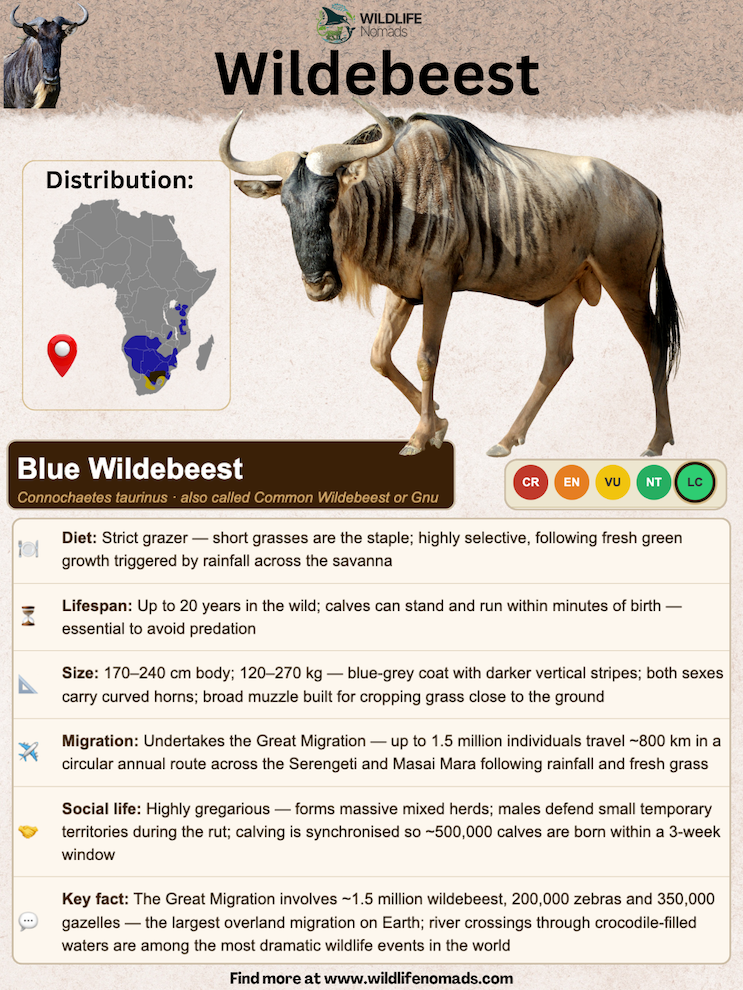
The Afrikaans name wildebeest translates almost exactly the way it sounds: wild beast. Dutch settlers in southern Africa gave the animal that name. They’d watched bulls charge, buck, and kick up dust like something out of a nightmare. It stuck.
“Gnu” — or nu, as my mom said it, comes from a different direction. It’s derived from the Khoekhoe word for the animal, later folded into Afrikaans and English as an alternate common name. So when someone asks what another name for a wildebeest is, the answer is gnu. It’s just as correct as wildebeest itself. Scientifically, every wildebeest belongs to the genus Connochaetes, inside the family Bovidae. That’s the same family that holds true antelopes, oryx, and goats. This family placement is exactly why people keep asking whether a wildebeest is secretly a cow. It isn’t. More on that below.
2. There Are Two Species, Not One
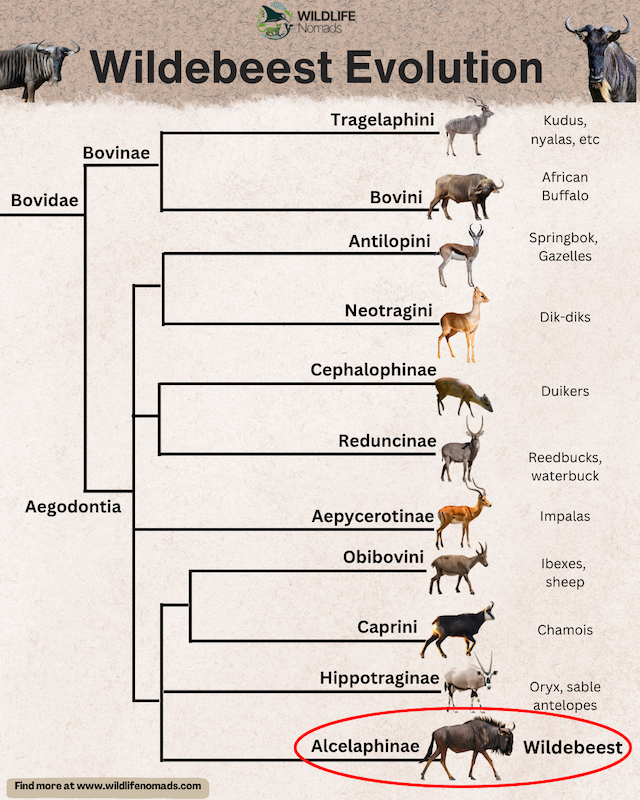
Most people assume “wildebeest” means one animal. It doesn’t. There are two main species in the genus Connochaetes. One is the blue wildebeest, Connochaetes taurinus. The other is the black wildebeest, Connochaetes gnou, sometimes called the white tailed gnu. They split from a common ancestor long enough ago to become two genuinely distinct species, not different species merely wearing different coats. Each occupies its own natural range today.
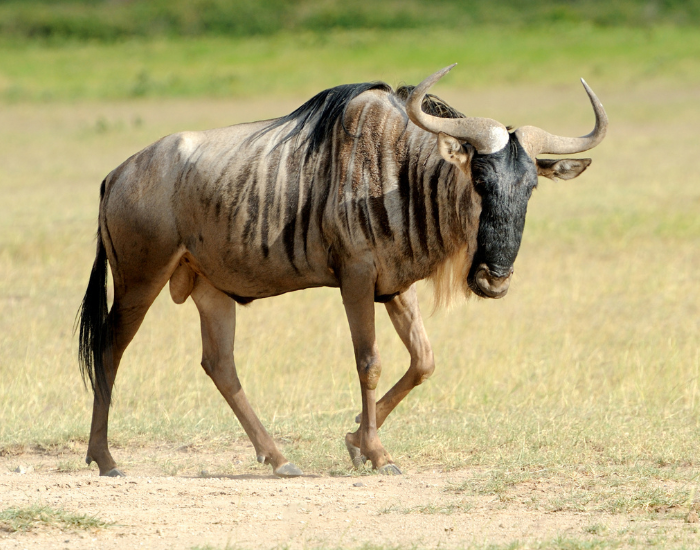
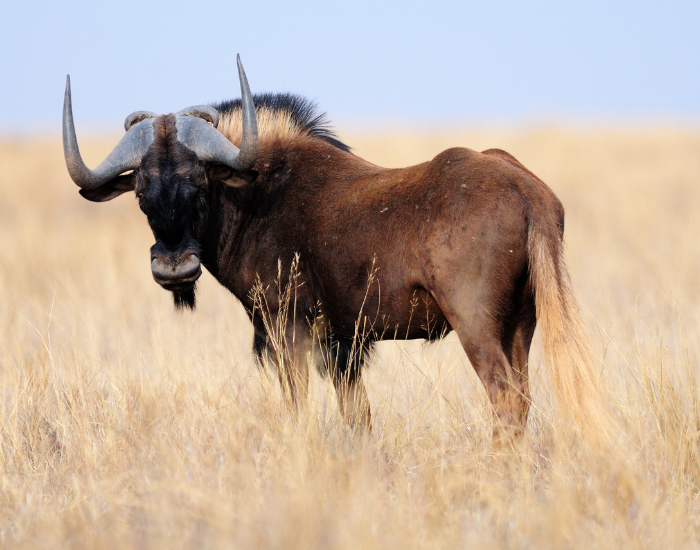
Blue wildebeest are the ones you’ve almost certainly seen in a documentary. Dark grey to slate-blue coats, a faint bluish sheen, dark brown vertical stripes across the shoulders, and a shaggy black mane. Black wildebeest run smaller and browner, with a long, pale, horse-like tail that gives the “white-tailed gnu” name its logic. Across their combined range in eastern and southern Africa, the wildebeest population runs into the low millions. Blue wildebeest form the migration’s enormous large herds, while black wildebeest stick to small, loose groups instead.
3. The Blue Wildebeest Has Five Faces You’ve Probably Never Heard Of
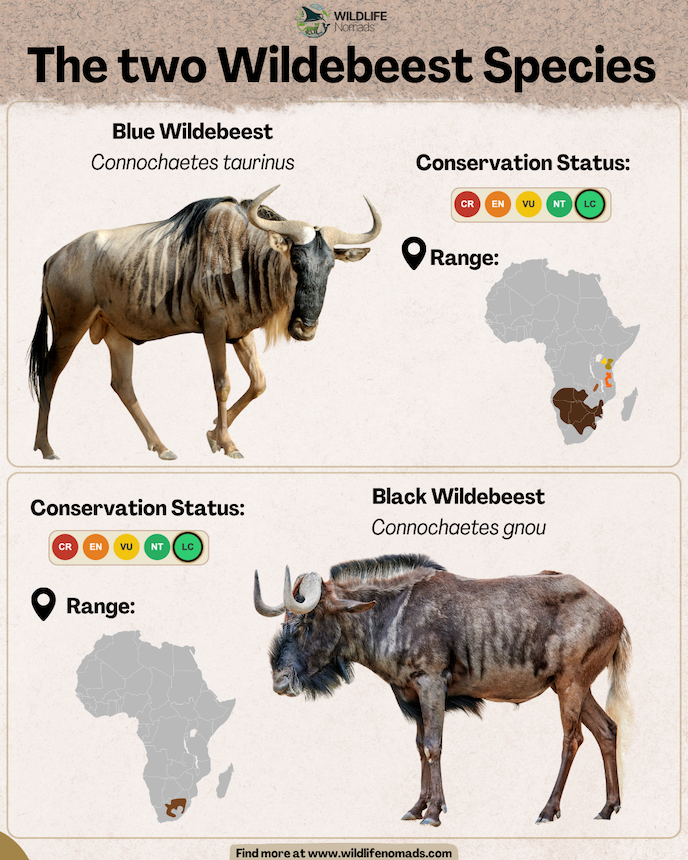
This is something probably you don’t know: the blue wildebeest isn’t one uniform population. Scientists recognize five subspecies, split mostly by geography and subtle differences in color and horn shape.
The western white bearded wildebeest and eastern white bearded wildebeest dominate eastern Africa’s Serengeti-Mara ecosystem. Together, they make up the bulk of the famous migrating herds across Kenya and northern Tanzania. Further south, the common or brindled gnu (Connochaetes taurinus taurinus) ranges across Botswana, Zimbabwe, and South Africa. Then there’s Cookson’s wildebeest, found almost nowhere else on Earth except Zambia’s Luangwa Valley. Last comes the Nyassaland wildebeest, tucked into Mozambique and Malawi. Five subspecies, one species name, and proof of how many species-level distinctions get flattened by casual conversation.
4. Built Like a Buffalo, Classified Like an Antelope
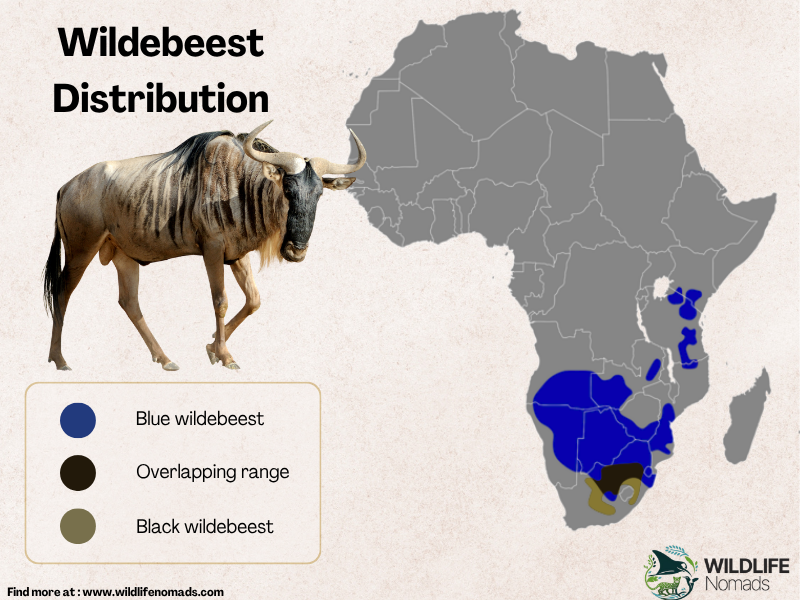
My mother’s mental image wasn’t far off. Wildebeest have the barrel chest, humped shoulders, and heavy head of something buffalo-adjacent. But look lower, and you’ll find the legs, hooves, and horns of an antelope. That in-between look is exactly why early European naturalists struggled to classify them.
Biologically, wildebeest are true antelopes, just unusually large ones. Blue wildebeest bulls stand around 130-145 cm at the shoulder. They can weigh up to 250 kg, occasionally pushing past 270 kg, near the 600-pound mark casual sources often cite. Females run noticeably smaller. Both species carry curved horns and shaggy manes, but the shapes differ. Blue wildebeest horns sweep outward and hook up toward the sky. Black wildebeest horns curve forward before turning upward, different enough to tell the species apart from the skull alone.
5. Black Wildebeest Nearly Vanished, Then Quietly Came Back
This is the wildebeest story most people never hear. By the late 1800s, unregulated hunting had pushed the black wildebeest to the edge of extinction. Fewer than 600 individuals remained across all of southern Africa. Farmers viewed them as competition for cattle grazing, and their hides and meat carried real commercial value. The killing was fast and largely unchecked.
What happened next is one of the better conservation turnarounds on the continent. Protected reserves, and later private landowners, bred and reintroduced black wildebeest across South Africa, Lesotho, and Eswatini. Today the population sits above 30,000 animals, with roughly 80% living on private land. That’s proof that private conservation, done properly, can pull a species back from a few hundred survivors. Black wildebeest are now nomadic or loosely sedentary. They stay within fixed home ranges on the cooler highveld plains, a very different lifestyle from their blue cousins’ long-distance wandering.
One side effect of that reintroduction boom: on reserves where black and blue wildebeest ranges now overlap, conservationists have documented hybrid animals. They actively manage breeding to protect the black wildebeest’s genetic distinctiveness. Even a conservation success story still needs ongoing management, not a one-time fix.
6. The Great Migration Is the Largest Land Migration on Earth, Click the Map to Follow It
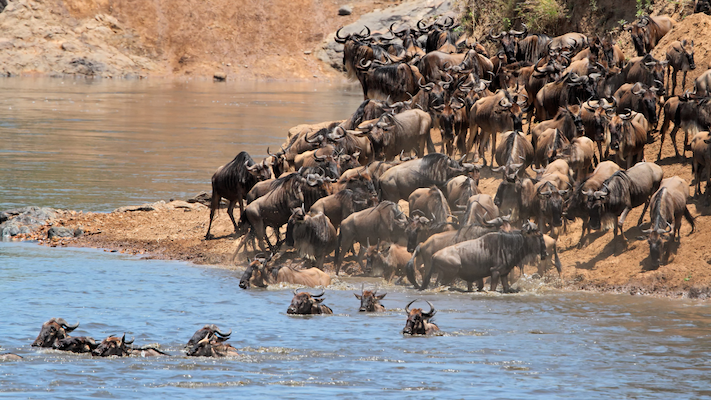
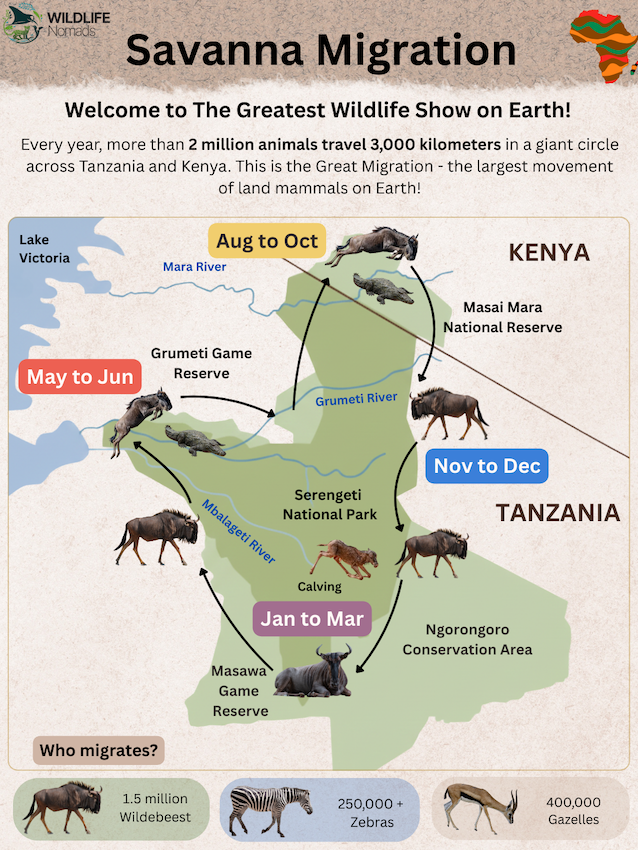
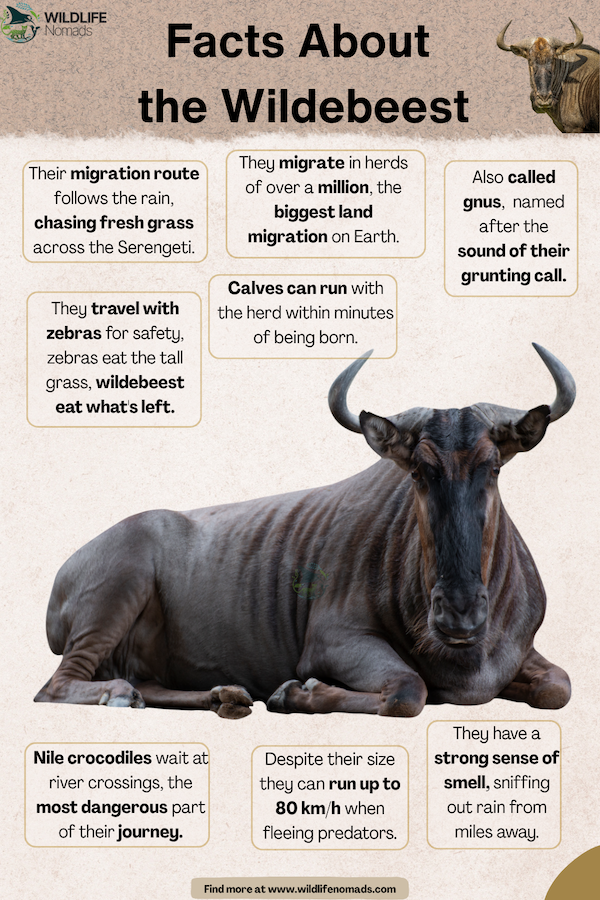
This is the fact I built an entire interactive tool around, so bear with me. Every year, somewhere between 1.2 and 1.5 million blue wildebeest walk a continuous, clockwise loop. That loop runs through the Serengeti-Mara ecosystem, crossing between Serengeti National Park and Masai Mara. One sits in northern Tanzania, the other in central Kenya, together, the beating heart of East Africa’s wildlife tourism. This is what most people mean by the famous Great Wildebeest Migration. Factor in every zigzag the herds make chasing rain, and the total ground covered over a full year can reach up to 1,800 miles.
The migration isn’t scheduled. It’s driven entirely by rainfall, and the herds move to wherever the rainy season has just triggered fresh grass growth. As the short grass plains of the southern Serengeti dry out, the herds swing north and west. They’re chasing fresh food and greener pastures. Then they cycle back south once the rains return there instead. National Geographic has called it one of the greatest wildlife spectacles on the planet. And I don’t think that’s an exaggeration.
7. Calving Season Turns the Southern Serengeti Into a Nursery
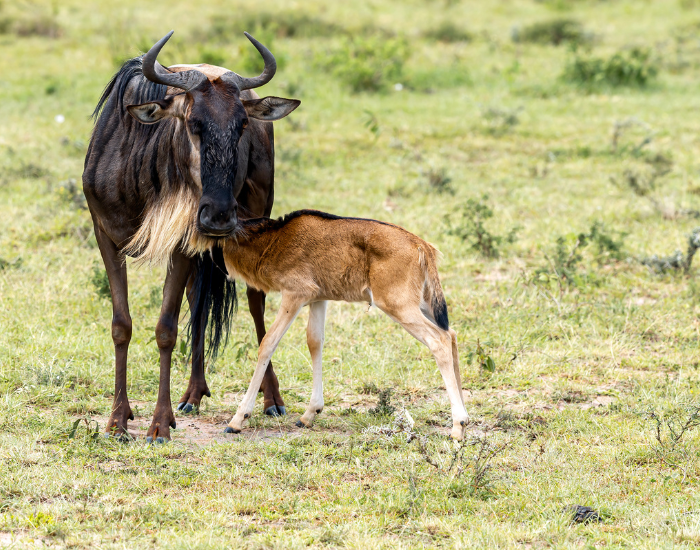
In the middle of the migration cycle sits one of the tightest reproductive windows in the animal kingdom. Calving season peaks between January and March, on the short grass plains of the southern Serengeti. Over 500,000 calves are born within just a few weeks. Biologist Richard Estes documented this synchrony back in 1976 as a deliberate predator-swamping strategy, and it still holds up.
The logic is brutal but effective. Hyenas, lions, and wild dogs face hundreds of thousands of newborns arriving almost at once. They can only kill a small fraction before the calves become mobile. And mobile happens fast: a wildebeest calf can stand and run within minutes of hitting the ground. It has to, to keep pace with a herd that never really stops moving. Female wildebeest carry their calves for a gestation period of roughly 250 to 260 days. Timing lines birth up almost exactly with peak grass growth. Mating season, or rut, follows a few months later, when bulls hold temporary territories and compete hard for breeding rights.
8. The Mara River Crossings Are as Dangerous as They Look on TV
Between July and September, the migration hits its most famous obstacle: the Mara River. Herds bottleneck on the banks and hesitate, sometimes for hours. Then they surge across in a chaotic mass, dodging crocodiles and hippos and each other in water that can run high and fast.
Not every wildebeest makes it. A study show what happens next. Published in the Proceedings of the National Academy of Sciences, their research found that these annual mass drownings drive real nutrient cycling in the Mara River. The carcasses feed fish, scavengers, and microbial communities for months after each crossing. It’s a strange kind of ecological gift: individual deaths that measurably enrich an entire river system. This is also one of the clearest examples of a single species shaping an ecosystem well beyond the plains it grazes.
9. Wildebeest Are Ecosystem Engineers, Not Just Prey
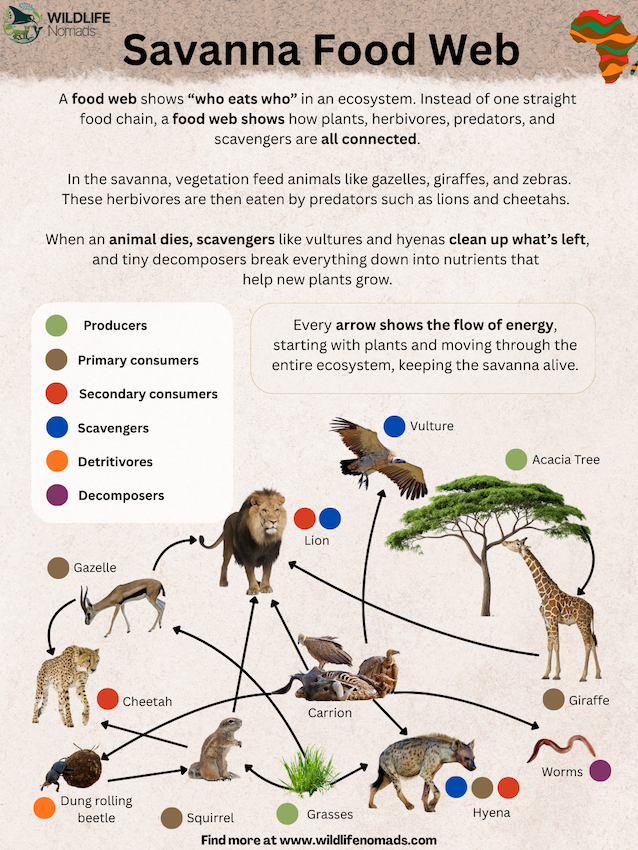
It’s tempting to think of wildebeest mainly as food for something else, like lions, hyenas or wild dogs. That undersells them badly. Wildebeest are widely considered a keystone species in the Serengeti ecosystem, and the mechanism is almost entirely about grass.
A migrating herd of over a million animals consumes vast amounts of short grass as it moves. That keeps open grasslands from turning into woody bush, and it triggers the fresh regrowth other herbivores depend on. A study showed the migration route tracks the most nitrogen-rich new grass. That’s forage smaller grazers can’t reach once it matures. Wildebeest dung then returns those nutrients to the soil across huge distances. It functions as a slow-motion fertilizer system for the entire savanna. Remove the migration, and the grassland would shift within a few seasons.
10. They Graze Alongside Zebras Without Competing for the Same Food
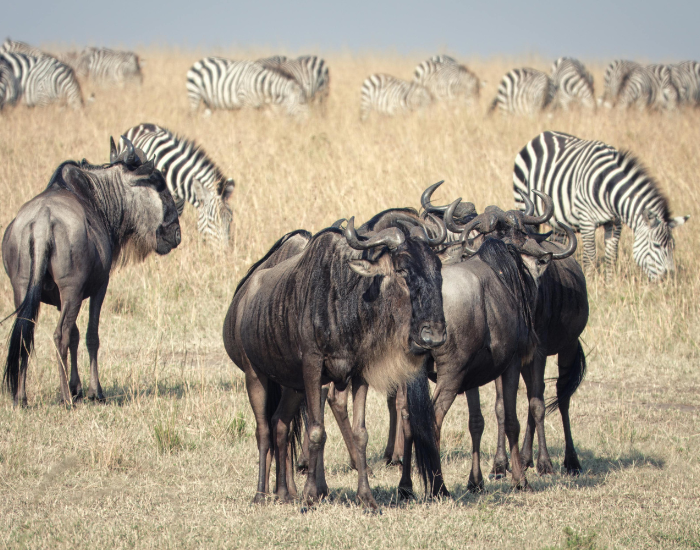
If you have the privilege to walk into the Serengeti during migration season, you’ll almost always see wildebeest and zebra sharing the same open plains. That’s not a coincidence. It’s also not because they’re indifferent to competition, it’s because they’re barely competing at all.
Zebras have simpler digestive systems and go for taller, coarser grass stems first, effectively mowing the vegetation down. Wildebeest follow behind and take advantage of the shorter, more nutrient-dense regrowth the zebras leave exposed. Both species also gain extra eyes and ears watching for predators. Mixed herds of wildebeest, zebra, and gazelles end up safer and better fed than any species manages alone. It’s one of the more elegant examples of how sharing a landscape with other animals isn’t automatically a conflict.
11. Predators Depend on Them, and the Numbers Prove It
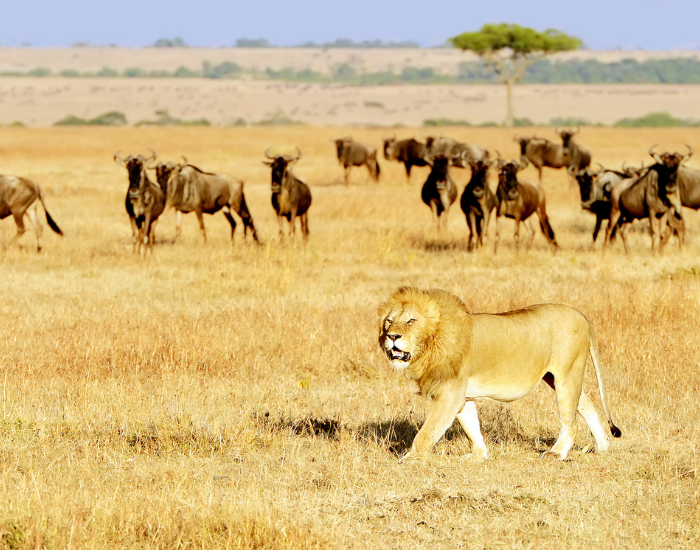
Lions, hyenas, and wild dogs all time parts of their own life cycles around wildebeest movements. That alone shows how central this species is to the entire predator community of southern and eastern Africa. Wildebeest are large mammals, but they’re not invincible. Calves, the old, and the injured fall most often to a coordinated pride or a hyena clan.
Their main defense isn’t size even though they cant get quite big compared to other animals. It’s speed and numbers. Both wildebeest species can sprint up to 80 km/h in short bursts to avoid predators. A herd numbering in the hundreds of thousands also makes any single individual’s odds of being singled out fairly low. Aggression toward humans, though, is rare and mostly defensive. A cornered or rutting bull can use those curved horns on a vehicle or a careless observer. Still, wildebeest don’t hunt or stalk people the way predators do. Give them space, and they’ll almost always choose to run rather than fight.
12. Their Stomach Does More Work Than Their Legs
Everything about a wildebeest’s endurance traces back to a four-chambered stomach. It’s built for breaking down huge quantities of low-quality grass efficiently. Like cattle, they’re ruminants, extracting nutrients from short grasses that would barely sustain a single-stomached grazer. That efficiency is exactly why they can afford to walk hundreds of kilometers rather than defend one territory. Fresh grass simply outweighs the cost of moving.
Water still matters enormously, though. Blue wildebeest need regular access during dry periods and stay within range of rivers even mid-migration. Black wildebeest, on cooler highveld plains further south, can go longer between drinks. Both species favor open woodlands and grasslands over dense bush, mostly because visibility against predators matters more than shade does.
Frequently Asked Questions
Wildebeest are also called gnu, a name derived from the Khoekhoe word for the animal. Both names are equally correct and used interchangeably in scientific and popular writing. “Wildebeest” itself is Afrikaans for “wild beast,” a nod to the animal’s aggressive-looking bucking and charging displays.
Wildebeest meat is legally harvested under hunting quotas in parts of southern Africa. Hunters and chefs generally describe it as lean and slightly gamey, often compared to venison or kudu. It isn’t a mainstream food source outside regulated hunting areas. Most people’s exposure is limited to specialty game markets, not everyday cooking.
Not typically. Wildebeest are grazing herbivores that prefer to flee rather than confront a threat, and unprovoked attacks on humans are rare. That said, a cornered animal, an injured bull, or one that’s rutting can charge defensively. Safari guides keep a respectful distance regardless.
The Wildebeest Deserves Better Than “Wild Beast”
Two species. Five subspecies. A keystone role in one of the planet’s most important ecosystems, and a migration that moves over a million animals across borders every year. That’s a lot to hide behind a name that just means “aggressive animal.” My mom wasn’t wrong to be fascinated by the nus at the zoo. She just never got to see what they do when nobody’s watching them behind glass.
That’s exactly why I built the interactive wildebeest migration map. Drag the timeline yourself, and watch a full year of movement compress into thirty seconds. Long-distance travel is what hooked you here? Our breakdown of the longest animal migrations on Earth puts the wildebeest’s journey next to eleven other species going just as far. Want to meet the other animals sharing those plains? Check out our guides to African lions, springbok, and the wider antelope family. Drop a comment below with the moment a zoo animal finally clicked for you. I’d genuinely like to read it.
Wildebeest & Migration Challenge
Eight questions on Africa’s legendary wanderer. How many can you get right?
References:
Estes, R. D. (1976). The significance of breeding synchrony in the wildebeest. African Journal of Ecology, 14(2), 135–152. https://doi.org/10.1111/j.1365-2028.1976.tb00158.x
Holdo, R. M., Holt, R. D., & Fryxell, J. M. (2009). Opposing rainfall and plant nutritional gradients best explain the wildebeest migration in the Serengeti. The American Naturalist, 173(4), 431–445. https://doi.org/10.1086/597229
Subalusky, A. L., Dutton, C. L., Rosi, E. J., & Post, D. M. (2017). Annual mass drownings of the Serengeti wildebeest migration influence nutrient cycling and storage in the Mara River. Proceedings of the National Academy of Sciences, 114(29), 7647–7652. https://doi.org/10.1073/pnas.1614778114
Grobler, J. P., Rushworth, I., Brink, J. S., Bloomer, P., Kotze, A., Reilly, B., & Vrahimis, S. (2011). Management of hybridization in an endemic species: Decision making in the face of imperfect information in the case of the black wildebeest — Connochaetes gnou. European Journal of Wildlife Research, 57(5), 997–1006. https://doi.org/10.1007/s10344-011-0567-1
Veldhuis, M. P., Ritchie, M. E., Ogutu, J. O., Morrison, T. A., Beale, C. M., Estes, A. B., Mwakilema, W., Ojwang, G. O., Parr, C. L., Probert, J., Wargute, P. W., Hopcraft, J. G. C., & Olff, H. (2019). Cross-boundary human impacts compromise the Serengeti-Mara ecosystem. Science, 363(6434), 1424–1428. https://doi.org/10.1126/science.aav0564