The first time a Vermilion Flycatcher stopped me cold, I was in central Mexico. My biologist friends and I were on a slow morning birding walk, not researching anything, just looking. Then a small flame lit up on a fence wire. That scarlet male changed how I saw the whole group. I had assumed flycatchers were a handful of little brown birds. Instead, I learned they belong to the largest bird family on Earth, with over 400 species worldwide.
This article is my running list of favorites, built from years in the field and a few unforgettable mornings. Some of these birds I have watched myself, coffee in hand, no notebook required. For each one, you will get quick biology, behavior, range, and the ID clues that actually work. By the end, you should recognize far more flycatcher species than you expected to.
What Makes a Flycatcher a Flycatcher
Most flycatchers are aerial insectivores. They perch, watch, and snap up flying insects mid-air in a quick loop called “sallying.” Their tools match the job. They carry flattened, specialized bills fringed with stiff rictal bristles that help funnel prey and shield their eyes.
Because they hunt from lookouts, these birds favor habitats with prominent perches. A bare snag, a fence post, a high wire. Watch that same perch long enough and the bird often returns to it. As a group, they play a critical role in controlling insect populations across forests, deserts, and backyards alike.
Identification is the fun part and the hard part. Many flycatchers wear subdued green-gray plumage with lighter undersides, so voice, call, and habitat often matter more than color. Subtle differences in plumage, tail shape, and eye-ring can tip the balance. Learn the sounds, and half the battle is won.
1. Vermilion Flycatcher
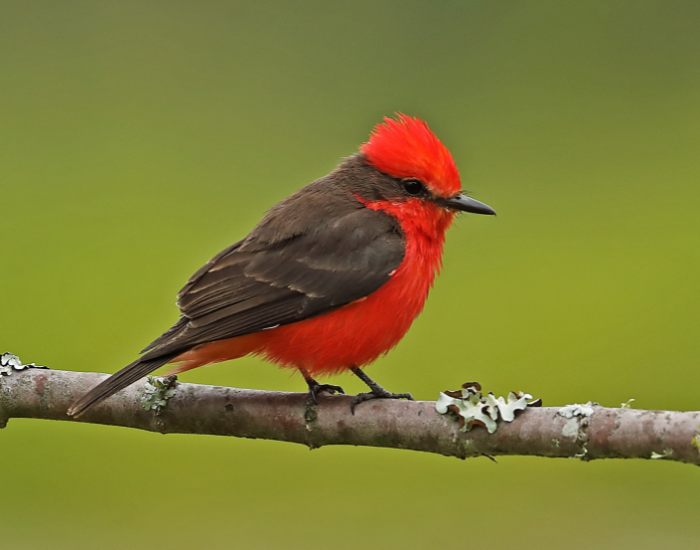
I have to start here. The male Vermilion Flycatcher glows fire-red on the head and chest, unlike almost any other flycatcher bird in North America. Females stay soft gray with a peachy wash. In Mexico, my friends and I turned up several on a single walk, and I finally understood how much I had overlooked.
They love open habitats near water, from desert washes to ranch land. The male performs a fluttering display flight, rising and singing to defend his nesting territory. Look for them on low, exposed perches, dropping to snatch beetles and flies. Range stretches from the American Southwest deep into South America.
2. Great Crested Flycatcher
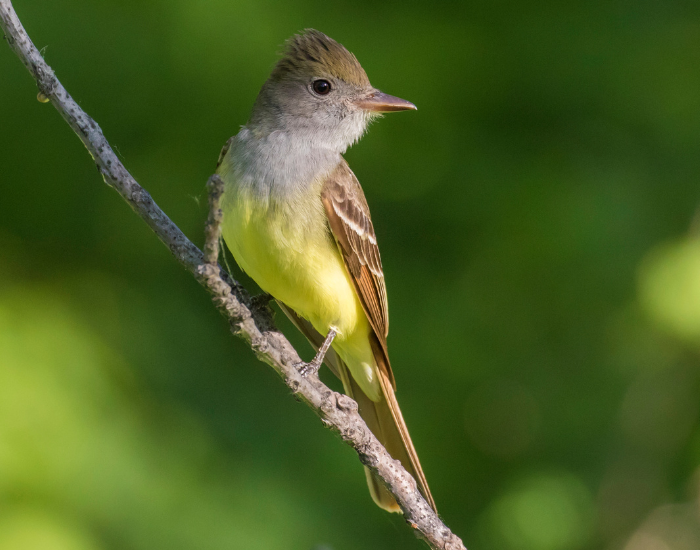
This loud, cinnamon-tailed bird of eastern woodlands belongs to the genus Myiarchus. You hear its rolling “wheep” long before you spot it in the canopy. It is one of the eastern flycatchers most likely to nest in your yard, because Myiarchus flycatchers readily use tree cavities and birdhouses.
Here is my favorite quirk. Great Crested Flycatchers often weave a shed snakeskin into the nest, and today they will use crinkly plastic instead. Whether it deters predators or just fits the texture they like remains debated. They forage high, catching moths, wasps, and caterpillars among the foliage.
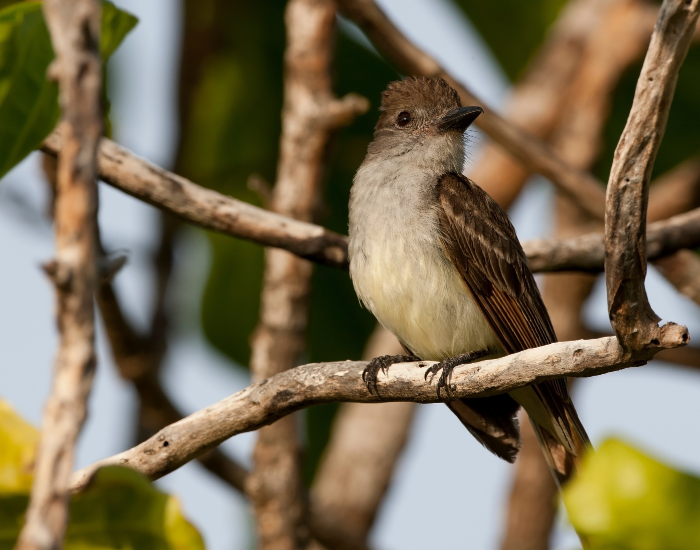
3. Ash-throated Flycatcher
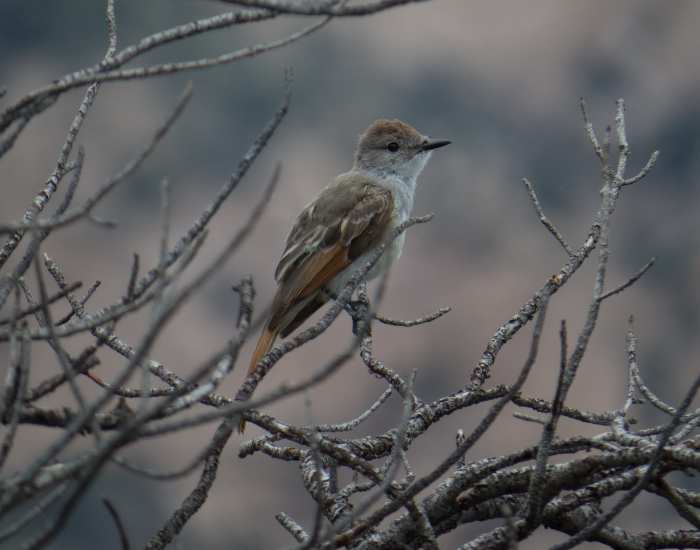
A pale, understated cousin, the Ash-throated Flycatcher measures 7.5 to 8.6 inches long. It thrives in dry western woodlands, deserts, and brushy foothills. The gray throat, lemon belly, and rusty tail give it away when voice fails you.
This species breaks the usual flycatcher script. Rather than hawking insects in mid-air, it flies short distances to pluck prey from branches and the ground. Its diet leans on insects and spiders, including flies, larvae, bees, and caterpillars. In winter it also eats small fruits and berries.
As a cavity nester, the Ash-throated Flycatcher uses pre-existing holes, often abandoned woodpecker holes, plus fence posts and nest boxes. Most nests sit no more than 20 feet off the ground, though birds occasionally place them as high as 70 feet. They build with bark, grasses, and small roots. In southern parts of the range, a pair may raise two broods in a season.
4. Brown-crested Flycatcher
The largest Myiarchus in the U.S., the Brown-crested Flycatcher is a saguaro-country specialist. It nests in giant cactus cavities carved by woodpeckers, sharing that real estate with owls and other tenants. Its call is a sharp, whistled “whit.”
They perch boldly on cactus arms, then launch after big insects, even small lizards. Range runs from Arizona and Texas south through Mexico. Where it overlaps with the Ash-throated, voice remains your best tool.
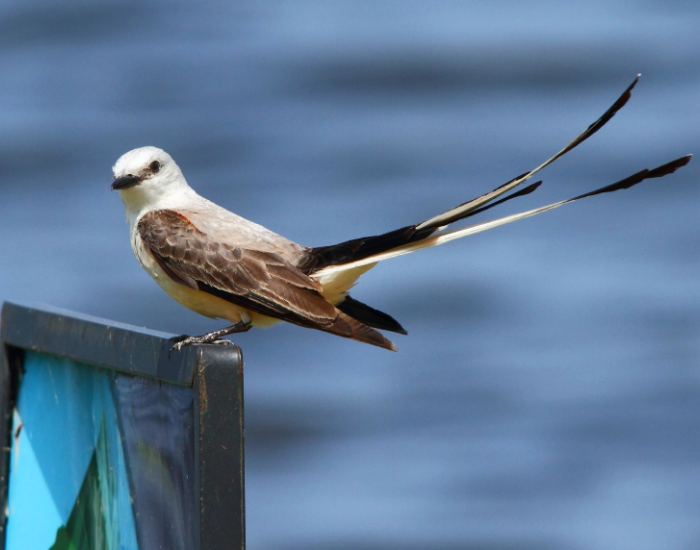
5. Scissor-tailed Flycatcher
Few birds are as elegant. The Scissor-tailed Flycatcher trails a long, forked tail that streams behind it in flight like ribbon. Pale gray above with salmon-pink flanks, it is the pride of the southern Great Plains and a signature Texas bird.
It belongs to the genus Tyrannus, the kingbirds, and shares their bold streak. Males perform a spectacular “sky dance,” tumbling through the air to defend territory. They hunt grasshoppers and beetles from fences and wires along open roadsides. In late summer, they gather in large, chattering flocks before migration.
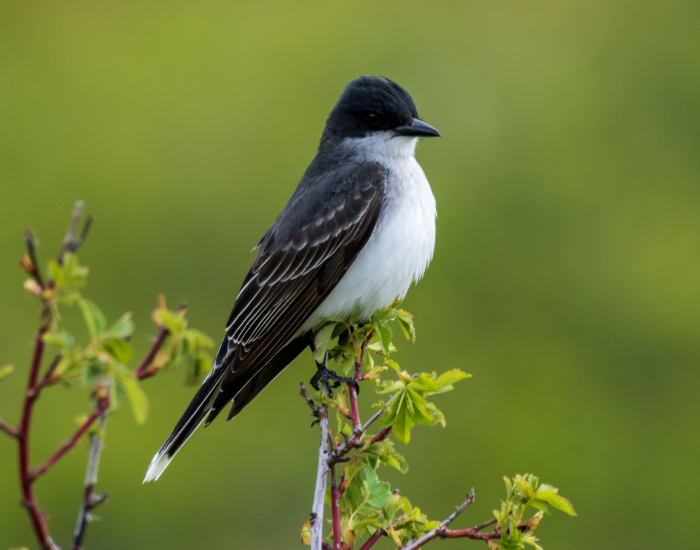
6. Eastern Kingbird
Kingbirds are the largest flycatchers in the U.S. and Canada, and the Eastern Kingbird acts like it. Crisp black above and white below, it wears a hidden crimson crown patch it rarely flashes. The white tail tip clinches the ID.
Many flycatchers show aggressive territorial behavior, but this one is legendary. I have watched a single kingbird chase crows and even hawks clean out of its airspace. It nests in open country near water and hunts flying insects from exposed perches. In winter, oddly, it turns fruit-eater in the Amazon.
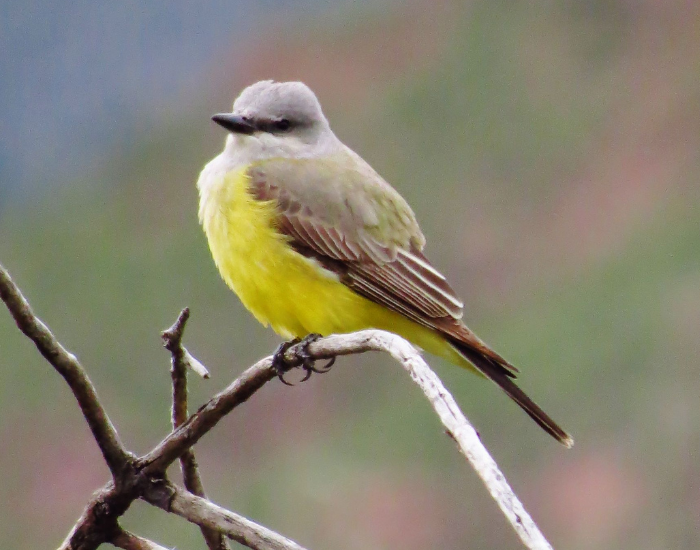
7. Western Kingbird
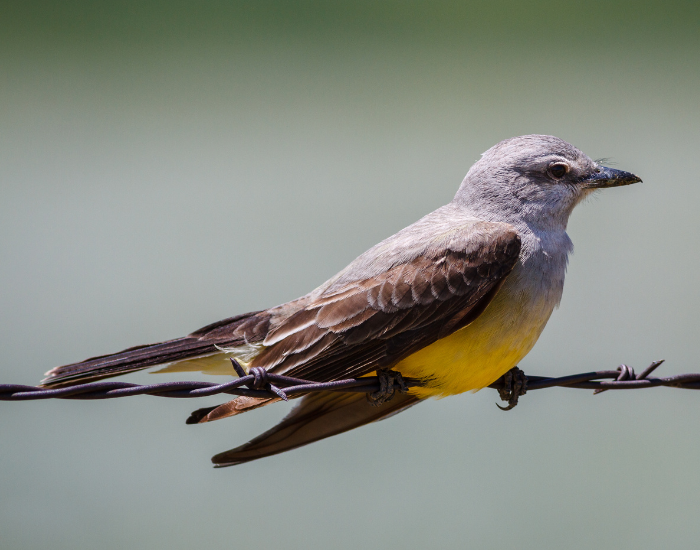
Swap the tuxedo for a lemon vest and you have the Western Kingbird. Gray head, yellow belly, and black tail edged in white, it is a familiar sight on western fence lines and roadside wires. It has expanded its range as towns and farms spread.
This bird nests happily on utility poles and building ledges, right beside people. It defends its nesting territory with the same fury as its eastern cousin, harassing much larger birds. Watch one work a perch and you will see the classic sally-and-return over and over.
8. Cassin’s Kingbird
Cassin’s Kingbird looks like the Western’s darker, stockier sibling. The gray chest contrasts with a white chin, and the tail lacks white edges. Its emphatic “chi-beer” call is the giveaway where the two species mix.
I find them in oak foothills and pine-oak canyons, often a touch higher and shadier than Western Kingbirds prefer. They range from the interior West down into Mexico. Like all kingbirds, adults are loud, confident, and quick to scold intruders near the nest.
9. Eastern Phoebe
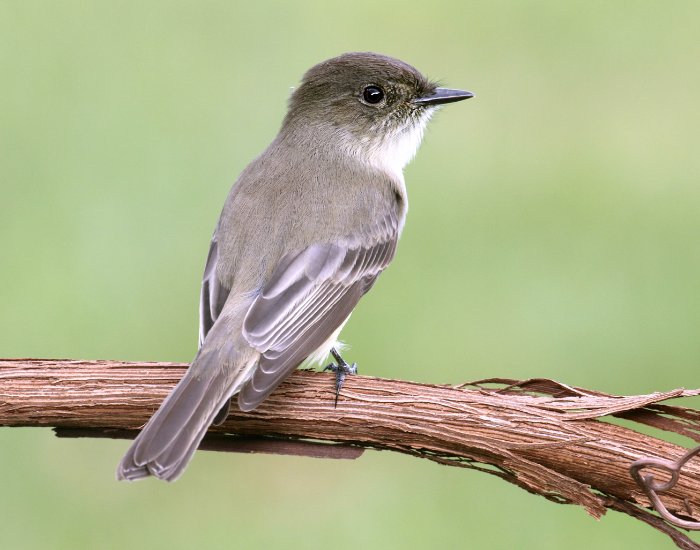
Phoebes are among the most approachable flycatchers, and the Eastern Phoebe practically invites acquaintance. Plain grayish-brown, it pumps and wags its tail almost constantly, a habit that IDs it at a glance. There is no bold eye-ring, no wing-bar drama, just that steady tail.
This is one of the first migrants back north, often by late April or even March. It readily nests on porches, bridges, and barn eaves, building a tidy moss cup on a same-perch ledge year after year. Its buzzy “fee-bee” song names the bird. I have had one nest above my door and adopt me for a whole spring.
10. Black Phoebe
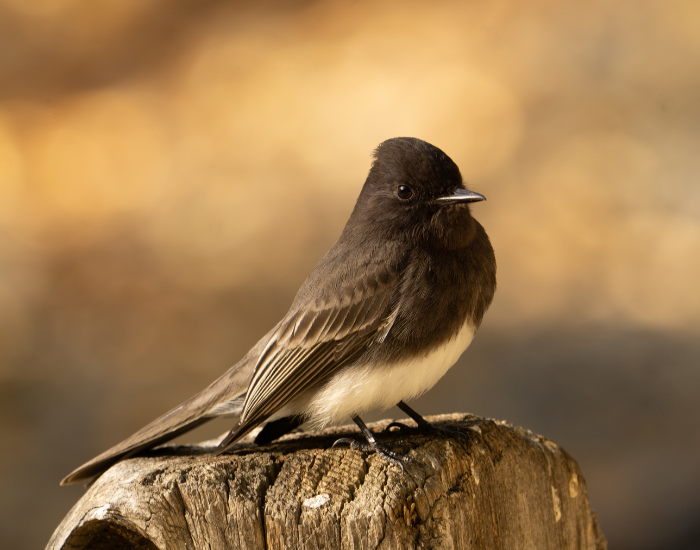
The Black Phoebe never strays far from water. Sooty black with a clean white belly, it works the edges of ponds, creeks, and coastal streams across the West and into South America. That crisp two-tone look is unmistakable.
It hunts low over water, snapping up insects that hatch off the surface, then returns to a favorite rock or root. Like its relatives, it wags its tail while perched. Mud is its building material, and it plasters cup nests under bridges, culverts, and eaves.
11. Say’s Phoebe
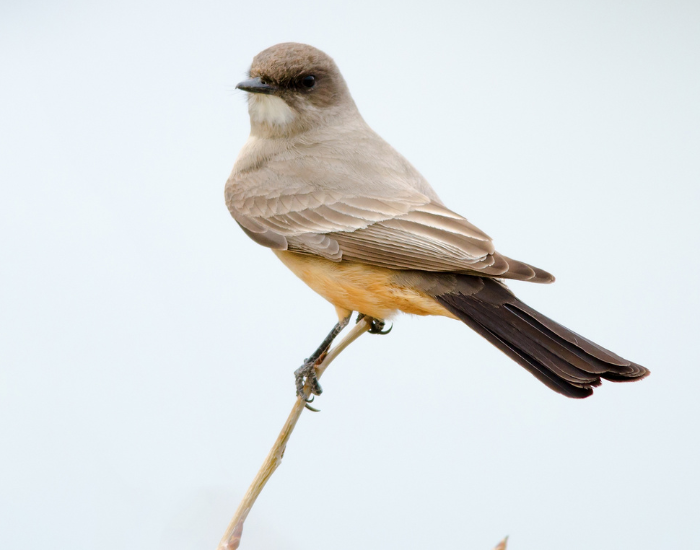
Soft cinnamon underparts set the Say’s Phoebe apart in dry open country. It favors deserts, sagebrush flats, and badlands, often far from any water at all. The pale rusty belly glows warm in low desert light.
This hardy bird ranges farther north than any other flycatcher, breeding sometimes reaching into Alaska. It nests on cliffs, cabins, and abandoned buildings, tolerating harsh, wind-scoured ground. I associate its plaintive, downslurred whistle with lonely ranch roads at dusk.
12. Willow Flycatcher
Now we reach the Empidonax, the small, confusing, green-gray flycatchers that humble every birder. The Willow Flycatcher looks almost identical to its cousins, so I rely on its sneezy “fitz-bew” song to name it. Silent birds in this genus are often best left unidentified.
It breeds in wet willow thickets and streamside shrubs across much of North America. Conservation matters here. The Southwestern Willow Flycatcher subspecies is federally endangered, hit hard by the loss of riparian habitat. Protecting those green corridors protects far more than one small bird.
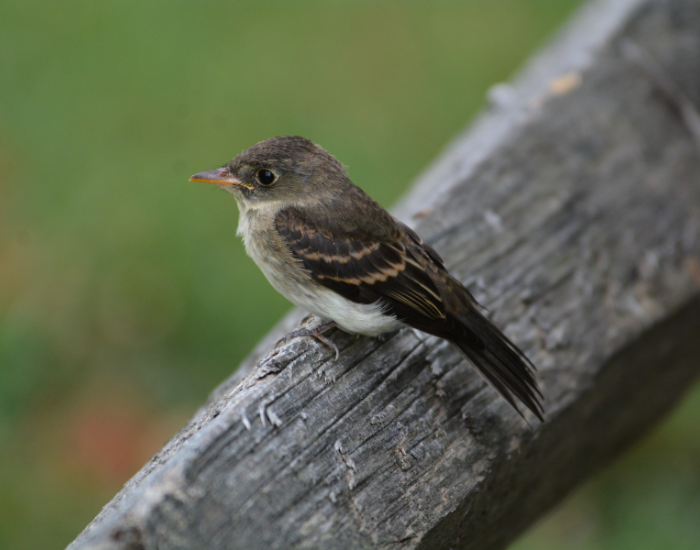
13. Least Flycatcher
The Empidonax flycatchers are among the smallest flycatchers in North America, and the Least Flycatcher is tiny even by that standard. A bold white eye-ring and crisp wing-bars stand out on its gray-olive body. Its dry, snappy “che-bek” repeats endlessly through northern woodlands.
Small does not mean meek. This pugnacious mite defends dense nesting clusters and picks fights with birds twice its size. It gleans and sallies for gnats, beetles, and flies among the mid-story foliage. Look for it in second-growth forest edges across the northern U.S. and Canada.
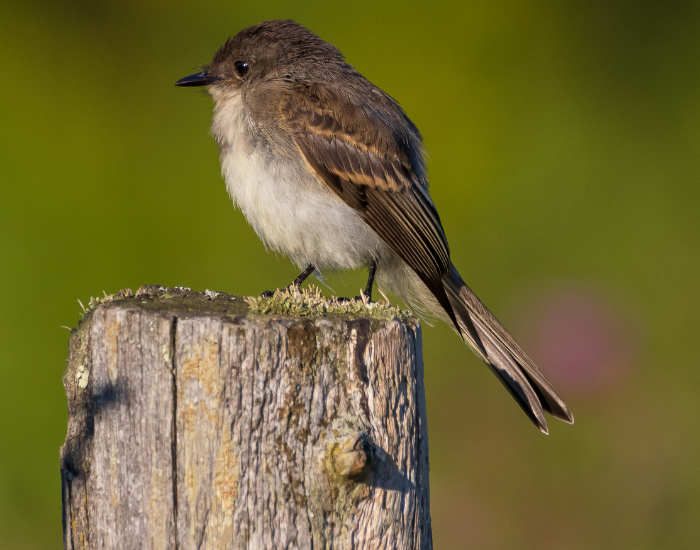
14. Acadian Flycatcher
The Acadian Flycatcher is the Empidonax of the shady southeastern hardwood forest. Greener above than most of its kin, it haunts ravines and streamside woods with a closed canopy. An explosive “peet-sa” call carries through the humid understory.
It slings a loose, hanging basket nest from a low horizontal fork, often over water. As a long-distance migrant to Central and South America, it depends on healthy forest on both ends of the journey. Voice and habitat, again, matter far more than plumage here.
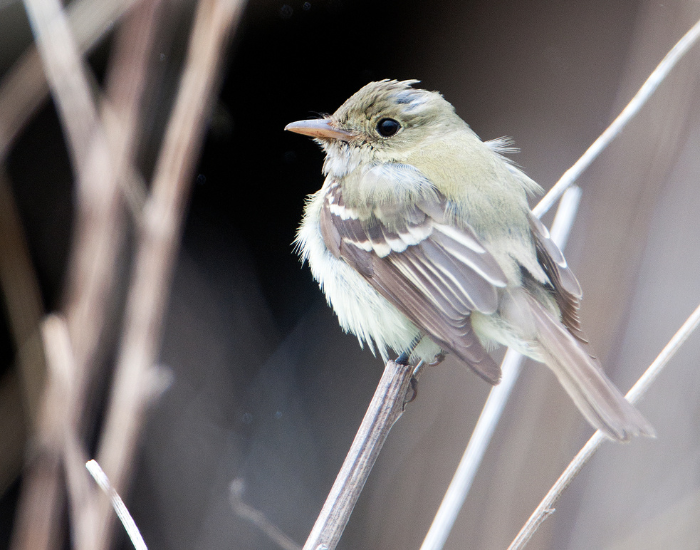
15. Eastern Wood-Pewee
I will close the list with a voice I hear more than I see. The Eastern Wood-Pewee sings a slow, mournful “pee-a-wee” from mid-canopy that defines eastern summer woods. Grayish and slim, it lacks a strong eye-ring, which separates it from the Empidonax crowd.
It perches upright on bare inner branches and sallies for passing insects, returning again and again to the same lookout. The nearly identical Western Wood-Pewee replaces it out west, betrayed by a burry, nasal call. Both are long-distance migrants that thin our forest bug populations all summer long.
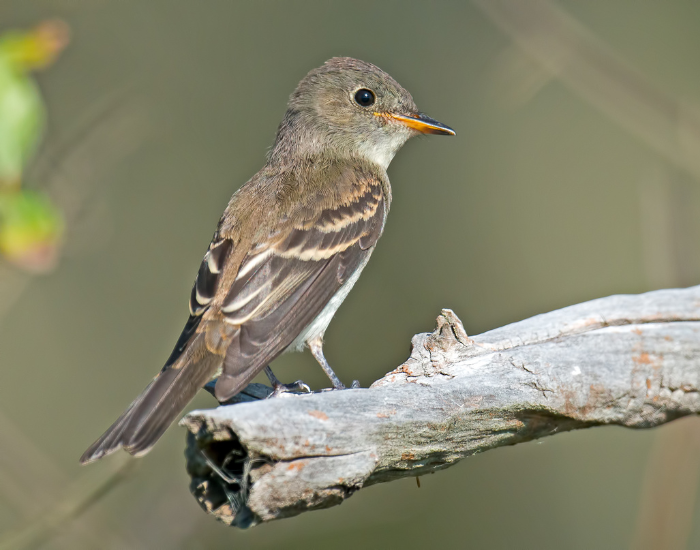
A Few More Worth Knowing
Fifteen species barely scratch the surface. Out west, a knot of look-alike Empidonax keeps birders honest: the Gray Flycatcher, Dusky Flycatcher, Hammond’s Flycatcher, and Cordilleran Flycatcher all overlap in range and appearance. In the boreal north, the Alder Flycatcher and Yellow-bellied Flycatcher add two more voices to learn. The Olive-sided Flycatcher, meanwhile, belts its “quick-three-beers” from the very tops of dead spruces. Each one rewards a patient ear.
Can You Name That Flycatcher? 🐦
A 15-photo identification challenge — the wrong answers are deliberately tricky look-alikes from the same genus. The Myiarchus, the kingbirds, and the little Empidonax will test you. Go back and change any answer before you score.
Which flycatcher is this?
Frequently Asked Questions
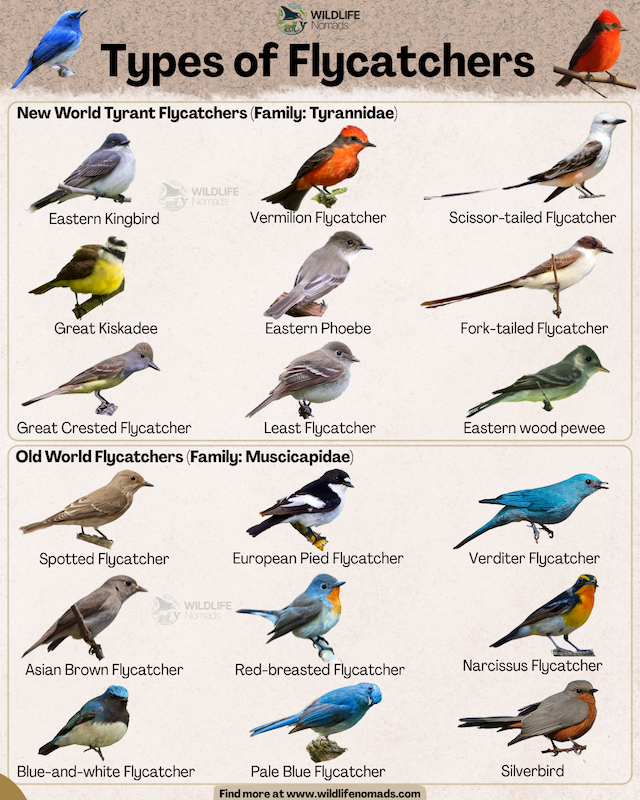
A flycatcher is a perching bird that catches insects, usually in mid-air. In the Americas, the name means the tyrant flycatchers, family Tyrannidae, the largest bird family with over 400 species. It includes kingbirds, phoebes, pewees, and the little Empidonax birds.
Flycatchers are the classic insect-catcher birds. They perch, watch, and sally out to snap flying insects, then return to the same perch. Their specialized bills and bristles make them efficient bug-catching birds across nearly every American habitat.
Most flycatchers are common and widespread. A few, though, are genuinely rare. The Southwestern Willow Flycatcher is federally endangered, and many aerial insectivores have declined sharply since the 1980s. Habitat loss and falling insect numbers are the leading suspects.
Flycatchers are not tame, but several tolerate people closely. Phoebes and kingbirds often nest on porches, barns, and utility poles. Many flycatchers also show aggressive territorial behavior, boldly chasing off hawks and crows near their nests.
Beyond flycatchers, many birds are bug catchers: swallows, swifts, warblers, and wrens all eat insects. What sets the types of flycatcher birds apart is their sit-and-wait hunting style. They ambush prey from a perch rather than searching constantly.
Go Find One Yourself
The real lesson of that Mexican fence wire was simple. Once you learn to notice flycatchers, they appear everywhere, and the diversity is staggering. Start with the loud, obvious ones near you, then let voice and habitat guide you into the tricky Empidonax.
Grab binoculars and watch a single perch for ten minutes. You will likely meet one of these birds before long. And if a kingbird decides to chase off the local hawks, you will see why so many birds of prey give these fierce little hunters a wide berth. Drop a comment and tell me which flycatcher you spot first.
References:
Cardiff, S. W., & Dittmann, D. L. (2020). Ash-throated Flycatcher (Myiarchus cinerascens), version 1.0. In A. F. Poole (Ed.), Birds of the World. Cornell Lab of Ornithology. https://doi.org/10.2173/bow.astfly.01
Michel, N. L., Smith, A. C., Clark, R. G., Morrissey, C. A., & Hobson, K. A. (2016). Differences in spatial synchrony and interspecific concordance inform guild-level population trends for aerial insectivorous birds. Ecography, 39(8), 774–786. https://doi.org/10.1111/ecog.01798
Nebel, S., Mills, A., McCracken, J. D., & Taylor, P. D. (2010). Declines of aerial insectivores in North America follow a geographic gradient. Avian Conservation and Ecology, 5(2), 1. https://doi.org/10.5751/ACE-00391-050201
Ohlson, J., Fjeldså, J., & Ericson, P. G. P. (2008). Tyrant flycatchers coming out in the open: Phylogeny and ecological radiation of Tyrannidae (Aves, Passeriformes). Zoologica Scripta, 37(3), 315–335. https://doi.org/10.1111/j.1463-6409.2008.00325.x
Smith, A. C., Hudson, M.-A. R., Downes, C. M., & Francis, C. M. (2015). Change points in the population trends of aerial-insectivorous birds in North America: Synchronized in time across species and regions. PLOS ONE, 10(7), e0130768. https://doi.org/10.1371/journal.pone.0130768
Spiller, K. J., & Dettmers, R. (2019). Evidence for multiple drivers of aerial insectivore declines in North America. The Condor: Ornithological Applications, 121(2), duz010. https://doi.org/10.1093/condor/duz010