
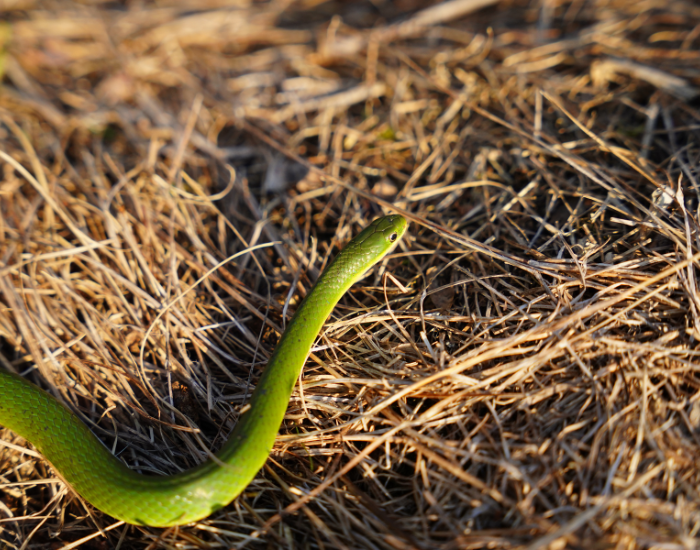
In my years working in a zoo, we used to keep smooth green snakes on exhibition. As part of the reptile team, my job was to look after a strange and wonderful cast of animals, including poison dart frogs, crocodiles, boa constrictors, tarantulas, and of course, snakes like this one. That herpetology section was the classic dark, cave-looking, humid corner of every zoo. She lived there, behind the glass, glowing like a piece of moss come to life.
That little female taught me more about smooth green snakes than any textbook ever could. Most people walked past her enclosure looking for the boa or the rattlesnake, never realizing one of North America’s most beautiful snake species was inches from their face. So today, I want to share twelve things every nature lover should know about smooth green snakes — the science, the field stories, and the small but important conservation fight happening in meadows across the continent.
1. Their Scientific Name Tells the Whole Story
The smooth green snake’s scientific name is Opheodrys vernalis. Roughly translated, it means “spring tree-snake,” which is fitting for an animal that emerges into bright green meadows just as the world wakes up. Older literature still calls them Coluber vernalis, but modern taxonomy places them squarely in the genus Opheodrys alongside their close relative, the rough green snake.
I love this name because it captures the feeling of finding one. You’re walking through grass in May, and suddenly there’s this living strand of vernal color flowing across your boot. Naming matters in biology, and snake Opheodrys vernalis tells you exactly what you’re looking at: a slender, arboreal-leaning, springtime green snake species.
2. That Bright Green Color Is Pure Camouflage Genius
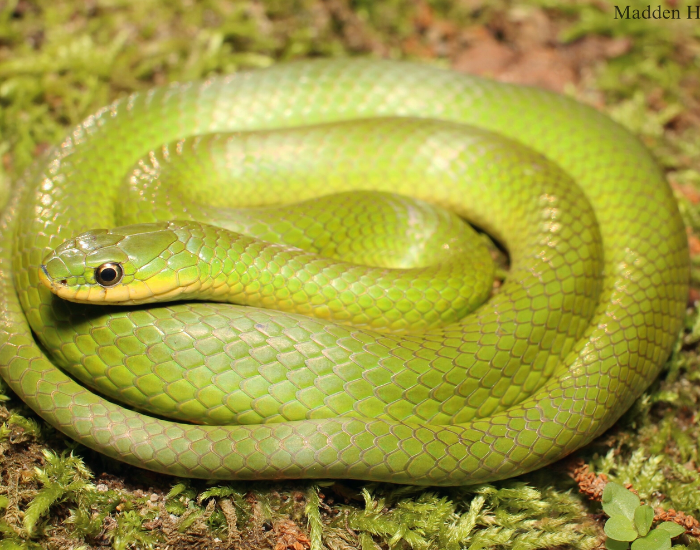
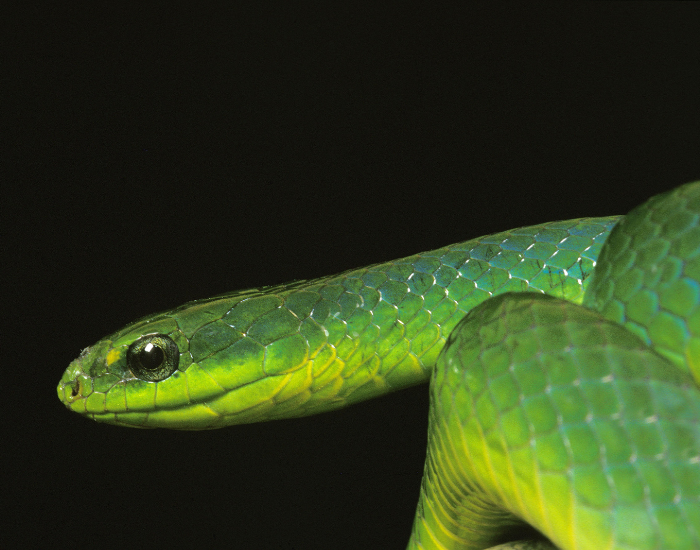
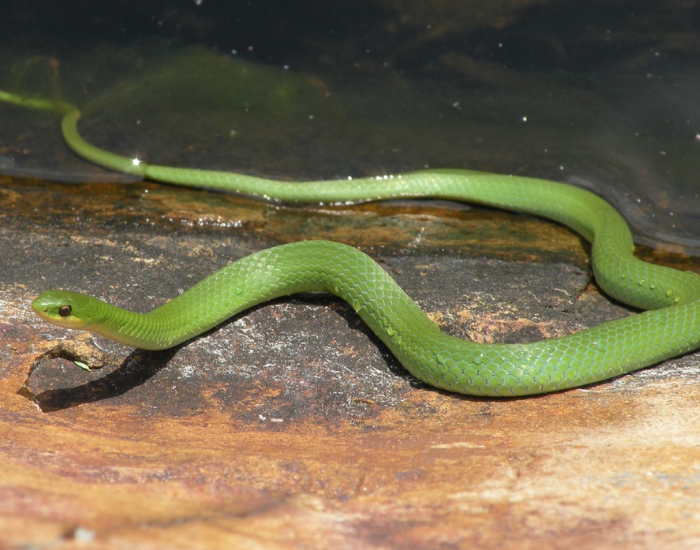
The bright green color of smooth green snakes is not pigment alone. It’s a blend of yellow pigments stacked over a layer of blue-reflecting cells in the skin. When sunlight hits those layers, you get that brilliant, leaf-mimicking bright green. Press a smooth green snake against fresh grass and she essentially disappears.
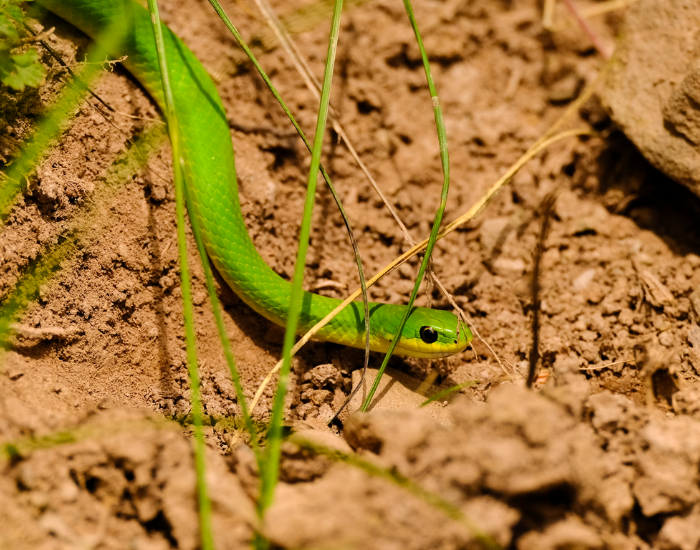
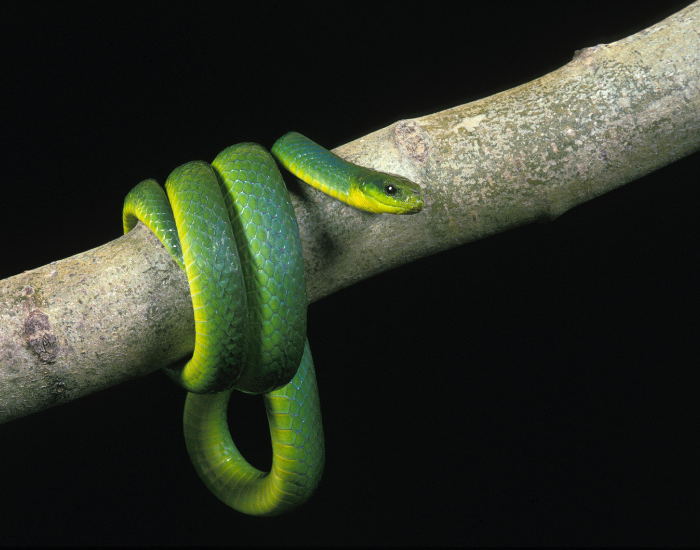
This is camouflage built for life among grass, vegetation, and low shrubs. In the wild, I have watched these snakes go fully invisible at three feet of distance. By contrast, on bare ground or rocks, they stick out like a neon ribbon. Their entire ecology — where they hunt, where they hide, where they breed — pivots on staying glued to green vegetation.

3. There’s a Reason Dead Smooth Green Snakes Turn Blue
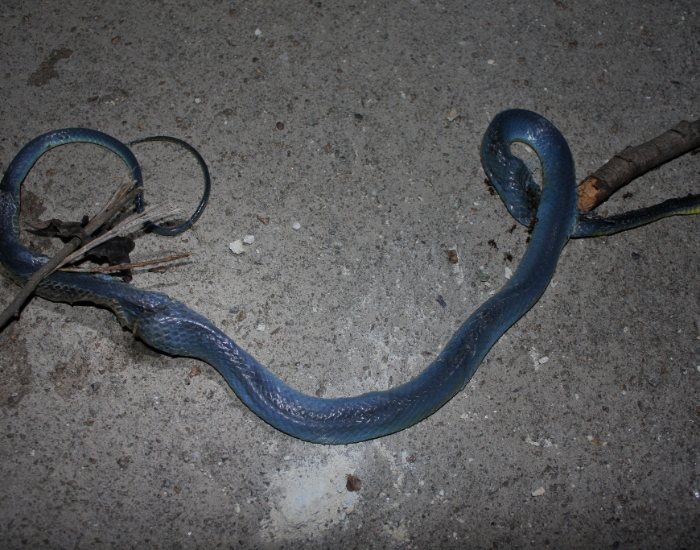
Here is one of my favorite weird facts. After a smooth green snake dies, the yellow pigment in its skin breaks down quickly, leaving only the blue-reflecting layer behind. Within a day or two, the snake turns sky blue. People who find one in this state often think they have discovered a new subspecies; the mythical “blue smooth green snake.”
I had a visitor at the zoo bring me a photo once, convinced he’d found something undescribed. I had to gently break the news. There is no blue morph in the wild population. It’s just chemistry doing its slow, sad work after death.
4. Smooth vs. Rough: A Tale of Two Green Cousins
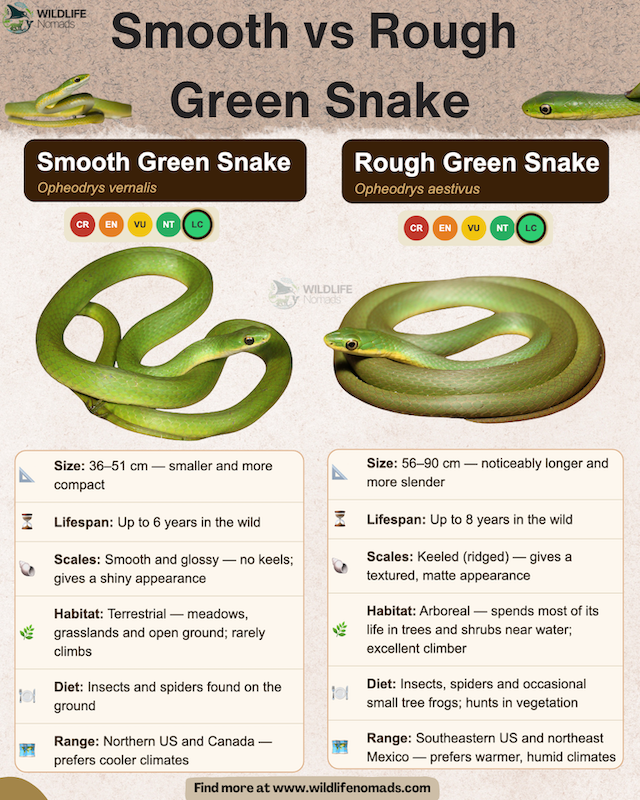
People constantly mix up the smooth green snake with the rough green snake (Opheodrys aestivus). The fastest way to tell them apart is to look at the dorsal scales. The smooth green snake has, well, smooth dorsal scales… flat and glossy. The rough green snake has keeled dorsal scales, with a tiny ridge running down each scale that gives it a matte, textured look.
Beyond the scales, rough green snakes are longer, more arboreal, and live further south. Smooth green snakes are shorter, more terrestrial, and reach much higher latitudes. If you’re in southern Canada or northern New England and you see a slender bright green snake, it’s almost certainly the smooth, not the rough green. If you’re in Virginia or the Carolinas and the snake is up in a bush, you’re probably looking at the rough green snake instead.
5. They’re One of the Few Insect-Eating Snakes in North America
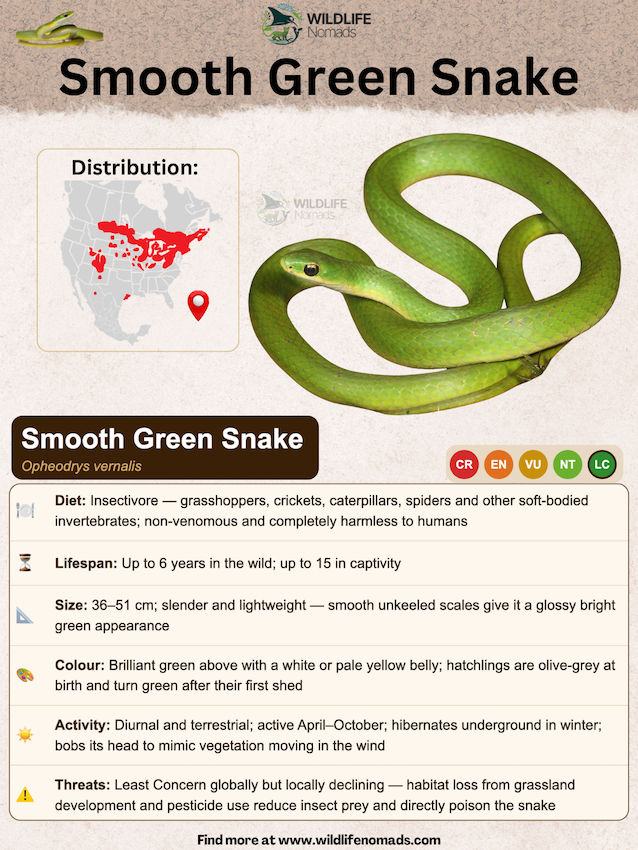
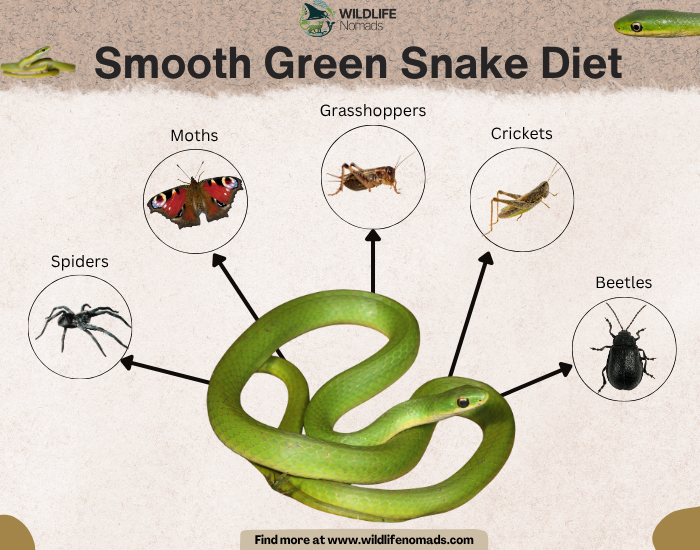
Most snakes hunt vertebrates: mice, voles, frogs, lizards, other snakes. Smooth green snakes break that rule. Their diet is built around insects and spiders. Crickets, grasshoppers, caterpillars, moths, beetle larvae, and the occasional spider make up the bulk of what they eat. Some studies even document them taking small snails and millipedes.
This insectivorous habit is part of why smooth green snakes are so vulnerable to pesticides. When farmers spray, the snakes do not just lose food; they accumulate toxins through every cricket they eat. Few people realize how tightly bug-snake-pesticide loops together in grassland ecosystems. In the zoo, we fed our female crickets and small spiders, and she would track them with those large eyes of hers, then strike from a perfect ambush coil.
6. No, They Are Not Dangerous
Are green snakes dangerous? Are smooth green snakes venomous or poisonous? The honest answer to all three is no. Smooth green snakes are completely nonvenomous, harmless to humans, and almost impossibly gentle. In all my years handling them, first at the zoo, later in field surveys… I have never been bitten. They simply don’t bite people.
If you find a green little snake in your garden or hiking through a meadow, leave it alone and watch it. You are looking at one of the most pacifist reptiles on the continent. Compare that to many other snakes I’ve worked with, and the smooth green snake stands out as a teaching animal; perfect for showing kids that not every snake is a threat.
7. Females Lay Eggs in Some of the Strangest Places
Smooth green snake reproduction is fascinating because females lay eggs in late summer, often in communal nest sites shared with other females and sometimes other species. Common nest sites include rotting vegetation, sawdust piles, compost heaps, and small mammal burrows. The warmth and moisture inside this rotting vegetation incubates the eggs.
Females lay anywhere from three to a dozen eggs per clutch. Because the eggs are partially developed when laid, they hatch in just a few weeks instead of the usual months. I’ve always thought of it as the smooth green snake hedging her bets against the short northern summers. Anecdotal evidence from herpetologists also suggests that some northern females may even retain eggs internally until they are nearly ready to hatch.
8. They Range From Southern Canada to the Rocky Mountain Region
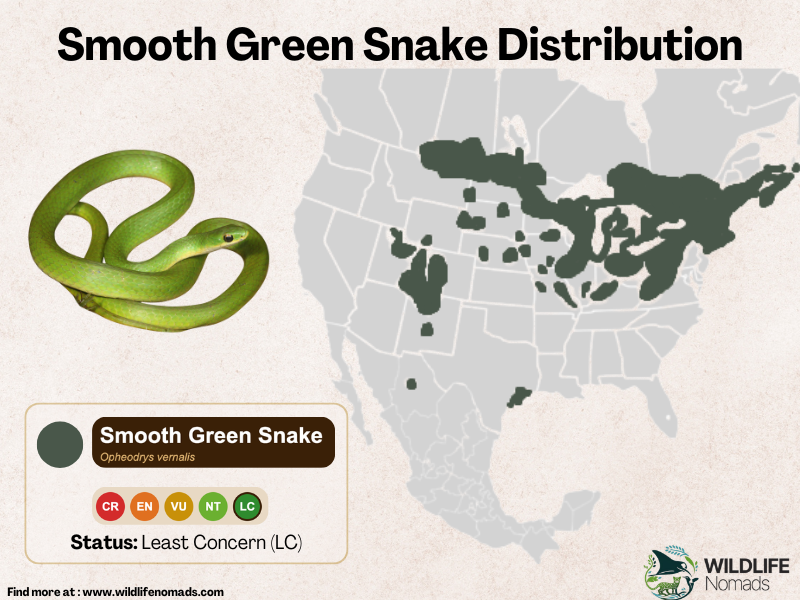
The geographic range of smooth green snakes is wider than most people realize. They occur from southern Canada down through the northeastern United States, west across the Great Lakes, and into pockets of the Rocky Mountain region. There are no native populations in South America or Mexico; this is a temperate, northern snake species.
Within that range, distribution is patchy. The eastern smooth green snake is the most widespread form, while the western smooth green snake hangs on in isolated populations across mountain meadows and grassy areas in states like Wyoming, Colorado, and Utah. New subspecies designations come up in the literature occasionally, but the genus Opheodrys has stayed relatively stable for decades.
9. They Need Very Specific Habitat to Survive
Habitat is everything for this little snake. Smooth green snake habitat consists of moist habitats with dense low vegetation: meadows, wetlands, the edges of pine barrens, open woods, prairie remnants, abandoned pastures, and grassy areas near streams. They’re occasionally found in suburban gardens, but they cannot tolerate heavily managed lawns.
The common thread is structure on the ground. They need tussocks of grass, leaf litter, and rocks to hide under. They need open areas to bask. And they need patches of rotting vegetation for nesting. Strip out any one of those and the local population collapses. This is why population ecology research keeps pointing to habitat loss as the single biggest threat to the species.
10. Their Conservation Status Is Quietly Alarming
Globally, the IUCN lists the smooth green snake as Least Concern, but that label hides a lot of trouble at the regional level. Several U.S. states list them as Species of Greatest Conservation Need because of steep population declines tied to habitat destruction, pesticide use, and the conversion of meadows into row crops or development. The eastern smooth green snake has vanished from large parts of its historic range.
In the field, I have surveyed sites that produced dozens of smooth green snakes in the 1980s and turned up zero in the 2010s. That’s not noise. That’s a real signal. Anyone who cares about natural history needs to take quiet declines like this seriously, because nonvenomous snake species rarely get the conservation funding their flashier cousins do.
11. They Communicate Through Chemical Signals
Like most snakes, smooth green snakes navigate their world through chemical signals. They flick their tongues constantly, picking up scent particles and pressing them against the Jacobson’s organ in the roof of the mouth. This is how they find prey, locate mates during the spring breeding season, and avoid predators.
Females release pheromone trails that males track for considerable distances. In one study, researchers documented males following a single female trail across more than fifty meters of meadow. That kind of chemical sensitivity is part of what makes them so good at finding insects hiding in dense grass — they smell their way to dinner.
12. A Smooth Green Snake’s Lifespan Is Longer Than You’d Think
In the wild, smooth green snakes typically live four to six years. In captivity, with no predators and steady food, they can push past eight. Sexual maturity arrives at about two years for both sexes. The young, sometimes called neonates, look like tiny olive green versions of the adults (almost more brown than bright green) and shift toward true vivid green over their first year.
Average length for an adult sits between fourteen and twenty inches, with females generally larger than males. They are slender to the point of looking fragile, with a thin tail that tapers to almost nothing. That delicate build is part of why predators; hawks, herons, foxes, larger snakes like milk snakes; take such a heavy toll on every generation.
Frequently Asked Questions
No. Smooth green snakes are a completely nonvenomous snake species and are not poisonous either. They cannot harm humans, pets, or livestock. They are insect-eaters with tiny teeth designed to grip soft-bodied prey, not deliver toxins.
Smooth green snakes live in moist habitats across southern Canada, the northeastern and midwestern United States, and isolated populations in the Rocky Mountain region. They prefer meadows, wetlands, pine barrens, open woods, and grassy areas with dense low vegetation.
They eat insects and spiders almost exclusively. Crickets, grasshoppers, caterpillars, moths, beetle larvae, and small spiders make up the bulk of their diet. This insectivorous habit is unusual among North American snakes and makes them especially vulnerable to pesticides.

We Can’t Let the Smooth Green Snake Vanish
Smooth green snakes are one of those species that quietly tell you whether an ecosystem is healthy. When meadows thrive, the snakes thrive. When meadows go, the snakes vanish — and almost no one notices. Walk through your local grassland this spring and look for a flicker of bright green moving through the stems. If you find one, you’ve found proof that the small, fragile, beautiful pieces of nature are still hanging on.
If you enjoyed this, you might also like our pieces on the animals of Mexico, the surprising world of amphibians, or the dazzling blue poison dart frog. Drop a comment below and let me know if you have ever spotted a smooth green snake in the wild — and where. The data, even anecdotal evidence, helps build a clearer picture of where these little emeralds still survive.
References:
Blais, B. R., Smith, B. E., Placyk, J. S., Casper, G. S., & Spellman, G. M. (2021). Phylogeography of the smooth greensnake, Opheodrys vernalis (Squamata: Colubridae): Divergent lineages and variable demographics in a widely distributed yet enigmatic species. Biological Journal of the Linnean Society, 134(4), 940–957. https://doi.org/10.1093/biolinnean/blab124
Gould, J., & McHenry, C. (2024). It’s not easy being green: Comparing typical skin colouration among amphibians with colour abnormalities associated with chromatophore deficits. Ecology and evolution, 14(5), e11438. https://doi.org/10.1002/ece3.11438
Sacerdote-Velat, A. B., & Sekits, T. (2023). First observations of smooth greensnake (Opheodrys vernalis) communal oviposition within an active ant nest of Lasius interjectus. Northeastern Naturalist, 30(4). https://doi.org/10.1656/045.030.0404
Hammerson, G.A. (2016). Opheodrys vernalis. The IUCN Red List of Threatened Species 2016: e.T63842A90083304. https://dx.doi.org/10.2305/IUCN.UK.2016-1.RLTS.T63842A90083304.en.
Pisani, G. R. (2009). Use of an active ant nest as a hibernaculum by small snake species. Transactions of the Kansas Academy of Science (1903-), 112(1/2), 113–118. http://www.jstor.org/stable/40588228
Grobman, A. B. (1992). Metamerism in the snake Opheodrys vernalis, with a description of a new subspecies. Journal of Herpetology, 26(2), 175–186. https://www.jstor.org/stable/1564859