I was maybe ten years old the first time I saw a whooping crane. My family had driven down to Florida, and somewhere along a marshy stretch of coast, this enormous white bird materialized like something from another era. Long legs, long neck, black wingtips slicing against the sky. I remember thinking it looked prehistoric, too tall, too striking, too deliberate in its movements to be real. That single sighting rewired something in me. Decades later, as a field biologist who has tracked herons, storks, and even the bizarre shoebill in Africa, whooping cranes still hold a singular place in my mind. These cranes represent what happens when an endangered bird teeters on the edge, and somehow pulls back.
Here are 12 things every wildlife enthusiast should know about whooping cranes.
1. Whooping Cranes Are the Tallest Birds in North America
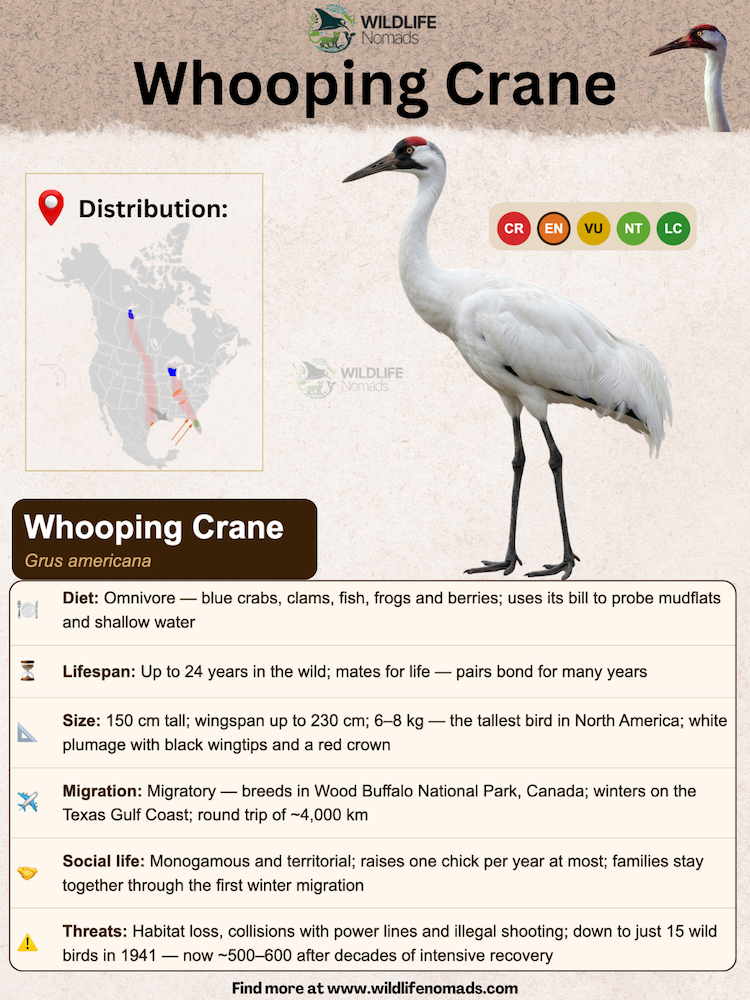
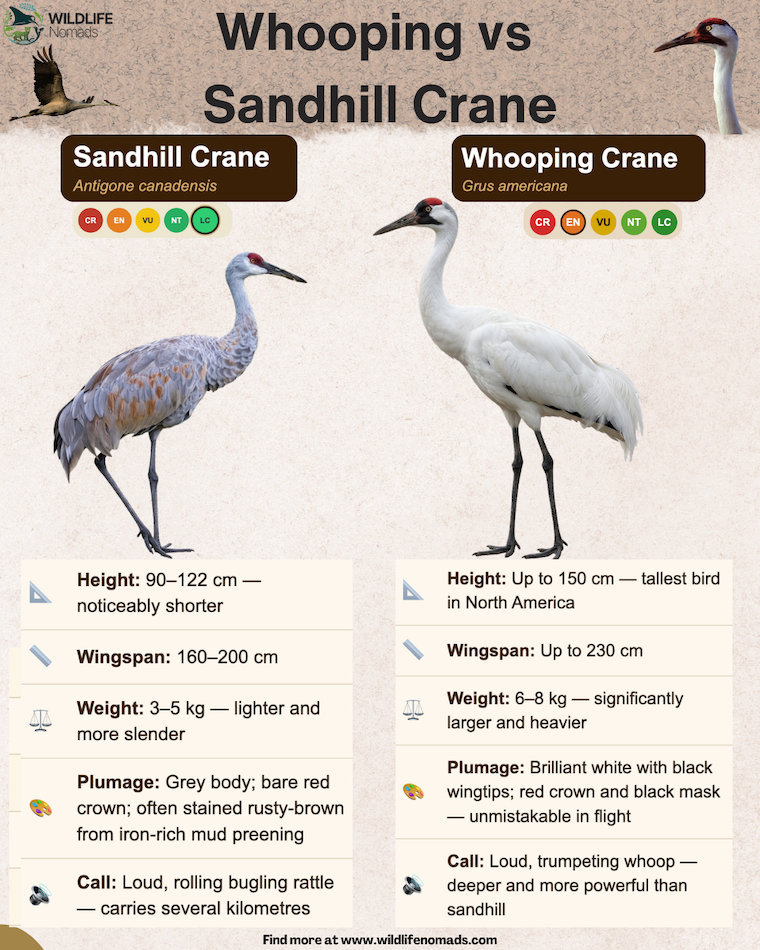
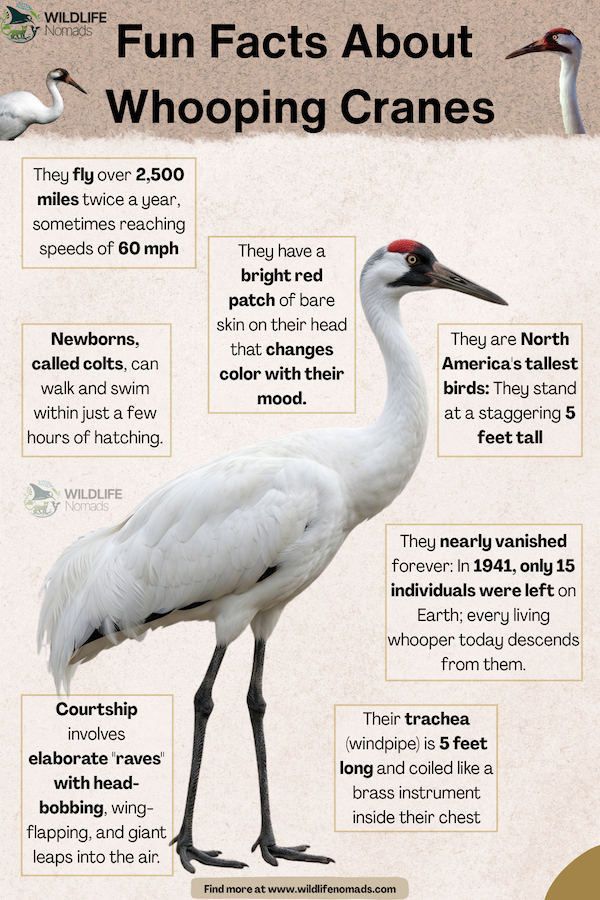
Standing up to five feet tall with a wingspan reaching seven feet fully extended, whooping cranes tower over every other crane on the continent. As the tallest bird in North America, they dwarf their close relatives, sandhill cranes max out around four feet. That height difference is immediately obvious in the field. Adult whooping cranes carry themselves with a slow, regal posture, their long necks held upright as they wade through coastal marshes. These birds belong to the Gruiformes family, an ancient order that also includes rails, coots, and 14 other crane forms worldwide. The Gruiformes family has deep roots, with fossil records stretching back tens of millions of years.
Their scientific name, Grus americana, translates roughly to “American crane bird”, a fitting title for birds that have become one of North America’s most powerful wildlife conservation symbols. Grus americana is one of just two crane types native to this continent, the other being the far more common sandhill crane. Whooping cranes can weigh up to 16 pounds, making them among the heaviest flying birds on the continent as well.
2. They Nearly Went Extinct… Only 21 Birds Survived
This is the statistic that stops people cold. By 1941, the total population of whooping cranes had dropped to just 21 birds in the wild. Two more survived in captivity. That’s it, the entire population of whooping cranes reduced to a number that could fit in a single flock. Decades of illegal hunting, egg collection, and habitat destruction across North America had pushed these endangered birds to the brink of extinction.
The original range of whooping cranes once stretched from the Gulf Coast to the Arctic, from Utah to New Jersey. These birds bred across the northern prairies and wintered in salt flats and coastal wetlands from Texas to southwestern Louisiana. By the early twentieth century, that range had collapsed. The last non-migratory Louisiana population disappeared entirely by 1950, when the final wild bird was captured and relocated. Every Grus americana alive today descends from that tiny remnant flock.
3. Their Comeback Is One of Conservation’s Greatest Stories
From 21 wild birds to over 800 today. That trajectory sounds miraculous, but it required decades of painstaking cooperative effort involving the U.S. Fish and Wildlife Service, Canadian wildlife agencies, the International Crane Foundation, and dozens of partners. Whooping cranes remain listed as an endangered species under the Endangered Species Act, but the trend gives real reason for hope.
The primary migratory flock — which breeds in and around Wood Buffalo National Park in Canada’s Northwest Territories and winters at Aransas National Wildlife Refuge on the Texas coast — reached a record 557 whooping cranes during the 2024–2025 wintering survey. That’s the first time this population of whooping cranes exceeded 550. In addition, three reintroduced populations now exist: an eastern migratory population in Wisconsin, a non-migratory flock in Louisiana, and a small non-migratory flock that persists in Florida. Texas Parks and Wildlife has called the recovery “one of the most intensive wildlife conservation programs ever undertaken.” Grus americana has become a flagship for what sustained, multi-agency wildlife conservation can achieve.
4. They Migrate 2,500 Miles Twice a Year
Every fall, whooping cranes begin one of the longest migrations of any North American bird. They leave Wood Buffalo National Park — a vast wilderness straddling Alberta and the Northwest Territories — and fly roughly 2,500 miles south to Aransas National Wildlife Refuge along the Texas coast. In spring migration, whooping cranes reverse the journey, heading north again as wetlands thaw.
The route cuts through the Great Plains, and Nebraska’s Platte River serves as one of the most critical stopover sites. Whooping cranes rest and refuel along the central Platte, sometimes spending days or weeks foraging in wet meadows and agricultural fields before continuing. Fall migration typically begins in September, with most birds arriving on their wintering grounds by November. Spring migration kicks off in March and April, with adult birds reaching their breeding grounds by late April or May.
5. Adults Are Stunning White — But Chicks Are Cinnamon Brown
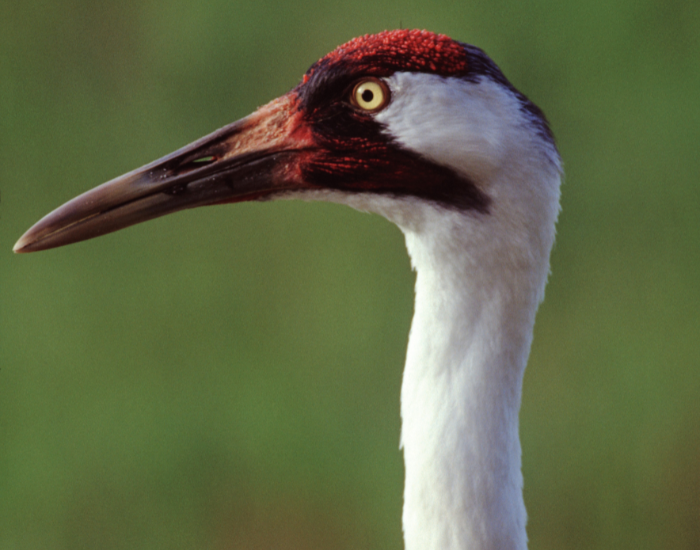
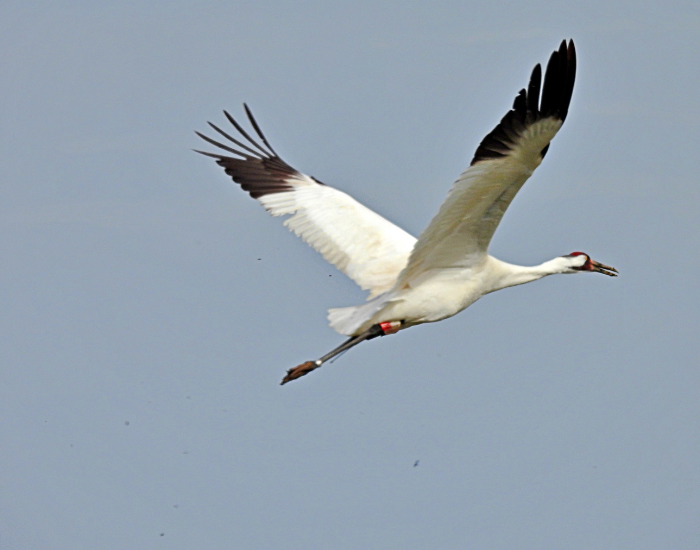
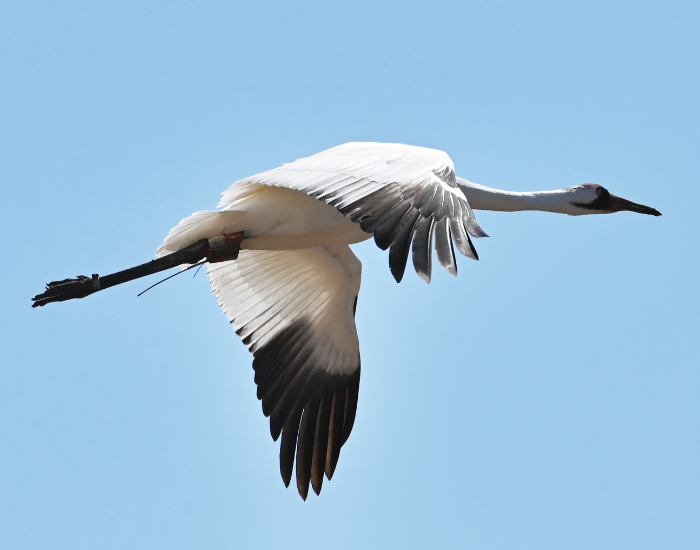
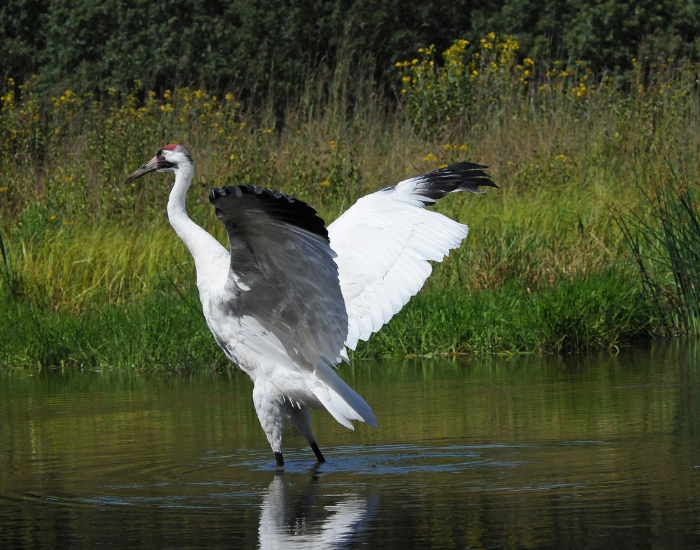
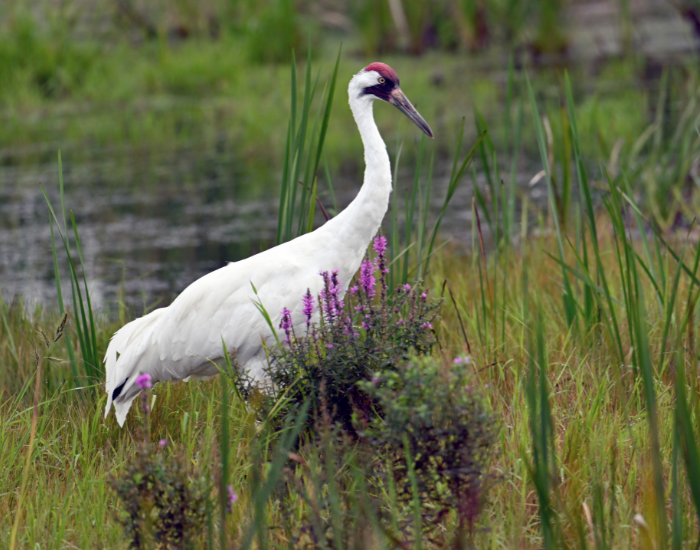
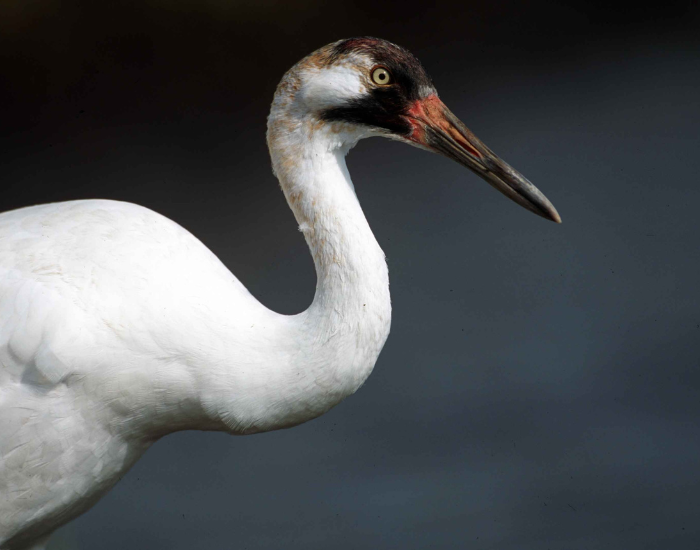
Adult whooping cranes are almost entirely white, with jet-black wingtips visible only in flight and a bold red crown of bare skin on their head. The contrast is dramatic. A dark olive gray beak, pale yellow eyes, and long dark legs complete the look. Their black primary feathers and white feathers across the wing create a striking pattern when these birds soar with necks fully extended. The dark primary feathers are only visible when the wing feathers spread during flight, at rest, whooping cranes appear pure white.
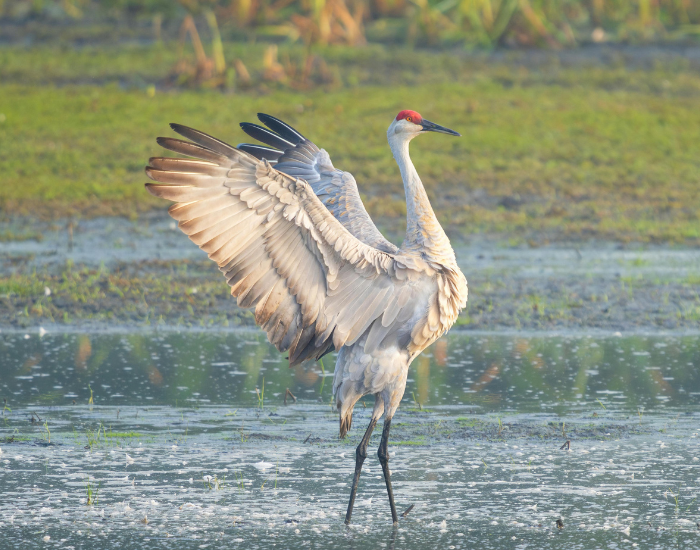
Young whooping cranes, however, look completely different. Juvenile birds hatch covered in rusty, cinnamon-brown down that gradually lightens over their first year. By the following spring, most of the brown has been replaced by white, though patches of gray black juvenile plumage can linger into their second year. This color shift often confuses birders who expect every crane to be white. Knowing what young whooping cranes look like helps prevent misidentification — sandhill cranes, which are gray overall, are frequently mistaken for immature birds and vice versa.
6. They Eat Everything from Blue Crabs to Frogs
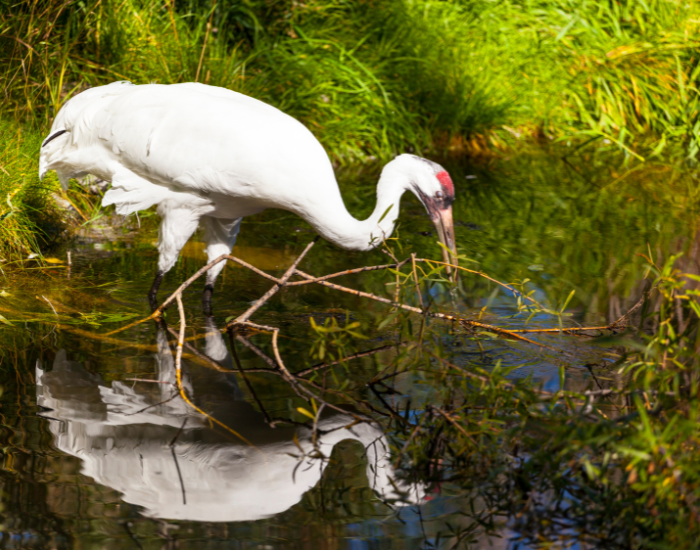
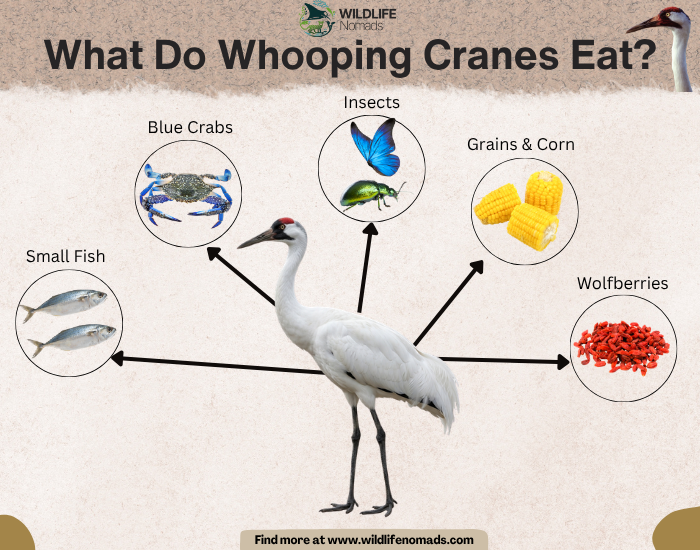
Whooping cranes are opportunistic omnivores. On their wintering grounds along the Texas coast and Gulf Coast, blue crabs are an important food source for these cranes. They also forage for clams, snails, and wolfberries in the brackish marshes surrounding Aransas National Wildlife Refuge. During migration, the menu shifts to small amphibians like frogs, crayfish, small birds, beetles and other insects, and waste grain in agricultural fields.
On their breeding grounds in Canada, whooping cranes hunt in wetlands for minnows, insects, and aquatic invertebrates. These birds have been documented eating snakes, small rodents, and even the eggs of other birds. This dietary flexibility has likely helped whooping cranes survive bottlenecks that would have doomed a more specialized feeder. For any field biologist, watching a five-foot-tall wild bird stalk through a marsh with the patience and precision of a heron is a reminder that convergent strategies show up everywhere in nature, different lineages arriving at the same solutions.
7. Pair Bonds Last a Lifetime
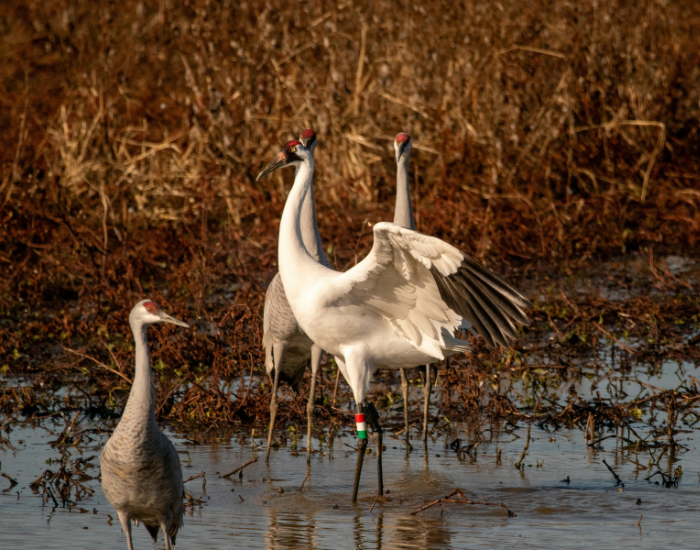
Whooping cranes form pair bonds that can last 20 years or more. Mates perform elaborate unison calls, synchronized duets where both birds throw their heads back, stretch their necks skyward, and trumpet in coordinated bursts. Their trachea actually coils into the sternum, amplifying the sound so it carries over a mile across open wetlands. These calls reinforce the bond, establish territory, and warn other whooping cranes to keep their distance.
Whooping crane pairs typically return to the same territory year after year. If one mate dies, the surviving bird will eventually seek a new partner, but the process takes time. Strong pair bonds correlate with higher reproductive success — experienced whooping crane pairs that have bred together for multiple seasons tend to raise more chicks than newly formed pairs.
8. They Usually Lay Two Eggs But Raise Only One Chick
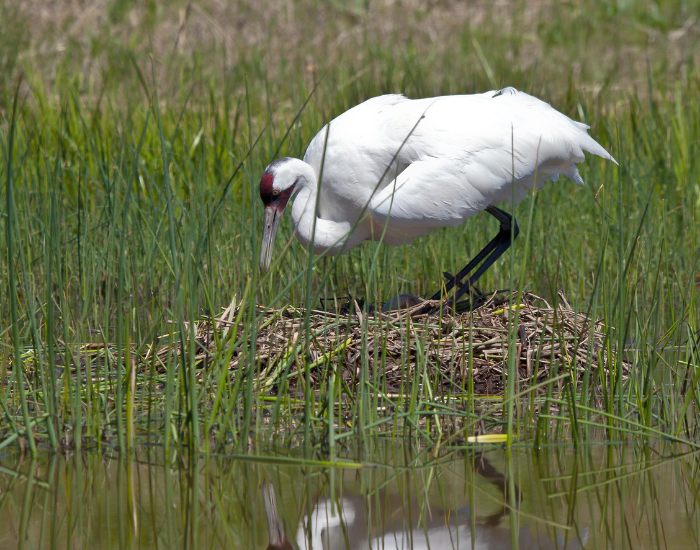
Female whooping cranes typically lay two eggs per clutch, occasionally three eggs in rare cases. Each pair builds a large mound of vegetation in marshy, isolated wetlands — the parents brood the eggs for roughly 29 to 31 days. Both whooping crane parents take turns incubating.
Here’s the hard truth: despite laying two eggs, most whooping crane pairs fledge only one chick. The older, stronger sibling often outcompetes the younger one for food, and in many cases the second hatchling doesn’t survive. Researchers at the Patuxent Wildlife Research Center historically collected the “extra” egg from wild pairs to bolster captive breeding programs — a strategy that boosted the captive breeding population without reducing productivity, since most birds would only raise one chick regardless.
Two chicks surviving to fledge is rare but does happen, particularly in years with abundant food. When it does, both young birds stay with their parents through their first migration and first winter, learning everything they need to survive on their own.
9. Ultralight Aircraft Once Taught Cranes to Migrate
This might be the most audacious experiment in wildlife conservation history. Between 2001 and 2015, a program called Operation Migration used ultralight aircraft to teach captive-reared young whooping cranes a migration route from Wisconsin to Florida. Pilots in white suits — designed so the birds wouldn’t imprint on recognizable human features — led whooping cranes on their first migration south. The birds were exposed to ultralight aircraft engine sounds while still in the egg, so by the time they hatched, the noise was familiar.
The program successfully guided over 200 juvenile whooping cranes on their first migration. The idea was to establish a self-sustaining eastern migratory population as a safety net for the main Aransas–Wood Buffalo migratory flock. However, the ultralight-reared birds struggled to reproduce in the wild. Researchers suspected that the intensive human contact, even with costumed handlers, disrupted normal social development.
The eastern migratory population today numbers around 80 whooping cranes. It’s growing slowly, but each chick hatched in that flock represents real progress toward a self sustaining population.
10. Their Breeding Grounds Weren’t Discovered Until 1954
For decades, scientists knew whooping cranes wintered in Texas but had no idea where these birds bred. The breeding grounds of the last migratory flock remained a mystery until 1954, when a forest fire crew in Wood Buffalo National Park, a massive wilderness area spanning northeastern Alberta and the southern Northwest Territories, stumbled upon whooping cranes with chicks. The discovery was front-page news.
Wood Buffalo National Park covers nearly 17,300 square miles of boreal forest, marshes, and salt flats. Whooping cranes breed in an extremely remote section of the park, far from roads or settlements. That isolation likely saved them. While habitat destruction wiped out wild populations across the prairies, this one pocket of birds persisted precisely because nobody could reach them.
11. Louisiana Is Building a New Non-Migratory Flock
In 2011, the Louisiana Department of Wildlife and Fisheries launched a bold reintroduction project. The goal: establish a self sustaining non-migratory population of whooping cranes in southwestern Louisiana, where a resident flock historically lived before it was wiped out by the 1950s.
The Louisiana population has grown steadily through annual releases of captive-bred juvenile whooping cranes into White Lake Wetlands Conservation Area. As of early 2026, this non migratory flock numbers over 75 cranes. Nesting has occurred; whooping crane pairs have laid eggs and hatched chicks without human intervention. However, embryo mortality remains a challenge, and the non migratory population hasn’t yet hit the threshold of 120 individuals and 30 productive nesting pairs needed to be considered a self sustaining population.
12. The Biggest Threats Today Aren’t What You’d Expect
Illegal hunting still kills whooping cranes, several birds have been shot in recent years along migration corridors, and each loss hits a population this small disproportionately hard. But the more persistent threats are subtler. Power lines have killed at least 44 documented whooping cranes since 1956. Habitat loss continues to erode wetlands along the Texas coast and Gulf Coast. Climate change is altering precipitation patterns across breeding grounds and wintering grounds alike.
On the wintering grounds at Aransas National Wildlife Refuge, freshwater inflows from rivers are critical for maintaining the brackish marshes where these birds forage. Drought and upstream water diversions reduce those inflows, crashing blue crab populations and forcing the birds to spend more energy searching for food. Sea-level rise threatens to reshape the entire coastal ecosystem these endangered birds depend on.
Frequently Asked Questions
Whooping cranes get their name from their loud, resonant call — a trumpeting “whoop” that carries over a mile across open wetlands. Their trachea coils into the sternum, acting as a natural amplifier. The sound is unmistakable and completely unlike any other North American bird. Grus americana produces these calls year-round, but they intensify during the breeding season and during migration.
As of the 2024–2025 season, approximately 800+ whooping cranes exist across all wild populations and captivity combined. The main Aransas–Wood Buffalo migratory flock hit a record 557 birds at Aransas National Wildlife Refuge. Three reintroduced populations — the eastern migratory population in Wisconsin, the Louisiana population, and a remnant Florida group — account for the rest of the wild birds.
Size and color are the quickest tells. Whooping cranes stand up to five feet tall — the tallest bird in North America — with white plumage and black wingtips. Sandhill cranes are smaller (three to four feet), gray overall, with darker wing feathers and far more abundant — over 600,000 of these birds exist in North America compared to roughly 800 wild whooping cranes. Both birds share a red crown, but their body color makes them easy to distinguish in the field.
Why Whooping Cranes Still Matter
Every wild bird that claws back from a population of 21 rewrites what we think is possible. Whooping cranes remind us that wildlife conservation works — but only when the effort is sustained across decades, across borders, and across agencies willing to adapt when strategies fail. The shift from ultralight aircraft to parent-rearing, the pivot from Florida to Louisiana for reintroduction, the ongoing protection of stopover habitat along Nebraska’s Platte River — none of this happened by accident.
If you’ve ever watched large wading birds work a shoreline, you already understand part of the whooping crane’s appeal. These birds share that patient, deliberate hunting style with herons and storks — convergent evolution shaping similar body plans for similar ecological niches. If you’re curious about other tall, striking waterfowl and wading birds, those guides are a great place to go deeper.
References:
Butler, M. J., Harris, G., & Strobel, B. N. (2013). Influence of whooping crane population dynamics on its recovery and management. Biological Conservation, 162, 89–99. https://doi.org/10.1016/j.biocon.2013.04.003
Cannon, J. R. (1996). Whooping crane recovery: A case study in public and private cooperation in the conservation of endangered species. Conservation Biology, 10(3), 813–821. https://doi.org/10.1046/j.1523-1739.1996.10030813.x
Thompson, H. L., Caven, A. J., Schmidt, S. M., Sicich, B. R. F., Sarrol, A. J., Szyszkoski, E. K., & Gordon, N. M. (2025). Whooping Crane Chick Survival in the Reintroduced Eastern Migratory Population. Ecology and evolution, 15(4), e71284. https://doi.org/10.1002/ece3.71284
Gil-Weir, K. C., Grant, W. E., Slack, R. D., Wang, H. H., & Fujiwara, M. (2012). Demography and population trends of whooping cranes. Journal of Field Ornithology, 83(1), 1–10. https://doi.org/10.1111/j.1557-9263.2011.00349.x