
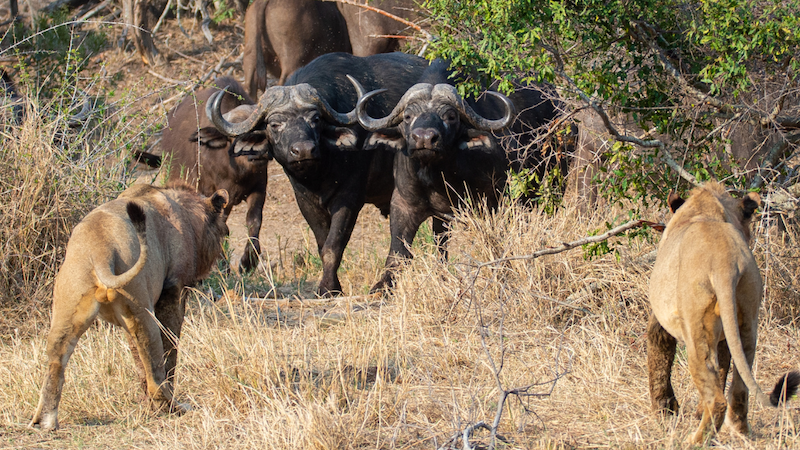
I still remember the first time I felt the ground shake beneath my feet. It wasn’t during a Masai Mara Safari, I was just a kid staring through reinforced glass at a zoo. However, even behind those barriers, the African buffalo looked less like a cow and more like a sentient tank. There was a look in their eyes that said both “leave me alone” and “I dare you to try.”
That childhood fascination transformed into bone-deep respect. I’ve watched lions size up herds of these massive animals, and the tactical precision they display is nothing short of military grade. They don’t just run when predators approach. Instead, they regroup, form walls of horn and muscle, and fight back with ruthless efficiency.
In this article, we’re exploring the muddy, gritty world of the African buffalo (Syncerus caffer). Whether you call them Cape buffalo, savannah buffalo, or by their notorious nickname “Black Death,” these animals are true heavyweight champions of the African ecosystem.
1. Taxonomy and Evolution: Ancient Lineage of a Modern Giant
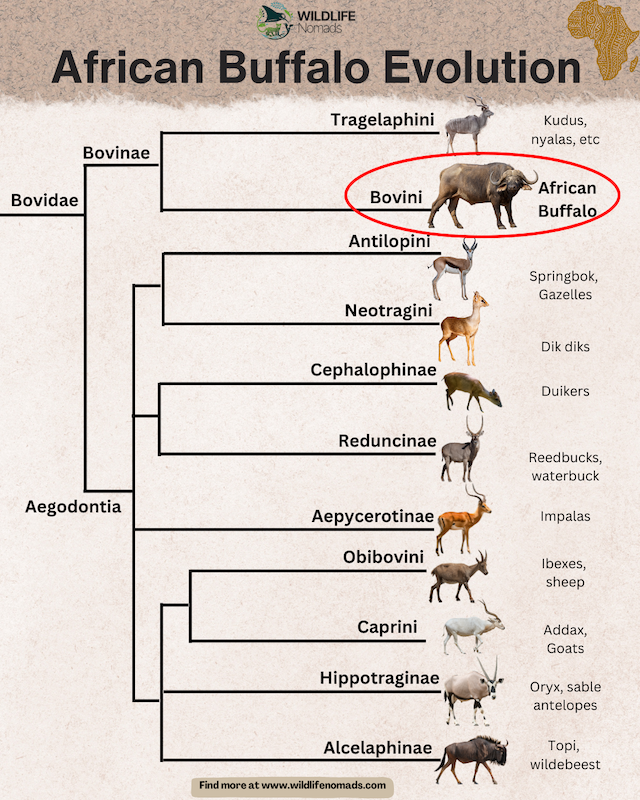
The African buffalo belongs to the family Bovidae, which includes all cattle, Aoudads, and antelopes like the springbok. However, their evolutionary journey sets them apart from domestic cattle entirely. Scientists classify them under the genus Syncerus, with Syncerus caffer being the primary species found across Africa.
Fossil evidence suggests that buffalo ancestors appeared in Africa approximately 5 million years ago. During the Pleistocene epoch, these animals evolved to become the robust herbivores we recognize today. Their closest living relative is the Asian water buffalo, though the two species diverged millions of years ago and display significant differences in behavior and physiology.
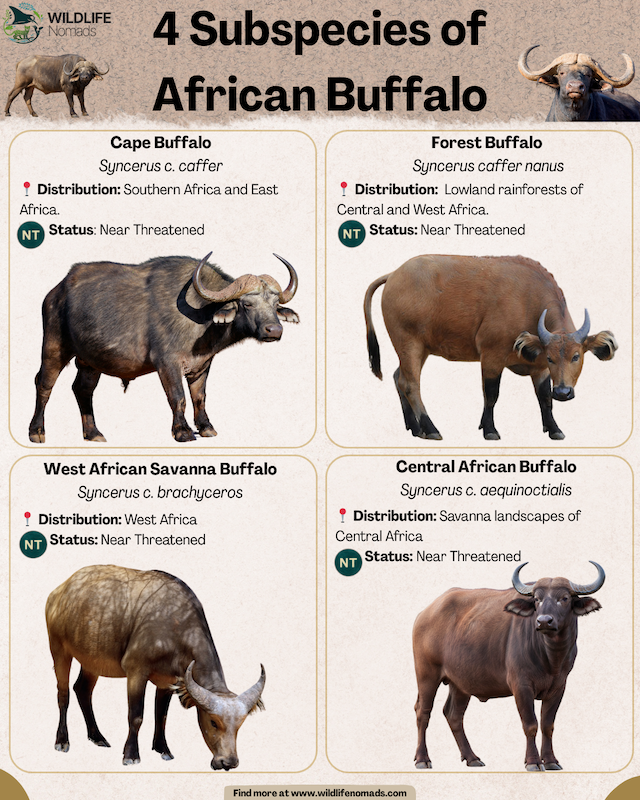
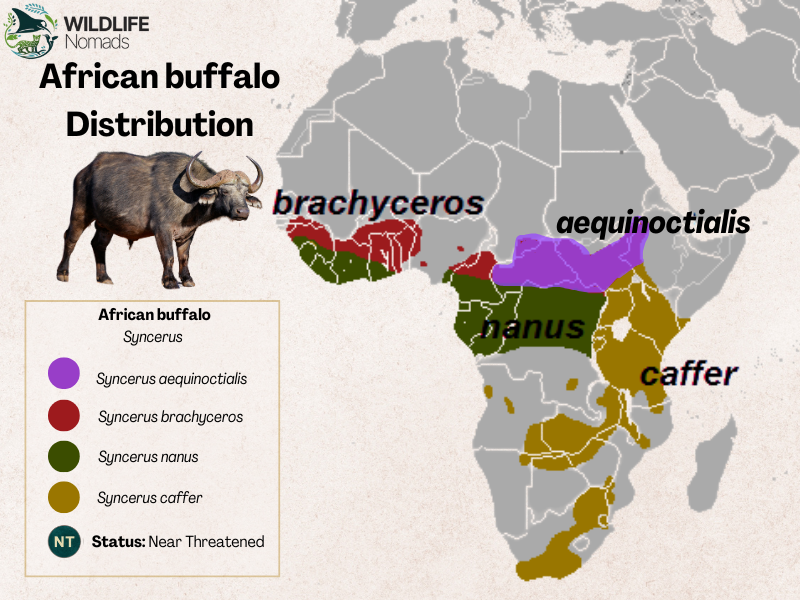
The species Syncerus caffer includes four subspecies adapted to different habitats as shown on the infographic below. The Cape buffalo (Syncerus caffer caffer) dominates southern and eastern Africa. Meanwhile, the forest buffalo (Syncerus caffer nanus) inhabits the dense forests of central Africa and west Africa. Some researchers also recognize the West African savanna buffalo and the central African buffalo as distinct populations, though debate continues within the scientific community about their exact classification.
This evolutionary adaptation allowed African buffalo to colonize diverse habitats from coastal savannas to lowland rainforests. They basically became one of the most successful large mammals on the continent alongside hippopotamuses.
2. Size and Physical Characteristics: Built Like Battle Tanks
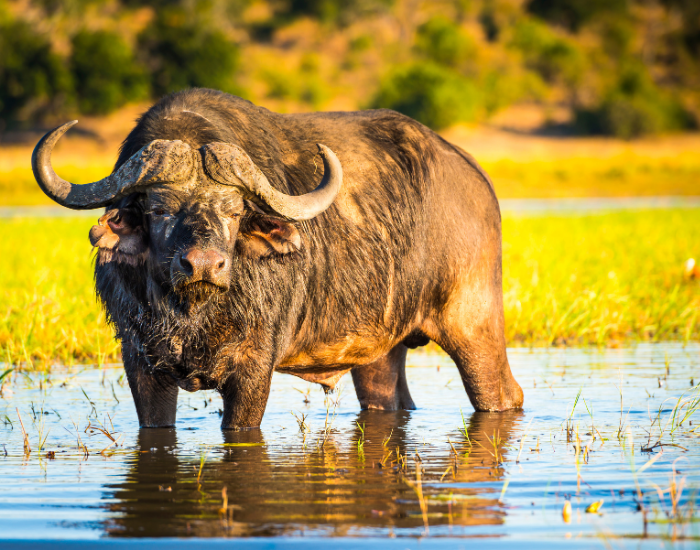
When you encounter an adult male African buffalo in the wild, just looking at the size commands immediate respect. Cape buffalo bulls can weigh up to 900 kg (nearly 2,000 pounds), making them one of Africa’s largest land animals. In comparison, adult females typically weigh between 500-700 kg, though they’re no less formidable when protecting young calves.
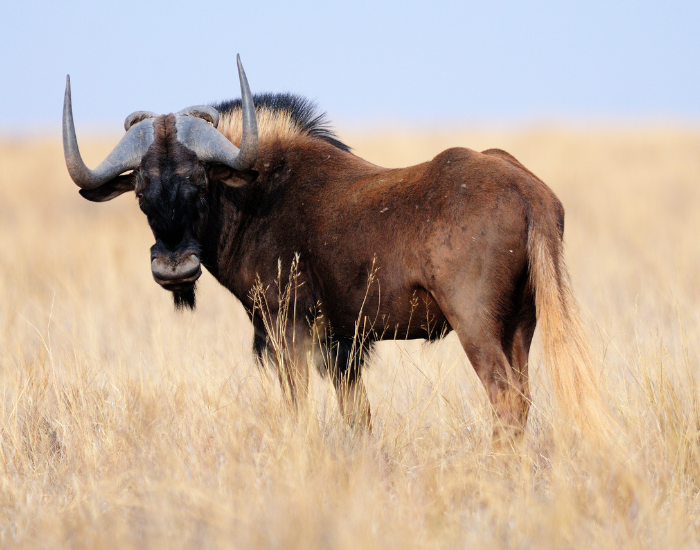
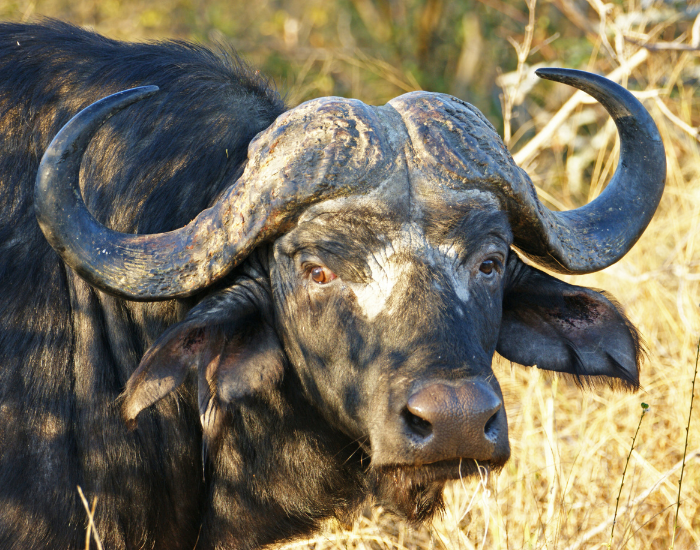
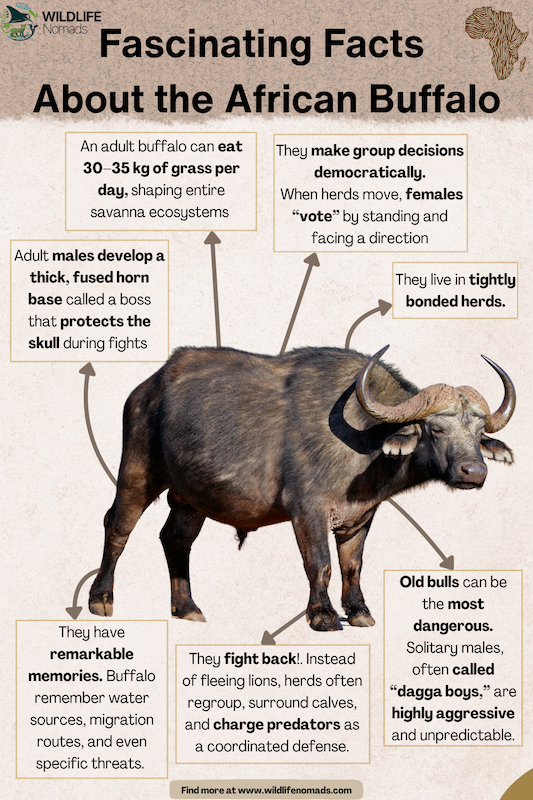
The most distinctive feature is the “boss”, a thick, fused section of horn that forms a protective shield across the forehead. This boss can be up to 5 inches thick in large adult males. The horns themselves curve downward and then up, creating deadly weapons that sweep outward from the head. Male African buffalo use these horns during the breeding season when they compete for dominance.
Forest buffalo present a stark contrast. These smaller subspecies weigh only 250-320 kg and display a reddish brown coloration instead of the dark brown or black coat typical of Cape buffalo. Their horns are smaller and swept back, adapting them perfectly for movement through dense cover in the rainforests.
The skin of an African buffalo is remarkably thick, up to 2 inches in some areas, althoughbit typically ranges from 12mm to 18mm (about 0.5 to 0.7 inches). This provides excellent protection against predators and thorny vegetation. Adult bulls often appear darker because they wallow in mud during the wet season, which cakes onto their hides and provides additional protection from insects and sun.
3. Habitat and Range: Masters of Sub Saharan Africa
African buffalo once roamed across nearly all of sub Saharan Africa. Today, their range has contracted significantly, but they still inhabit an impressive variety of habitats. You’ll find them in the open grasslands of east Africa, the floodplains of southern Africa, and the dense forests of central Africa.
In South Africa, Kruger National Park hosts one of the largest buffalo populations on the continent. The Serengeti-Mara ecosystem supports massive herds that migrate seasonally in search of food sources. Meanwhile, in the Democratic Republic of Congo and Burkina Faso, smaller populations of forest buffalo navigate the challenging terrain of lowland rainforests.
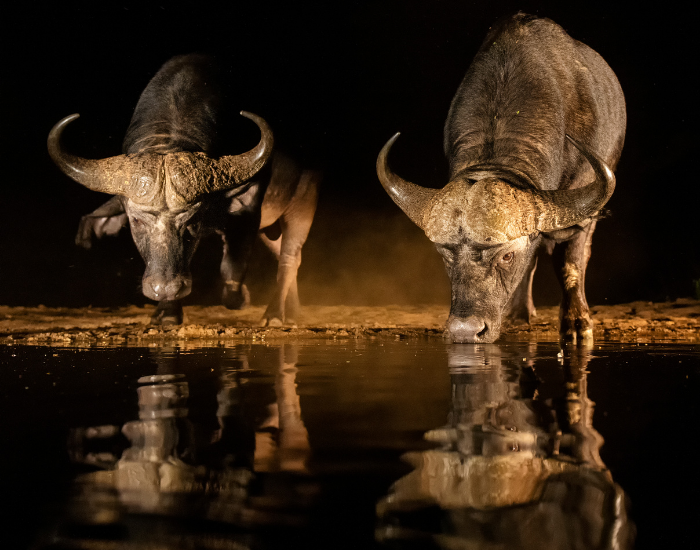
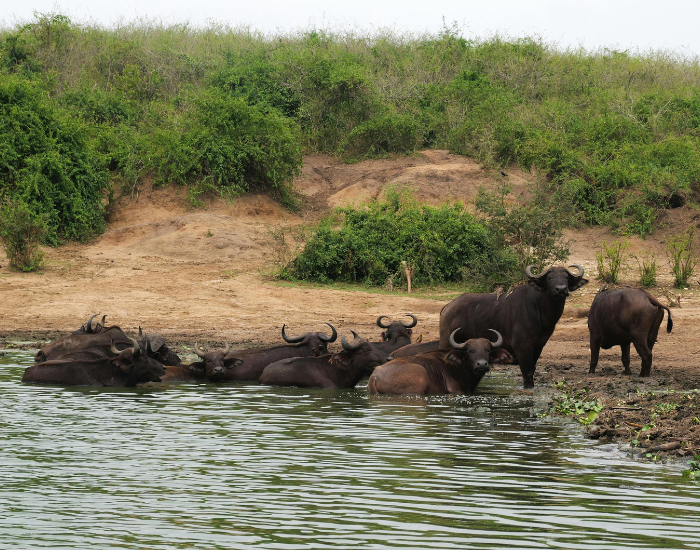
These animals require access to water daily, which explains their presence in areas with permanent water sources. During the dry season, large herds often concentrate near rivers and waterholes. Conversely, in the wet season, they disperse across broader territories, taking advantage of temporary pools and lush vegetation.
4. Social Structure: The Democracy of Large Herds
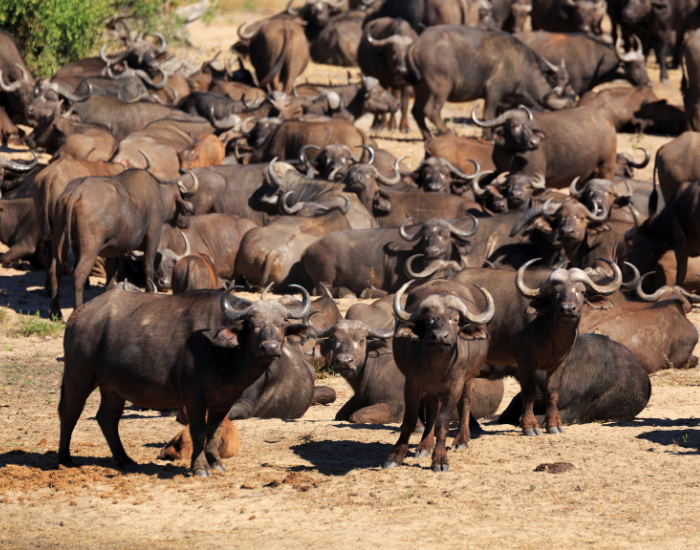
African buffalo live in complex social groups that can range from small bachelor groups to large herds exceeding 500 animals. This social structure provides protection against predators and increases their chances of survival in the harsh African landscape.
Adult females form the core of these large herds, creating stable family units that persist for years. Younger males remain with these mixed groups until they reach sexual maturity around age 4-5. After that point, males leave to join bachelor groups or become solitary animals, often called “dagga boys” by local guides.
Bachelor herds consist of older bulls who no longer compete for breeding rights. These groups typically contain 3-12 individuals. Interestingly, solitary animals, usually very old bulls—are considered the most dangerous animals you can encounter in the bush. Without the protection of a herd, they’re extremely wary and aggressive toward potential threats.
Research has revealed fascinating decision-making processes within buffalo societies. When it’s time to move to new feeding areas, adult females participate in what scientists call “voting behavior.” They stand, face a particular direction, and then lie back down. The herd moves in whichever direction receives the most “votes” from these related females. This demonstrates a level of social sophistication rarely seen in large mammals.
5. The Ultimate Bulk Grazers
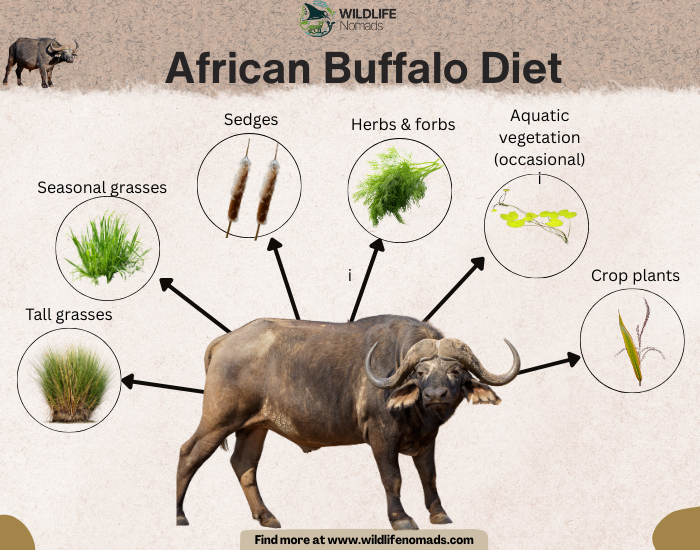
African buffalo are classified as bulk grazers, meaning they consume large quantities of relatively low-quality grass. An adult buffalo can eat 30-35 kg of vegetation daily. This massive consumption has profound effects on the African ecosystem, creating opportunities for other species.
They prefer tall grasses that other herbivores like zebras and wildebeest avoid. By cropping these coarse grasses, buffalo open up the landscape for smaller species and promote new growth. During the rainy season when grass is abundant, herds spread out across vast areas. However, in the dry season, they concentrate near remaining food sources and water.
The relationship between buffalo and birds provides an excellent example of symbiosis in nature. Oxpeckers and cattle egrets constantly accompany large groups of buffalo, picking ticks and parasites from their thick hides. This cleaning service benefits both species, birds get easy meals while buffalo receive pest control.
6. Why Lions Respect the Herd
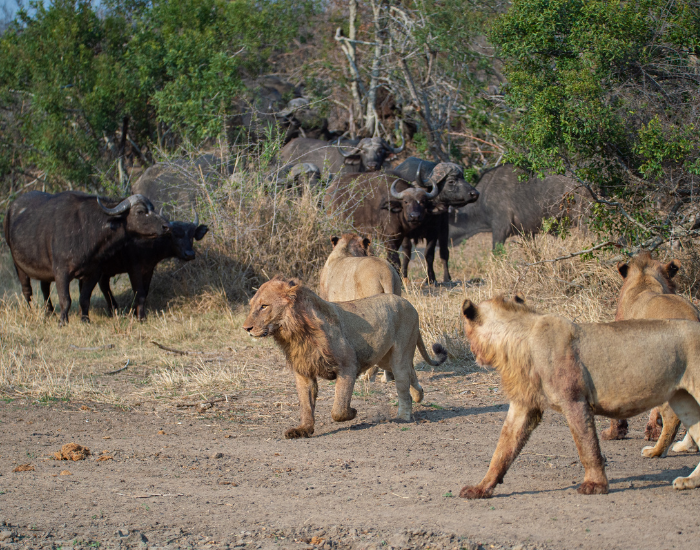
Despite their size, African buffalo face significant predation pressure, primarily from lions. However, these dangerous animals don’t go down easily. It typically requires an entire pride of lions to successfully bring down a healthy adult buffalo. Even then, the hunt carries substantial risk for the predators.
Lions, hyenas, or any other apex predators like leopards, and even large crocodiles target young animals separated from the protection of their mothers. When lions approach, the herd doesn’t simply flee. Instead, they form protective circles with young calves in the center. Adult males position themselves at the front, presenting a wall of horns and massive bulk. This coordinated defense often forces predators to abandon their hunt. Single calves are most vulnerable to predation
The moniker “Black Death” comes from big game hunters who considered buffalo among the most dangerous animals to pursue. Unlike many species that flee when wounded, buffalo are known to circle back and ambush their pursuers. This behavior has resulted in more hunter fatalities than almost any other African animal, earning them a place in the notorious “Big Five.”
7. Raising the Next Generation
The breeding season varies by region, but most buffalo populations experience peak births during the wet season when food is abundant. Males compete intensely during this period, engaging in dramatic displays of strength and horn-clashing contests with other large males.
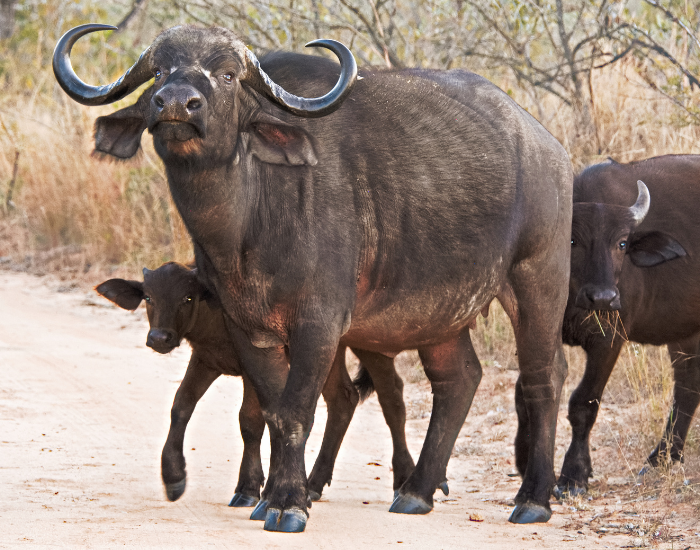
After a gestation period of approximately 11 months, adult females give birth to a single calf. The newborn weighs around 40 kg and can stand within minutes of birth. This early mobility is crucial for survival in a landscape filled with predators.
Young calves stay close to their mothers for the first few months of life. The bond between cow and calf is remarkably strong, lasting well beyond weaning at 6-8 months. Female offspring often remain with their mother’s herd throughout their lives, creating multi-generational family groups within the larger population.
Males reach sexual maturity around age 5, but they don’t typically breed until they’re 8-10 years old. This delay occurs because older, more dominant bulls monopolize breeding access to adult females. Younger males must either wait their turn or challenge established bulls, a risky proposition that can result in serious injuries.
8. A Major Threat to Future Populations
Currently, the African buffalo population is classified as “Near Threatened” by the IUCN Red List. While they remain relatively abundant in protected areas, several serious threats challenge their long-term survival across Africa.
Habitat loss represents the primary concern. As human populations expand throughout Africa, traditional buffalo habitats shrink. Agricultural development, infrastructure projects, and human settlements increasingly fragment the vast territories these animals require. This habitat fragmentation isolates populations, preventing genetic exchange and increasing the risk of local extinctions.
Disease poses another major threat. Bovine tuberculosis, transmitted from domestic cattle to wild buffalo, has devastated some populations. The disease spreads rapidly through large herds, causing chronic wasting and reduced reproductive success. In some areas, entire herds have been culled to prevent disease transmission to livestock, creating conflict between conservation efforts and agricultural interests.
9. Smarter Than They Look
African buffalos are very smart, more than you think. Their cognitive abilities often surprise researchers. Their reputation as “dangerous animals” stems partly from their intelligence and memory. Local guides often say that buffalo “look at you like you owe them money”, and there’s truth to this observation.
Buffalo remember threats and locations. Studies have shown they can recall watering holes and migration routes years after last visiting them. This spatial memory proves crucial for survival in environments where resources shift seasonally. More impressively, they remember individual humans who have threatened them, demonstrating long-term memory that rivals primates.
10. Buffalo vs. Other Species: Understanding the Differences
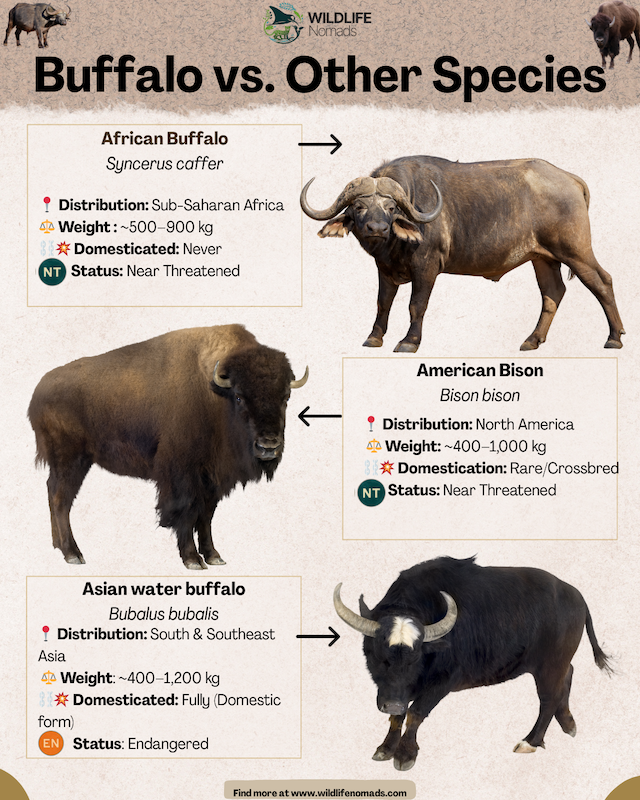
Many people confuse African buffalo with other buffalo species, particularly the American bison and Asian water buffalo. Therefore, it’s worth clarifying the key differences between these animals.
The American bison, native to North America, is actually taller and can be heavier than African buffalo, reaching up to 1,000 kg. However, bison have massive humps of shoulder muscle adapted for plowing through snow, a feature absent in African buffalo. Bison are also generally less aggressive, preferring to flee rather than confront threats directly.
Asian water buffalo have been domesticated for thousands of years and differ significantly in temperament and appearance. They have longer, swept-back horns and lack the fused boss characteristic of African buffalo. While wild water buffalo still exist in small populations, they’re critically endangered and rarely encountered outside protected reserves.
FAQs About African Buffalo
Yes, African buffalo rank among the most dangerous animals in Africa. They’re responsible for more hunter fatalities than almost any other species. Adult bulls, especially solitary animals or those in bachelor groups, are particularly aggressive and unpredictable.
Cape buffalo are larger (up to 900 kg), have dark brown or black coloration, and inhabit open savannas across southern and eastern Africa. Forest buffalo are smaller (250-320 kg), display reddish brown coats, and live in the dense forests of central Africa and west Africa.
In the wild, African buffalo typically live 15-25 years. However, many factors affect lifespan, including predation, disease, and environmental conditions. Older bulls face increased mortality after losing dominance status.
African buffalo are bulk grazers that consume primarily grass. An adult can eat 30-35 kg of vegetation daily. They prefer tall, coarse grasses that other herbivores avoid, playing a crucial role in shaping grassland ecosystems.
Respect the Power of Africa’s Wild Cattle
The African buffalo stands as a testament to nature’s raw power and resilience. These animals aren’t simply “wild cows”, they’re complex, social, intelligent survivors that have dominated the African landscape for millions of years. From the massive Cape buffalo bulls of South Africa to the elusive forest buffalo of central Africa, they command respect wherever they roam.
As a biologist, my greatest hope is ensuring that future generations can witness these magnificent animals in their natural habitats. Their presence signals healthy, functioning ecosystems. The thundering approach of a large herd, the sight of adult females protecting young calves, and the intimidating stare of an old bull, these experiences connect us to the wild Africa that still exists.
Next time you see a photograph of an African buffalo, look closely at that boss on its head. That thick shield represents millions of years of evolution, countless battles survived, and the indomitable spirit of one of Africa’s most successful large mammals. In a rapidly changing world, protecting these animals means preserving a piece of wilderness that future generations deserve to inherit.
African Buffalo Challenge 🦬
Eight multiple-choice questions on Africa’s ultimate powerhouse. How many can you get right?
Plan Your Safari Adventure!
Here is a list of 6 safari tours where you can see African Buffalos in the wild. As a biologist, I only recommend tours that follow strict ethical guidelines to ensure we don’t disturb wildlife. These are the three tours/ partners I trust most based on their conservation records:
This blog is reader-supported. When you buy experiences through links listed on this site, we may earn an affiliate commission.
References:
Sankey, D. W. E., O’Bryan, L. R., Garnier, S., Cowlishaw, G., Hopkins, P., Holton, M., Fürtbauer, I., & King, A. J. (2021). Consensus of travel direction is achieved by simple copying, not voting, in free-ranging goats. Royal Society Open Science, 8(2), Article 201128. https://doi.org/10.1098/rsos.201128
Roug, A., Muse, E. A., Clifford, D. L., Kock, R. D., & Eblate, E. (2020). Seasonal movements and habitat use of African buffalo in Ruaha National Park, Tanzania. BMC Ecology, 20(1), Article 6. https://doi.org/10.1186/s12898-020-0274-4
Talenti, A., et al., (2024). Continent-wide genomic analysis of the African buffalo (Syncerus caffer). Communications biology, 7(1), 792. https://doi.org/10.1038/s42003-024-06481-2
Kaszta, Ż., Marino, J., Ramoelo, A., & Wolff, E. (2016). Bulk feeder or selective grazer: African buffalo space use patterns based on fine-scale remotely sensed data on forage quality and quantity. Ecological Modelling, 323, 115–122. https://doi.org/10.1016/j.ecolmodel.2015.12.006