When we think about the natural world, it’s easy to focus on the charismatic creatures—the lions, pandas, or whales, that capture our imaginations. But as a professional biologist, my time spent in the field has taught me to look closer, past the “main characters” and toward the unseen heroes that quietly hold our planet together.
I have spent years documenting ecosystems across the globe, from the dense, tangled mangroves of Southeast Asia to the towering kelp forests of Baja. Whether I was diving in the vibrant, complex coral reefs of Ko Lipe, Komodo, Bali, or Coron, I’ve been consistently awestruck by the sheer scale of these biological structures and the staggering amount of life they support. These aren’t just collections of organisms; they are massive, living structures that function as the scaffolding for entire communities.
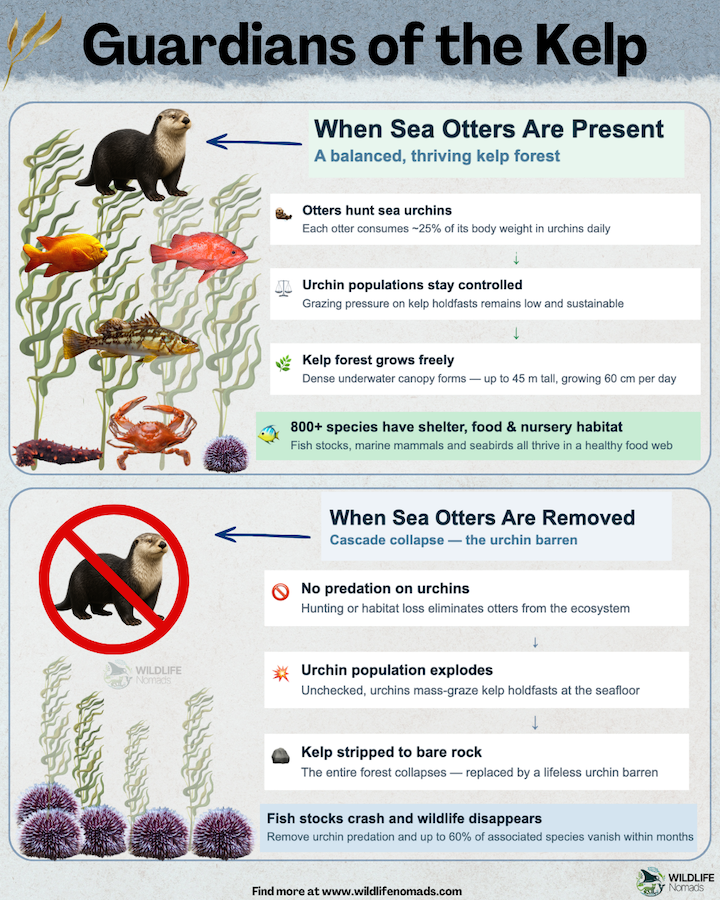
Through my work, I’ve seen firsthand how fragile these systems can be. I often think back to the classic ecological lessons regarding sea otters: remove them, and the sea urchin population explodes, razing the kelp forests to the ground. In an instant, a thriving, vibrant habitat disappears. This is the ultimate lesson in interconnectedness, it forces us to view the Earth not as a series of isolated parts, but as one singular, massive organism where every structural component counts.
These architects are known as foundation species. In this article, we’ll explore exactly what a foundation species is, how they differ from the often-confused keystone species, and why, as a biologist, I believe understanding them is our most vital tool for conservation.
What is a Foundation Species?
A foundation species is an organism that plays a crucial role in creating and maintaining the structure of an ecosystem. These species often form the physical habitat that supports a diverse array of other life forms. Think of them as the scaffolding of nature, without them, the entire ecosystem could collapse.
The concept of foundation species was popularized by ecologist Paul Dayton, who distinguished them from keystone species. While keystone species have a disproportionate impact on their environment relative to their abundance, foundation species are often numerous and omnipresent, providing the structural basis for entire communities. Foundation species often increase habitat complexity, providing various niches that support a wide range of organisms.
Foundation species create habitats that support diverse plant and animal life. They differ from keystone species, which regulate ecosystems rather than form them. Examples include giant kelp forests, coral reefs, mangroves, and seagrasses.

Foundation Species vs Keystone Species: What’s the Difference?
It’s easy to confuse foundation species with keystone species, but they serve distinct roles:
- Foundation Species: Provide the physical structure of an ecosystem. They are often abundant and create habitats for other species. Examples include giant kelp in marine ecosystems or trees in forests.
- Keystone Species: Have a disproportionate impact on their environment, often through predation or other interactions. They may not be abundant, but their presence is critical for maintaining balance. Examples include sea otters and wolves.

Foundation species also play a crucial role in structuring the food web, supporting various trophic levels within the ecosystem.
A single ecosystem can have both foundation and keystone species. For instance, in a kelp forest, giant kelp acts as the foundation species, while sea otters serve as the keystone species by controlling sea urchin populations.
Here is a table with a summary of foundation species and keystone species, and how they serve different roles:


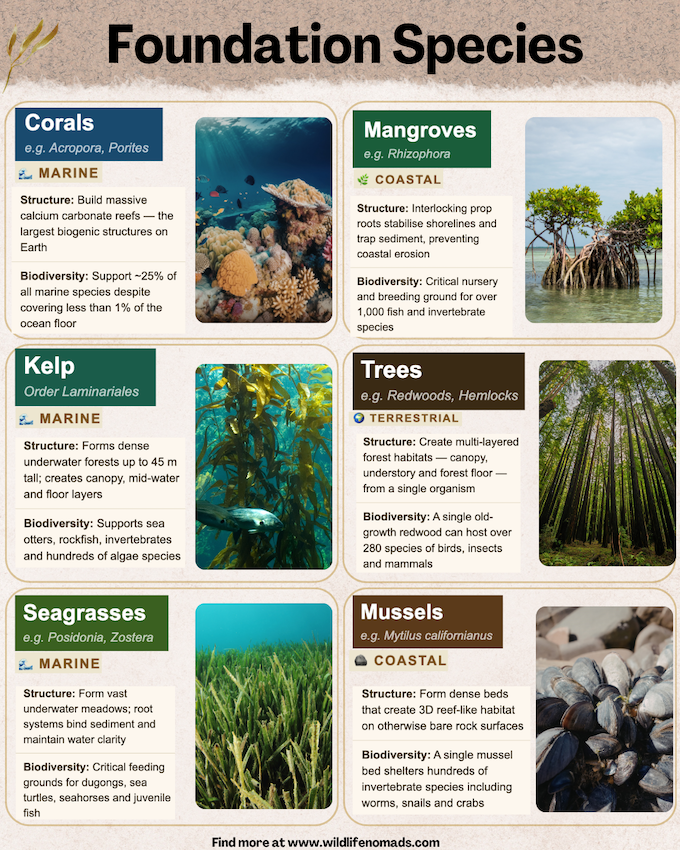
Foundation Species Examples
Let’s explore some of the most fascinating foundation species examples across different ecosystems:
Many foundation species, such as kelp and corals, are primary producers that bring energy into the ecosystem, supporting a diverse array of life forms.
1. Giant Kelp: The Primary Producers of the Sea
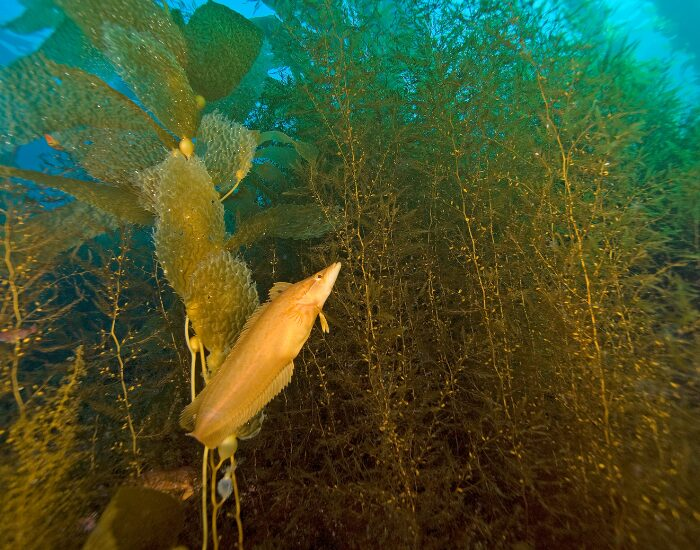
Giant kelp (Macrocystis pyrifera) is one of the most iconic foundation species in the ocean. As described in The Nature of Nature, giant kelp forms underwater forests that provide habitat for hundreds of species in marine ecosystems. These towering underwater plants can grow up to 1.5 feet per day, forming dense forests that shelter hundreds of species, from fish and crustaceans to sea otters and sharks.
- Structure: Giant kelp can grow up to 120 feet tall, with gas-filled bladders that keep it buoyant. Its holdfasts anchor it to the ocean floor, creating a complex habitat for worms, echinoderms, crustaceans, and fish.
- Impact: Without giant kelp, the entire kelp forest ecosystem would collapse, taking with it species like sea urchins, abalones, and black sea bass.
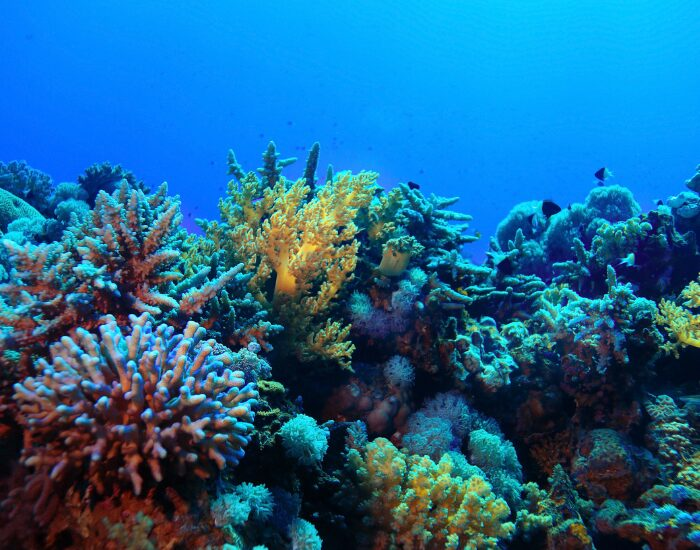
2. Coral: The Builders of Reefs
Coral reefs are often called the “rainforests of the sea,” and for good reason. The polyps are tiny architects of the ocean’s bustling cities. Reefs are built by tiny coral polyps, forming one of the most biodiverse ecosystems on Earth. These structures provide shelter, breeding grounds, and food sources for 25% of all marine species, making them an essential foundation species in tropical waters. Coral reefs are essential for the resilience and function of the marine community, supporting a wide range of species.
- Structure: Corals secrete calcium carbonate to form hard skeletons, which accumulate over time to create reefs.
- Impact: Reefs provide shelter, breeding grounds, and food for thousands of species: Some examples include sea turtles, sea anemones, sea slugs, pufferfish and even sharks like black tip reef sharks! (The ones I have seen in Indonesia)
3. Trees: The Backbone of Forests
In terrestrial ecosystems, trees are the ultimate foundational species. They create the physical structure of forests, offering food, shelter, and nesting sites for countless organisms.
- Structure: Trees form canopies, understories, and root systems that support diverse life forms.
- Impact: Forests are home to 80% of the world’s terrestrial biodiversity, from insects to mammals.
The role of trees as foundation species can vary significantly depending on the specific ecosystem, from tropical rainforests to temperate woodlands.

4. Prairie Grasses: Grassland Groundkeepers
In North America’s prairies, grasses like big bluestem and switchgrass are foundational species. Their deep roots hold soil, store carbon, and feed bison and birds. Prairie grasses can increase species diversity depending on their ability to create stable habitats and provide resources for various organisms.
- Structure: Prairie grasses form dense root systems that prevent soil erosion and create a stable habitat for ground-nesting birds and insects.
- Impact: 80% of original prairies have been lost to farming, threatening grassland species. Fire suppression further disrupts these ecosystems, making conservation efforts critical.

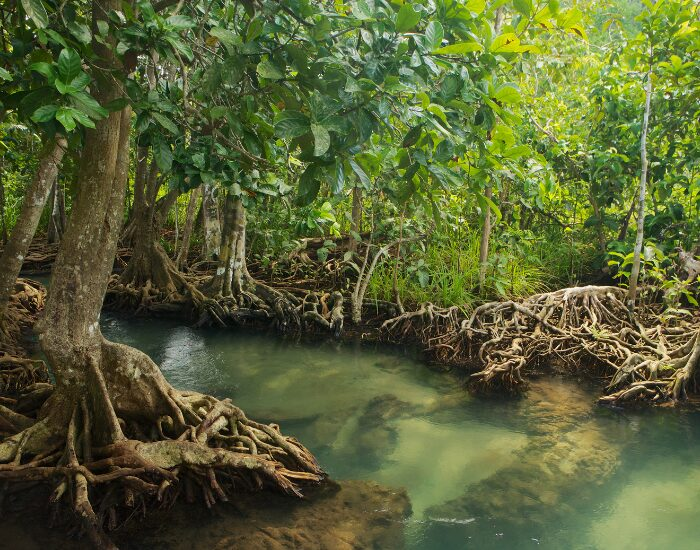
5. Mangroves: Coastal Guardians
Mangroves line tropical shores, their tangled roots serving as nurseries for fish and buffers against storms. Found from Florida to Southeast Asia, these foundation species support 70% of coastal fisheries.
- Structure: Mangrove roots create a complex network that stabilizes coastlines and provides habitat for juvenile fish and crustaceans.
- Impact: Despite their importance, 35% of mangroves have been lost globally due to deforestation. Protecting these ecosystems is vital for both biodiversity and coastal communitiesImpact: Forests are home to 80% of the world’s terrestrial biodiversity, from insects to mammals.
6. Seagrasses: The Ocean’s Hidden Nurseries
While coral reefs get the glory, seagrass meadows are the true, quiet powerhouses of the coastal zone. These aren’t just patches of “grass”; they are complex flowering plants that have adapted to life underwater. In my field studies, I’ve found that these meadows are the busiest hubs of the marine world, they are the essential nursery for countless fish and invertebrate species.
- Structure: Seagrasses form expansive, dense underwater meadows that stabilize the seafloor, prevent erosion, and capture vast amounts of carbon, a process known as “blue carbon” sequestration.
- Impact: They are the primary food source for some of the ocean’s most gentle giants, including manatees and dugongs, and provide vital foraging grounds for sea turtles. Without these meadows, the complex life cycles of these threatened species would be severed, as they rely on these beds for both protection and sustenance during their most vulnerable stages.

The Role of Foundation Species in Habitat Complexity
Foundation species are essential for maintaining biodiversity and ecosystem stability. Here’s how they shape their environments:
- Habitat Creation: They provide the physical structure that other species depend on. By creating habitats, foundation species enhance food web complexity, supporting diverse interactions among species.
- Resource Provision: They offer food, shelter, and breeding grounds.
- Ecosystem Engineering: They modify their environment in ways that benefit other organisms, such as stabilizing soil or filtering water.
Case Study: The Kelp Forest Ecosystem
The kelp forest is a perfect example of how foundation species and keystone species interact.
- Foundation Species: Giant kelp creates the forest structure.
- Keystone Species: Sea otters control sea urchin populations, preventing them from overgrazing the kelp.
In the 1960s, ecologist Bob Paine observed that removing sea urchins allowed kelp to thrive. Later, Jim Estes discovered that sea otters, by preying on sea urchins, played a critical role in maintaining the balance of the ecosystem. This interplay highlights the importance of both foundation and keystone species. The kelp forest ecosystem is greatly affected by the presence or absence of its foundation and keystone species.
Frequently Asked Questions
Giant kelp, coral, and trees are classic examples of foundation species. Giant kelp’s is a perfect example. Off California’s coast, Paul Dayton’s decades-long Scripps study shows it anchors an entire underwater world. Remove it, and the foundation species collapse takes everything down, from fish to algae. It’s numerous, structural, and vital.
Giant kelp and coral are two of the most important foundation species in marine ecosystems.
Corals themselves are the foundation species of coral reefs, creating the physical structure that supports thousands of other species.
The Web of Life: Everything Begins With a Foundation
Foundation species are the unherd heroes of the natural world, quietly shaping the habitats that support life on Earth. From the towering kelp forests of the ocean to the lush canopies of terrestrial forests, these species are the backbone of ecosystems. Each foundation species plays a particular role in its ecosystem, influencing the overall structure and biodiversity.
Understanding what is a foundation species and their role in ecosystems is not just an academic exercise, it’s a call to action. By protecting these critical species, we can safeguard the biodiversity and resilience of our planet.
References:
Dudley, M. P., & Pringle, R. M. (2020). Rethinking foundation species in a changing world. University of Georgia Pringle Lab. https://pubs.usgs.gov/publication/70211524
Goldberg, L., Lagomasino, D., Thomas, N., & Fatoyinbo, T. (2020). Global declines in human-driven mangrove loss. Global change biology, 26(10), 5844–5855. https://doi.org/10.1111/gcb.15275
Gonzalez-Aragon, D., Rivadeneira, M. M., Lara, C., Torres, F. I., Vásquez, J. A., & Broitman, B. R. (2024). A species distribution model of the giant kelp Macrocystis pyrifera: Worldwide changes and a focus on the Southeast Pacific. Ecology and evolution, 14(3), e10901. https://doi.org/10.1002/ece3.10901
Hoegh-Guldberg, O., Poloczanska, E. S., Skirving, W., & Dove, S. (2017). Coral reef ecosystems under climate change and ocean acidification. Frontiers in Marine Science, 4, Article 158. https://doi.org/10.3389/fmars.2017.00158
Langendorf, R. E., Doak, D. F., Watson, J., & Estes, J. A. (2025). Dynamic and context-dependent keystone species effects in kelp forests. Proceedings of the National Academy of Sciences, 122(10), Article e2413360122. https://doi.org/10.1073/pnas.2413360122
Miller, R. J., Lafferty, K. D., Lamy, T., Kui, L., Rassweiler, A., & Reed, D. C. (2018). Giant kelp, Macrocystis pyrifera, increases faunal diversity through physical engineering. Proceedings of the Royal Society B: Biological Sciences, 285(1874), Article 20172571. https://doi.org/10.1098/rspb.2017.2571
Zu Ermgassen, P. S. E., Worthington, T. A., Spalding, M., & others. (2025). Mangroves support an estimated annual abundance of over 700 billion juvenile fish and invertebrates. Communications Earth & Environment. https://doi.org/10.1038/s43247-025-02229-w