I’ll be honest, I’d seen triggerfish on coral reefs before, but I never paid them much attention. That changed during a trip to Amed, Bali, with my partner. One morning, she decided to go snorkeling while I stayed back to finish some work (we work as digital nomads).
Not long after she left, she burst back into our room, visibly shaken. A massive triggerfish had charged at her repeatedly, chasing her across the reef. She described how terrifying it felt, this fish wouldn’t back down. Later, we learned the survival trick: swim horizontally away, never upward. We also discovered this only happens during mating season when males defend their nesting sites.N
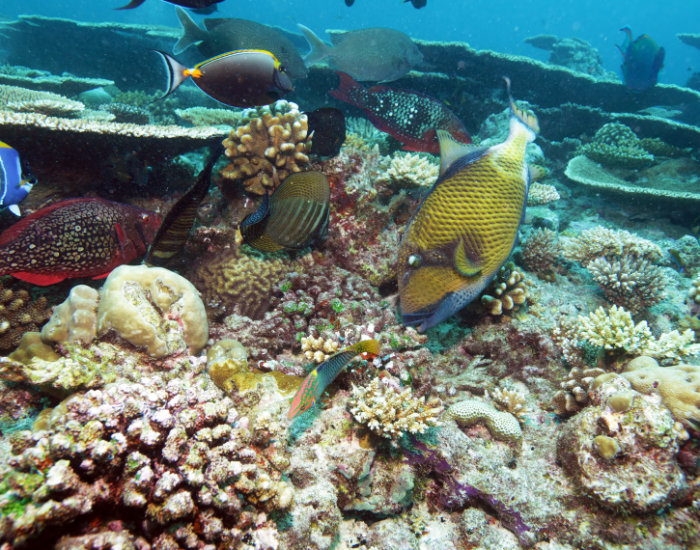
Next day she took me to the exact spot she saw it, and there it was, a Titan Triggerfish swimming. We didn’t go anywhere close, but jus thinking it about that masisve fish charging at me was scary. That encounter sent us down a rabbit hole. Having been nipped by tiny territorial fish before, which hurts more than you’d expect, I couldn’t imagine facing a titan triggerfish at full charge. Therefore, I started researching everything about these remarkable creatures.
Triggerfish are members of the Balistidae family, a group of around forty species scattered across warm waters. Found on coral reefs, sandy flats, and even open seas, these fish challenge every stereotype about underwater life. They’re not timid background characters. Instead, they’re architects, gardeners, and fierce defenders of their homes.
First, you will encounter 12 facts to know them better, and if you keep scrolling, you will find a list with photos of the 10 most common triggerfish you may find while diving and an infographic.

1. A Family of Forty Faces: Many Species of Triggerfish
If you’ve ever wondered what a triggerfish is, it’s more accurate to ask which one. There are nearly forty trigger fish species worldwide. Some of these are even threatened species, which are sometimes targeted for the aquarium trade, impacting their populations.
For example, you’ll find the electric-patterned clown triggerfish, the territorial titan triggerfish, and the sleek grey triggerfish. The family spans oceans, from the Pacific to the western Atlantic ocean.
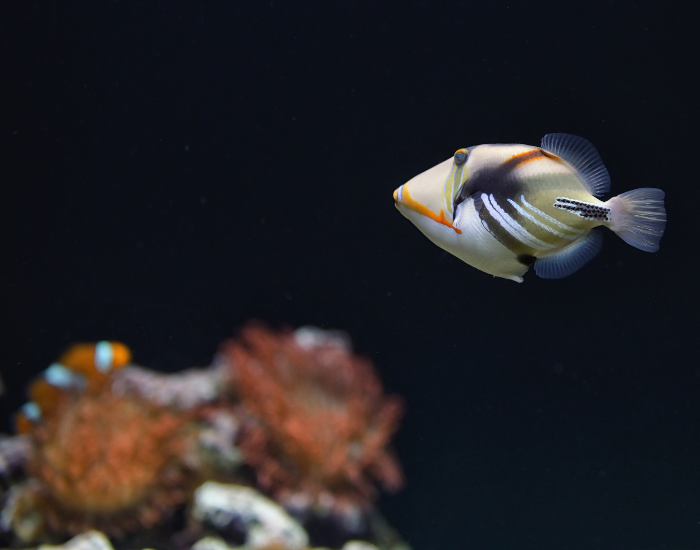
Each species carries its own flair. The Picasso triggerfish, with blue spots and saddle markings across its oval shaped body, looks like it swam straight out of an artist’s palette. Others, such as Balistoides viridescens, show off sand-yellow scales speckled with light spots that shimmer under tropical sunlight.
Juveniles drift among floating seaweed near the surface before settling onto reefs. This journey helps distribute wild populations. In addition, some species like the stone triggerfish can grow over three feet in maximum length, while smaller fish like Rhinecanthus aculeatus stay more compact.
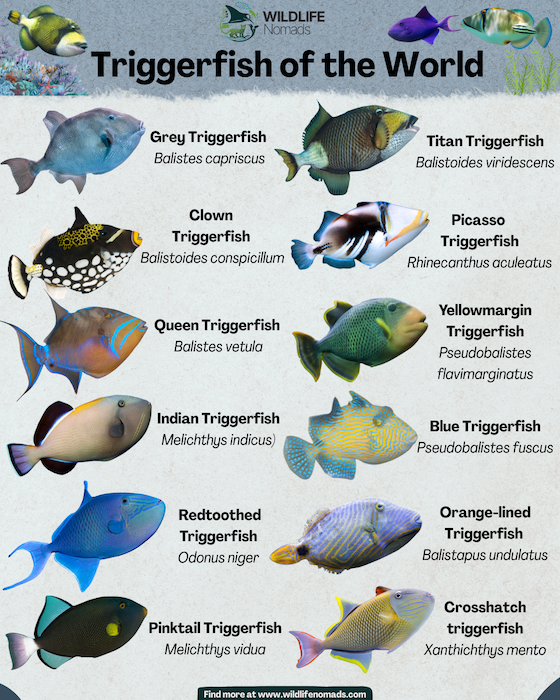
You will find a list below of 10 species after all the facts!
2. The Locking Dorsal Spine That Inspired Their Name
The reason we call them “triggerfish” lies hidden in their dorsal fins. Along their backs sits a small but ingenious mechanism: three spines. The first spine locks into place while the second spine acts like a release trigger. When predators approach, the fish dives into a tight crevice, erects the spine, and wedges itself inside.
Once locked, even a grouper or sharks prey strike can’t pull it free. This ability provides excellent predator defense. However, it also gives divers their first lesson in underwater etiquette, never try to touch or corner these fish.
I’ve watched a titan triggerfish wedge into coral cracks during a spring tide surge. It remained completely immovable until it calmly released the “trigger” and swam out again. It’s evolutionary engineering at its finest.

3. Built Like Tanks: Strong Teeth and Hard Shelled Prey
Triggerfish have evolved for survival in busy reef cities. Their bodies are oval shaped, laterally compressed, and covered in thick scales that feel almost like sandpaper. Small gill opening positioned behind the eyes reduce drag and keep them streamlined.
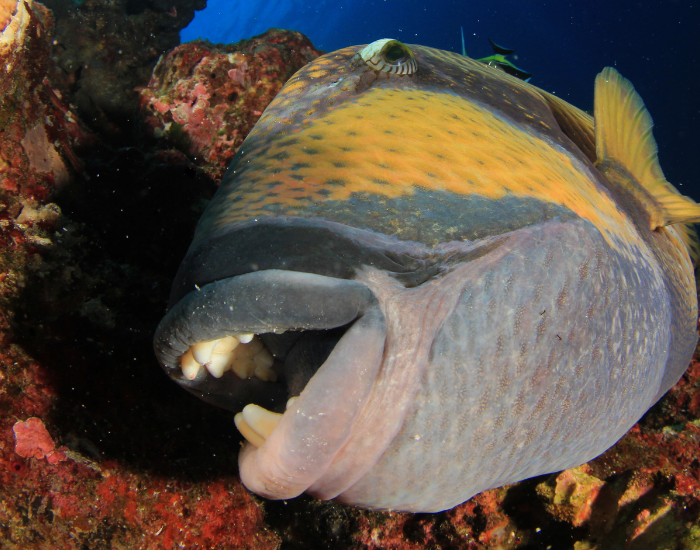
They possess strong teeth, four on the upper body and four on the bottom. These teeth are perfect for chiseling through hard shelled prey like sea urchins, crabs, and sand dollars. Their jaws can crush coral fragments and snail shells with ease.
During dives off Fiji, I’ve seen triggerfish chisel holes into coral rubble in seconds. They flip over sand dollars and search for soft tissue beneath. When feeding on sea urchins, triggerfish flip them over to access their undersides, which have fewer spines and are easier to eat. Every muscle in their anal fins and dorsal fins moves with surgical precision.
Instead of fast tail beats, they use these fins to hover and glide. This gives them remarkable control over movement. Therefore, watching them navigate reefs feels a bit like seeing an underwater drone built by nature.
4. Coral Reefs: The Kingdom Where Triggerfish Establish Territories
Spend time on coral reefs anywhere from Nova Scotia’s warmer southern reaches to the Indo-Pacific, and you’ll spot these characters. Some, like the grey triggerfish, venture deeper to over 180 feet. However, others cruise shallow lagoons.
They prefer warm waters rich in benthic invertebrates, places buzzing with life. Males often establish territories on sandy flats or near coral heads. They guard nesting sites against other fish and predators fiercely.
Their territory cones can stretch upward. Consequently, divers who swim above a nest may suddenly find themselves in unwanted company. It’s not aggression for aggression’s sake, it’s parental protection.
When you understand that, you start seeing the reef not just as scenery. Instead, it becomes a living neighborhood full of boundaries, rituals, and unspoken rules that many species respect.
5. Feeding Habits: Masters of the Reef Buffet
Few creatures feed with the same creativity as triggerfish. They hunt smaller fish, shellfish, worms, and sea urchins using strategy more than speed. By blowing jets of water into sand, they expose hidden prey. Then they flip it over to attack the vulnerable underside.
I once watched a grey triggerfish on a Caribbean reef turn over a rock almost half its size. It revealed a wriggling crab beneath. This intelligence and persistence make them effective in shaping reef ecosystems.
By preying on sea urchins, triggerfish prevent urchin overgrazing, a critical role. Without them, reefs could collapse under carpets of algae. They also maintain sediment health by stirring up detritus so oxygen can penetrate reef beds.
Their constant digging and foraging keep coral reefs alive, dynamic, and diverse. In addition, they occasionally consume algae when animal prey becomes scarce.
6. Social Structure: Small Groups and Communication
Triggerfish may look solitary, but they are far from silent or simple. They communicate through grunts, clicks, and sudden body movements, almost like underwater gestures. During my time documenting reef soundscapes in Micronesia, I recorded these short bursts of noise. This happened especially when two males faced off over territory.
While many live alone, some gather in small groups during spawning periods or around abundant feeding grounds. Their eyes, set high and far back, help them watch both prey below and predators above simultaneously.
At times, I’ve seen triggerfish follow divers. They seem curious about our strange gear and bubbles. It’s hard not to anthropomorphize them when they tilt sideways and stare back. They appear to evaluate your buoyancy control.
7. Spawning and The Cycle of Life: Full Moon and New Moon Rituals
Reproduction for triggerfish is a beautifully coordinated ritual. Around the full moon or new moon, when spring tide raises and lowers the sea dramatically, males clear patches of sand to form nesting sites. Females arrive to lay eggs, often guarded by both parents.
The male establishes territories that can encompass several species of female nests. He defends them from intruders with swift charges. Once fertilized, the eggs receive constant care, fanned by fins to maintain oxygen flow.
Hatching occurs within days. The larvae drift with the currents—tiny, transparent juveniles drift between fragments of seaweed. Months later, they settle back onto reefs, completing the circle.
When I dived in Palau during a bright full moon, I saw this drama unfold. Males were fanning sand while females circled like slow-motion dancers. Then came a sudden burst of motion as thousands of new lives joined the plankton.
8. When Defense Becomes Drama: Understanding Territorial Behavior
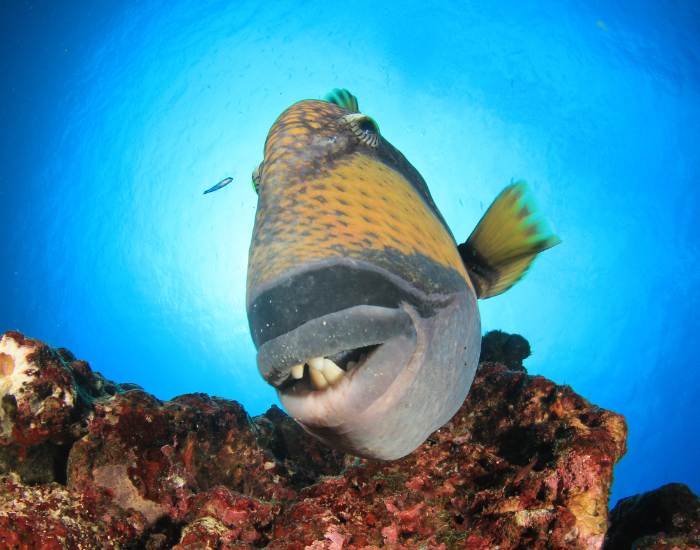
Divers often ask why triggerfish seem aggressive. The answer lies in those nesting instincts. During breeding season, especially for the titan triggerfish, boundaries become sacred. Swim too close and the fish will rise to defend its nest with sudden lunges and sharp teeth.
The key to staying safe is simple, don’t ascend. Instead, swim horizontally away. Their territorial cone points upward, so climbing out vertically keeps you within their defensive zone.
Most divers who understand this coexist peacefully. Those who don’t sometimes get a gentle but memorable lesson. However, this isn’t blind aggression. It’s a sophisticated behavioral strategy that evolved to ensure survival in reefs crowded with predators and other fish.
9. Giants, Minis, and Everything In Between: Size Variations
Triggerfish vary enormously in size. Most measure between eight and twenty inches. However, a few, like the stone triggerfish, reach over three feet in maximum length. The titan triggerfish, the largest in the Indo-Pacific, dominates reefs with an almost prehistoric presence.
Meanwhile, smaller species such as Rhinecanthus aculeatus or Odonus niger drift more gracefully. Their light spots and bright colors shimmer through the shallows. I once filmed a titan near a coral mound the size of a compact car.
It had excavated a perfect circular nest. Its oval shaped body moved sediment like a living bulldozer. When it turned toward me, I kept my respectful distance and marveled at its confidence.
Some adult gray triggerfish and juvenile gray triggerfish show different coloration patterns. This helps researchers identify age groups when studying wild populations.
10. Eating Triggerfish: Delicacy or Danger?
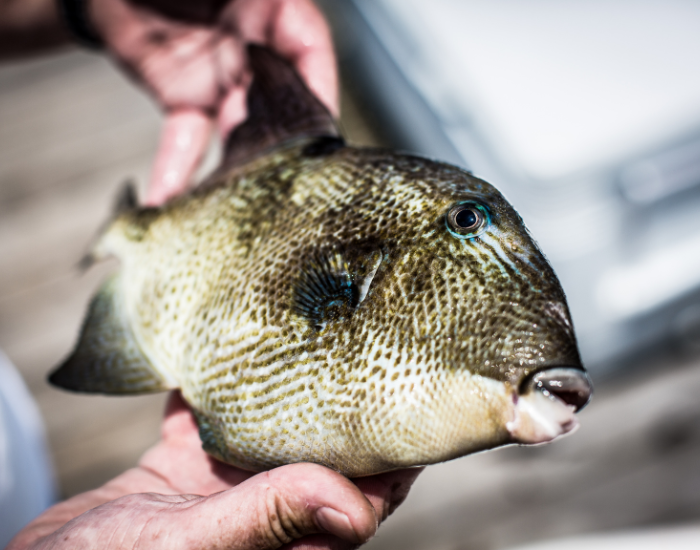
People often ask if triggerfish are good to eat. The answer depends on the species and location. The grey triggerfish is a culinary favorite in parts of the Atlantic. It’s praised for its firm white flesh and excellent quality flavor.
In some Pacific islands, locals enjoy them grilled over coals. They remove the tough skin first. However, certain species can carry ciguatera toxin. This naturally occurring poison accumulates through coral reef food webs.
Eating infected fish can cause illness. Therefore, many divers and coastal residents avoid larger reef-dwelling species like the titan triggerfish. In short, trigger fish can be delicious. However, they should only be sourced responsibly and from toxin-free waters.
11. Conservation and Threats: Protecting Threatened Species
Like many reef inhabitants, triggerfish face mounting threats. Overfishing, habitat degradation, and coral bleaching threaten their survival. The grey triggerfish population in the Atlantic has declined from heavy fishing. In fact, the popularity of triggerfish has, in some cases, worked against their own good, as increased demand can lead to overfishing and further threaten wild populations. This led to stricter catch limits.
Meanwhile, reef destruction jeopardizes nesting sites and food sources. The solution lies in stewardship. Supporting marine reserves helps protect these fish. Reducing bycatch in nets that also catch red snappers and groupers is essential.
Encouraging sustainable fishing protects both fish and livelihoods. Conservation groups emphasize that maintaining triggerfish populations also preserves their ecological role. They keep reefs balanced and sea urchins in check.
During research in the Coral Triangle, I met local divers who described these fish as “reef guardians.” It’s an apt title. Without them, coral reefs would lose some of their most diligent caretakers.
Organizations like the Wildlife Conservation Society work to protect these threatened species. In addition, they study how triggerfish interact with their environment. This research helps inform better management practices.
12. The Human Connection: Why Divers Love These Fish
Beyond science, triggerfish embody the thrill of discovery that drives divers to return to the ocean repeatedly. They remind us that even familiar waters hold surprises. Whether you’re exploring reefs off the Great Barrier, drift diving the Maldives, or snorkeling over Caribbean seagrass, there’s always a chance you’ll meet one.
You might see a triggerfish defending a nest, chasing away predators, or simply eyeing you with unmistakable curiosity. As someone who has spent years studying marine wildlife, I often find myself reflecting on these encounters.
Triggerfish have personality. They’re territorial yet intelligent, wary yet inquisitive. They teach us about respect, space, and coexistence, lessons that extend far beyond the ocean.
Next time you dive, look closer at the reef floor. The fine sand may conceal a nest. It’s guarded by a parent with the heart of a warrior and the mind of an engineer. Remember, those strong teeth and spines aren’t symbols of hostility. They’re proof of evolution’s brilliance.
Triggerfish Predators: Who Hunts the Hunters?
Even with their tough armor and ingenious defenses, triggerfish are not invincible in the wild. The ocean is a place of constant challenge, and several formidable predators see triggerfish as a worthy meal. Large sharks and grouper are among the top hunters, capable of overpowering even the most robust triggerfish species. The stone triggerfish, which can grow over three feet in length, may seem too big to mess with, but it’s still on the menu for these apex predators.
Juvenile gray triggerfish, easily identified by their small violet dots and lighter coloration, are especially vulnerable. As they drift through open water, they must evade swift hunters like tuna, dolphinfish, and marlin. These young fish rely on camouflage and quick reflexes, but many fall prey before reaching adulthood.
Adult gray triggerfish, with their thicker bodies and powerful dorsal spines, have fewer natural enemies. Still, they aren’t completely safe, large sharks and other big fish, such as grouper, can and do prey on them. Even the striking clown triggerfish and the formidable titan triggerfish, known for their bold colors and aggressive nest defense, can become targets for opportunistic predators like red snappers and sea bass.
Understanding who preys on triggerfish helps scientists and conservationists manage wild populations and protect threatened species. It’s a reminder that, in the sea, every fish—no matter how tough, plays both hunter and hunted in the intricate web of life.

10 Triggerfish Species You May Encounter on Your Next Dive
Here are ten remarkable species of triggerfish you might meet while exploring coral reefs around the world:
1. Grey Triggerfish (Balistes capriscus)
The grey triggerfish inhabits the western Atlantic ocean from Nova Scotia to Argentina. This species reaches up to 12 inches and features a compressed, oval shaped body with subtle grey-blue coloring. Known for excellent quality meat, it’s popular among anglers.
2. Titan Triggerfish (Balistoides viridescens)
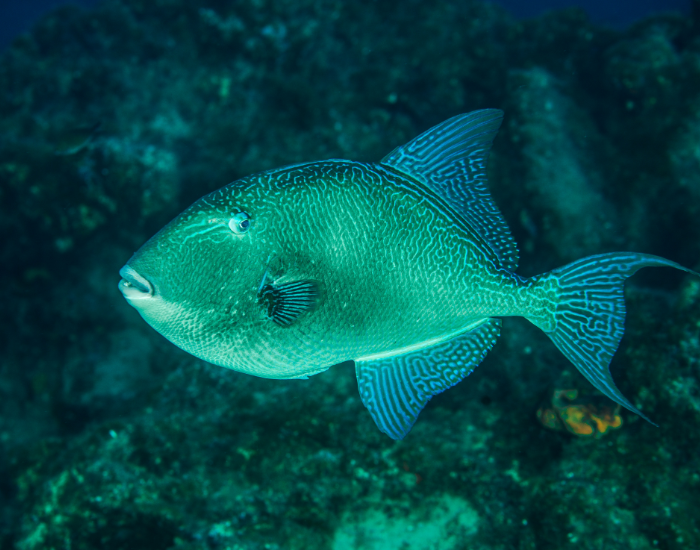
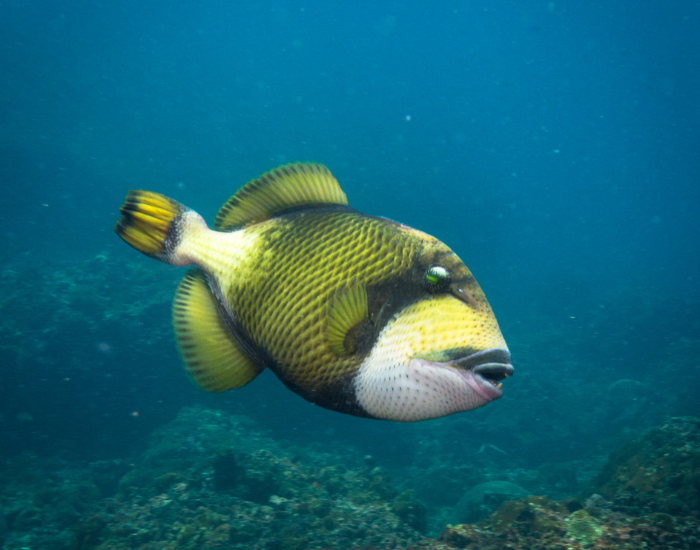
The titan triggerfish is the largest species, growing over three feet in maximum length. Found throughout the Indo-Pacific, this powerful fish aggressively defends nesting sites during spawning season. Divers respect its territorial cone and keep their distance.
3. Clown Triggerfish (Balistoides conspicillum)
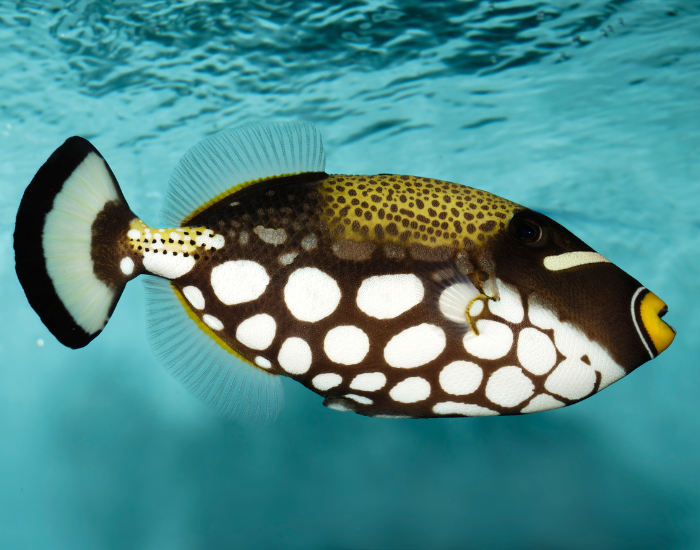
The clown triggerfish displays stunning patterns with large white spots on its dark body and bright yellow mouth. This species inhabits reefs across the Indo-Pacific. However, it’s shy compared to other fish in the Balistidae family.
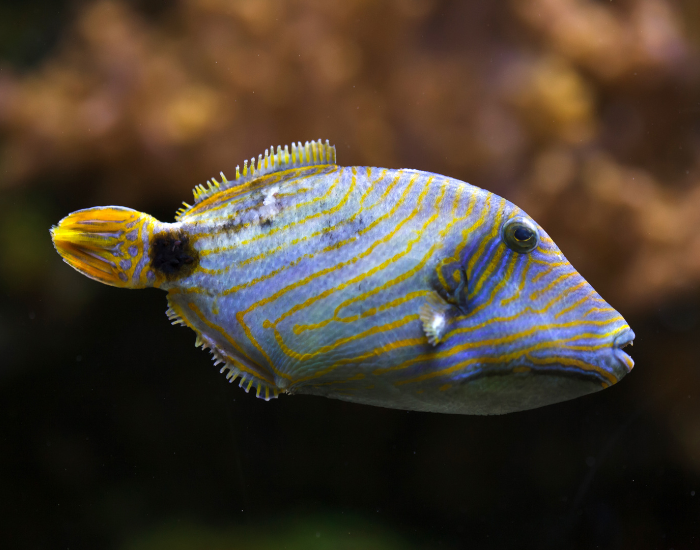
4. Picasso Triggerfish (Rhinecanthus aculeatus)
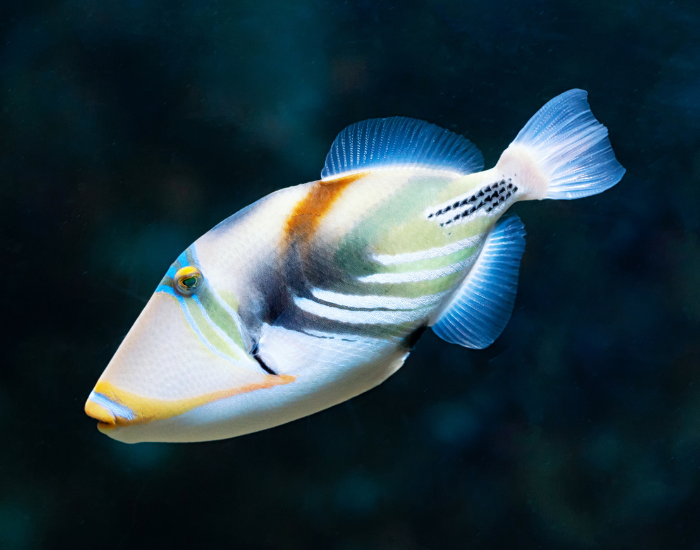
Named for its artistic patterns, the Picasso triggerfish shows blue spots, yellow stripes, and distinctive saddle markings. Common in Hawaii and throughout the Pacific, this species grows to about 10 inches. It uses strong teeth to crack open hard shelled prey.
5. Queen Triggerfish (Balistes vetula)
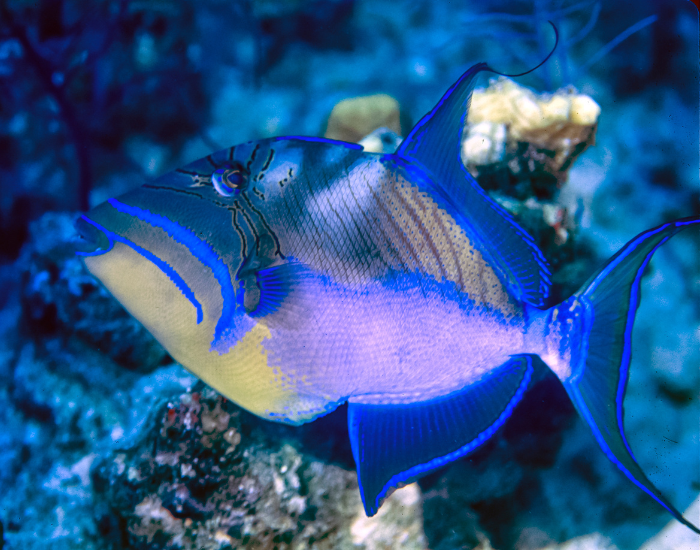
The queen triggerfish swims throughout the western Atlantic ocean and Caribbean reefs. It displays vibrant blue and yellow fins with electric-blue streaks radiating from its eyes. This species establishes territories near coral heads and sandy flats.
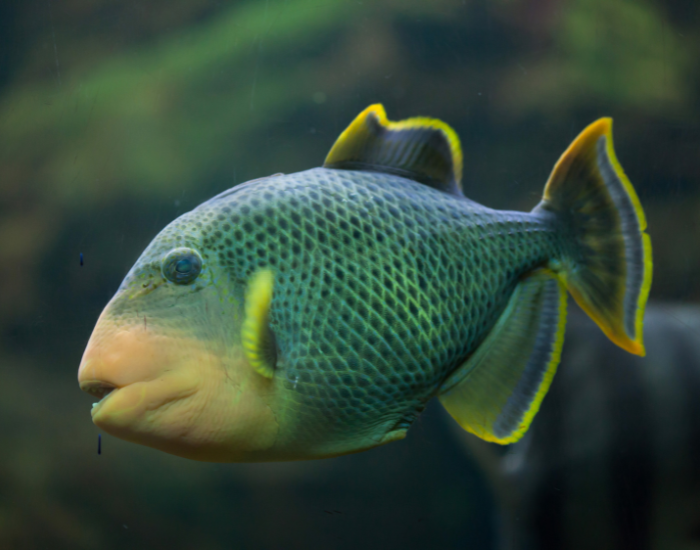
6. Yellowmargin Triggerfish (Pseudobalistes flavimarginatus)
The yellowmargin triggerfish features a dark body outlined with bright yellow fins. Found in the Indo-Pacific, it reaches about 24 inches. This species uses its dorsal spine mechanism to wedge into tight crevice spaces when threatened by predators.
7. Stone Triggerfish (Pseudobalistes naufragium)
The stone triggerfish ranks among the giants, reaching over three feet in length. It inhabits deeper reefs and rocky areas. This species uses powerful jaws to consume sea urchins, crabs, and other benthic invertebrates.
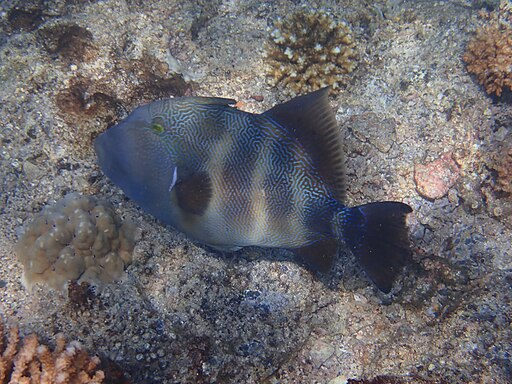
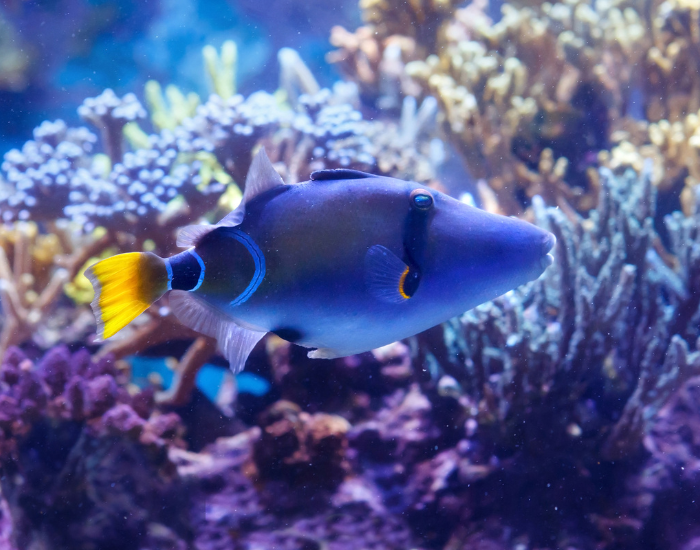
8. Redtooth Triggerfish (Odonus niger)
Also called the blue triggerfish, “Odonus niger” displays a deep purple-blue color with distinctive red teeth. This species often travels in small groups over reef drop-offs. Juveniles drift in open water before settling onto coral reefs.

9. Orange-lined Triggerfish (Balistapus undulatus)
This species shows dramatic orange lines against a green-brown body. Common throughout the Indo-Pacific warm waters, it grows to about 12 inches. Males establish territories and defend them vigorously during the full moon spawning periods.
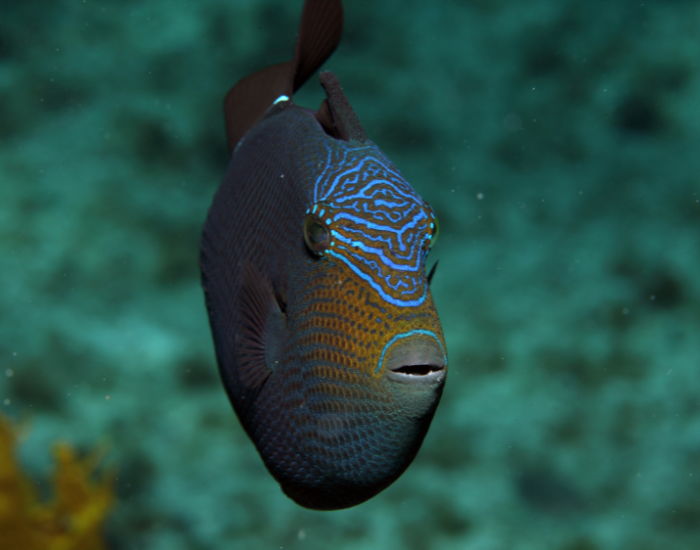
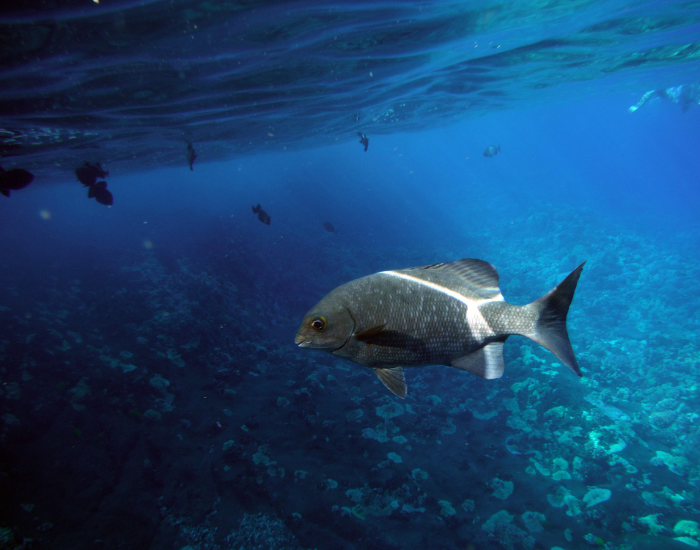
10. Black Triggerfish (Melichthys niger)
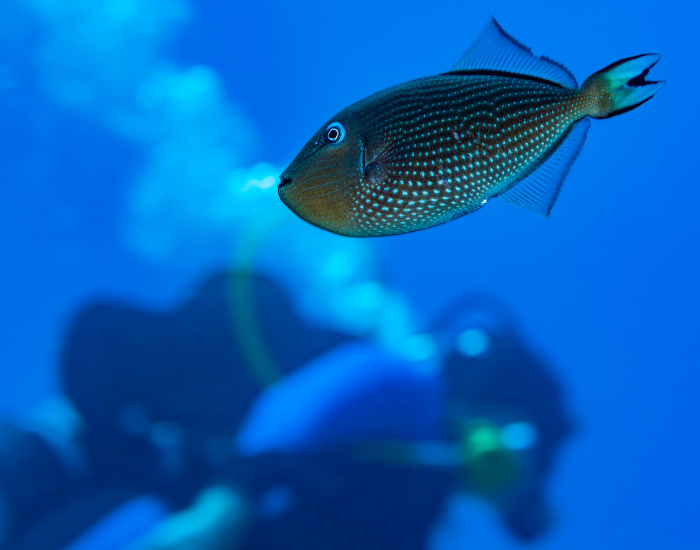
The black triggerfish features uniform dark coloring with light spots along its dorsal fins and anal fins. Found in both Atlantic and Pacific oceans, this species feeds primarily on plankton. It’s less territorial than many species, making it safer for divers to approach.
Each of these species plays a vital role in maintaining healthy coral reefs. They control sea urchins populations, turn over sand to expose prey, and help prevent algae overgrowth that threatens reef ecosystems.
FAQs you May Have About Triggerfish
Triggerfish primarily eat hard shelled prey including sea urchins, crabs, sand dollars, and smaller fish. They use their strong teeth to crack open shells. Additionally, they blow jets of water to uncover prey hiding in sand.
Triggerfish become territorial when guarding nesting sites during spawning season. Males especially defend their nest from perceived threats. However, this behavior is protective, not randomly aggressive.
The titan triggerfish is the largest species, reaching over three feet in maximum length. Meanwhile, the stone triggerfish also grows quite large compared to most other fish in the Balistidae family.
Grey triggerfish offer excellent quality meat with firm, white flesh. However, always source them from areas without ciguatera toxin. Check local advisories before consuming any reef fish.
Triggerfish use their unique dorsal spine mechanism for predator defense. The first spine locks while the second spine acts as a trigger release. They wedge into tight crevice spaces where predators cannot reach them.
Triggerfish inhabit coral reefs throughout warm waters worldwide. You’ll find many species in the western Atlantic ocean and Indo-Pacific regions. Some venture as far north as Nova Scotia during warm months.
Reef Guardians Worth Protecting
Triggerfish are far more than colorful characters of the reef. They’re ecological keystones, skillful engineers, and living reminders of balance. From their locking dorsal spine to their fearless nest defense, they demonstrate that survival in the ocean isn’t just about strength.
It’s about adaptability, intelligence, and connection. For divers and wildlife enthusiasts alike, learning about triggerfish deepens appreciation for the intricate web of life. This web keeps coral reefs thriving across the sea.
They remind us that every species, no matter how small or misunderstood, has a role to play. Therefore, protecting these fish means protecting entire reef ecosystems. The grand choreography of the sea depends on these remarkable guardians.
Further Reading
- Top 12 Facts About the Life of the Colorful Parrot Fish
- Echinoderms: The Spiny-Skinned Architects of the Ocean
- The Fascinating World of the Seadragon
- Scary but Gentle: 12 Amazing Facts About the Wolf Eel
Find Underwater Snorkelling Experiences !
This blog is reader-supported. When you buy experiences through links listed on this site, we may earn an affiliate commission and support us to keep bringing free wildlife resources.