I have spent most of my career with my eyes on the sky. As a biologist and the author of Wildlife Nomads, I have watched birds of prey hunt across three continents. When you spot a hawk soaring on a thermal, you are watching one of nature’s most refined predators at work.
These birds raptors have fascinated me since I was a student. But what actually makes a bird a raptor? And why should we care? Unlike most birds, predatory birds carry a specialized toolkit: sharp talons, hooked beaks, and keen vision. Those traits set them apart as true birds of prey.
This guide draws on field seasons, a condor program in Baja California, and the peer-reviewed science. From the smallest kestrel to the largest eagle, raptors hold ecosystems together. Let me show you how.

What Does Raptor Mean in Birds?
The word “raptor” comes from the Latin rapere, meaning “to seize.” That single verb captures everything. A backyard songbird eats seeds. A raptor seizes, kills, and eats other animals. Ttrue birds of prey share four core traits:
- Sharp talons and sharp curved claws to grasp, kill, and carry prey.
- Hooked beaks built to tear flesh.
- Keen vision — often four to eight times sharper than ours.
- Powerful flight muscles for the chase or the soar.
Here is the part that surprises people. Those sharp talons are not only weapons. Raptors use them to carry prey back to a perch, and to defend themselves. When I have handled injured birds in care, even a weak bird will throw its feet up in self defense. The talons come first, always.Classification is messier than it looks. Many species and certain species of other birds show one or two raptorial traits, but a true raptor combines them all. Keen vision alone does not make a raptor.

What Birds Are Birds of Prey?
This is where bird people argue. The answer to “what birds are birds of prey” depends on whether you mean behavior, anatomy, or evolution. Some groups have long been considered raptors. Modern research has reshuffled a few of them.
Raptors include hawks, eagles, vultures, falcons, and owls. Scientists sort them into a handful of orders. Hawks, eagles, and Old World vultures sit in Accipitriformes. Falcons belong to Falconiformes. Owls form their own order, Strigiformes. New World vultures fall under Cathartiformes.
Diurnal Raptors (Active by Day)
Diurnal raptors are part of a larger group of diurnal birds that hunt in daylight:
- Hawks, including goshawks, harriers, and accipiters.
- Eagles, including bald eagles, golden eagles, and sea eagles.
- Falcons, including peregrine falcons, kestrels, and merlins.
- Kites and harriers.
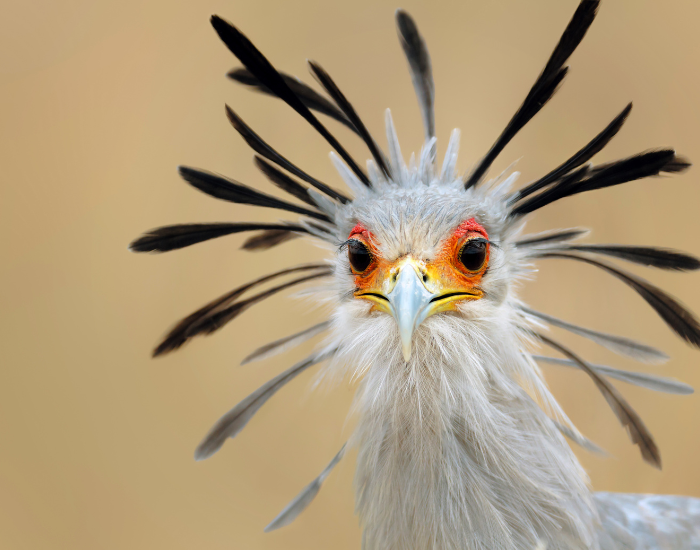
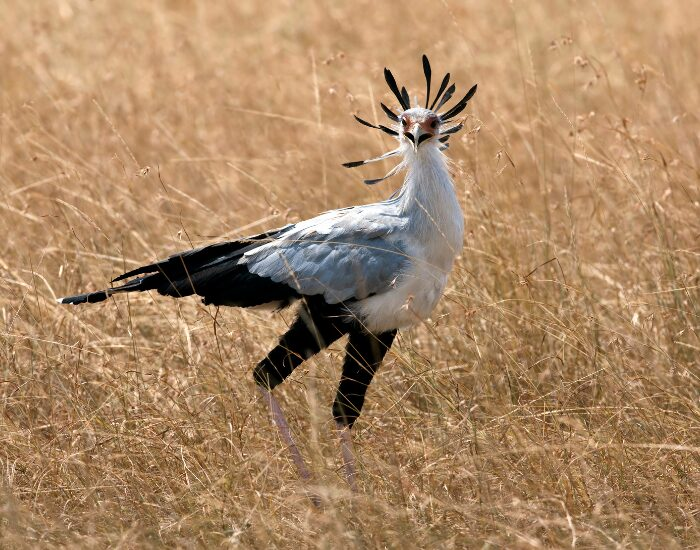
- Secretary birds (Sagittarius serpentarius), found in Africa.
- Caracaras (Caracara plancus), the bold opportunists of the falcon family. Read more about the caracara.
Nocturnal Raptors
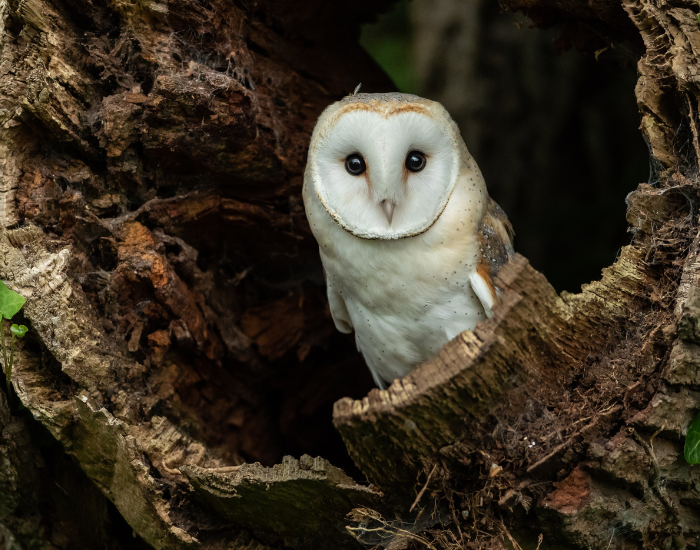
Owls are the great nocturnal bird specialists. A nocturnal bird like the great horned owl, screech owl, or barn owl hunts in near-darkness. See our full guide to the types and species of owls.
Owls deserve special mention. They evolved silent flight, thanks to comb-like feather edges that break up turbulence. They also have asymmetrical ear openings, so each ear hears a sound a fraction of a second apart. That lets a nocturnal bird pinpoint a mouse under snow. Explore the pygmy owl and the tawny owl for two very different examples.
Are Vultures Raptors?
The honest answer is: it depends which vultures.
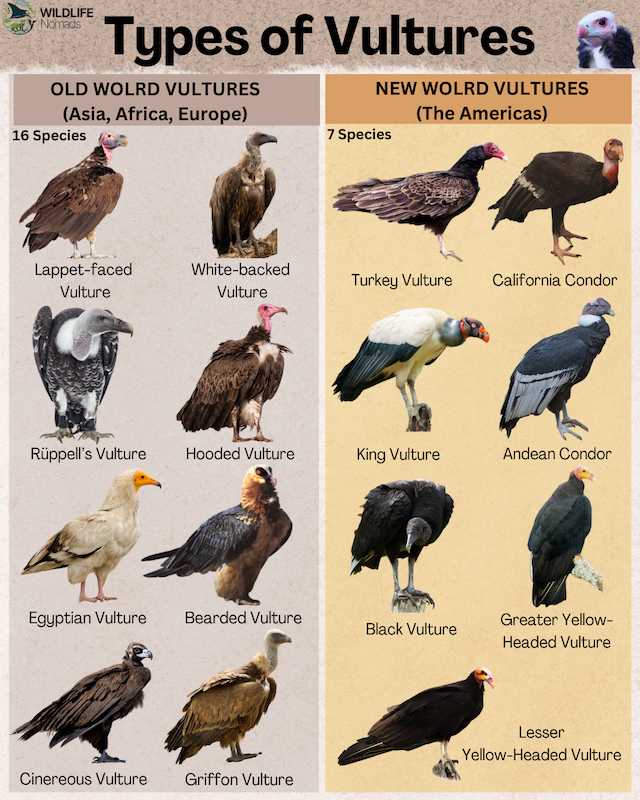
New World vultures: turkey vultures (Cathartes aura) and California condors (Gymnogyps californianus), are not true raptors by descent. Genetic work places them closer to storks than to hawks. They simply look the part through convergent evolution. The black vulture (Coragyps atratus), with its black face and white wingtips, ranges from the United States through South America. Both the black vulture and turkey vultures are common across South America’s open country.
Old World vultures, found in Africa, Asia, and Europe, are the real thing. These world vultures sit close to eagles and hawks on the family tree, despite looking like their New World cousins. For more, see our guide to the types of vultures.
So are vultures birds of prey? Behaviorally, yes, they live on meat. Evolutionarily, it is split. It is one of my favorite examples of how science keeps refining the story. Whether they hunt or scavenge, vultures are some of the most important scavenger animals alive.
How Raptors Evolved: A Story Written in DNA
For a long time, naturalists assumed all raptors descended from one common predatory ancestor. The hooked beak and the grasping foot looked like a shared inheritance. Most raptors, the thinking went, traced back to a single common ancestor.
Molecular phylogenetics rewrote that. When researchers compared nuclear and mitochondrial DNA across the group, the neat family tree fell apart. Falcons turned out to be closer to parrots than to hawks. Studies of mitochondrial DNA confirmed that the raptorial landbird lineage is not one tidy branch. Much of what unites raptors is convergent evolution, different ancestors arriving at the same predatory blueprint.
This matters for how we read the fossil record too. The extinct “terror birds” of South America were fearsome predatory birds, but they were not raptors at all. And among modern birds, the raptor body plan has appeared more than once. Each living bird in the group is a separate solution to the same problem: how to catch and kill on the wing. Work published in journals of avian biology and across biological journal archives keeps sharpening this picture, species by species.
Are Hawks Raptors? Inside the Hawk Family
Yes, without question. Hawks are the textbook raptors. The hawk family, Accipitridae, holds true hawks, eagles, kites, harriers, and Old World vultures. Both hawks and eagles share broad wings and powerful bodies built for lift and force.
For a deeper dive, see our guide to the kinds of hawks.
Red-Tailed Hawk
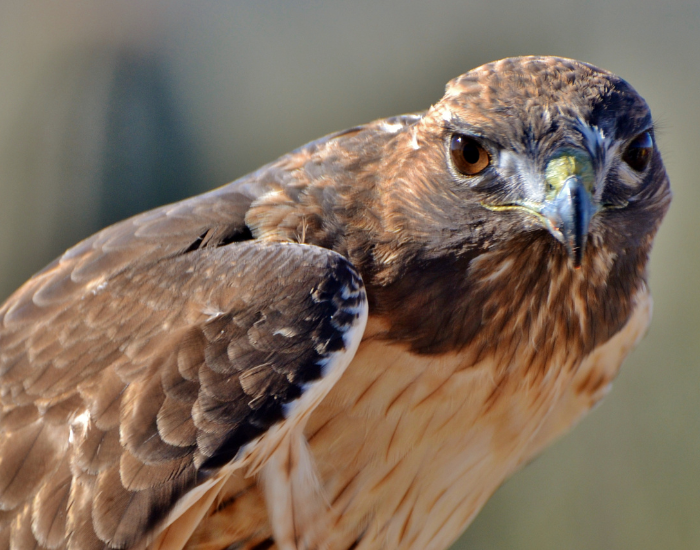
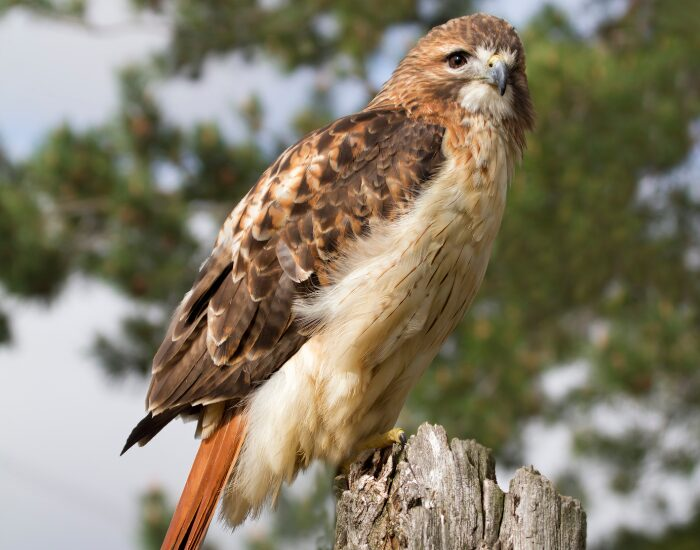
The red-tailed hawk (Buteo jamaicensis) is the raptor most North Americans will meet first. Broad wings, a stocky body, and a rust-red tail mark the adult. It thrives from deserts to forests to city edges. According to urban ecology research, the red-tailed hawk has expanded its range by learning to live alongside us.
Red-Shouldered Hawk
The red-shouldered hawk (Buteo lineatus) is a forest bird with bold black-and-white checkered wings and reddish barring on the chest. Its loud, repeated call carries through mature woodland and river bottoms, where it breeds.
Sharp-Shinned Hawk
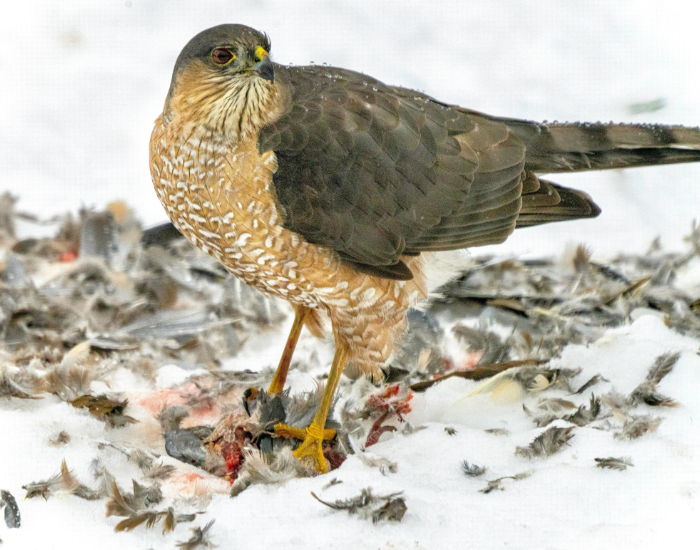
The sharp-shinned hawk (Accipiter striatus) is small, fast, and built for ambush. It threads through dense forest at speed to take small birds on the wing. People often confuse it with Cooper’s hawk (Astur cooperii), but the sharp-shinned hawk is smaller with a square-tipped tail. Few raptors are better at catching small birds.
Northern Goshawk, Northern Harrier, and Rough-Legged Hawks
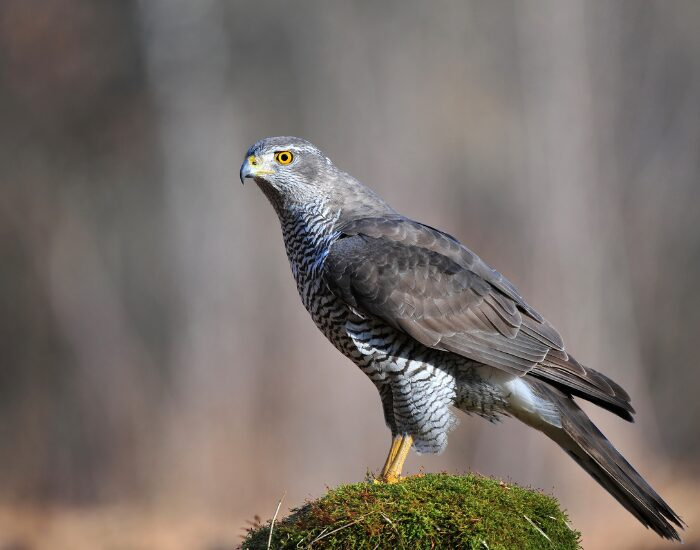
The northern goshawk (Accipiter gentilis) is the largest, most powerful forest hawk. It can take grouse, rabbits, and even small fawns. The northern harrier (Circus hudsonius) works open ground instead — grasslands and marshes — quartering low on long wings with a white rump patch. The northern harrier even uses sound to hunt, with an owl-like facial disc.
Rough-legged hawks (Buteo lagopus) round out the group. These rough legged hawks are Arctic breeders that winter across open North America and Eurasia. Rough legged hawks hover over fields hunting voles, with feathered legs that handle the cold. Their broad wings let them hang almost motionless in a headwind.
What Is an Australian Raptor?
Australia holds birds of prey found nowhere else. Ask “what is an Australian raptor” and you open a list of remarkable hunters.
Wedge-Tailed Eagle
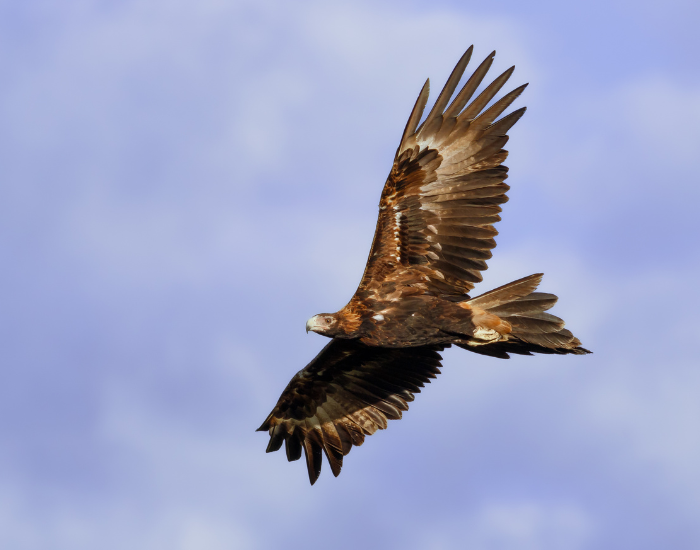
The wedge-tailed eagle (Aquila audax) is Australia’s largest raptor and one of the biggest eagles on Earth. It soars for hours on broad wings without a flap. Its eyesight is legendary, roughly twice the visual acuity of a human, the sharpest measured in any animal. That keen vision lets it scan vast country for carrion and prey.
Peregrine Falcon
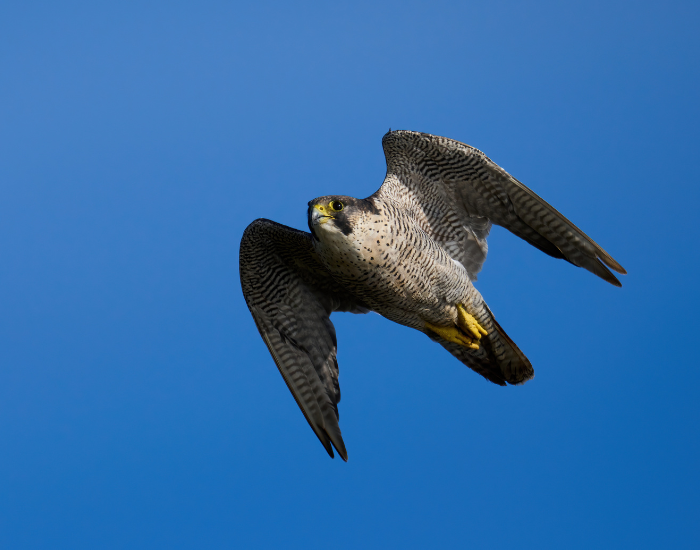
The peregrine falcon (Falco peregrinus) has taken to Australian cities. Pairs nest on skyscrapers and bridges in Melbourne and Sydney, hunting pigeons in the canyons between buildings. In a stoop, it is the fastest animal alive. Learn more in our peregrine falcon facts.
Australian Kestrel
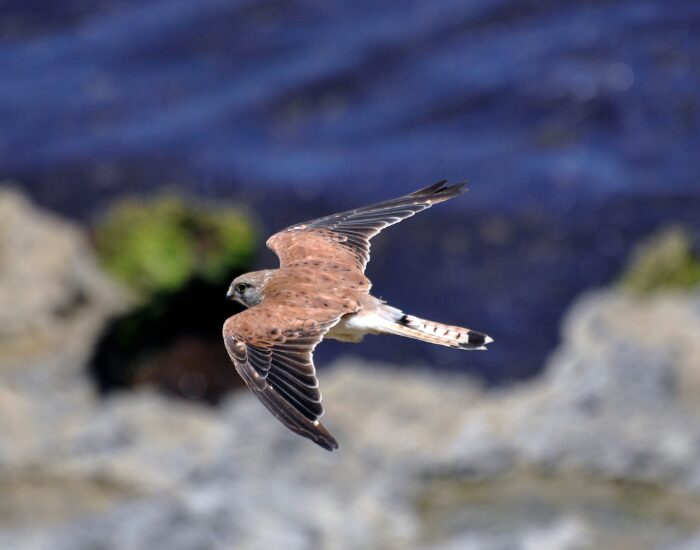
The Australian kestrel is a master of the hover, hanging on beating wings while it studies the ground. It takes small mammals, small birds, and large insects. Watching one work a roadside verge, motionless against the wind, is a lesson in patience and keen vision.
Brown Goshawk and Collared Sparrowhawk
The brown goshawk (Accipiter fasciatus) and collared sparrowhawk (Accipiter cirrocephalus) are the accipiters of Australia. Both specialize in catching other birds with sudden, agile bursts of speed.
Don’t Forget the Osprey
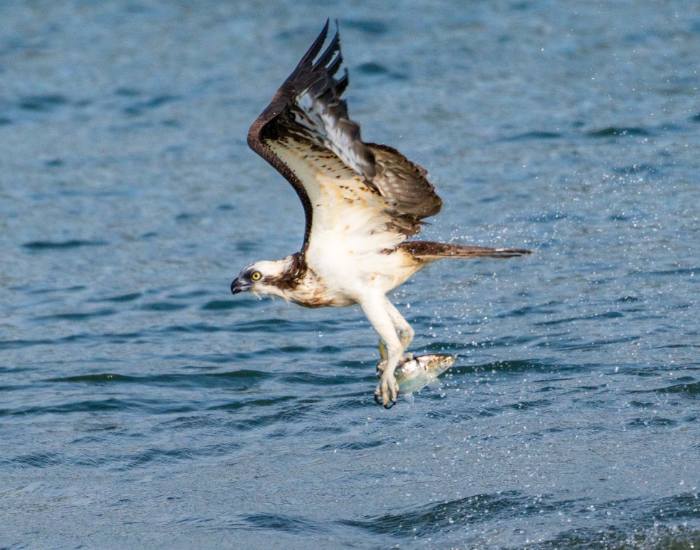
The osprey (Pandion haliaetus) sits in a family all its own. People call it the “sea hawk” for good reason, it feeds almost entirely on fish. It hovers over water, then plunges feet-first, closing reversible outer toes and barbed footpads around slippery prey. No other raptor carries prey quite like it, gripping a fish head-first to cut drag in flight.
The Anatomy of a Predator
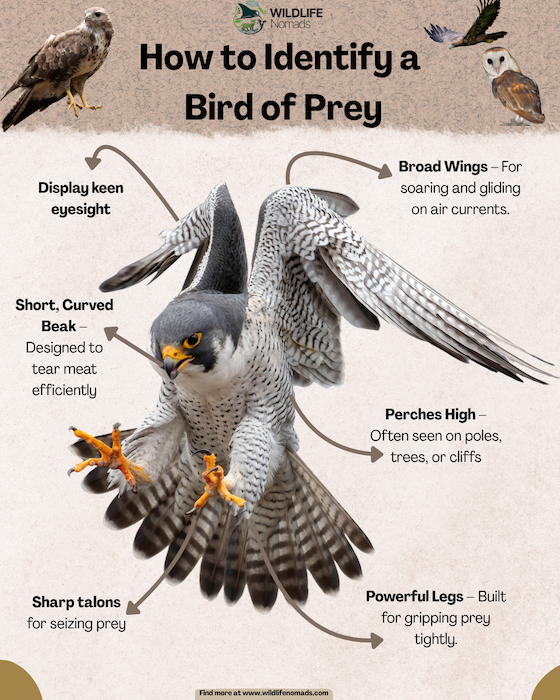
Spend time with these birds and the same hardware shows up again and again. Sharp talons do most of the work. A raptor’s sharp talons clamp prey, carry prey to a perch, and serve in self defense when the bird feels cornered. Watch a hawk mantle over a kill, feet locked, and you understand why sharp talons define the group more than any other feature.
The eyes come next. Keen vision lets a raptor spot a vole from a soaring height, and that keen vision works in three dimensions thanks to forward-facing eyes. Forget keen vision and the sharp talons are useless — the two evolved together. Broad wings finish the kit, giving hawks and eagles the lift to soar and the power to climb.
Not every predatory bird qualifies. The species traditionally considered raptors all combine these tools; birds consisting of only one or two raptorial traits, like shrikes, are left out. When biologists weigh whether a group should be considered raptors, they look for the full set — talons, hooked beak, and keen vision working as one system. Each individual species refines the blueprint for its own niche. Healthy raptor species maintained in the wild depend on three things at once: prey, habitat, and clean food, and those sharp talons go to waste when any one fails.
Is a Tawny Frogmouth a Raptor?
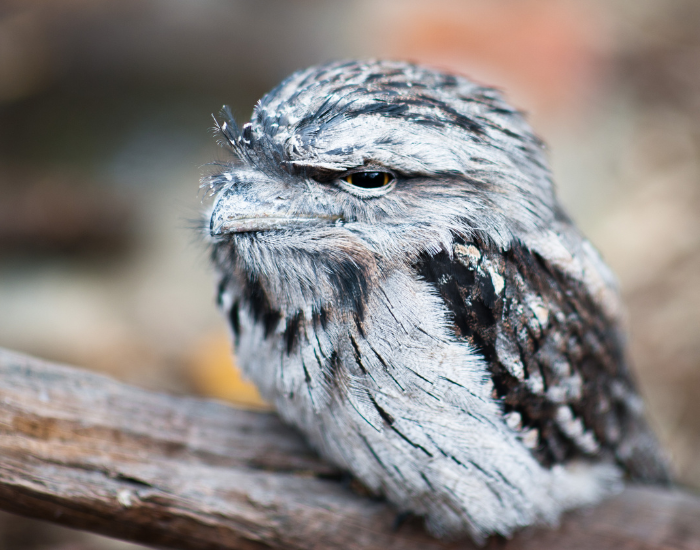
Our Australian readers ask this a lot: “is a tawny frogmouth a raptor?” It looks owl-like and hunts at night, so the confusion makes sense. The answer is no.
The tawny frogmouth (Podargus strigoides) belongs to the family Podargidae, closer to nightjars than owls. It eats insects, frogs, and small mammals, but it lacks raptor talons and the raptor beak. It is a sit-and-wait predator that relies on camouflage, then gapes and swallows prey whole, nothing like the grab-and-tear of a true raptor. Read the full story in our tawny frogmouth facts.
What Raptors Do for Ecosystems
Identifying raptors is fun. Understanding their role is the point. These predators are keystone species — pull them out, and the whole system wobbles. Raptors prey heavily on small vertebrates and small mammals, which keeps rodent numbers in check.
Population Control
Raptors hold prey populations steady and stop overgrazing. Studies cited by the National Park Service link healthy raptor numbers to more diverse, stable ecosystems.
Indicator Species
Because raptors sit at the top of the food chain, they accumulate toxins from everything below. That makes them early warning systems. The near-collapse of peregrine falcons under DDT in the mid-20th century was the alarm that drove modern pesticide regulation.
Nature’s Cleanup Crew
Scavengers like vultures dispose of carcasses before they breed disease. Research in Conservation Biology shows that where vulture populations crash, disease transmission climbs and rats and feral dogs move in.
From the Field: Seeing Condors in Baja California
My respect for these birds is not academic. I spent three weeks with a California condor recovery effort in the Sierra de San Pedro Mártir, in Baja California. We tracked released birds, checked feeding stations, and logged behavior from before dawn.
One morning I watched several condors lift off a ridge and ride the thermals overhead. A wingspan close to three meters blocks out a piece of sky. I have read every paper on this species, but no biological journal prepares you for that shadow passing over. The California condor (Gymnogyps californianus) is the largest living bird of prey in North America, and from the ground it looks like a piece of the mountain learning to fly.
Conservation Challenges Facing Birds of Prey
For all their power, many birds of prey are in trouble. A landmark assessment found that 18% of raptor species are threatened with extinction, and more than half have declining populations. Threats are stacking up faster than recovery in much of the world.
The American kestrel (Falco sparverius) shows the pattern. This small falcon has suffered a serious decline in Massachusetts as grasslands give way to suburbs. Habitat loss is only part of it. Prey hawks and kestrels are highly vulnerable to second-generation anticoagulant rodenticides, the rat poisons that move up the food chain. Studies in Massachusetts and beyond keep finding these compounds in raptor livers.
Lead Poisoning
Lead poisoning from shot ingestion is one of the cruelest threats I have seen up close. When raptors feed on carcasses or gut piles left by hunters, they swallow tiny lead fragments. A continent-wide study of bald and golden eagles found nearly half carried chronic toxic lead levels — enough to suppress population growth. Non-lead ammunition is the simplest fix we have.
Habitat Loss
As development spreads, raptor habitat is fragmented or destroyed. Forest species like goshawks need large, quiet territories. Grassland species need open space that keeps getting plowed or paved.
Climate Change
Climate change is shifting migration timing, breeding dates, and prey availability. Research shows some raptors now migrate weeks earlier to track the season.
Human-Wildlife Conflict
Where raptor and human territory overlap, conflict follows. Raptors sometimes take poultry or pets, and persecution follows. Education and smart management let people and predators share ground.
A Personal Note: Meeting Raptors at Their Most Fragile
In the wild, raptors look invincible. Fierce eye, set jaw, total command of the air. My view changed at university, when I volunteered briefly with a raptor rehabilitation program.
Injured birds of prey came through our doors — hit by cars, poisoned, shot. I held hawks and owls in the worst moments of their lives. Up close, that fierce bird is also fragile: a fast heartbeat under thin feathers, an eye full of fear. Seeing them vulnerable, not majestic, is what turned my interest into a vocation. We tend to admire raptors from a distance. I learned to respect what it costs them to survive near us.
Birds of Prey: Fact or Fiction? 🦅
Ten statements about raptors — some true, some surprisingly false. Can you separate the real biology from the bird myths?
Fact or Fiction?
Frequently Asked Questions About Birds of Prey
Raptors include hawks, eagles, vultures, falcons, and owls. Owls sit in the order Strigiformes. Hawks and eagles fall under Accipitriformes, and falcons under Falconiformes. Vultures split into Old World and New World groups.
Exceptional. The wedge-tailed eagle has roughly twice the visual acuity of a human. Raptors also use binocular vision for objects as close as 8 meters, judging distance with precision before a strike. That keen vision is the foundation of how they hunt.
Their eyes are nearly fixed in the socket, so they move the whole head instead. Flexible necks — with extra vertebrae — let raptors scan their surroundings across a huge arc without shifting their bodies. Owls are the champions, but every raptor relies on this.
Often, yes. Many raptors show reversed sexual size dimorphism, where the female is the larger bird. It is most extreme in bird-hunting species like the sharp-shinned hawk, and it lets a pair exploit different prey sizes.
Not exactly. Naturalists once assumed a single common ancestor, but molecular phylogenetics — using nuclear and mitochondrial DNA — shows the raptor body plan arose more than once through convergent evolution. Falcons, for instance, are closer to parrots than to hawks.
Behaviorally, yes… they live on meat. New World species like turkey vultures, the black vulture, and the California condor are more closely related to storks, while Old World vultures are true raptors. All are vital scavengers.
References:
McClure, C. J. W., Westrip, J. R. S., Johnson, J. A., Schulwitz, S. E., Virani, M. Z., Davies, R., … Butchart, S. H. M.(2018). State of the world’s raptors: Distributions, threats, and conservation recommendations. Biological Conservation, 227, 390–402. https://doi.org/10.1016/j.biocon.2018.08.012
McClure, C. J. W., Schulwitz, S. E., Anderson, D. L., Robinson, B. W., Mojica, E. K., Therrien, J.-F., … Johnson, J.(2019). Commentary: Defining raptors and birds of prey. Journal of Raptor Research, 53(4), 419–430. https://doi.org/10.3356/0892-1016-53.4.419
Slabe, V. A., Anderson, J. T., Millsap, B. A., Cooper, J. L., Harmata, A. R., Restani, M., Katzner, T. E. (2022). Demographic implications of lead poisoning for eagles across North America. Science, 375(6582), 779–782. https://doi.org/10.1126/science.abj3068
Elliott, J. E., Rattner, B. A., Shore, R. F., & van den Brink, N. W.(2024). Anticoagulant rodenticide toxicity in terrestrial raptors: Tools to estimate the impact on populations in North America and globally. Environmental Toxicology and Chemistry, 43(2), 277–289. https://doi.org/10.1002/etc.5829
Ogada, D. L., Keesing, F., & Virani, M. Z. (2012). Dropping dead: Causes and consequences of vulture population declines worldwide. Annals of the New York Academy of Sciences, 1249(1), 57–71. https://doi.org/10.1111/j.1749-6632.2011.06293.x
Mitkus, M., Potier, S., Martin, G. R., Duriez, O., & Kelber, A. (2018). Raptor vision. In Oxford Research Encyclopedia of Neuroscience. Oxford University Press. https://doi.org/10.1093/acrefore/9780190264086.013.232