
I lived a few years during my childhood in Tabasco, Mexico, right in front of a river in Villahermosa where crocodiles were part of daily life. As a kid, I remember hearing stories of people being attacked, and even fatalities weren’t uncommon. They were simply part of the environment, respected, feared, and sometimes taken for granted.
Fast forward to my recent years living in Australia, I discovered the same wild presence here in this country. In northern Queensland and the Northern Territory, crocodiles are as much a part of the landscape as kangaroos. At zoos, I was amazed to see massive saltwater crocodiles, the largest living reptiles on Earth, and realized how similar the ecosystems of my childhood were to Australia’s wild north.
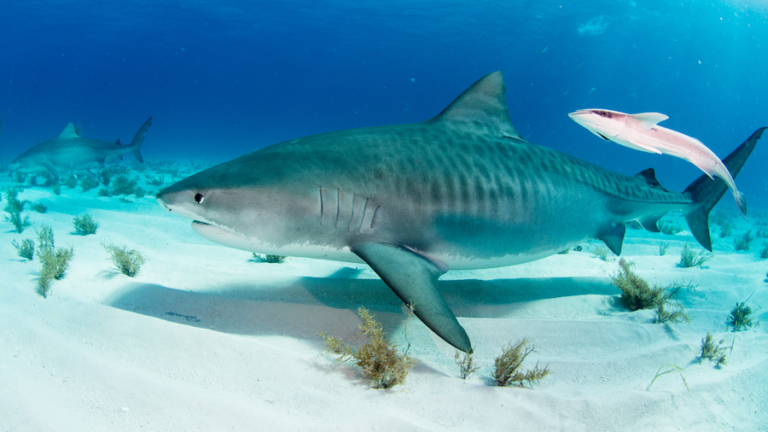
What fascinated me most? In places like Arnhem Land and Kakadu, saltwater crocodiles don’t just dominate rivers, they even share coastal habitats with sharks. That overlap of two top predators says everything about just how adaptable and resilient crocodiles are.
The Basics: What Is a Crocodile?
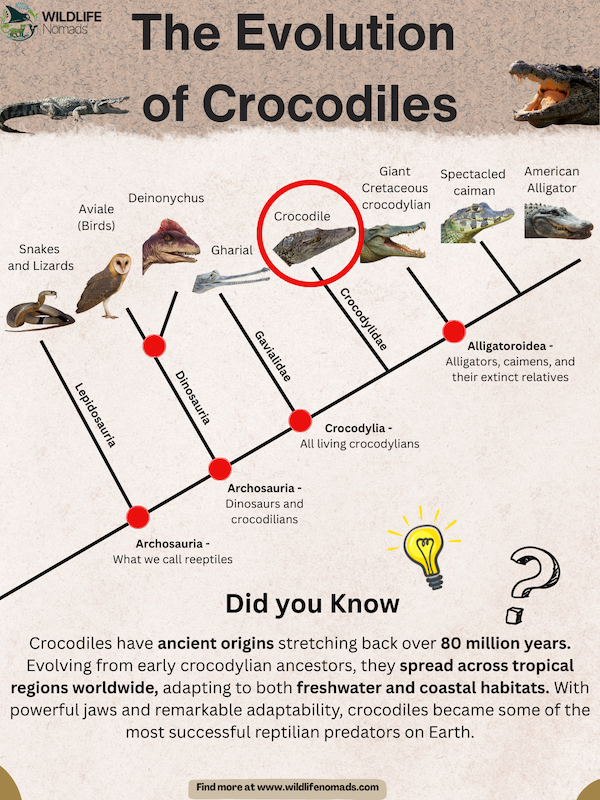
Is a crocodile a reptile? Yes. Crocodiles belong to the reptile order Crocodylia. They are ancient animals, often called “living dinosaurs,” with ancestors dating back over 200 million years.
Appearance of a crocodile:
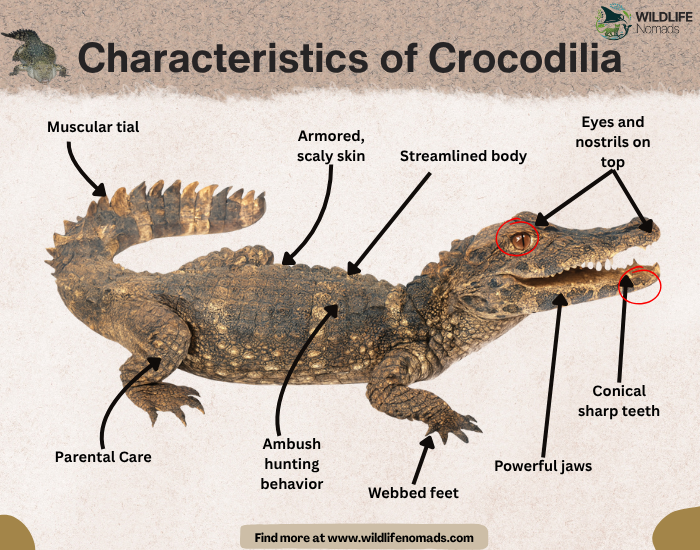
- Long, muscular bodies built for stealth.
- Powerful tails for propulsion in water.
- Conical teeth designed for gripping prey.
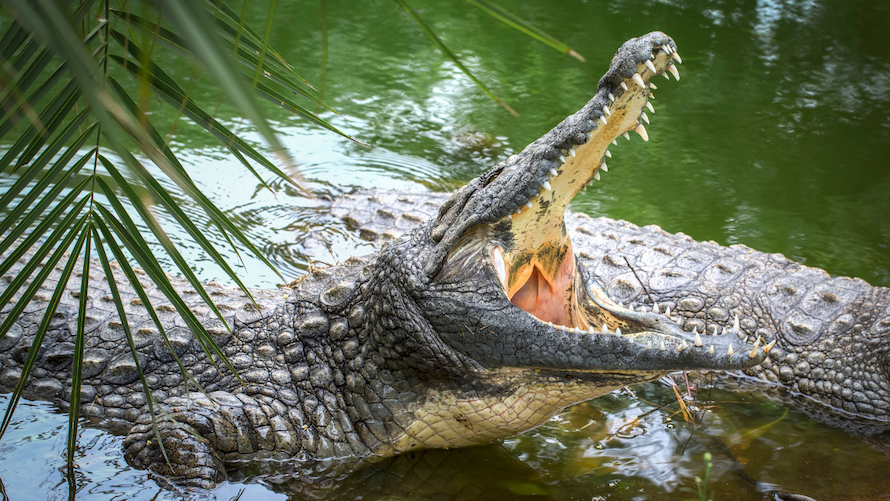
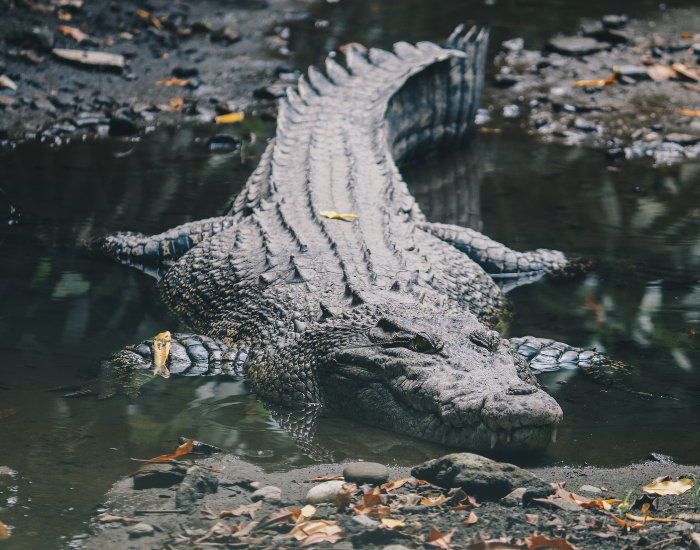
- Eyes, ears, and nostrils placed on top of the head so they can remain almost completely submerged while stalking.
- Broad upper jaw that overlaps the lower jaw, influencing bite strength and making some teeth visible even when the mouth is closed.
- Webbed feet as a physical adaptation for swimming, aiding movement in water.
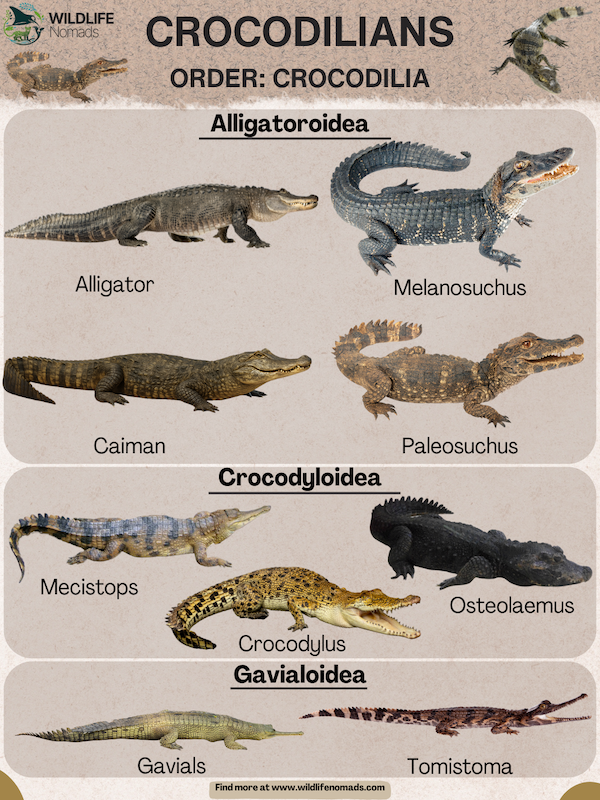
Crocodiles are perfectly adapted ambush predators, with their physical appearance fine-tuned for survival in both freshwater and saltwater habitats. Different to similar reptiles like alligators or caimans.
10 Fascinating Facts About Crocodiles in Australia
1. Two Crocodile Species Call Australia Home
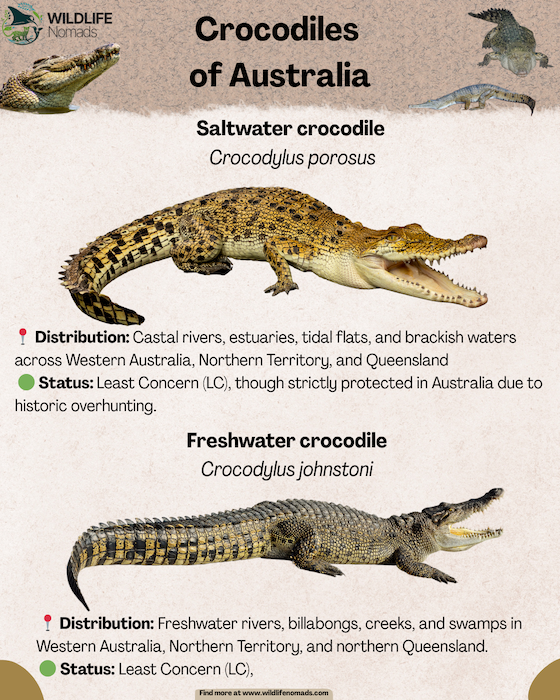
Australia is unique because it has two distinct species of crocodiles. The saltwater crocodile (Crocodylus porosus), also known as the estuarine crocodile, is the largest reptile in the world and a true apex predator. Sharing its range is the smaller freshwater crocodile (Crocodylus johnstoni), which rarely grows beyond 3 meters. While saltwater crocodiles dominate tidal rivers, estuaries, and brackish water habitats, freshwater crocodiles stick to inland rivers and freshwater environments. As summary:
Saltwater Crocodile (Crocodylus porosus)
- Also known as the estuarine crocodile.
- The largest reptile on Earth, reaching over 7 meters in rare cases.
- Found in northern Australia (Queensland, Northern Territory, Western Australia), Southeast Asia, and surrounding islands.
- Apex predators that can take down large prey, including water buffalo, wild boar, and even sharks.
- Saltwater crocodiles are among the most active crocodilian species and have a broader range of prey compared to most species.
Freshwater Crocodile (Crocodylus johnstoni)
- Smaller, rarely exceeding 3 meters.
- Found in northern freshwater rivers, swamps, and billabongs.
- Diet mainly consists of fish, insects, and smaller animals.
- Less aggressive toward humans, but still capable of serious injury if provoked.
2. The Largest Reptile on Earth
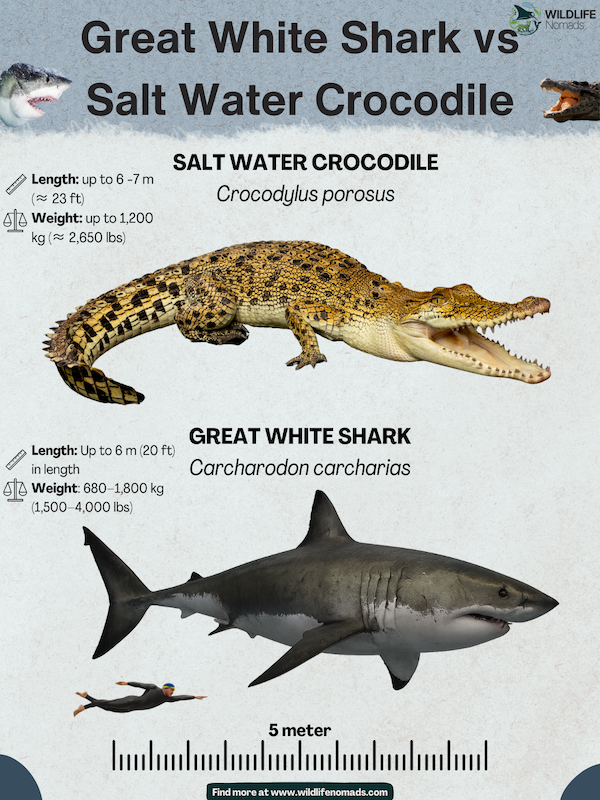
The saltwater crocodile is the heavyweight champion of reptiles and is recognized as the largest species of living reptile. Males commonly exceed 5 meters, with large crocodiles varying considerably in length and weight, some adults can weigh over 1,000 kg. The largest crocodiles ever reliably measured, such as “Lolong,” reached 6.17 meters, and there are unverified reports of even larger individuals.
Seeing these giants in person, whether in Arnhem Land or northern Queensland, reminds me of watching massive crocs on Mexican rivers as a kid, only here, they share space with sharks along the coast. To visualize how a massive “salties” measures up against other apex predators, test them out on ourAnimal Size Comparison Tool.
3. Where Crocodiles Live in Northern Australia
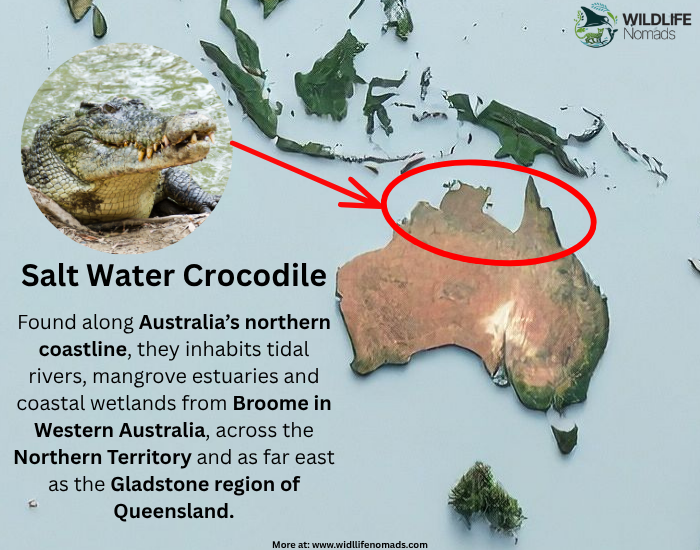
Where do crocodiles live in Australia? Their distribution is mostly tropical. Saltwater crocodiles live across northern Australia, from the Kimberley region in Western Australia through the Northern Territory to Cape York in north Queensland. They thrive in tidal rivers, estuaries, and even open seas, and are commonly found in various river systems, which are crucial for their habitat and seasonal movements. Saltwater crocodiles are also found in the Solomon Islands as part of their broader geographic range. Freshwater crocodiles live in inland rivers, creeks, and freshwater swamps. When I first traveled north, it felt just like Tabasco again, warning signs on river banks and locals reminding you never to swim where crocs are found.
in a nutshell:
- Saltwater crocodiles inhabit estuaries, coastal rivers, brackish waters, and even open seas. They’re commonly found in the Northern Territory, Arnhem Land, and northern Queensland.
- Freshwater crocodiles prefer inland freshwater rivers, lakes, and swamps, often overlapping with salties but in less coastal areas.
Where are crocodiles most commonly found?
- Northern Territory’s Mary River (one of the most crocodile-infested rivers in the world).
- Kakadu National Park.
- Queensland’s Daintree River.
- Western Australia’s Kimberley region.
Some saltwater crocodiles have even been spotted far out at sea, demonstrating their incredible adaptability.
4. Ancient Reptiles With Dinosaur Roots
The saltwater crocodile is the heavyweight champion of living reptiles, but even a 6-meter “salty” looks small compared to its prehistoric ancestors like Deinosuchus, a giant crocodilian that hunted dinosaurs. Males commonly exceed 5 meters, with large crocodiles varying considerably in length and weight, some adults can weigh over 1,000 kg.
The largest crocodiles ever reliably measured, such as “Lolong,” reached 6.17 meters, and there are unverified reports of even larger individuals. Seeing these giants in person, whether in Arnhem Land or northern Queensland, reminds me of watching massive crocs on Mexican rivers as a kid, only here, they share space with sharks along the coast.
5. Crocodiles Can Live in Both Saltwater and Freshwater
Crocodiles are remarkably versatile. Saltwater crocodiles dominate tidal zones, estuaries, and brackish waters, but they also travel far out to sea. Saltwater crocodiles possess specialized salt glands that allow them to excrete excess salt, enabling them to thrive in marine and brackish habitats. Here in Australia is common to look fro crocodile signs in both the ocean and rivers just in case.
Freshwater crocodiles, on the other hand, stick to inland freshwater habitats like rivers and billabongs. Their ability to move between salt and fresh water is one reason they remain such successful predators in the modern world.
6. What Crocodiles Eat
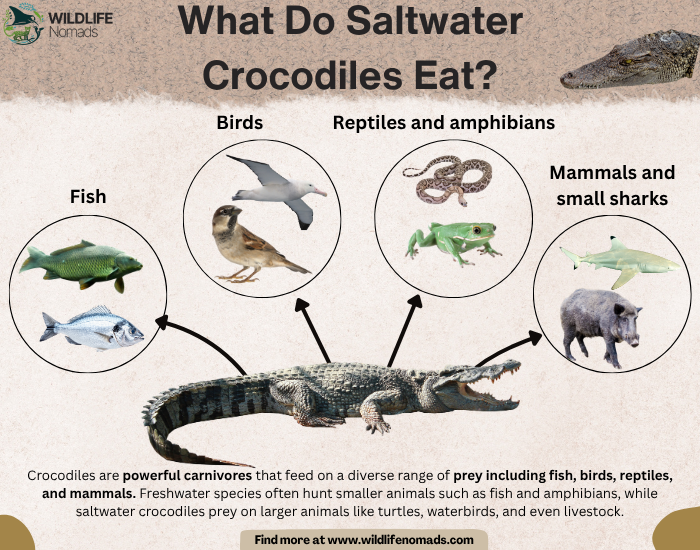
What do crocodiles eat? The answer depends on the species. Saltwater crocodiles eat large prey such as wallabies, feral pigs, sea turtles, and fish, and they’re known to ambush animals at the water’s edge. They’ve even been recorded eating different types of sharks, and in areas where human settlements overlap with crocodile habitats, they have been known to prey on pet dogs. Freshwater crocodiles tend to eat small prey like fish, small amphibians, insects, and other small animals such as lizards and small mammals. Both species are opportunistic feeders, and crocodiles live long enough to refine their hunting skills throughout their lives.
Crocodiles are opportunistic carnivores.
- Saltwater crocodiles eat: fish, turtles, sea birds, wallabies, feral pigs, and even sharks.
- Freshwater crocodiles eat: insects, small fish, and amphibians.
Juvenile crocodiles face predation from avian predators such as sea eagles, which can significantly impact their survival rates.
Crocodiles also scavenge carrion. Their ability to survive long periods without eating makes them especially resilient in harsh environments.
7. Crocodile Eggs and the Breeding Season
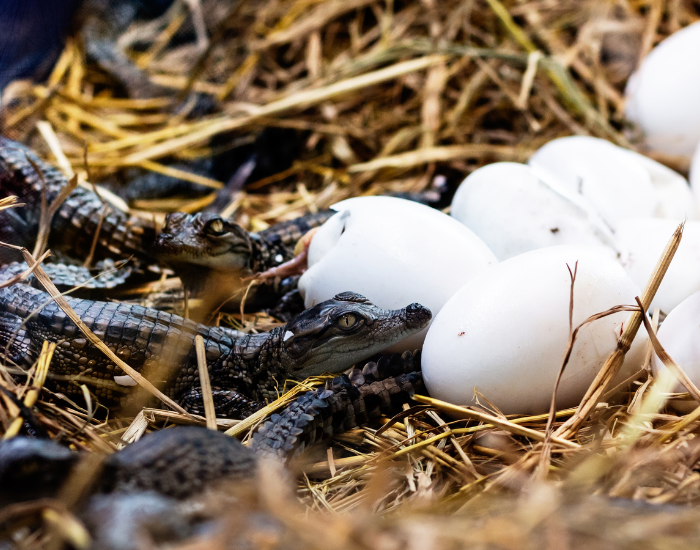
During the breeding season, which coincides with the wet season, female crocodiles build mounded nests of mud and vegetation along riverbanks. A clutch can contain 40–60 crocodile eggs.
What’s remarkable is that the nest temperature determines the sex of the hatchlings. This phenomenon, called Temperature-Dependent Sex Determination (TSD), doesn’t follow a simple “warm-for-males, cool-for-females” rule. Instead, saltwater crocodiles exhibit a more complex pattern:
- Females are produced at both cooler temperatures (below approximately 30°C) and very warm temperatures (above approximately 34°C).
- Males are only produced within a specific, intermediate temperature range (around 31°C to 33°C).
This means the sex ratio of a nest is highly dependent on its construction and location. After hatching, young saltwater crocodiles are small and vulnerable, feeding primarily on insects, small fish, and amphibians during their early life stages.
8. The Appearance of a Crocodile
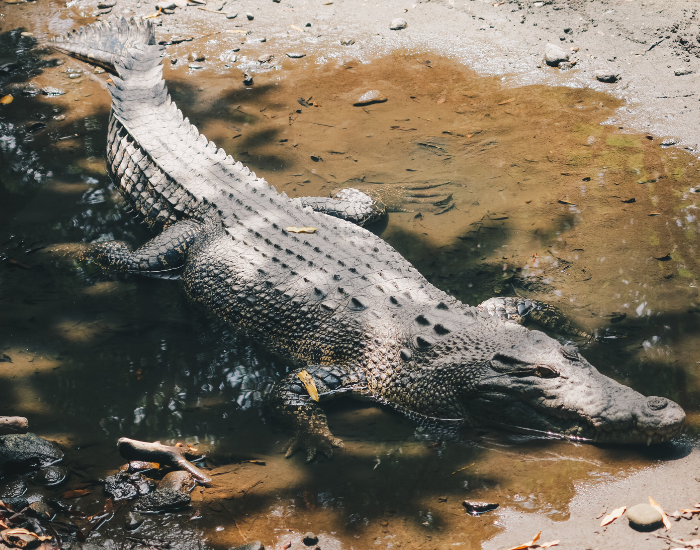
The appearance of a crocodile is built for ambush. Their muscular tails propel them with explosive power. Their upper and lower jaws close with one of the strongest bite forces measured in the animal kingdom. Bodies are armored in bony scutes, and their eyes, ears, and nostrils are positioned on top of the head, perfect for stalking prey while remaining nearly invisible in shallow water.
9. Aggressive Species With Warning Signs Everywhere
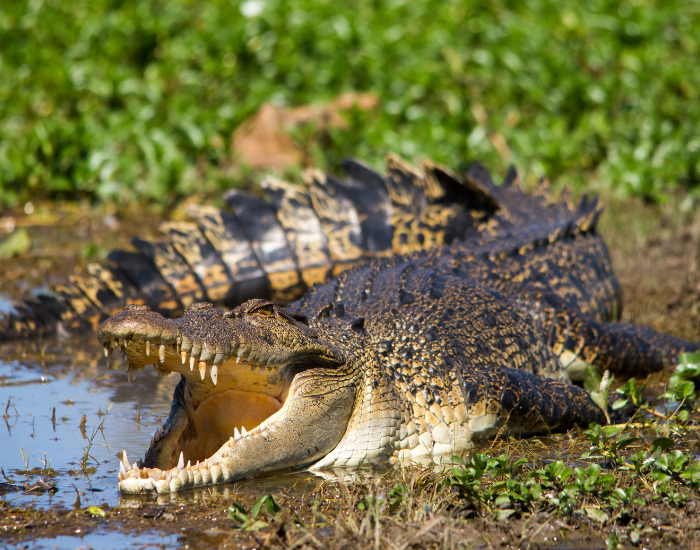
Saltwater crocodiles are notorious as an aggressive species. They’re territorial, especially large males, and will readily defend their patch of river. This is why crocodile warning signs are plastered across northern rivers, creeks, and beaches. In some regions, authorities identify and relocate problem crocodiles, those that repeatedly threaten humans or livestock, to reduce conflict and improve safety. Freshwater crocodiles are generally less aggressive, but they can still bite if threatened. Having grown up in Mexico where river crocs caused regular attacks, seeing the same caution in Australia felt familiar, it’s a reminder that respect is essential in crocodile country.
10. Crocodiles Tend to Outlive Most Predators
Crocodiles live for decades, often 70 years or more in the wild. With few natural predators, they remain dominant in their ecosystems. Humans are their biggest threat, but strict protection laws in Australia since the 1970s have allowed populations to recover. Today, conservation efforts focus on coexistence, balancing human safety with the survival of one of the world’s most successful predators.
Behavior and Ecology
Crocodiles are ambush predators. They lie in wait, sometimes for hours, before exploding into action. Most crocodiles prefer brackish estuaries and river systems, adapting to these habitats for optimal hunting.
- Saltwater crocodiles: Opportunistic feeders, anything from fish and birds to wild pigs and even feral dogs can end up in their jaws. Australian saltwater crocodiles are particularly known for their wide range and aggressive hunting strategies.
- Freshwater crocodiles: More specialized hunters, focusing on fish, frogs, and small prey.
Despite their lethargic appearance, crocodiles can launch themselves at lightning speed. Their upper and lower jaws are designed for a crushing bite, making them some of the most successful predators in history
Conservation Status and Efforts
- Saltwater crocodiles: Once hunted heavily for leather, now listed as Least Concern but strictly protected in Australia. Populations have rebounded dramatically since the 1970s.
- Freshwater crocodiles: Stable but vulnerable to threats like invasive cane toads, which are toxic when eaten.
Conservation measures include:
- Protected areas (Kakadu, Daintree, and Kimberley).
- Public education and crocodile warning signs at waterways.
- Sustainable tourism and regulated crocodile farming.
Crocodiles and Humans: Attacks and Safety
Saltwater crocodiles are one of the deadliest animals in Australia. They are responsible for most attacks on humans in Australia. They are territorial and aggressive, especially during breeding season.
Safety Tips:
- Yes, I know it ound obvious, but believe, people still do it. Never swim in areas marked with crocodile warning signs!
- Stay well back from riverbanks and estuaries, you generally can feel croc vibe in these enviornments.
- Avoid camping near the water’s edge, that would be perfect croc territory.
- Do not feed crocodiles! Again, it sounds obvious, but people do it. It encourages dangerous behavior.
Freshwater crocodiles are less aggressive but will attack if threatened or handled.
The Latest Science on Crocodiles in Australia
Crocodiles might look like living fossils, but scientists in Australia are constantly uncovering new insights about their role in ecosystems. One recent study took a long-term perspective on their ecological importance. Recent research conducted a 50-year review of saltwater crocodiles (Crocodylus porosus) in northern Australia, showing how the population’s massive recovery has reshaped nutrient flows in rivers and floodplains. As crocodile biomass grew from a few thousand to over 100,000 individuals, their combined prey consumption increased nearly tenfold, and their nutrient contributions to waterways rose dramatically, altering both top-down predation and bottom-up ecosystem processes.
Other work has focused on their movements, and the results are just as impressive. Scientific research tracked estuarine crocodiles during the breeding and nesting season and found that some individuals roamed hundreds of kilometers, crossing river systems and even venturing into the ocean. This confirmed earlier satellite tracking bin 2007, which showed long-distance coastal travel and homing ability in translocated crocodiles. Together, these studies remind us that when you see a crocodile warning sign in northern Australia, it’s not about a single river or billabong, these giants are part of a much bigger, connected landscape.
FAQ: Crocodiles of Australia
The Mary River in the Northern Territory is often called the most croc-infested river, with estimates of one crocodile per two kilometers.
In tropical northern Australia—Northern Territory, Queensland, and Western Australia.
Alligators (like American alligators) have broader snouts and are mostly found in the southeastern U.S., while crocodiles tend to have narrower, V-shaped snouts and wider distribution.
Occasional sightings extend into central Queensland, but they are primarily restricted to the tropical north.
Australian Crocodile Biology & Science Quiz 🐊
Ten fun study questions covering crocodile species, temperature-dependent sex determination, habitat overlap with sharks, and safety tips. Test your retention!
Multiple Choice
The Largest Predator in Australia
Crocodiles are not just predators, they are keystone species that shape entire ecosystems. In Australia, they remind us that true wilderness is both beautiful and dangerous.
From the rivers of Mexico where I grew up, to the estuaries of northern Australia, crocodiles have always symbolized survival and raw power. Understanding where crocodiles are found, how they behave, and how to coexist safely is essential as humans continue to share landscapes with these ancient reptiles.
Their story is one of resilience, proof that even in the modern world, some creatures still rule as they have for millions of years.
References:
Campbell, H. A., Dwyer, R. G., Irwin, T. R., & Franklin, C. E. (2013). Home range utilisation and long-range movement of estuarine crocodiles during the breeding and nesting season. PLOS ONE, 8(5), e62127. https://doi.org/10.1371/journal.pone.0062127
Campbell, M. A., Udyawer, V., White, C., Baker, C. J., Kopf, R. K., Fukuda, Y., Jardine, T. D., Bunn, S. E., & Campbell, H. A. (2025). Quantifying the ecological role of crocodiles: A 50-year review of metabolic requirements and nutrient contributions in northern Australia. Proceedings of the Royal Society B, 292(2042), 20242260. https://doi.org/10.1098/rspb.2024.2260
Fukuda, Y., Moritz, C., FitzSimmons, N. N., Jang, N., Webb, G., Lindner, G., Campbell, H., Christian, K., Leeder, S., & Banks, S. (2024). Natal origin and dispersal of problem saltwater crocodiles in the Darwin Harbor, Australia. The Journal of Wildlife Management, 88(2), e22525. https://doi.org/10.1002/jwmg.22525
Fukuda, Y., Webb, G., Manolis, C., Delaney, R., Letnic, M., Lindner, G., & Whitehead, P. (2011). Recovery of saltwater crocodiles following unregulated hunting in tidal rivers of the Northern Territory, Australia. The Journal of Wildlife Management, 75(6), 1253–1266. https://doi.org/10.1002/jwmg.191
Read, M. A., Grigg, G. C., Irwin, S. R., Shanahan, D., & Franklin, C. E. (2007). Satellite tracking reveals long distance coastal travel and homing by translocated estuarine crocodiles, Crocodylus porosus. PLOS ONE, 2(9), e949. https://doi.org/10.1371/journal.pone.0000949