.
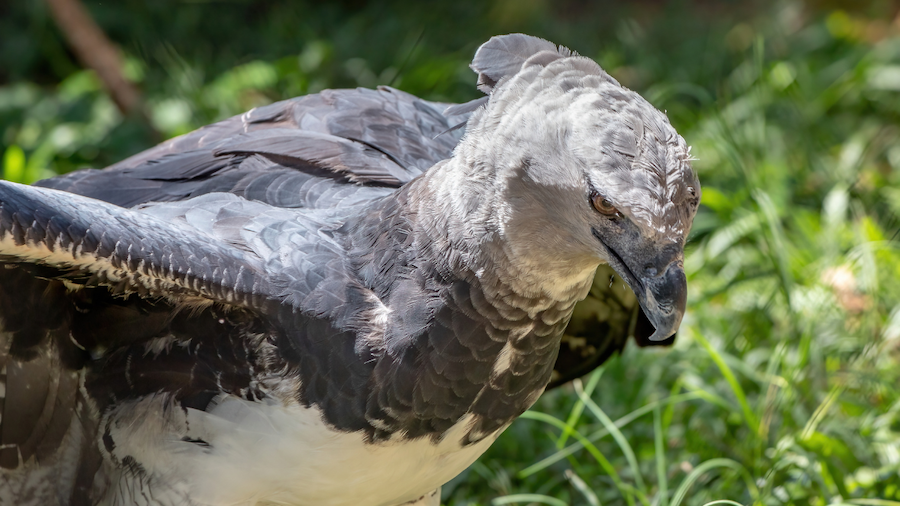
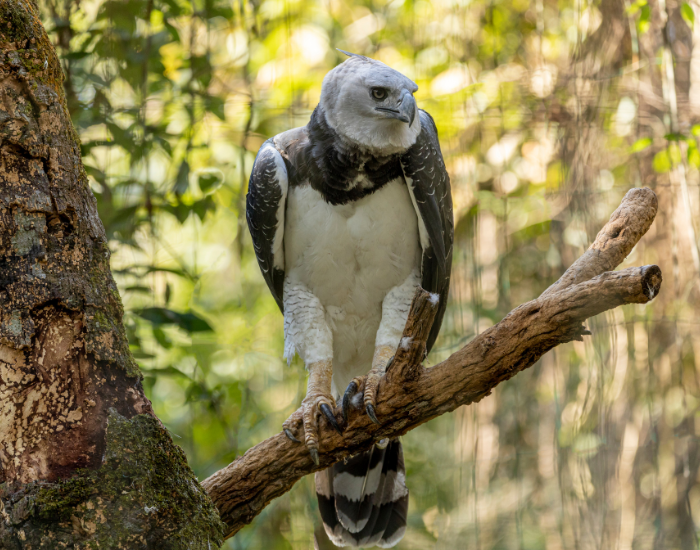
Have you ever wondered what it would feel like to lock eyes with one of nature’s most formidable predators? The harpy eagle (Harpia harpyja) isn’t just another type of eagle, it’s a living relic of prehistoric times, almost mythical, perfectly adapted to rule the rainforest canopy. With talons as large as a grizzly bear’s claws and a wingspan that stretches nearly 8 feet, this bird inspires awe in everyone who encounters it.
When people ask, “What is a harpy eagle?” the truth is more extraordinary than most expect. Known locally as the “harpía real” or (‘royal harpy’) in Latin America for the way its crest make them look like royalty, this apex predator is a keystone species of Central and South America. From southern Mexico to northern Argentina, wild harpy eagles still soar over huge trees like the kapok, though their numbers are dwindling.

What Makes the Harpy Eagle the World’s Most Powerful Raptor?
The harpy eagle isn’t just big, it’s a specialist predator built for ambush hunting in dense forests.
- Size: Up to 3.5 feet tall, with females reaching 20 pounds.
- Wingspan: 6.5–7.5 feet, broad, but shorter than soaring raptors for maneuverability in the forest canopy.
- Talons: Rear talons grow to 5 inches, comparable to grizzly bear’s claws.
- Harpy Eagle Mass: Females weigh nearly double that of males, a common trait among large raptors.
These birds are an apex predator, sitting at the very top of the food chain. Their rear talons can exert crushing force on prey, allowing them to snatch up different types of prey.
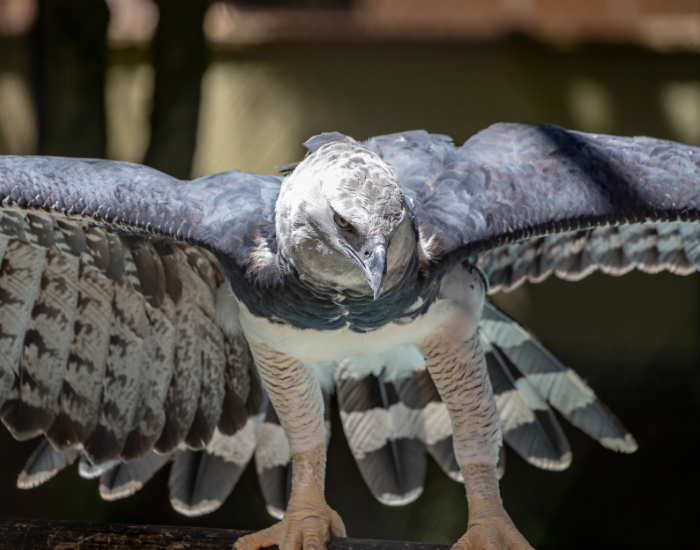
Harpy Eagle Size Comparison: Bigger Than Bald Eagles?
One of the most common questions is whether harpy eagles are larger than the bald eagle, America’s national bird. The answer? Yes… at least in terms of mass and power.
Harpy Eagle vs Bald Eagle:
- Weight: Harpy females up to 20 lbs, bald eagle females 14 lbs.
- Length: Harpy 35–41 in, bald eagle 28–40 in.
- Wingspan: Bald eagles slightly longer at 7–8 ft, harpy 6.5–7.5 ft.
While the wingspans are similar, the harpy’s dense build gives it far more raw power. They’re like the heavyweight boxers of the eagle world, built for close-quarters combat in the jungle canopy rather than soaring over open water.

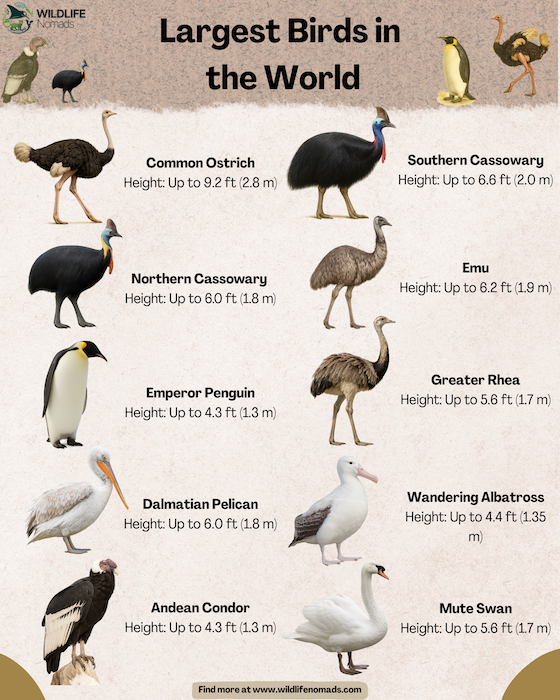
What Bird Is Bigger Than a Harpy Eagle?
I already wrote about the biggest birds in the world, and even though the harpy eagle is quite massive, a few other birds take the prize. The Philippine eagle and Steller’s sea eagle sometimes rival the harpy in size. Steller’s may reach 20 pounds, and the Philippine eagle often exceeds 3.5 feet in length. Still, when it comes to attack prey, grip strength, and rainforest hunting prowess, the harpy is unmatched.
The largest harpy eagle ever recorded was a female weighing nearly 22 lbs (10 kg), larger even than some large raptors of the north.
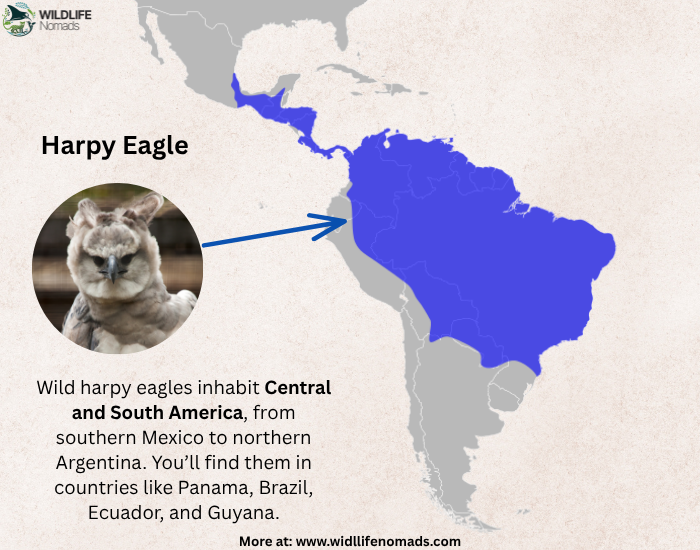
Range and Habitat: Do Harpy Eagles Live in America?
Yes, just not the United States. Wild harpy eagles inhabit Central and South America, from southern Mexico to northern Argentina. You’ll find them in countries like Panama, Brazil, Ecuador, and Guyana.
- They need nesting sites in emergent trees like kapoks.
- They defend massive territories, sometimes over 25 square miles.
- They depend on abundant prey: howler monkeys, sloths, iguanas, and other mammals.
If you’re wondering whether harpies exist in the U.S., the answer is no. Their reliance on huge trees and unbroken rainforest excludes them from North America.
Want to see where the harpy eagle lives? Find it high in the emergent layer in my interactive climb down the Amazon rainforest.
Hunting Behavior: Harpy Eagle Predation
These apex predator eagles employ hunting strategies that are both patient and explosive. They’ll perch motionlessly for hours in the tallest trees, using their exceptional hearing to locate prey moving through the canopy. When they identify a target – whether it’s a three-toed sloth, howler monkeys, or even a young deer – they launch into action with devastating efficiency.
Their broad wings and relatively short wingspan (compared to soaring eagles) make them incredibly maneuverable through dense forest. Think of these raptors as the fighter jets of the eagle world – built for agility rather than long-distance cruising.

Diet includes:
- Sloths (primary prey)
- Monkeys (spider monkeys, capuchin monkeys, and howler monkeys)
- Coatis and kinkajous
- Large lizards and iguanas
- Occasionally other birds and young deer
Males usually take smaller prey, while the larger females can overpower larger prey like adult sloths. This natural division of labor allows pairs to maximize hunting success.

Temperament: Are Harpy Eagles Friendly or Violent?
Harpy eagles are not “friendly” in the domestic sense. They’re wild, powerful, and supremely confident. While attacks on humans are almost nonexistent, these birds show little fear when encountered. Researchers often describe the intense feeling of being studied by a harpy, it’s as if the eagle is weighing its options.
Are they violent? Not unless provoked. Their reputation as the most feared eagle comes not from aggression toward humans, but from their dominance in rainforest ecosystems.
The Most Feared Eagle: Power vs. Other Apex Predators
Is this species the most feared eagle? Among rainforest inhabitants, absolutely. Their reputation precedes them throughout Central America and South America, where indigenous cultures have long recognized them as powerful spirit animals and symbols of strength.
What sets these eagles apart from other raptors is their specialization for forest hunting. While golden eagles might be faster in open terrain, and sea eagles like the osprey, might have longer wingspans, no raptor species matches this combination of power, stealth, and forest-adapted hunting skills.
Their fearsome reputation is well-earned:
- Those massive rear talons can exert crushing pressure on prey
- Their silent flight allows them to appear seemingly from nowhere
- Their patience means prey never knows when an attack might come
- Their hunt success rate is remarkably high among raptors

Harpy Eagles vs the So-Called “Harpy Owl”
Sometimes people get confused between the harpy eagle and something they’ve heard called a “harpy owl.” In reality, there is no owl species formally known as the harpy owl, the name comes from mythology, where harpies were half-woman, half-bird creatures.
What causes the mix-up? Harpy eagles have a dramatic feathered crest that, when raised, gives them a slightly “owl-like” appearance. But unlike owls, they do not have a facial disk designed to funnel sound; instead, they rely on keen eyesight and powerful hearing alone.
So while owls and harpies both evolved unique features to hunt in forests, only the harpy eagle (Harpia harpyja) is the true rainforest giant, unmistakable once you see its size, crest, and immense talons.

Breeding and Nesting: Same Nest for Generations
Breeding behavior of harpy eagles is fascinating. They build massive nesting sites of large sticks in the tallest trees, often over 130 feet up.
- Nests can be 5 feet wide and several feet deep.
- They often reuse the same nest for decades.
- Some pairs maintain several nests across their territory.
- They typically lay two eggs, but only the first chick is raised. The second egg is insurance, often abandoned once the first hatches.
The chick fledges after 6–7 months but remains dependent for up to 18 months. This slow cycle means harpies reproduce only every 2–3 years, one reason they’re so vulnerable.
Conservation Status: Harpy Eagle Conservation in Crisis
The harpy eagle is listed as Vulnerable, with some populations critically endangered. Habitat loss is their greatest threat.
Main pressures include:
- Deforestation across the Amazon and beyond.
- Nesting site destruction as emergent trees are logged.
- Human persecution (sometimes shot out of curiosity or fear).
- Climate change shifting prey populations.
In Panama City, the Peregrine Fund has spearheaded raptor research and conservation since 2000, protecting nests and educating local communities. Researchers use camera traps and even acoustic monitoring of sound waves to track wild harpy eagles.
Cultural and Mythological Significance
The name “harpy” comes from Greek mythology, describing winged spirits that were part woman, part bird. Indigenous cultures across South America also revere harpies as powerful eagles, spirit guides, and guardians of the forest.
Panama even made the harpy eagle its national bird, symbolizing strength and wildness.
Latest Research on Harpy Eagles
Over the past decade, scientists have made major strides in understanding the ecology and conservation needs of the Harpy Eagle. Key findings include:
- Genomic insights: A new chromosome-scale reference genome shows that harpy eagle populations have experienced long-term demographic declines over the last 20,000 years. This genomic resource provides critical data for conservation planning.
- Climate projections : Spatial modeling predicts that under high-emission scenarios, the species could lose up to 14.4% of its suitable habitat by 2090, highlighting the importance of protecting intact rainforest landscapes.
- Nest monitoring: Field research in the eastern Amazon found that nest activity peaks when nestlings are present, around 16% of a nest’s 30–36 month cycle, information that helps guide ecotourism and nest-protection programs.
These efforts confirm that harpies require large expanses of rainforest and are highly sensitive to habitat fragmentation.
How Rare Is the Harpy Eagle?
In some areas, like Darien Province, Panama, fewer than 450 remain. Across their range, numbers are declining, making them one of the rarest large eagles in the Americas! It very hard to see in the wild. Their rarity, combined with their amazing agility and unmatched power, makes them a conservation priority.
What You Can Do: Helping Harpy Eagles
- Support groups like The Peregrine Fund and World Land Trust.
- Buy rainforest-friendly coffee, chocolate, and FSC-certified wood.
- Visit conservation sites through eco-tourism.
- Share knowledge, spreading harpy eagle facts raises awareness.

Future for This Species
So, is the harpy eagle a real bird? Yes, though its size and power often feel mythical. It’s not only bigger and more robust than a bald eagle, it’s one of the largest species of raptor alive today.
Is it bigger than a California condor? Not in wingspan, but in strength and predatory power, absolutely.
The harpy eagle’s story is a test of our commitment to the natural world. Protecting them means protecting vast rainforest ecosystems, local communities, and countless other species. Every nest, every egg, and every forest canopy saved brings us closer to ensuring that this apex predator continues to reign for centuries.
The question is not whether harpy eagles are worth saving, it’s whether we are ready to rise to the challenge of conserving them.
References:
Canesin, L. E. C., et al.,(2024). A reference genome for the Harpy Eagle reveals steady demographic decline and chromosomal rearrangements in the origin of Accipitriformes. Scientific Reports, 14, Article 70305. https://doi.org/10.1038/s41598-024-70305-w
Donald, P. F., Fishpool, L. D. C., Ajagbe, A., Bennun, L. A., Bunting, G., Burfield, I. J., Wege, D. C. (2019). Important Bird and Biodiversity Areas (IBAs): The development and characteristics of a global inventory of key sites for biodiversity. Bird Conservation International, 29(2), 177–198. https://doi.org/10.1017/S0959270918000102
Epelboin, L., Mutricy, R., Pelletier, V., Fremery, A., Dechelle, M., Ottema, O., Pfefer, S., Sinasac, J., Uriot, S., Claessens, O., & Miranda, E. B. P. (2025). Unveiling the myth: Harpy Eagle Harpia harpyja attacks on a human in the Amazon Forest. Ecology and Evolution, 15(4), e71266. https://doi.org/10.1002/ece3.71266
Giraldo-Amaya, M., Aguiar-Silva, F. H., Aparicio-U., K. M., & Zuluaga, S. (2021). Human persecution of the Harpy Eagle: A widespread threat? Journal of Raptor Research, 55(2), 281–286. https://doi.org/10.3356/0892-1016-55.2.281
Miranda, E. B. P., et al., (2021). Tropical deforestation induces thresholds of reproductive viability and habitat suitability in Earth’s largest eagles. Scientific Reports, 11(1), 13048. https://doi.org/10.1038/s41598-021-92372-z
Sutton, L. J. (2024). Distribution ecology of the harpy eagle: Spatial patterns and processes to direct conservation planning [Doctoral thesis, University of Plymouth]. PEARL. https://pearl.plymouth.ac.uk/bms-theses/148/