

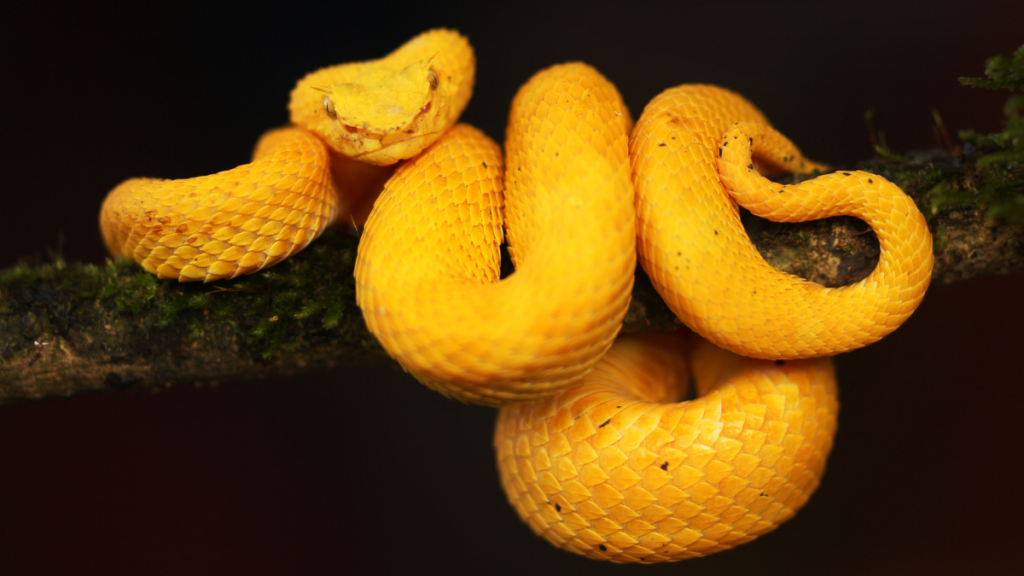
Last month I stood in the reptile hall of London’s Natural History Museum, nose almost against the glass. Row after row of taxidermy animals stared back, and the sheer variety stopped me cold. One case held a coil of preserved yellow snakes, scales still faintly glowing under the gallery lights. My mind snapped back my time working in the Reptile and Amphibian department in a zoo in Mexico where I helped the senior caregivers to feed a yellow viper. I wanted more than a memory, so I went home and started building this list.
I’ve spent years tracking reptiles across rainforests, deserts, and mangrove swamps. Yellow snakes fascinate me because that single color hides wild diversity. Some are completely harmless. A few rank among the most venomous species alive. In this guide I’ll walk you through 15 stunning yellow snakes, where they live, how they behave, and which ones I’ve been lucky enough to meet in the wild.
Color, as you’ll see, tells you almost nothing about danger. So let’s look closer.
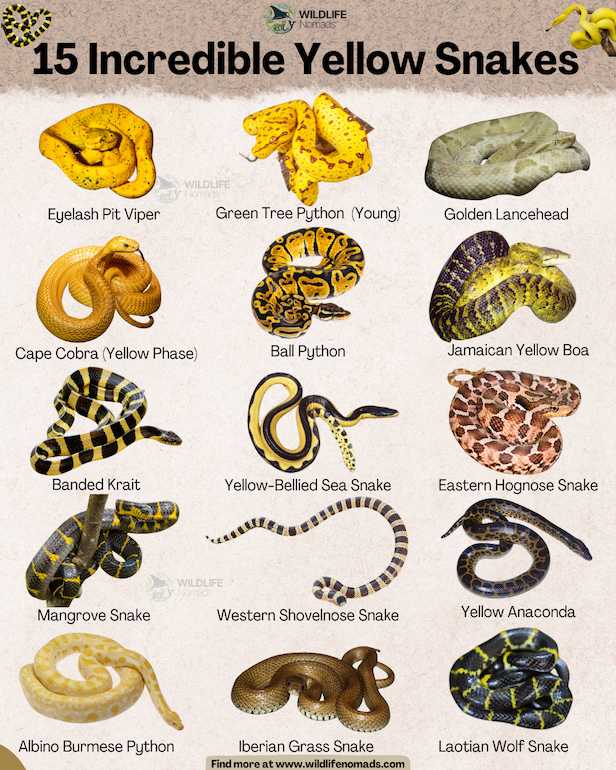
Why Are Some Snakes Yellow?
Yellow coloration appears in a wide variety of snakes around the world. The pigment comes from specialized cells called xanthophores, which sit in the skin and reflect warm tones. Some species wear yellow as camouflage among sun-dappled leaves. Others flash it as a warning.
Here’s the catch. Color alone is never enough to identify whether a snake is dangerous. A bright yellow belly can belong to a harmless rat snake or a lethal sea serpent. Interestingly, a snake’s shade often shifts as it matures and sheds its old skin. Keep that in mind as we work through the list.
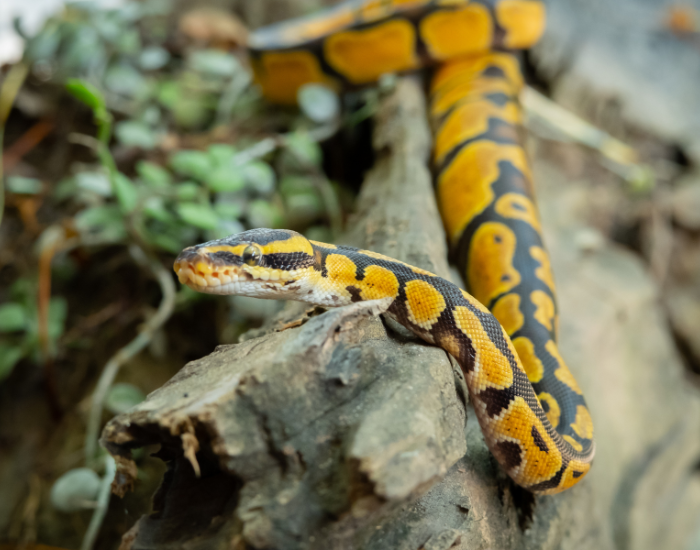
1. Ball Python
Ball pythons are nonvenomous snakes from the grasslands and forests of West and Central Africa. They typically grow to three to five feet long, making them one of the smaller pythons. Breeders love them because captive-bred ball pythons come in hundreds of color morphs, including brilliant yellow.
The name comes from their defense. When threatened, a ball python rolls its body into a tight ball, tucking its head safely inside. I’ve watched wild ones do exactly this, and it’s oddly endearing. Sadly, heavy poaching for the pet trade now threatens their wild population.
2. Jamaican Yellow Boa
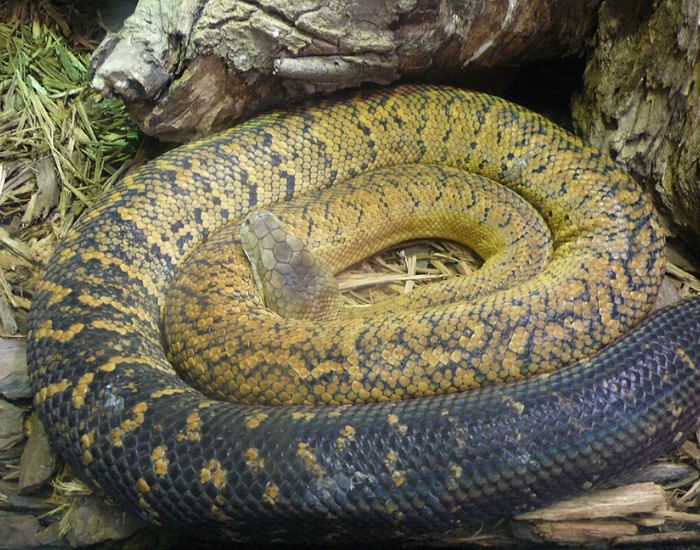
The Jamaican yellow boa is one of the Caribbean’s most striking reptiles. These snakes can reach up to eight feet, though most average around six and a half feet. Their golden bodies fade to dark, almost black, toward the posterior end.
This species is classified as vulnerable, and its population is declining rapidly. Habitat loss drives most of the damage. European colonization also introduced new predators like mongooses, which prey on the babies. Conservation programs in Jamaica now work to protect the forests these boas depend on.
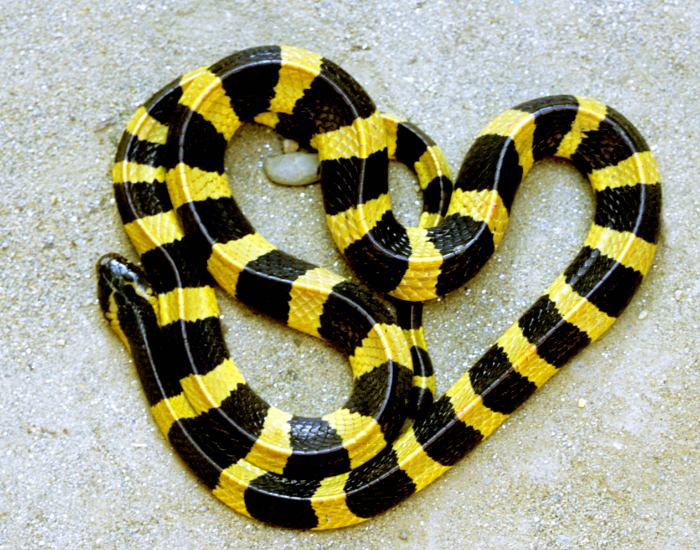
3. Banded Krait
Few venomous snakes look as unmistakable as the banded krait. Its glossy body wears bold black and yellow bands from head to tail. Adults measure six to seven feet, and they carry extremely potent neurotoxic venom.
Banded kraits live across Southeast Asia and southern China. They’re nocturnal and generally nonaggressive, preferring to hide rather than fight. During the day I’ve found them tucked inside termite mounds and rodent burrows. That said, treat any krait with deep respect, because its venom attacks the nervous system.
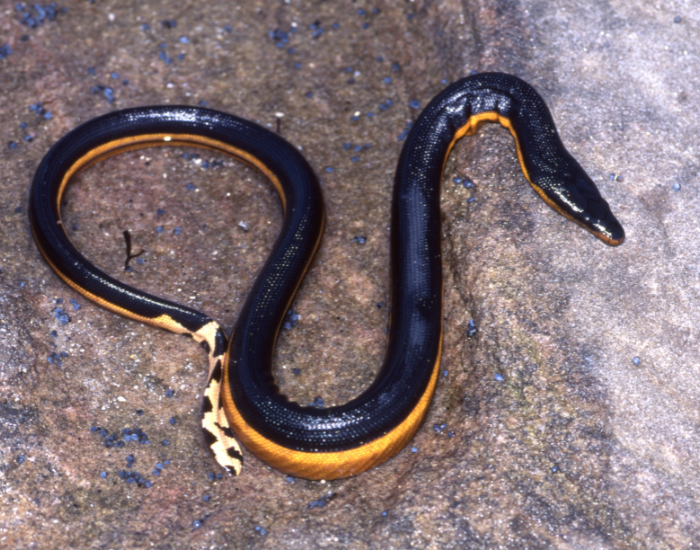
4. Yellow-Bellied Sea Snake
This is the ocean’s great wanderer. The yellow-bellied sea snake drifts through tropical oceanic waters across the Pacific and Indian Oceans. Its top half is jet black, its underside a bright yellow slash, a living warning sign at sea.
Most measure about three and a half feet. Despite its slim build, this is an extremely venomous species with neurotoxic venom that immobilizes fish instantly. Proving that we are still uncovering marine mysteries, scientists in 2017 described a completely xanthic (all-yellow) colony (Hydrophis platurus xanthos) isolated in a Costa Rican gulf, which hunts upside down at the surface.
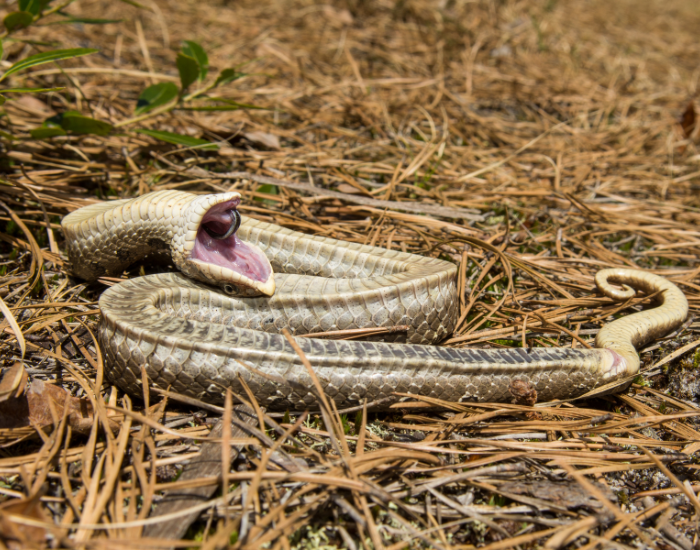
5. Eastern Hognose Snake
The eastern hognose is a drama queen of the reptile world. These snakes grow 17 to 41 inches long and sport an upturned, piglike snout built for burrowing through sandy soil. Color varies widely, and yellow-and-brown morphs are common across the eastern United States.
They primarily hunt toads and shrug off the toxins most predators avoid. Technically they’re mildly venomous, using rear fangs to subdue prey, but they pose no real danger to humans. When cornered, an eastern hognose will hiss, flatten its neck, then flop over and play dead, tongue out, completely convincing.
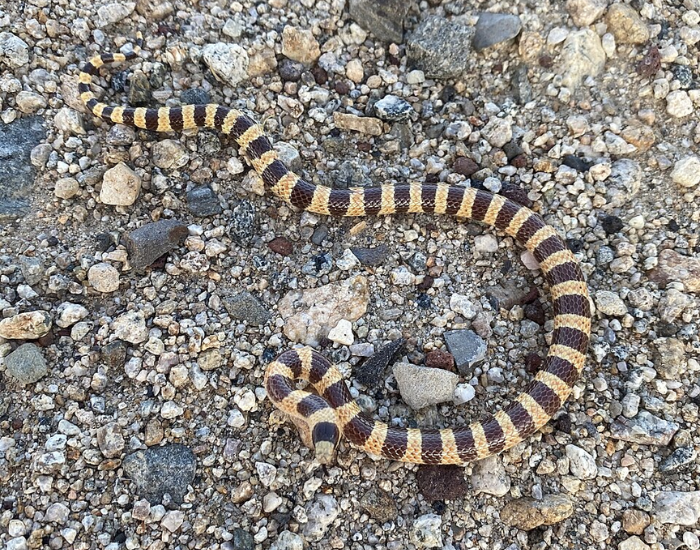
6. Western Shovelnose Snake
Small and understated, the western shovelnose snake measures just 11 to 17 inches. Its creamy or light yellow body carries dark bands, and a flat snout lets it “swim” through loose desert sand. You’ll find these snakes across the deserts of the southwestern United States.
They’re nocturnal, emerging after dark to hunt invertebrates like spiders and insects. Because they spend daylight buried, few people ever see one.
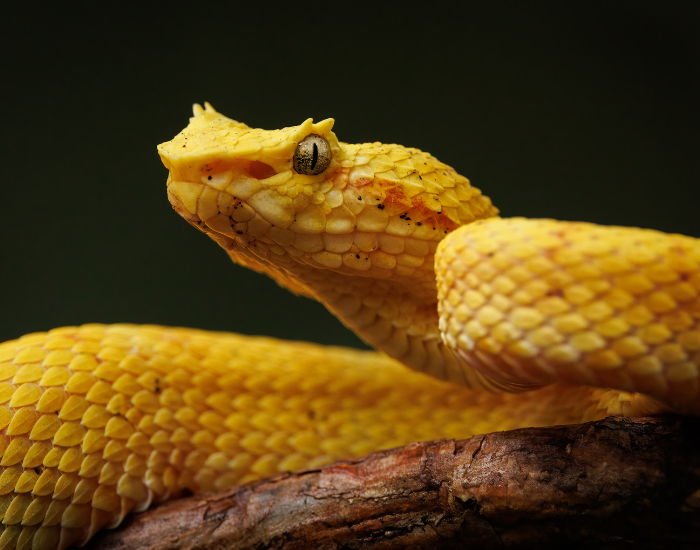
7. Eyelash Viper
Here’s the snake my old professor described, the one that started this whole list. Eyelash vipers prefer wet, humid environments across Central and South America. They measure 22 to 32 inches and come in a stunning palette: yellow, red, pink, green, or brown.
Their name comes from modified scales that bristle above each eye like tiny lashes. These arboreal snakes live in trees, ambushing birds and small mammals with a large, triangular head full of venom. The golden-yellow morph, often called the “oropel,” is one of the most photographed reptiles in the Neotropics.
8. Laotian Wolf Snake
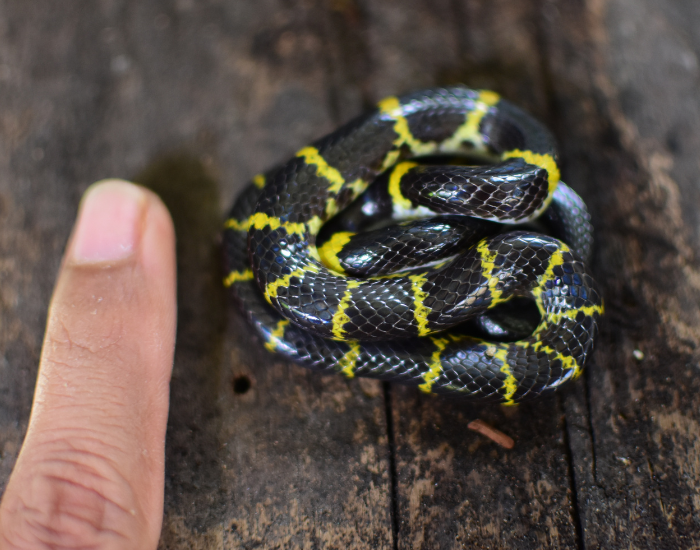
The Laotian wolf snake is a jewel of Southeast Asia. It grows up to 20 inches and wears a glossy black body crossed with lemon-yellow bands. You’ll find it in Laos, Vietnam, and Thailand, usually across mountainous and hilly habitats.
This snake is nonvenomous, though it won’t go quietly. When threatened, a Laotian wolf snake will bite repeatedly, relying on bluff rather than toxin. Its resemblance to the venomous krait is a classic case of mimicry, and it fools plenty of predators.
9. Ring-Necked Snake
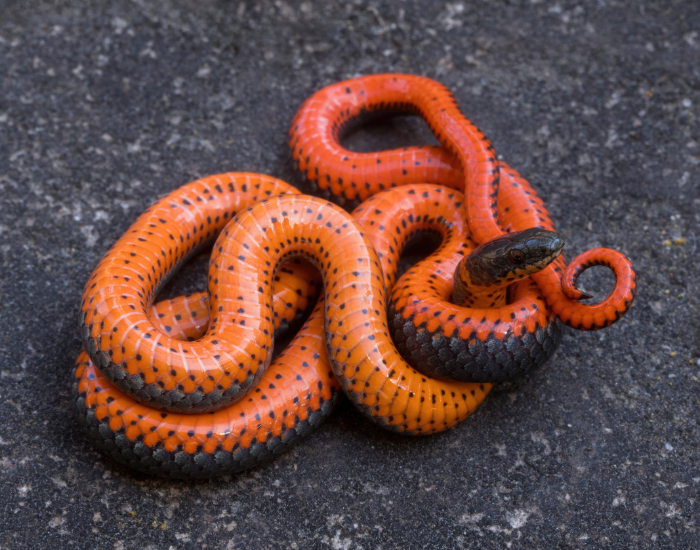
Tiny and secretive, the ring-necked snake measures 10 to 18 inches. A yellow or orange ring circles its neck, and its belly glows with a bright ombre pattern it flashes when alarmed. These nocturnal snakes hide under logs and rocks by day.
They primarily eat earthworms, young snakes, and lizards, using mild venom delivered through rear fangs. Humans have nothing to fear from them.
10. Jungle Carpet Python
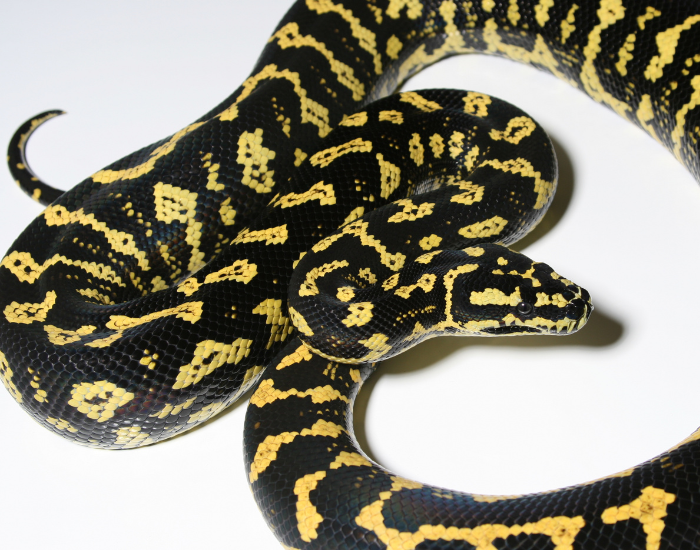
Australia’s rainforests hide one of the world’s most beautiful pythons. Jungle carpet pythons live in the tropical forests of Queensland and typically measure five to seven feet. Their lemon-yellow bodies carry sharp black zigzags, like living stained glass.
These pythons are attentive parents. Females coil around their eggs and care for them until the hatchlings emerge. Because they’re so prized, jungle carpet pythons are legally protected from capture in the wild across Australia.
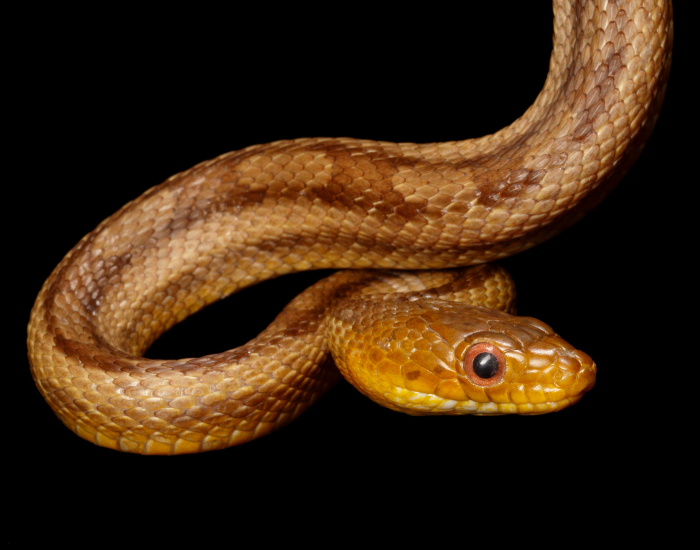
11. Yellow Rat Snake
The yellow rat snake is a familiar sight across the southeastern United States. Adults wear a mustard-yellow body marked with four dark stripes. Interestingly, young and adult yellow rat snakes can look completely different, since juveniles often show blotches instead of stripes.
While modern herpetologists now group these color variations under the single species banner of the Eastern Rat Snake (Pantherophis alleghaniensis), the “yellow rat” remains a distinct regional favorite. They are entirely nonvenomous, strong constrictors that you’ll often find draped in oak trees or gliding through cypress swamps hunting rodents. They might strike if cornered, but they prefer to leave people alone.
12. Corn Snake
Corn snakes are the friendly ambassadors of the reptile world. Wild corn snakes typically show yellow, red, or orange tones and grow anywhere from 24 to 72 inches. They’re gentle, hardy, and one of the most popular pet snakes on Earth.
Their docile nature makes them ideal for beginners. Captive-bred corn snakes now come in a rainbow of morphs, and scientists have even traced the genetics behind them. A famous study linked their amelanistic coloring to a single mutation in the OCA2 gene, biological chemistry written right into their scales.

13. Mangrove Snake
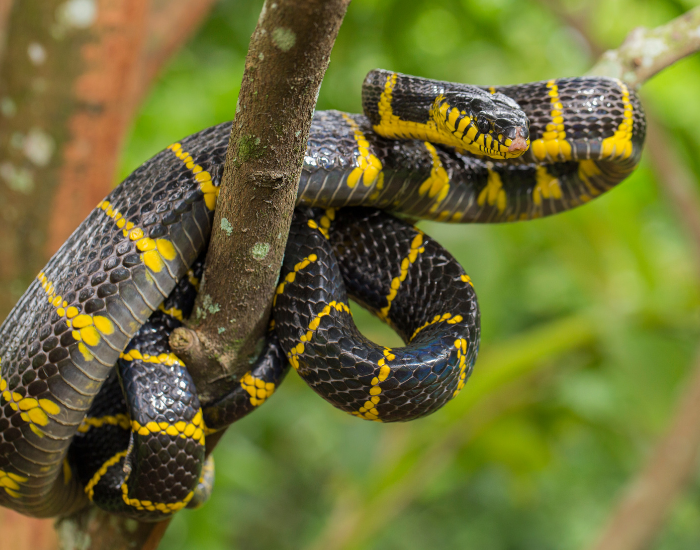
The mangrove snake, sometimes called the yellow-ringed cat snake, is pure drama. These snakes grow six to seven feet and wear a jet-black body crossed with electric yellow bands. They live in the mangrove forests and rainforests of Southeast Asia, from Thailand through Indonesia.
Mangrove snakes are generally nocturnal, though they’ll occasionally bask in the sun. They carry a mild venom delivered through rear fangs and can turn aggressive when cornered. I met one on a night survey in Borneo, and its warning display (mouth gaping, body arched) is unforgettable.
14. Yellow Anaconda
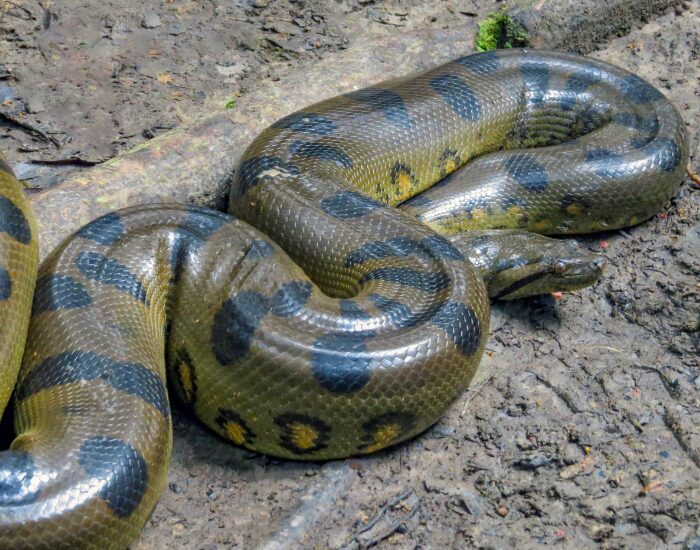
The yellow anaconda is the heavyweight of this list. This thick-bodied constrictor spends much of its life in the water, cruising the wetlands and slow rivers of South America. Its yellow-gold body carries dark blotches for camouflage among reeds.
Smaller than its green cousin, it still reaches impressive lengths and hunts fish, birds, and small mammals. Yellow anacondas are ambush predators, lying motionless until prey drifts near. They’re nonvenomous, killing by constriction alone.
15. Golden Tree Snake
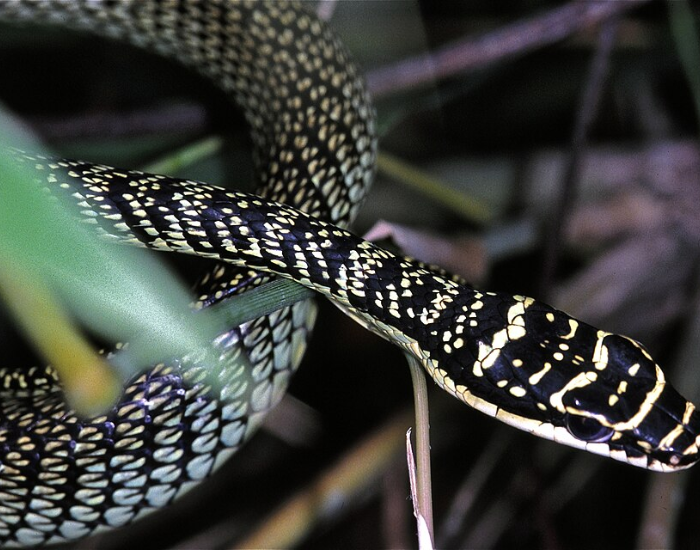
We finish with a snake that seems to defy physics. The golden tree snake is famous for its ability to glide between trees, flattening its body to sail through the air. It ranges across South and Southeast Asia, including the forests of Thailand.
These mildly venomous colubrids pose no danger to humans and feed mostly on lizards. Watching one launch from a branch and ripple through the air felt like witnessing a magic trick. Among all yellow snakes, few move with such astonishing grace.
A Quick Word on Look-Alikes
Before we hit the FAQ, a caution I give every student. Most yellow snakes people encounter in North America are completely harmless, garter snakes, rat snakes, and kingsnakes like the eastern black kingsnake, Lampropeltis nigra. Even so, several dangerous species share similar tones abroad. So never rely on color, and never handle a wild snake you can’t confidently identify.
Frequently Asked Questions
Mangrove snakes are only mildly venomous. They belong to the rear-fanged colubrids, so delivering venom to a human is difficult. A bite may cause local swelling and discomfort, but it rarely poses a serious medical threat. Still, they can be aggressive, so it’s best to admire them from a distance.
Not really, at least not for beginners. Mangrove snakes are nervous, defensive, and prone to biting when handled. Their mild venom and skittish nature make them a species for experienced keepers only. A docile corn snake or captive-bred ball python is a far better first pet.
It depends entirely on the species, not the color. Many yellow snakes, such as corn snakes and rat snakes, are completely harmless. Others, like the banded krait and yellow-bellied sea snake, rank among the most venomous species alive. Always identify before you assume.
Can You Name That Yellow Snake? 🐍
A 15-photo identification challenge — the wrong answers are deliberately tricky look-alikes, especially the black-and-yellow banded species. Go back and change any answer before you score.
Which snake is this?
The Real Lesson in All That Yellow
Standing in that museum, I assumed yellow was just yellow. Fifteen species later, the truth is far richer: that single color spans harmless pets, ocean wanderers, and neurotoxic hunters, each shaped by its own habitat and history. Yellow snakes remind us that nature rarely fits our tidy shortcuts.
So the next time a flash of gold slips through the leaves, pause and look closer, but keep your distance. If you loved meeting these reptiles, tell me in the comments which one surprised you most.
References:
Cañas, C. A., Erazo-Martínez, V., Pérez-Uribe, V., Castaño-Valencia, S., & Castro-Herrera, F. (2024). Envenomation by eyelash viper Bothriechis schlegelii (Berthold, 1846) in southwestern Colombia. Wilderness & Environmental Medicine, 35(1), 78–85. https://doi.org/10.1177/10806032231222353
Fernández, J., Neri-Castro, E., Bénard-Valle, M., Sánchez, E. E., & Alagón, A. (2018). Venom gland transcriptomics and microRNA profiling of juvenile and adult yellow-bellied sea snake, Hydrophis platurus, from Playa del Coco (Guanacaste, Costa Rica). Toxicon, 153, 96–105. https://www.sciencedirect.com/science/article/abs/pii/S0041010118303702
Gutiérrez, J. M., et al. (2022). Biological and medical aspects related to the yellow-bellied sea snake Hydrophis platurus (Linnaeus, 1766): A view from Colombia. Travel Medicine and Infectious Disease, 49, 102410. https://www.sciencedirect.com/science/article/abs/pii/S1477893922001569
Muñoz-Gómez, N., et al. (2021). Individual variations in the protein profiles and functional activities of the eyelash palm pit-viper (Bothriechis schlegelii) venom from the Colombian southwest region. Acta Tropica, 224, 106136. https://www.sciencedirect.com/science/article/abs/pii/S0001706X21002928
Newman, C. E., Wilson, B. S., Henderson, R. W., Larson, K. W., Reynolds, R. G., & Tzika, A. C. (2020). Review of the Jamaican boa (Chilabothrus subflavus): Biology, ecology, and conservation management of a vulnerable species. Herpetological Conservation and Biology, 15(2), 343–357. https://www.herpconbio.org/Volume_15/Issue_2/Newman_etal_2020.pdf
Ullate-Agote, A., Milinkovitch, M. C., & Tzika, A. C. (2015). Amelanism in the corn snake is associated with the insertion of an LTR-retrotransposon in the OCA2 gene. Scientific Reports, 5, 17118. https://doi.org/10.1038/srep17118




.jpg)
