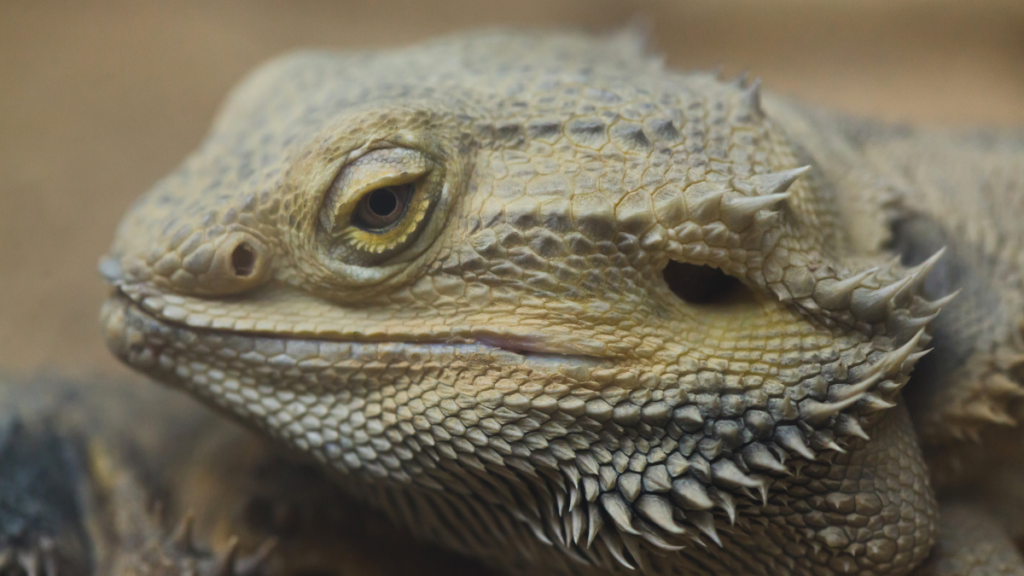
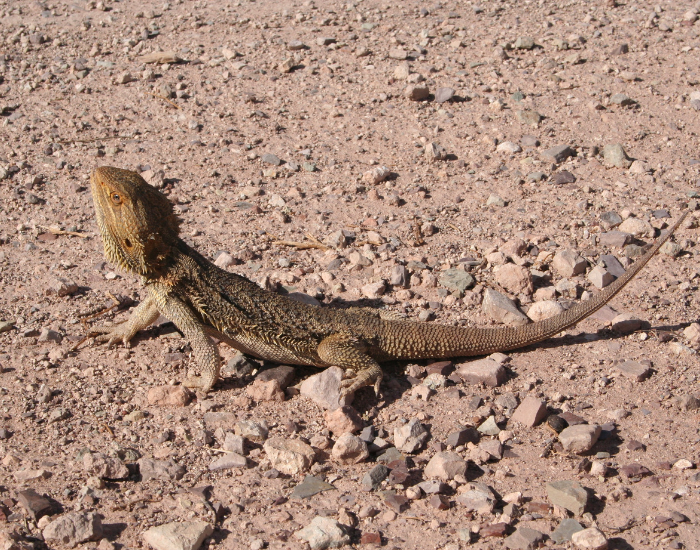
I have seen exactly one wild bearded dragon in Australia. One.
It was flattened against warm bitumen at a scrappy desert campsite, tail out, beard half-puffed at my boots. I crouched. It held. We stared at each other for maybe forty seconds before it bolted under a saltbush.
That single encounter embarrassed me. I study animals for a living, I live here now, and I could not have told you which of the types of bearded dragons I was looking at. So I did the homework. There are six currently recognized species within the genus Pogona, not the nine different species you will see repeated across the internet.
In a few months I start a full lap of the country. My goal is simple: find and photograph every species in the genus, and update this post each time I tick one off. Consider this the field key I built for myself.
Below you get the six wild Pogona species, then the morphs, the selectively bred variants that dominate the pet trade and confuse almost everyone.
The Six Pogona Species (Not Nine)
Count carefully and you land on six. The “nine different species” figure comes from counting subspecies of Pogona minor as full species, plus a few names that taxonomists retired decades ago. That distinction matters, because bearded dragon species are defined by scalation and skull structure, not by colour.
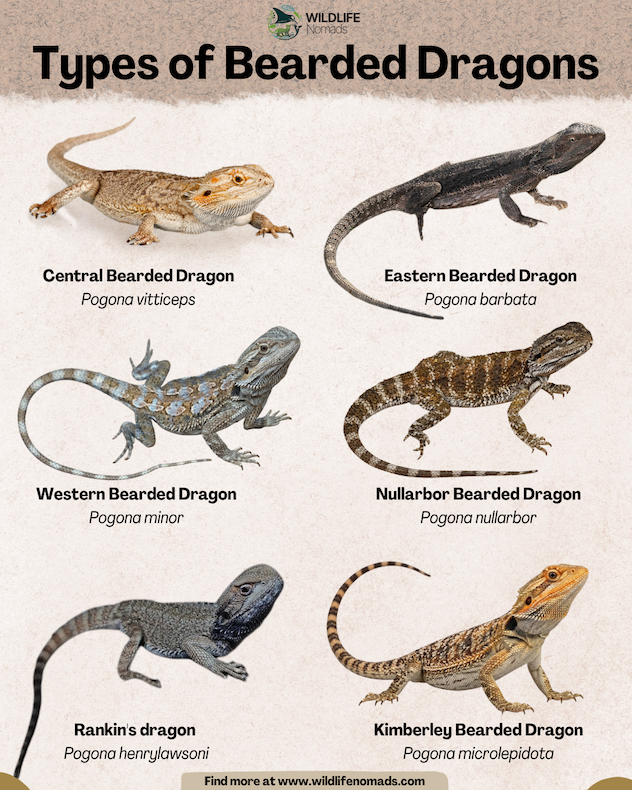
1. Central Bearded Dragon (Pogona vitticeps)
The central bearded dragon owns the arid interior, central Australia, western Queensland, inland New South Wales and up into South Australia. Pogona vitticeps is the most common pet bearded dragon on Earth, and nearly every captive animal you meet traces back to this species.
Wild ones run dull gray, tan or brick, depending on soil. That is the first lesson of the genus: colour tracks substrate, so a single species can look like four. My roadside dragon was almost certainly this one, given the natural habitat and where the swag was parked.
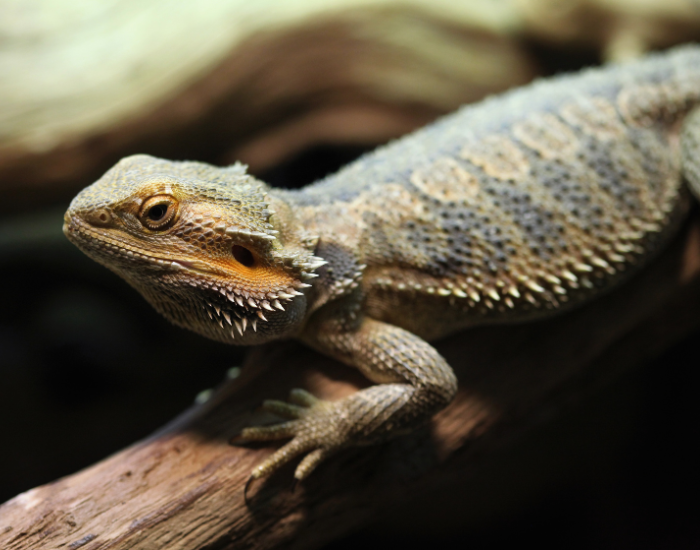
2. Eastern Bearded Dragon (Pogona barbata)
Pogona barbata is known as the eastern bearded dragon, and it is the tree-climber of the group. It ranges down the eastern seaboard from Cape York to Victoria, and it grows long, up to about 60 cm including tail.
Its beard flushes jet black when threatened, a display far more theatrical than anything vitticeps produces. Interestingly, this species tolerates cooler, wetter forest than most people expect from a “desert lizard.” For a wider look at the continent’s reptile assemblage, see my guide to the animals of Australia.

3. Western Bearded Dragon (Pogona minor)
Pogona minor minor is known as the dwarf bearded dragon, and it is the workhorse of Western Australia. It spans the Pilbara to the south coast, holding on in heathland, woodland and coastal dune.
Two other dragons sit inside this species. Pogona minor mitchelli occupies tropical woodland in north western Australia, from the Kimberley south to the Pilbara. Pogona minor minima survives only on the Wallabi group of the Houtman Abrolhos islands, roughly 80 km offshore, an island population I badly want to see.
4. Nullarbor Bearded Dragon (Pogona nullarbor)
Pogona nullarbor is also called the Nullarbor bearded dragon, and it is the easiest of all bearded dragons to identify. Bold white bars cross a reddish-brown back in a ladder pattern no other species matches.
It occupies the treeless limestone plain straddling South Australia and Western Australia. That plain sits directly on my driving route, which makes this species my most realistic early win.

5. Lawson’s/ Rankin’s Dragon (Pogona henrylawsoni)
Pogona henrylawsoni is also called Lawson’s bearded dragon, or Rankin’s dragon, or the black-soil dragon. Choose whichever name you like; the animal answers to none of them.
It is small (around 25 cm) with a rounded head, less spikes than its relatives, and a beard that barely deserves the name. Central Queensland’s cracking black-soil plains are its stronghold. As a result, captive keepers value it for a calm temperament in a compact body.
6. Kimberley Bearded Dragon (Pogona microlepidota)
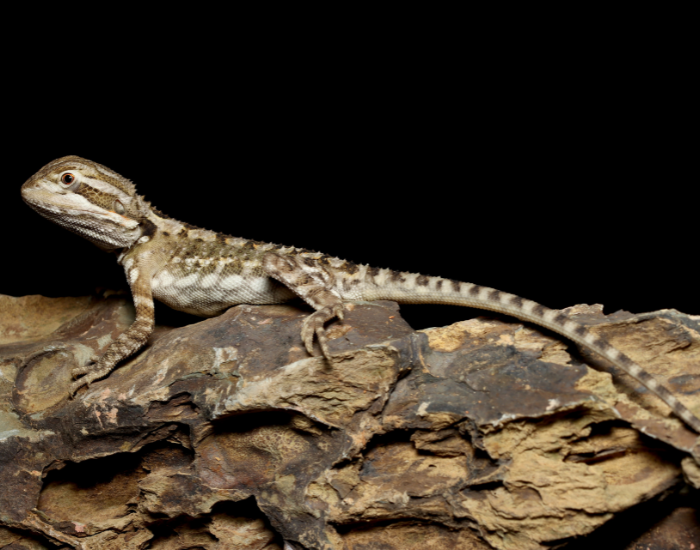
Pogona microlepidota is the ghost of the genus. Discovered near the Drysdale River in the north Kimberley, it is known from a handful of specimens and almost no behavioural data.
Its name means “small-scaled,” and the smaller scales separate it from barbata. Most references list Pogona microlepidota at 4–6 inches in body length, though that figure rests on thin sampling. Honestly, this is the one I expect to miss.
Bearded Dragon Morphs: The Types Humans Made
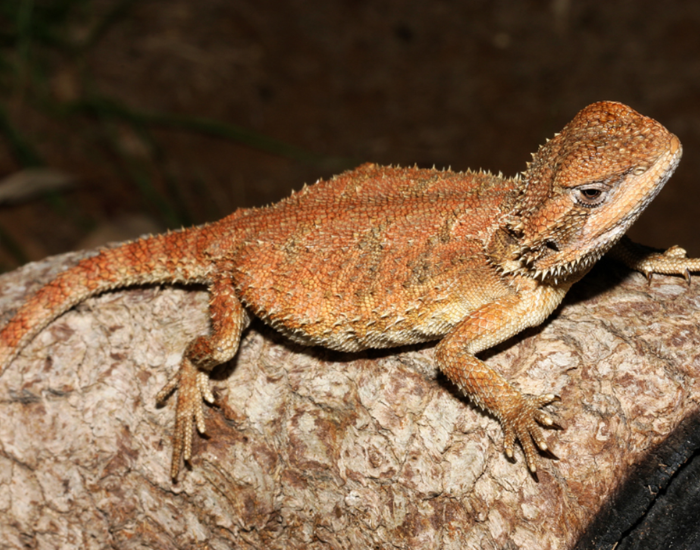
Here is where beginners get lost. A morph refers to selectively bred genetic variants within bearded dragons, and it is not a species. Bearded dragon morphs are classified by selective genetic mutations affecting scale type and pigmentation, and there are now over 20 variations circulating.
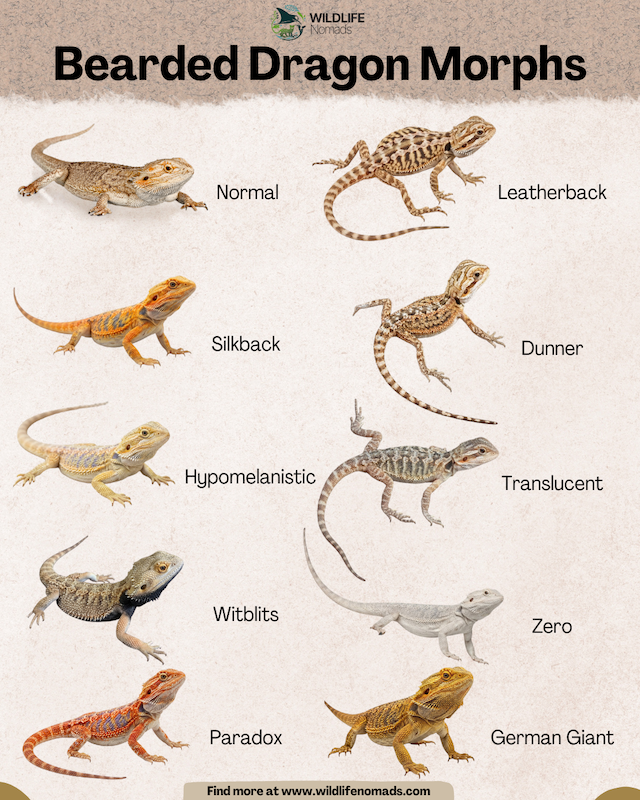
Nearly all of them sit inside Pogona vitticeps. The primary bearded dragon morphs include Normal, Leatherback, Silkback, Dunner, Hypomelanistic, Translucent, Witblits, Zero, Wero and Paradox.
That concentration is not an accident. Pogona vitticeps has become one of the best-sequenced reptiles alive, with a near telomere-to-telomere genome published in 2025. Laurent’s lab even recorded slow-wave and REM sleep cycles in this species, pushing the origin of those brain rhythms deep into amniote history. Decades of captive colonies gave breeders the pedigrees that every morph line depends on.
Normal (Standard Morph)
The standard morph carries full scalation, prominent spikes along the flanks, and a wild-type pattern. Breeders sometimes dismiss it. I find it the most interesting body type in the room, because it is the only one shaped by selection pressure rather than a price list.
Leatherback
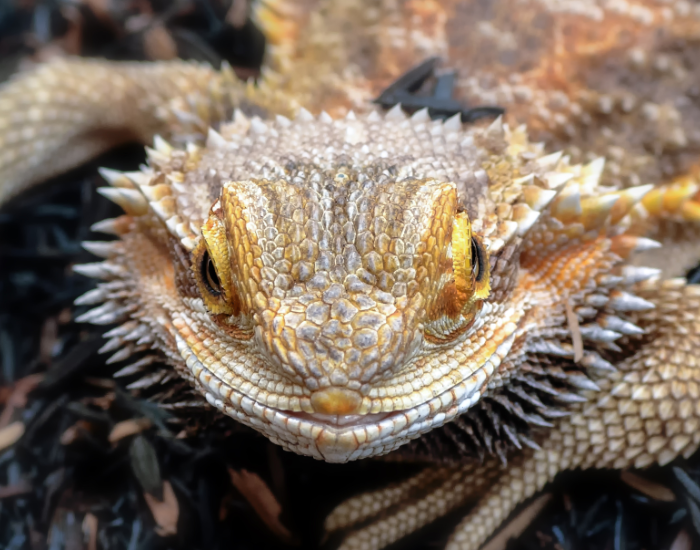
Leatherbacks carry one copy of a co-dominant mutation that reduces scale prominence. The result is a smooth-looking dragon with brighter colors, since pigment is not broken up by raised scales.
Silkback
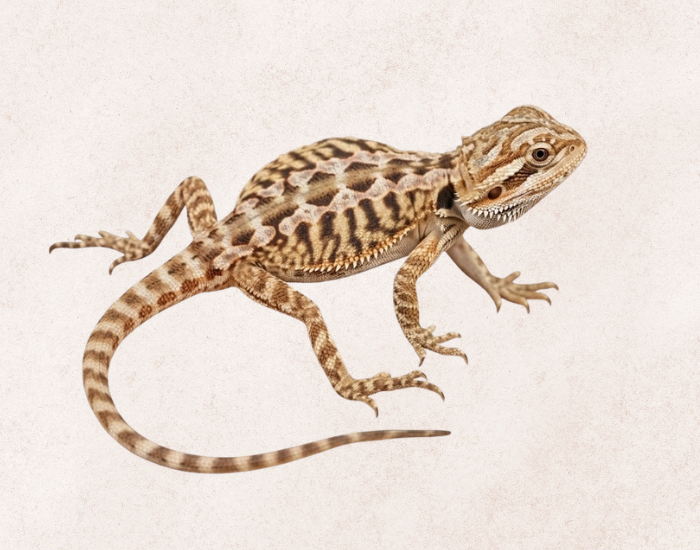
Breed two leatherbacks and roughly a quarter of the clutch produce silkbacks. Silkback morphs lack scales entirely and have smooth skin, which looks striking and functions poorly.
This is where I push back hard. Sakich and Tattersall (2021) measured evaporative water loss across the three phenotypes and found silkbacks lost water at about twice the rate of wild-types. Scales are not decoration. They are a waterproofing organ, and breeding them away has a physiological cost.
Dunner
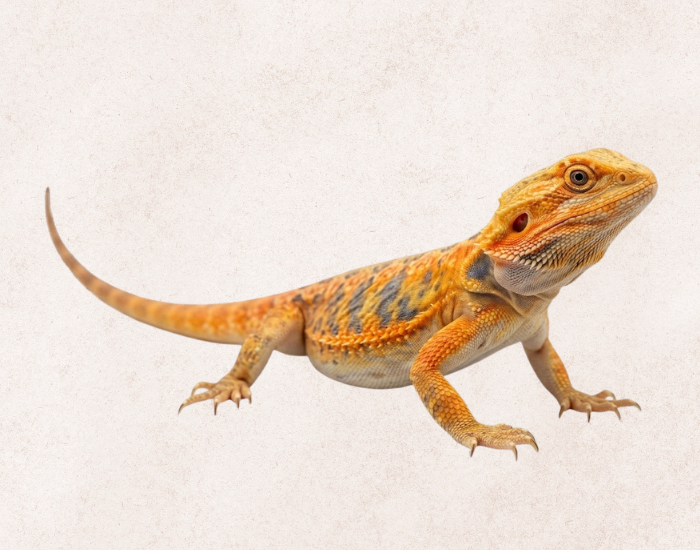
The Dunner morph scrambles scale orientation. Scales point in different directions instead of lying in neat rows, and the pattern shifts from stripes to scattered spots. Dunner dragons also carry, by breeder description, incredibly dark brown eyes.
Hypomelanistic
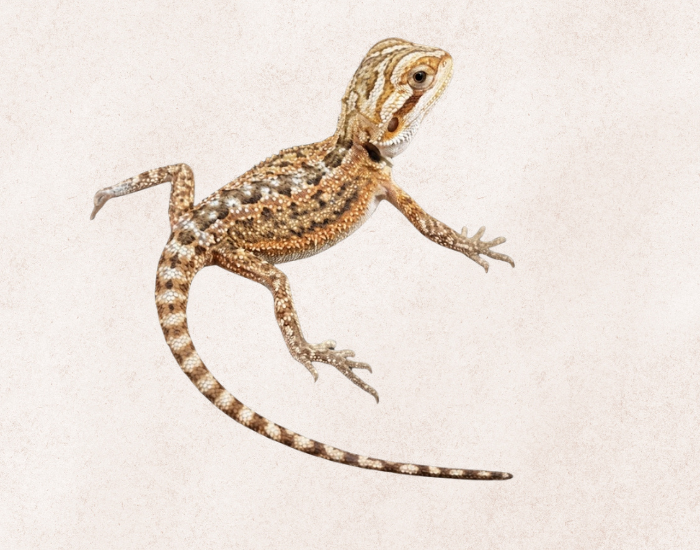
Hypomelanistic morphs reduce black pigment. Therefore they show lighter, brighter colors, and — the reliable tell, clear nails instead of dark ones. Look at the toes before you look at the body.
Translucent
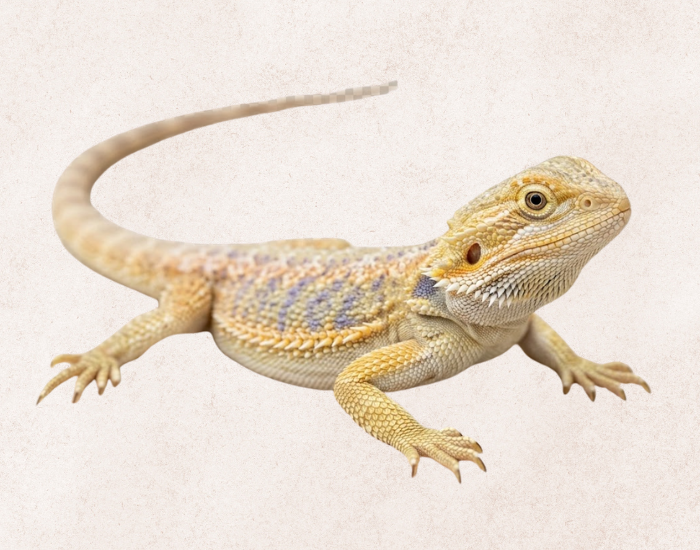
Translucent morphs have almost see-through spikes and scales. Hatchlings show a clear belly and a bluish cast where organ tissue reads through thin skin. Adults often keep solid black eyes, which is the trait most keepers chase.
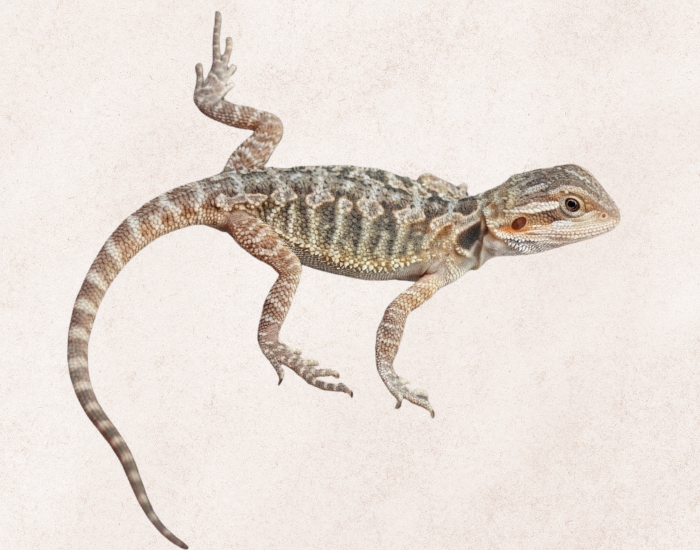
Witblits
Witblits are patternless morphs with warm or earthy tones — sand, clay, dusty peach. The name is Afrikaans for “white lightning.” Two patternless dragons throw patternless babies, since the trait is recessive.
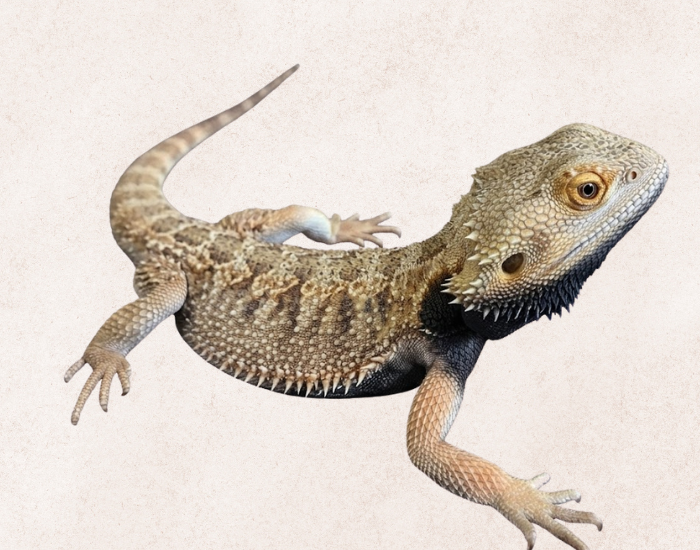
Zero
Zero bearded dragons are devoid of color and pattern, appearing ghostly white to pale silver. They look, in the flesh, like a lizard rendered in unfinished clay. Zero dragons remain among the most expensive animals in the hobby.
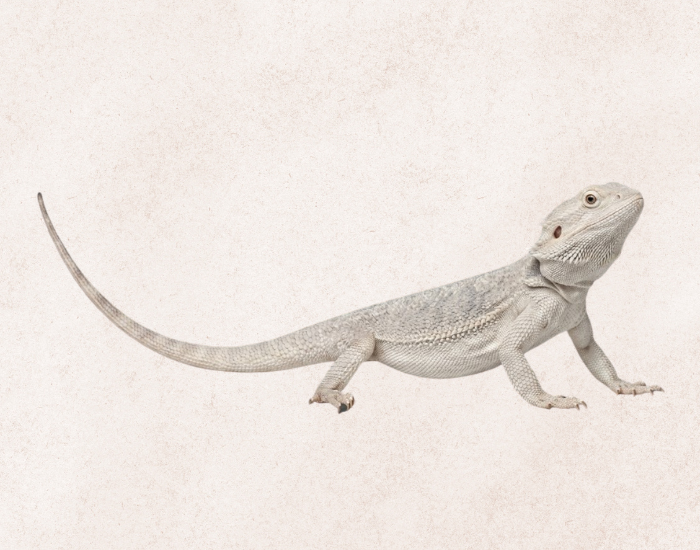
Paradox
Paradox is a visual mutation characterized by random splashes of bright colors across an otherwise plain animal. No two are alike, and the trait does not inherit predictably. That unpredictability is exactly why the paradox morph commands the prices it does.
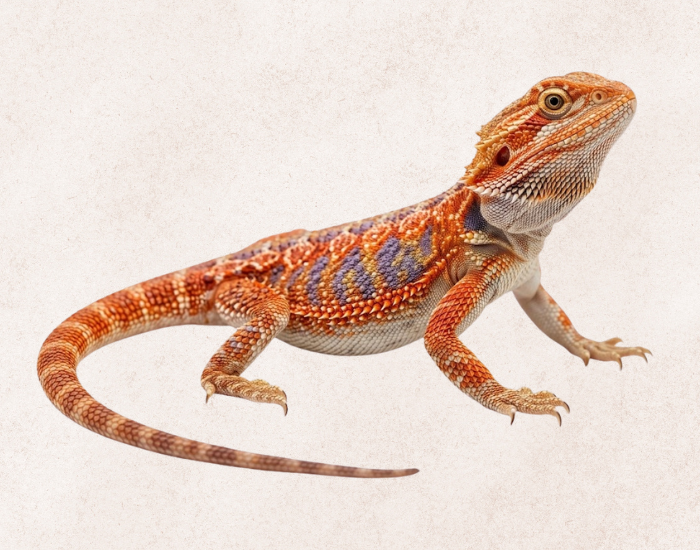
German Giant
German Giant is a bloodline bred exclusively for large size, not a colour trait. The German Giant morph can grow 50% larger than standard dragons, which means German giants demand a larger enclosure and a bigger food budget.
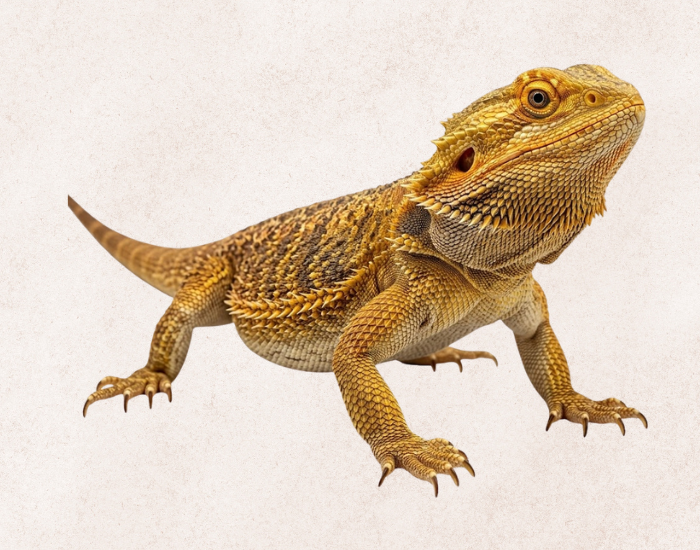
Colour Lines: Red, Citrus, Yellow and Pastel
Red bearded dragons, Citrus, Red Monster and pastel pigmentation are descriptive trade names for selective color breeding, not distinct genetics. Selective breeding has created a variety of morphs and color phases in bearded dragons, and vendors invent labels constantly.
By contrast, muted colors dominate wild populations for good reason. Vibrant colors on a lizard sitting exposed on red dirt attract raptors, not mates.
Frequently Asked Questions
Pogona vitticeps, the central bearded dragon, is the best pet for almost everyone. It is hardy, widely captive-bred, well studied, and tolerant of handling. Choose a standard or leatherback morph over a silkback, since reduced scalation carries documented physiological costs.
Check scalation, not colour. Count spike rows along the flank, check nail colour, and look at scale direction. Clear nails suggest hypo; scattered scales pointing in different directions suggest Dunner; smooth skin means silkback. If you bought it in a shop, the species is almost certainly Pogona vitticeps.
Pogona barbata, the eastern bearded dragon, is the largest wild species at around 60 cm total length. In captivity, German Giants take the crown, growing up to 50% larger than standard dragons.
Pogona henrylawsoni and Pogona vitticeps both handle well. Lawson’s dragon suits smaller spaces; the central bearded dragon suits keepers who want a bolder animal. Temperament tracks individual history far more than morph type.
What I’m Doing Next
Six wild species, twenty-plus captive morphs, and one continent that hides all of them in plain sight. The real lesson from studying the types of bearded dragons is that colour tells you almost nothing while scales tell you almost everything.
My lap starts soon. Nullarbor first, then the Kimberley, then the Abrolhos if I can talk my way onto a boat. I will update this post with photographs and locations every time I confirm a species.
Tell me in the comments which one you have found, and roughly where. Every data point helps. While you plan your own trip, read up on the most dangerous snakes in Australia before you go turning logs, and check my guide to the best Victorian parks for accessible herping close to Melbourne.
Can You Name That Bearded Dragon? 🦎
A 10-photo challenge — six wild species and four captive morphs. The wrong answers are always from the same group, so read the scales, not the colour.
Which one is this?
References:
Kis, A., Huber, L., & Wilkinson, A. (2015). Social learning by imitation in a reptile (Pogona vitticeps). Animal Cognition, 18(1), 325–331. https://doi.org/10.1007/s10071-014-0803-7
Holleley, C. E., O’Meally, D., Sarre, S. D., Marshall Graves, J. A., Ezaz, T., Matsubara, K., Azad, B., Zhang, X., & Georges, A. (2015). Sex reversal triggers the rapid transition from genetic to temperature-dependent sex. Nature, 523(7558), 79–82. https://doi.org/10.1038/nature14574
Patel, H. R., Alreja, K., Reis, A. L. M., Chang, J. K., Chew, Z. A., Jung, H., Hammond, J. M., Deveson, I. W., Ruiz-Herrera, A., Marin-Gual, L., Holleley, C. E., Zhang, X., Lister, N. C., Whiteley, S., Xiong, L., Dissanayake, D. S. B., Waters, P. D., & Georges, A. (2025). A near telomere-to-telomere phased genome assembly and annotation for the Australian central bearded dragon Pogona vitticeps. GigaScience, 14, giaf085. https://doi.org/10.1093/gigascience/giaf085
Sakich, N. B., & Tattersall, G. J. (2021). Bearded dragons (Pogona vitticeps) with reduced scalation lose water faster but do not have substantially different thermal preferences. Journal of Experimental Biology, 224(12), jeb234427. https://doi.org/10.1242/jeb.234427
Shein-Idelson, M., Ondracek, J. M., Liaw, H.-P., Reiter, S., & Laurent, G. (2016). Slow waves, sharp waves, ripples, and REM in sleeping dragons. Science, 352(6285), 590–595. https://doi.org/10.1126/science.aaf3621
Georges, A., Li, Q., Lian, J., O’Meally, D., Deakin, J., Wang, Z., Zhang, P., Fujita, M., Patel, H. R., Holleley, C. E., Zhou, Y., Zhang, X., Matsubara, K., Waters, P., Graves, J. A. M., Sarre, S. D., & Zhang, G. (2015). High-coverage sequencing and annotated assembly of the genome of the Australian dragon lizard Pogona vitticeps. GigaScience, 4, 45. https://doi.org/10.1186/s13742-015-0085-2
Siviter, H., Deeming, D. C., van Giezen, M. F. T., & Wilkinson, A. (2017). Incubation environment impacts the social cognition of adult lizards. Royal Society Open Science, 4(11), 170742. https://doi.org/10.1098/rsos.170742