I spent four cold, beautiful days at Gloucester River campground, and the leeches were everywhere. By the time I left, I had pulled at least 20 off my body, mostly from my feet. Earthworms filled the damp ground too. I watched the local kookaburras dropping down to feed, most likely on the leeches. It turned a stop on my lap around Australia into a crash course on the types of annelids.
I’m a biologist, so I studied invertebrates at university and dissected a few annelids in the lab. However, my fondness for worms started much earlier. As a kid, I collected earthworms in a bucket, watched them for a while and set them free. Odd hobby? Maybe not.
Annelids are the segmented worms, and they are far stranger than the garden earthworm suggests. Some drink blood, some have copper jaws, and one lives for centuries without a mouth. Here are 15 of them, plus the body plan they share.
Can you tell a bobbit worm from a bloodworm? Two quizzes wait at the end: name 10 annelids from their photos, then test what you learned. Jump to the quizzes ↓What Are Annelids? Animals Built From Rings
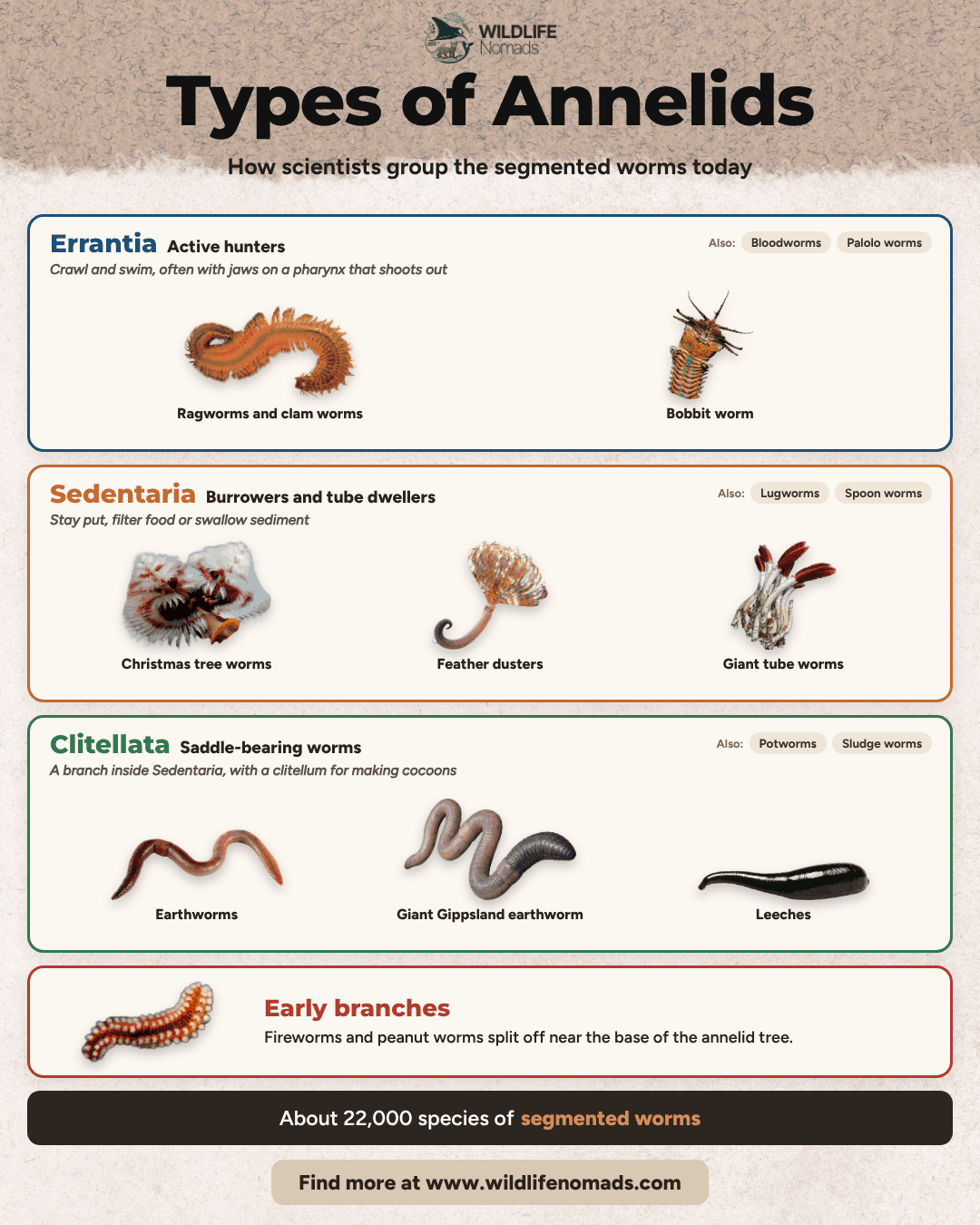
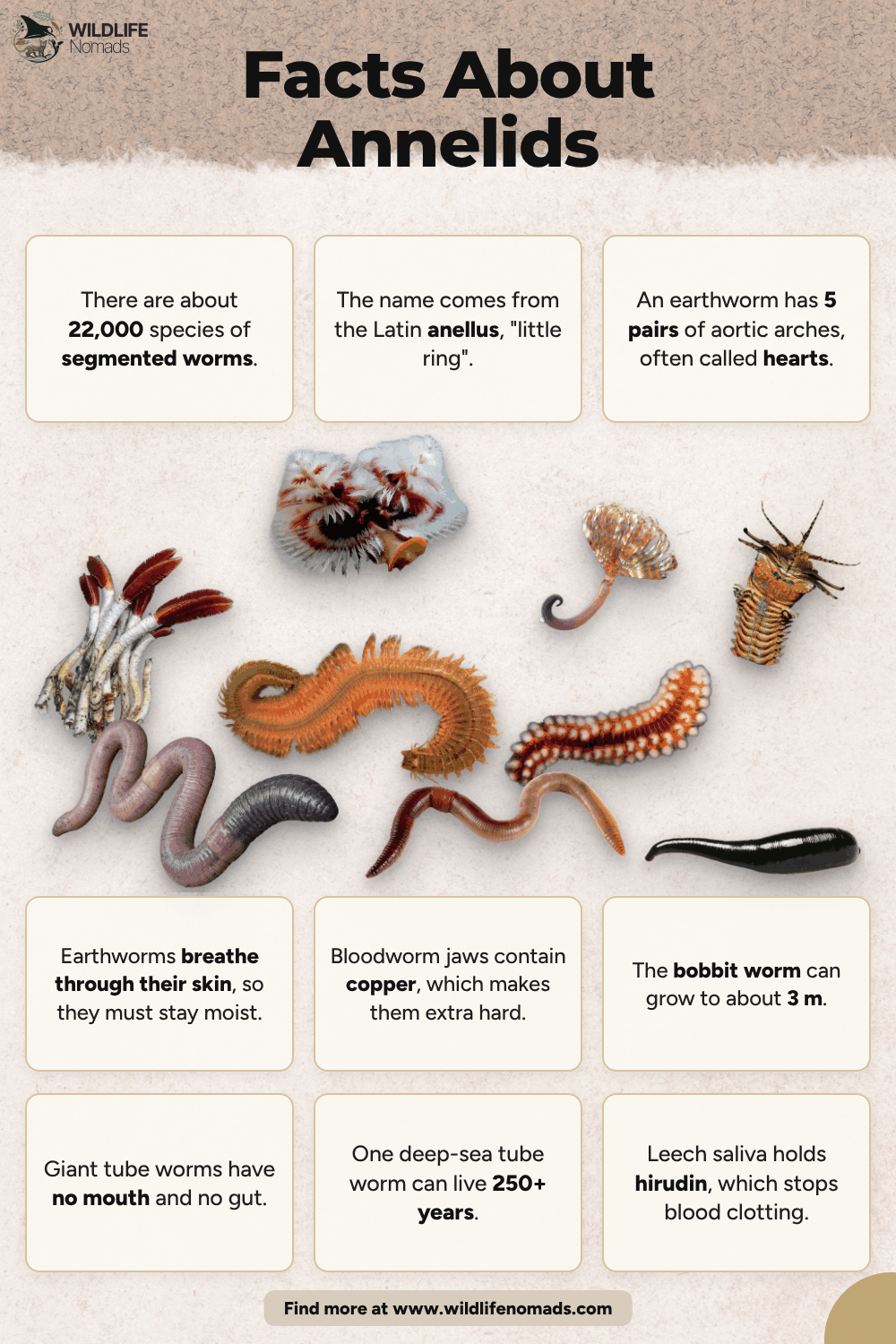
Annelids are a phylum of segmented worms with more than 20,000 described species. The name is derived from the Latin anellus, meaning “little ring”. Look closely at any earthworm and you’ll see why. Its body is a chain of ring-like segments, running from the head to the tail. Like us, annelids also have bilateral symmetry.
Scientists call this repetition metamerism. Each body segment often carries its own muscles, nerves, blood vessels and a pair of excretory organs called nephridia. As a result, an annelid can squeeze one part of its body while another part stays relaxed.
Most annelids also carry chitinous bristles called setae (or chaetae). Earthworms have only a few per segment. By contrast, marine polychaete worms bear dense tufts on paired appendages called parapodia. That is where the name “bristle worms” comes from.
Most annelids are marine species. Others are freshwater species, or terrestrial annelids living in moist terrestrial habitats such as soil and leaf litter.
Annelid anatomy: inside the segmented body
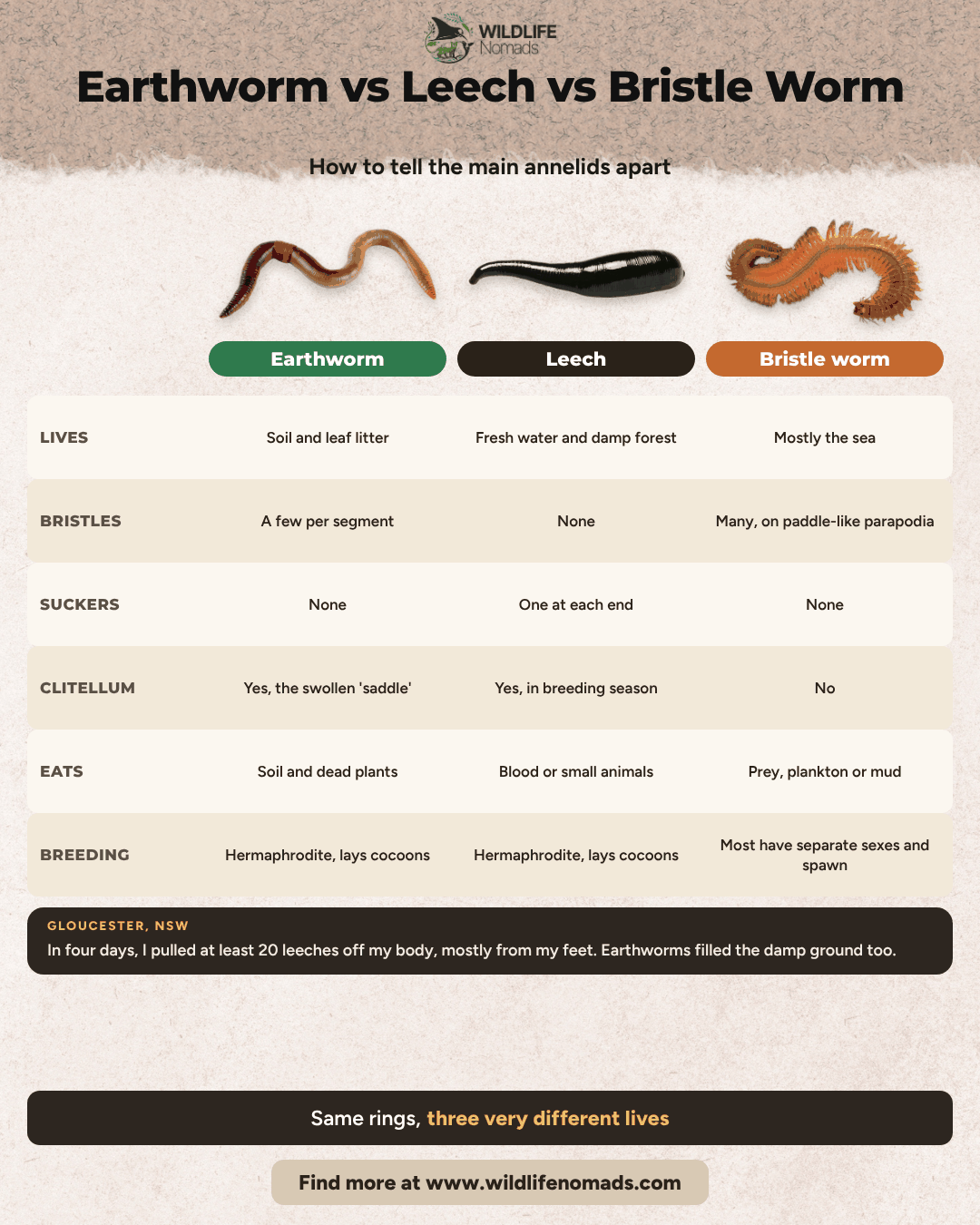
From the outside, their external morphological features look simple: a tube of rings and a few bristles. Their internal anatomy is far more complex. The basic anatomy starts with the body wall. It has a thin external cuticle, then a layer of circular muscle and a layer of longitudinal muscles. Unlike insects, most annelids grow without moulting. Leeches are the exception, as they shed their cuticle regularly.
Inside sits a true coelom, a fluid-filled body cavity that holds the internal organs. Walls divide it between segments. The fluid works like a water balloon. Muscles push against it, so the worm stretches, shortens and digs.
Most annelids have a closed circulatory system. Two major blood vessels run the length of the body: the dorsal and ventral vessels. Smaller blood vessels that run into each segment service individual tissues.
Earthworms and leeches lack a well developed respiratory system. Instead, gas exchange occurs across the moist body surface. That is why earthworms die if their skin dries out.
Annelids possess well developed nervous systems for such simple-looking animals. A brain of fused ganglia sits above the gut. Two ventral nerve cords run beneath it, usually fused into one. That cord bears enlarged nodes in each segment. Annelids also have a complete digestive system. The digestive tract runs from the mouth through a muscular pharynx to an anal opening.
How Scientists Group the Types of Annelids Today
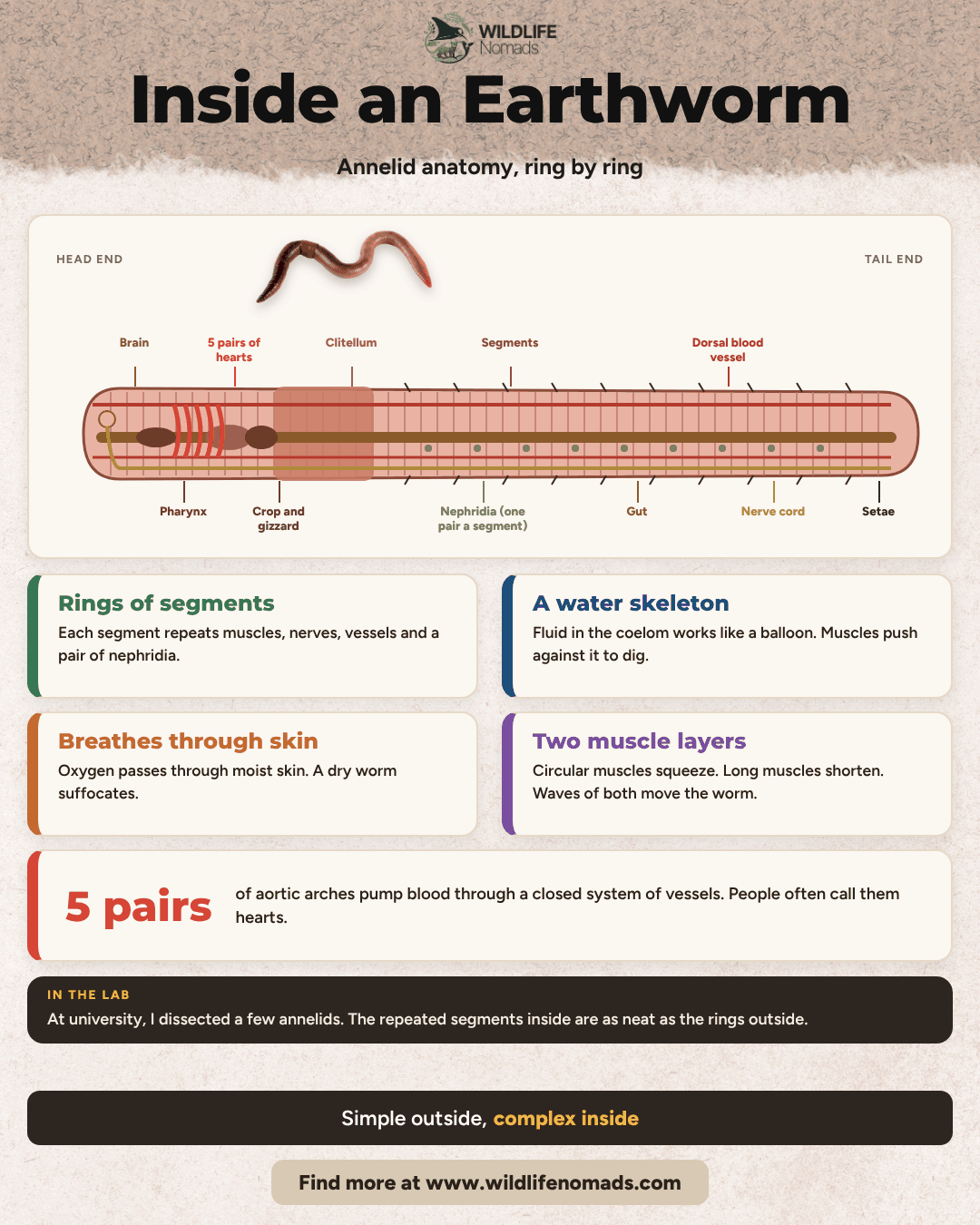
Old textbooks split annelids into two neat classes: Polychaeta (bristle worms) and Clitellata (earthworms and leeches). Genetic studies have rewritten that picture. Clitellates turned out to be a branch inside the polychaete family tree, not a separate one (Weigert & Bleidorn, 2016).
Today, most annelids fall into two major groups. Errantia are the active crawlers and swimmers, while Sedentaria are the burrowers and tube dwellers. Earthworms and leeches sit inside Sedentaria. Even stranger, peanut worms, spoon worms and deep-sea tube worms were once separate phyla (Struck et al., 2011). Now they are all annelids. You can see where they branch off in our interactive tree of life.
Earthworms and Their Relatives
1. Common earthworms (Lumbricidae)
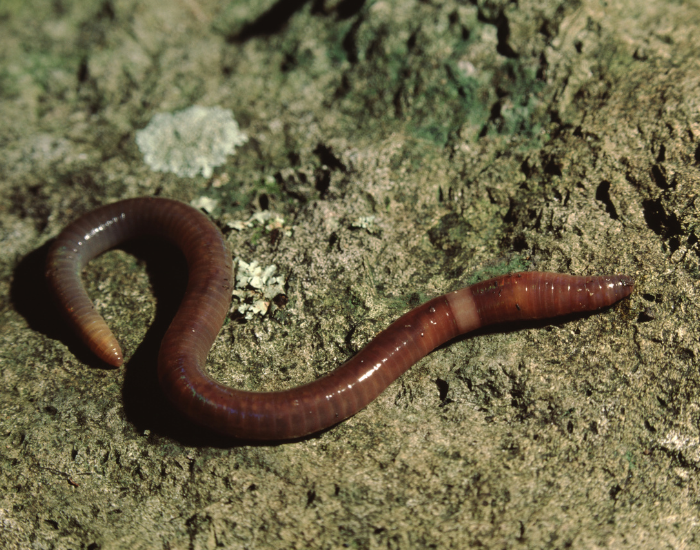
The common earthworm (Lumbricus terrestris) is the terrestrial annelid most people know. It swallows soil, grinds it in a muscular gizzard and leaves behind nutrient-rich casts. Earthworms are classic ecosystem engineers. They mix organic matter, open air channels and help rainwater soak into the soil (Blouin et al., 2013).
Each worm has five pairs of muscular aortic arches that pump blood. It moves with waves of muscle contractions, while its setae anchor the segments in place. Its skin also generates mucus that keeps it moist for breathing.
Earthworms are hermaphroditic animals with permanent gonads. The key reproductive structure is the clitellum, the swollen band near the front. Its mucus holds two mating worms together to aid sperm transfer. Later, each worm forms a cocoon from the clitellum. The fertilized eggs develop inside it. At Gloucester, earthworms seemed to be everywhere I looked.
2. Giant Gippsland earthworm (Megascolides australis)
Australia holds one of the biggest earthworms on Earth. The giant Gippsland earthworm averages 80 to 100 cm long, and museum staff have recorded worms of about 2 metres. Older claims of 3 metres or more came from stretched, dead specimens.
It lives only in the clay soils of South and West Gippsland in Victoria. It rarely surfaces. Instead, you can sometimes hear it, as it makes gurgling sounds when it moves through wet burrows.
The species reproduces slowly, and its large cocoons can take over a year to hatch. It is listed as Endangered on the IUCN Red List and Vulnerable under Australian law.
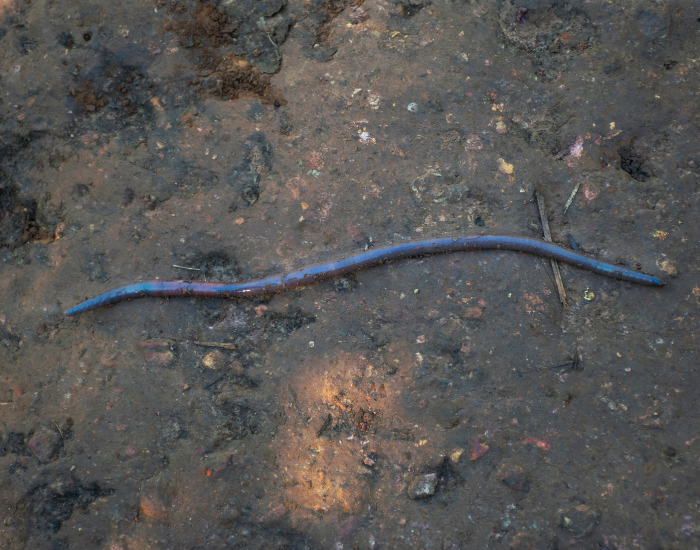
3. Potworms and sludge worms (Enchytraeidae and Naididae)
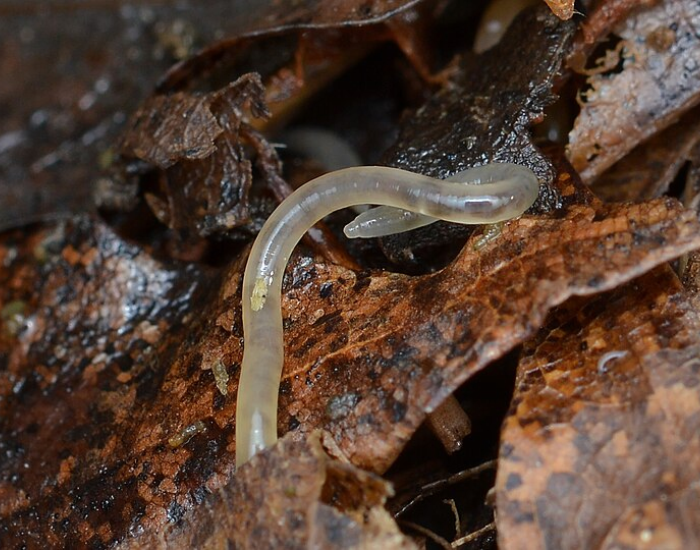
Not all clitellates are big. Potworms are tiny, white worms that swarm through compost and leaf litter. Sludge worms, such as Tubifex tubifex, live head-down in muddy tubes in freshwater habitats. They wave their red tails to breathe.
That red colour comes from haemoglobin, which lets them survive in low-oxygen mud. Large sludge worm colonies often signal polluted water.
Some of these small worms reproduce asexually. The California blackworm (Lumbriculus variegatus), a close relative, simply breaks into pieces. Each fragment regrows its missing head or tail.
Leeches and Their Look-Alikes
4. Australian land leeches (Haemadipsidae)
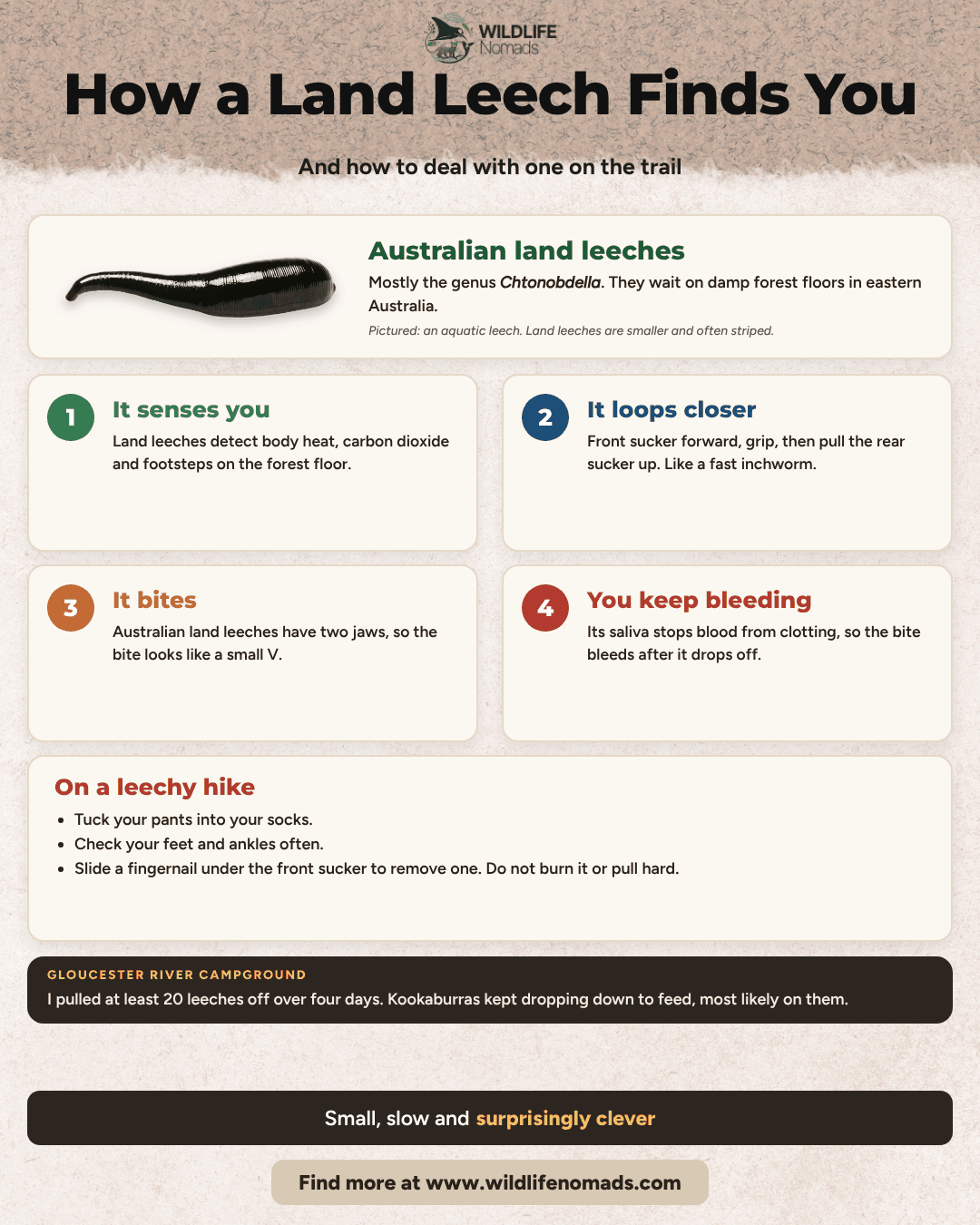
These were my Gloucester companions. Most land leeches in eastern Australia belong to the genus Chtonobdella. They wait on the forest floor and sense body heat, carbon dioxide and vibrations from passing animals.
I watched them closely during those four days. A leech stretches its front sucker forward, grips, then pulls its rear sucker up behind it. It moves like a tiny, determined inchworm, and it is surprisingly fast.
Australian land leeches have two jaws rather than three, so their bite looks like a small V. Their saliva stops blood clots from forming. That is why a leech bite keeps bleeding after the leech drops off.
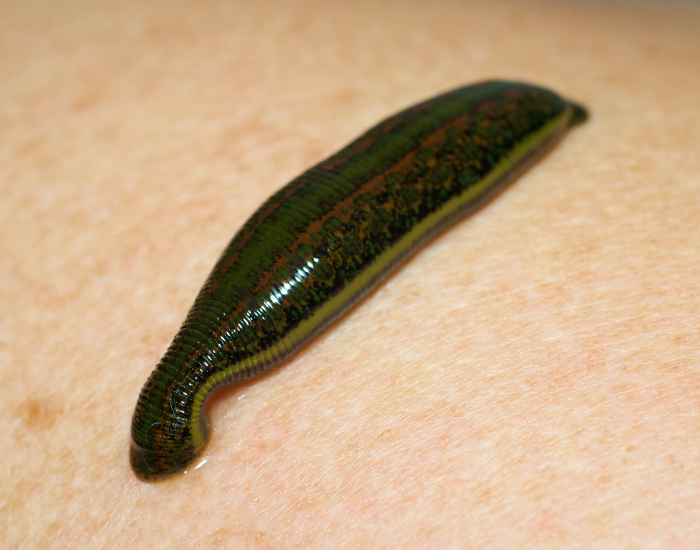
5. Medicinal leeches (Hirudo species)
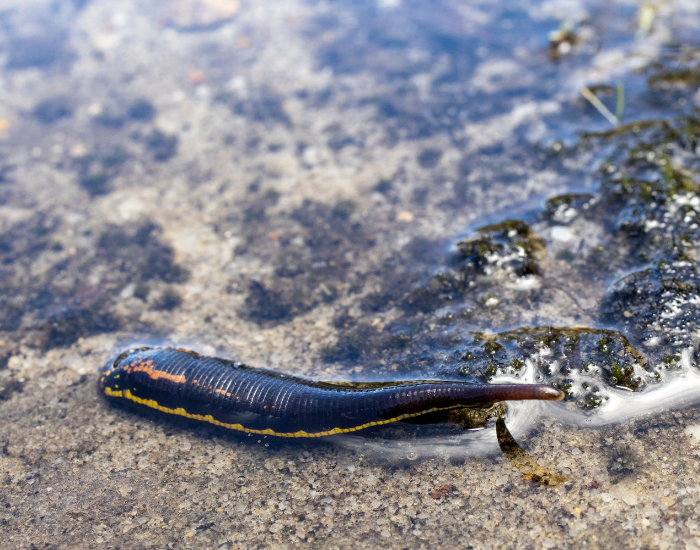
The European medicinal leech (Hirudo medicinalis) has three jaws lined with tiny teeth. It feeds on host vertebrates, from frogs to people, and can swell several times its size in one meal.
Its saliva contains hirudin, a powerful anticoagulant. Surgeons still use leeches when blood pools in reattached fingers or skin grafts. Increasing blood circulation in that tissue can save it. The US Food and Drug Administration cleared medicinal leeches as a medical device in 2004.
Like all leeches, it has a fixed number of segments and a sucker at each end. It is a hermaphrodite, and it never reproduces asexually.
6. Crayfish worms (Branchiobdellida)
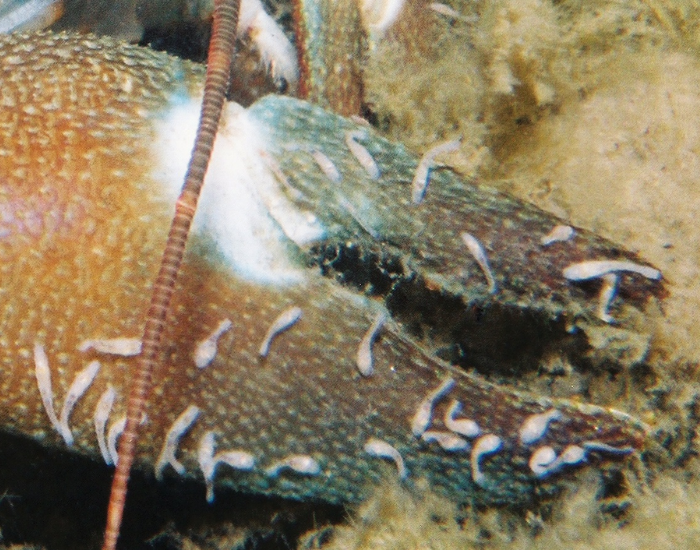
Crayfish worms are tiny leechlike worms, usually under a centimetre long. They live on the shells and gills of freshwater crayfish, mainly in the Northern Hemisphere.
Most graze on bacteria and debris on their host. In moderate numbers, they may even clean the crayfish’s gills. In large numbers, some damage gill tissue instead. They show how parasitic and commensal symbioses can blur into each other.
Genetic work places crayfish worms close to true leeches. Both groups share a rear sucker and a fixed segment count (Tessler et al., 2018).
Bristle Worms of the Coast and Reef
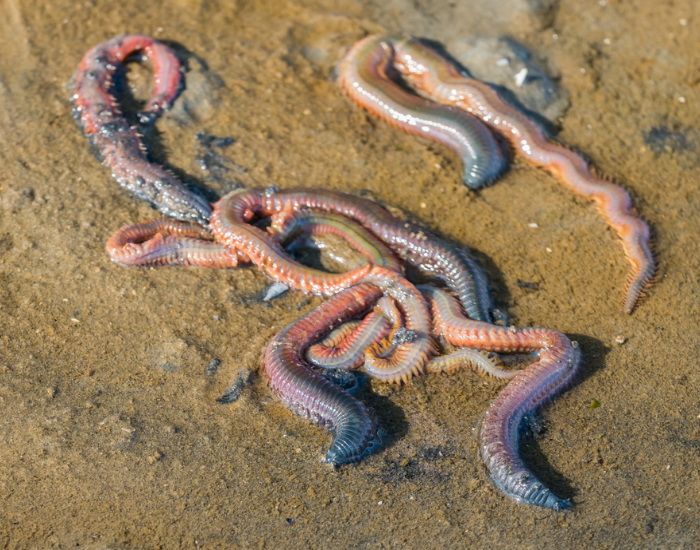
7. Ragworms (Nereididae)
Polychaete worms are the most abundant members of the phylum, and ragworms are a good place to start. They crawl through mud and sand on paddle-like parapodia. Many also swim with side-to-side waves of the body.
A ragworm hunts by turning its pharynx inside out. The everted pharynx shoots forward, and a pair of jaws snaps shut on small prey. The king ragworm (Alitta virens) can grow longer than a metre.
Like most marine polychaetes, ragworms have temporary or seasonal gonads. Fertilization occurs in open water, where eggs and sperm meet after a spawning swarm.
8. Bloodworms (Glyceridae)
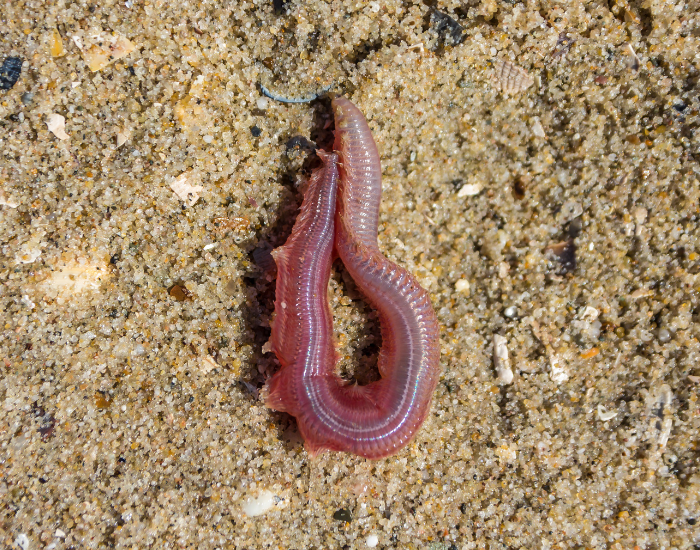
Bloodworms get their name from the red fluid visible through their pale skin. They burrow through intertidal mud and wait for prey to pass.
Their weapon is a long proboscis tipped with four hollow jaws. Those jaws contain copper, which makes them unusually hard. Glands at the base inject venom, so a bloodworm bite on a fisher’s finger stings like a bee.
Fishers dig bloodworms as bait, which shows how much people already value these marine annelids.
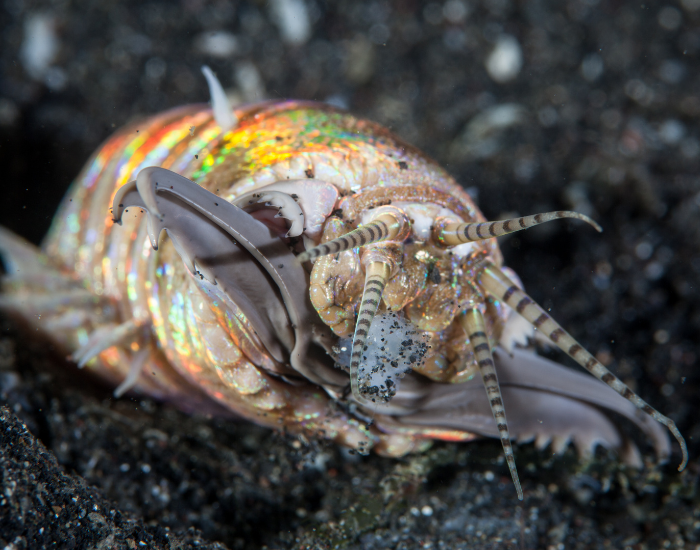
9. Bobbit worm (Eunice aphroditois)
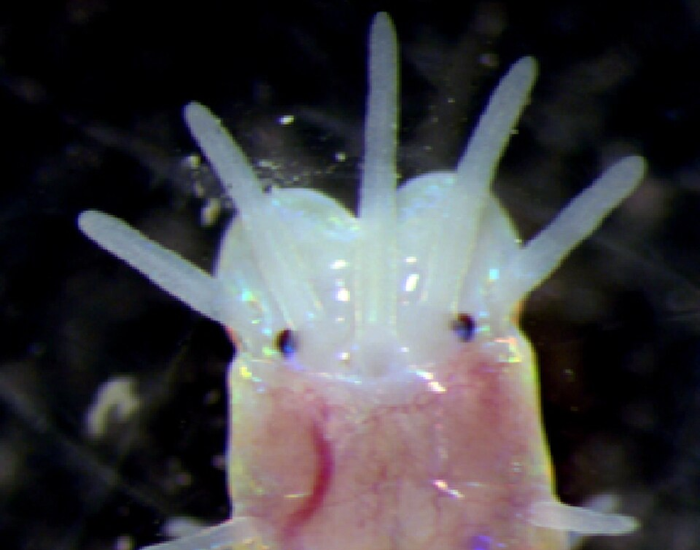
The bobbit worm is an ambush predator of warm, sandy seabeds. It buries its body in the sediment and leaves only its head and five antennae exposed.
Those antennae help it capture prey. When a fish touches one, the worm strikes. Its scissor-like jaws close in a fraction of a second, and it drags the prey underground. Most bobbit worms measure around a metre, yet some reach about 3 metres.
Even so, fish fight back. Researchers watched one species mob bobbit worm burrows, blowing jets of water at them to expose the hidden hunter.
10. Fireworms (Amphinomidae)
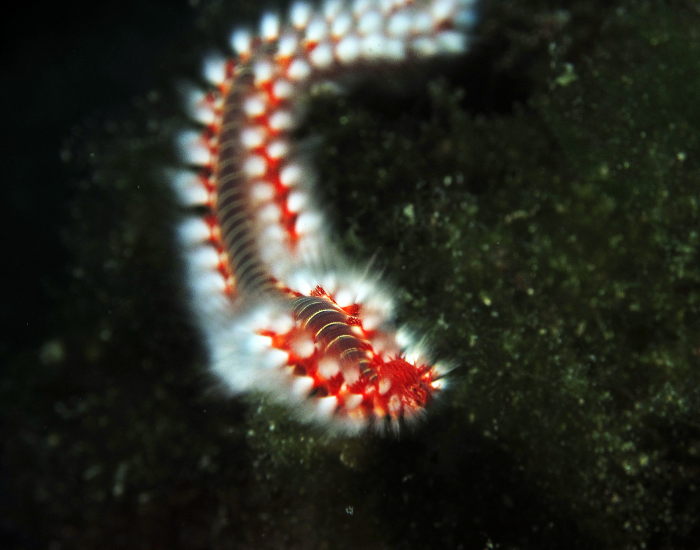
Fireworms crawl over reefs and rocks in tropical seas. They look soft and fuzzy, but their white tufts are hollow, brittle bristles.
Touch one and the bristles snap off in your skin. They cause a burning pain that can last for hours. The bearded fireworm (Hermodice carunculata) also feeds on living corals, sea anemones and other reef animals.
Genetic studies place fireworms near the base of the annelid tree. That makes them one of the earliest-splitting annelid lineages.
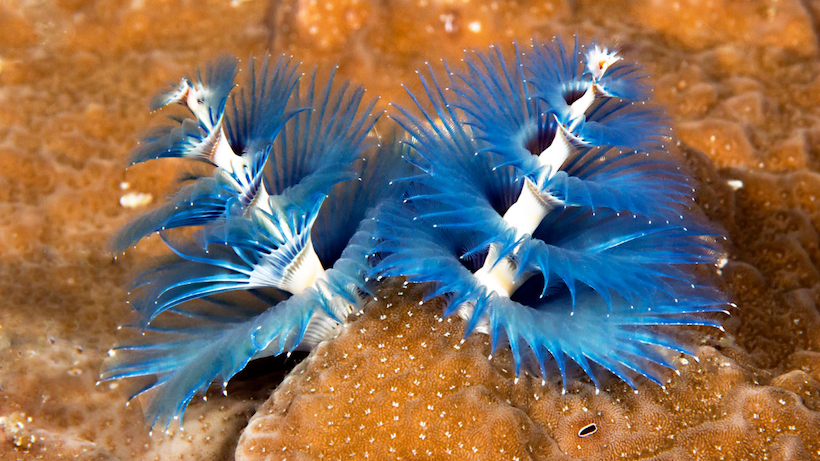
11. Christmas tree worms and feather dusters (Serpulidae and Sabellidae)
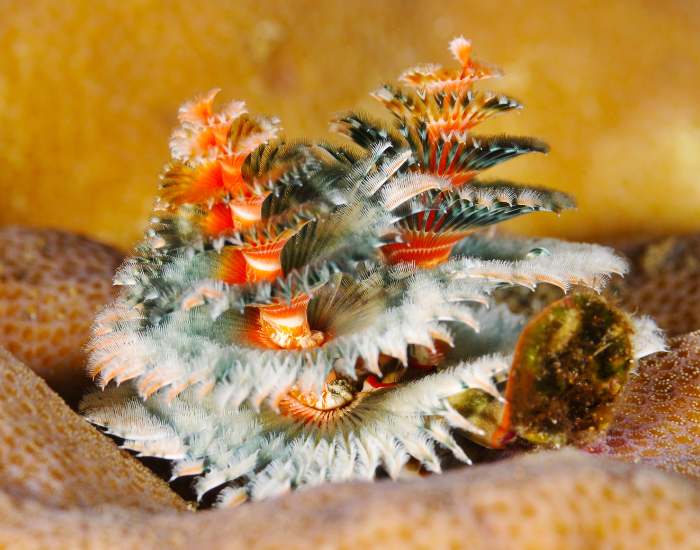
These tube worms look nothing like earthworms. A Christmas tree worm (Spirobranchus giganteus) builds a hard tube inside living coral. Only its two colourful spirals stick out.
Those spirals are feathery tentacles called radioles. They catch plankton and handle gas exchange at the same time. At the first shadow or ripple, the worm snaps back into its tube and seals it with a lid.
Feather duster worms work the same way, but they build softer tubes from mud and mucus. Both are common sights on healthy coral reefs.
12. Lugworms (Arenicolidae)
If you’ve seen coiled piles of sand on a low-tide beach, you’ve seen lugworm work. The lugworm (Arenicola marina) lives in a U-shaped burrow under the sand.
Lugworms ingest copious quantities of sediment. They digest the bacteria and organic film on each grain. Then they back up and push the clean sand out as casts. Rows of red, bushy gills along their bodies supply oxygen.
Lugworms show how most annelids fit their feeding to their habitat. Feeding mechanisms vary widely across the phylum.
13. Palolo worms (Palola species)
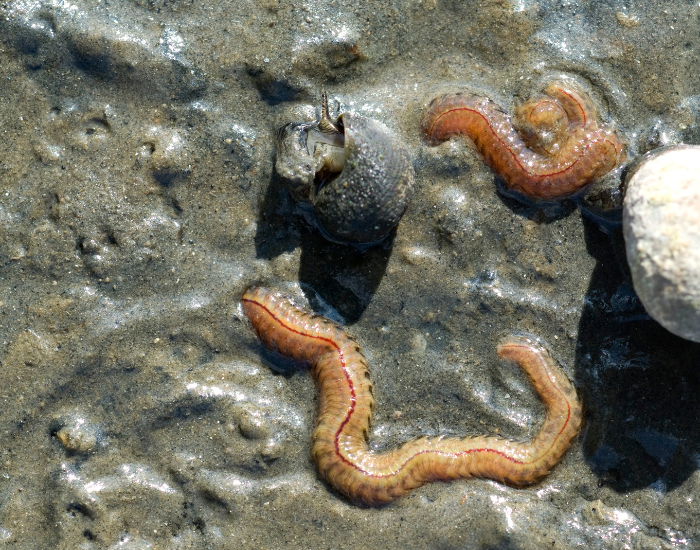
Palolo worms live inside coral rock in the Pacific. For most of the year, nobody sees them. Then, on a few nights linked to the moon, their rear halves break off and swim to the surface.
Each swimming piece is packed with eggs or sperm. Millions rise together, burst and release their cargo. In Samoa and nearby islands, people scoop up the swarms as a seasonal delicacy.
The front half stays safe in the reef and regrows the missing segments. It is a remarkable way to time sperm transfer and fertilization across a whole reef.
The Surprise Annelids
14. Giant tube worms (Siboglinidae)
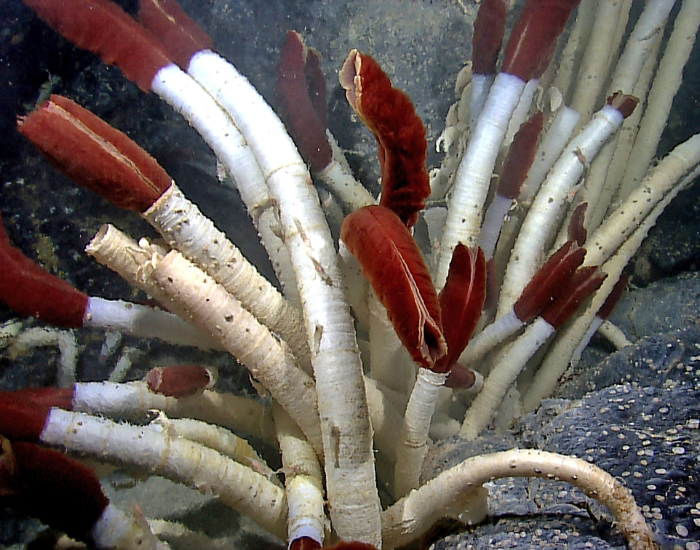
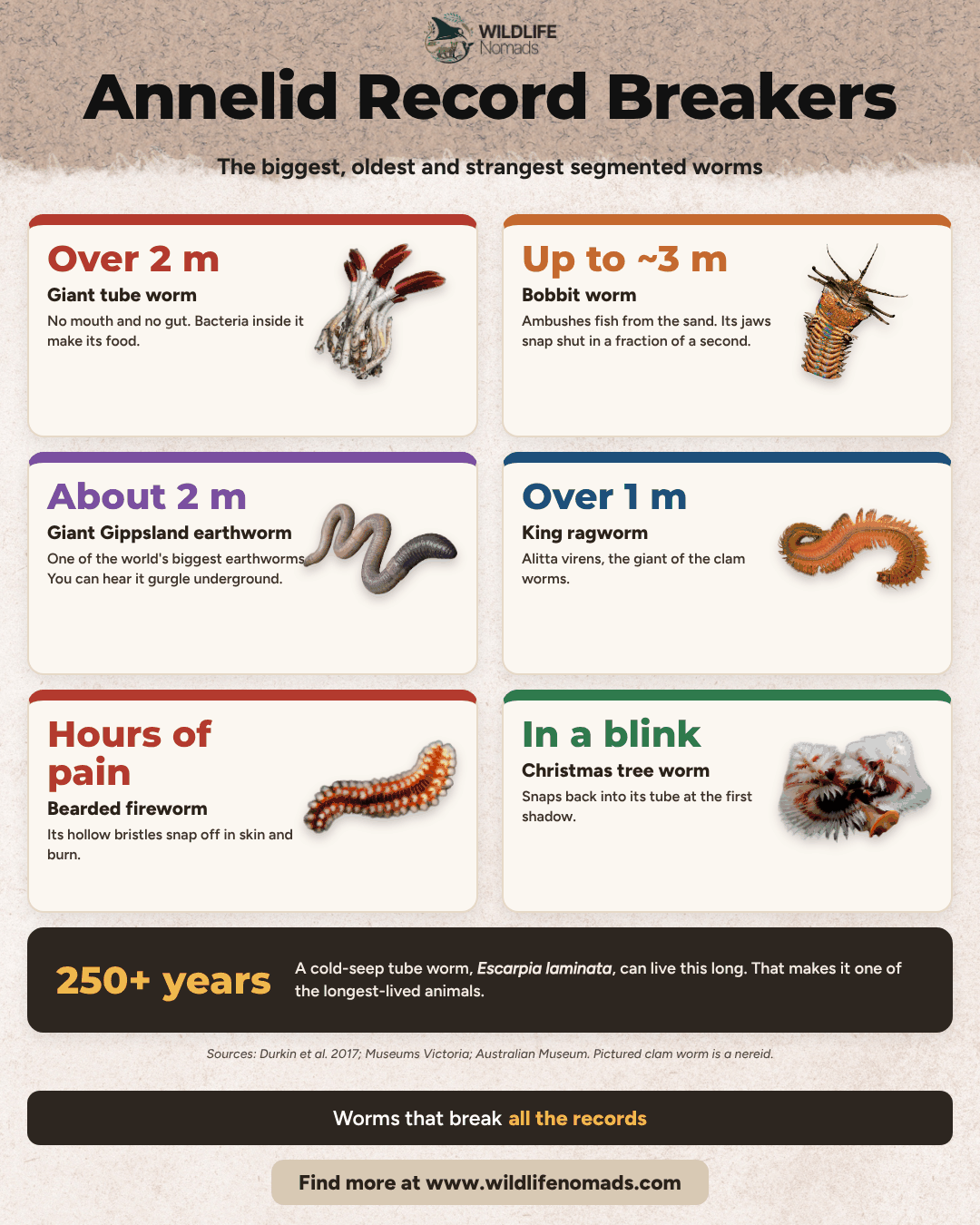
Giant tube worms (Riftia pachyptila) live at hydrothermal vents in the deep sea. They can grow over 2 metres long. Unlike almost all other annelids, adults have no mouth and no digestive system.
Instead, billions of bacteria live inside one of their internal organs, called the trophosome. The worm’s red plume collects oxygen and hydrogen sulfide, and the bacteria turn those chemicals into food.
Their relatives break records too. Escarpia laminata, a cold-seep tube worm, can live more than 250 years (Durkin et al., 2017). That puts it among the longest-living animals on the planet.
15. Peanut worms and spoon worms (Sipuncula and Echiura)
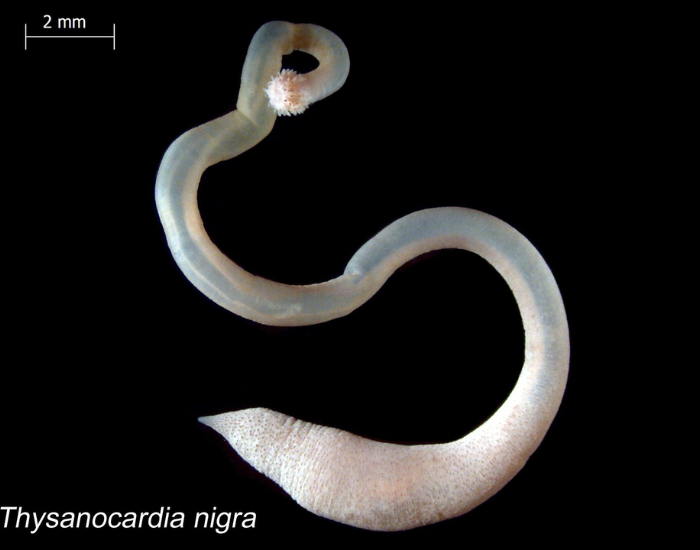
Peanut worms contract into a firm, peanut-shaped body when disturbed. Adults show no obvious segments. For decades, scientists placed them in their own phylum.
Spoon worms look like soft sausages with a spoon-shaped proboscis that sweeps food from the seabed. Genetic studies now place both groups firmly inside Annelida. Spoon worms appear to have lost their segments over time.
I like these two groups because they break the rules. They prove that the annelid body plan is flexible, not fixed.
Why Annelids Matter
Annelids recycle nutrients from rainforest soils to the abyssal seafloor. They also feed a huge share of the food web. Platypus, birds, fish and crabs all hunt them. Around coral reefs and tidal flats, marine annelids may account for over a third of bottom-dwelling animal species.
That said, the right worm in the wrong place causes trouble. Non-native earthworms are spreading through many North American forests that had no earthworms after the last ice age. They eat the leaf litter that native plants and animals depend on (Frelich et al., 2019). It is a reminder that even a helpful animal can become invasive.
Common FAQ you May Have about Annelids
No. Earthworms are hermaphrodites, so each worm has both male and female organs. They still need a partner to reproduce. Two worms line up and swap sperm. Each one then forms a cocoon from its clitellum, where its eggs are fertilized.
No. Leeches are hermaphrodites that reproduce sexually by exchanging sperm with a partner. They lay their eggs in a cocoon made by the clitellum. Unlike some earthworm relatives and bristle worms, leeches cannot split in two or regrow lost body parts.
Yes. Annelids have a closed circulatory system with dorsal and ventral blood vessels. They also have a nervous system with a brain and a ventral nerve cord, and a complete digestive system from mouth to anus. Paired nephridia remove waste, and muscles in the body wall power movement.
Annelids have a true coelom. This fluid-filled body cavity forms inside the mesoderm and is usually divided by walls between segments. The fluid acts as a hydrostatic skeleton that muscles push against. In leeches, tissue has filled much of the coelom.
The Types of Annelids Are Closer Than You Think
The types of annelids range from blood-drinking leeches to mouthless tube worms. Yet they all share the same ringed body plan, tuned for wildly different lives. Gloucester reminded me that you don’t need a submarine to meet them. You just need wet socks and a bit of patience.
Next time it rains, look down. Watch an earthworm stretch and anchor its segments, or a leech loop across the leaf litter. If you want to see where these worms fit among other animals, explore our animal kingdom guide. Have you had your own leech encounter on a hike? Tell me in the comments.
Name That Annelid: Can You Spot a Bobbit Worm?
Ten photos from this article. Look closely at each worm, then pick its name.
Still curious? Explore the types of invertebrates, climb the tree of life, or dive into the deep sea.
References
Blouin, M., Hodson, M. E., Delgado, E. A., Baker, G., Brussaard, L., Butt, K. R., Dai, J., Dendooven, L., Peres, G., Tondoh, J. E., Cluzeau, D., & Brun, J.-J. (2013). A review of earthworm impact on soil function and ecosystem services. European Journal of Soil Science, 64(2), 161–182. https://doi.org/10.1111/ejss.12025
Durkin, A., Fisher, C. R., & Cordes, E. E. (2017). Extreme longevity in a deep-sea vestimentiferan tubeworm and its implications for the evolution of life history strategies. The Science of Nature, 104(7–8). https://doi.org/10.1007/s00114-017-1479-z
Frelich, L. E., Blossey, B., Cameron, E. K., Dávalos, A., Eisenhauer, N., Fahey, T., Ferlian, O., Groffman, P. M., Larson, E., Loss, S. R., Maerz, J. C., Nuzzo, V., Yoo, K., & Reich, P. B. (2019). Side-swiped: Ecological cascades emanating from earthworm invasions. Frontiers in Ecology and the Environment, 17(9), 502–510. https://doi.org/10.1002/fee.2099
Struck, T. H., Paul, C., Hill, N., Hartmann, S., Hösel, C., Kube, M., Lieb, B., Meyer, A., Tiedemann, R., Purschke, G., & Bleidorn, C. (2011). Phylogenomic analyses unravel annelid evolution. Nature, 471, 95–98. https://doi.org/10.1038/nature09864
Tessler, M., de Carle, D., Voiklis, M. L., Gresham, O. A., Neumann, J. S., Cios, S., & Siddall, M. E. (2018). Worms that suck: Phylogenetic analysis of Hirudinea solidifies the position of Acanthobdellida and necessitates the dissolution of Rhynchobdellida. Molecular Phylogenetics and Evolution, 127, 129–134. https://doi.org/10.1016/j.ympev.2018.05.001
Weigert, A., & Bleidorn, C. (2016). Current status of annelid phylogeny. Organisms Diversity & Evolution, 16(2), 345–362. https://doi.org/10.1007/s13127-016-0265-7