I never spotted a wild quaker parrot in central Argentina. My closest brush with these little green clowns came during my early career at a small zoo in central Mexico, where I spent most days neck-deep in the reptile and amphibian section. The aviary lived across the courtyard, and I would sometimes hear the unmistakable chatter of the quaker parrot birds in their flight cage, that scratchy, gravelly voice that sounds like a tiny old man complaining about the weather. I never handled them. But the keepers swore those quakers were the smartest, loudest, and most mischievous birds in the entire collection.
Two decades of fieldwork and a long list of parrot stories — from the Dracula parrot of New Guinea to the African grey parrot, one of the smartest parrots alive — kept pulling me back to one question. Why do quaker parrot birds, also called monk parakeets, behave so unlike any other parrot? Here is what makes them genuinely special.

1. The Quaker Parrot Is the Only Parrot That Builds Stick Nests
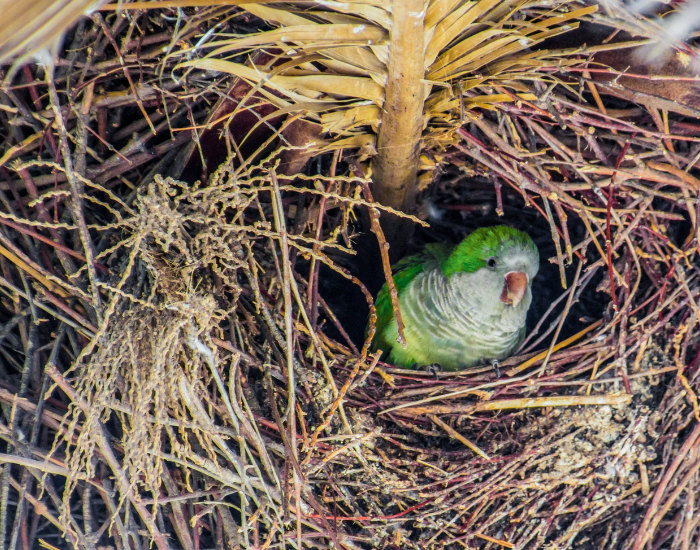
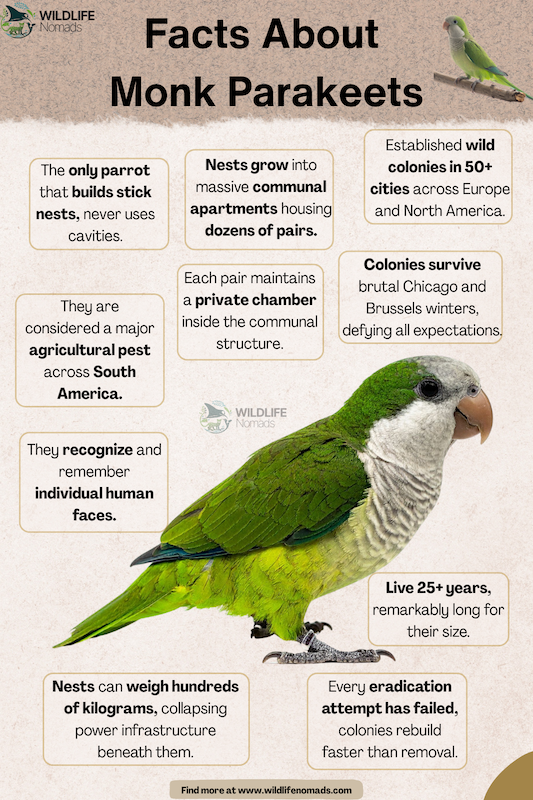
Most parrot species nest in tree cavities. They use existing holes in trunks, rock crevices, or even termite mounds. The quaker parrot throws the entire rulebook out the window. These birds are the only members of the parrot family that weave huge, communal nests from sticks and twigs.
I find this absolutely wild. While looking at galahs and other Australian parrots, I watched birds peer into tree cavities looking for the perfect cavity. Compare that to a monk parakeet colony stacking apartment-style nests in a single tree, sometimes over a meter wide and weighing hundreds of pounds. These breeding colonies often contain multiple chambers, with each pair claiming its own room. It is the closest thing to communal architecture you will find among parrots.
Their nest building instincts are so persistent that captive quaker parrots will weave anything they can reach inside the cage, from popsicle sticks to dropped pencils. I have heard stories from breeders whose monk parakeets dismantled wicker furniture for raw materials.
2. The Real Name Is Monk Parakeet (Myiopsitta Monachus)
Taxonomically speaking, the quaker parrot is actually a parakeet. The species name Myiopsitta monachus sits inside the genus Myiopsitta, a tiny branch of the parrot family tree, and translates roughly as “monk fly-parrot” — a nod to the gray hooded plumage that resembles a monastic cowl, and its energetic, darting flight pattern.. So when someone asks about a quaker parakeet versus a monk parrot versus a monk parakeet, the answer is simple: same species, different nicknames.
Biologists tend to call them monk parakeets. Pet keepers and aviculturists usually say quaker parrot. The Quaker Parakeet Society uses both terms interchangeably across its educational materials. I default to “quakers” when chatting with bird people because it feels affectionate, the way some people call a Labrador a “lab.”
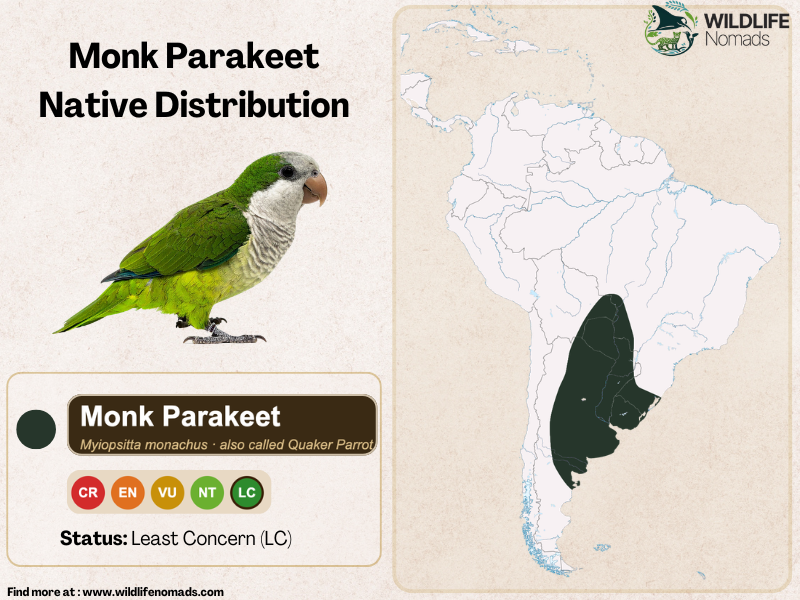
3. They Come From Southern South America, Not the Amazon
People often assume any green parrot lives in the Amazon rainforest. Not these birds. The quaker parrot origin lies in southern South America, specifically central Argentina, Uruguay, Paraguay, Bolivia, and southern Brazil. Their natural habitat includes savannas, dry woodlands, palm groves, and increasingly, agricultural landscapes across southern South America.
This origin matters more than it sounds. Unlike tropical parrots that struggle outside humid forests, monk parakeets evolved in temperate zones. They handle cold climates remarkably well. Some feral populations now survive winters in Chicago and Brooklyn — a feat no macaw could manage. That hardiness is the secret behind their global success as an introduced species. According to the IUCN Red List entry for Myiopsitta monachus, the wild population in their native range remains stable and even expanding.
4. Feral Colonies Now Live in Numerous US States
Escaped or released quaker parrots have established feral colonies across numerous US states, plus much of Europe, Israel, and Japan. Florida, Texas, Connecticut, Illinois, and New Jersey all host well-documented breeding colonies. A friend of mine once led a bird walk through Brooklyn and stopped traffic just by pointing at a bushy nest tucked into a power substation.
This success comes with controversy. Because monk parakeets strip crops and damage electrical infrastructure with their massive nests, several states classify them as an agricultural pest. Local laws vary dramatically. California, Hawaii, Kansas, and Connecticut restrict or ban ownership of these birds outright. Other states require permits. Before bringing a quaker parrot home, check your local laws first — the consequences for owning a banned species can include confiscation.
5. The Blue Quaker Parrot Is a Captive Color Mutation
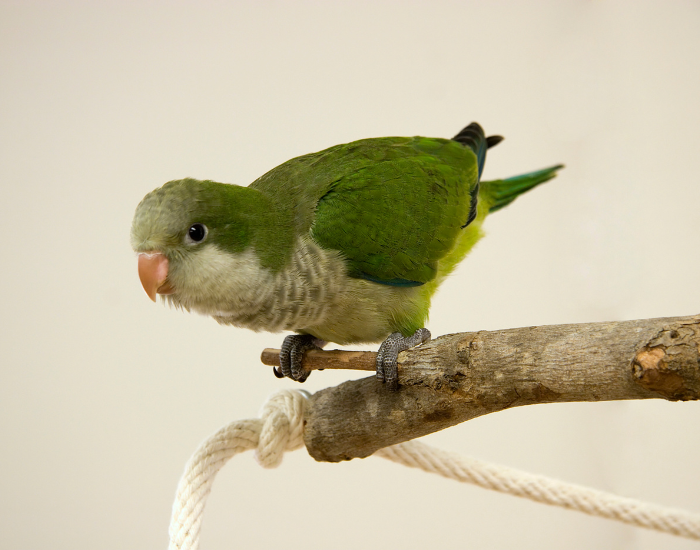
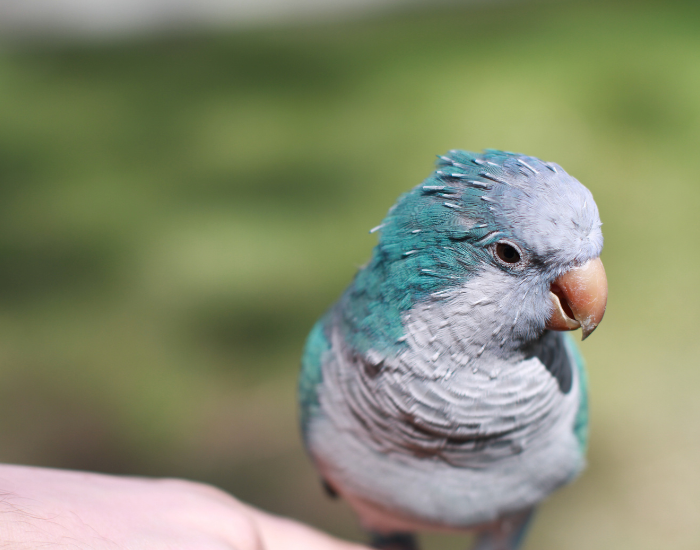
Wild quaker parrots wear a uniform of bright green on the back, light green on the belly, and a pale gray “monk” face. That said, breeders have produced several striking color mutations over the past few decades. The blue quaker parrot, sometimes marketed as the dark blue or cobalt quaker, is the most famous. There is also a cinnamon, a lutino (yellow), and a pied form.
I want to be clear about something. These color variations do not exist in the wild. They emerged through selective breeding from rare recessive genes. The bright green wild type remains the only form you will see flying through central Argentina. Pet store enthusiasm for the blue mutation has pushed prices considerably higher, but the bird itself behaves identically to its green cousins.
6. How Big Do Quaker Parrots Get? Smaller Than You Think
Quaker parrot birds are small parrots, measuring about 11 to 12 inches from beak to the tip of a long tail. Adults weigh just 90 to 120 grams — roughly the weight of a baseball. Compared to larger parrots like macaws or African greys, the size of a quaker parrot is closer to a cockatiel than a macaw.
That compact frame hides surprising strength. I once watched a sanctuary quaker bend the wire of its cage with sheer beak pressure. Their flight feathers are sturdy and pointed, designed for swift, direct flight rather than the soaring style of bigger parrots. In the wild, this lets them dart between trees in flocks of dozens, calling constantly so the flock stays cohesive.
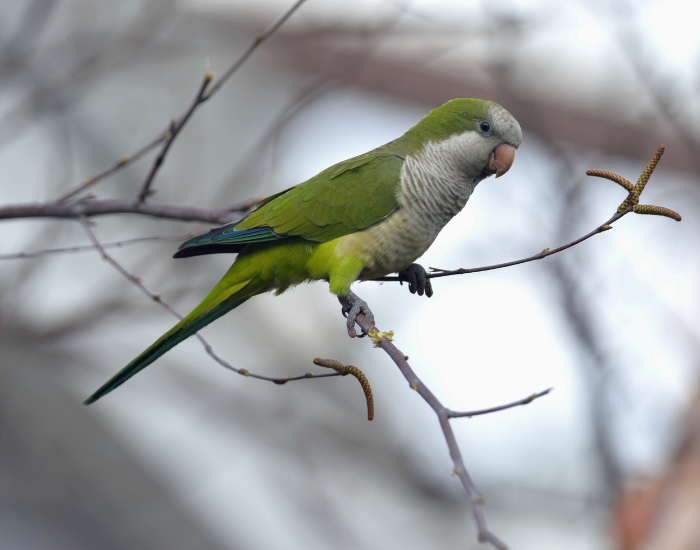
7. Quakers Are Highly Intelligent and Skilled Talkers
Here is the trait that puts these birds in any honest conversation about the smartest animals on the planet. Quaker parrots are highly intelligent and learn human speech with startling clarity. Many individuals develop vocabularies of 50 to 100 words, and standout quakers have been documented learning several hundred. Their talking ability rivals African grey parrots in clarity, though they typically learn fewer total words.
I think their intelligence makes sense when you consider their lifestyle. Building communal nests, defending territory in a flock, and coordinating foraging all require sharp social cognition. Monk parakeets recognize individual flockmates, remember complex social ranks, and pass learned calls between generations. Bird Talk Magazine ran a long-running column profiling quaker owners whose birds memorized entire phone conversations. That is not random mimicry. That is context-aware learning, the same kind of cognition that makes them intelligent and social companions.
8. They Bond Closely and Live a Long Time
The average lifespan of a quaker parrot in captivity ranges from 20 to 30 years, with proper care pushing some birds into their early 30s. That is a serious commitment, comparable to many other parrots and even some other pets like cats and small dogs.
This bonding behavior cuts both ways. A quaker parrot that bonds closely with one person may become aggressive toward everyone else in the household. I have spoken with rescue volunteers who described quakers refusing food when their chosen human went on vacation. If you want a pet that treats you like a flock-mate, the quaker delivers. If you want a casual companion, look elsewhere — perhaps a finch or a budgie.
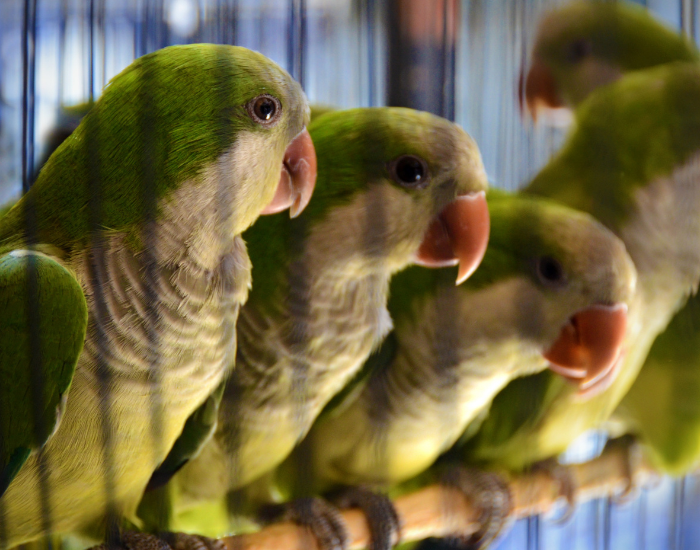
9. A Varied Diet Goes Way Beyond Sunflower Seeds
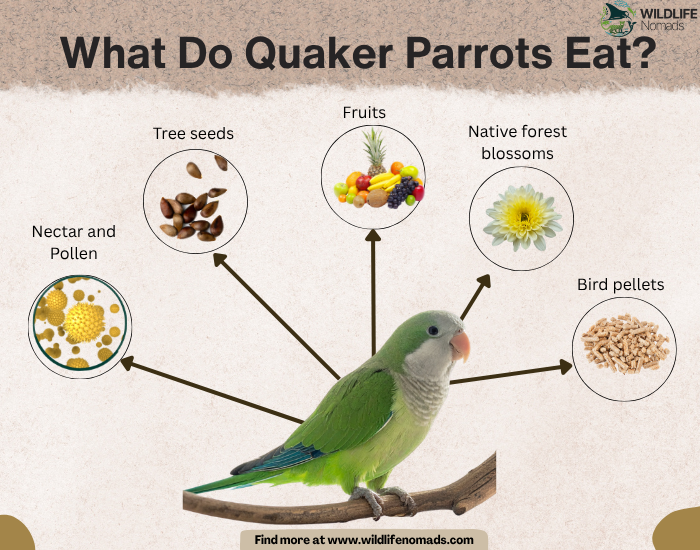
In the wild, monk parakeets eat seeds, fruits, berries, grasses, leaf buds, and the occasional insect. While wild birds burn off these high-fat treats flying miles a day, captive quakers simply don’t have the workload to process a heavy seed diet. That varied diet keeps them healthy. The biggest mistake I see new pet owners make is feeding a sunflower seed mix as the main food source. Sunflower seeds are too fatty and lead directly to fatty liver disease — one of the most common health issues in captive quakers. Liver disease shortens their lives dramatically.
A balanced captive diet should be roughly 60 percent high-quality pellets, 30 percent fresh vegetables with small amounts of fruits, and only 10 percent seeds as treats. Leafy greens, carrots, broccoli, sweet potato, and occasional cooked legumes all work. Avoid avocado, chocolate, and anything from your dinner plate that contains salt or onion. The same nutritional rules apply to most pet birds, but quakers seem especially prone to obesity if their food skews toward seeds.
10. They Adapted Beautifully to Urban Environments
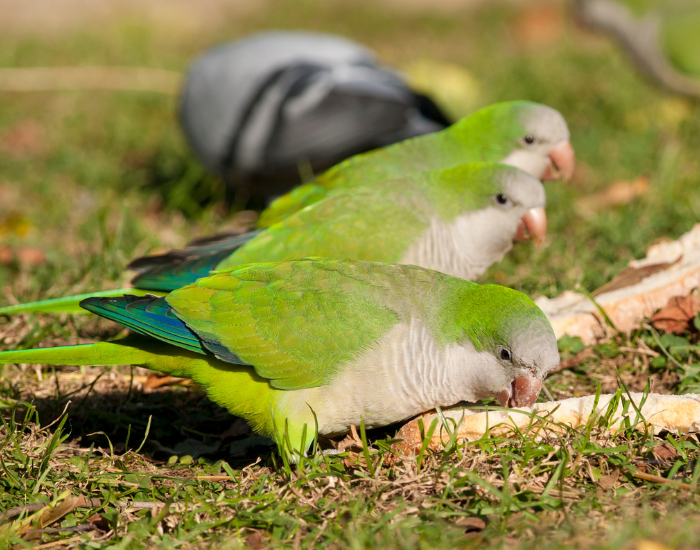
Quaker parrots thrive where other parrot species fail. While many other birds cling to shrinking forests, monk parakeets actively colonize urban environments. They nest on cell towers, stadium lights, and power transformers. They forage on lawns, in parks, and at backyard feeders. And they also have learned to eat human food scraps, ornamental berries, and seeds spilled from agricultural transport.
This adaptability fascinates me as a biologist. It is the same flexibility I admire in galahs and a handful of other parrots back in Australia. Most species lose ground when humans transform a landscape. Quakers gain ground. They demonstrate a critical truth about modern wildlife: the species that survive the Anthropocene will be the generalists, the social learners, the opportunists. Quakers check every box.
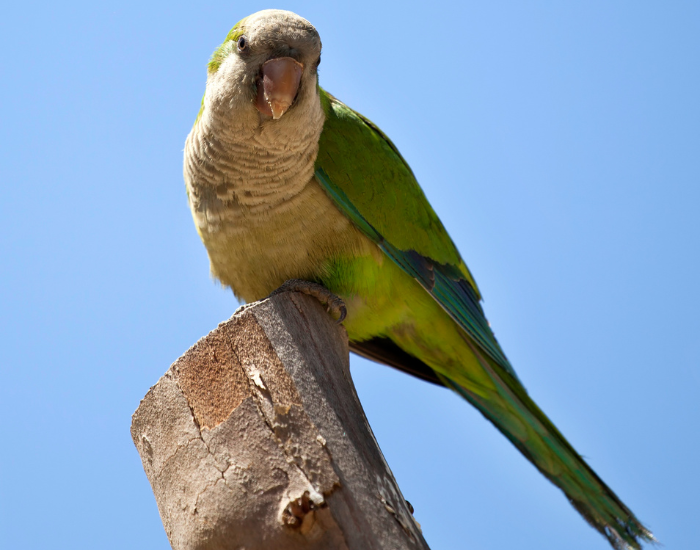
11. They Are Considered an Agricultural Pest in Their Native Range
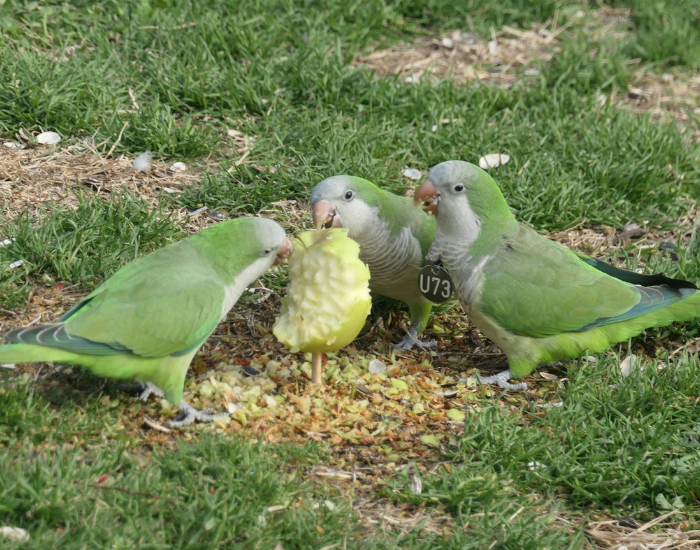
This one surprises pet owners. In central Argentina and surrounding regions of southern South America, the quaker parrot is considered an agricultural pest of significant economic concern. Flocks of these birds raid sorghum, corn, sunflower, and citrus crops. Argentine farmers have used everything from netting to shotguns to organized nest destruction to control numbers.
I want to acknowledge the nuance here. The same intelligence and adaptability that make quakers wonderful pets also make them devastating crop raiders. That is not a failing of the species. It is what happens when humans plant millions of acres of palatable food right in the path of a hungry, smart, communal flock of birds.
12. The Quaker Parakeet Society Helps Owners Navigate Local Laws
Because of the legal patchwork across the United States, prospective owners often feel overwhelmed. The Quaker Parakeet Society — a volunteer-run nonprofit founded in the 1990s — provides updated information on local restrictions, husbandry guides for breeders and owners, and adoption listings. They also lobby state legislatures to recognize quaker parrots as ethical pet birds rather than dangerous invasive species.
If you are seriously considering one, I recommend cross-referencing the Society’s resources with your state wildlife agency. Reputable breeders will also know the rules in your area. Avoid any pet store that cannot confirm legality — that is a red flag for the rest of their practices, too.
A few practical care notes if you are still in. Keep the cage well away from direct sunlight and drafts, since quakers overheat quickly. Watch out for household items like nonstick pans, scented candles, and aerosols, all of which can kill birds in minutes. And budget for an avian vet, because young birds and adults alike develop health issues that no general-practice vet will catch.
Frequently Asked Questions
Quaker parrots can be wonderful pets, but they suit dedicated owners more than casual ones. These social birds bond closely, demand daily out-of-cage interaction, and live 20 to 30 years. Beginners willing to commit time and learn proper care succeed often. Beginners looking for a low-effort companion typically struggle. The Quaker Parakeet Society maintains good starter guides for first-time keepers.
Adult quaker parrots reach 11 to 12 inches from head to tail tip and weigh between 90 and 120 grams. The size of a quaker parrot makes it one of the small parrots — roughly cockatiel-sized — with a stocky build and a long tail that accounts for nearly half its total length. Males and females look essentially identical.
Quaker parrots are restricted or banned in several US states because feral colonies can damage crops and infrastructure as an introduced species. California, Hawaii, Kansas, Connecticut, and a few others either prohibit ownership or require special permits. These local laws stem from concerns about quakers becoming an established invasive species, not from any danger to humans.
What I Take Away From the Quaker Parrot
Few small parrots punch above their weight like the quaker parrot. These are the architects, the talkers, the city-dwellers, and the survivors of the parrot world. My early encounters across that Mexican zoo courtyard never let me hold one, but the more I research these birds, the more I want to.
I would love to hear from anyone living with a quaker parrot, drop your stories in the comments below. If you want to compare these chatty escape artists to other parrots I have profiled, my pieces on the conure parrot and the black cockatoo make great next reads. And for a broader survey of bird diversity, types of birds covers ground from songbirds to raptors.
References:
Bucher, E. H., & Aramburu, R. M. (2014). Land-use changes and monk parakeet expansion in the Pampas grasslands of Argentina. Journal of Biogeography, 41(6), 1160–1170. https://doi.org/10.1111/jbi.12282
Briceño, C., Sandoval-Rodríguez, A., Yévenes, K., Larraechea, M., Morgado, A., Chappuzeau, C., Muñoz, V., Dufflocq, P., & Olivares, F. (2019). Interactions between Invasive Monk Parakeets (Myiopsitta monachus) and Other Bird Species during Nesting Seasons in Santiago, Chile. Animals : an open access journal from MDPI, 9(11), 923. https://doi.org/10.3390/ani9110923
Hernández-Brito, D., Carrete, M., Blanco, G., Romero-Vidal, P., Senar, J. C., Mori, E., White, T. H., Jr, Luna, Á., & Tella, J. L. (2021). The Role of Monk Parakeets as Nest-Site Facilitators in Their Native and Invaded Areas. Biology, 10(7), 683. https://doi.org/10.3390/biology10070683
Hobson, E. A., Avery, M. L., & Wright, T. F. (2014). The socioecology of monk parakeets: Insights into parrot social complexity. The Auk, 131(4), 756–775. https://doi.org/10.1642/AUK-14-14.1
Souviron-Priego, L., Muñoz, A. R., Olivero, J., Vargas, J. M., & Fa, J. E. (2018). The legal international wildlife trade favours invasive species establishment: The monk and ring-necked parakeets in Spain. Ardeola, 65(2), 233–246. https://doi.org/10.13157/arla.65.2.2018.ra3