I have never spotted a wild conure in a rainforest canopy. My only real encounters with these birds happened in small sanctuaries across southeastern Mexico, where rescued birds clung to my fingers with that signature conure curiosity. That said, two decades of fieldwork, plus writing here about everything from the African grey parrot to the Dracula parrot, taught me that few parrot species capture the public imagination quite like the conure.
These birds explode across social media for good reason. They are loud, bright, and packed with personality. Today I want to share what makes the conure so special, drawing on the same field biology lens I have applied to the black cockatoo, the king parrot, and various types of macaws. Whether you are a curious bird lover or considering one as a pet, here are 10 conure facts worth knowing.
1. A Conure Is a Parrot. Just Not a Tidy Scientific Category
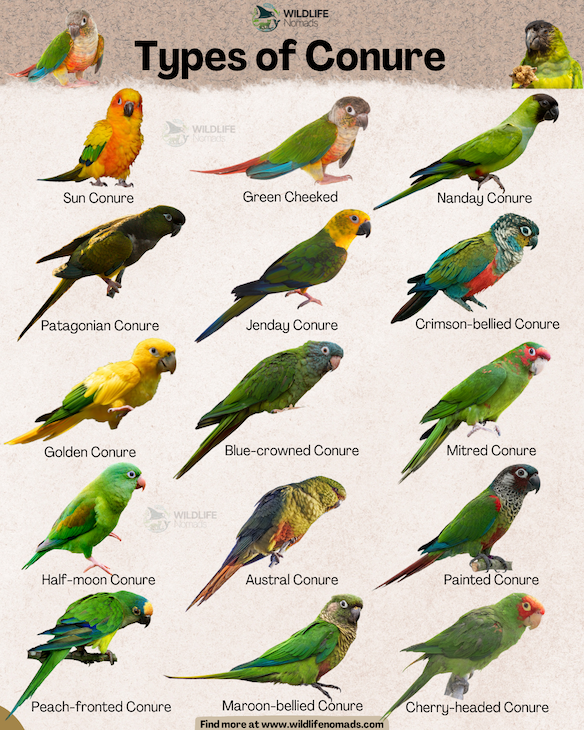
Is a conure a parrot? Yes, absolutely. Conures belong to the parrot family Psittacidae, but the conure definition is messier than most people realize. “Conure” is a common name, not a strict taxonomic group. The label covers several genera of small to medium sized birds from Central and South America.
All conures are parrots, yet no single scientific group contains every conure. Genus Pyrrhura, genus Aratinga, genus Eupsittula, and genus Cyanoliseus all hold birds that pet owners call conures. Conure species range from a tiny green cheeked conure to massive patagonian conures that rival some larger parrots in size. Even the Parakeet Conure label gets thrown around, since many of these birds are technically long-tailed parakeets.
2. Where Do Conures Come From? Tracing Wild Conures Across Two Continents
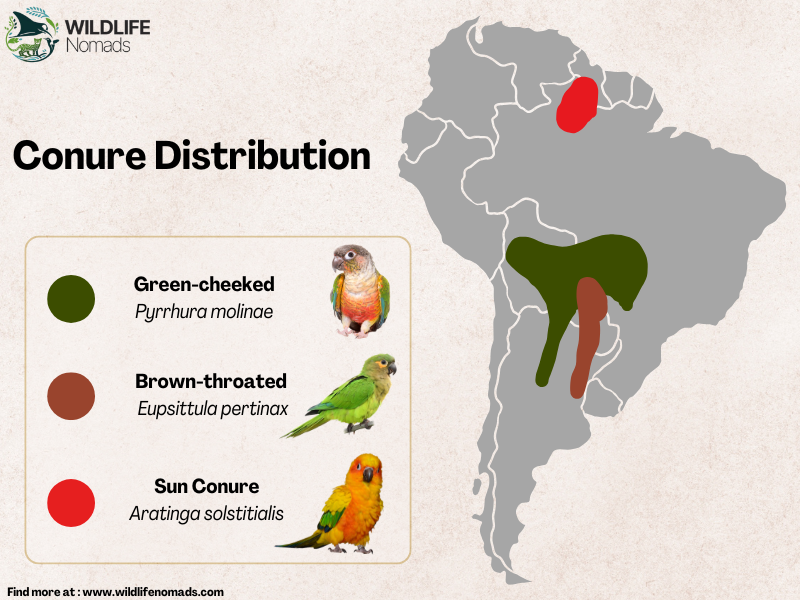
Where do conures originate from? Almost exclusively the warm forests, grasslands, and scrublands of South America, with a few species pushing north. Different conure species occupy wildly different habitat zones across this enormous region.
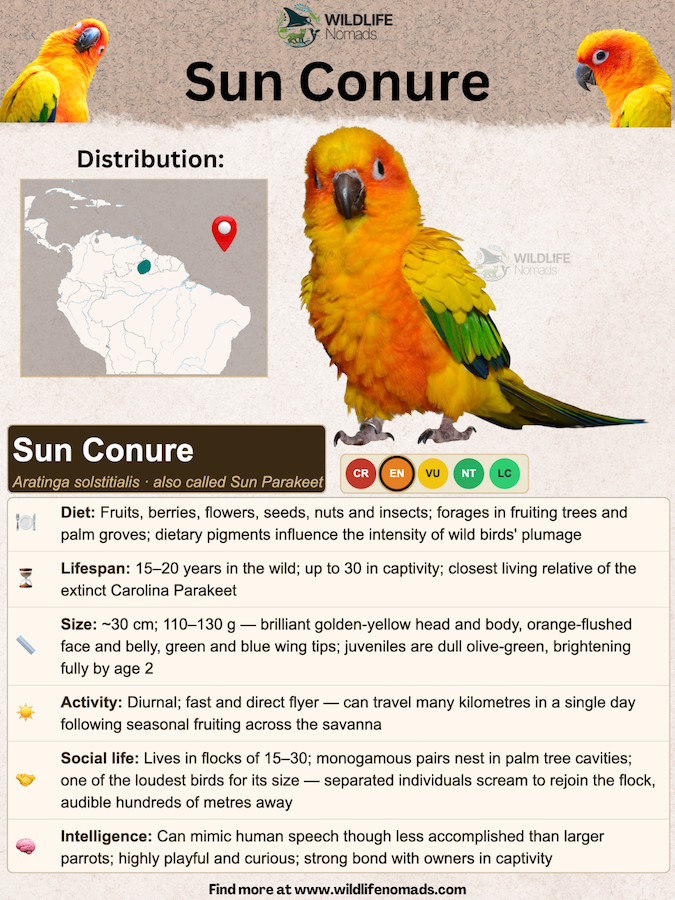
Green cheeked conures roam the dense habitat of eastern Bolivia into Paraguay and northern Argentina. The sun conure holds court in the dry savanna habitat of northern Brazil and the Guianas. A patagonian conure digs burrows into Argentine cliffs, while the nanday conure flocks through the Pantanal wetlands. Cherry headed conures originally come from western Ecuador and Peru, though a famous feral population now thrives in San Francisco.
3. The Green Cheeked Conure Is the Reigning Pet Favorite
Of every conure species kept as companion birds, the Green Cheeked Conure dominates the pet market. There are good reasons for this. Green cheeked conures are quieter than their sun conure cousins, smaller than blue crowned conures, and arguably the most affectionate conure in the genus Pyrrhura.
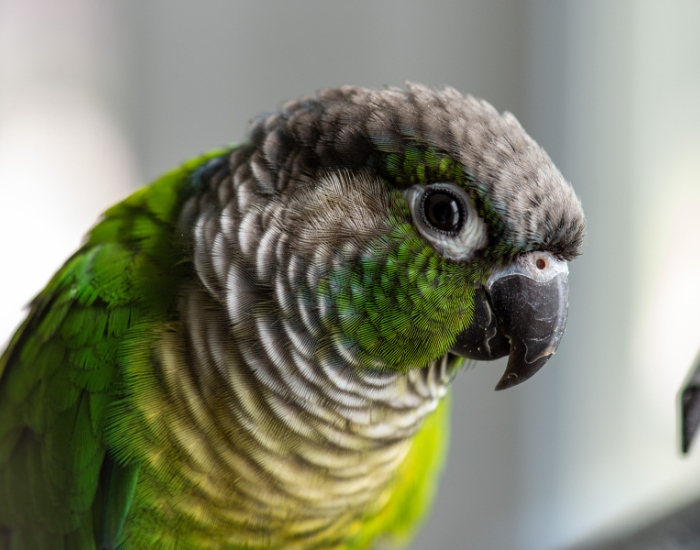
The classic green cheeked conure shows olive green wings, a dusky maroon tail, a grey chest, a small dark beak, and the bright green cheek patches that earned the name. Selective breeding has produced color mutations — pineapple, turquoise, cinnamon, yellow sided — but the original green cheeked plumage remains the standard.
A green cheeked conure rarely screams as loudly as larger parrots, which makes green cheeked conures popular pets in apartments where the booming voice of a macaw would empty the building.
4. Pyrrhura Conures Are the Quiet, Cuddly Branch of the Family
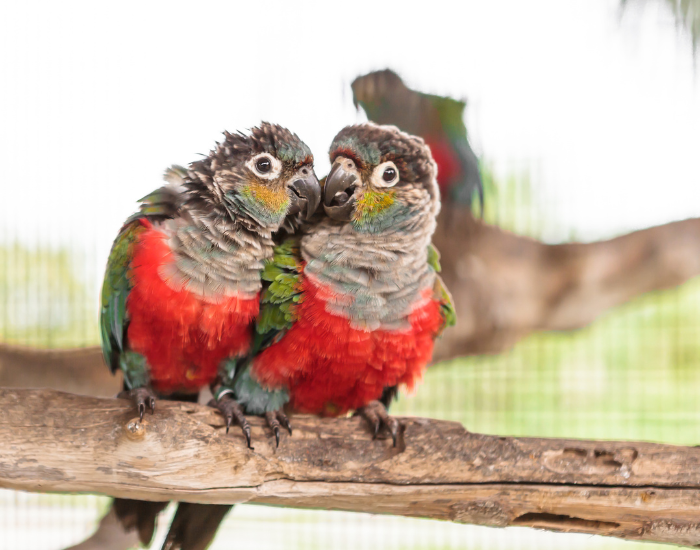
Pyrrhura conures form one of the most beloved branches of the conure family. The genus Pyrrhura contains roughly two dozen small parrot species, including the green cheeked, maroon-bellied, black-capped, and pearly conure.
Birds in the genus Pyrrhura are generally quieter and calmer than the louder Aratinga conures like sun conures and nanday conures. Most conures in this group have intricate scalloping on the chest feathers, giving them an almost embroidered look up close. Their playful personalities, dainty curved beak, and gentle volume make pyrrhura conures my pick for first-time conure keepers.
5. The Sun Conure and Golden Conures Burn the Brightest
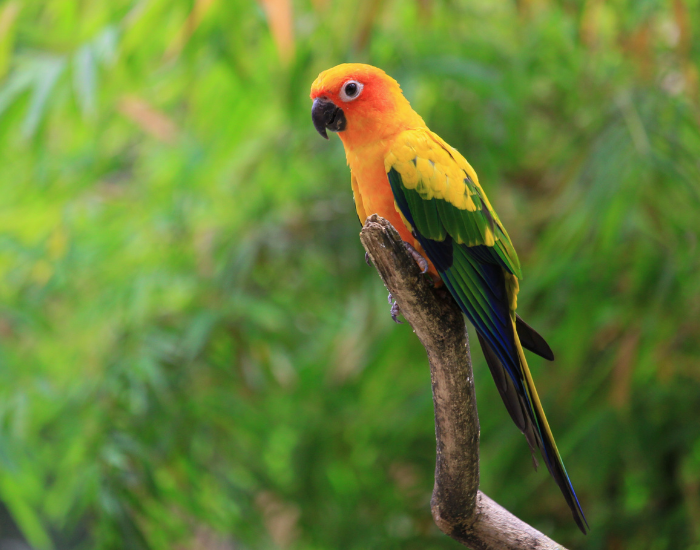
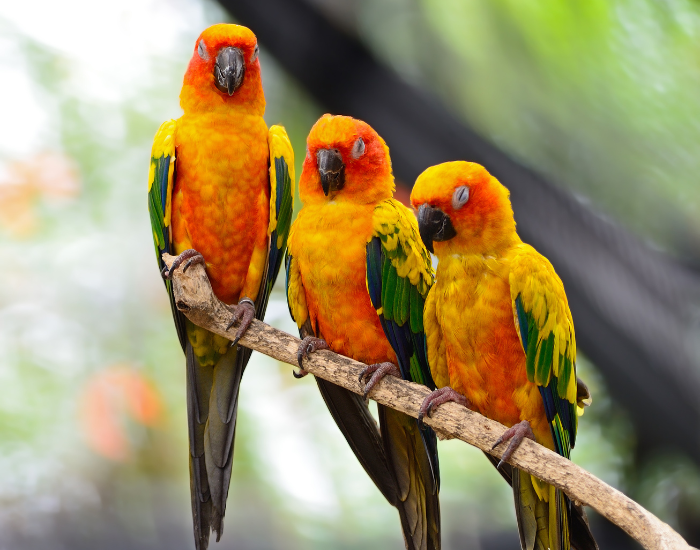
If you have ever seen a flame-orange and bright yellow parrot trending online, you have probably seen a sun conure. The sun conure ranks among the most photogenic of any conure species on Earth, sunset-feathered birds that look painted rather than evolved.
Golden conures, sometimes called the Queen of Bavaria’s conure, push the color story further. A golden conure shows almost entirely golden body feathers broken only by dark green flight feathers. Both species are larger and louder than green cheeked conures. The trade-off for spectacular color is a voice that carries across a small neighborhood. Many conures from this Aratinga branch share that bold volume.
6. The Patagonian Conure Is a Cliff-Dwelling Giant
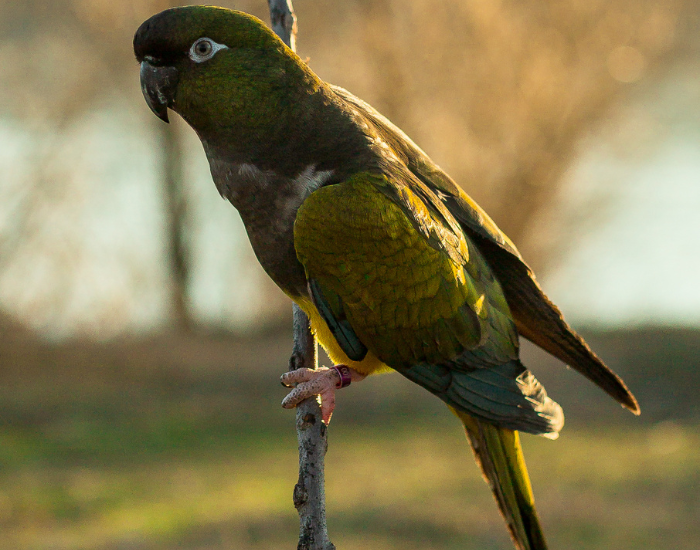
Patagonian conures defy almost every assumption about conures size. They are the largest conure species, reaching nearly 18 inches from beak to tail. They live in the windy steppe habitat of southern Argentina, and they nest communally in cliff burrows, sometimes in colonies of thousands of birds.
These birds are extremely social, forming long-term flock bonds and synchronized flight displays that ripple across canyon walls. Few experiences in birding compare to watching a flock spiral out of a sandstone cliff at dawn during mating season.
7. Conures Are Highly Social Animals — Loneliness Hurts Them
Here is a conure truth glossed over in pet shop sales pitches. Conures are intensely social creatures. In nature, most conures live in noisy flock formations of 10 to 30 birds, maintaining constant contact calls. A wild flock is loud and coordinated.
When you bring a single conure home, you become its flock. Conures crave daily interaction, and many owners underestimate how much out of cage time these birds require. A conure left in its cage for 12 hours a day will pluck its tail feathers, scream, or develop neurotic behaviors.
The advice I give people considering any types of parrots as pets applies double to conures. Do not get one unless you can offer real daily interaction, mental stimulation, and a steady daily routine.
8. What Do Conures Eat? A Mostly Plant-Based Diet
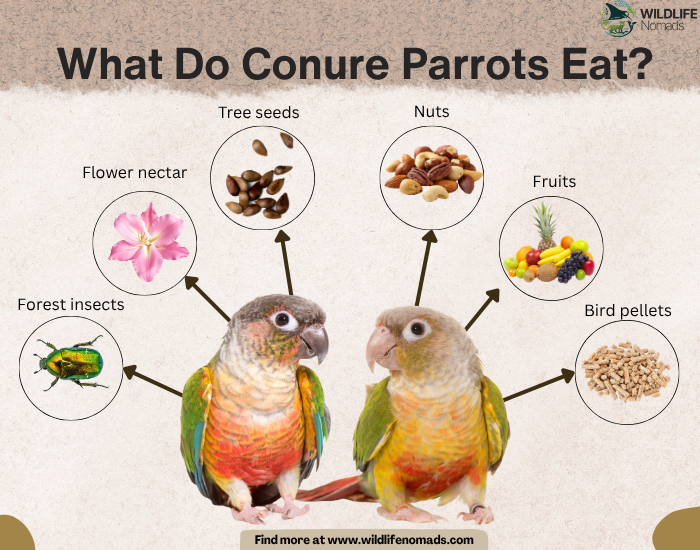
In the wild, conures eat a varied plant-based diet of fruits, seeds, nuts, flowers, and occasional insect larvae. Captive conure diet should mirror this variety. Pellets form the backbone of most modern food plans, supplemented with fresh fruits, vegetables, sprouted seeds, and limited nuts.
Avoid avocado, chocolate, caffeine, and salty human food, all toxic to a conure. Various seeds like millet and safflower work well as training rewards, but a seed-only food regimen will shorten your bird’s life through fatty liver disease. Fresh water should be changed daily, and warm water baths or a gently mist from a spray bottle keep feathers and wings in good condition.
A healthy diet plus a rotating produce mix is the closest thing to a longevity formula these birds have. Young birds especially benefit from food variety, since taste preferences lock in early. Offering chopped fruits in a foraging bowl mimics nature and keeps the birds engaged.
9. Conures Talk, Mimic Sounds, and Learn Surprisingly Well
Can conures talk? Yes, though not as crisply as African greys or Amazons. Most of these birds master a handful of words, plus a startling repertoire of household sounds. A friend in Mexico kept a green cheeked conure that replicated a microwave beep, a doorbell, and a sneeze.
Conures mimic sounds more than they speak. Sun conures and nanday conures tend to be the loudest mimics. Green cheeked conures, blue crowned conures, and cherry headed conures often produce clearer words. Short training sessions of 5 to 10 minutes, several times a day, work better than long marathon lessons. Learning tricks like target training, recall, and waving builds the trust that makes a conure a genuine companion rather than a noisy ornament.
Watch: The playful antics and vocalizations of a Sun Conure in the home:
10. Captive Care Comes Down to Cage, Diet, and Hazards
Cage, Perches, and Toys
The fundamentals of keeping these birds healthy are not complicated, but the details matter. A proper cage should be at least 24 inches wide, taller than it is square, fitted with multiple perches of varying diameter. Natural wood perches help condition feet better than smooth dowel perches, and a mix of perches at different heights encourages climbing. A play gym outside the cage gives your bird somewhere to spend its out of cage time.
Rotate toys weekly to prevent boredom. Chewing, shredding, and foraging toys serve different needs. Hide bits of food and fruits inside puzzle toys so the birds work for their meals. A larger aviary suits keepers with space, while standard pet birds do fine in a roomy cage with the right perches and toys.
Hazards to Avoid
Household hazards kill more pet birds than disease ever does. Cooking fumes from nonstick Teflon pans can be lethal within minutes. Ceiling fans, open windows, candles, and other pets create constant risks. Never expose a conure to direct sunlight in a glass-walled cage as it can cause overheating. However they do need UV light (direct sunlight not through glass) for Vitamin D3 synthesis. A bird healthy enough to thrive needs clean air, fresh food, fresh water, mental stimulation, and steady daily interaction.
Are Conures Good Pets? An Honest Field Biologist’s Take
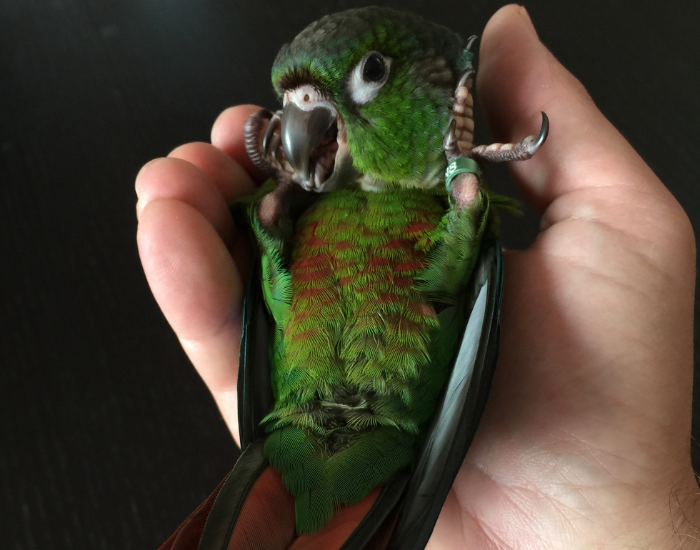
Conures make good pets for the right person. Their playful personalities, big personalities packed into a small parrot frame, and willingness to bond with human companions earn them a top spot among popular pets. Yet they are not low-maintenance birds. They scream, they bite when frustrated, and most conures outlive the patience of casual keepers.
I watched the same pattern with macaws at the zoo where I once worked. If you cannot offer real out of cage time and enrichment, consider smaller species. If you can, few experiences beat sharing your home with one of these colorful, opinionated South American birds.
FAQs About Conures
Roughly 40 to 50 conure species exist depending on how you split the taxonomy. The most common groups in aviculture include green cheeked conures, the sun conure, the nanday conure, cherry headed conures, blue crowned conures, jenday conures, the patagonian conure, and golden conures. Pyrrhura conures form the largest pet-favorite genus, followed by Aratinga.
Avocado is the single most dangerous fruit for any parrot, including every conure. The persin in avocado flesh and pits causes heart failure in birds. Fruit pits and seeds from apples, cherries, peaches, and apricots also contain trace cyanide compounds and should be removed before serving fresh food to your bird.
Green cheeked conures usually win the most-affectionate title, with the sun conure close behind. Individual personality matters more than species though. A hand-raised, well-socialized conure of nearly any kind will bond deeply with a patient owner who offers daily interaction.
Conures size varies dramatically. A small conure like the green cheeked measures around 10 inches long including its tail. The sun conure and nanday conure reach 12 inches. Patagonian conures stretch nearly 18 inches. These birds are small to medium sized, far smaller than macaws but larger than budgies.
The Vibrant Little Parrots
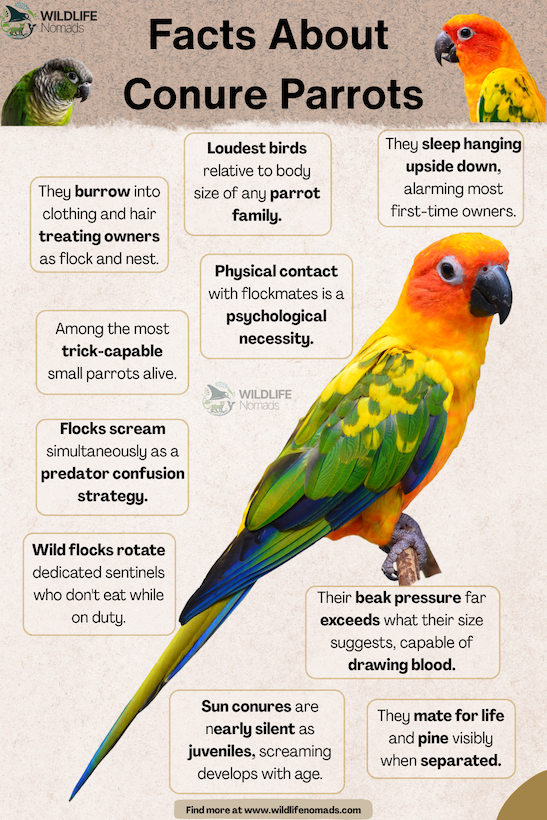
Conures sit at a sweet spot in the parrot world; colorful, small enough to share a home, smart enough to surprise you daily. From the galahs of Australia to the Dracula parrot of New Guinea and the many types of birds I have covered, the conure stays a favorite. These birds remind me that the wild lives we admire most often fit in the palm of a hand.
If you have a conure story, a clever bird, a memorable rescue, a favorite species — drop it in the comments. And if you want to keep exploring, my piece on the African grey parrot is the natural next read.
References:
Berkunsky, I., Quillfeldt, P., Brightsmith, D. J., Abbud, M. C., Aguilar, J. M. R. E., Alemán-Zelaya, U., et al. (2017). Current threats faced by Neotropical parrot populations. Biological Conservation, 214, 278–287. https://doi.org/10.1016/j.biocon.2017.08.016
Bucher, E. H., & Aramburú, R. M. (2014). Land-use changes and monk parakeet expansion in the Pampas grasslands of Argentina. Journal of Biogeography, 41(6), 1160–1170. https://doi.org/10.1111/jbi.12282
Masello, J. F., Pagnossin, M. L., Sommer, C., & Quillfeldt, P. (2006). Population size, provisioning frequency, flock size and foraging range at the largest known colony of Psittaciformes: the Burrowing Parrots of the north-eastern Patagonian coastal cliffs. Emu – Austral Ornithology, 106(1), 69–79. https://doi.org/10.1071/MU04047
Tella, J. L., Dénes, F. V., Zulian, V., Prestes, N. P., Martínez, J., Blanco, G., & Hiraldo, F. (2016). Endangered plant-parrot mutualisms: seed tolerance to predation makes parrots pervasive dispersers of the Critically Endangered tonka bean. Scientific Reports, 6, 31709. https://doi.org/10.1038/srep31709
Mori, E., Grandi, G., Menchetti, M., Tella, J. L., Jackson, H. A., Reino, L., et al. (2017). Worldwide distribution of non-native Aratinga parakeets and their potential impacts. Animal Biology, 67(1), 25–37. https://doi.org/10.32800/abc.2017.40.0049
Urantowka, A. D., Strzała, T., & Grabowski, K. A. (2016). The first complete mitochondrial genome of Pyrrhura sp.–question about conspecificity in the light of hybridization between Pyrrhura molinae and Pyrrhura rupicola species. Mitochondrial DNA. Part A, DNA mapping, sequencing, and analysis, 27(1), 471–473. https://doi.org/10.3109/19401736.2014.900672
Wright, T. F., Schirtzinger, E. E., Matsumoto, T., Eberhard, J. R., Graves, G. R., Sanchez, J. J., et al. (2008). A multilocus molecular phylogeny of the parrots (Psittaciformes): support for a Gondwanan origin during the Cretaceous. Molecular Biology and Evolution, 25(10), 2141–2156. https://doi.org/10.1093/molbev/msn160