
A few weeks ago I scrolled past a photograph that stopped me cold. A bird with jet-black feathers, a bald red head, and a hooked beak that looked dipped in fresh blood. My first thought: this can’t be real. My second: I have to learn everything about it. That bird was the dracula parrot, and after years of looking for wildlife across continents, I had somehow never heard of it.
Coming from Mexico, I grew up watching Scarlet Macaws and Military Macaws cut across the sky. In Australia, I’ve trailed galahs, king parrots, black cockatoos. I thought I knew this corner of the bird world. I was wrong. Pesquet’s parrot — tagged online as the dracula bird, dragon parrot, dracula vulture, and goth parrot — is unlike any other bird I’ve ever met. And it’s quietly disappearing from the rainforests of New Guinea.
This is what I love about my work. You think you’ve cataloged the strangest animals on the planet, then a single image cracks the world open again. Below are 12 facts that floored me during my deep dive into this gothic, vulture-faced species.
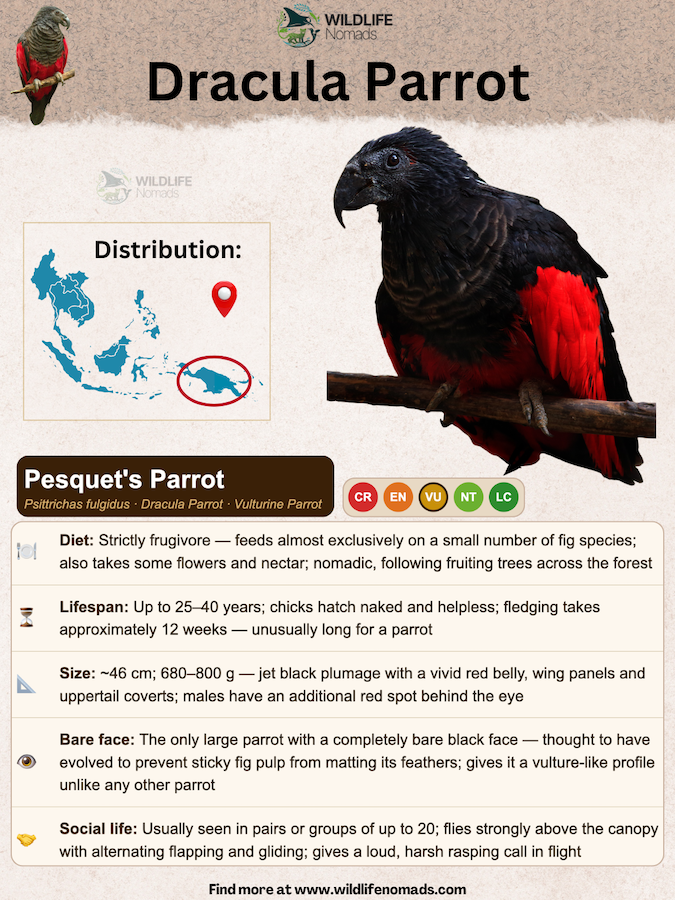
1. Yes, the Dracula Parrot Is Absolutely Real
The first question I had to answer myself: are dracula parrots real? They look photoshopped, like a mascot designed for a heavy metal album cover. But yes, the dracula parrot is a real, living bird native to the lower mountains of New Guinea.
Scientists know it as Pesquet’s parrot (Psittrichas fulgidus). The internet has invented dozens of other nicknames: vampire parrot, dracula bird, dracula vulture, dragon parrot, the dracula parrot, dracula cockatoo, even dracula macaw and goth parrot. None of those last labels are technically correct — it’s neither a macaw nor a cockatoo — but the dracula tag fits the look perfectly. There is no real albino dracula parrot in the wild, despite what some clickbait articles suggest. Every wild bird wears the same goth uniform.
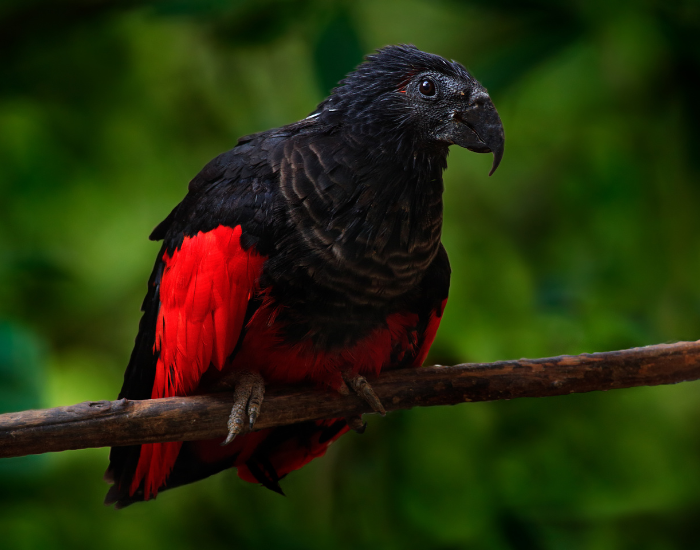
2. It’s the Only Member of Its Genus
This bird is so weird, evolutionarily speaking, that it stands alone. Pesquet’s parrot is the only member of the genus Psittrichas, and the only member of its own subfamily (Psittrichasinae), with no close living relatives. That’s like being the last surviving cousin in an entire family tree, a single branch of evolution that bet everything on one strange design.
When I read this, I thought of the kea of New Zealand; another oddball with no real twin. Evolution in isolated places does strange things. New Guinea, with its rugged forests and high biodiversity, is a factory for one-of-a-kind species, and this bird is its dark masterpiece.
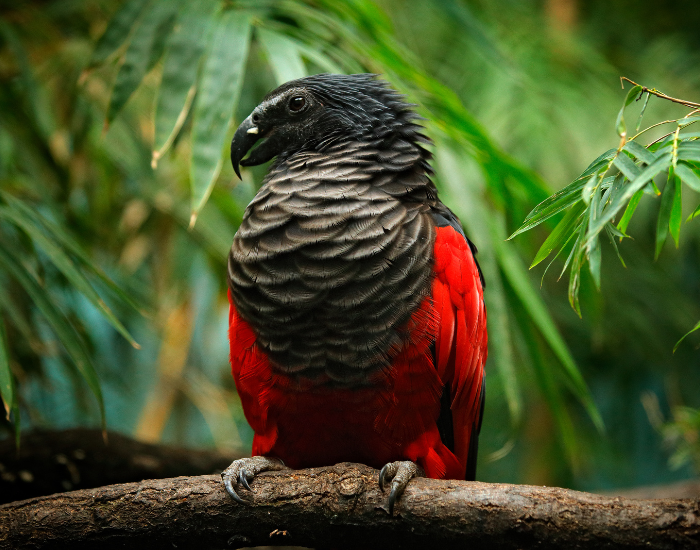
3. The Bald Head Has a Surprisingly Practical Reason
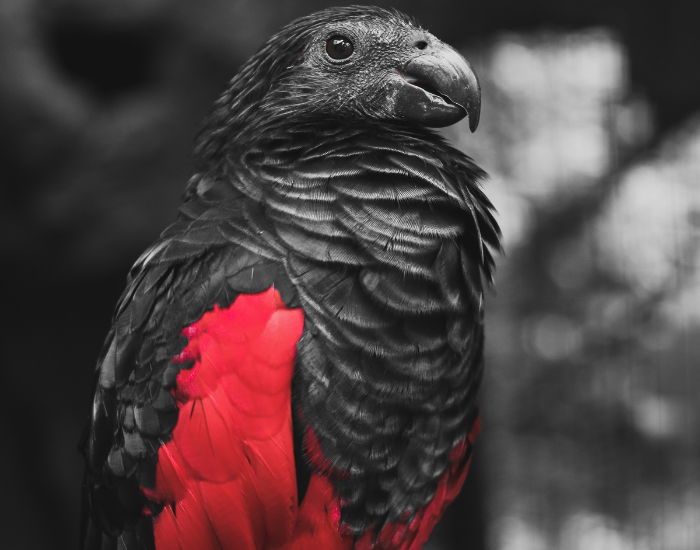
Here’s where the vampire myth falls apart. The bare skin on its face and head is not for drinking blood, it’s an adaptation for hygiene. Just like vultures lost the feathers on their heads to stay clean while feeding on carcasses, this species evolved bald head feathers to handle a messy, sticky fruits diet without matting gunk into its plumage.
When you’re elbow-deep in a fig every day, feathers become a liability. So evolution shaved them off. Practical, brilliant, and accidentally terrifying, a perfect example of how form follows function in nature.
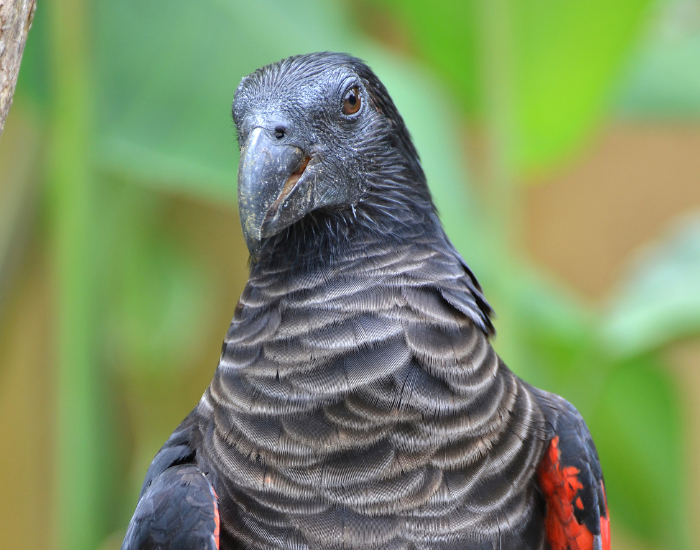
4. The Brilliant Scarlet Plumage Is a Showstopper
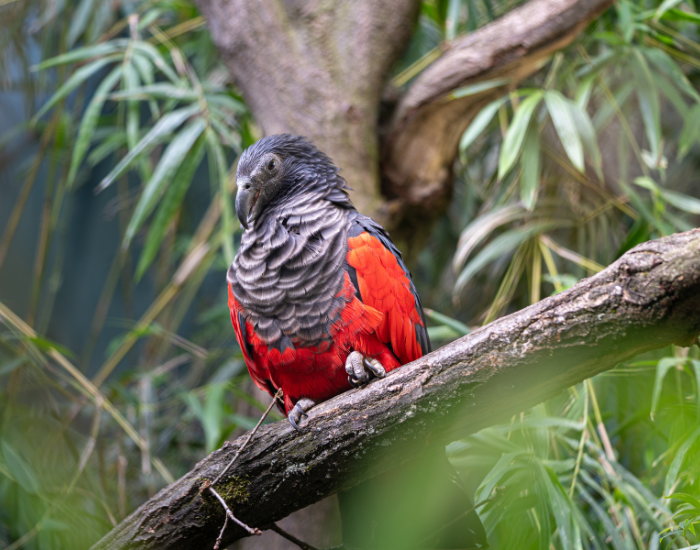
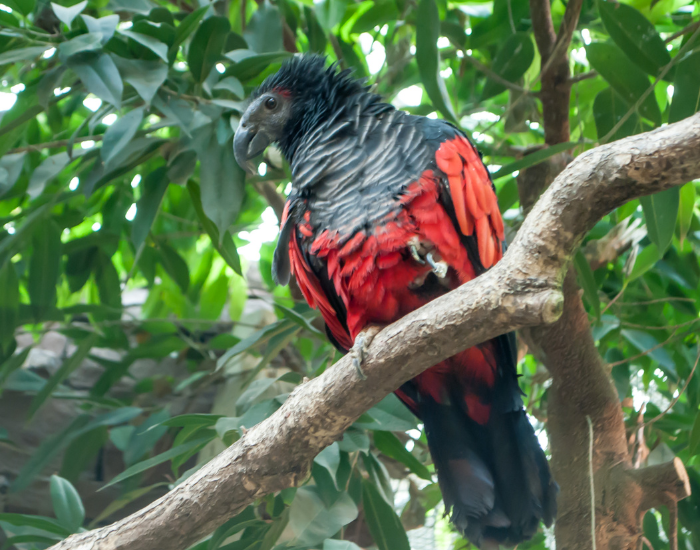
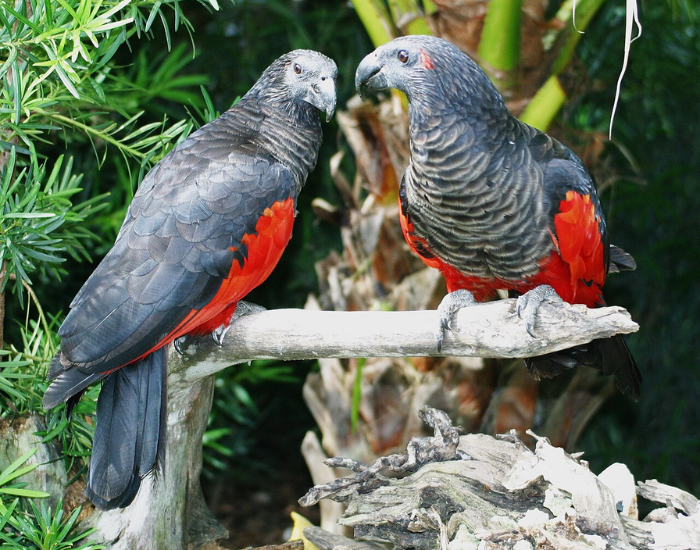
The contrast is what makes this bird unforgettable. Most of the body is matte black, but flashes of brilliant scarlet plumage cover the belly, the underside of the wings, and parts of the tail. Those striking feathers explode into view only when the bird opens its wings or fans its tail mid-flight.
I’d love to see this in person someday. Locals in Papua New Guinea describe a flock taking off as a wave of red against the green canopy. That single red spot of color is highly prized, and as you’ll see, it’s also the species’ biggest curse.
5. It Flies and Soars Like a Vulture
This is why it earned the nickname vulturine parrot. Unlike most birds in this family, which beat their wings constantly, it uses a vulture-style flight pattern: rapidly flapping wings followed by long, lazy short glides. From a distance, you’d swear you were watching a bird of prey.
I’ve seen plenty of macaws power through the air with that classic deep wingbeat. This one doesn’t do that. It cruises, it conserves energy, and it sails through the canopy like a small black vulture. In dense forests, that flight efficiency matters.
6. It Eats Almost Nothing but Figs
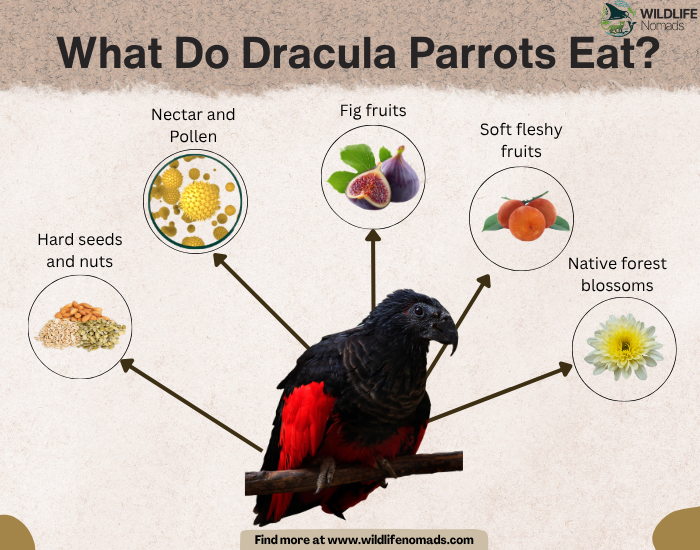
Most members of this family have a varied diet of seeds, nuts, fruit, flowers, and the occasional insect. This species eats almost exclusively figs. Some studies suggest figs make up around 90% of its feeding intake, with a little nectar and a few other soft fruits filling out the rest.
That makes it one of the most specialized fruit-eaters in the bird world. It depends entirely on healthy fig tree populations to survive. Lose the figs, lose the bird. That’s why habitat loss hits this species especially hard compared to more flexible eaters.
7. Its Calls Sound Like a Horror Movie Soundtrack
Forget cute chatter. The dracula parrot screams. Its harsh, rasping calls are easily heard from a long way off in the forest, and recordings make it sound like a creature stalking through a horror film. Researchers note its screams are so distinctive you can identify the species by ear alone.
When I first heard a clip, I laughed out loud. Of course this bird sounds like that. The full goth aesthetic, black feathers, blood-red wings, vulture flight, ear-splitting calls. Nature really committed to the theme.
8. They Mate for Life and Lay Just Two Eggs
The breeding habits of this species are surprisingly tender for such a gothic-looking bird. Pairs are monogamous and stick together long-term. Females lay just two eggs (sometimes only one) inside hollow trees high in the canopy. Both males and females share feeding duties once the chicks hatch.
This slow strategy is a problem for survival. With only two eggs per clutch and chicks that take months to fledge, populations recover slowly from any kind of pressure. There’s no margin for error in their conservation.
9. They’re Endemic to the Rainforests of New Guinea
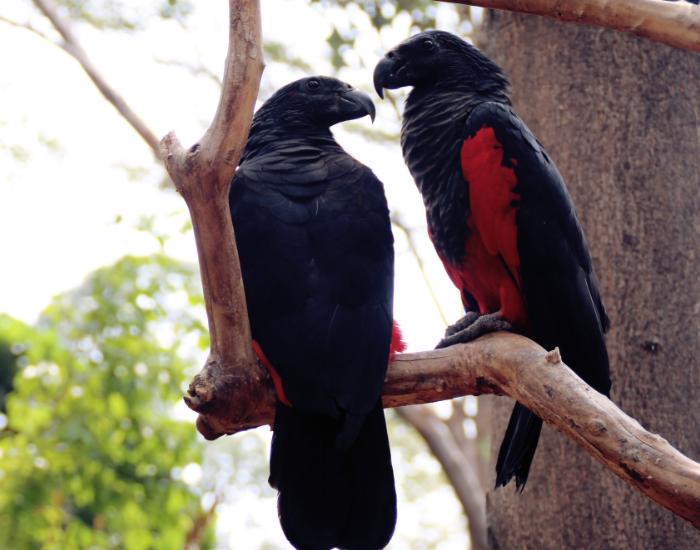
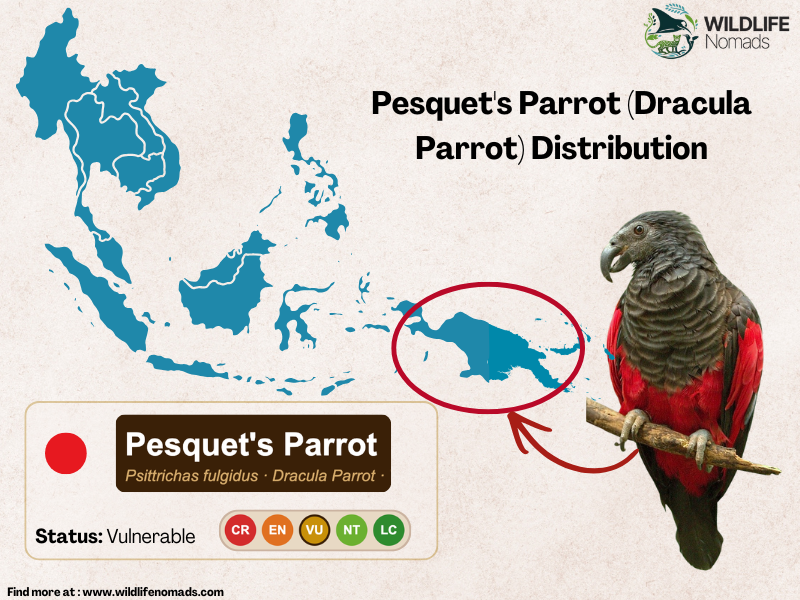
Where do dracula parrots live? Only in the hill and lower mountains forests of New Guinea, the giant island just north of Australia. They’re endemic, meaning they exist nowhere else on Earth. You won’t find a meaningful captive population in zoos, and no wild population has ever been established outside their native range.
I’ve birded across Mexico and Australia, but New Guinea is its own universe. The island holds an enormous concentration of unique birds, and this one is the rarest jewel in that collection.
10. They’re Officially a Vulnerable, Threatened Species
The International Union for Conservation of Nature lists this species as a vulnerable, threatened species. It’s also listed under CITES Appendix II, which restricts international trade. Population estimates suggest fewer than 50,000 mature birds remain, and numbers are falling.
Are dracula parrots endangered? Officially, “vulnerable” sits one rung below endangered, but the trajectory is bad. Without serious conservation work, the next sign of decline points only one direction.
11. Their Red Feathers Are Why They’re Hunted
Here’s the painful part. For centuries, the brilliant scarlet plumage of this bird has been highly prized for ceremonial headdresses across Papua New Guinea. The red feathers and their skin are still hunted today, often fetching high prices in informal markets where rare bird parts move quietly.
Add habitat loss from logging, agriculture, and mining, and you get a brutal one-two punch. Slow reproduction, a narrow diet, and a small range mean it can’t bounce back the way more adaptable other animals can. This is the same story I’ve watched play out with macaws back home in Mexico, beautiful birds priced into oblivion.
12. Despite the Vampire Looks, It’s Not Bloodthirsty
Let’s clear up the biggest myth. The dracula parrot doesn’t drink blood. It isn’t bloodthirsty. The vampire nickname comes purely from how it looks, black plumage, bald red face, hooked beaks stained with sticky fig juice that resembles blood after a particularly messy meal.
Like other members of its family, this one is highly intelligent. Pesquet’s parrot belongs to a group that consistently ranks among the smartest animals on the planet. The “vampire” branding is fun, but it completely misses the real story: a brainy, social, fruit-loving bird that just happens to wear the most metal outfit in the animal kingdom.
Frequently Asked Questions
No, you cannot legally own one as a pet in most countries. The species is protected under CITES Appendix II, which strictly regulates international trade. Even within its native range, hunting and capture are restricted. Birds offered for sale online are almost always illegally trafficked.
They are not dangerous to humans. They have powerful hooked beaks built for crushing tough figs, but they aren’t aggressive toward people. In the wild they’re shy and tend to flee at the first sign of disturbance.
Pesquet’s parrot is currently listed as vulnerable by the IUCN, one step below endangered. Habitat loss and hunting for its red feathers continue to drive numbers down. Without conservation intervention, the species could shift to endangered status within a few decades.
They live only in the hill forests and lower mountains of New Guinea, including Papua New Guinea and the Indonesian provinces of Western New Guinea. They prefer mid-elevation rainforests with abundant fig trees and hollow trees suitable for nesting.
A Bird Worth Saving
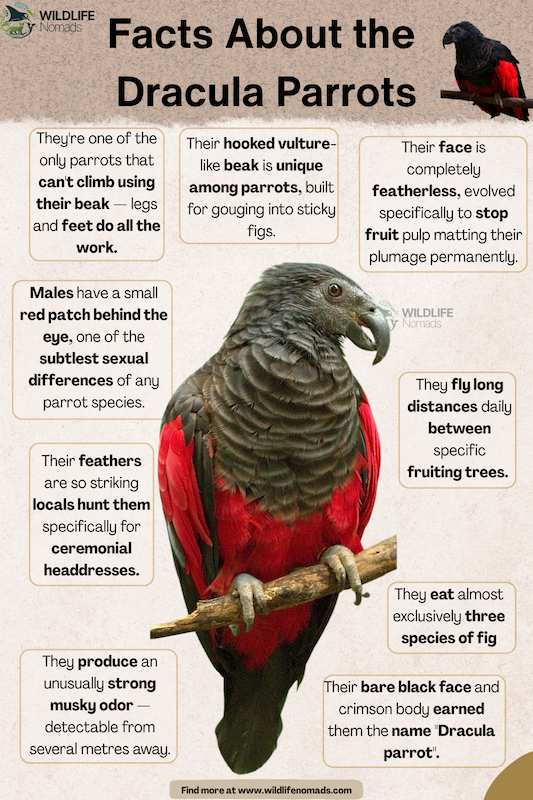
The dracula parrot is a reminder that the planet still hides species most of us have never heard of, and that some are running out of time. It evolved for a single niche — figs in mountain rainforests, and that beautiful specialization is also its weakness. As New Guinea’s forests shrink, so does this gothic icon.
If this story moved you, drop a comment with the strangest bird you’ve ever encountered, then keep exploring the rest of my field notes. I’ve written about the native birds of Australia, the animals of Australia, the birds of Mexico, other types of parrots you can actually go meet, the cheeky galah, the regal king parrot, the moody black cockatoo, brilliant macaws, and the mischievous kea parrot. The world is full of weirder, more wonderful creatures than you think — go find them.
References:
Collar, N. and G. M. Kirwan (2020). Pesquet’s Parrot (Psittrichas fulgidus), version 1.0. In Birds of the World (J. del Hoyo, A. Elliott, J. Sargatal, D. A. Christie, and E. de Juana, Editors). Cornell Lab of Ornithology, Ithaca, NY, USA. https://doi.org/10.2173/bow.pespar1.01
Mack, A. L., & Wright, D. D. (1998). The Vulturine Parrot, Psittrichas fulgidus, a threatened New Guinea endemic: notes on its biology and conservation. Bird Conservation International, 8(2), 185–194. doi:10.1017/S0959270900003257
Symes, C. T., & Marsden, S. J. (2007). Patterns of supra-canopy flight by pigeons and parrots at a hill-forest site in Papua New Guinea. Emu — Austral Ornithology, 107(2), 115–125. https://doi.org/10.1071/MU06041
Beehler, B. M., & Pratt, T. K. (2016). Birds of New Guinea: Distribution, taxonomy, and systematics. Princeton University Press. https://press.princeton.edu/books/hardcover/9780691164243/birds-of-new-guinea