The first time someone stumped me with an animal beginning with I, I was sitting around a campfire in Madagascar. We were playing the alphabet naming game between night surveys. Everyone froze on the letter I. I grinned, because I’d spent that same afternoon listening to an indri wail across the canopy.
This post is for anyone playing a word game, helping a kid with homework, or just curious about the animal kingdom. I’ll walk you through fifteen animals that start with the letter I. Some I’ve watched in the wild; a few I’m still hoping to find. Either way, you’ll leave with a name that wins the round and a fact worth repeating.
Let’s meet them.
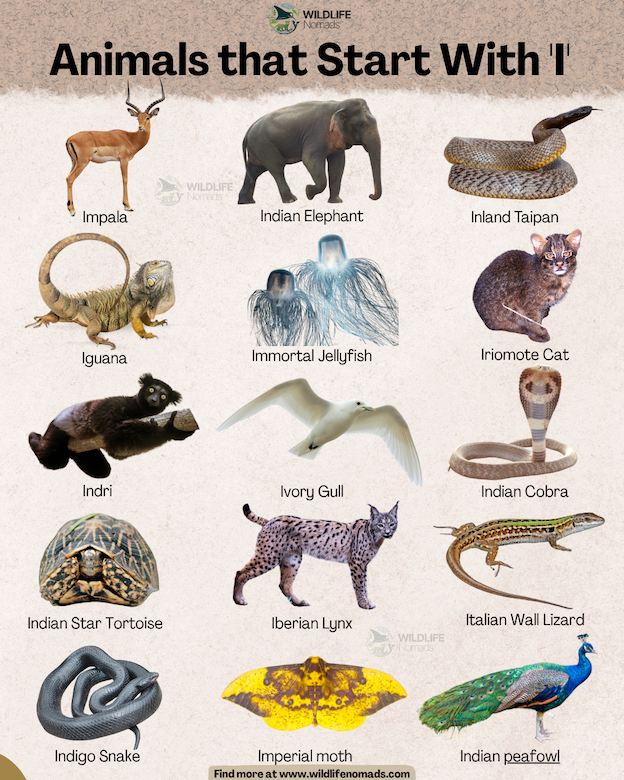
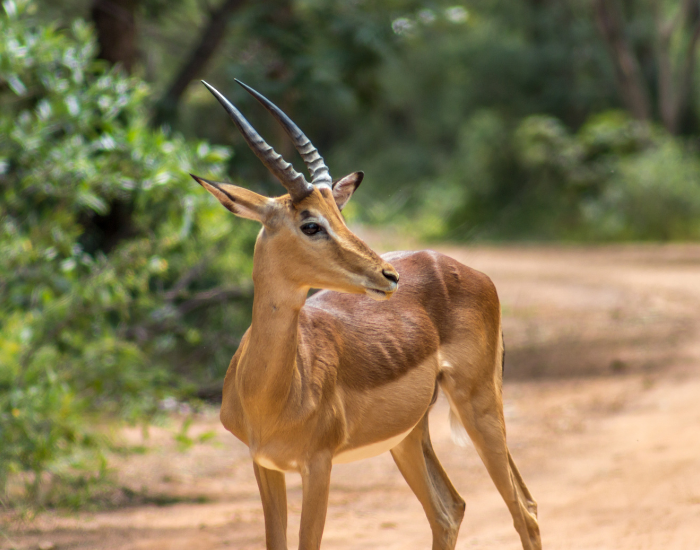
1. Impala
The impala is a mid-sized antelope found across the savannas of eastern and southern Africa. I’ve watched hundreds ghost through the grass at dusk, and their escape is pure theater. A startled impala can leap distances of up to 10 m in a single bound, clearing bushes and even other antelope.
Males carry elegant lyre-shaped horns that can reach 0.91 m long. Their coat is reddish-brown with white undersides, a two-tone pattern that breaks up their outline in dappled light. Impalas form herds of either females or bachelor males, splitting the social world by sex outside the mating season.
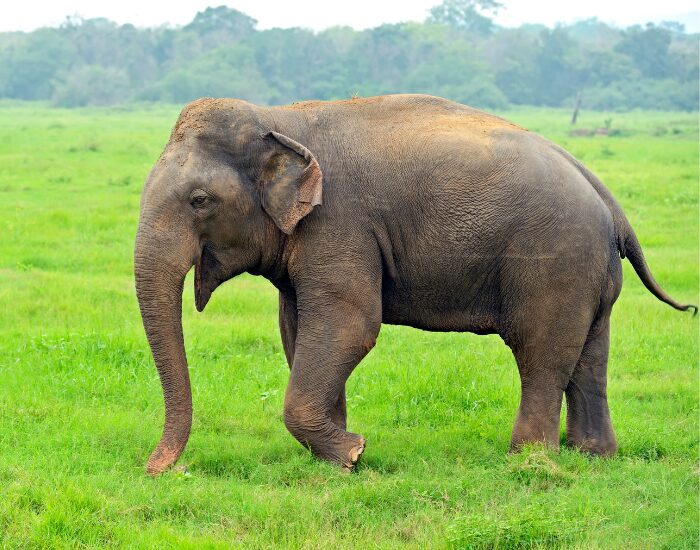
2. Indian Elephant
The Indian elephant is the first that lands. It’s a subspecies of the Asian elephant, and the most common one at that. These giants roam across mainland Asia, from grassland to dense forest.
Indian elephants play a crucial role in their ecosystems, dispersing seeds and clearing paths that smaller animals use for years. Sadly, they’re an endangered species, hit hard by habitat loss and poaching. Their cousin, the Sri Lankan elephant, faces similar pressure across South Asia, and conservation efforts now span the whole region.
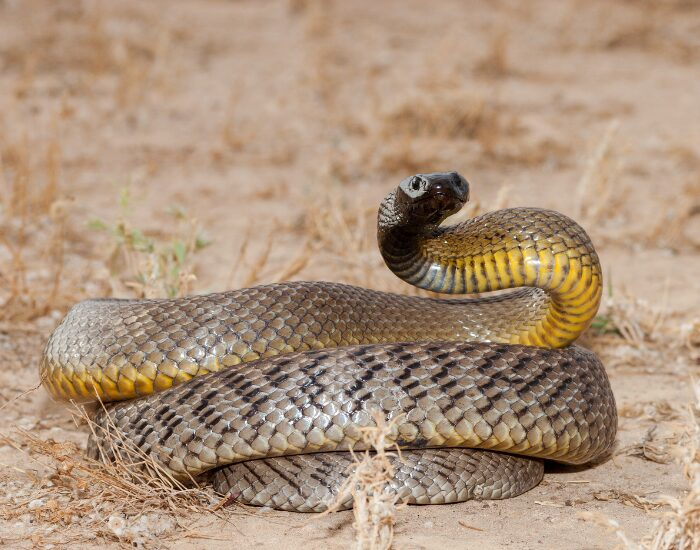
3. Inland Taipan
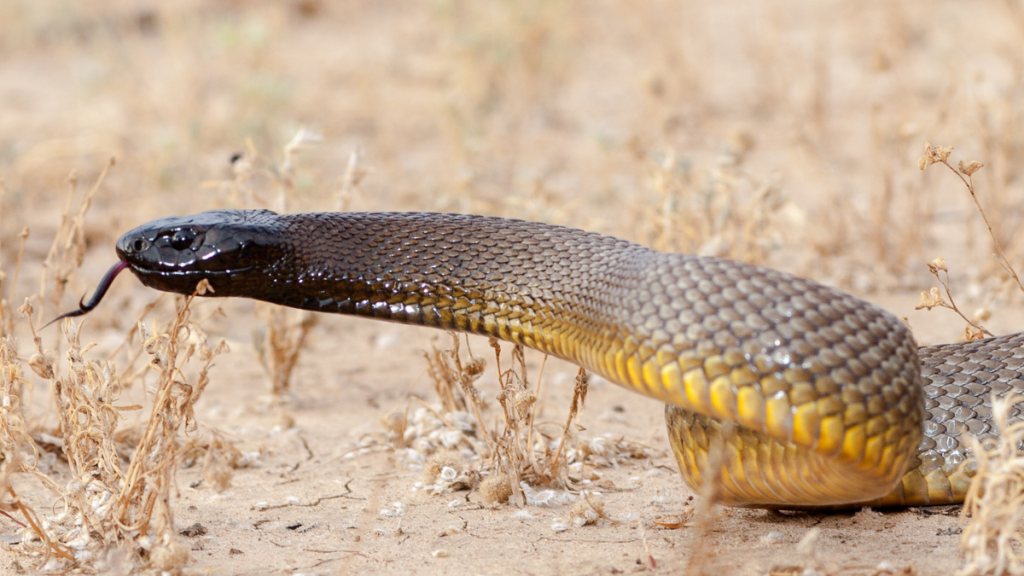
Here’s a fact I love: the inland taipan is the world’s most venomous snake. A single bite delivers enough toxin to kill 100 adult humans. That statistic sounds like something from mythical animals, but it’s measured, verified toxinology.
The good news, if you’re squeamish, is distance. This venomous snake lives in the remote deserts of central Australia, far from most people. It primarily hunts mammals, especially rodents, striking fast and letting the venom do the work. Despite the fearsome reputation, the inland taipan is generally not aggressive towards humans and would rather slip away than fight.
4. Iguana
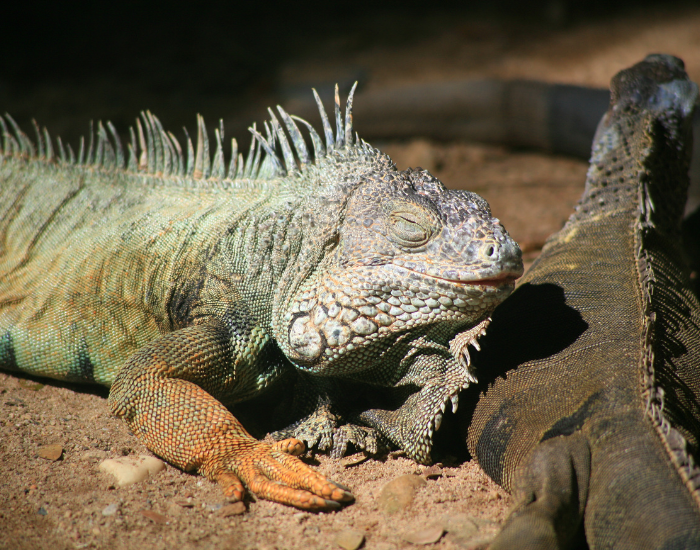
The green iguana is one of the most popular animals in the exotic pet trade, though I’d argue it belongs in a rainforest, not a tank. Wild green iguanas inhabit the forests of Central and South America, basking high in the canopy above rivers.
They’re bigger than people expect. Green iguanas can exceed lengths of 2 m (6.56 ft) from nose to tail tip, with a good chunk of that being whip-like tail. Primarily herbivorous reptiles, they graze on leaves, flowers, and fruit. A member of the Iguanidae family, the green iguana is also a superb swimmer that will dive straight into water to escape a hawk. In parts of southeastern United States, escaped pets have turned into an invasive species, a reminder that a beautiful animal in the wrong place causes real damage.
5. Immortal Jellyfish
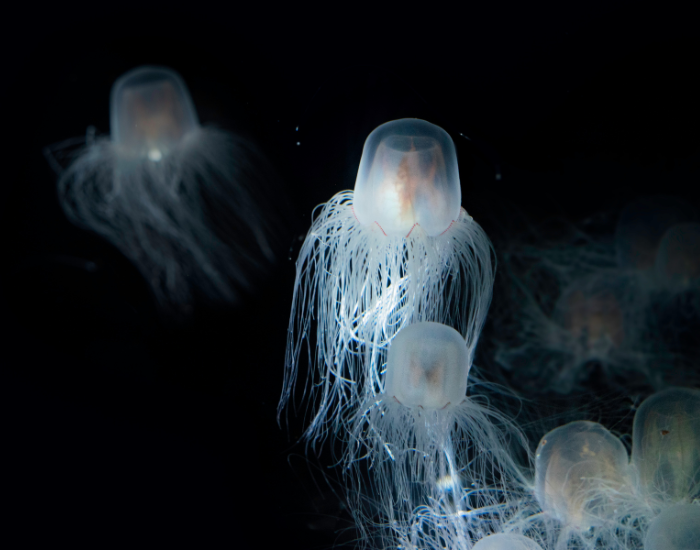
If you want to blow someone’s mind with an animal from the letter I, reach for the immortal jellyfish. This tiny ocean animal is considered biologically immortal. When stressed or injured, it can revert to its polyp stage, essentially rewinding its own life cycle and starting over.
It manages this by regenerating new cells that are genetically identical to the original, a process biologists call transdifferentiation. Don’t picture a monster, though. The immortal jellyfish measures about 2.7 mm in height and 3.3 mm in diameter, roughly the size of a pinky nail. Originally native to the Mediterranean Sea but now found in oceans worldwide, feeding on plankton and fish eggs. In the whole fascinating world of biology, nothing else quite cheats death like this.
6. Iriomote Cat
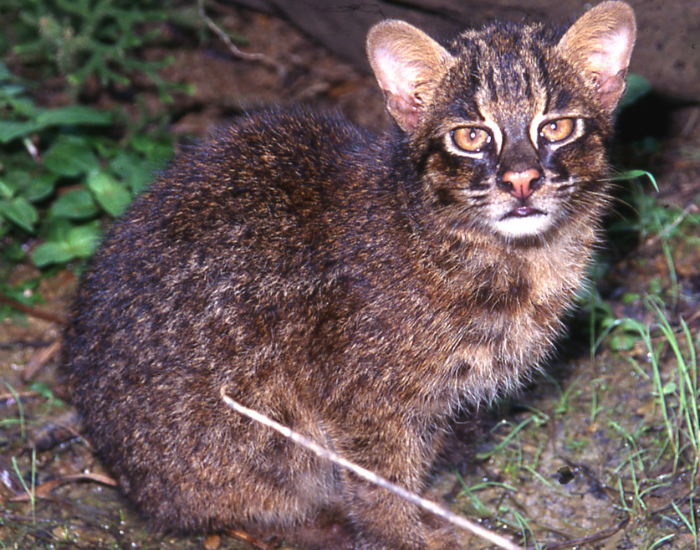
The Iriomote cat might be the rarest animal on this list. It’s a subspecies of the leopard cat, found only on one Japanese island, Iriomote, in southern Japan. Fewer than 100 adults survive, making it critically endangered.
This cat species is small, secretive, and mostly nocturnal, hunting frogs, birds, and rodents through the island’s forests. Iriomote cats typically give birth to a single kitten, which means the population recovers painfully slowly. They face threats from habitat loss and, heartbreakingly, traffic accidents on the island’s few roads.
7. Indri
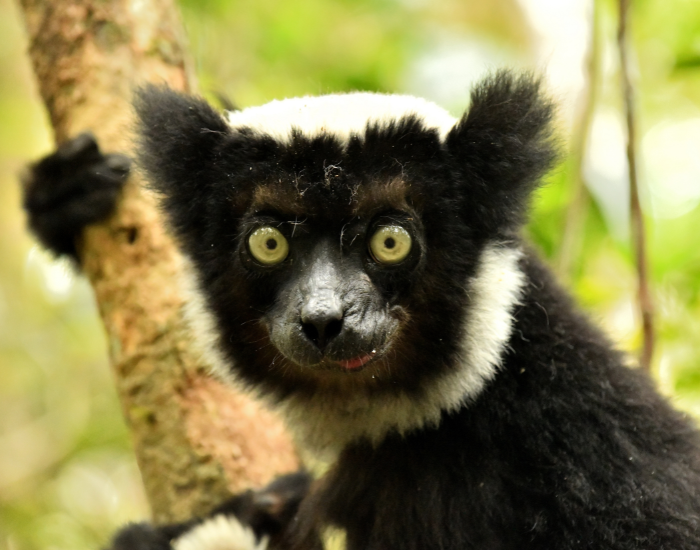
The indri is the world’s largest lemur, and its call is one of the strangest sounds in the animal kingdom. Endemic to Madagascar’s rainforests, this primate sings in whooping duets that carry for miles through the trees.
Indris wear striking black and white fur and cling upright to trunks, more teddy bear than monkey. That campfire wail I mentioned? This was the singer. The indri is critically endangered due to deforestation, and unlike many lemurs it stubbornly refuses to breed in captivity, which makes protecting its forest the only real hope.
8. Ivory Gull
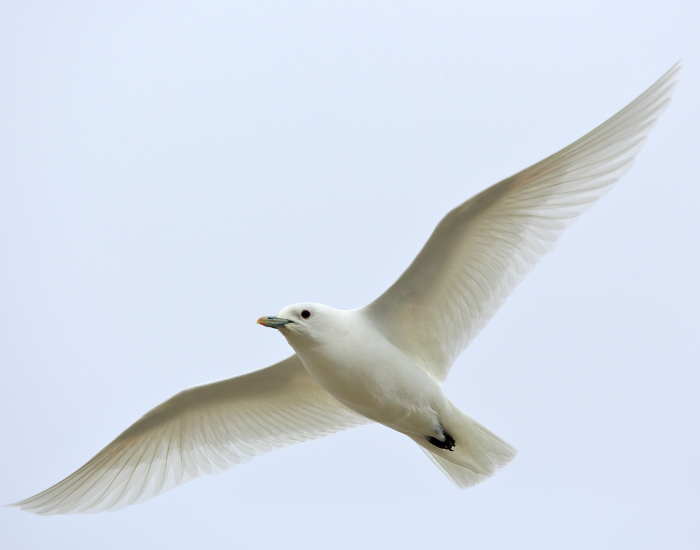
Among seabirds, the ivory gull is a ghost of the far north. Adults have pure white plumage set against black legs and a dusky bill, a small gull built for a brutal climate. It breeds in the high Arctic, nesting on cliffs and remote shorelines.
Here’s the detail I love: ivory gulls follow polar bears across the sea ice to scavenge the leftovers of a seal kill. Where the bears hunt, the gulls wait. Beyond that grim buffet, they take a varied diet including fish and crabs. The ivory gull is the only member of the genus Pagophila, a lone branch on the family tree, and one of the harder animals that start with I to spot in the flesh.
9. Indian Cobra
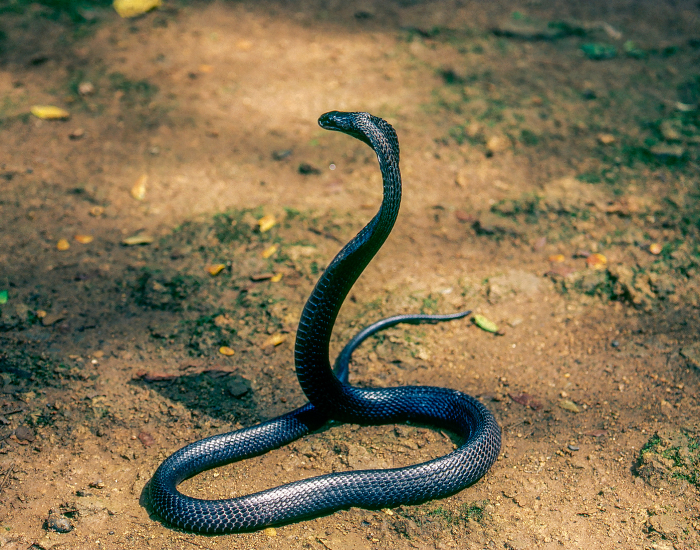
The Indian cobra is a highly venomous snake and one of the most recognizable reptiles on Earth, thanks to its flared hood and the spectacle mark across the back of it. It ranges across South Asia, from farmland to forest edge, and features heavily in Indian folklore and, yes, plenty of Greek-mythology-style storytelling elsewhere.
For all its danger, the Indian cobra is a vital rodent controller, which is exactly why farmers have long tolerated it near the fields.
10. Indian Star Tortoise
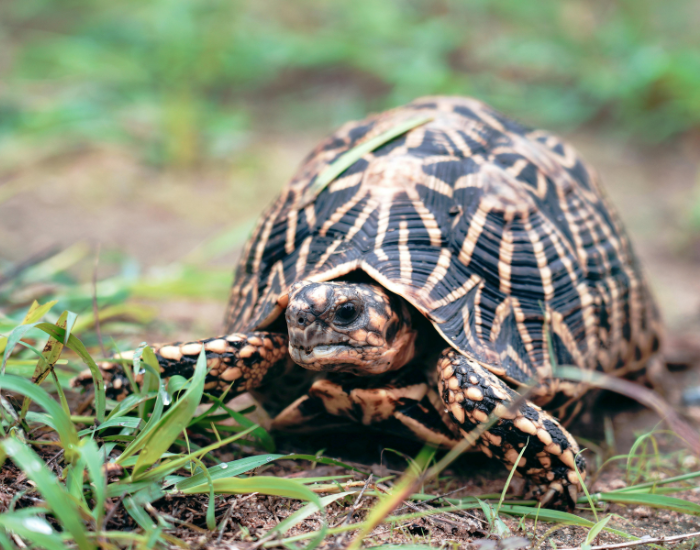
The Indian star tortoise is a threatened tortoise species named for the striking star-burst pattern radiating across its shell. Those golden lines aren’t just pretty; they break up the animal’s outline in dry grassland, a quiet bit of camouflage.
Found across India, Pakistan, and Sri Lanka, this reptile has a sturdy build and a domed carapace that helps it right itself if it topples. The illegal pet trade has hit it hard, and it’s now one of the more trafficked reptiles on the planet. Conservation efforts and stricter trade rules are slowly helping, but demand remains the problem.
11. Indian Giant Squirrel
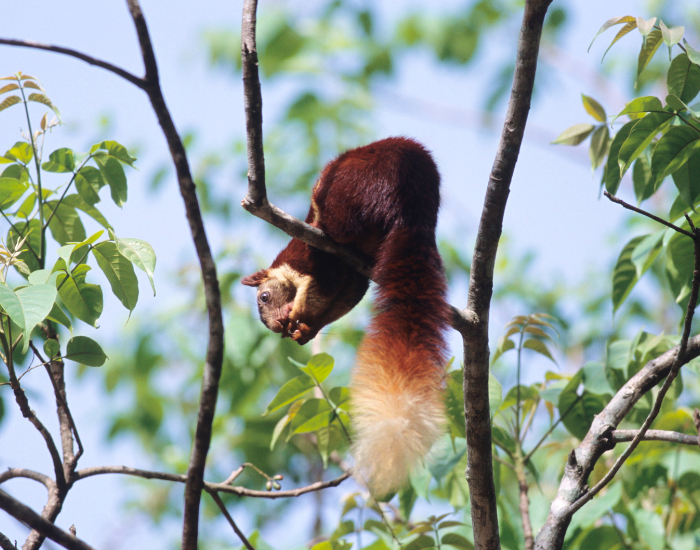
The Indian giant squirrel, also called the Malabar giant squirrel, looks like someone painted a squirrel for a fantasy film. Its coat runs maroon, rust, cream, and even purple depending on the light.
Body length can reach nearly a meter including the tail. This large tree squirrel almost never comes down, leaping across gaps of six meters between branches. It’s a hard animal to photograph and an easy one to fall in love with.
12. Iberian Lynx
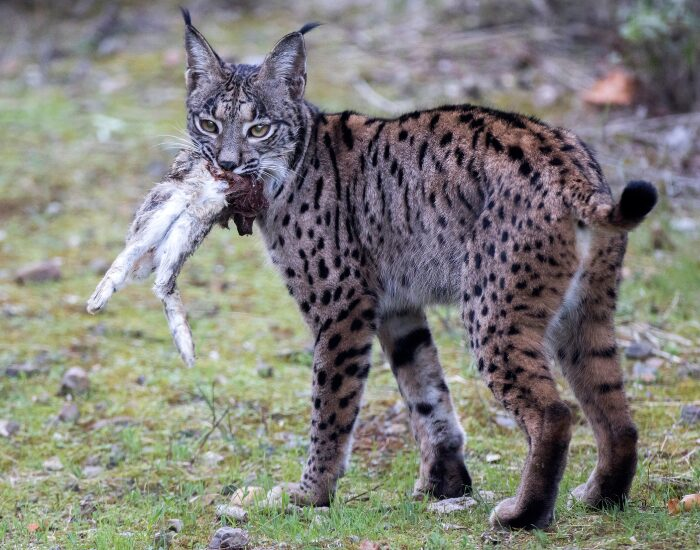
The Iberian lynx is my favorite comeback story in modern conservation. Not long ago, this cat species was the most endangered feline on Earth, with barely 62 mature individuals left in 2001. It survives only in Spain and Portugal, hunting rabbits through Mediterranean scrub.
Then something rare happened: it worked. Thanks to sustained conservation efforts, captive breeding, and habitat restoration, mature numbers climbed to 648 by 2022, with the total population now above 2,000. In 2024 the IUCN moved the Iberian lynx from Endangered to Vulnerable. A tufted-eared, bob-tailed lynx clawing its way back from the brink is proof that the work matters.
13. Italian Wall Lizard
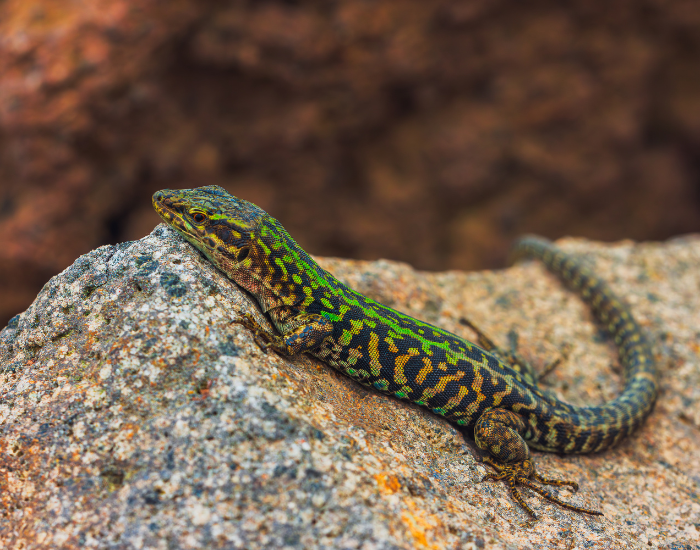
The Italian wall lizard is a small, quick reptile native to Italy and the wider Mediterranean. You’ll spot it doing push-ups on sun-warmed stone walls, which is exactly where the name comes from. Males flush green along the upper body during the mating season, a flash of color to warn rivals and woo females.
What fascinates me is its travel record. This lizard has hitchhiked around the world in shipments and luggage, establishing populations far from home, including pockets of the United States. It’s a textbook example of how an ordinary animal becomes an invasive species once we move it.
14. Indian Palm Squirrel
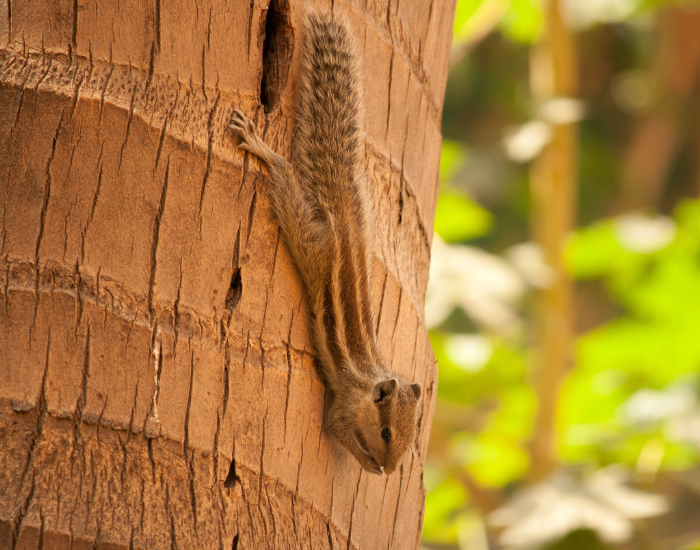
The Indian palm squirrel is the little rodent you’ll meet in every Indian garden, market, and temple courtyard, its back marked with three pale stripes. In local legend those stripes are the fingerprints of a god who stroked its back, which is a lovely story to file under fun facts.
I have a soft spot for this one because it’s fearless around people, chattering and flicking its tail inches from your tea. It thrives where many animals fail, which is why it’s so common across South and Southeast Asia. Sometimes the most successful species is the one napping on a windowsill.
15. Indigo Snake
The eastern indigo snake rounds out the list, and it’s a stunner. This large, glossy-blue-black snake is the longest native snake in the United States, ranging across the southeastern United States. Despite the size, it’s non-venomous and remarkably calm.
I’ve handled one during a survey in Georgia, and its strength was astonishing, all muscle and quiet confidence. The indigo snake even eats venomous snakes, including rattlesnakes, which makes it an integral part of its ecosystem. Habitat loss has pushed it onto threatened lists, so spotting a wild one is a real privilege.

More Animals
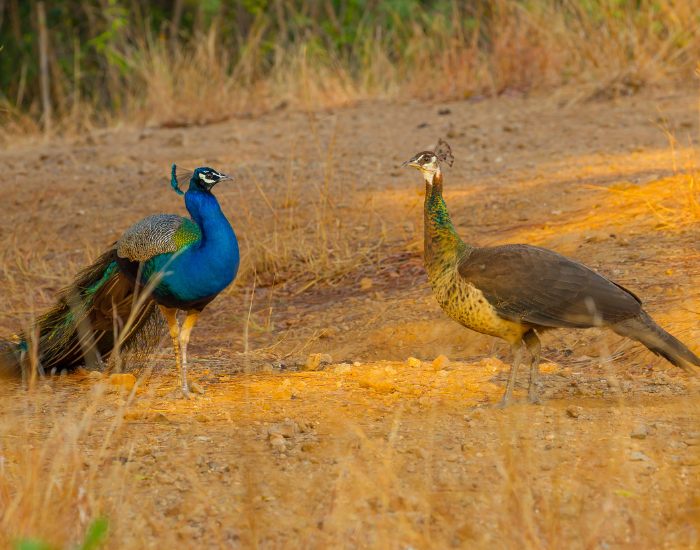
If you need still more animals for the game, the letter I keeps giving. Reach for the Indian flying fox, a giant fruit bat; the dazzling Indian peafowl; the armored Indian pangolin; the elusive Indian wolf; the loud Indian bullfrog; and the Indian gharial, a fish-eating crocodilian.
Bird lovers can add the ivory-billed woodpecker, long believed extinct, plus the small Iceland gull. Insect fans have the ivory marked beetle, the imperial moth, the Io moth, and the Indian moon moth. For a dog breed, the Irish setter, the Ibizan hound, and the Icelandic sheepdog all begin with I. And among extinct animals, don’t forget the Irish elk, Iguanodon, and Ichthyosaurus, an extinct marine reptile. That’s plenty to win any round.
References:
Do Amaral, F. R., et al. (2021). Cellular reprogramming and immortality: Expression profiling reveals putative genes involved in Turritopsis dohrnii‘s life cycle reversal. Genome Biology and Evolution, 13(7), evab136. https://doi.org/10.1093/gbe/evab136
International Union for Conservation of Nature. (2024). Iberian lynx rebounding thanks to conservation action — IUCN Red List [Press release]. https://iucn.org/press-release/202406/iberian-lynx-rebounding-thanks-conservation-action-iucn-red-list
Piraino, S., Boero, F., Aeschbach, B., & Schmid, V. (1996). Reversing the life cycle: Medusae transforming into polyps and cell transdifferentiation in Turritopsis nutricula (Cnidaria, Hydrozoa). Biological Bulletin, 190(3), 302–312. https://doi.org/10.2307/1543022
Fry, B. G., Wickramaratna, J. C., Hodgson, W. C., Alewood, P. F., Kini, R. M., Ho, H., & Wüster, W. (2002). Electrospray liquid chromatography/mass spectrometry fingerprinting of Acanthophis (death adder) venoms: Taxonomic and toxinological implications. Rapid Communications in Mass Spectrometry, 16(6), 600–608. https://doi.org/10.1002/rcm.613
Sukumar, R. (2003). The living elephants: Evolutionary ecology, behavior, and conservation. Oxford University Press. https://doi.org/10.1093/oso/9780195107784.001.0001