I was maybe eight years old, slumped on a wooden bench in Chapultepec Park in Mexico City, waiting for my dad to wrap up a workshop. I closed my eyes for what felt like five minutes. When I opened them, I was surrounded. One squirrel sat inches from my shoulder. Another perched at my feet. Three more scampered nearby, tails twitching. I counted at least eight or nine of these little critters within arm’s reach. I felt outnumbered, and honestly, a little intimidated. That morning in Chapultepec is where the obsession started.
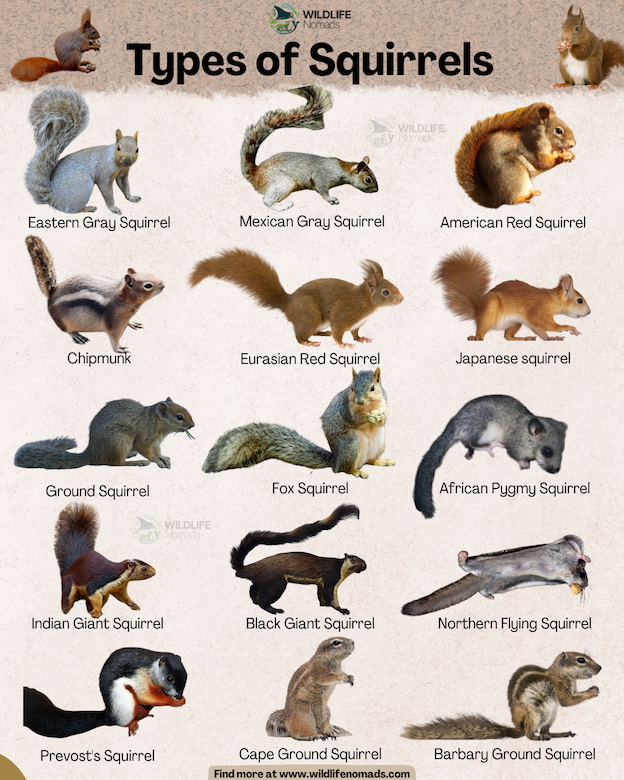
Below you will meet 15 species I have either studied in the field or chased through pages of dusty journals. From a dwarf in West Africa to the giants of the South Asian canopy, these critters will surprise you. Some glide. Some hibernate at sub-freezing temperatures. One travels upside down on tree trunks, scraping a microscopic fungus from cracks in the bark. Let me introduce you to the family.
1. Eastern Gray Squirrel (Sciurus carolinensis)
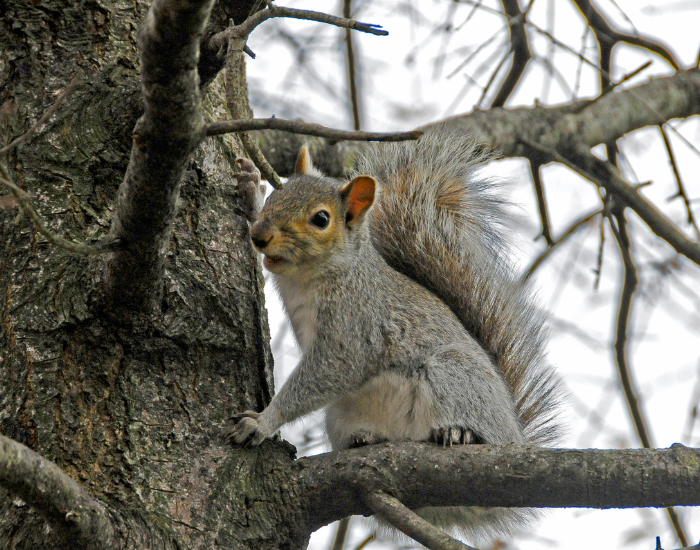
The eastern gray is the squirrel most North Americans picture when they hear the word. They spend roughly half their lives in trees and the other half stashing food in soft soil. Their scientific name honors the Carolinas, but their range now stretches from Florida to southern Canada and across much of urban Europe, where they outcompete the native Eurasian red.
These critters are social, opportunistic, and uncannily clever. Field studies show they remember the location of thousands of buried nuts. Their main threat is not natural predators but cars and habitat fragmentation. They are listed as Least Concern.
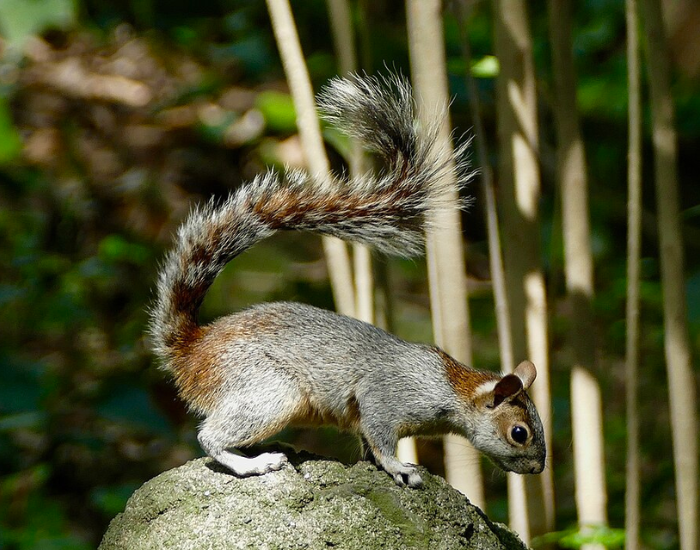
2. Mexican Gray Squirrel (Sciurus aureogaster)
This is the squirrel that ambushed me in Chapultepec. The Mexican gray ranges from northern Mexico through Guatemala and is famously bold around humans. I have watched females ferry their young across busy Mexico City avenues with the calm of a crossing guard. Females are noticeably more cautious than males, who roam farther between feeding sites. Their coat shifts seasonally, sometimes a deep rust, sometimes charcoal with a white belly. Locals feed them peanuts, which is why they treat napping tourists as potential vending machines.
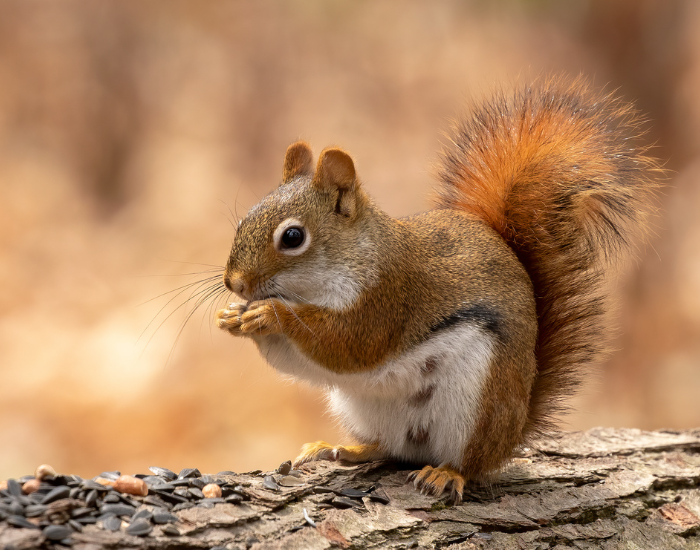
3. American Red Squirrel (Tamiasciurus hudsonicus)
The American red is the loudmouth of North American forests. If you have ever been scolded from a spruce branch in Maine, you have met one. These critters are smaller than gray squirrels but defend feeding territories with theatrical ferocity. Their scientific name nods to Hudson Bay, where the species was first formally described. Both females and males will chase intruders out of a tree they have claimed.
I once spent a week in Alberta watching a single female cache spruce cones in a midden the size of a kitchen table. That food larder, called a “midden,” determines whether her young survive the long winter. For more on this species’ temperament, our deep-dive on red squirrels is the place to go.
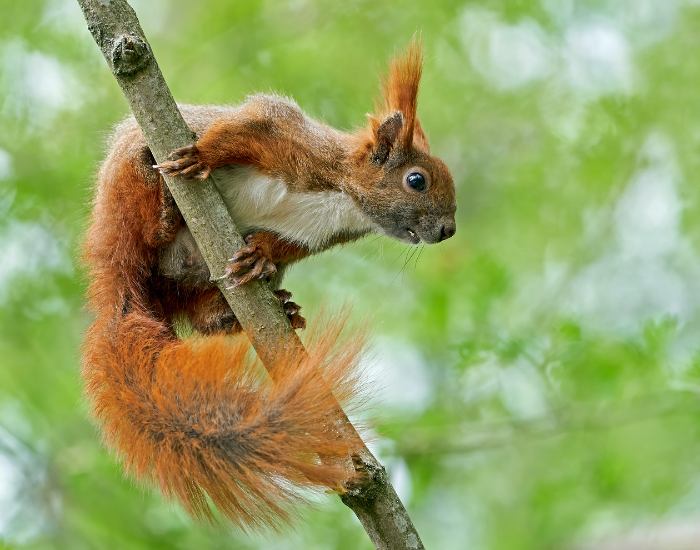
4. Eurasian Red Squirrel (Sciurus vulgaris)
Across Europe and Asia, the Eurasian red is the squirrel of fairy tales and Beatrix Potter illustrations. They prefer conifer forests and are now squeezed into shrinking habitat by the introduced eastern gray and a parapoxvirus the gray carries asymptomatically.
Their bushy tail is famously red, but coat color varies — some animals are nearly black. Breeding occurs early in the year, with the first litter often arriving while snow still covers the lower levels of the canopy. Adult females raise the young alone, and males play no part in rearing.
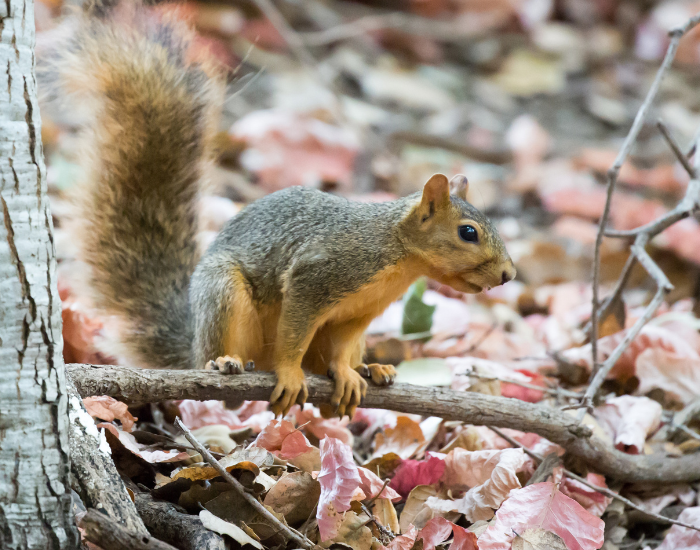
5. Fox Squirrel (Sciurus niger)
The fox squirrel is the largest tree squirrel in North America. I once weighed one in Georgia that hit 1.1 kilograms, a chunky orange beast with a tail like a paintbrush. They prefer open pine and oak woodlands where they cross open soil between widely spaced trees.
Unlike their gray cousins, fox squirrels tolerate the open sun and forage incessantly across bright clearings. The Delmarva subspecies is an endangered population worthy of its own article.
6. African Pygmy Squirrel (Myosciurus pumilio)
Here is where things get genuinely strange. The African pygmy squirrel is the smallest squirrel in the world. An adult weighs about 15 grams — less than three teaspoons of sugar. They are very elusive, in fact, let me tell you, finding the smallest squirrel species on Earth in dense tropical rainforests is a humbling exercise in patience.
People sometimes ask about the Pygmy squirrel Borneo people see in nature documentaries — that is a different animal entirely, Exilisciurus exilis, a similarly tiny relative across the Pacific. The African Pygmy, by contrast, is the only species in its genus Myosciurus. Nine species of dwarf squirrel (from Exilisciurus or Microsciurus) exist worldwide, but this one stands apart on both anatomy and behavior. Some primary literature on African rainforest squirrels treats the pygmy squirrel as its own evolutionary experiment.
Their senses are calibrated for life among constant, nearby danger. The African pygmy squirrel relies heavily on smell to detect threats and on sight to track nearby animals such as monkeys, hornbills, and columns of army ants. When army ants march through the leaf litter, African pygmy squirrels follow them at the lower levels of the canopy, pouncing on insects, termites, and other ants the swarm flushes out into the open.

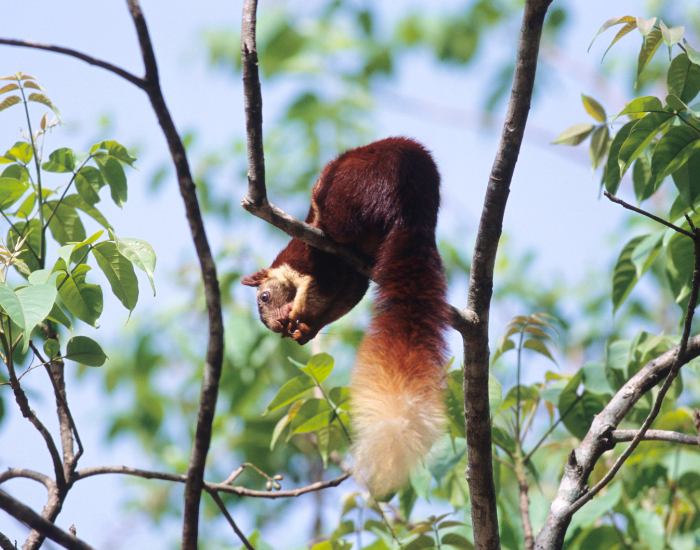
7. Indian Giant Squirrel (Ratufa indica)
If the African pygmy sits at one end of the scale, the Indian giant is the showstopper at the other. Body length runs 35–45 cm. You could spot one of them in the Western Ghats with fur that looks airbrushed — burnt orange, deep purple, and cream on a single animal. They rarely descend from the canopy, preferring to leap up to six meters between branches in the upper trees. Their habitat is fragmented evergreen forest.
8. Black Giant Squirrel (Ratufa bicolor)
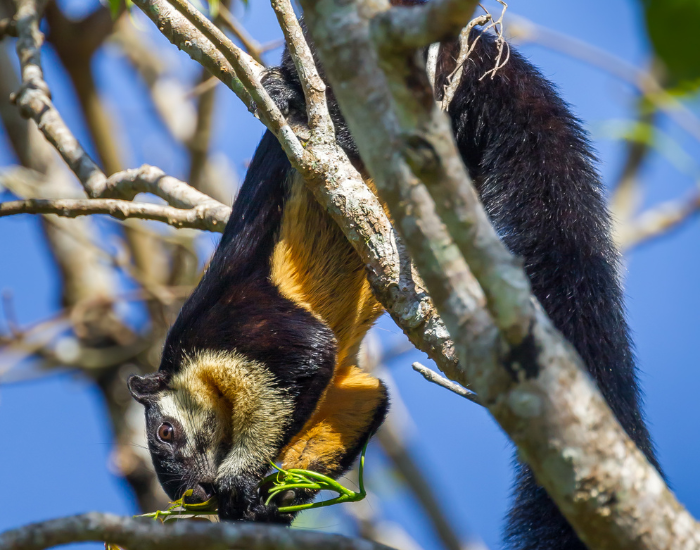
Black giant squirrels prowl the canopies of Southeast Asia, from Nepal to Indonesia. They eat fruit, seeds, and the occasional insect. They are great travellers, sometimes walking more than half a kilometer through the trees without descending once, a reminder that for these animals the forest floor is a foreign country.
9. Northern Flying Squirrel (Glaucomys sabrinus)
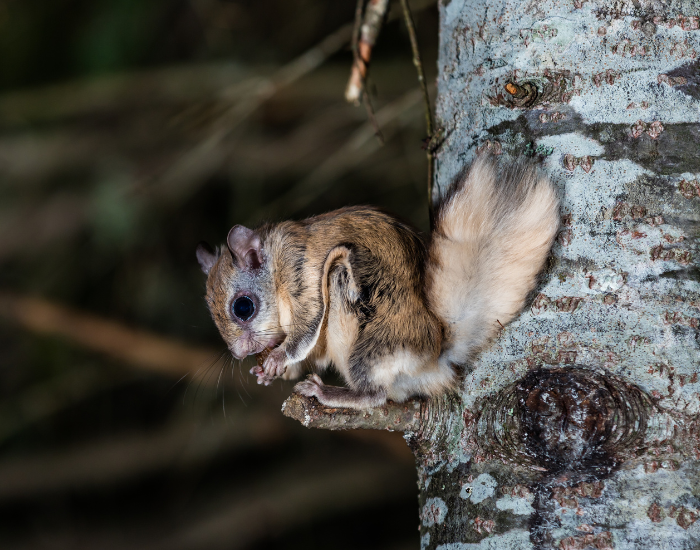
Flying squirrels do not fly. They glide. The patagium — a flap of skin stretched between wrist and ankle — turns them into living paper airplanes. Northern flying squirrels live across the boreal forests of North America. They eat lichen, fungi, and the occasional egg. They are strictly nocturnal, which is why most people who share a backyard with them have no idea they are there.
10. Southern Flying Squirrel (Glaucomys volans)
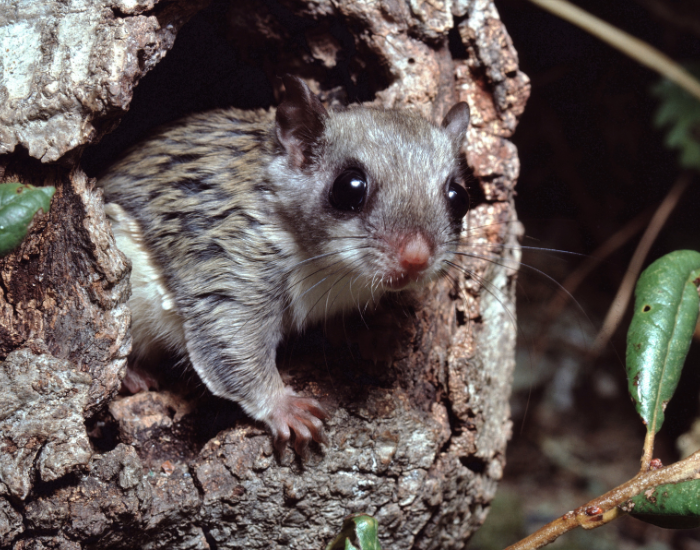
The southern flying squirrel overlaps with the northern along a narrow band in the Appalachians, where the two species occasionally interbreed. Southern flying squirrels are slightly more omnivorous — they take insects, eggs, and even nestling birds. Their oversized eyes are an adaptation to low light, granting remarkable sight at night.
11. Prevost’s Squirrel (Callosciurus prevostii)
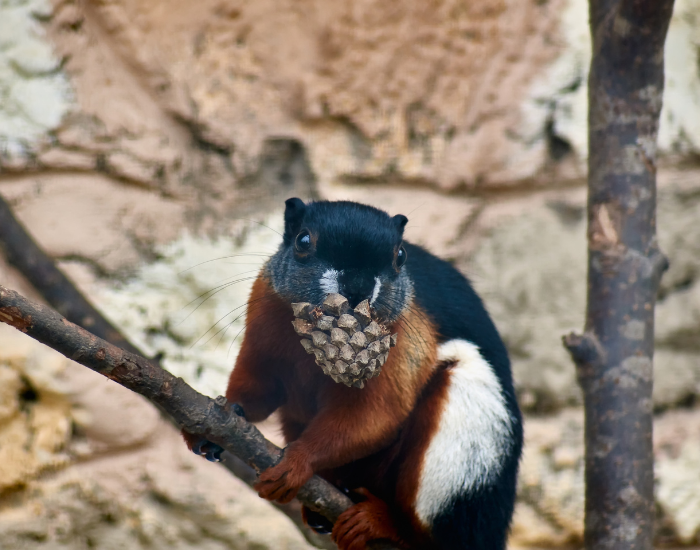
This tri-colored beauty from Southeast Asia looks like someone painted it on purpose: black back, white flanks, rust belly. Prevost’s squirrels are diurnal tree squirrels that spend their days raiding fruit trees in lowland rainforests. I spotted one in the humid rainforests of Sumatra when I was tracking monkeys, gibbons and Orangutans. They follow a polygamous lifestyle and the females typically produce two to three litters of two to four offspring a year.
12. Cape Ground Squirrel (Geosciurus inauris)
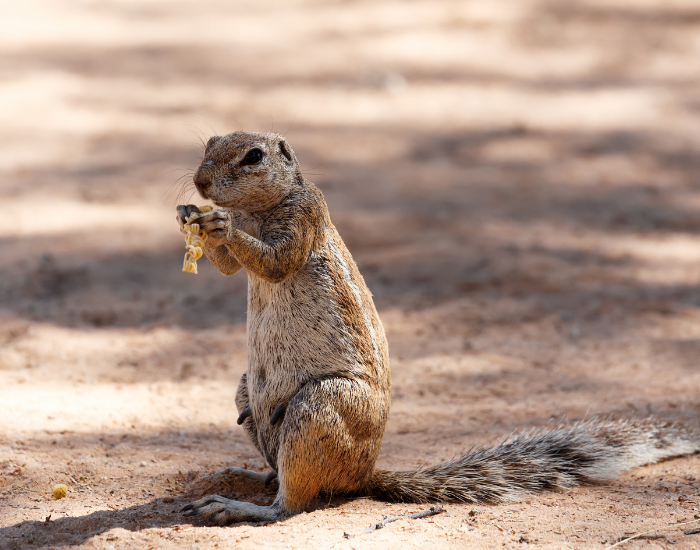
Now we leave the trees for the soil. Cape ground squirrels live in the arid south of Africa, dig deep colonial burrows, and use their bushy tails as parasols against the desert sun. These critters are highly social. Breeding is staggered across the colony so that pups always have multiple aunts on babysitting duty.
13. Arctic Ground Squirrel (Urocitellus parryii)
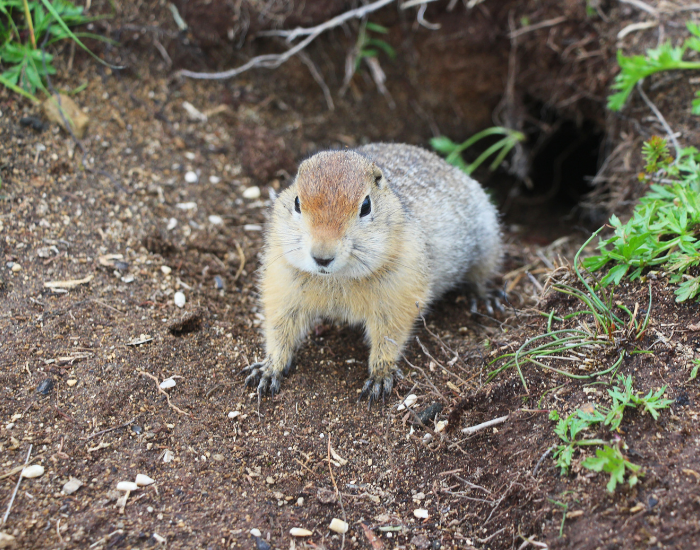
I spent two summers in Denali tracking arctic ground squirrels, the only mammal known to allow its body temperature to drop below freezing during hibernation. Their core temperature reaches around -2°C and they survive — biology that NASA studies for clues to deep-space hibernation. They live further north than almost any other rodent in the natural world.
14. Douglas Squirrel (Tamiasciurus douglasii)
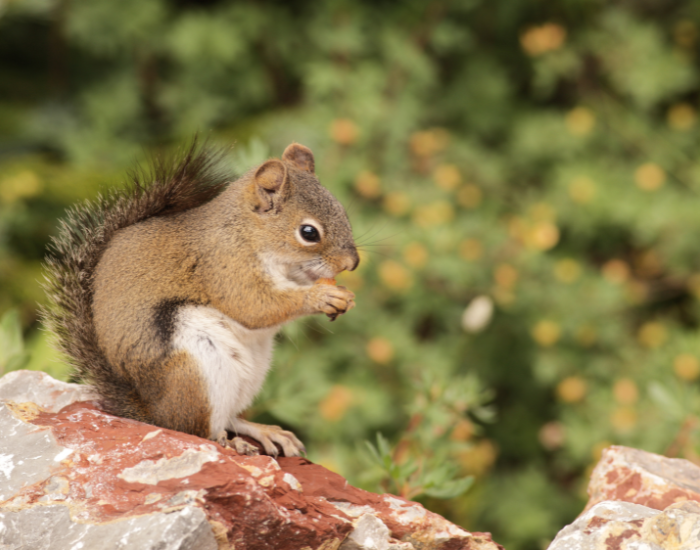
The Douglas squirrel — sometimes called the chickaree — lives in the conifer forests of the Pacific Northwest. They are kinetic, vocal, and territorial. John Muir famously called them “by far the most interesting and influential of the Sierra animals.” I have spent enough mornings being scolded by these critters at dawn to believe him.
15. Abert’s Squirrel (Sciurus aberti)
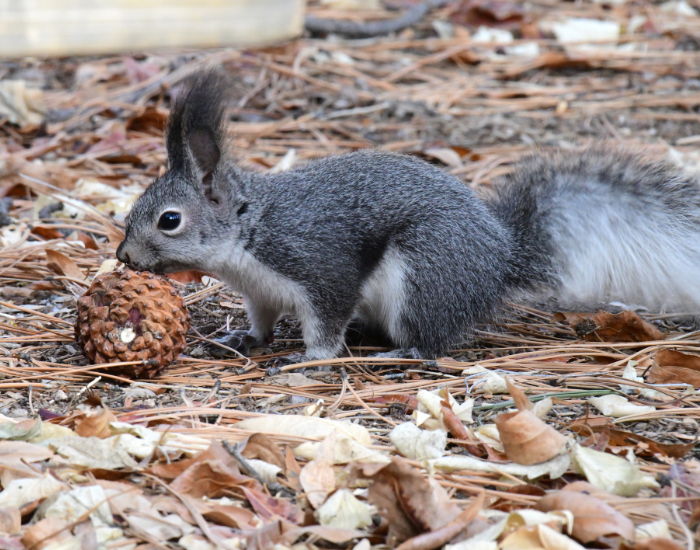
Abert’s squirrel, also called the tassel-eared squirrel, depends almost entirely on the ponderosa pine. Their diet shifts seasonally between pine seeds, buds, and hypogeous truffles that grow in the soil under the trees. They have outsized ears with dramatic tufts. Their conservation status is stable across most of their range. In the Grand Canyon’s North Rim they exist as the isolated Kaibab subspecies, with strikingly white tails, a textbook case of allopatric speciation.
Frequently Asked Questions about Squirrels
Yes. Squirrels are rodents, members of the family Sciuridae within the order Rodentia. They share that order with hamsters, voles, and guinea pigs but split off into their own family roughly 36 million years ago. More than 280 squirrel species are alive today.
Squirrel nests, called dreys, are surprisingly weather-resistant rather than truly waterproof. The outer shell is woven from twigs, leaves, and shredded plants, while the inner chamber is lined with moss and fur. The layered design sheds light rain and traps body heat through winter, but a sustained downpour will still soak the structure.
No. Squirrel monkeys are not squirrels at all — they are small primates from Central and South America. They live in groups of 20 to 75 individuals, require complex social environments, and quickly become aggressive in captivity. Most countries restrict or ban private ownership outright.
Squirrel monkeys are not aggressive toward humans in the wild, but captive individuals can bite when stressed. The bigger issue is disease — they can carry Saimiriine herpesvirus 1 and 2 (which can cause fatal disease in other monkeys), and they can carry rabies or yellow fever, and other pathogens that transmit to people. Treat them as wildlife, never as pets.
One Last Thought Before You Go Outside
Squirrels are everywhere, and that is the easiest thing to miss about them. The next time a squirrel crosses your path — whether it is a Mexican gray on a park bench or an African Pygmy you are lucky enough to glimpse on a tree trunk — slow down for a minute. Watch where it goes, what it touches, which branches it chooses. These are some of the most adaptable rodents on the planet, sharing the lineage with hamsters, guinea pigs, and voles, and outmaneuvering predators like foxes and birds of prey every single day. If you want more reading, our pieces on chipmunks and red squirrels pair perfectly with this one. Drop a comment with the squirrels you spot this week — I read every one.
References:
Chow P. K. Y. (2023). Flying squirrels, hidden treasures. eLife, 12, e89823. https://doi.org/10.7554/eLife.89823
Goropashnaya, A. V., Bergua, I. Y., Sugiura, M. H., Rice, S. A., Drew, K. L., Dupont-Versteegden, E. E., & Fedorov, V. B. (2025). Skeletal muscle preservation in arctic ground squirrels during hibernation season. Comparative biochemistry and physiology. Part A, Molecular & integrative physiology, 304, 111847. https://doi.org/10.1016/j.cbpa.2025.111847
Emmons, L. H. (1980). Ecology and resource partitioning among nine species of rain forest squirrels in Gabon. Ecological Monographs, 50(1), 31–54. https://doi.org/10.2307/2937245
Hofmann, R., Lehmann, T., Warren, D. L., & Ruf, I. (2021). The squirrel is in the detail: Anatomy and morphometry of the tail in Sciuromorpha (Rodentia, Mammalia). Journal of morphology, 282(11), 1659–1682. https://doi.org/10.1002/jmor.21412
Lurz, P. W. W., Gurnell, J., & Magris, L. (2005). Sciurus vulgaris. Mammalian Species, 769, 1–10. https://doi.org/10.1644/769
Steele, M. A., & Yi, X. (2020). Squirrel-seed interactions: The evolutionary strategies and impact of squirrels as both seed predators and seed dispersers. Frontiers in Ecology and Evolution, 8, 259. https://doi.org/10.3389/fevo.2020.00259
Pra, R. D., Bagriantsev, S. N., & Gracheva, E. O. (2022). Ground squirrels. Current biology : CB, 32(12), R605–R607. https://doi.org/10.1016/j.cub.2022.02.015