
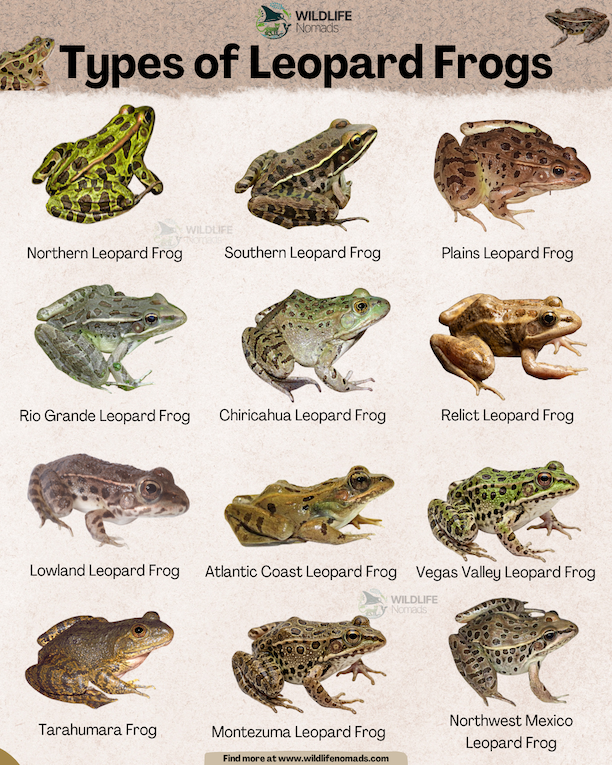
During my years studying wildlife in Puebla, Mexico, we used to go on field trips to surrounding areas, all the way to Oaxaca. On those trips, it was common to see frogs at night after we finished our practice. Nobody said much about them, even though we were all biologists, nobody had a particular fascination with frogs back then. I remember seeing many types: green frogs, some toads, and other amphibians. But certain ones stood out. They had characteristic dark markings, oval dark spots ringed by a lighter halo against greenish brown skin.
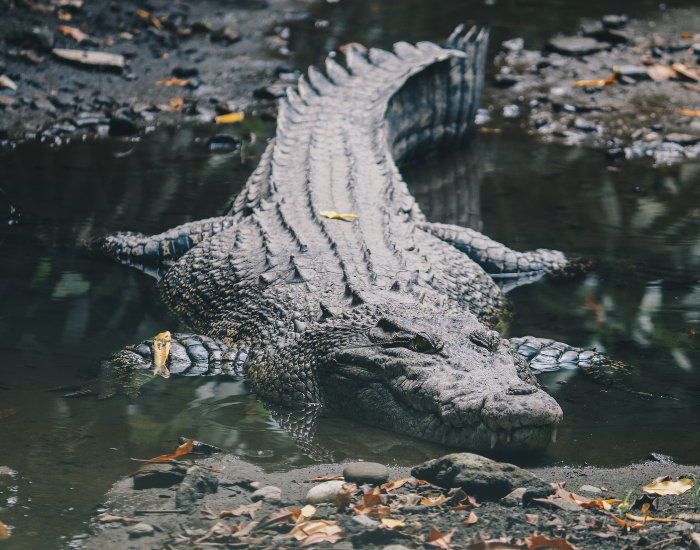
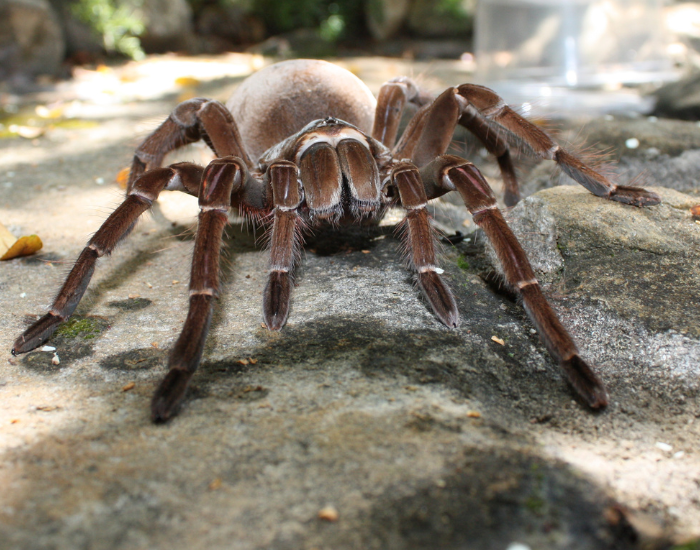
I didn’t think much of it until years later, when I worked at a zoo in the reptile and amphibian area alongside crocodiles, toxic dart frogs, and tarantulas. That’s where my colleague, a herpetologist and amphibian expert, introduced me to the incredible diversity of leopard frogs. He explained that most species belonged to the genus Lithobates (formerly Rana), all true frogs in the family Ranidae. He started with the northern leopard frog, the most widespread and recognizable, and worked his way through rarer species I never knew existed. That conversation changed how I look at every spotted frog I encounter in the field. Here are the 15 species I learned to identify, love, and respect.
1. Northern Leopard Frog (Lithobates pipiens)
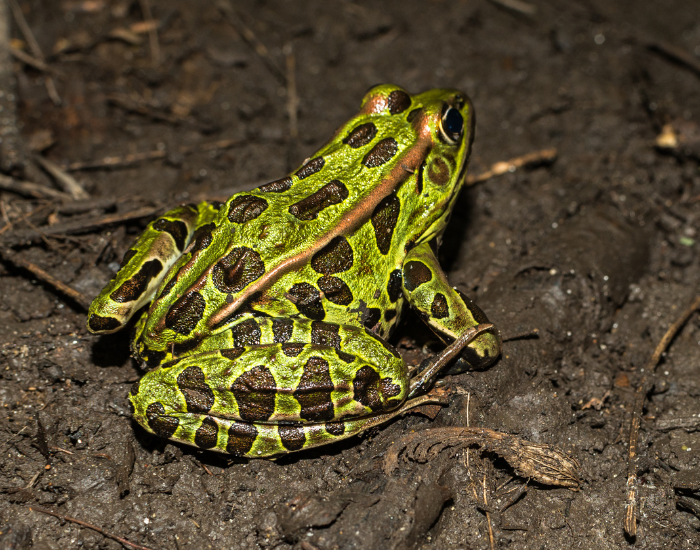
The northern leopard frog is the species most people picture when they hear “leopard frogs.” Formerly classified as Rana pipiens, this frog once dominated biology classrooms as the go-to dissection specimen. Its species range stretches from New Hampshire and Newfoundland west through western Canada to British Columbia, then south into the western United States and New Mexico.
Identifying a northern leopard frog is straightforward. Look for a slim body covered in large, oval dark spots, each surrounded by a lighter halo. The base color ranges from bright green to greenish brown. Two prominent dorsolateral folds run unbroken from behind the eye to the hips. A white stripe lines the upper lip, and the upper jaw shows a clean light border. Females grow slightly larger than males, reaching up to 11.5 cm.
Males gather at breeding sites from mid March through early June, depending on latitude. They inflate paired vocal sacs to produce a deep snoring call that carries across the breeding pond. A single female lays up to a thousand eggs in a gelatinous mass attached to submerged vegetation. Eggs hatch within two weeks, and tadpoles transform by late summer.
2. Southern Leopard Frog (Lithobates sphenocephalus)
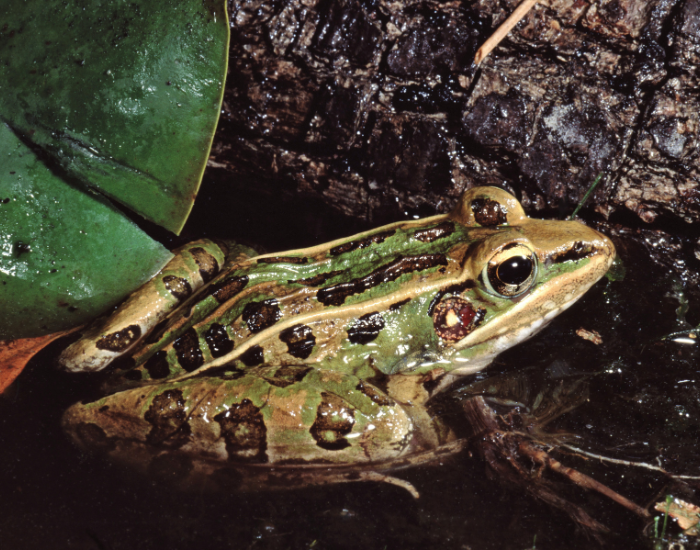
The southern leopard frog thrives across the southeastern United States, from Kansas and New Jersey south to Florida and west to Texas. Where the northern leopard frog struggles with habitat loss across the northern United States, this adaptable species keeps expanding into human constructed habitats, ditches, canals, farm ponds, and flooded agricultural fields.
You can separate a southern leopard frog from a northern leopard frog by the pointed snout and a light spot on the tympanum. The body is slender with long legs built for powerful jumps. Base color leans toward brown or olive-green, with round dark spots scattered across the back. Dorsolateral folds extend from behind the eye to the groin.
These frogs eat insects, spiders, worms, and small invertebrates. They hunt primarily at night, hiding in thick vegetation along the water’s edge during the day. Their willingness to breed in temporary pools and disturbed habitats makes them one of the most commonly encountered leopard frogs in the eastern United States. As cold-blooded animals, they rely on environmental body heat to regulate their metabolism.
3. Plains Leopard Frog (Lithobates blairi)
The plains leopard frog occupies the Great Plains from South Dakota south to Texas and west to Arizona. This is the drought specialist among leopard frogs, more tolerant of arid conditions than almost any other species in the group. They occur along streams, reservoirs, irrigation ditches, and earthen stock tanks scattered across prairies and desert grasslands.
The key field mark is the interrupted dorsolateral fold. Unlike the northern leopard frog Lithobates pipiens with its smooth, unbroken ridges, the plains leopard frog’s folds break apart near the groin and shift inward. The body is stocky, usually brown rather than green. A distinct light line runs along the upper jaw, and a dark spot sits on the snout. Males produce a stuttering chuckle call, completely unlike the snore of other leopard frogs.
Plains leopard frogs breed in spring after heavy rains fill their habitats. Males gather at temporary pools and flooded fields to attract females. This species tolerates agricultural landscapes better than most, though fertilizer and pesticide runoff remain serious threats. Indiana lists the plains leopard frog as state-endangered, but across most of its range, populations remain stable.
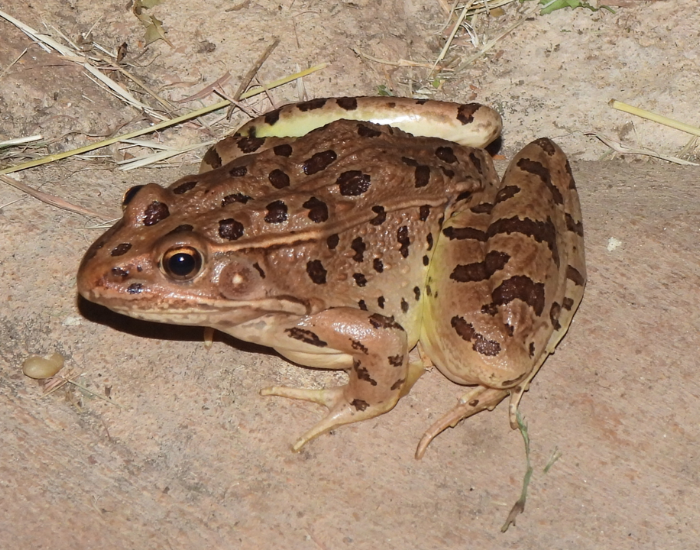
4. Rio Grande Leopard Frog (Lithobates berlandieri)
This is the species I almost certainly encountered during those field trips in Puebla. The Rio Grande leopard frog ranges from central Texas through New Mexico and deep into Mexico, reaching Veracruz and parts of Central America. In Oaxaca and Puebla, these frogs occur along rivers, streams, and spring-fed pools at lower elevations.
They inhabit both temporary and permanent water bodies, arroyo pools, stock ponds, drainage ditches, and slow-moving rivers. The body is tan, brown, or pale green with black spotting and prominent light-colored dorsolateral folds. They are primarily nocturnal, which explains why we always found them at night.
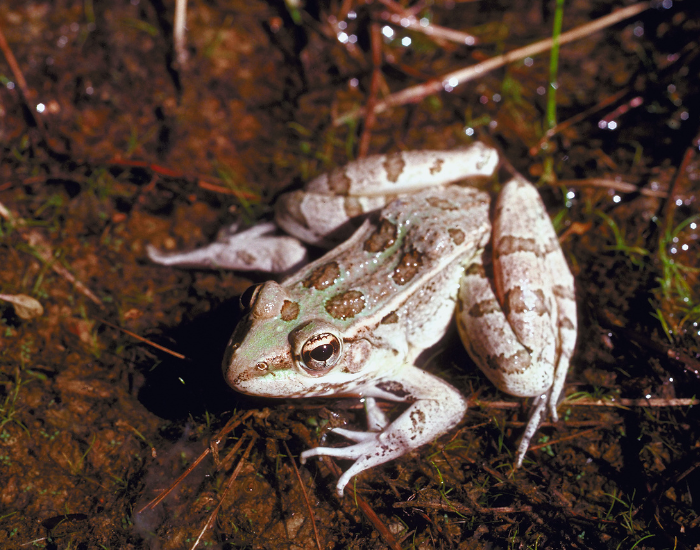
5. Chiricahua Leopard Frog (Lithobates chiricahuensis)
The Chiricahua leopard frog lives at higher elevations in central Arizona, western New Mexico, and northern Mexico’s Sierra Madre. Federally listed as Threatened since 2002, it has experienced an 80% population decline driven by chytrid fungus, invasive bullfrogs, and habitat destruction.
This frog looks stocky, more like a small bullfrog than a typical northern leopard frog. The skin is rough, olive to dark green, with charcoal spots and a distinctive salt-and-pepper pattern on the rear thighs. Golden eyes sit high on the head. They occur in springs, streams, lakes, and human constructed habitats like stock tanks at elevations between 1,000 and 2,600 meters.
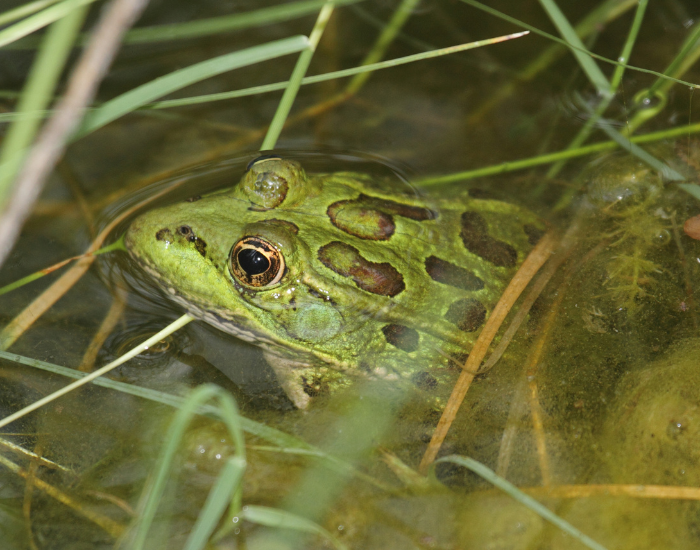
6. Relict Leopard Frog (Lithobates onca)
If you want a story about survival against impossible odds, the relict leopard frog delivers. Scientists declared it extinct in the 1950s. Then, decades later, researchers rediscovered small populations clinging to warm springs near Lake Mead, Nevada. Today, this frog survives at just six spring sites in two localities.
The relict leopard frog is small — under 7.5 cm — with tan to olive coloring and dark spots. It thrives in geothermally influenced springs, a niche habitat that most other frogs avoid. Dams, urban expansion, invasive bullfrogs, and exotic fish nearly wiped it out entirely.
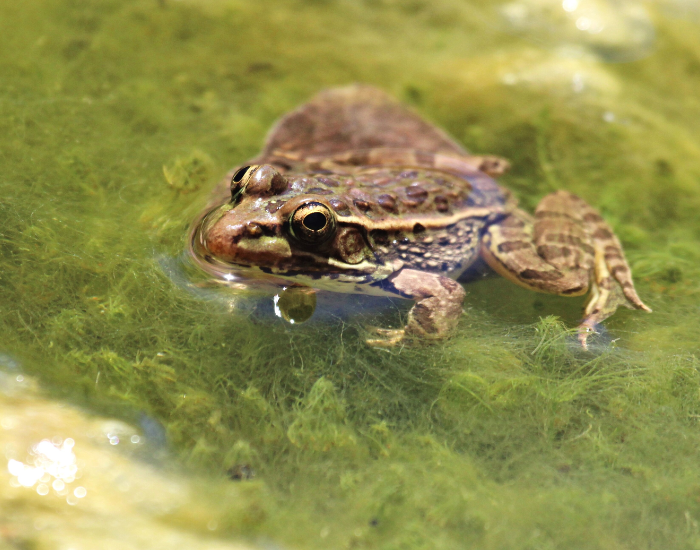
7. Lowland Leopard Frog (Lithobates yavapaiensis)
The lowland leopard frog haunts arid canyons and desert streams across Arizona, southern Nevada, and northern Mexico. It’s smaller than the Rio Grande leopard frog (under 87 mm) and usually brown or gray-brown, sometimes with a green tinge on the head.
Males lack the prominent vocal sacs seen in other leopard frogs. Their call is soft, almost whispery. These frogs breed in beaver ponds, springs, and deeper pools with thick vegetation along canyon streams.
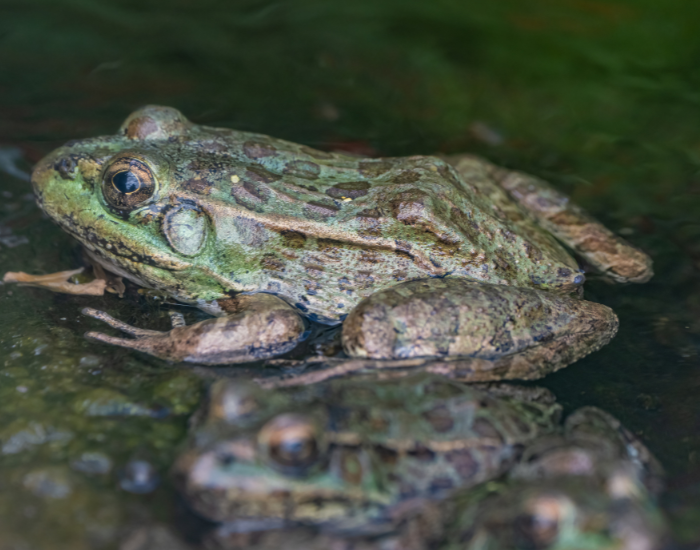
8. Atlantic Coast Leopard Frog (Lithobates kauffeldi)
Described in 2014, the Atlantic coast leopard frog is the newest member of the leopard frog group. It hid in plain sight along the most urbanized corridor in North America, the I-95 stretch from Connecticut to North Carolina. The holotype specimen came from Staten Island, New York.
You cannot reliably identify this species by appearance alone. It looks almost identical to both the northern leopard frog and the southern leopard frog, the yellow green frog covered in dark spots that most people recognize from field guides. The call is the giveaway: a single repetitive chuck, nothing like the snoring of its relatives. DNA analysis in 2012 confirmed it as genetically distinct.
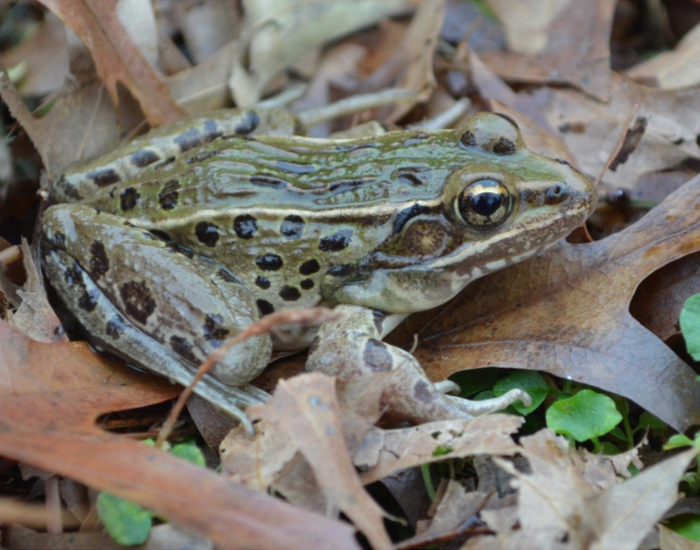
9. Vegas Valley Leopard Frog (Lithobates fisheri)
This is the cautionary tale. The Vegas Valley leopard frog, once endemic to the springs of Las Vegas Valley, Nevada, is the only frog species native to the United States confirmed extinct in modern times. The last specimens were collected at Tule Springs on January 13, 1942.
As Las Vegas grew, groundwater pumping drained the springs these frogs depended on. Invasive bullfrogs finished the job. A 2011 DNA study hinted that populations on Arizona’s Mogollon Rim might actually be surviving L. fisheri — but the 2021 IUCN review maintained the Extinct status. The Vegas Valley leopard frog stands as a stark reminder of what happens when habitats vanish faster than species can adapt.
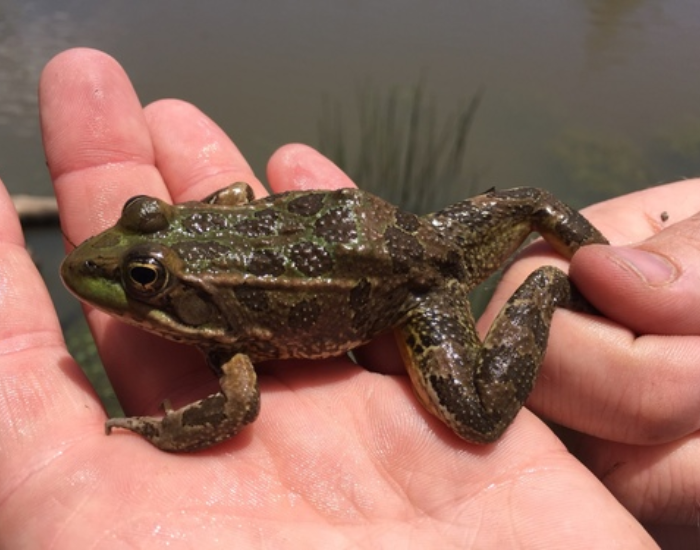
10. Tarahumara Frog (Lithobates tarahumarae)
Named for the Tarahumara people of the Sierra Madre, this large leopard frog, up to 11.5 cm, once occurred in Arizona’s sky island mountains. It disappeared from the United States entirely by 1983. Today, it survives only in Mexico’s Sierra Madre Occidental, in streams and plunge pools within oak and pine-oak forests.
Chytrid fungus hit this species particularly hard. Reintroduction attempts in Arizona have been tried, but success remains limited. The Tarahumara frog needs cold, clean, well-oxygenated canyon streams, exactly the habitats most threatened by climate change and air pollution.
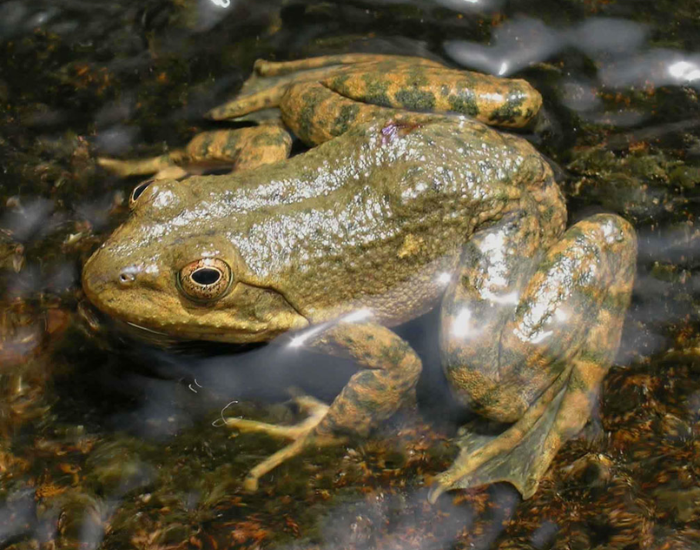
11. Montezuma Leopard Frog (Lithobates montezumae)
Named after the Aztec emperor, the Montezuma leopard frog lives above 2,000 meters in central Mexico’s pine-oak forests. This high-altitude specialist tolerates cooler temperatures than most leopard frogs and breeds in permanent mountain lakes and ponds.
During field trips near Puebla, we sometimes reached elevations where this species could occur. The central Mexican highlands represent one of the richest zones for amphibians diversity on the continent, a fact most people never associate with Mexico.
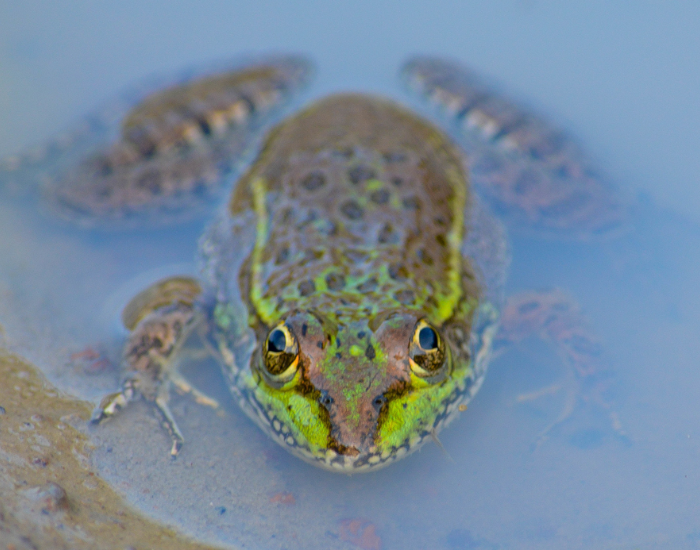
12. Bigfoot Leopard Frog (Lithobates megapoda)
The name isn’t a joke. Megapoda means “big foot,” and this species has disproportionately large hind feet and webbed hind toes adapted for powerful swimming. Endemic to western-central Mexico around Jalisco, Nayarit, and Michoacán, it lives in lakes and permanent water bodies.
Here’s what makes this species unusual among leopard frogs: people eat it. Communities around Lake Chapala — Mexico’s largest lake — harvest bigfoot leopard frogs for food. That harvesting pressure, combined with habitat loss, pushes this species toward a threatened status. It feeds on beetles, ants, spiders, and other small invertebrates, maintaining a classic opportunistic diet.
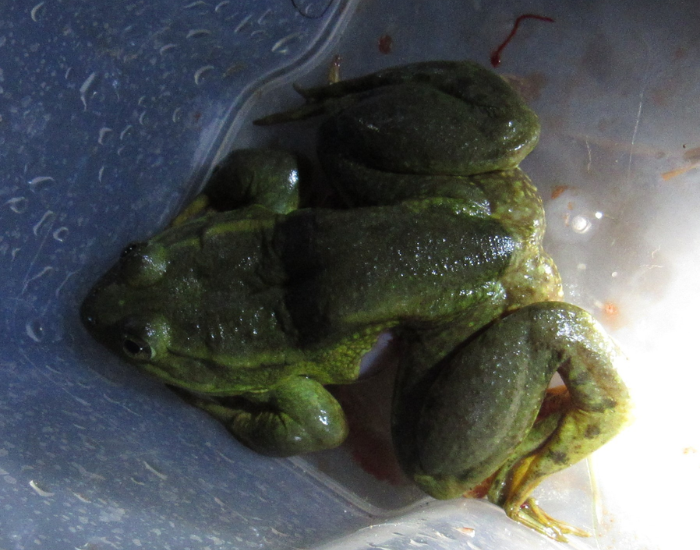
13. Neovolcanic Leopard Frog (Lithobates neovolcanicus)
This species takes its name from the Trans-Mexican Volcanic Belt, one of the most geologically active and biodiverse regions in Mexico. The neovolcanic leopard frog inhabits pine-oak forests and mesquite grasslands near lakes, pools, and slow-flowing streams along that volcanic corridor.
The Trans-Mexican Volcanic Belt passes through northern Puebla, placing this frog within the broader region where I conducted fieldwork. Agricultural conversion threatens its restricted range, and it remains poorly studied compared to its North American relatives. More survey work could reveal whether populations are stable or declining.
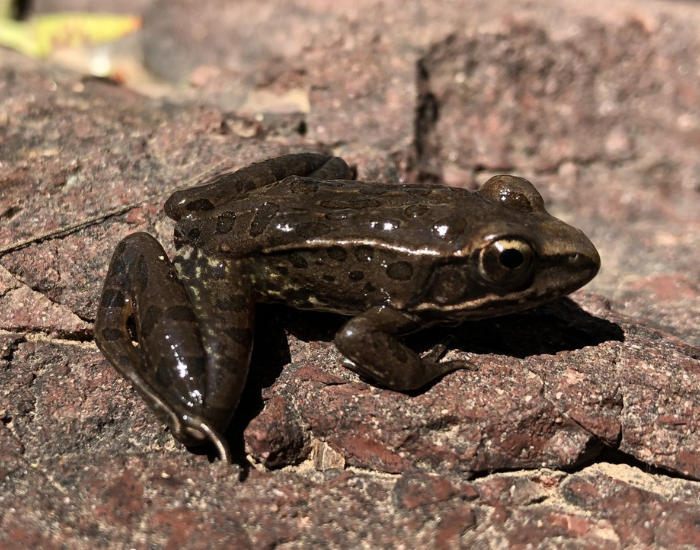
14. Northwest Mexico Leopard Frog (Lithobates magnaocularis)
Magnaocularis means “large-eyed,” and those big, protruding eyes are the first thing you notice. This medium-sized leopard frog occurs along the Pacific slope of the Sierra Madre Occidental from southern Sonora to Jalisco and Nayarit.
It breeds in both temporary pools and permanent water from sea level to about 470 meters. Recent surveys have expanded its known range into Aguascalientes and Zacatecas. Like many Mexican leopard frogs, research remains limited, but its insectivorous diet, heavy on beetles, ants, and insects, follows the standard leopard frog playbook.

What Sets Leopard Frogs Apart from Other Frogs?
Leopard frogs belong to the genus Lithobates (formerly genus Rana) within the family Ranidae, the true frogs. The northern leopard frog serves as the type species for this group, the benchmark against which all others are compared. Several features unite them. All species share some version of dark spots against a lighter background, which inspired the “leopard” name. Most show dorsolateral folds running along the back. A white stripe typically marks the upper lip.
Don’t confuse leopard frogs with the pickerel frog (Lithobates palustris), which has squarish spots arranged in parallel rows rather than the random round spots of leopard frogs. The pickerel frog also produces mild skin toxins, something leopard frogs do not.
Compared to green frogs and bullfrogs, leopard frogs are smaller frogs with more agile, streamlined bodies. They’re built for leaping through meadows, not sitting in one pond all year. Some of the biggest frogs in the world are close relatives in Ranidae, but these spotted species stay modestly sized.
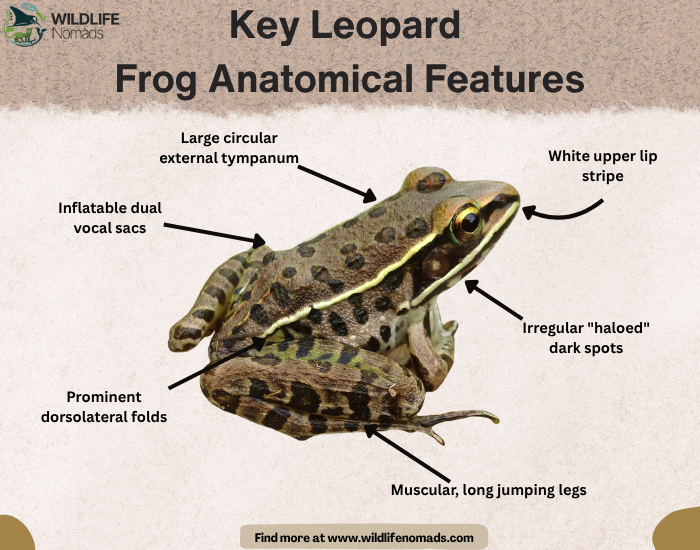
Frog Anatomical Features | Credit: Wildlife Nomads
FAQs about Leopard Frogs
Leopard frogs eat almost anything that fits in their mouths. Adults consume insects, spiders, worms, small invertebrates, and even smaller frogs. They are opportunistic predators that hunt by ambush, using their long sticky tongues. Tadpoles feed on algae and decaying vegetation in ponds, streams, and rivers. Snakes, birds, and other predators also feed on leopard frogs, making them an important link in aquatic food webs. Birds of prey are among their most effective predators.
Leopard frogs live across North America, from western Canada to Central America. They occur in a wide variety of habitats: ponds, lakes, rivers, streams, marshes, wet meadows, and temporary pools. Some species even breed in earthen stock tanks and irrigation ditches. During summer, many species wander into grasslands and fields far from water. In winter, they hibernate in deep ponds or under river sediment in the northern United States and Canada. Breeding habitats include shallow water along pond edges with dense vegetation.
The northern leopard frog lives five to eight years in the wild. Southern leopard frogs average about three years. Males typically reach sexual maturity at one to two years, while females mature slightly later. The northern leopard frog life cycle from egg laying through tadpole development to adult takes roughly three to four months during a single breeding season.
A Living Legacy of Spots and Springs
Leopard frogs span an extraordinary range of habitats, from the geothermal springs of Nevada to the volcanic highlands of Puebla, from the beaver ponds of New Hampshire to the desert canyons of Arizona. Some species thrive alongside humans. Others teeter at the edge of extinction. What unites them is a shared evolutionary blueprint: those unmistakable spots, those powerful legs, and an ancient connection to freshwater habitats that humans increasingly reshape.
Next time you hear a snoring chorus rising from a pond at dusk, stop and listen. You might be hearing a northern leopard frog, a plains leopard frog, or something rarer. Pay attention. Take a photo. Share what you find in the comments below — I’d love to hear which leopard frogs occur in your area. And if you want to explore more of the amphibian world, check out our full guide to types of amphibians.
References:
Bradford, D. F., Jaeger, J. R., & Jennings, R. D. (2004). Population status and distribution of a decimated amphibian, the relict leopard frog (Rana onca). The Southwestern Naturalist, 49(2), 218–228. https://doi.org/10.1894/0038-4909(2004)049<0218:PSADOA>2.0.CO;2
Feinberg, J. A., Newman, C. E., Watkins-Colwell, G. J., et al. (2014). Cryptic diversity in Metropolis: Confirmation of a new leopard frog species (Anura: Ranidae) from New York City and surrounding Atlantic Coast regions. PLOS ONE, 9(10), e108213. https://doi.org/10.1371/journal.pone.0108213
Frost, D. R., Grant, T., Faivovich, J., et al. (2006). The amphibian tree of life. Bulletin of the American Museum of Natural History, 297, 1–370. https://doi.org/10.1206/0003-0090(2006)297[0001:TATOL]2.0.CO;2
Smith, M. A., & Green, D. M. (2005). Dispersal and the metapopulation paradigm in amphibian ecology and conservation: Are all amphibian populations metapopulations? Ecography, 28(1), 110–128. https://doi.org/10.1111/j.0906-7590.2005.04042.x
Newman, C. E., & Rissler, L. J. (2011). Phylogeographic analyses of the southern leopard frog: the impact of geography and climate on the distribution of genetic lineages vs. subspecies. Molecular ecology, 20(24), 5295–5312. https://doi.org/10.1111/j.1365-294X.2011.05353.x
Savage, A. E., Sredl, M. J., & Zamudio, K. R. (2011). Disease dynamics vary spatially and temporally in a North American amphibian. Biological Conservation, 144(7), 1910–1915. https://doi.org/10.1016/j.biocon.2011.03.018
Van Rooij, P., Martel, A., Haesebrouck, F., & Pasmans, F. (2015). Amphibian chytridiomycosis: a review with focus on fungus-host interactions. Veterinary research, 46, 137. https://doi.org/10.1186/s13567-015-0266-0