When I first arrived in Australia in 2019, I felt like I had stepped out of a time machine. As a biologist, you study ‘allopatric speciation’ in textbooks, but Australia is where you see it in the flesh. Because this continent has been geographically isolated for 50 million years, evolution took a completely different path here.
Returning in 2022, I was struck by the same realization: this isn’t just a country; it’s an evolutionary vault. Over 80% of the mammals here—mostly marsupials—exist nowhere else on Earth. But I also saw the fragility. Having witnessed the landscapes both before and after the recent extreme weather events, I realized that Australia’s ‘uniqueness’ is its greatest vulnerability. In this guide, we aren’t just looking at ‘cute’ animals; we are looking at the specialized survivors of an island continent, from the prehistoric Southern Cassowary, their unique marsupials, to the venomous reptiles, the bizarre sea dragons, and unique amphibians found exclusively in Australia

Kangaroo
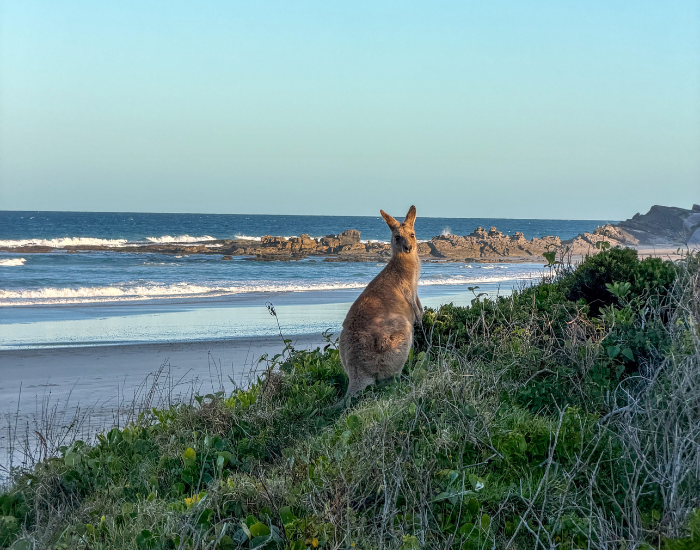
The kangaroo is probably the best known of the native Australian animals, it might be even Australia’s national symbol. These creatures are the world’s largest marsupial, with various species like the red kangaroo, eastern grey kangaroo, and western grey kangaroo roaming the continent, a little bit too much. Kangaroos are built for speed and endurance, capable of hopping at speeds of up to 56 km/h (35 mph). They use their strong tails for balance and powerful hind legs to traverse vast distances in search of food and water. Found in diverse habitats, from grasslands to deserts, kangaroos are a vital part of the Australian ecosystem, aiding in seed dispersal and vegetation control.
I have spent a lot of time observing the energy-saving tactics of marsupials. Unlike placental mammals (like us), marsupials give birth to very undeveloped young. Seeing a ‘pinky’ joey in a pouch for the first time reminds you that Australian wildlife hasn’t just adapted to the land, they’ve adapted to a nutrient-poor soil that requires them to be masters of energy conservation

Koala
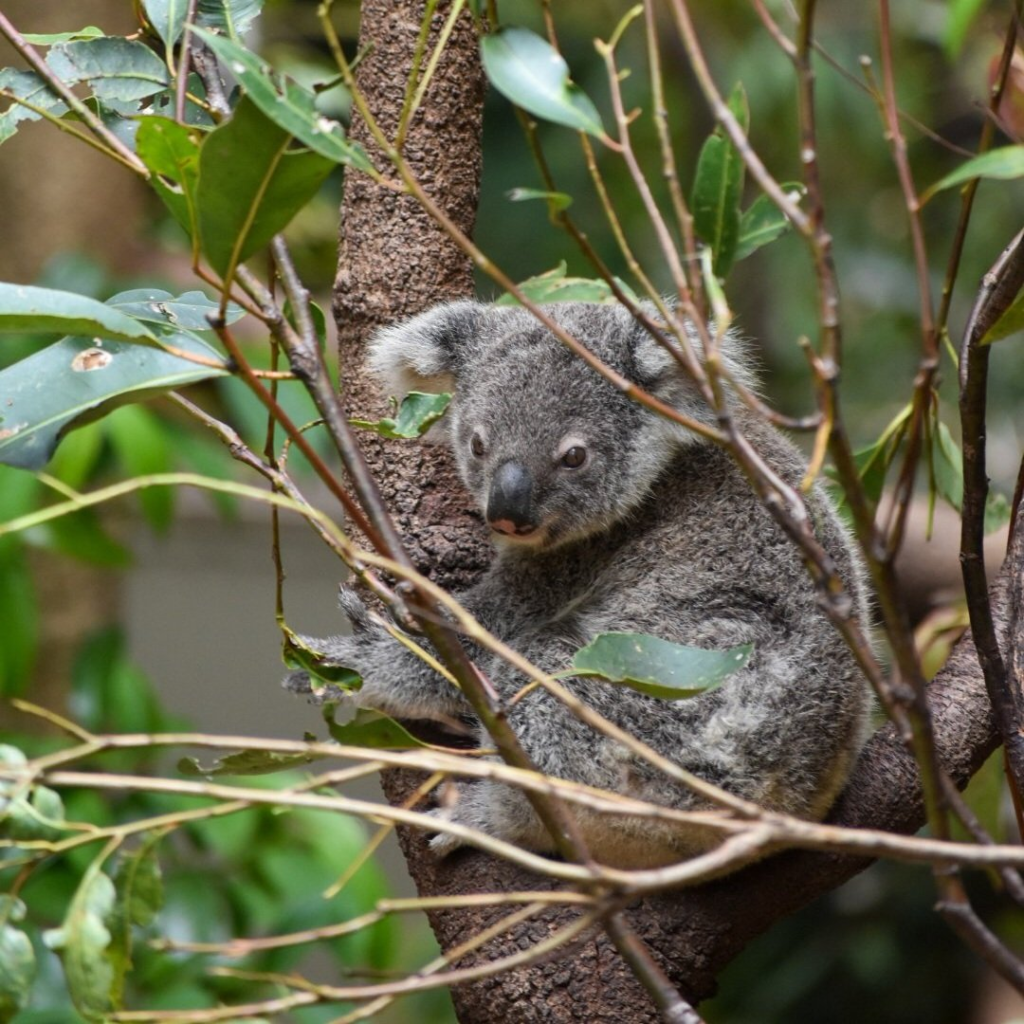
The koala is another very beloved marsupial in Australia, often associated with Australia’s eucalyptus forests. Koalas are found in the eucalyptus forests of northern and eastern Australia. This cuddly bear-looking animal (it is not a bear though) is highly adapted to their environment, feeding almost exclusively on eucalyptus leaves, which provide both their food and water needs. Their low-energy diet means they spend up to 20 hours a day resting in trees. Habitat destruction poses a significant threat to koalas, making conservation efforts crucial for their survival.
Platypus
If you ever saw Phineas and Ferb the platypus is already very well known for you. The platypus is a truly unique mammal, one of the few monotremes (which means: egg-laying mammals) on Earth. Found in freshwater rivers and streams in mainland Australia, this fascinating creature uses electroreceptors in its bill to locate prey underwater. Its blend of mammalian, reptilian, and bird-like traits left early European naturalists baffled, with some believing it was a hoax. The platypus is a deep look into the evolutionary paths of Australian wildlife.

Quokka
Is it possible not to smile when you see these small animals? The quokka it is often called the “world’s happiest animal” because it always looks like it is smiling. This small marsupial can be found primarily on Rottnest Island. Quokkas thrive on Rottnest Island due to the absence of natural predators. Quokkas are herbivores that play a key role in seed dispersal however it seems they have adapted to eating chips and hamburgers, as some people feed them on the island even though you are not supposed to.
Their charm has made them a social media sensation. If you ever have the chance to visit this Island, a selfie with one of them is a must. However, their limited range makes them vulnerable to habitat changes, diseases, and predators.

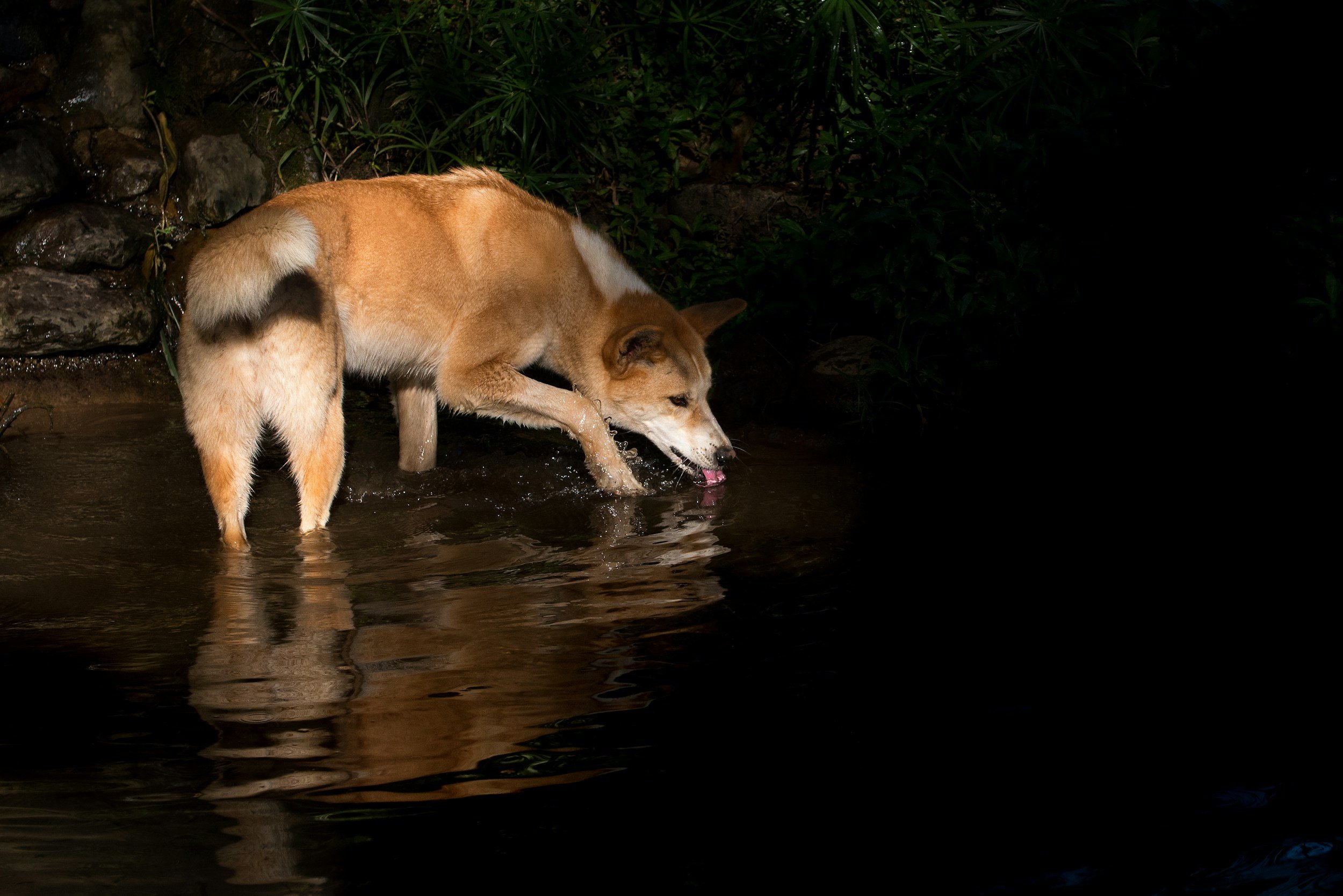
Dingo
Australia’s wild dog is the dingo, and not without controversies. Some biologists consider them not a Native animal of Australia, given the fact it was introduced around 5,000 years ago by people. This is an apex predator and a vital part of its ecosystems as they help to control populations of invasive species and herbivores, functioning as keystone species, thereby supporting the survival of native species.
Found across deserts, forests, and grasslands, dingoes are often misunderstood yet essential to the health of Australia’s biodiversity. Their complex relationship with humans and livestock highlights the challenges of conservation in shared landscapes. Every year, there is always a case of a Dingo biting a human/child, which makes them object of controversy as some people advocate for reducing their populations.
Bilby
Bilbies are nocturnal marsupials known for their long ears and burrowing habits, which make them exceptional soil aerators. Once widespread, bilbies are now classified as a threatened species due to habitat loss and predation by invasive species like foxes and cats. Conservation programs such as captive breeding and fenced sanctuaries aim to restore their populations, ensuring these “ecosystem engineers” continue to thrive.

Echidna
Another incredibly unique creature I frequently encountered during my afternoon bushwalks around Sydney’s outer ridges is the short-beaked echidna. Alongside the platypus, these spiked wanderers are the world’s only surviving monotremes (egg-laying mammals). Evolutionarily speaking, they are living time capsules, having remained largely unchanged for millions of years.
Whenever I spotted one rustling through the dry eucalyptus leaf litter, my inner biologist couldn’t help but marvel at their bizarre, specialized anatomy. Covered in sharp, defensive keratin spines, echidnas are master excavators. If you startle one on a trail, they won’t run; instead, they use their deceptively powerful claws to dig straight down into the soil, sinking out of sight like a disappearing submarine until only a fortress of spikes protects their back.

Emu
When you think of big birds, probably the first thought that comes to your mind is the Ostrich. However, meet another fascinating Australian animal: the Emu. This bird is Australia’s largest bird and the second-largest bird in the world, standing up to two meters tall.
Flightless but incredibly fast, emus can run at speeds of up to 50 km/h (31 mph). They are often spotted in open plains and woodlands, where they forage for seeds, fruits, and insects. As important seed dispersers, emus contribute significantly to maintaining Australia’s ecosystems.

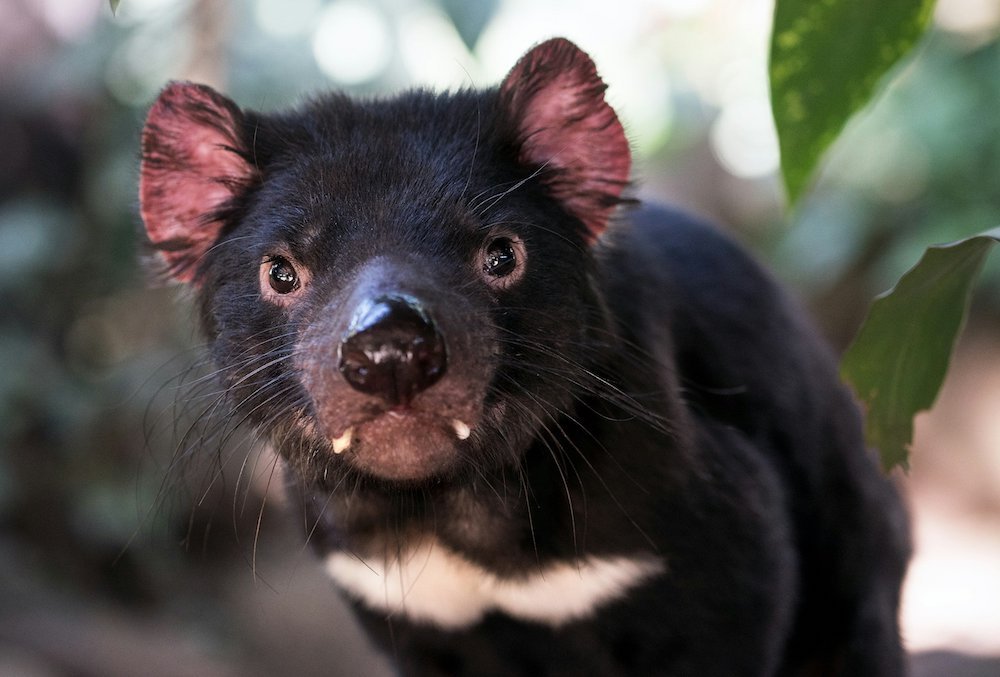
Tasmanian Devil
The Tasmanian devil, found exclusively on the island of Tasmania, is known for its powerful bite and distinctive screeches. It is the world’s largest carnivorous marsupial. This carnivorous marsupial plays a crucial role as a scavenger, helping to clean up ecosystems by consuming carrion. However, the species faces challenges from Devil Facial Tumor Disease (DFTD), a contagious cancer that has drastically reduced populations. Conservation programs are working tirelessly to protect and restore this iconic species.
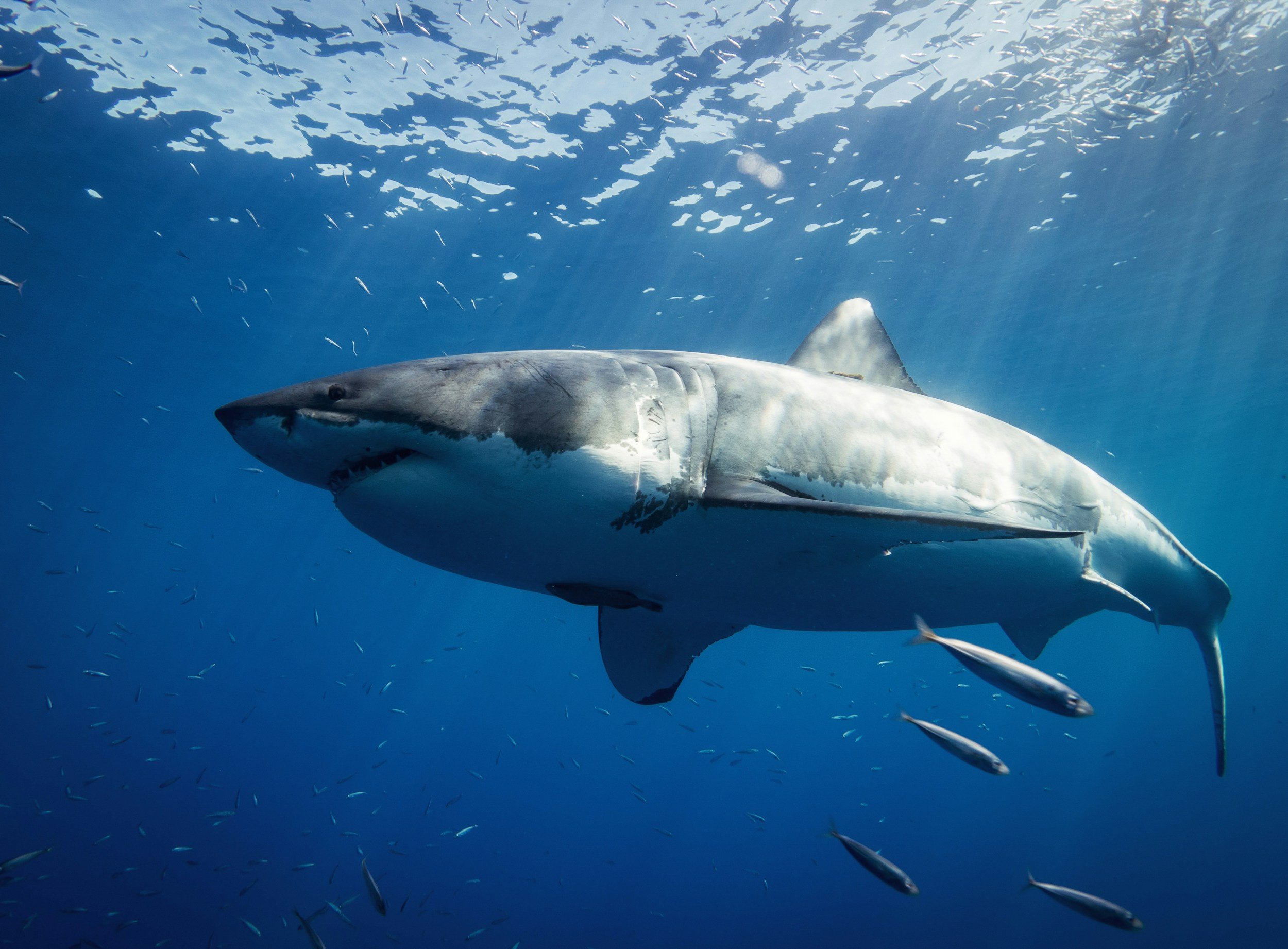
Great White Shark
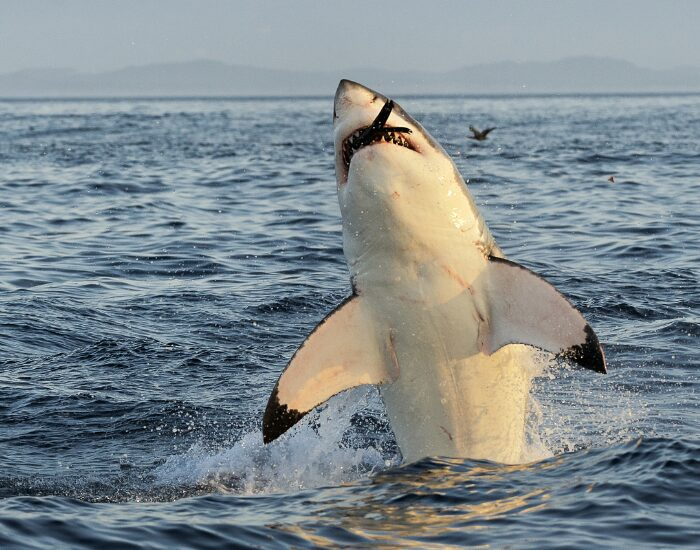
Most people when think about Australian animals, they can only think in big or dangerous animals. Well, sharks, but particularly this shark is one that could scare more than one person. Australia’s waters are home to many sharks, including bull sharks, wobbegongs, and zebra sharks, but probably the most jaw dropping one is the great white shark, an apex predator of the ocean. These formidable creatures are vital to marine ecosystems, maintaining balance by controlling prey populations. Despite their fearsome reputation, great white sharks are under threat due to overfishing and habitat loss. Australia has implemented marine sanctuaries and fishing regulations to help protect them.
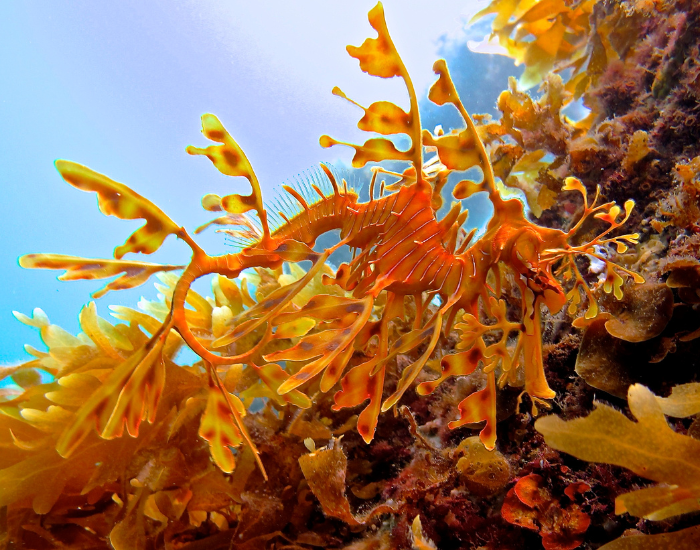
Weedy Sea Dragon
Often mistaken for a floating piece of seaweed, the weedy sea dragon is one of Australia’s most enchanting marine creatures. Endemic to the southern coastline, these delicate relatives of seahorses drift gracefully through kelp forests and seagrass meadows. Their leaf-like appendages provide perfect camouflage from predators, while their vivid colors help them blend into their surroundings. Despite their beauty, sea dragons face threats from habitat degradation and pollution. Thanks to strict marine protection laws and conservation breeding programs, Australia continues to safeguard these mesmerizing icons of its underwater world.
Rainbow Lorikeet
The rainbow lorikeet is a burst of colour in the Australian landscape, even in the cities where you can see them like pigeons in europe (which I rather see Lorikeets rather than Pigeons as personal preference). With vert vibrant and colourful plumage of red, blue, green, and yellow, these parrots are as noisy as they are beautiful. Found in rainforests, woodlands, and urban areas, they feed on nectar, pollen, and fruits using their specialized brush-tipped tongues. Their playful antics and loud calls make them a delight to watch, especially during flowering seasons.

Black Cockatoos
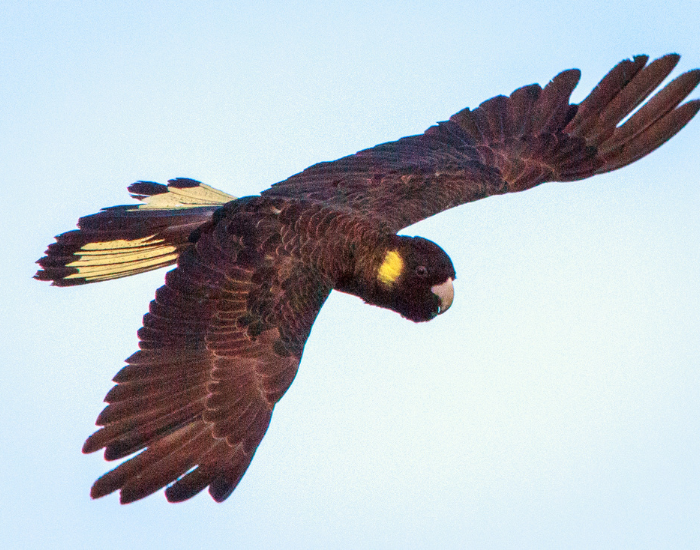
Black cockatoos are among Australia’s most striking and intelligent birds, easily recognized by their dark plumage, powerful beaks, and loud, echoing calls that carry across eucalyptus forests.
I remember my first encounter with these birds vividly. I was working as an ecologist in a bushy corridor on the outskirts of Sydney. A coworker turned to me as a massive flock of Yellow-tailed Black Cockatoos landed nearby and mentioned that in many Aboriginal traditions, these birds are considered a good omen, specifically messengers of incoming rain. We couldn’t help but laugh because there were so many of them around us that day; we joked that we must be in for the luckiest year (and the wettest month) of our lives!
Whether you call them ‘Ngoolark’ (Noongar) or ‘Ngaoaraa’ (Dharawal), these birds are more than just wildlife; they are seasonal markers. Recent 2025 observations in Sydney show them appearing more frequently in summer, likely due to climate-driven shifts in their food sources like the Eastern Suburbs Banksia Scrub.
Sugar Glider
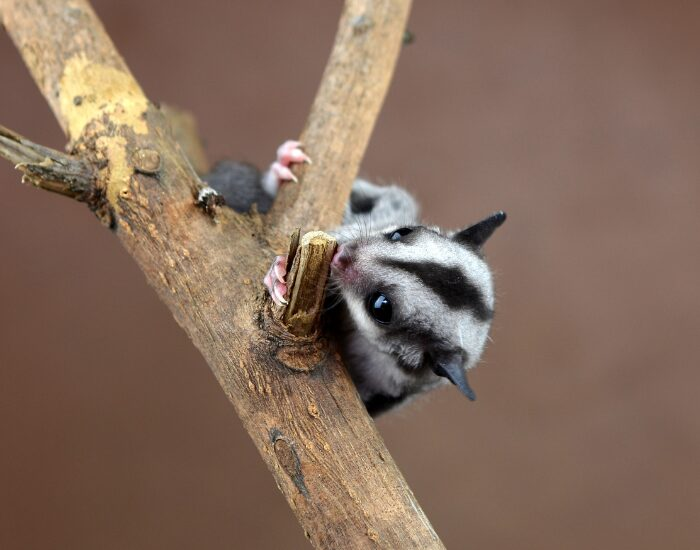
This small animal is a nocturnal marsupial possum, known for its very impressive ability to glide through the air. If you have ever seen one gliding you can understand their charm. With its membrane-like skin stretching between its fore and hind limbs, it can leap and glide distances of up to 50 meters, allowing it to move effortlessly between trees in search of food. Sugar gliders are social creatures, living in family groups and feeding on nectar, sap, and insects. Unfortunately, their charming, wide-eyed appearance has made them popular in wildlife parks and even as exotic pets, though they thrive best in the wild. Native to Australia’s forests, sugar gliders play a vital role in pollination, as their foraging habits help distribute pollen across their habitat.
Goanna
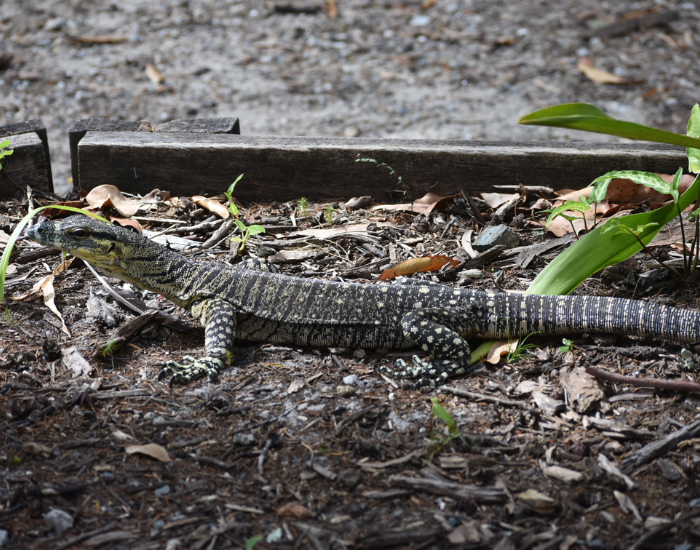
Goannas, or monitor lizards, are a group of large reptiles found across Australia. The perentie, the largest goanna species, can grow up to 2.5 meters in length. Known for their sharp claws and forked tongues, they are both scavengers and predators, feeding on insects, small mammals, and carrion. Goannas are also culturally significant, often appearing in Aboriginal art and storytelling.
Blue-Tongue Lizards
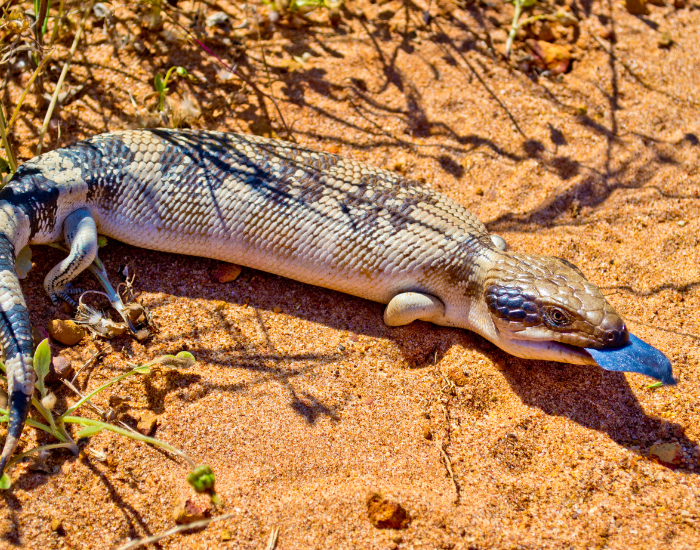
Named for their vivid cobalt-blue tongues, blue-tongue lizards are one of Australia’s most familiar reptiles. These slow-moving, gentle skinks thrive in gardens, grasslands, and forests across the country, where they feed on insects, snails, and fruits. When threatened, they display their bright tongue and hiss loudly to deter predators. Despite their tough appearance, they are harmless to humans and play an important role in controlling pests.
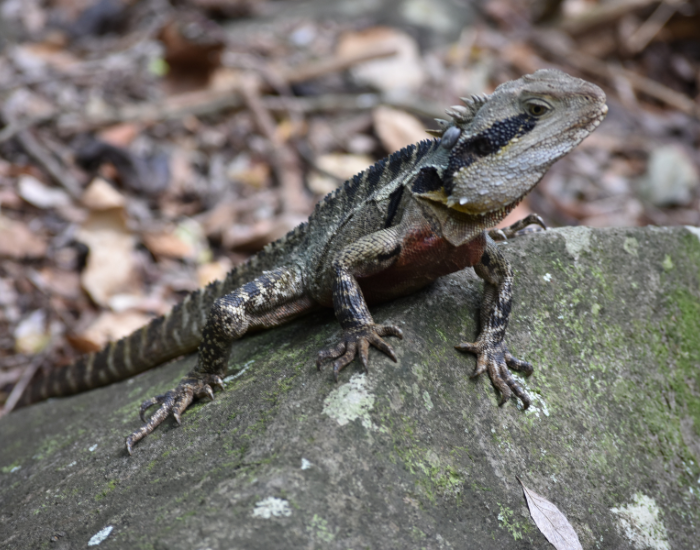
Eastern Water Dragons
The eastern water dragon is a semi-aquatic lizard found along Australia’s east coast, often seen basking on rocks or diving into creeks and ponds. With strong limbs, long tails, and the ability to remain underwater for up to 30 minutes, they’re perfectly adapted to life near water. These omnivorous reptiles feed on insects, small fish, and vegetation, and are known for their calm temperament and striking prehistoric look, a reminder of Australia’s ancient reptilian lineage.
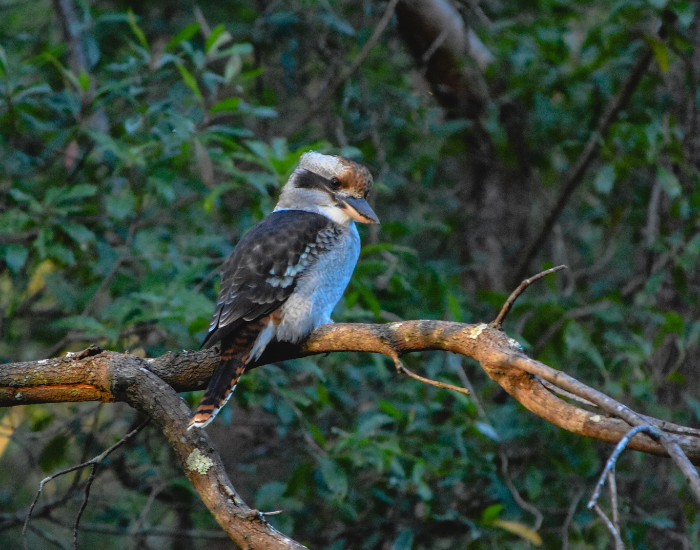
Kookaburra
By the sound it makes, if walk through the suburbs of Sydney, you probably will think it is a monkey and not a bird. The kookaburra is famous for its loud, distinctive call, which resembles human laughter and echoes through Australia’s forests and suburban areas. These large kingfishers are carnivorous, preying on insects, small reptiles, and even snakes. Known as the “laughing bird,” kookaburras are a quintessential part of Australia’s wildlife soundscape and are often spotted perched on trees or fences.
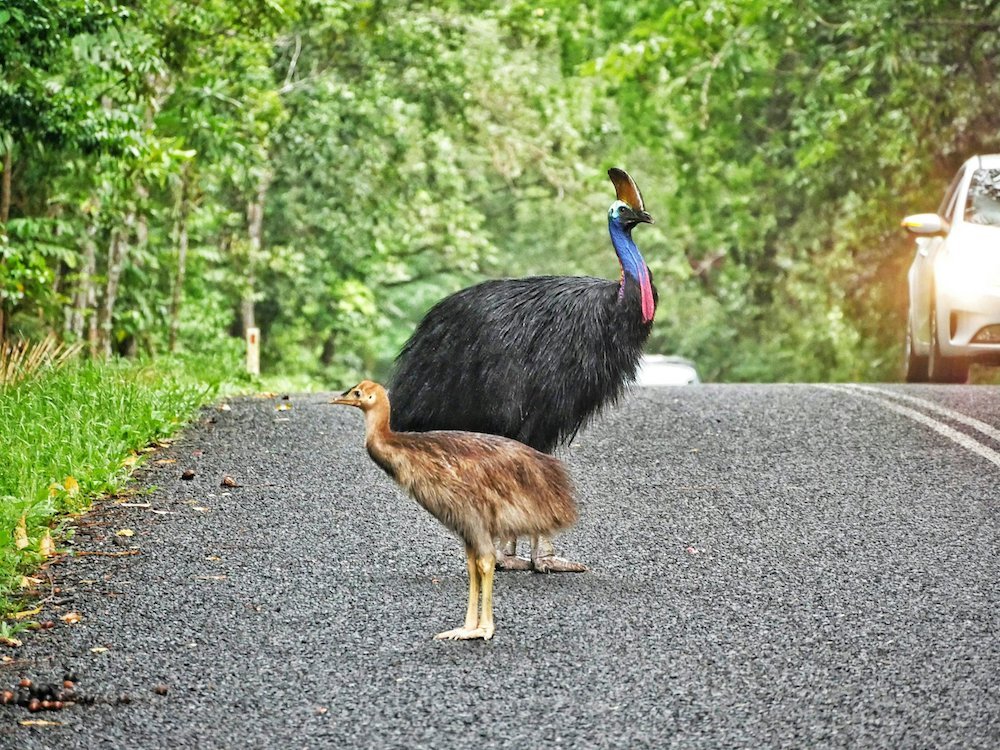
Cassowary
Looking at a cassowary definitely is a way to look into the past, how some dinosaurs probably looked. this bird is often dubbed “the most dangerous bird due to its big claws and beak. It inhabits the tropical rainforests of northern Australia, particularly northern Queensland. Recognizable by their striking blue and black plumage and casque-topped heads, cassowaries are crucial seed dispersers, ensuring the survival of many rainforest plants.
Green Tree Python
The Green Tree Python is one of those animals that you don’t believe it actually exists when you see it for the first time. Some reptiles, like the Perentie lizard, are found in western Australia. This beautiful snake is found in the rainforests of northern Queensland. Its vivid green coloration provides excellent camouflage among the trees, while its prehensile tail aids in climbing. Non-venomous and generally docile, these snakes are a favorite among wildlife photographers.

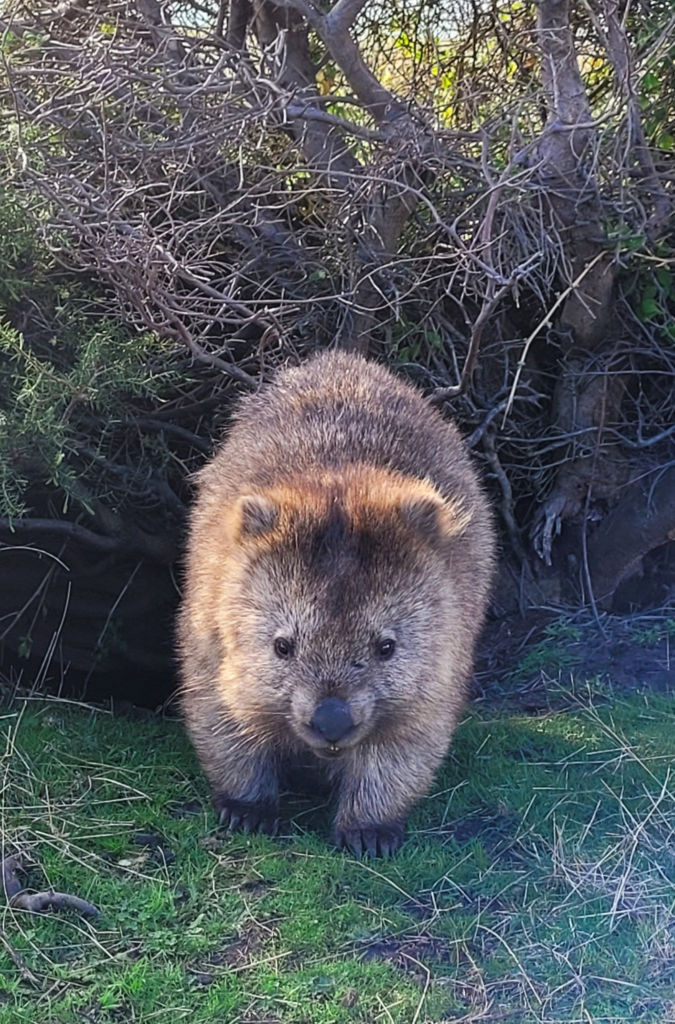
Wombat
Wombats are some of the most lovely, chubby marsupials in Australia, comparable in size to a small dog, and very well known for their burrowing skills. Their strong claws and powerful legs allow them to dig extensive tunnels, which provide shelter from predators and harsh weather. Found in forests, grasslands, and mountainous areas, wombats are essential to soil aeration, promoting healthy ecosystems. And don’t let their cute appearance fool you, they could charge at you if felt threatened.
Australian Amphibians and Reptiles
Snakes
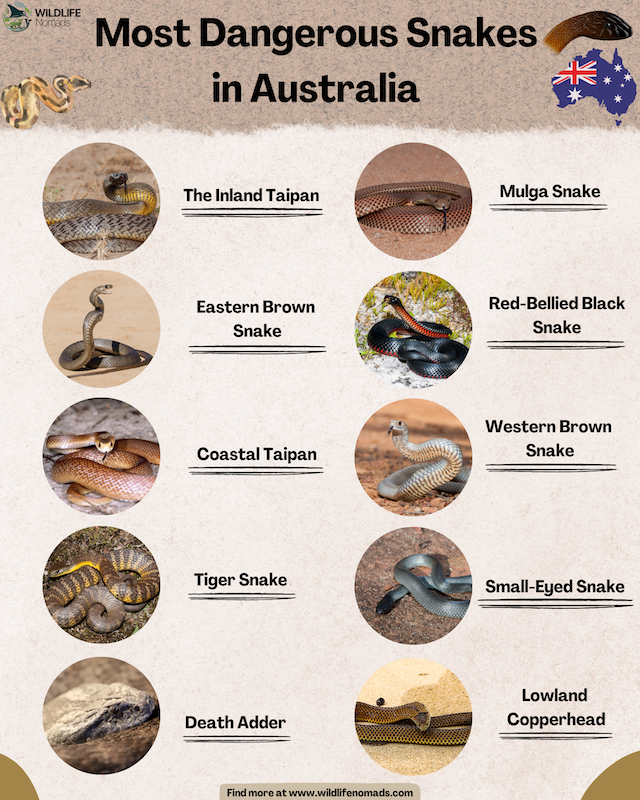
Australia is a land of extremes, and its snake population is no exception. With over 205 species slithering across the continent, including 100 venomous varieties, Australia is a herpetologist’s dream. Among the most notorious are the inland taipan, eastern brown snake, and tiger snake, each packing a potent punch of venom.
But it’s not all about danger; some snakes, like the carpet python, have found a place in the hearts of Australians as popular pets. These non-venomous constrictors are known for their striking patterns and relatively docile nature. Regardless of their reputation, snakes play a crucial role in the Australian ecosystem. They help control pest populations, keeping the balance in check and ensuring the health of their habitats.
Australian Birds
Waterbirds
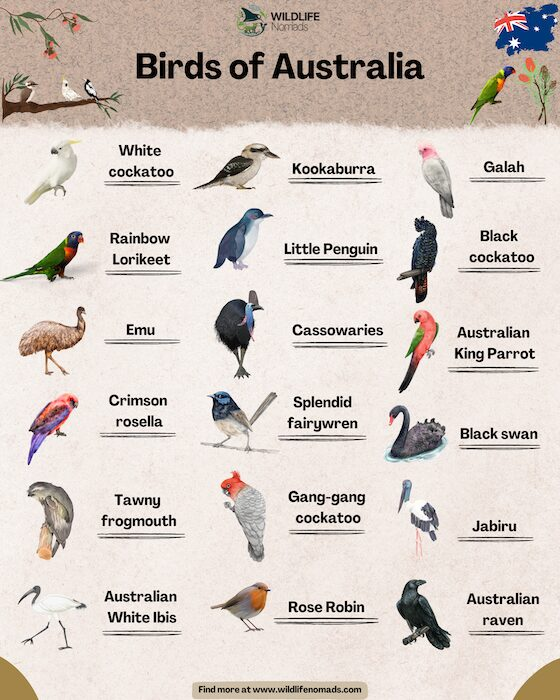
Australia’s wetlands and coastal areas are teeming with life, particularly when it comes to waterbirds. From the majestic Australian pelican with its enormous bill to the elegant black swan gliding across serene lakes, these birds are a sight to behold.
Endangered and Extinct Animals
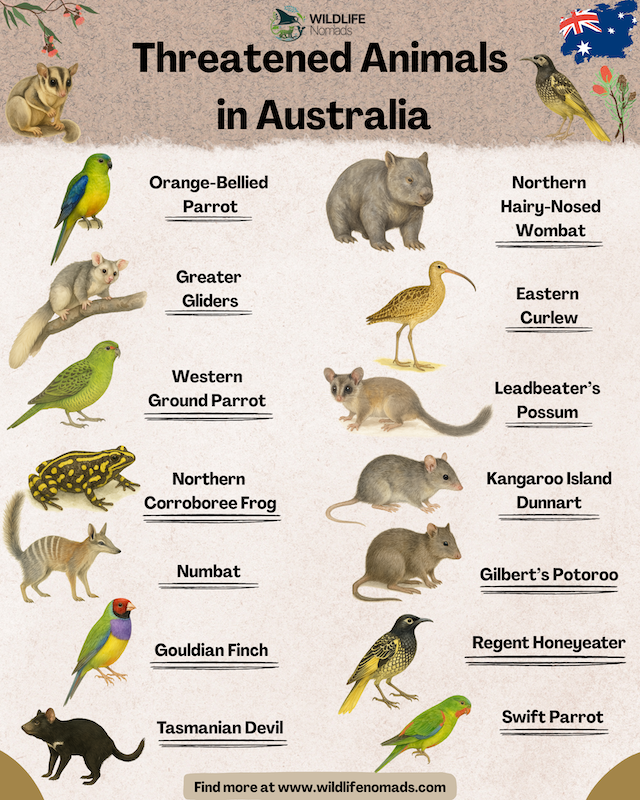
Australia’s unique wildlife faces significant challenges, with many species threatened and some other teetering on the brink of extinction. Habitat destruction, invasive species like cats, and climate change are formidable threats to the country’s native animals. Iconic species like the koala, Tasmanian devil, and northern quoll are among those fighting for survival.
The Tasmanian devil, the world’s largest carnivorous marsupial, is particularly vulnerable due to the devastating Devil Facial Tumor Disease (DFTD). Meanwhile, the northern quoll, a small but fierce predator, struggles against habitat loss and invasive species like the cane toad.
Australia has also witnessed the tragic loss of species such as the thylacine (Tasmanian tiger) and the gastric-brooding frog, both now extinct. These losses underscore the urgent need for conservation efforts. National parks and wildlife sanctuaries have been established to protect these precious creatures, and the Australian government has implemented laws and policies aimed at preventing further extinctions. Also, technology has shown promising results to improve marsupial conservation.
Can You Name That Australian Animal? 🦘
A 14-photo identification challenge — and the wrong answers are deliberately tricky look-alikes. Go back and change any answer before you score.
Which Australian animal is this?
See Australian Animals in the Wild!
Based on my two expeditions across the country, I’ve hand-picked a few tours through SafariBookings and Viator that actually prioritize ethical distances. As a biologist, I only recommend experiences that don’t disrupt the natural foraging behaviors of these endemic species.
This blog is reader-supported. When you buy through links listed on this site, we may earn an affiliate commission.
References:
Bender, H. S. (2010). Devil facial tumour disease (DFTD): Using genetics and genomics to investigate infectious disease in an endangered marsupial. In Marsupial Genetics and Genomics (pp. 499–515). Springer. https://doi.org/10.1007/978-90-481-9023-2_23
Booth, D. J., Trevor-Jones, A., Klanten, S., & Beretta, G. A. (2025). Mass stranding of common (weedy) seadragons (Phyllopteryx taeniolatus) in Sydney: Impacts and implications. Journal of Fish Biology, 107(1), 312–316. https://doi.org/10.1111/jfb.70019
Brookes, V. J., Degeling, C., van Eeden, L. M., & Ward, M. P. (2020). What is a dingo? The phenotypic classification of dingoes by Aboriginal and Torres Strait Islander residents in northern Australia. Animals, 10(7), Article 1230. https://doi.org/10.3390/ani10071230
Croft, D. B., & Witte, I. (2021). The perils of being populous: Control and conservation of abundant kangaroo species. Animals, 11(6), Article 1753. https://doi.org/10.3390/ani11061753
Martínez-Pérez, P., Hyndman, T. H., & Fleming, P. A. (2020). Salmonella in free-ranging quokkas (Setonix brachyurus) from Rottnest Island and the mainland of Western Australia. Animals, 10(4), Article 585. https://doi.org/10.3390/ani10040585
Metzger, M. J., & Goff, S. P. (2016). A sixth modality of infectious disease: Contagious cancer from devils to clams and beyond. PLOS Pathogens, 12(10), Article e1005904. https://doi.org/10.1371/journal.ppat.1005904
Tallowin, O., Parker, F., O’Shea, M., Hoskin, C., Couper, P., & Amey, A. (2018). Morelia viridis. The IUCN Red List of Threatened Species 2018: e.T177524A21649845. https://dx.doi.org/10.2305/IUCN.UK.2018-2.RLTS.T177524A21649845.en