Life Beneath the Plains
The first time I saw a prairie dog was in Zacatecas, Mexico, on a dry, sun-bleached afternoon. I was traveling between field sites studying grassland birds when I noticed the earth pockmarked with neat, circular burrow entrances. Then came a chorus of chirps, short, sharp, and oddly dog-like. Tiny heads popped up, tails flicking, each animal perfectly alert. I had stumbled upon a prairie dog colony, a bustling town of social, subterranean engineers.
These little rodents are far more than curious burrowers. The scientific name for prairie dogs, Cynomys, comes from Greek words meaning “dog mouse,” a nod to their bark-like calls and rodent characteristics. They’re keystone species that shape entire grasslands across the Great Plains and parts of Mexico. From black-tailed prairie dogs in South Dakota to Gunnison’s prairie dogs in New Mexico and white-tailed prairie dogs in Wyoming, these creatures keep grassland ecosystems alive and balanced.
Meet the Prairie Dog
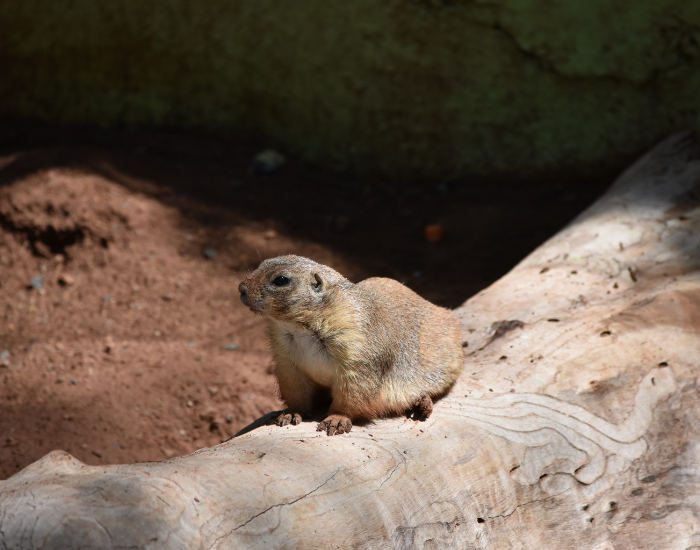
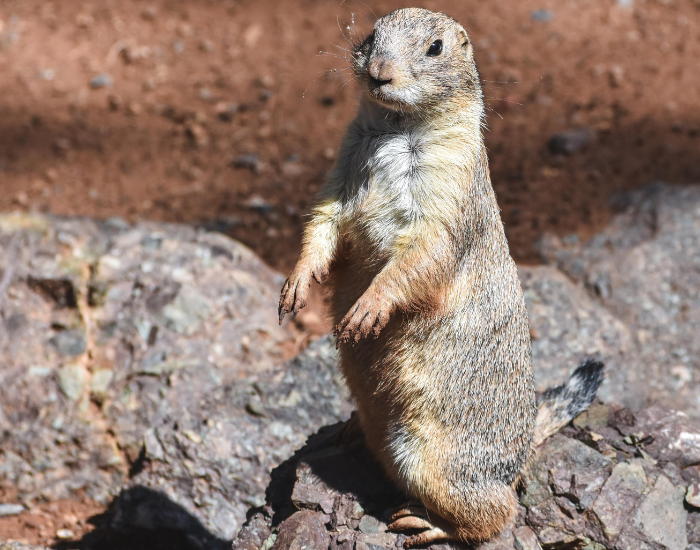
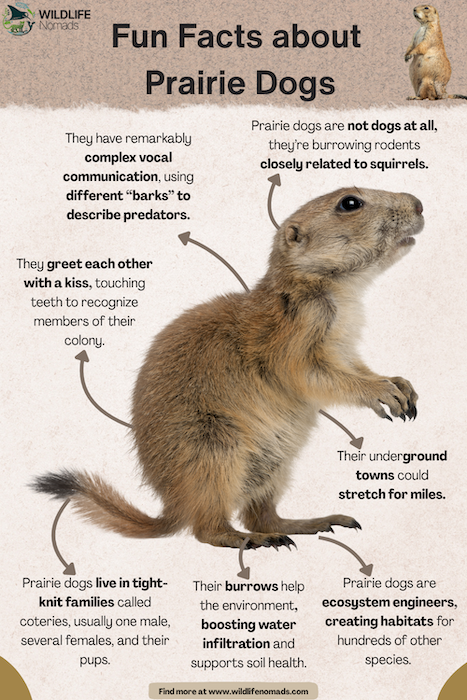
Prairie dogs belong to the genus Cynomys within the rodentia family. The name ‘Cynomys’ comes from Greek, meaning ‘dog mouse,’ referring to their bark-like calls and rodent appearance. As cynomys species, they are close relatives of ground squirrels and chipmunks. Despite their name, prairie dogs are not canines. Their sharp bark-like alarm call simply reminded early settlers of small dogs, and their warning call is often compared to a dog’s bark.
Five Prairie Dog Species
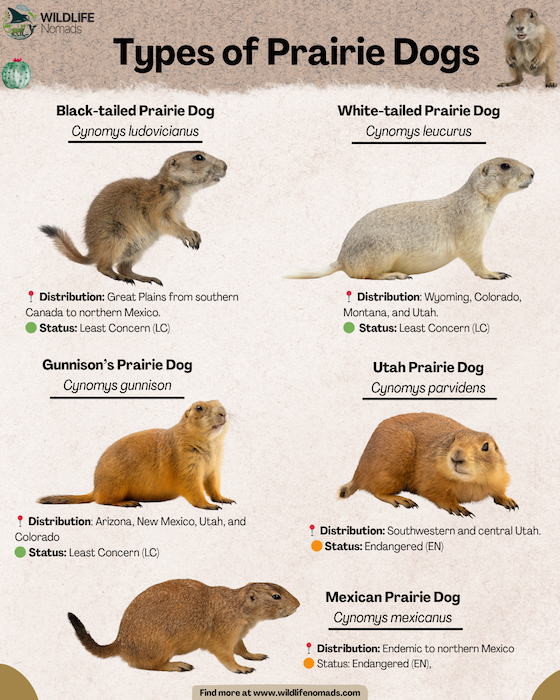
There are five species of prairie dogs found in North America:
Black-tailed prairie dog (Cynomys ludovicianus) – the most widespread species, ranging from Mexico to southern Canada across the Great Plains.
White-tailed prairie dog (Cynomys leucurus) – inhabits western states like Wyoming and Utah at higher elevations.
Gunnison’s prairie dog (Cynomys gunnisoni) – Gunnison’s prairie dogs are adapted to high desert plateaus in Arizona, New Mexico, and Colorado.
Utah prairie dog (Cynomys parvidens) – Utah prairie dogs are once nearly extinct, now protected under the Endangered Species Act with limited populations and are considered a threatened species.
Mexican prairie dog (Cynomys mexicanus) – found in northern Mexico, listed as an endangered species due to agricultural expansion.
The Utah prairie dog and white-tailed prairie dog are two species with close genetic and ecological links, distinguished by physical traits and geographic separation.
Adult prairie dogs typically measure 30–40 cm long and weigh around 1 kg. Body mass varies among species and can influence survival, reproductive success, and adaptation to habitat quality. They have a stout body, short tail, and strong claws adapted for digging burrows. Males are slightly larger than females, yet both sexes share similar social animal behaviors and colony responsibilities. Litter size varies by species and maternal body mass, with typical litters ranging from 2 to 8 pups.
Where Prairie Dogs Live
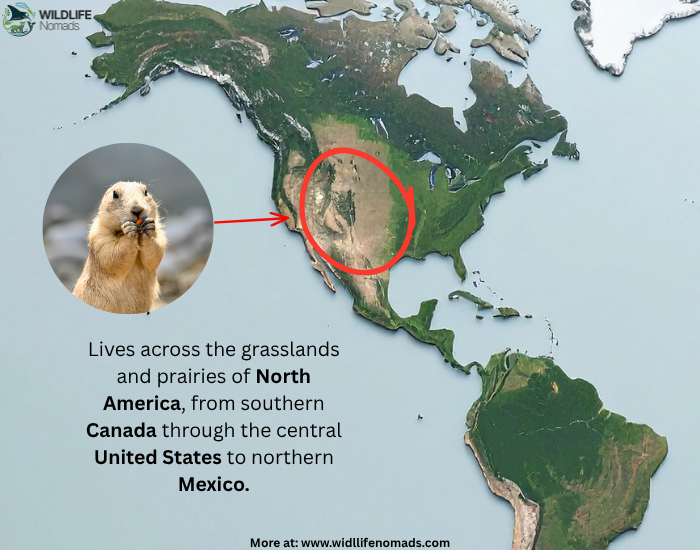
Prairie dogs inhabit the grasslands, savannas, and open plains of North America. Their range once covered over 100 million hectares, stretching from southern Canada through the Great Plains down into northern Mexico. Today, their occupied habitat is less than 5% of that original range. Habitat quality is crucial for prairie dog survival, as access to diverse plant species and suitable terrain supports their nutritional and shelter needs. Prairie dogs dig burrows as a key adaptation for living in grasslands, creating complex underground tunnel systems that provide protection and nesting sites.
In the United States, large populations exist in South Dakota, Wyoming, Colorado, and North Dakota. The black-tailed prairie dog dominates these regions, often forming massive prairie dog towns, interconnected colonies with hundreds or even thousands of burrow entrances. These colonies are called towns, reflecting the highly social structure and organization of prairie dog communities.
Some prairie dog colonies, particularly those historically found in Texas, covered hundreds of square kilometers. One famous prairie dog town in Texas stretched 100 miles wide and 250 miles long, containing an estimated 400 million animals. Different species prairie dogs have specific habitat preferences and play a significant role in shaping their environment, influencing soil properties and vegetation structure. However, modern development and agriculture have fragmented their range. Conservation programs are now helping prairie dog populations recover in protected areas, and the design of their burrows helps them avoid potential predators.
Burrows: Engineering Marvels Beneath the Soil
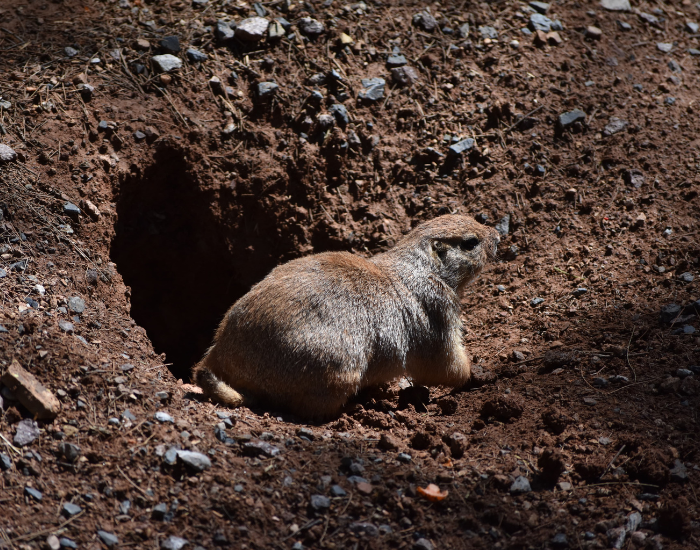
Prairie dog burrows are complex networks that regulate temperature, manage airflow, and provide protection from predators such as coyotes, swift foxes, hawks, and snakes. These underground systems demonstrate remarkable engineering skills. Prairie dogs dig burrows using their strong claws, creating intricate tunnel systems that form the foundation of their colonies.
A typical burrow extends 2–3 meters deep and can reach 10 meters long. Multiple chambers serve distinct purposes, nesting, nursing, and food storage. The entrances are often ringed by raised mounds that act as lookout points and water barriers during rain.
Within these prairie dog colonies, each family group, known as a coterie, includes one adult male, several adult females, and their offspring. Their cooperation is essential for survival. Tasks range from detecting predators to maintaining the burrow’s structure, with prairie dogs using their keen senses and vocalizations to detect predators from a distance.
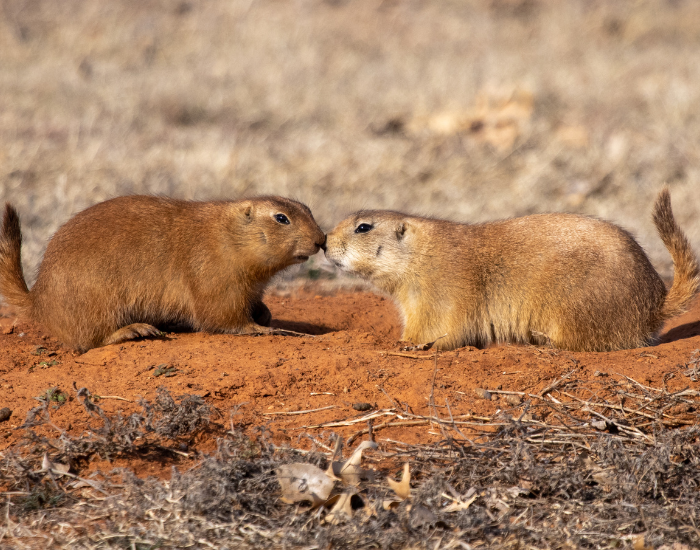
Interactions between two prairie dogs within the burrow system can involve territorial disputes, bluff charges, scent marking, or other social behaviors, reflecting the complex social structure of the colony.
These underground cities aren’t just for prairie dogs. They also shelter burrowing owls, mountain plovers, prairie rattlesnakes, and black-footed ferrets. Many of these species depend entirely on prairie dog burrows for survival.
Society of the Grasslands
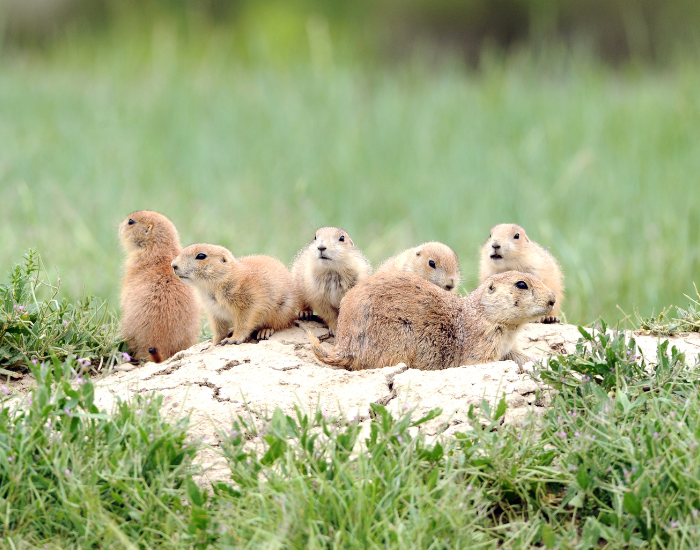
Prairie dogs are renowned for their complex social behavior. Each colony operates almost like a miniature civilization, complete with neighborhoods, communication systems, and social hierarchies. These social animals demonstrate sophisticated interactions rarely seen in other rodents.
Encounters between two prairie dogs can involve bluff charges, scent marking, or other social behaviors, especially during territorial disputes or social encounters.
Their vocalizations are astonishingly advanced. A series of chirps, yips, and barks can describe the size, color, and speed of an approaching predator. Research led by Dr. Con Slobodchikoff demonstrated that prairie dogs’ alarm calls qualify as one of the most advanced communication systems in the animal kingdom.
When a predator appears, one prairie dog issues a loud bark. This sends other colony members diving for cover. Moments later, a high-pitched call signals safety. Life then resumes—grooming, foraging, and playful chases above ground.
Diet and Foraging Behavior
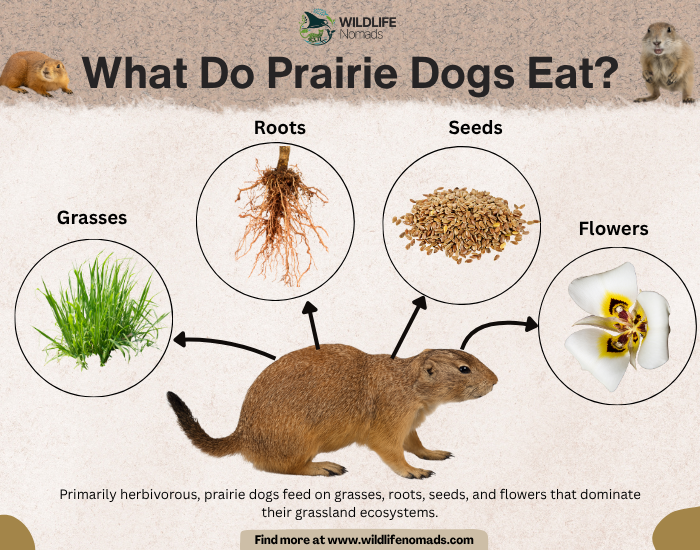
Primarily herbivorous, prairie dogs feed on grasses, roots, seeds, and flowers that dominate their grassland ecosystems. Access to a diverse range of plant species, including forbs, flowers, and seeds, is crucial for prairie dog survival, especially during periods of drought when nutritional needs are higher. Occasionally, they eat insects for protein, particularly during breeding or drought seasons when nutritional demands increase. Gunnison’s prairie dogs, in particular, may consume rabbit brush and tumbleweeds as part of their diet, adapting to the available vegetation in their habitat.
Their grazing behavior actually benefits the ecosystem. By trimming vegetation, they encourage new plant growth. This attracts grazing species such as bison and pronghorn antelope. Therefore, this cyclical relationship improves soil aeration and nutrient cycling, a natural form of land management that maintains healthy grasslands.
Reproduction and Lifecycle
They reach sexual maturity around one year of age. Breeding typically occurs in early spring, often in February or March, depending on latitude and climate conditions. In some regions, prairie dogs mate in early April. Prairie dogs mate during this period, engaging in reproductive activities that lead to the birth of new litters. The gestation period lasts about 30–40 days. After this period, females give birth to litters of 2–8 pups.
The young are born blind and hairless, spending the first six weeks underground. During this period, lactating females rarely leave the burrow. They rely on stored vegetation for sustenance. Once the pups emerge, older colony members teach them how to forage and respond to alarm calls. Juveniles remain above ground longer than adults before entering hibernation, allowing them more time to develop survival skills.
Prairie dogs’ body temperature and metabolism adapt to the seasons. Some species, like the white-tailed prairie dog, enter short periods of torpor during extreme cold. In the wild, they live three to five years. However, less than half reach adulthood due to predation and disease.
A Keystone Species
Ecologists often refer to prairie dogs as keystone species (which is not the same as foundation species). These are organisms whose ecological influence is disproportionately large relative to their size. Their digging burrows transform soil structure, increasing aeration and water infiltration. Moreover, their grazing maintains plant diversity. Their presence supports entire food webs across North American grasslands. Different species prairie dogs influence soil properties and vegetation structure in unique ways, shaping habitat for a variety of other wildlife. Cynomys species, as keystone species, have a significant ecological impact and their conservation status is closely monitored due to their crucial role in grassland ecosystems.
The decline of prairie dogs can trigger cascading ecological consequences. For instance, black-footed ferrets, one of North America’s most endangered mammals, rely almost entirely on prairie dogs for both food and shelter. Similarly, mountain plovers and burrowing owls nest in abandoned burrows. Their breeding success depends on thriving prairie dog towns. This intricate web of relationships underscores how one small rodent species sustains vast portions of the grassland ecosystem.

Relationship with the Black-Footed Ferret
The story of the black-footed ferret is inseparable from that of prairie dogs. As one of North America’s most endangered species, the black-footed ferret (Mustela nigripes) depends almost entirely on thriving prairie dog colonies for its survival. These slender, nocturnal hunters are highly specialized: up to 90% of their diet consists of prairie dogs, with the black-tailed prairie dog being especially vital in regions like South Dakota.
But the relationship goes beyond food. Black-footed ferrets make their homes in prairie dog burrows, using these intricate underground networks for shelter, raising young, and protection from predators. Without healthy prairie dog populations and intact habitat, ferrets simply cannot persist. When plague outbreaks or habitat loss decimate prairie dog towns, the ripple effect is immediate, ferret numbers plummet, and the delicate balance of the prairie ecosystem is thrown off.
This interdependence highlights the role of prairie dogs as a keystone species. Their burrowing not only shapes the land but also creates essential shelter for other animals, including burrowing owls and prairie rattlesnakes. When their colonies disappear, these species lose critical habitat, and the entire web of prairie life begins to unravel.

Threats and Conservation Status
Over the last century, prairie dogs have faced widespread persecution. Seen as agricultural pests, they were poisoned, shot, and displaced by livestock grazing and development. By the 1960s, prairie dog populations had dropped by more than 95%.
Today, the conservation status varies by species:
Black-tailed prairie dog: Stable but monitored. Local plague outbreaks periodically decimate colonies across their range.
White-tailed prairie dog: Listed as a species of concern. Impacted by energy development and habitat loss in western states.
Gunnison’s prairie dog: Threatened by the sylvatic plague and fragmented habitats throughout the Southwest.
Utah prairie dog: Listed under the Endangered Species Act. Subject to regulated recreational shooting restrictions in protected areas.
Mexican prairie dog: Classified as endangered due to agricultural conversion and limited range in northern Mexico.
All cynomys species face significant threats from disease, such as sylvatic plague, and ongoing habitat loss. Conservation strategies now include oral vaccines to prevent plague transmission. Controlled reintroduction programs operate across protected reserves in states like South Dakota and Colorado. The two species, Utah prairie dog and white-tailed prairie dog, are closely monitored due to their conservation status and are subject to specific legal protections.
Initiatives like these ones demonstrate that coexistence is possible. When these animals are recognized as allies of biodiversity rather than competitors for land, both wildlife and human communities benefit.
The Legal Landscape: Protection Under the Law
Their protection varies by species and region. The Endangered Species Act (ESA) safeguards the Utah prairie dog and Mexican prairie dog. Other species receive state-level protections based on their conservation status. Additionally, regulations regarding the importation and captivity of cynomys species are enforced in many regions to prevent disease transmission and protect native populations.
The U.S. Forest Service and U.S. Fish and Wildlife Service manage prairie dog habitats. They monitor conservation status and collaborate with NGOs to restore colonies. Public education programs help dispel myths about prairie dogs being pests. Instead, these programs highlight their importance as ecosystem engineers vital to grassland health.
The long-term goal is balance. Conservation plans aim to preserve their colonies while allowing sustainable land use for ranchers and communities across the Great Plains.
FAQs About Prairie Dogs
Prairie dogs primarily eat grasses, roots, seeds, and flowers. They occasionally consume insects for additional protein, especially during breeding seasons or droughts.
Prairie dogs live across the Great Plains, from southern Canada through the United States into northern Mexico.
In the wild, prairie dogs typically live three to five years. Females may survive up to eight years, while males average around five years. In captivity with proper care, some individuals live up to 10 years.
Some prairie dog species are endangered, including the Utah prairie dog and Mexican prairie dog.
Many animals depend on prairie dog burrows and colonies, including black-footed ferrets, burrowing owls, mountain plovers, swift foxes, and various reptiles.
Most prairie dog species do not truly hibernate. However, some species like white-tailed prairie dogs enter torpor during extreme cold, reducing their body temperature and metabolic rate to conserve energy.
Listening to the Bark of the Plains
That day in Zacatecas left a lasting impression. It struck me how fragile their existence is. Their survival depends on the land, weather, and human perception. These animals, often overlooked or misunderstood, quietly uphold the integrity of North American grasslands. From South Dakota to Mexico, prairie dog towns serve as biodiversity hotspots that benefit countless other species.
If you ever find yourself on the Great Plains, pause and listen. That faint, rhythmic bark in the wind might just be a reminder. Even the smallest voices can hold the balance of an entire ecosystem. Prairie dogs deserve our protection, not persecution. Their role as keystone species makes them indispensable to the health of grassland ecosystems throughout North America.