
I grew up on a river. Villahermosa, in Tabasco, right on the bank, where crocodiles were ordinary and everyone knew which stretches you did not swim in.
Years later, as a biologist, I learnt that this species runs up that same river system. The Grijalva and the Usumacinta are on the list of rivers this species uses. Nobody told me that as a kid. The crocodiles got all the attention.
I have since dived with lemon sharks, wobbegongs, whitetip reef sharks and hammerheads. Never a bull shark, and unlike the great white, that one I would actually like to fix.
There is a reason it has not happened. They live in exactly the water you cannot see into: estuaries, river mouths, canals, surf zones after rain. I live on the Gold Coast, where they are in the canal systems, and I have still never laid eyes on one.
Partway through our lap around Australia, a sign at Red Cliff in Yuraygir National Park warned us off swimming because of white sharks. I wrote about that in my great white shark facts. What the sign did not say is that northern NSW is bull shark country too, and in September we were sitting right in the middle of their range.
Here are twelve things worth knowing about Carcharhinus leucas, including one number the internet gets badly wrong.
1. They Move Between Salt and Fresh Water
This is the headline trick, and it is genuinely rare. Most sharks die in fresh water. This one moves through it for months at a time.
The problem is osmotic. A shark’s tissues are normally saltier than seawater, which lets water flow inward. Put that animal in a river and the gradient reverses, so it starts flooding with water and bleeding salt.
Reilly and colleagues looked at what changes in the gills. Animals caught in fresh water showed sharply increased expression of ion transporters, the molecular machinery that pulls salt back in. Their bodies retain salt through coordinated glands and kidney functions, working alongside the rectal gland and liver, and they cut the urea in their blood by roughly half.
It costs energy. That is the trade, and the payoff is a nursery no other large shark can reach.

2. The Name Comes From the Shape and the Behaviour
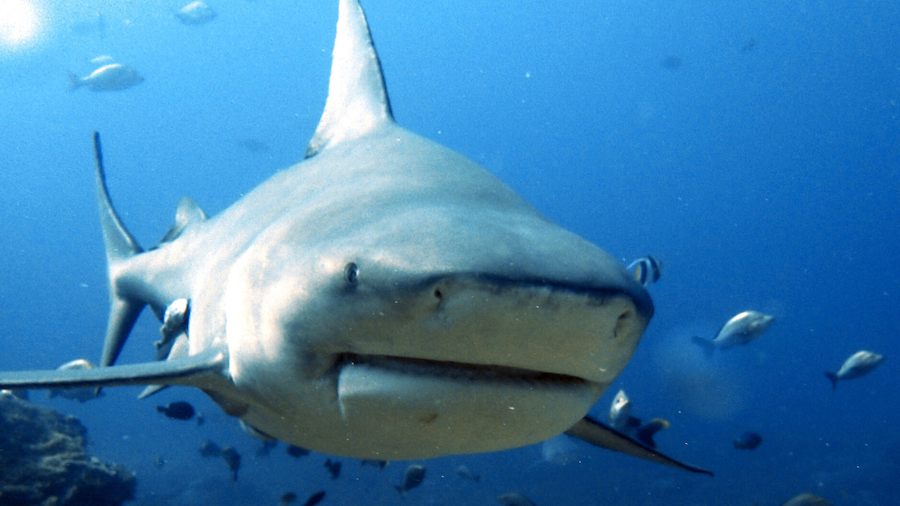
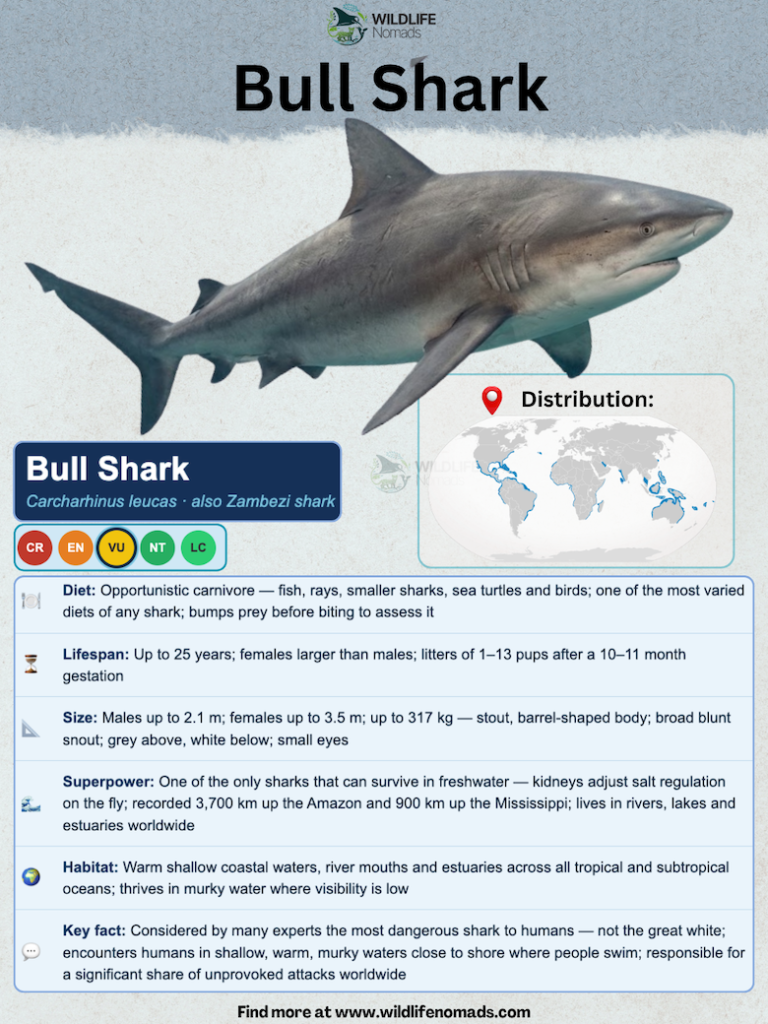
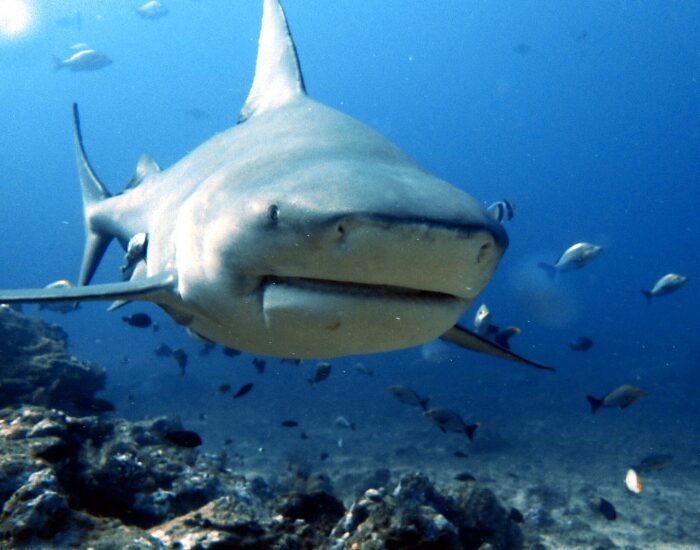
Short blunt snout, thick body, small eyes, and a tall triangular first dorsal fin set well forward. The stout appearance is where the name starts.
The behaviour finished it. They bump prey before committing, a habit that reads as belligerent whether or not it is. They are also territorial in a way most requiem sharks are not.
Different coasts named them for different things. Zambezi shark in southern Africa, Swan River whaler and estuary whaler in Australia, Van Rooyen’s shark, Nicaragua shark, cub shark, ground shark, shovelnose shark, freshwater whaler. When one animal collects that many regional names, it usually means a lot of people were running into it.

3. The Hardest Bite, Pound for Pound
Habegger and colleagues modelled the jaws across a range of body sizes and calculated a maximum of 5,914 newtons, about 1,330 pounds of force.
The number that matters is the ratio. Weight for weight, that is the highest bite force of any cartilaginous fish yet measured, ahead of the great white at equivalent size. Their skulls and jaw muscles are simply built heavier.
It explains the menu. What bull sharks eat is telling: sea turtles, rays and other shark species, prey that needs crushing rather than slicing.

5. Where They Actually Live, and How Far Up
Bull sharks are found in warm coastal waters worldwide, from Massachusetts to southern Brazil in the west Atlantic, across to west Africa, through the Indian Ocean and the Pacific. Do not confuse them with the true river sharks of the genus Glyphis, a separate group adapted to fresh water full-time.
The river records are the famous part. Roughly 4,000 km up the Amazon to Iquitos in Peru. The Ganges and Brahmaputra. The Tigris as far as Baghdad. A resident population in freshwater Lake Nicaragua, where tagged animals reached open ocean in seven to eleven days.
One correction, because it circulates constantly. Two were caught at Alton, Illinois, on the Mississippi, roughly 1,100 km from the Gulf of Mexico. You will see 3,000 km quoted. That figure is not supported by the catch record.

6. Australia’s East Coast Is Bull Shark Country
Smoothey and colleagues tracked this species along beaches in New South Wales and found a clear pattern. Large animals concentrate north of about 32° south, then push further south through summer and autumn.
Three conditions raised the odds of large sharks being present: water above 20°C, rainfall over 45 mm, and swell between 1.8 and 2.8 metres. Rain matters because it flushes nutrients and prey out of estuaries.
Juvenile bull sharks behaved differently. They stayed north, showed up on the nearshore receivers only once they passed about 157 cm, and were most active between 8 pm and 3 am.
Yuraygir sits at roughly 29.5° south. So does most of the coast we drove.
7. That Range Is Moving South
Lubitz and colleagues pulled fifteen years of acoustic tracking from Sydney Harbour and found something quietly significant. Bull sharks are leaving their summer grounds later, by about one day per year.
The mechanism is temperature. Local water has warmed roughly 0.67°C over the study, and these sharks migrate when it drops below about 19 to 20.5°C. Warmer autumns mean that threshold arrives later.
Extrapolate and the overlap season lengthens everywhere along the east coast. That is a more useful thing to know than any attack statistic.
8. Females Are Bigger, and Mature Very Late
Female bull sharks average about 2.4 m and 130 kg, with a maximum near 4.0 m. Male bull sharks average around 2.25 m and 95 kg. Adult bull sharks usually fall between 2.1 and 3.5 m.
The reproductive numbers are what make this species fragile. Gestation runs 10 to 12 months, litters hold 1 to 13 pups, and young bull sharks arrive at about 70 cm already hunting. Males reach maturity around 15 years. Females not until roughly 18.
Eighteen years to first pup. Every adult removed by fishing nets takes nearly two decades to replace.

9. Estuaries Are the Nursery
Females give birth in low-salinity estuaries, river mouths and coastal lagoons, then leave. The pups stay for years.
The reason is straightforward. Other sharks cannot tolerate the low salinity for long, including tiger sharks and even other bull sharks. Fresh water is a fence that only this species can cross freely.
It also means the bull shark population depends on estuary health. Dredging, pollution and coastal development hit the nursery directly, and nothing about the adults’ toughness protects the pups from that.

10. Their Diet Is Almost Anything
They are opportunistic and hunt alone. The bull shark’s diet is mostly fish, mainly bony fishes, plus smaller sharks and rays.
Beyond that it widens fast: sea turtles, seabirds, crustaceans, carrion, and occasionally each other. Marine mammals appear on the list too, mostly dolphins. Terrestrial mammals turn up in stomach contents as well, including dogs and cattle that entered the water, which is a function of where they hunt rather than any special appetite.
Adults have few natural predators. Larger tiger sharks and white sharks take them occasionally, and in some rivers so do crocodiles.
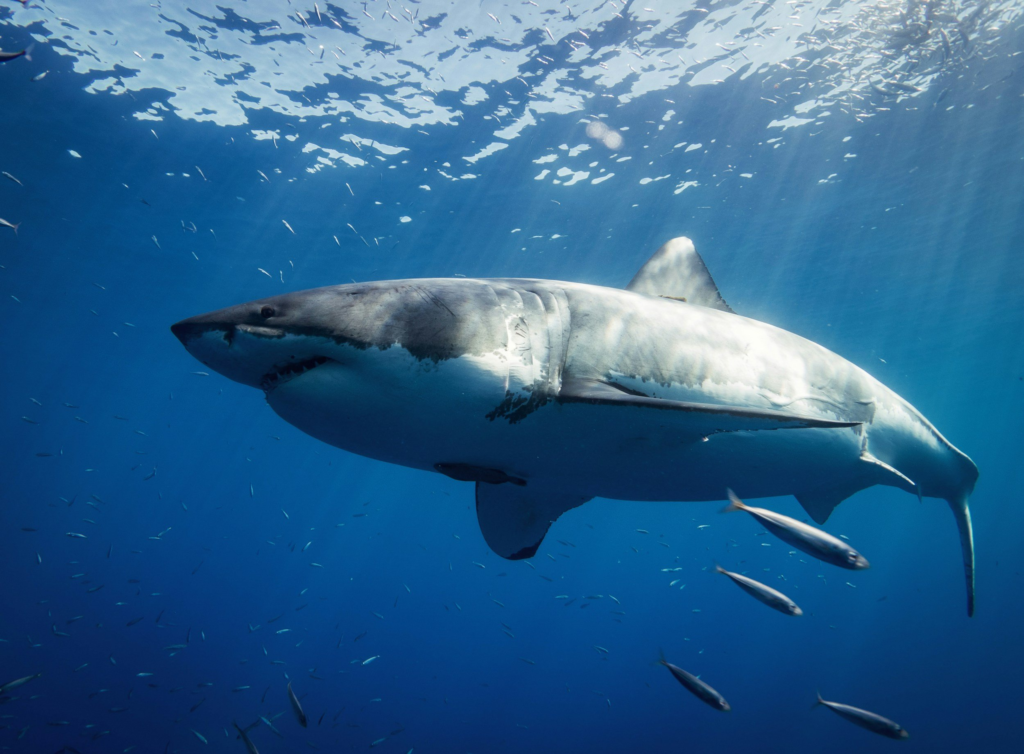
11. Are They the Most Dangerous Shark?
Along with the white shark and the tiger shark, this is one of the three dangerous sharks behind most serious incidents worldwide, linked to more than 100 unprovoked attacks in the International Shark Attack File. They were the likely species behind several of the 1916 Jersey Shore attacks and the historical Sydney Harbour bites.
Here is the honest framing. Shark attacks are extremely rare, and these animals do not hunt people. Bull sharks attack humans far less often than their reputation implies, and what drives the incidents is overlap. They use the shallow, murky, warm water where humans swim, at the times we swim in it, which is a different thing from aggression.
Compare the direction of harm. Humans kill tens of millions of sharks annually. My guide to the most dangerous sea animals is not led by any shark.

12. Vulnerable, and Protected Nowhere
The IUCN reassessed the bull shark species as Vulnerable in 2021, and the trend is decreasing. Many sources still say Near Threatened. That is out of date.
The pressures stack. They are caught unintentionally in fishing nets, targeted for fins destined for shark fin soup and for liver oil, killed in shark nets and drumlines, and squeezed by estuary loss and pollution. Their late maturity means none of that is absorbed quickly.
The detail I find hardest is this: despite being a threatened species, they are not legally protected anywhere across their range. Not one country. Plenty of other species in the same water get more. For context, see Australia’s most threatened animals and how many shark species there are to protect.

Frequently Asked Questions
Kingdom Animalia, Phylum Chordata, Class Chondrichthyes, Order Carcharhiniformes, Family Carcharhinidae, Genus Carcharhinus, Species Carcharhinus leucas. Chondrichthyes is the cartilaginous fish class, so bull sharks sit alongside rays and skates rather than the bony fishes. Carcharhinidae is the requiem shark family, which also holds tiger sharks and blacktips.
They are one of three species, with white sharks and tiger sharks, responsible for most serious bites on people. Whether they lead depends on how you count, since many attacks in murky water are never identified to species. The reason for their reputation is habitat overlap rather than temperament: bull sharks use the shallow warm water where people swim. Fatal encounters remain extremely rare.
No. Bull sharks occur in warm coastal waters worldwide, from Massachusetts to southern Brazil, across west Africa, through the Indian Ocean, and into the Pacific. Australia is simply one of the places they are studied most closely. They also run far up rivers, including the Amazon, Mississippi, Ganges and Zambezi, and hold a resident population in Lake Nicaragua.
Not indefinitely. They tolerate fresh water for long periods, and juveniles may spend years in estuaries and rivers, but maintaining salt balance costs energy. Adults return to the sea to breed and feed. Lake Nicaragua’s population was once thought landlocked; tagging showed those sharks reach the ocean through the San Juan River in about a week.

What I Would Watch For
If you want to see one, do not go looking in clear water. That is the mistake.
They are in the canal, the river mouth, the estuary behind the surf club. The conditions that put them nearshore are warm water, recent rain, and a decent swell, which is also roughly when the fishing gets good. That is not coincidence.
I still have not seen one, and I live somewhere they are common. If you have, tell me in the comments where and what the water was doing.
Bull Shark Biology & Science Quiz
Ten fun study questions covering osmoregulation, bite force, freshwater river records, female maturation age, and conservation status. Test your retention!
Multiple Choice
References:
Habegger, M. L., Motta, P. J., Huber, D. R., & Dean, M. N. (2012). Feeding biomechanics and theoretical calculations of bite force in bull sharks (Carcharhinus leucas) during ontogeny. Zoology, 115(6), 354–364. https://doi.org/10.1016/j.zool.2012.04.007
Lubitz, N., Butcher, P. A., Vianello, P., Barnett, A., Dwyer, R. G., Sheaves, M., & Smoothey, A. F. (2025). Ocean warming increases residency at summering grounds for migrating bull sharks (Carcharhinus leucas). Science of The Total Environment, 992, 179966. https://doi.org/10.1016/j.scitotenv.2025.179966
Reilly, B. D., Cramp, R. L., Wilson, J. M., Campbell, H. A., & Franklin, C. E. (2011). Branchial osmoregulation in the euryhaline bull shark, Carcharhinus leucas: A molecular analysis of ion transporters. Journal of Experimental Biology, 214(17), 2883–2895. https://doi.org/10.1242/jeb.058156
Smoothey, A. F., Niella, Y., Brand, C., Peddemors, V. M., & Butcher, P. A. (2023). Bull shark (Carcharhinus leucas) occurrence along beaches of south-eastern Australia: Understanding where, when and why. Biology, 12(9), 1189. https://doi.org/10.3390/biology12091189