When you hear the word macaw, you likely picture brilliant red, yellow, or blue feathers swooping through the rainforest canopy. These parrots are some of the most recognizable jungle birds. I remember seeing macaws every time I travelled to the south of Mexico as a kid, their bright feathers flashing across the sky in pairs. Over the years, I stopped seeing them in the wild, but it’s still amazing to encounter them in eco parks today.
Macaws aren’t just pretty faces. They are true parrots of the family Psittacidae. This group includes birds known for intelligence, mimicry, and strong social bonds. While they are beloved as popular pets, many wild macaw species face endangerment due to habitat loss and the illegal pet trade.
This article dives deep into the world of macaws. You’ll discover their species, behaviors, and incredible facts. Whether you’re curious about conservation or want a fun macaw fact file, this guide covers everything you need to know.
What Are Macaws?
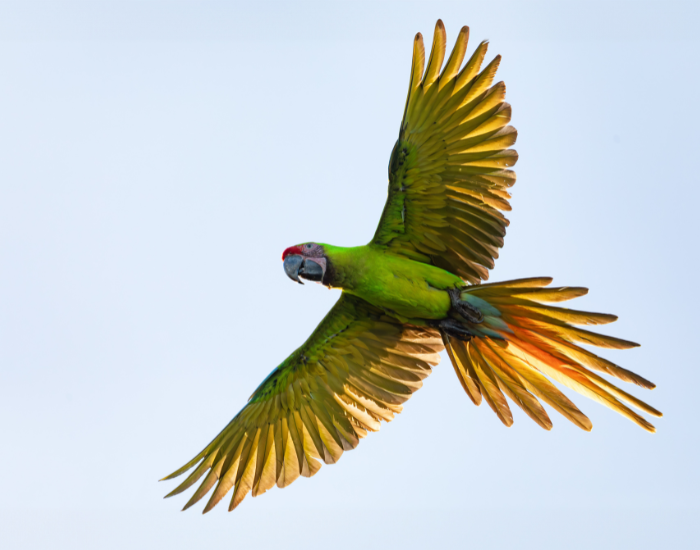
Macaws are large, long-tailed parrots native to Central and South America. They sit in the family Psittacidae alongside other true parrots and the New World parakeets. Cockatoos are not in it: they belong to Cacatuidae, a separate family, which is why a galah or a black cockatoo is a cockatoo and not a parrot in the strict sense.
What sets macaws apart is proportion. Colourful plumage in reds, blues, yellows and greens, most species with strong beaks shaped for nuts and seeds, some over a metre from head to tail, and loud calls that carry across the forest canopy. They are social birds and curious birds both, almost always in pairs or large flocks.
Macaws vs Other Parrots: Key Differences
All macaws are parrots; not all parrots are macaws. Macaw species run larger, with long tails out of proportion to the body and heavier beaks than most other parrots, plus bare facial skin where other parrots have feathers. Beyond that the differences are family resemblances. For the wider picture, see my guide to the types of parrots.
10 Major Macaw Species
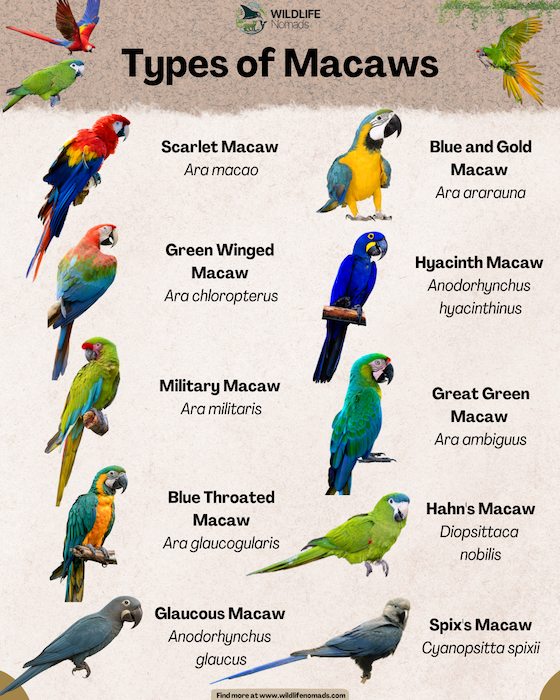
There are about 17 -19 recognized species of macaws alive today. However, several species are extinct in the wild or completely extinct. The range spans from the petite Hahn’s macaw to the massive hyacinth macaw. Let’s explore ten fascinating species in detail.
1. Scarlet Macaw (Ara macao)
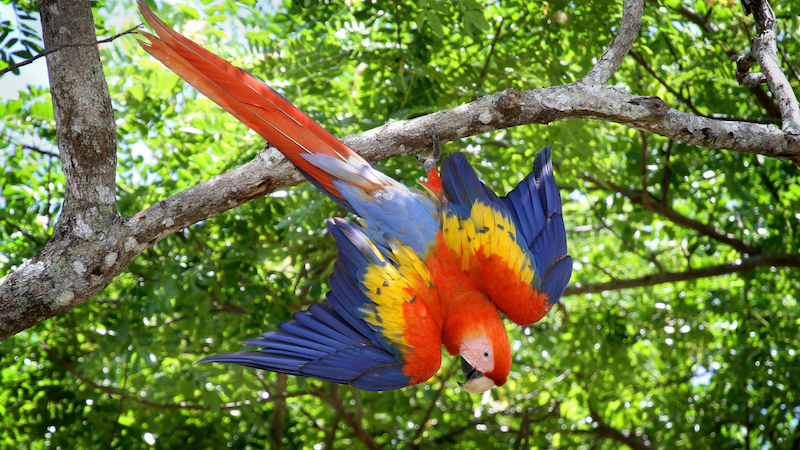
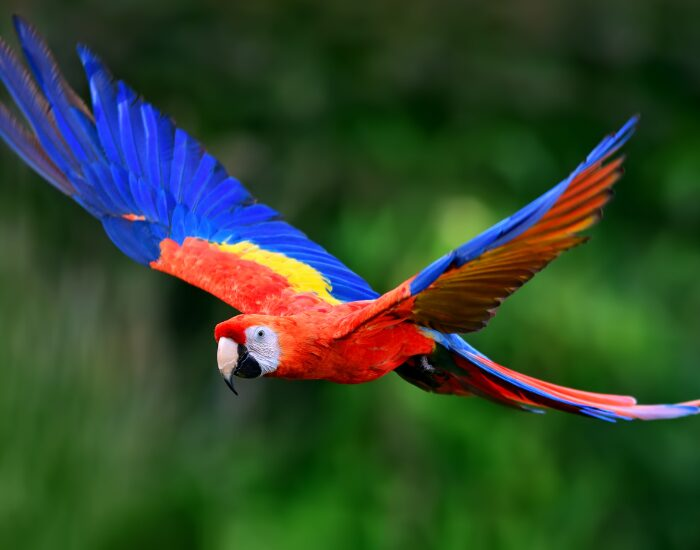
The scarlet macaw displays brilliant red plumage with blue and yellow wings. This makes it one of the most iconic macaw species. These birds inhabit humid lowland rainforests from Mexico to the Amazon basin.
Scarlet macaws form lifelong pair bonds and nest in tree cavities. They feed on nuts and seeds, fruits, and flowers. Their powerful beaks crack even the hardest shells. Wild populations face threats from habitat loss and the pet trade. However, conservation efforts in Costa Rica and Peru show promising results.
Fun fact: Scarlet macaws can live 40-50 years in the wild. In captivity, they often exceed 75 years.
You can meet the scarlet macaw in the emergent layer of my rainforest layers interactive, along with the other animals of the Amazon rainforest.
2. Blue and Gold Macaw (Ara ararauna)
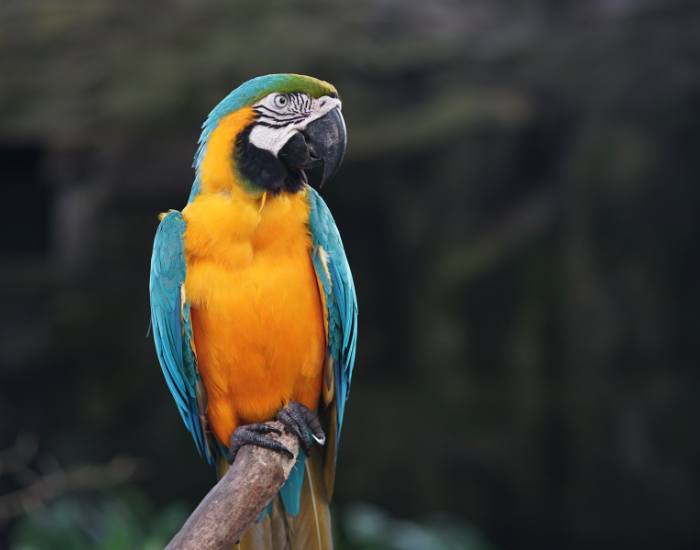
The blue and gold macaw features vibrant blue upperparts and golden-yellow underparts. A distinctive black throat patch and green forehead complete their striking appearance. These macaws live across South America, from Trinidad to Brazil and Bolivia.
Blue and gold macaws prefer tropical forests near rivers and swamps. They nest in dead palm trees, often high above the ground. Their diet consists mainly of palm nuts, seeds, and fruits. These birds are highly social and travel in large flocks.
As popular pets, blue and gold macaws show remarkable intelligence. They mimic human speech effectively and form strong bonds with their owners. Wild populations remain relatively stable compared to other species.
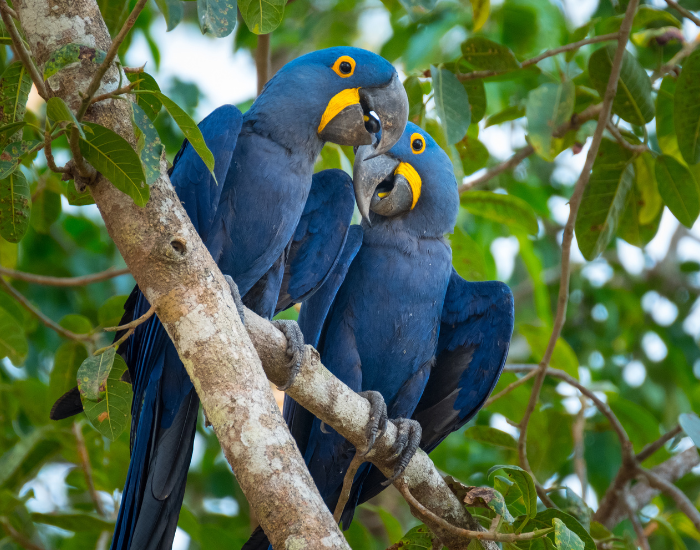
3. Hyacinth Macaw (Anodorhynchus hyacinthinus)
The hyacinth macaw holds the title of the largest parrot in the world. These magnificent birds display deep cobalt blue plumage. Striking yellow eye rings and facial patches create a bold contrast. They inhabit the Pantanal wetlands, cerrado savannas, and palm groves of Brazil.
Hyacinth macaws specialize in eating palm nuts, particularly from acuri and bocaiuva palms. Their incredibly strong beaks generate over 300 pounds of pressure. This allows them to crack the toughest nuts. These macaws nest in tree cavities or cliff faces.
Once critically endangered, hyacinth macaw populations have recovered thanks to conservation efforts. The Hyacinth Macaw Project in Brazil protects nesting sites and works with local communities. Current wild populations number around 6,500 birds.
4. Green Winged Macaw (Ara chloropterus)
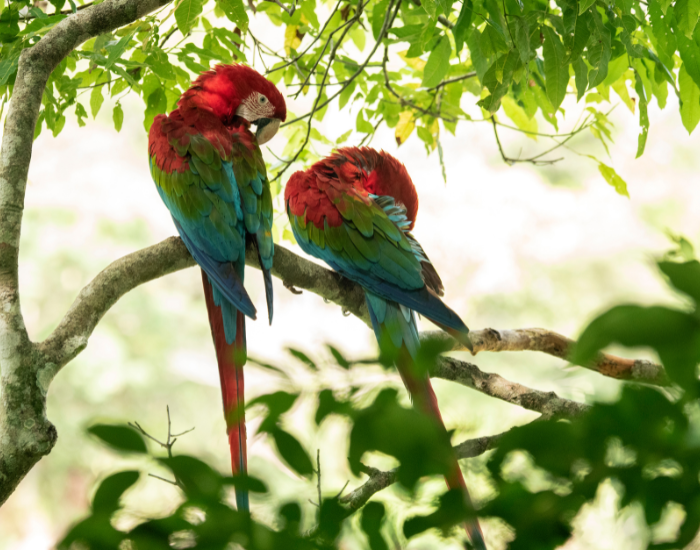
The green winged macaw rivals the scarlet macaw in size. In fact, it’s slightly larger. These birds feature deep red plumage with green wing feathers. Fine red lines pattern their white facial patches. They live in humid forests from Panama to Argentina.
Green winged macaws prefer tall rainforest canopy areas near rivers. They feed on seeds, nuts, fruits, and occasionally flowers. Clay lick visits provide essential minerals. These macaws form strong pair bonds and nest in large tree cavities.
Their calm temperament makes them popular pets among experienced bird keepers. However, their size and needs require substantial commitment. Wild populations face moderate threats from habitat loss.
5. Military Macaw (Ara militaris)
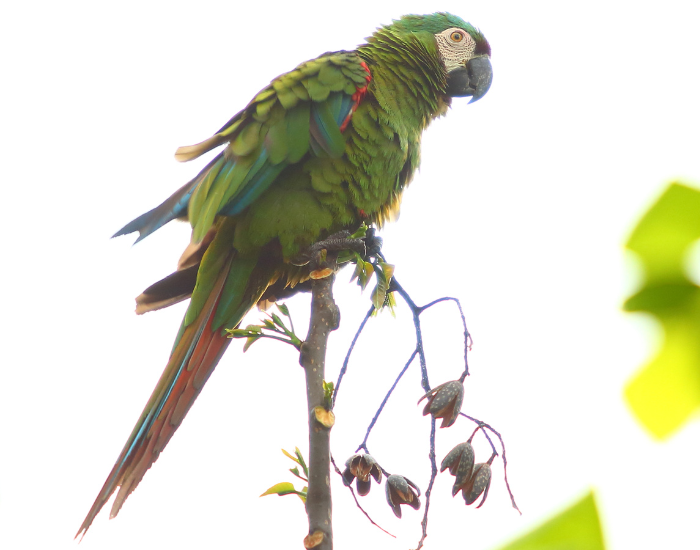
Military macaws display olive-green feathers with a distinctive red forehead. Blue flight feathers and red tail tips add color accents. Their name comes from their resemblance to military green uniforms. These birds inhabit mountainous regions from Mexico to Argentina.
Unlike many macaw species, military macaws prefer dry forests and woodland areas. They nest on cliff faces rather than tree cavities. Their diet includes seeds, nuts, fruits, and agricultural crops. This sometimes brings them into conflict with farmers.
Military macaw populations are declining across their range. Habitat loss and the illegal pet trade pose major threats. Conservation groups work to protect nesting sites and reduce trapping.
6. Great Green Macaw (Ara ambiguus)
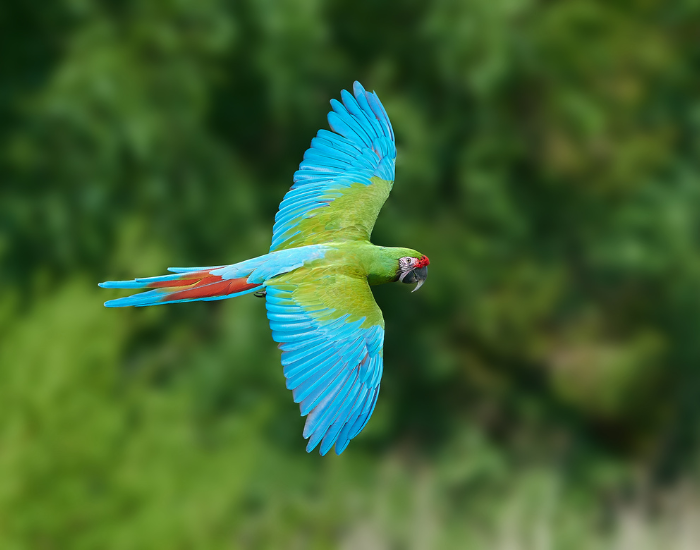
The great green macaw, also called Buffon’s macaw, inhabits Central America and northern South America. These large birds display lime-green plumage with blue wing tips. Red foreheads and blue-tipped tails provide color highlights. They depend heavily on mountain almond trees.
Great green macaws face severe endangerment due to deforestation. Their specialized diet links them closely to specific tree species. When these trees disappear, the macaws struggle to survive. Current populations number fewer than 2,500 birds.
Costa Rica and Ecuador lead conservation efforts for this species. Protecting remaining forest corridors proves crucial. Reforestation programs focus on planting mountain almond trees.
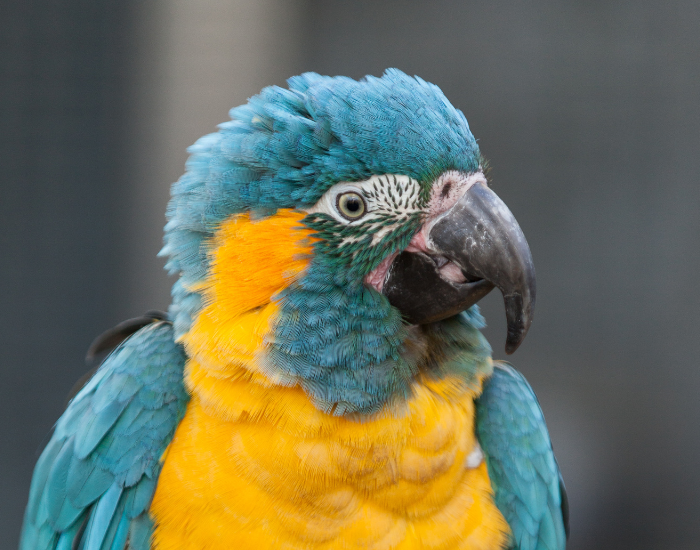
7. Blue Throated Macaw (Ara glaucogularis)
The blue throated macaw lives exclusively in a small region of Bolivia. These stunning birds display turquoise blue plumage with yellow undersides. Unlike blue and gold macaws, they lack a black throat patch. They inhabit palm-dominated savannas and wetlands.
Blue throated macaws nearly went extinct in the wild during the 1990s. Intensive trapping for the pet trade decimated populations. Only about 350-400 birds remain in the wild today. They are critically endangered.
Conservation breeding programs work to increase wild populations. Local communities now protect nesting sites and monitor breeding pairs. Ecotourism provides economic incentives for conservation.
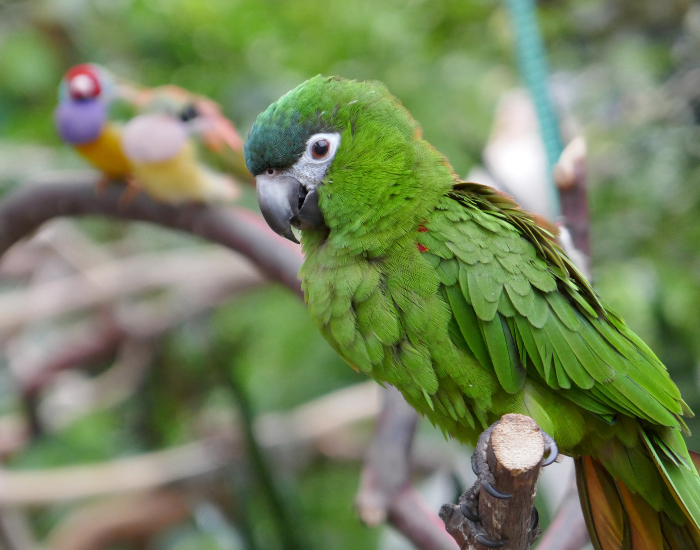
8. Hahn’s Macaw (Diopsittaca nobilis)
Hahn’s macaw is the smallest of all macaw species. Often called the red shouldered macaw, these mini macaws measure only 12 inches long. They display green plumage with blue wing tips. Their small red shoulder patches give them their alternate name.
These birds live in forests and woodlands across northern South America. Unlike larger macaws, Hahn’s macaws adapt well to various habitats. They form large flocks and nest in tree cavities. Their diet includes seeds, fruits, nuts, and flowers.
As popular pets, Hahn’s macaws offer many advantages. Their smaller size makes housing easier. They have playful personalities and can mimic human speech. These birds represent a more manageable option for potential owners.
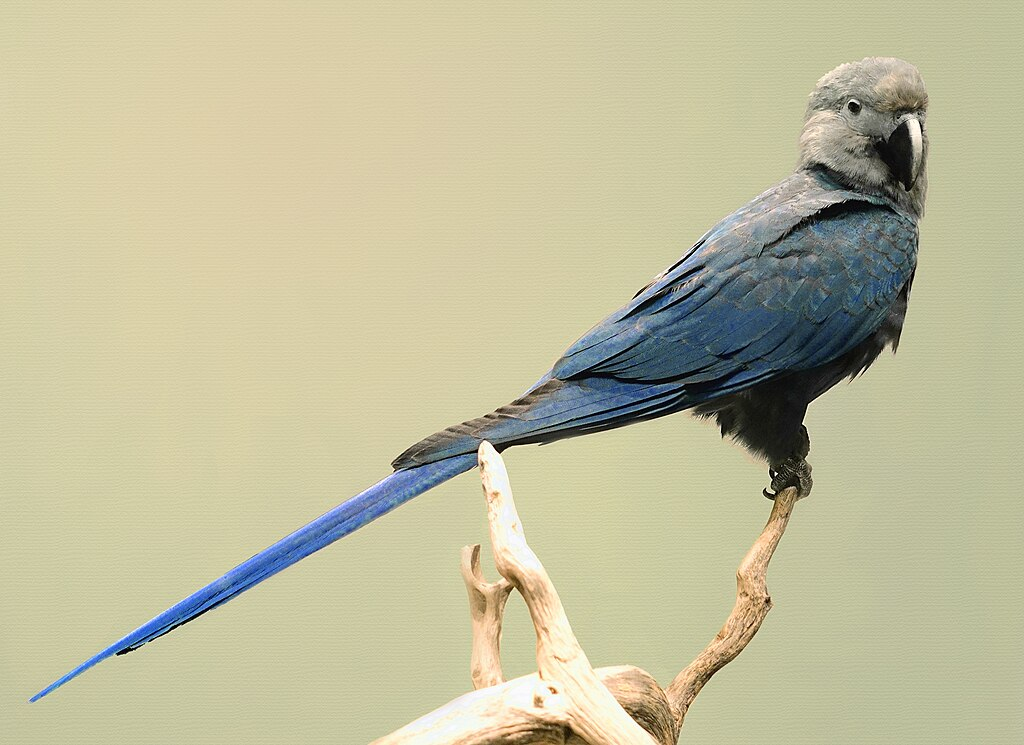
9. Spix’s Macaw (Cyanopsitta spixii)
The Spix’s macaw gained fame from the movie “Rio.” These small blue macaws once lived in northeastern Brazil. They display grayish-blue plumage with darker blue wings and tail. Sadly, they went extinct in the wild around 2000.
Habitat loss and illegal trapping caused their demise. As 2024, reports indicate approximately 360 Spix’s macaws are in captivity worldwide. However, a remarkable conservation story unfolds. Brazilian programs successfully bred captive birds and reintroduced them to the wild.
In 2022, the first Spix’s macaws returned to their native habitat. Conservationists monitor these birds closely. The species remains critically endangered, but hope exists for recovery.
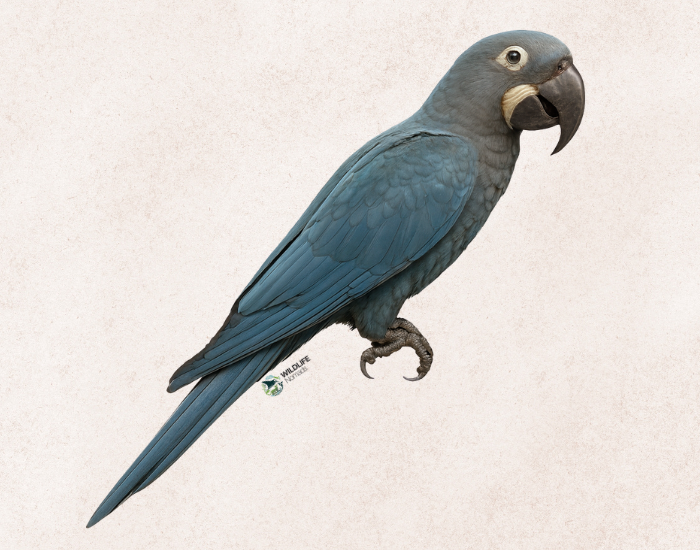
10. Glaucous Macaw (Anodorhynchus glaucus)
The glaucous macaw may already be extinct. These pale blue-gray macaws once inhabited parts of Argentina, Brazil, Paraguay, and Uruguay. They lived along major rivers and fed primarily on palm nuts. The last confirmed sighting occurred in the 1960s.
Several expeditions have searched for surviving birds. Occasional unconfirmed reports surface, but no physical evidence exists. Most experts consider the species extinct. Habitat loss and trapping likely caused their disappearance.
The glaucous macaw’s story serves as a stark reminder. It shows how quickly we can lose remarkable species without protection.
The Other Macaw Species
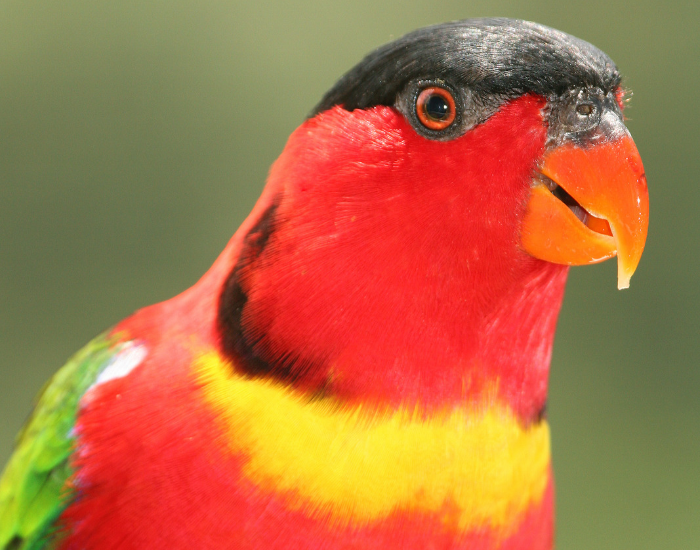
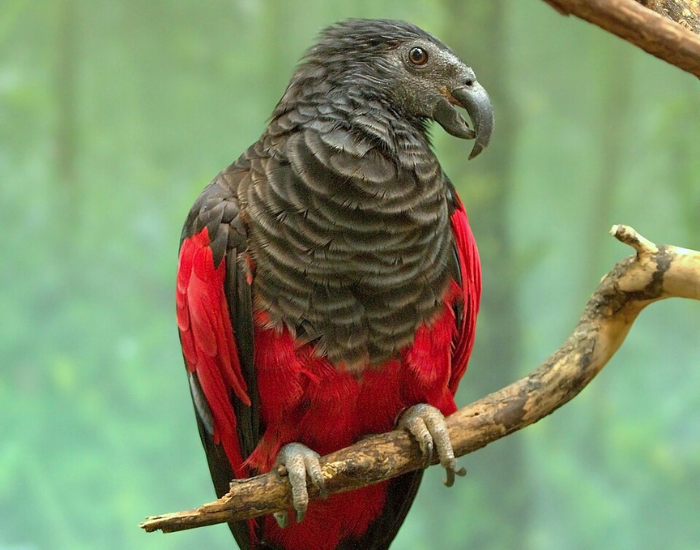
Seven other species sit outside this list, including the severe macaw, the yellow collared macaw and several other mini macaws, each with its own range and conservation picture. Among parrots more broadly, the dracula parrot and the rainbow lorikeet show how far the family’s colour range runs.
More have gone extinct in historical times: the Cuban macaw, the Saint Croix macaw, and others known only from bones and old accounts. Fossil evidence points to a Caribbean macaw fauna that was largely erased before anyone described it.
Macaw Fun Facts: What Makes a Macaw a Macaw
The Beak
A macaw’s beak is a nutcracker with a hinge. The upper mandible curves down over the lower one, which converts jaw muscle into crushing leverage at the tip, and the whole structure is anchored to a skull that can take the load. It is what lets a hyacinth macaw open a palm nut and a scarlet macaw get into a Brazil nut.
Behind the beak sits a thick, muscular tongue that works like a finger, rotating a nut into position while the beak does the work. Watch one eat and the tongue is doing most of the fine control. Long tail feathers run more than half the bird’s total length, large species reach around 3.5 pounds, and hyacinth wingspans approach four feet.
The Brain
Macaws mimic human speech, solve multi-step problems, use objects as tools in the wild and in captivity, and recognise individual people across years. None of that is parlour-trick territory. Smeele and colleagues analysed 133,818 individual parrots across 244 species and found relative brain size correlates consistently with life expectancy, supporting the idea that a bigger brain buys a longer life by solving the problems that would otherwise end it. Macaws sit at the long-lived end of that distribution for exactly this reason. They sit alongside the smartest animals in the world for good reason, and among parrots only the African grey and the kea are better studied.
Social Life
Most macaws pair for life. Bonded birds preen each other, share food and fly close enough that you can read the bond from the ground. A flock runs roughly 10 to 30 birds through the forest canopy, and a large group at a clay lick can be several hundred. Loud calls keep contact across distances where nobody can see anybody, and flock members call warnings when a raptor appears.
Young macaws stay with their parents for up to two years. That is a long apprenticeship for a bird, and it is where they learn which trees fruit when, where the clay licks are, and what a predator looks like. Take a juvenile out of that and you have removed more than one bird.
Why Macaws End Up in Cages
When I was a kid in Mexico an uncle gave me two canaries, one blue, one yellow-green. Both were dead within a year. I understood later that they almost certainly came from unlicensed sources, kept badly before they ever reached us. That is the quiet end of the same trade that empties forests of macaws, and it is worth saying plainly: demand is the mechanism.
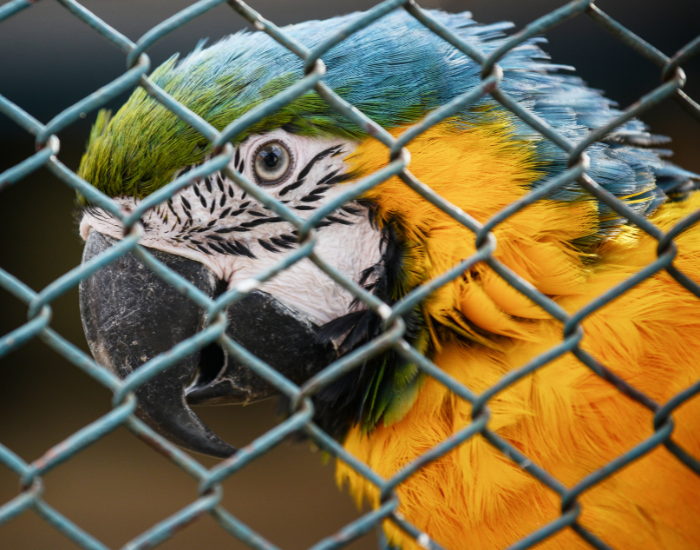
Macaws are expensive because they are rare, long-lived and in demand, and every one of those three makes trapping worth the risk. Birds illegally trapped as nestlings still move through the trade in several countries. Blue throated macaws fell to a few hundred for this reason, and Spix’s macaw went extinct in the wild for the same one. The large species are listed on CITES Appendix I, which bans commercial international trade, and the pressure has not stopped.
If you want a macaw, buy from a breeder who can document the bird’s parentage, and expect a commitment measured in decades. If you want to help the wild ones, support the organisations doing nest protection and community work in Bolivia, Brazil and Costa Rica. More on the species in trouble in endangered birds.
FAQs About Macaws
A flock. In the wild, flocks can number in the hundreds, and clay lick gatherings in Peru regularly draw over 500 birds of mixed species.
A strong curved beak where the upper mandible closes over the lower, creating leverage for cracking hard shells. A muscular tongue positions the nut while the beak crushes it.
Hahn’s macaws are usually named first, being smaller and adapting well to life with people. Blue and gold macaws are affectionate too, with considerably more volume.
Yes. Feral blue and gold macaws breed in Miami, descended from escaped pets, with small populations in other southern cities.
Many can, and blue and gold macaws are the best at it. Ability varies a lot between individuals, and training matters more than species.
Macaw Species & Science Challenge 🦜
Ten fun photo-based True/False and Multiple Choice questions to test what you’ve learned about the world’s most iconic parrots!
Multiple Choice
Watch Them in Pairs
Find wild macaws and the first thing you notice is that they come in twos. Once you see it you cannot stop seeing it, and it tells you more about the bird than the colour does.
Macaws are seed dispersers, forest indicators and the reason a lot of people care about rainforests at all. They are also easy to trap and slow to recover. Protecting the forest is the whole of the job. If you get the chance to see them wild, go, and go with an operator who keeps their distance from nests. More birds worth the trip in my guide to jungle birds, the birds of Mexico, the wider types of birds guide and the best bird watching destinations to plan around.
References:
Brightsmith, D. J., Hobson, E. A., & Martinez, G. (2018). Food availability and breeding season as predictors of geophagy in Amazonian parrots. Ibis, 160(1), 112–129. https://doi.org/10.1111/ibi.12515
Purchase, C., Lugarini, C., Purchase, C., Ferreira, A., Vercillo, U. E., Stafford, M. L., & White, T. H. (2024). Reintroduction of the Extinct-in-the-Wild Spix’s Macaw (Cyanopsitta spixii) in the Caatinga Forest Domain of Brazil. Diversity, 16(2), 80. https://doi.org/10.3390/d16020080
Smeele, S. Q., Conde, D. A., Baudisch, A., Bruslund, S., Iwaniuk, A., Staerk, J., Wright, T. F., Young, A. M., McElreath, M. B., & Aplin, L. M. (2022). Coevolution of relative brain size and life expectancy in parrots. Proceedings of the Royal Society B, 289(1971), 20212397. https://doi.org/10.1098/rspb.2021.2397
Tella, J. L., Baños-Villalba, A., Hernández-Brito, D., Rojas, A., Pacífico, E., Díaz-Luque, J. A., Carrete, M., Blanco, G., & Hiraldo, F. (2015). Parrots as overlooked seed dispersers. Frontiers in Ecology and the Environment, 13(6), 338–339. https://doi.org/10.1890/1540-9295-13.6.338
Vergara-Tabares, D. L., Cordier, J. M., Landi, M. A., Olah, G., & Nori, J. (2020). Global trends of habitat destruction and consequences for parrot conservation. Global Change Biology, 26(8), 4251–4262. https://doi.org/10.1111/gcb.15135
Young, A. M., Hobson, E. A., Bingaman Lackey, L., & Wright, T. F. (2012). Survival on the ark: Life-history trends in captive parrots. Animal Conservation, 15(1), 28–43. https://doi.org/10.1111/j.1469-1795.2011.00477.x