Meet The Diversity of Texas’s Birds
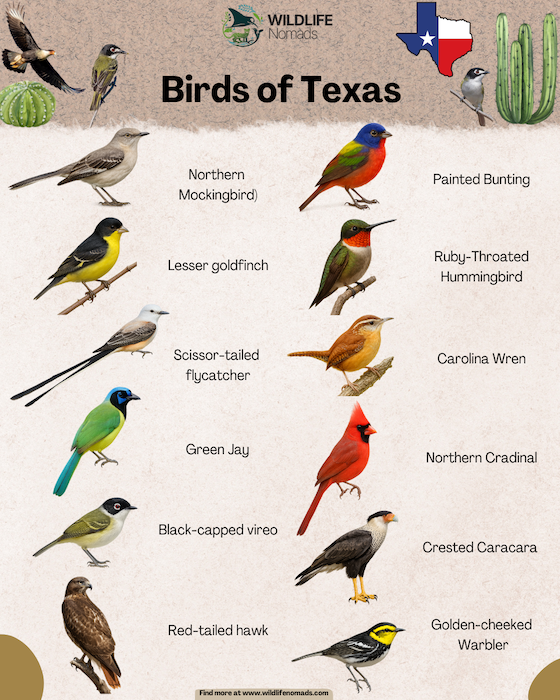
What do you know about Texas? If you are not from the U.S., you may think of Texas as a massive desert, which in a way, it is true, but the reality is that Texas is a birdwatcher’s dream, if you know where to look.
With more than 600 species recorded, the Lone Star State is one of the most diverse birding destinations in all of North America. From the pine forests of East Texas to the dry scrublands of the south, every corner of the state has its own unique birdlife waiting to be discovered.
Birds here adapt to just about every environment you can imagine, oak woodlands in the Hill Country, sprawling coastal marshes, desert landscapes, and even bustling urban neighbourhoods. Many of these native birds have such distinctive traits that once you learn them, you’ll start recognizing species almost instantly. And knowing a little about their seasonal patterns, feeding habits, and favorite habitats makes every birding trip feel more rewarding.
What makes Texas even more special is its position at the crossroads of major migratory flyways. In spring and summer, waves of travellers from the north join the year-round residents, turning the skies and trees into a living festival of wings and song. Even right at home, backyard bird feeders often become mini nature shows, bringing bright flashes of color and curious behaviors up close for anyone who takes the time to watch.
The Northern Mockingbird: Texas’s Official State Bird
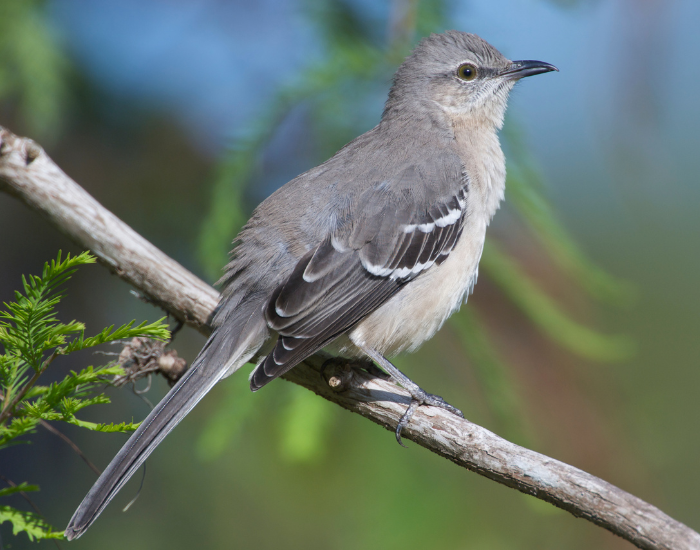
If there’s one bird that embodies the spirit of Texas, it’s the northern mockingbird. Chosen as the state’s official bird, it’s not just a symbol, it’s a performer. Mockingbirds are master mimics, capable of weaving together a playlist of over 150 songs borrowed from other birds, insects, and even mechanical sounds. Picture a male perched proudly on a fencepost at dawn, belting out his medley to defend his patch of land, his voice carrying across fields, towns, and city neighborhoods alike.
These birds thrive everywhere in Texas, from the heart of bustling cities to quiet country backroads. They’re fiercely territorial during the breeding season, which stretches from early spring through the heat of summer. If you wander too close to their nests hidden in shrubs or low trees, you might find yourself scolded or even dive-bombed by a bold parent defending its brood.
In flight, mockingbirds flash white wing bars and tail patches, field marks that make them instantly recognizable. On the ground, they forage with sharp-eyed precision, snapping up insects and fruit. You won’t often see them at bird feeders, but rest assured, they benefit from the insect buffet those feeders attract. Intelligent, adaptable, and endlessly entertaining, the mockingbird feels like Texas itself, resilient, bold, and full of song.
The Yellow-Breasted Chat: A Hidden Gem
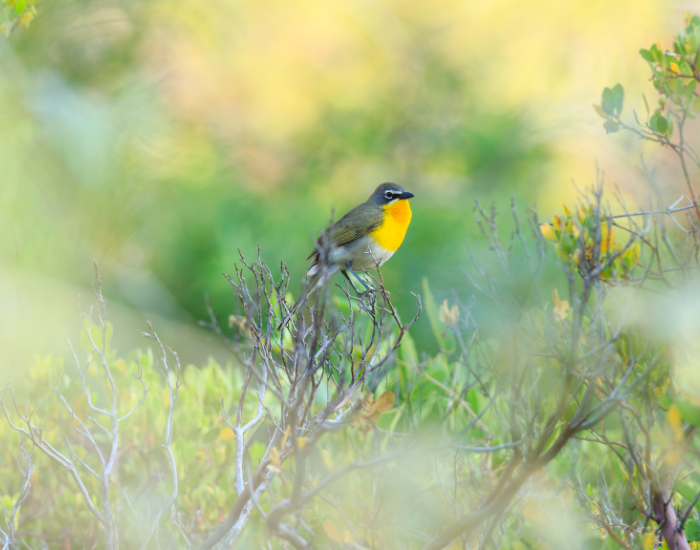
On the other end of the spectrum is a bird you’ll rarely see but never forget: the yellow-breasted chat. These secretive songbirds slip quietly through thickets and dense brush, flashing a blaze of golden yellow when they catch the light. For many birders, finally spotting one feels like striking gold.
Chats prefer riparian corridors, overgrown fields, and scrubby woodland edges across Texas. But while they may hide in the shadows, their voices give them away. Their songs are a wild mash-up of whistles, clicks, and clucks, sometimes delivered midair during dramatic flight displays. Males rise above the vegetation, wings fluttering, pouring out their eccentric music for all who care to listen.
These birds ask little of us, just patches of untrimmed shrubs and natural brush where they can hunt insects and spiders in peace. They’re living pest control, flitting through the greenery, unseen but always at work. For patient birdwatchers, the key to finding a chat is not your eyes but your ears: follow that odd, jumbling chorus, and you just might glimpse the yellow flash of one of Texas’s most intriguing songbirds.
Lesser Goldfinch: A Colorful Seed-Eater
Few sights brighten up a Texas morning like a flock of lesser goldfinches. The males, dressed in yellow underparts with glossy black caps and backs, look like little bursts of sunlight darting across fields and gardens. Females wear more subtle olive-green and yellow, but together, these tiny birds bring color and movement wherever they go.
Goldfinches are true seed specialists. In the wild, they flock to patches of native wildflowers and weedy fields, hanging upside down with acrobatic ease to pick out seeds. Around homes, they’re frequent visitors at feeders stocked with thistle or nyjer seed, especially if the feeders are placed near natural cover. Watching a dozen of them cling and feed at once is like seeing a living, fluttering bouquet.
During nesting season, pairs build delicate cup-shaped nests tucked into shrubs and trees, lining them with soft plant fibers. With their cheerful songs and flocking habits, lesser goldfinches remind us how important even the smallest birds are to the tapestry of Texas’s ecosystems.
Painted Bunting: Nature’s Masterpiece
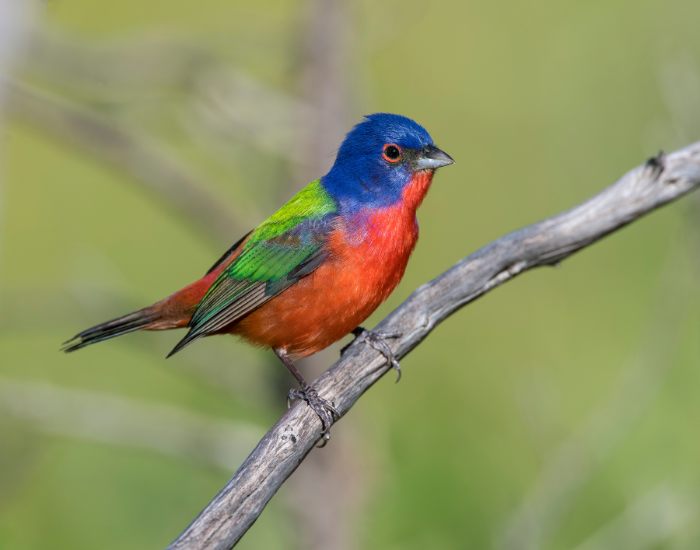
Ask any birder about the most beautiful bird in North America, and chances are they’ll mention the painted bunting. Males are nothing short of breathtaking, ruby-red bellies, emerald-green backs, and cobalt-blue heads combine in a dazzling display that looks painted by hand. To see one perched in the brush of South or Central Texas is an unforgettable moment, even for seasoned birdwatchers.
Females and young birds wear soft olive-green plumage, perfectly camouflaged against dense vegetation. While less showy, they play just as vital a role in the species’ survival, quietly nesting and raising the next generation. These birds thrive in brushy areas, woodland edges, and even suburban gardens with the right native plants for food and cover.
Feeders filled with small seeds can sometimes tempt painted buntings closer, especially during migration. But their future depends more on habitat protection than backyard feeding. Loss of brushy habitat and the added challenge of cowbird parasitism continue to pressure their populations. Still, each summer, when brilliantly colored males arrive to claim territories and sing from the treetops, they remind us why conservation matters, for without healthy landscapes, even nature’s masterpieces could fade away.
Carolina Wren: A Year-Round Vocalist
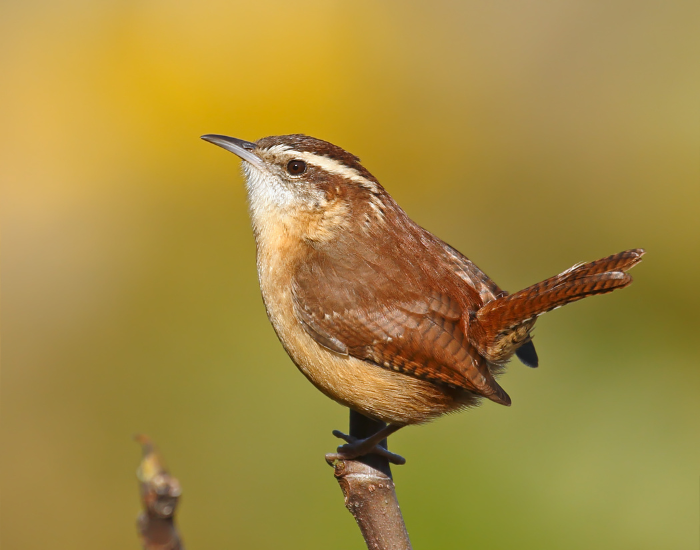
The carolina wren represents one of the most vocal birds from texas, singing throughout the year with loud, musical phrases. These energetic texas birds explore gardens, woodlands, and urban areas with their tails cocked upright and constant activity. Carolina wren populations remain stable throughout texas, adapting well to human-modified landscapes.
Carolina wren identification features include warm brown upperparts, white or buff underparts, and distinctive white eyebrow stripes. These curious birds in texas investigate brush piles, woodpiles, and garden structures while searching for small invertebrates and spiders. Their strong feet and long toes help them navigate complex vegetation and feeding areas.
Bird feeders attract carolina wren when stocked with suet, mealworms, and small insects. These adaptable birds often nest in unusual locations including mailboxes, planters, and outdoor equipment. Carolina wren pairs maintain territories year-round and may raise multiple broods during the extended breeding period.
Blue Jay: An Intelligent Corvid
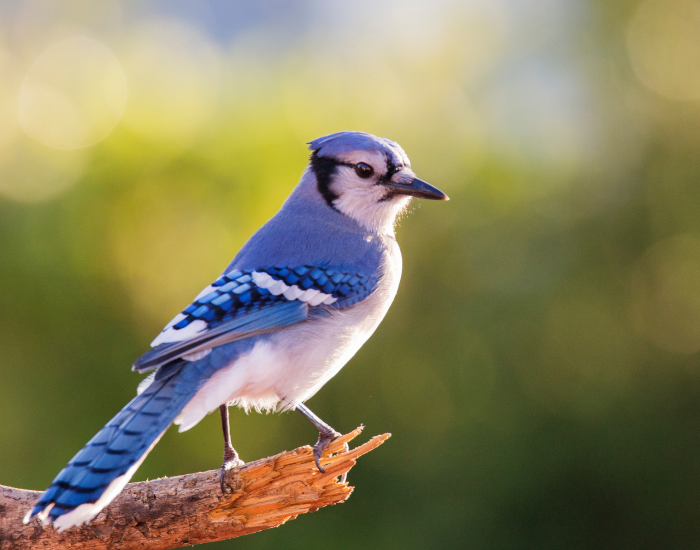
Brilliant, noisy, and undeniably clever, the blue jay is one of Texas’s most iconic corvids. That splash of vivid blue with a sharp crest makes them impossible to miss, but it’s their intelligence and antics that leave the biggest impression.
Blue jays thrive in woodlands and suburbs alike, where they show off remarkable problem-solving skills. Watch a jay at a feeder and you might see it testing ways to crack a seed or slyly carrying one off to hide for later. They’re famous food cachers, stashing peanuts or corn in dozens of secret spots, and somehow remembering them all.
Their social lives are just as complex. Jays use an array of calls to warn others of predators or coordinate mobbing behavior against owls and hawks. Family bonds run deep, with young birds sometimes staying on as helpers to defend territory and feed the next brood. With their mix of beauty and brains, blue jays are the mischievous geniuses of the Texas bird world.
Ruby-Throated Hummingbird: A Tiny Jewel
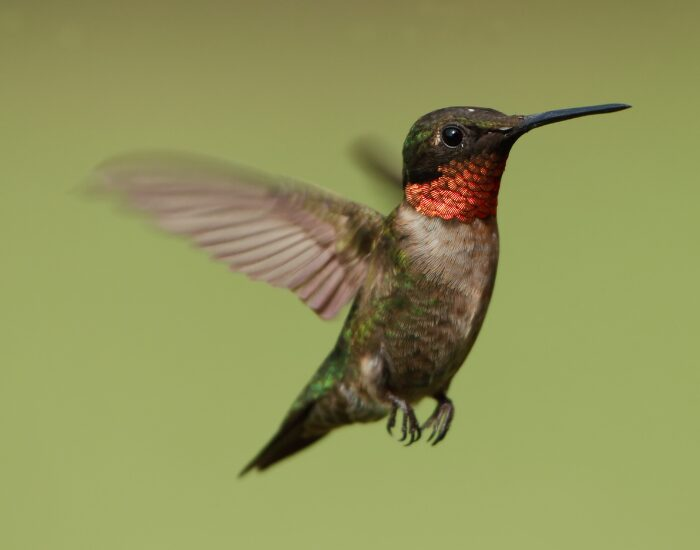
From all hummingbirds, the ruby-throated hummingbird is quite special. The males’ throats flash with iridescent scarlet when the light hits just right, while females wear subtler greens and whites. Despite their delicate appearance, these tiny birds are astonishing athletes, capable of hovering, darting, and even flying backward.
In Texas, ruby-throats are most common in the east, especially during spring and fall migrations when they funnel through on their way to and from Central America. Some stick around to breed, weaving nests no bigger than a walnut, bound together with spider silk and camouflaged with lichen.
Backyard feeders are a lifeline during migration. A simple 4:1 mix of water and sugar draws them in, but the real key is fresh nectar and clean feeders. Though small, they defend their feeding territories with fierce determination, chasing off rivals with buzzing dives. Planting native flowers ensures these winged jewels have a natural food source too. Watching them zip and hover from bloom to bloom is pure magic, proof that even the tiniest creatures can capture the biggest awe.
Northern Cardinal: A Backyard Favorite
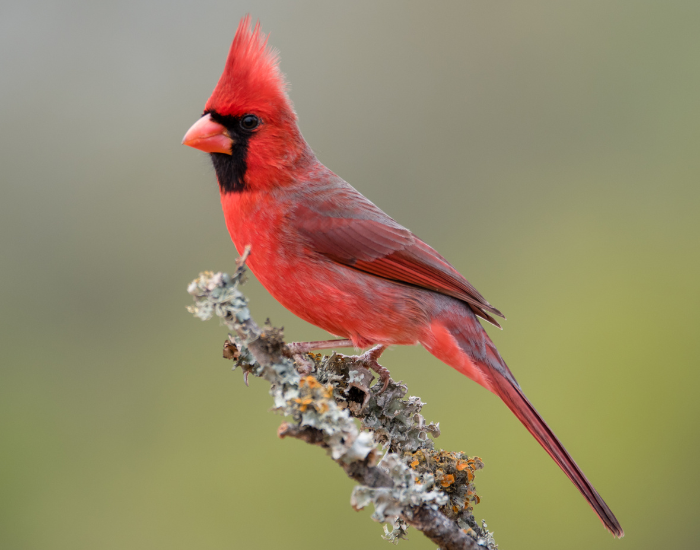
The northern cardinal ranks among the most beloved birds from texas, with brilliant red adult males creating stunning contrasts against green vegetation. These non-migratory texas birds remain in territories year-round, providing consistent color and activity for suburban birdwatchers. Northern cardinal pairs maintain strong bonds and often feed together at bird feeders.
Northern cardinal females display warm brown coloration with red tinges on wings, tails, and crests. These popular birds in texas prefer areas with dense vegetation, shrubs, and trees that provide cover and nesting sites. Bird feeders stocked with sunflower seeds consistently attract northern cardinal to residential areas.
Northern cardinal breeding plumage remains constant throughout the year, with males displaying the same brilliant red coloration in all seasons. These birds build nests in dense vegetation where females incubate eggs while males defend territories. Young cardinals display brown plumage similar to females until males develop adult coloration.
Cedar Waxwing: An Elegant Fruit-Eater
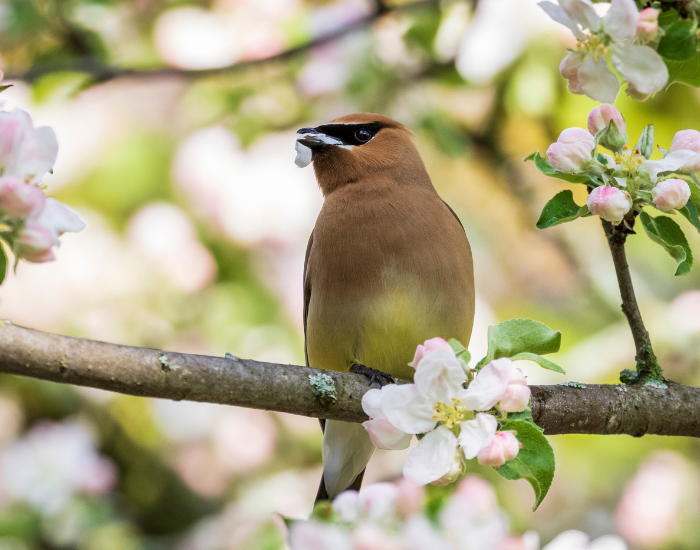
Few winter visitors are as graceful as the cedar waxwing. These sleek, silky birds arrive in Texas in flocks, their soft brown plumage accented by bright yellow tail tips and tiny, waxy red droplets on their wings. Watching a flock descend on a fruiting tree is like witnessing a choreographed performance, birds lined up neatly along branches, passing berries from beak to beak with quiet precision.
With their crested heads and sharp black masks, waxwings look as stylish as they behave. They rarely bother with feeders, preferring landscapes rich in native hollies, cedar trees, and sumacs. Their nomadic nature means they follow the fruit, breeding whenever and wherever food is abundant rather than by the calendar. Spotting them often feels like a gift from chance, a flock appearing suddenly, stripping a tree of berries, and moving on just as quickly.
House Finch: The Backyard Regular
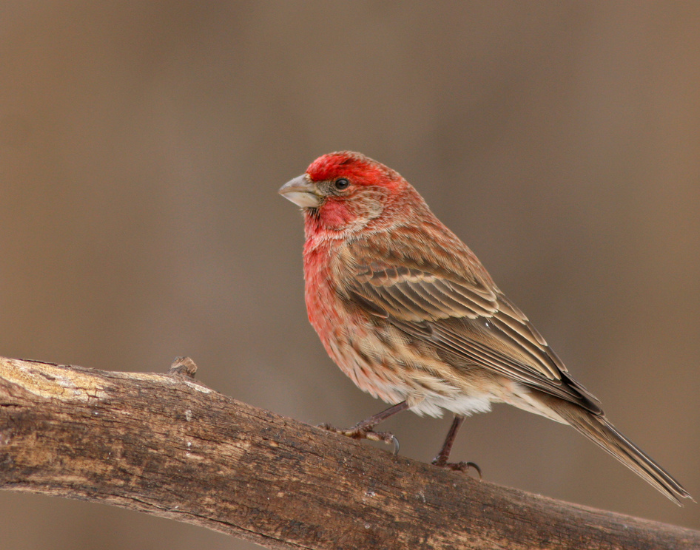
Where cedar waxwings are elegant wanderers, the house finch is the familiar neighbor. Common across Texas suburbs and cities, these small, cheerful birds have adapted beautifully to human spaces. The males, with their varying shades of rosy red on the head, chest, and rump, stand out against the streaky browns and grays of the females. Together, they bring a splash of life to even the most ordinary backyard.
House finches are loyal visitors to feeders, especially when sunflower or millet seeds are on the menu. They’re resourceful nesters too, tucking cup-shaped homes into hanging plants, ledges, and thick shrubs around homes and gardens. In the non-breeding season, they gather in noisy flocks, foraging in weedy fields or crowding around seed feeders, filling the air with chatter and song.
From March through late summer, pairs may raise multiple broods, with males often singing sweet warbles from rooftops and power lines. While unassuming compared to Texas’s flashier species, the house finch has earned its place as one of the state’s most endearing companions, always nearby, always singing, and always at home in our shared spaces.
American Goldfinch: A Seasonal Color-Changer
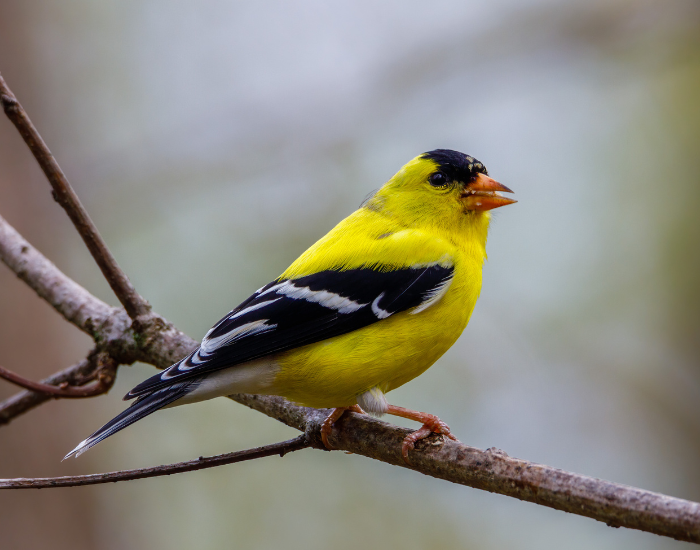
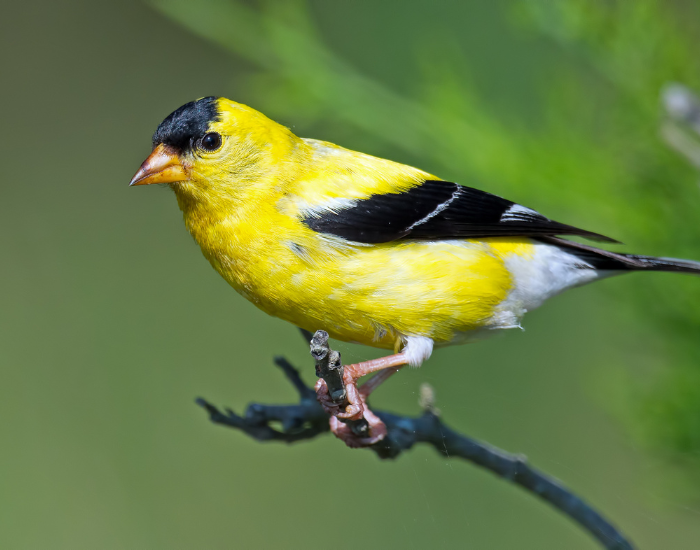
The American goldfinch is a little marvel of transformation. In winter, males wear muted olive-green plumage, blending easily into fields and shrubs. But come breeding season, they burst into bright yellow, topped with a bold black cap and striking wings and tail. It’s as if the bird itself carries a touch of sunshine into the Texas landscape.
Goldfinches flock to thistles, sunflowers, and other seed-producing plants, and in winter their numbers swell as northern migrants join local populations. Watching them hang upside-down to pick seeds—whether from wildflower heads or from a feeder—is always a delight. Females keep their olive and yellow tones year-round, adding subtle beauty alongside the males’ flash.
For backyard birders, tube-style feeders stocked with nyjer or thistle seed are the best way to attract these acrobatic visitors. Goldfinches often nest later than most songbirds, waiting for the summer peak of seed abundance to raise their broods. It’s a strategy that makes them perfectly in sync with the rhythms of the land.
Prothonotary Warbler: A Golden Swamp Dweller
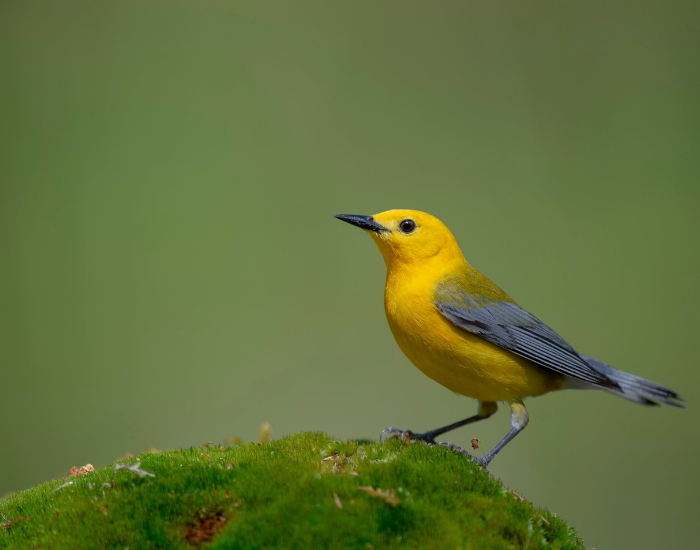
Adult males display golden yellow heads and underparts with olive green backs and blue wings. These beautiful birds prefer habitats with floating vegetation, small ponds, and mature trees near water.
Prothonotary warbler populations inhabit east texas bottomland forests where they nest in tree cavities near water. These texas birds demonstrate site fidelity, returning to the same general areas each breeding period. Adult males establish territories through persistent singing from prominent perches throughout wooded areas.
Prothonotary warbler conservation requires protecting riparian forests and maintaining water quality in breeding areas. These native birds of texas face threats from habitat loss and competition for nest cavities. Bird-friendly plants that provide insects and nesting materials support prothonotary warbler populations in suitable habitat.
Regional Variations and Seasonal Patterns
Texas display distinct regional preferences based on habitat requirements and climate conditions. East texas pine and hardwood forests for example support different species than the hill country oak woodlands or south texas brush country. Central texas serves as a transition zone where eastern and western species overlap, creating exceptional birding diversity.
Seasonal patterns significantly influence texas birds populations throughout the year. Winter visitors from northern regions arrive in late july and remain through early march, dramatically increasing local bird diversity. Breeding period activities peak from March through August when resident species establish territories and raise young.
Migration timing varies among texas birds with some species passing through quickly while others remain for extended periods. Early march marks the beginning of major spring migration when many species move north to breeding grounds. Understanding these patterns helps birdwatchers plan optimal viewing opportunities throughout the texas birding year.
Creating Bird-Friendly Habitats
Attracting birds requires understanding their habitat needs and providing appropriate resources. These where wildlife friendly gardens come into the picture. Bird feeders should offer varied seed types to accommodate different species preferences, while hummingbird feeders provide nectar sources for tiny visitors. Dense vegetation creates nesting sites and cover that native birds of texas require for successful reproduction.
Bird-friendly plants native to texas provide natural food sources including seeds, fruits, and insects that support diverse bird populations. Trees offer nesting sites, roosting areas, and foraging opportunities for various species. Small ponds and water features attract birds while providing drinking and bathing opportunities.
Maintaining pesticide-free environments protects birds from chemical poisoning while preserving insect populations that serve as important food sources. Dense vegetation areas should include native shrubs and trees that provide year-round cover and food resources. Urban areas can support surprising diversity when appropriate habitat elements are provided.
Conservation Challenges and Solutions for The Birds of Texas
Native birds of texas face numerous challenges including habitat loss, climate change, feral cats, and invasive species competition. This could threat them and put many birds on the endangered list in the region in the future. Urban development eliminates natural habitats while agricultural practices alter landscapes that historically supported diverse bird communities. Many species require large territories or specific habitat conditions that become increasingly fragmented.
Species monitoring programs track population trends and identify conservation priorities for texas birds. Research reveals habitat requirements and migration patterns that inform management decisions. Education programs help residents understand how to support birds from texas through appropriate landscaping and feeding practices.
Frequently Asked Questions
While no bird species exists exclusively in texas, the state hosts several native birds of texas with limited ranges. The golden-cheeked warbler breeds primarily in texas hill country and represents one of the most restricted species geographically. Texas birds like the black-chinned hummingbird reach their easternmost range limits in the state.
The northern mockingbird serves as texas’s official state bird, representing the state since 1927. This adaptable species thrives throughout texas and demonstrates the vocal abilities and resilience associated with the Lone Star State. Northern mockingbird populations remain stable and visible in both urban areas and natural habitats.
Texas hosts over 600 recorded bird species, though the number of truly native birds of texas varies depending on classification criteria. Approximately 300-400 species breed regularly in texas or utilize the state as critical habitat during migration. The diversity of texas birds reflects the state’s varied ecosystems and geographic position.
Several species rank among the rarest birds from texas, including the ivory-billed woodpecker (possibly extinct) and whooping crane (critically endangered). The golden-cheeked warbler and black-capped vireo represent endangered native birds of texas with very restricted breeding ranges. Rarity can vary based on regional populations and seasonal occurrence patterns.
Multiple texas birds display yellow chest coloration, including the yellow-breasted chat, lesser goldfinch, and american goldfinch. Adult males of these species show the most pronounced yellow coloration, particularly during breeding plumage periods. Prothonotary warbler males also display brilliant yellow underparts in appropriate habitats.
Yellow-breasted bird texas species include various warblers, finches, and other songbirds with yellow underparts. The yellow-breasted chat specifically refers to the largest North American warbler species. Lesser goldfinch, american goldfinch, and several warbler species also display yellow breast coloration among birds from texas.