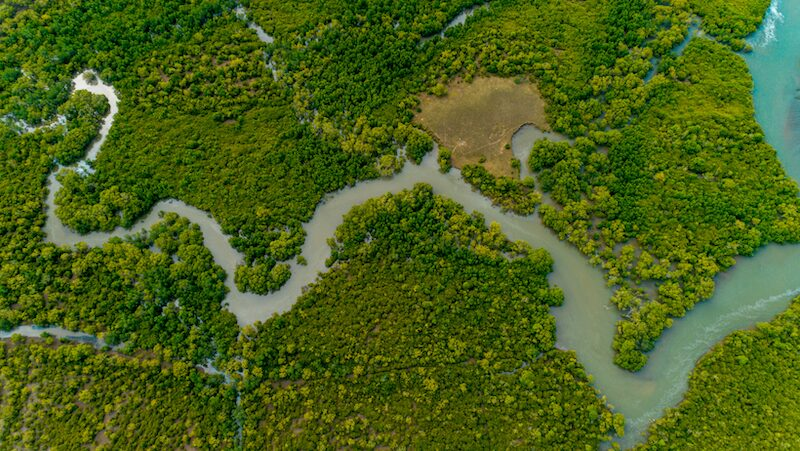
Nobody had told us about Urunga. I picked it from a few photos on Google Maps and expected a quick fuel stop.
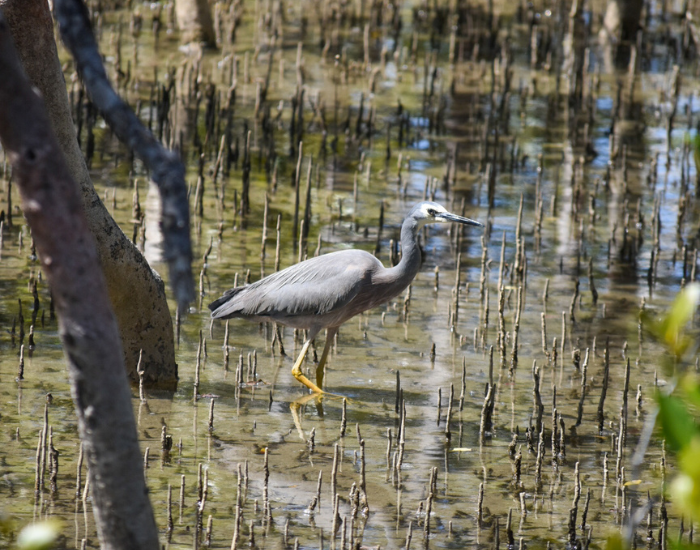
Instead, we found crystal-blue tidal water sliding through mangroves under a clear sky. A white-faced heron flew over our heads, landed in the roots and began to hunt. I wrote about that stop in my guide to the animals of Urunga and Nambucca Heads.
Back home on the Gold Coast, I also regularly kayak the canals between mangrove-lined banks. At Coombabah Lakelands on the Gold Coast, sand flies near the water’s edge ate me alive twice. In Queensland, I’ve also watched mud crabs in the mangrove mud.
Those muddy, buggy forests are some of the hardest-working coastal ecosystems on Earth. Below are 12 reasons why mangroves are so important, checked against the latest 2026 science.
🌿 How well do you know mangroves?
Twelve questions on roots, nurseries, storms and blue carbon. Read on, then test yourself at the end.
Jump to the quiz ↓What Are Mangroves?
Here is the simple mangrove definition. A mangrove is a tree or shrub that grows in salt water or brackish water on tropical coasts. Together, these tropical trees form mangrove forests, also called mangrove swamps.
Want a quick mangroves description? Picture trees and shrubs standing with their roots in the tide. They belong to the wider group of coastal wetlands, alongside salt marshes and seagrass meadows.
So what is mangrove as a word? It likely comes from the Spanish mangle, borrowed from the Taíno language of the Caribbean. That Spanish mangle lives on in the red mangrove’s scientific name, Rhizophora mangle.
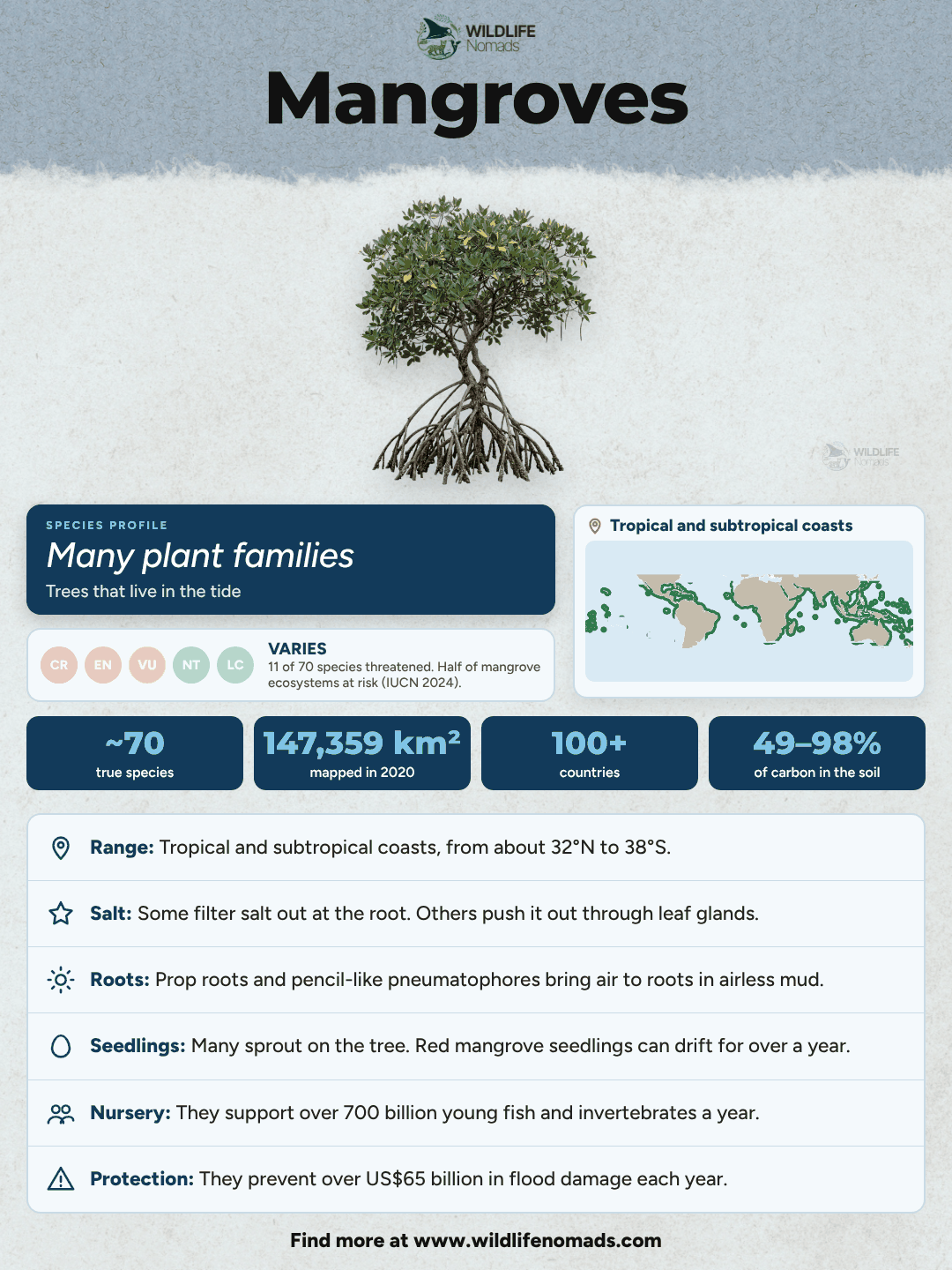
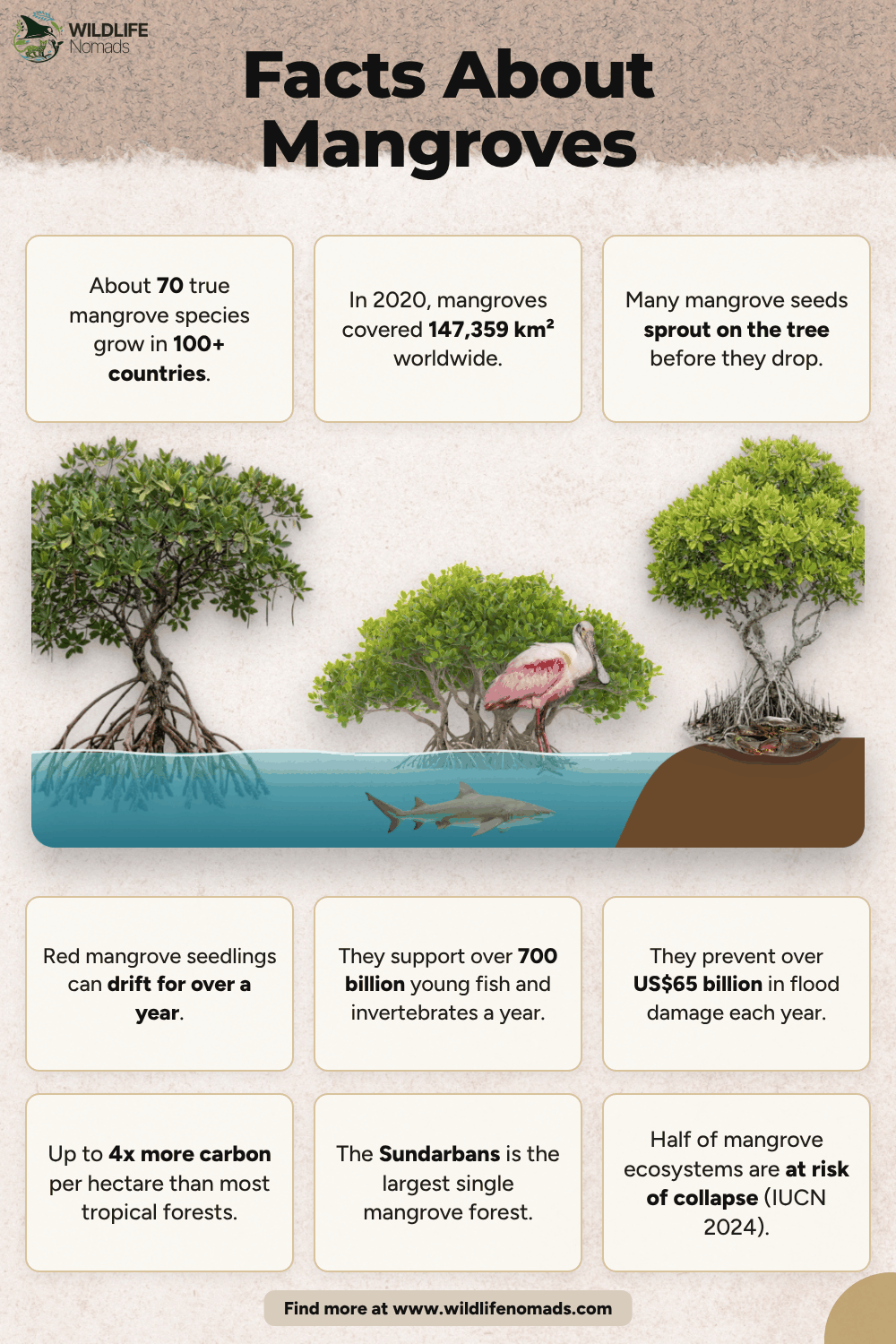
Importantly, “mangrove” is not one family. It is a lifestyle shared by unrelated plant species that evolved the same tricks. In other words, a mangrove plant is defined by where it lives, not by its family. Scientists recognise about 70 true mangroves, plus many associated shrubs, ferns and palms.
Mangrove species are widely distributed across more than 100 countries. Most mangroves grow between the tropics, but some reach subtropical latitudes. For example, they grow in Indonesia, Australia, Brazil, Mexico and West Africa.
In 2020, Global Mangrove Watch mapped 147,359 km² of these forests worldwide. That mangrove area is smaller than Bangladesh, yet it punches far above its weight.
12 Reasons Why Mangroves Are So Important
1. Mangroves Thrive Where Most Plants Die
They are among the toughest tropical plants on Earth. Most plants die in sea water. That’s because salt pulls water out of their cells, and waterlogged mud holds very little oxygen. Mangroves, however, thrive in exactly these low oxygen, salty conditions.
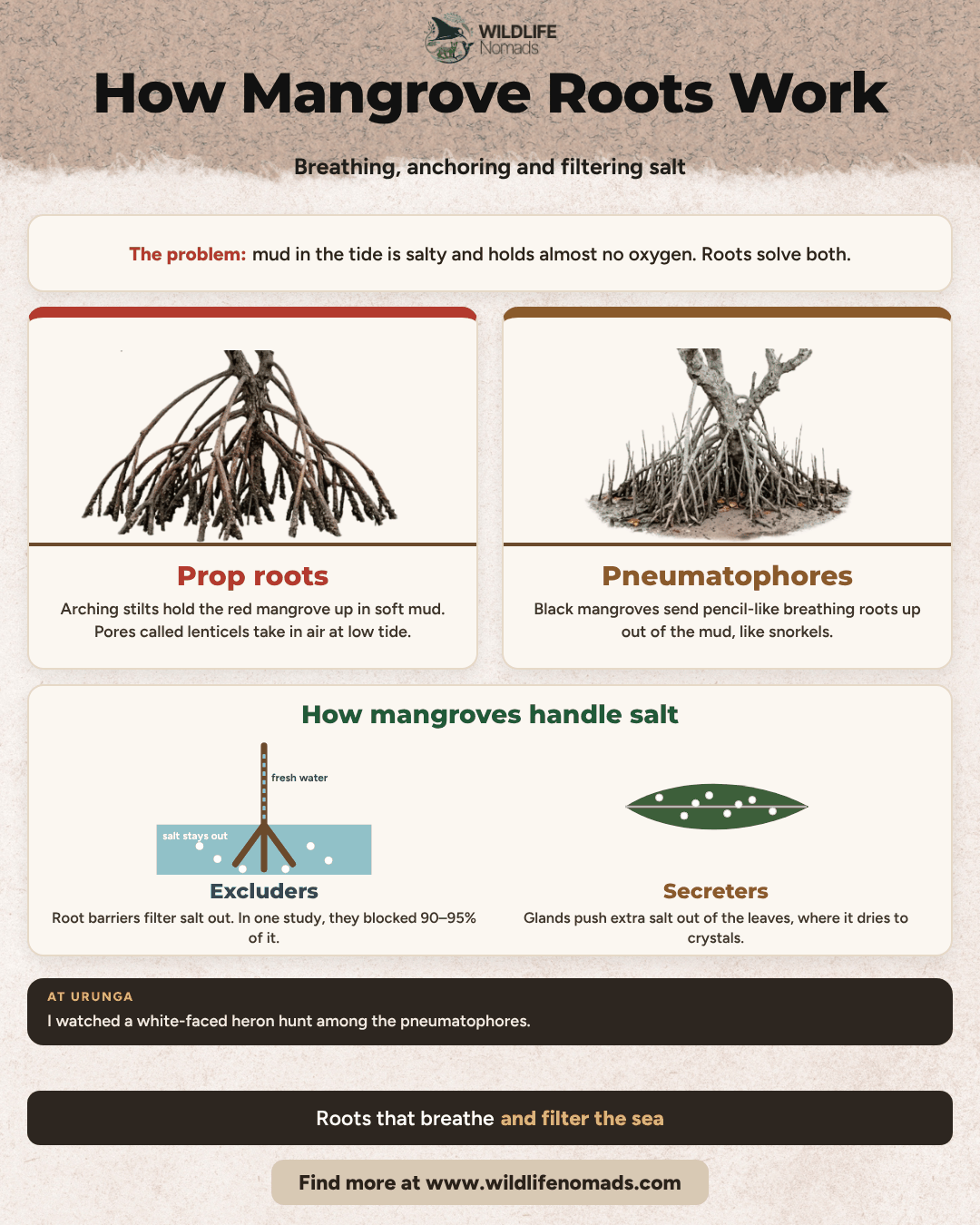
They use two main strategies. First, salt excluders filter salt at the root. In one study, waxy root barriers in Avicennia officinalis blocked 90 to 95% of the salt. That salt stays behind in the surrounding seawater.
Then there are salt secreters, which push extra salt out through glands in their leaves. Black mangrove leaves are often crusted with salt crystals. Many species also close their stomata to save precious fresh water.
These tricks evolved independently in several plant families. That makes mangroves a textbook case of convergent evolution. It also explains how they colonise shores where other plants fail.
2. Their Roots Are Natural Engineering Marvels (Really!)
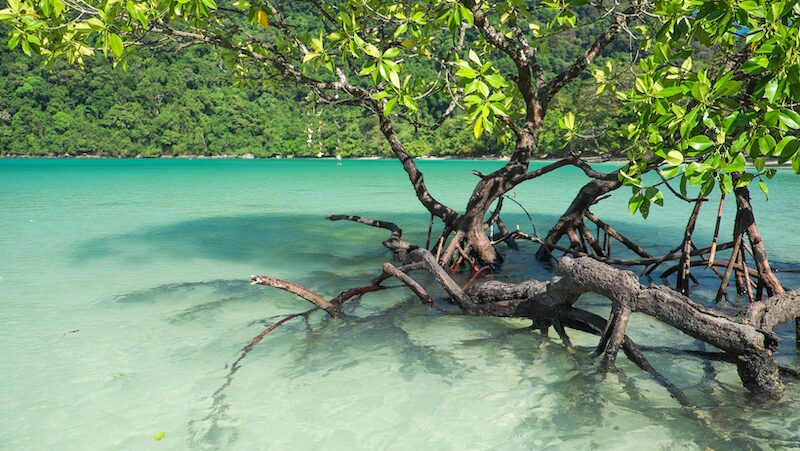
Mangrove roots are the first thing you notice from a kayak. On the Gold Coast canals, they line the banks.
However, each design solves the oxygen problem differently:
- Prop roots: the red mangrove stands on arching stilts. These prop roots anchor the tree in soft mud.
- Pneumatophores: the black mangrove sends up pencil-like breathing roots from the mud.
- Aerial roots: many species hang roots from their branches. Tiny pores called lenticels take in air at low tide.
- Knee roots: some species loop roots up and back down, like bent knees.
Meanwhile, these aerial roots do much more than breathe. They slow currents, trap mud and give crabs, oysters and young fish a place to hide.
3. Their Seedlings Sprout on the Tree
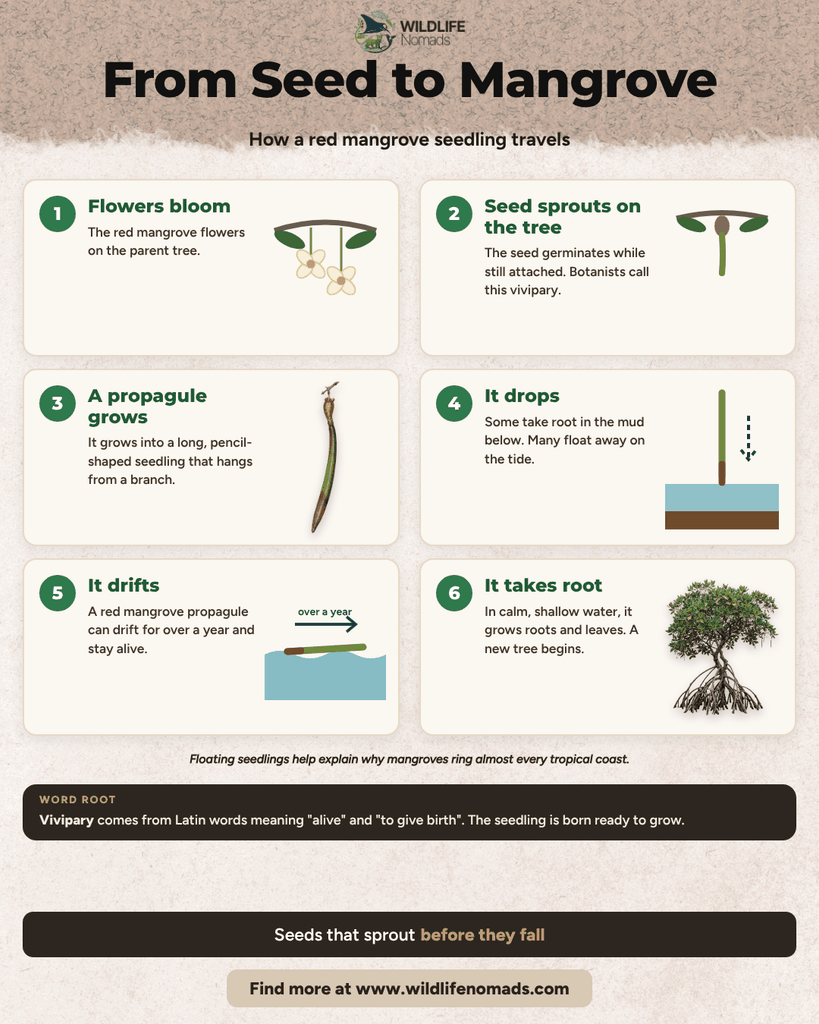
Most trees drop seeds that wait in the soil. Many mangroves, however, don’t. Instead, their seeds germinate while still attached to the parent tree.
Botanists call this vivipary. Later, the finished seedling, or propagule, drops into the mud or floats away on the tide. Red mangrove propagules can drift for over a year before they root.
As a result, these trees have spread across oceans. Genetic studies suggest the red mangrove’s genus arose on the shores of the ancient Tethys Sea, during the Cretaceous. Their long history explains why they now ring almost every tropical coast.
4. Three Mangroves Shape South Florida
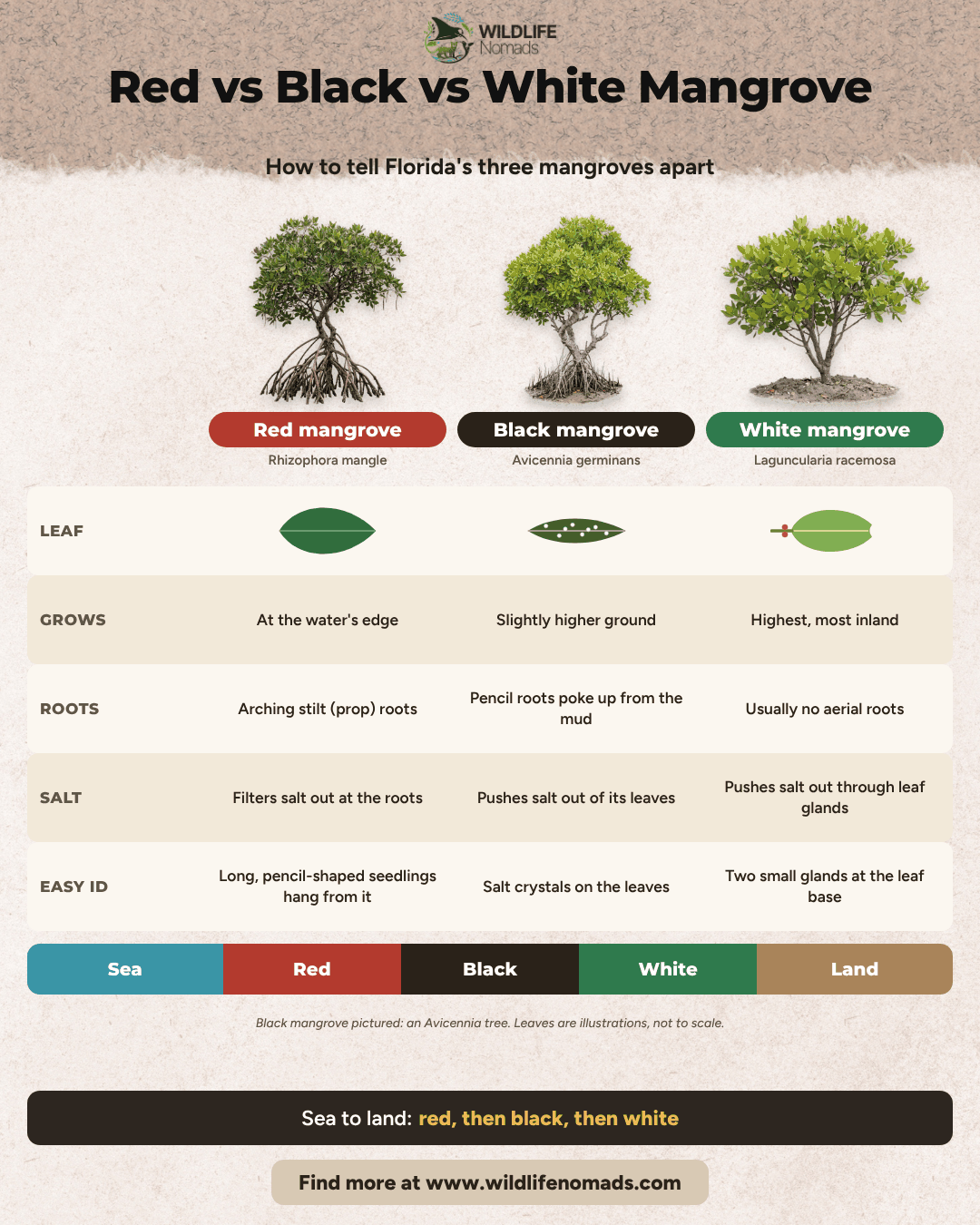
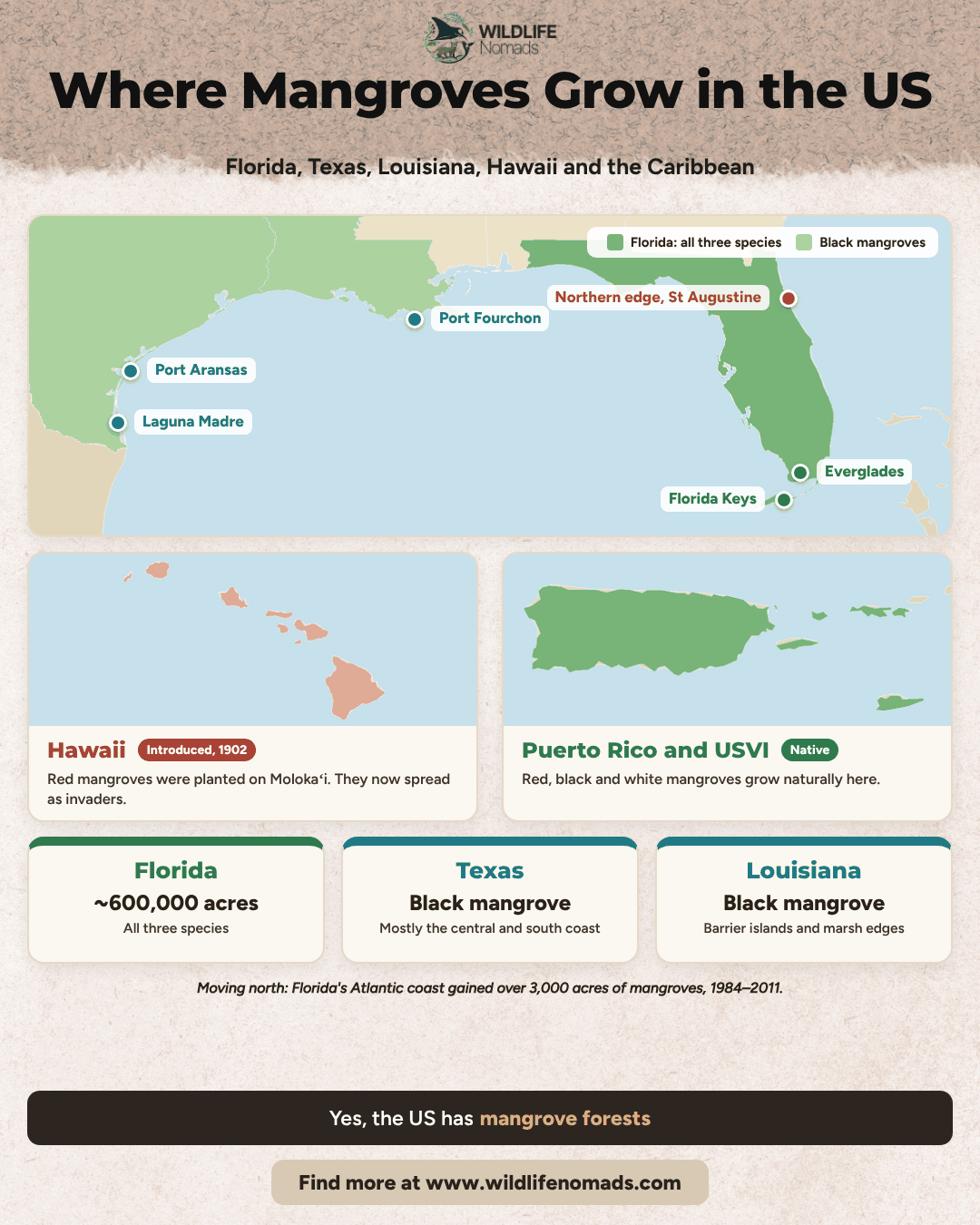
Do mangrove trees grow in the US? Yes. Florida has about 600,000 acres of them, mostly in South Florida. Three native species grow there in neat zones from sea to land:
| Species | Scientific name | Where it grows | Key feature |
|---|---|---|---|
| Red mangrove | Rhizophora mangle | Water’s edge | Arching prop roots |
| Black mangrove | Avicennia germinans | Slightly higher ground | Pneumatophores, salty leaves |
| White mangrove | Laguncularia racemosa | Highest, most inland | Two glands at the leaf base |
In addition, black mangroves grow along the Texas and Louisiana coasts. Red ones were introduced to Hawaii in 1902 and now spread there as invaders. Puerto Rico and the US Virgin Islands also have native stands.
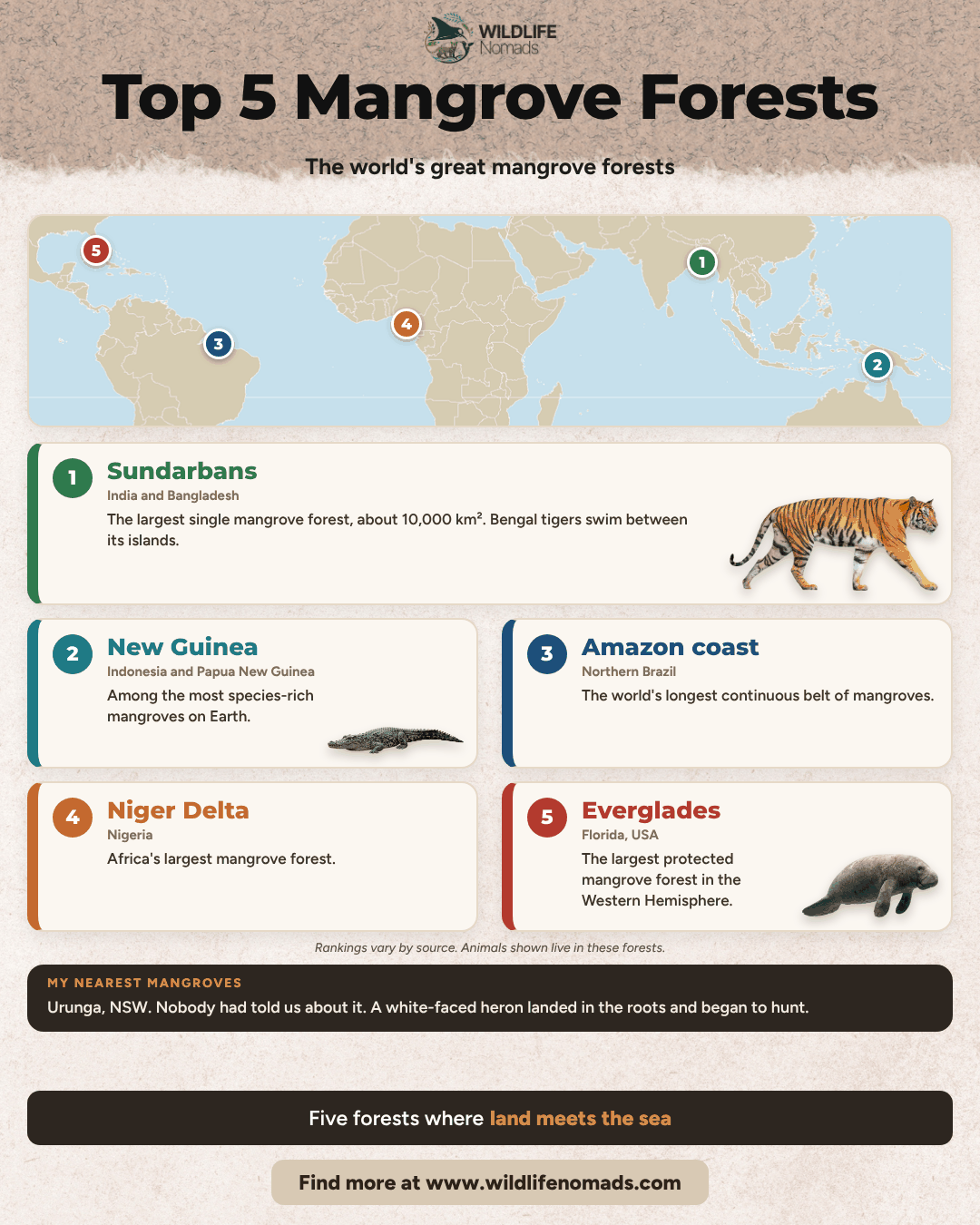
Florida’s forests are also spreading north. As winters warm, the Atlantic coast gained over 3,000 acres between 1984 and 2011. In southern Florida, Everglades National Park protects the largest continuous mangrove stand in the Western Hemisphere. Explore more animals in Florida and Florida birds that depend on them.
5. They Are Nature’s Fish Nurseries
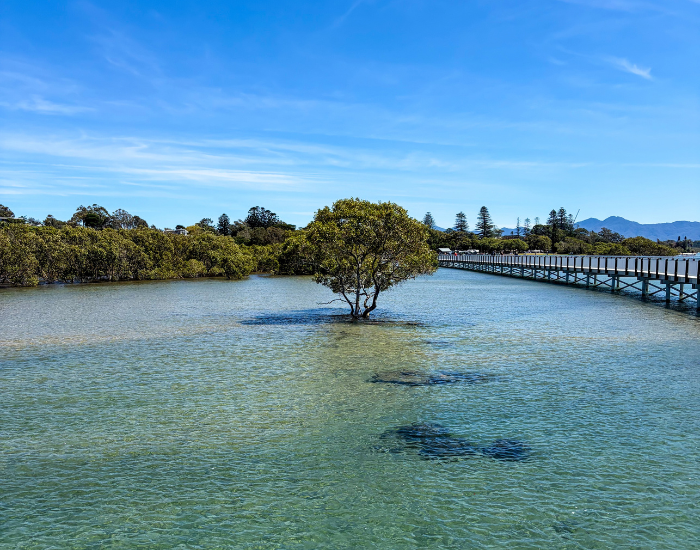
Look down from any coastal boardwalk and you’ll see young fish. At Urunga, toadfish hovered in the shallows below us.
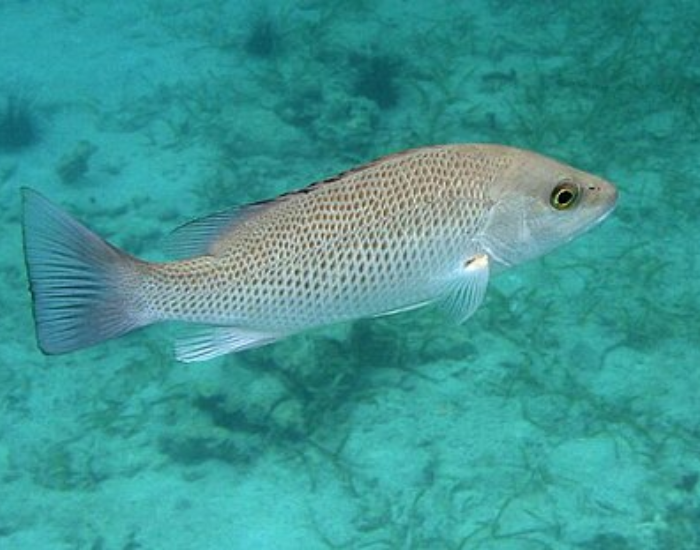
In fact, mangroves are vital nursery habitats. Their roots offer shelter from predators and plenty of food. In 2025, a global study estimated that they support over 700 billion juvenile fish and invertebrates every year.
That study covered 37 commercially important species, including snappers, prawns and mud crabs. Similarly, lemon sharks give birth in mangrove lagoons, where their pups spend their first years. Read our lemon shark facts and meet the fishes of Florida.
6. They Are Biodiversity Hotspots
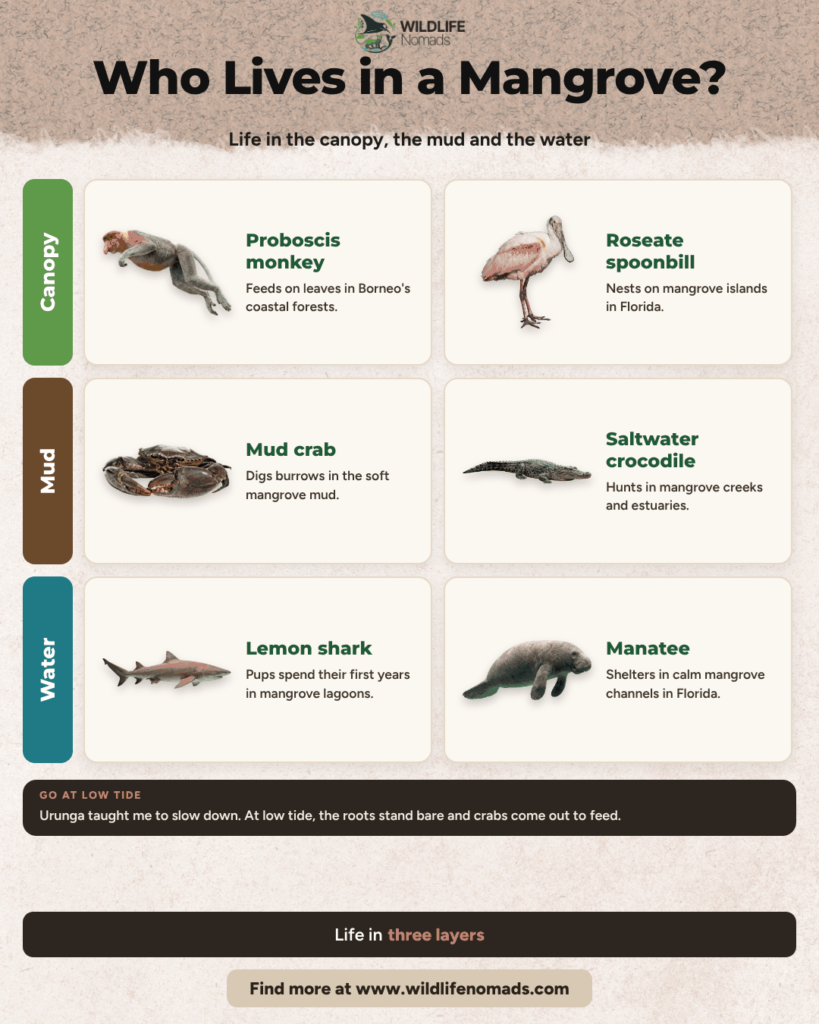
Mangroves are unique ecosystems with life in three layers. Birds and monkeys live in the canopy. Meanwhile, crabs and mudskippers work the mud, while fish fill the water below.
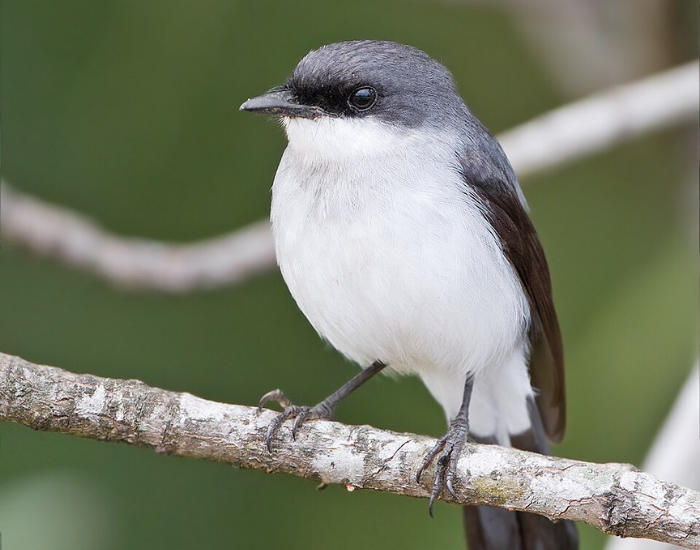
Some animals are also closely tied to them. For instance, the proboscis monkey feeds in Borneo’s coastal forests. In the Sundarbans, Bengal tigers swim between islands. Australia even has a mangrove robin, and Southeast Asia has a mangrove snake.
Many other species visit to feed. I’ve watched a white-faced heron stalk fish at Urunga and a little pied cormorant perch in a mangrove at Nambucca. Discover types of crabs, roseate spoonbills and kingfishers of Australia that rely on them.
This richness is why biodiversity conservation plans often start with mangroves. Learn why biodiversity is important.
7. They Shield Coasts From Storm Surges
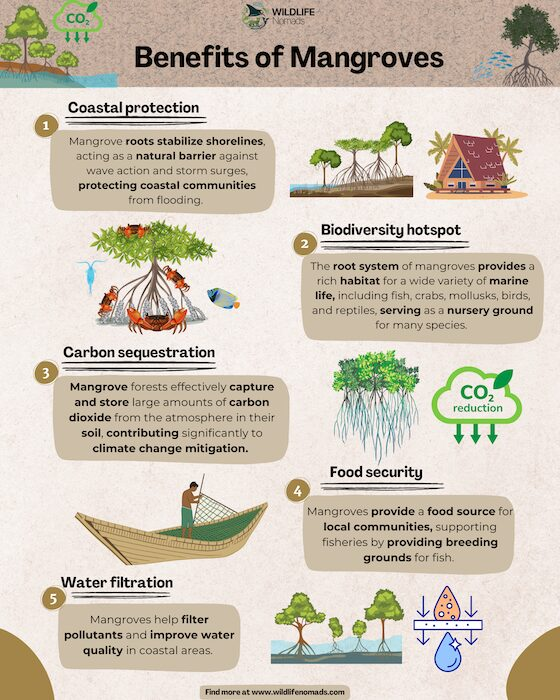
Overall, mangroves are a living sea wall. Their dense roots and trunks absorb wave action and slow storm surges during tropical storms.
The numbers are striking, too. A 2020 study estimated that mangroves prevent over US$65 billion in flood damage each year. Thanks to them, about 15 million fewer people are flooded annually.
In 1999, a super cyclone struck Odisha, India. A study in the Proceedings of the National Academy of Sciences found fewer deaths in villages behind wider mangroves.
Closer to home for many readers, Hurricane Irma hit Florida in 2017. Mangroves there prevented about US$1.5 billion in flood damage. Consequently, they protected over 500,000 people.
8. They Hold the Coastline Together
Erosion eats coastlines when waves hit bare mud. Mangroves stop that, because their roots bind the soil and trap fine sediments washing down rivers.
Over time, those trapped sediments build the ground higher. In some places, this lets mangroves keep pace with slowly rising seas. Remove them, however, and shorelines can retreat fast.
This is also why mangroves matter to coastal areas and estuaries. Rivers carry silt, and the roots catch it before it smothers coral reefs offshore.
9. They Clean Coastal Waters
Water filtration is one of the quietest ecosystem services mangroves provide. As tides flow through the roots, mud, nutrients and pollutants settle out.
Oysters, sponges and other organisms on the roots then take over. They drive nutrient cycling and break down waste. Studies show mangroves can lock away excess nutrients and heavy metals.
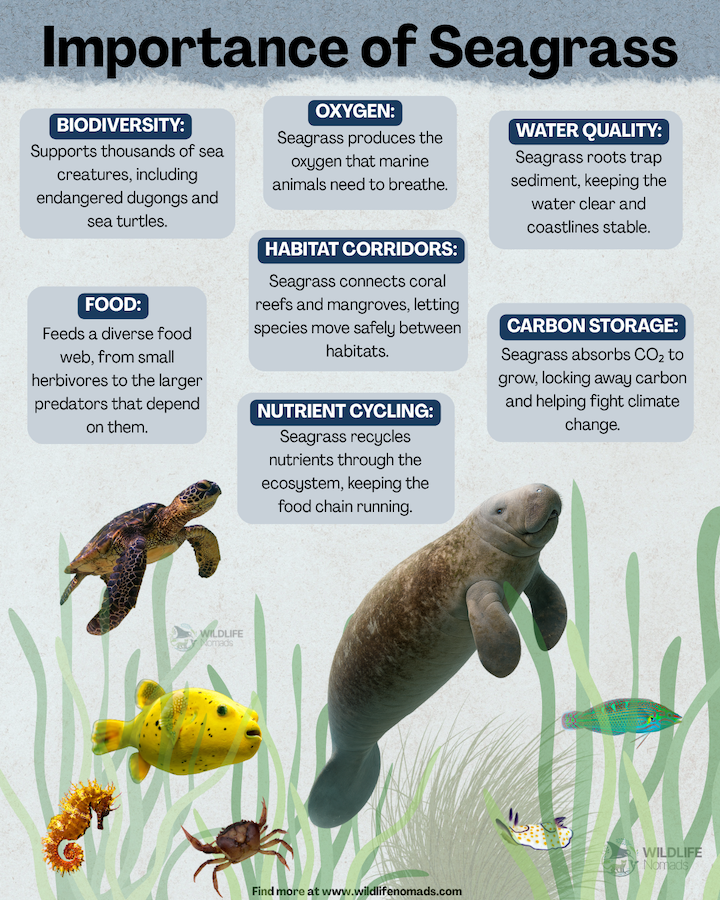
Cleaner water helps neighbours too. In this way, mangroves, seagrass meadows and coral reefs work as a team. The trees catch the mud, so seagrass and coral get the clear water and light they need.
10. They Are Blue Carbon Champions
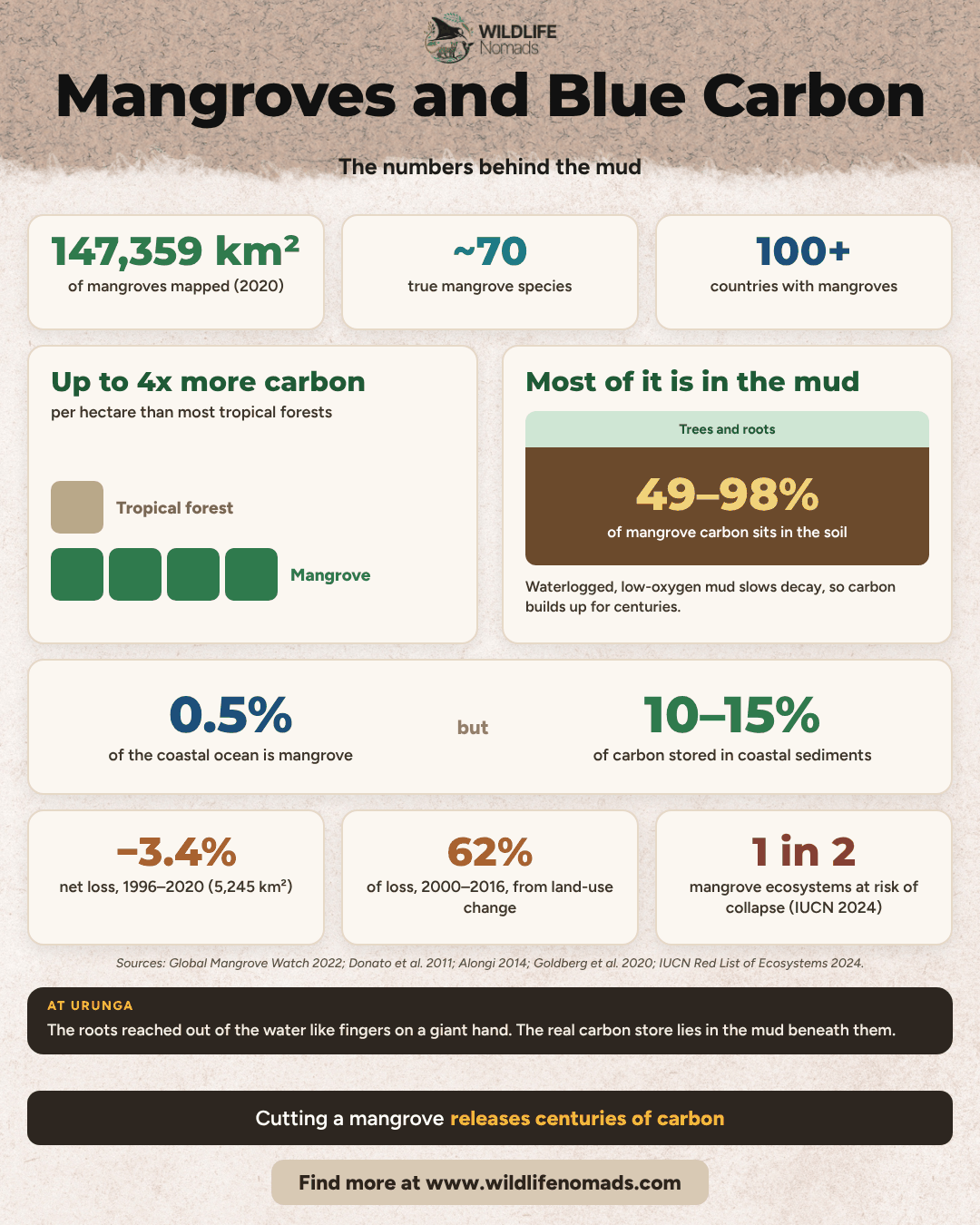
Mangrove forests are among the best ecosystems to sequester carbon. Per hectare, they can store up to four times more carbon than most tropical forests. That helps slow climate change.
Surprisingly, though, most of it isn’t in the trees. Waterlogged, low oxygen mud slows decay, so carbon builds up in the soil for centuries. In one survey, soils held 49 to 98% of mangrove carbon.
These forests cover only 0.5% of the coastal ocean. Even so, they account for 10 to 15% of the carbon stored in coastal sediments. That is about 24 million tonnes of carbon a year.
However, the reverse is also true. Cutting the trees releases that carbon. In 2012, global mangrove ecosystems held about 4.19 billion tonnes of carbon. Indonesia alone caused over 48% of the carbon lost between 2000 and 2012.
11. They Feed and Employ Coastal Communities
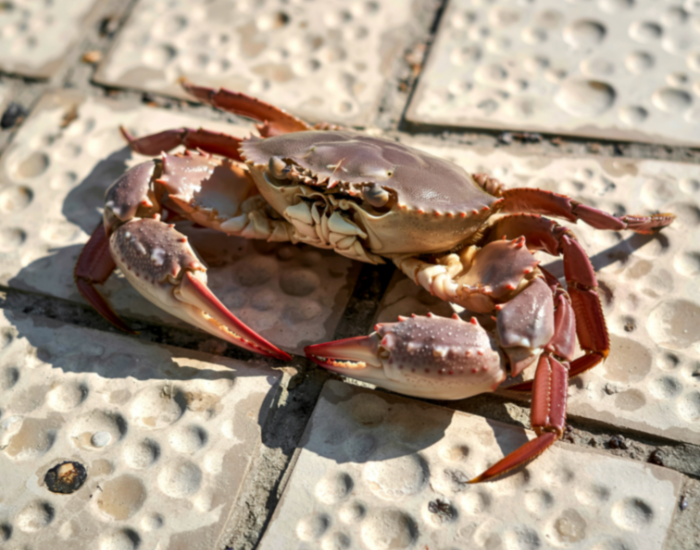
Above all, millions of people in coastal communities rely on mangroves every day. For example, they catch fish, crabs and prawns there and collect wood, honey and medicine. I sometimes join my partner’s dad crabbing in the Gold Coast mangroves, always within the local fishing rules.
Mangroves provide jobs in tourism, too. Kayaking a tidal channel or walking a boardwalk is a classic eco-tour. Urunga’s boardwalk is one of the best I’ve walked on the east coast.
Want to explore them yourself? Choose a responsible guide from our wildlife tours. Done well, tourism gives local people a reason to keep their forests standing.
12. They Are Disappearing, But They Can Come Back
Sadly, mangrove loss is real. For example, I’ve seen it along Mexico’s Riviera Maya, where development has eaten into the coast. Between 1996 and 2020, the world saw a net loss of 5,245 km² of forest, about 3.4% of the total.
Human activity drives most of it, especially farming. From 2000 to 2016, 62% of mangrove forest loss came from land-use change. Shrimp ponds, rice paddies and oil palm caused most of it, mainly in Southeast Asia.
Coastal development, pollution and habitat destruction add pressure. Then in 2024, the IUCN found half of all these ecosystems at risk of collapse. Sea-level rise and stronger storms are the biggest threats.
There is good news, though. On my lap around Australia, for instance, I saw healthy mangroves at Forster. It felt good. Mangrove deforestation has slowed since 2000. Satellites now track the health status of mangrove habitats worldwide, and mangrove restoration is growing.
Still, the best projects restore tides and freshwater flow first, then let seedlings return. Planting the wrong species in the wrong place often fails. Learn how nature can restore itself.
FAQs About Mangroves
Mangroves are salt-tolerant trees and shrubs that grow on tropical and subtropical coasts. They live in the tidal zone, where salt water meets fresh water. Together they form mangrove forests, also called mangrove swamps.
Mangroves protect coasts from storm surges and erosion. They also act as fish nurseries, filter water and store large amounts of carbon. Millions of people depend on them for food and income.
Genetic and fossil evidence suggests early mangroves evolved on the shores of the ancient Tethys Sea during the Cretaceous. Today, the Indo-West Pacific has the highest mangrove diversity. From there, floating seedlings helped them spread worldwide.
Yes. Florida has about 600,000 acres of mangroves, mostly in South Florida. Red, black and white mangroves all grow there, and their range is slowly moving north as winters warm.
Florida has the most. Black mangroves also grow along the coasts of Texas and Louisiana. Hawaii has red mangroves too, but people introduced them in 1902 and they are now invasive there.
Yes, for a lot. Mangroves prevent over US$65 billion in flood damage each year and support over 700 billion young fish and invertebrates. They also clean coastal water and lock away carbon.
Walk a Mangrove at Low Tide
Urunga, Forster and the Gold Coast canals all taught me to slow down. Low tide is the best time to visit, when the roots stand bare and crabs come out to feed.
So find a mangrove boardwalk near you, and bring insect repellent. Then explore our Biome Explorer or dive into the Coral Reef Explorer. You can also see which species need help in our Endangered Animals Explorer.
You can help mangroves from anywhere. Choose seafood with a sustainability label, cut plastic and fertiliser use, and support local mangrove restoration groups. Have you walked through a mangrove forest? Tell me where in the comments.
Experience the Beauty of Mangroves
Look at some mangrove tours worldwide and experience these forests for yourself.
This blog is reader-supported. When you buy experiences through links listed on this site, we may earn an affiliate commission.
References:
Alongi, D. M. (2014). Carbon cycling and storage in mangrove forests. Annual Review of Marine Science, 6, 195–219. https://doi.org/10.1146/annurev-marine-010213-135020
Bunting, P., Rosenqvist, A., Hilarides, L., Lucas, R. M., Thomas, N., Tadono, T., Worthington, T. A., Spalding, M., Murray, N. J., & Rebelo, L.-M. (2022). Global mangrove extent change 1996–2020: Global Mangrove Watch version 3.0. Remote Sensing, 14(15), 3657. https://doi.org/10.3390/rs14153657
Donato, D. C., Kauffman, J. B., Murdiyarso, D., Kurnianto, S., Stidham, M., & Kanninen, M. (2011). Mangroves among the most carbon-rich forests in the tropics. Nature Geoscience, 4(5), 293–297. https://doi.org/10.1038/ngeo1123
Goldberg, L., Lagomasino, D., Thomas, N., & Fatoyinbo, T. (2020). Global declines in human-driven mangrove loss. Global Change Biology, 26(10), 5844–5855. https://doi.org/10.1111/gcb.15275
Hamilton, S. E., & Friess, D. A. (2018). Global carbon stocks and potential emissions due to mangrove deforestation from 2000 to 2012. Nature Climate Change, 8(3), 240–244. https://doi.org/10.1038/s41558-018-0090-4
Lo, E. Y. Y., Duke, N. C., & Sun, M. (2014). Phylogeographic pattern of Rhizophora (Rhizophoraceae) reveals the importance of both vicariance and long-distance oceanic dispersal to modern mangrove distribution. BMC Evolutionary Biology, 14, 83. https://doi.org/10.1186/1471-2148-14-83
Menéndez, P., Losada, I. J., Torres-Ortega, S., Narayan, S., & Beck, M. W. (2020). The global flood protection benefits of mangroves. Scientific Reports, 10, 4404. https://doi.org/10.1038/s41598-020-61136-6
Polidoro, B. A., et al., (2010). The loss of species: Mangrove extinction risk and geographic areas of global concern. PLoS ONE, 5(4), e10095. https://doi.org/10.1371/journal.pone.0010095
Whitfield, A. K. (2017). The role of seagrass meadows, mangrove forests, salt marshes and reed beds as nursery areas and food sources for fishes in estuaries. Reviews in Fish Biology and Fisheries, 27(1), 75–110. https://doi.org/10.1007/s11160-016-9454-x
zu Ermgassen, P. S. E., et al., (2025). Mangroves support an estimated annual abundance of over 700 billion juvenile fish and invertebrates. Communications Earth & Environment, 6, Article 299. https://doi.org/10.1038/s43247-025-02229-w