
Wildlife Nomads · Play · The Spider Index
The Deadliest Spider on Earth: The Top 10, Ranked by Real Danger to People
Meet 13 of the most feared spiders, from the Sydney funnel-web to the white-tail. See which ones have really killed people, which ones only look scary, and which myths to forget.
By Cesar Medina, conservation biologist and former zoo keeper of reptiles, amphibians and arachnids · Every figure sourced from peer-reviewed studies, museums and health agencies, checked October 2026
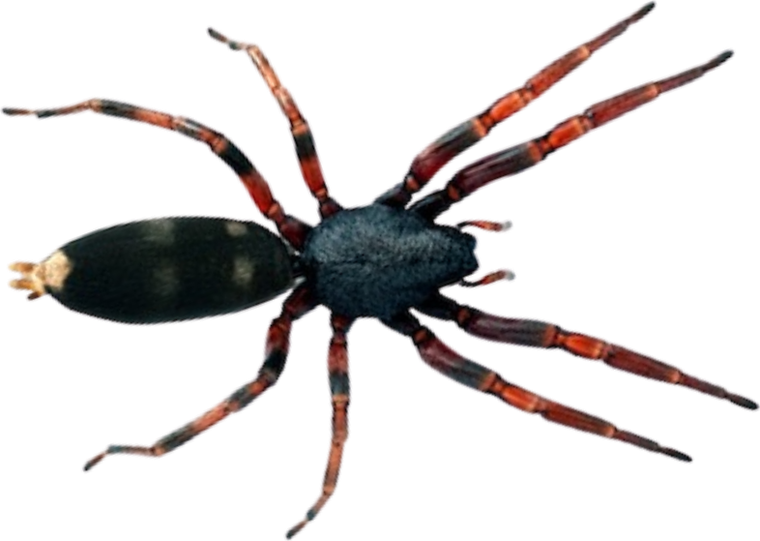
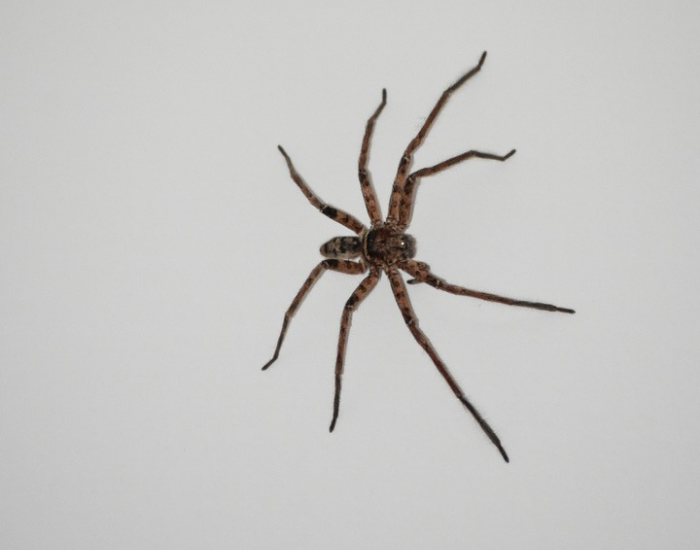
On our Australia lap, spiders turn up everywhere. After a long day outside, we often find a huntsman hiding in our bags or gear. It is big, fast and hairy. However, it is one of the least dangerous spiders in the country.
That is the first lesson about the deadliest spider on Earth. Indeed, size and looks tell you almost nothing. At the zoo where I worked, our reptile team also ran the arachnid section. We kept Mexican red knee tarantulas, and we sometimes let them walk on us while changing their substrate. Meanwhile, my first funnel-web was just a hole in a bank in Sydney.
So which deadly spiders are really dangerous to people? Which is the most deadly spider of all? I built the Spider Index above to answer that with evidence, not fear. Below, you will find the top 10 most dangerous spiders in the world. Then come the myths and what to do after a bite.
How I checked the facts. Every figure comes from peer-reviewed studies, museums such as the Australian Museum, or health agencies. Where a number is an estimate, I say so. This is not medical advice. Instead, it is general information in case someone is bitten.
What is the deadliest spider on Earth?
The Sydney funnel-web is usually named the deadliest spider on Earth. Its venom hits humans and other primates far harder than most animals. Before antivenom arrived in 1981, funnel-web bites killed 13 people in Australia. Since then, nobody has died (Isbister et al., 2005).
However, other spiders have a longer record of human deaths. For example, the Brazilian wandering spider has caused about 10 known deaths from over 7,000 confirmed bites in Brazil. Recluse spiders, too, have killed people, mostly young children. Still, deaths from spider bites are now exceedingly rare.
In other words, there is no single answer. Instead, it depends on whether you measure potent venom, human deaths or how often a spider bites humans. Therefore, the Spider Index sorts each species by its real record with people.
Top 10 most dangerous spiders in the world (with pictures)
This list ranks the deadliest spiders to humans by their documented record with people. First come the spiders with recorded human deaths. Then come those that can cause serious illness. Then tap a spider to open its card in the tool.
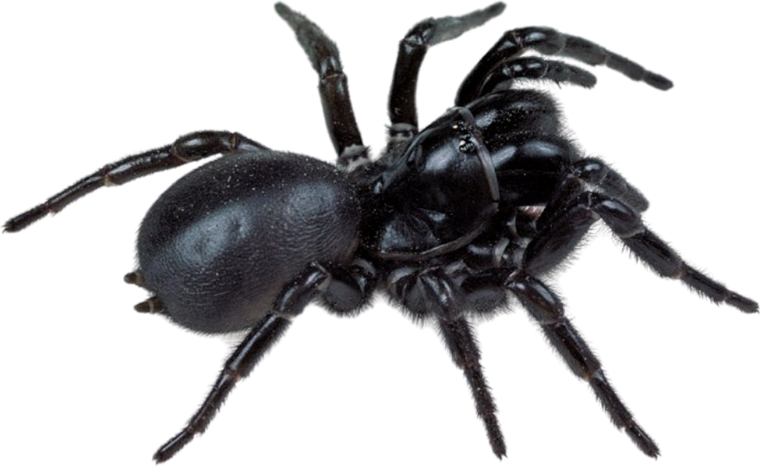
1. Sydney funnel-web spider (Atrax robustus)
- Size
- Body 2 to 4 cm
- Human deaths
- 13 recorded deaths (all funnel-webs), all before antivenom in 1981; none since
- Antivenom
- Yes, since 1981
- Where
- Sydney region, NSW, Australia
This dark brown to black spider lives in burrows around Sydney and the Central Coast in eastern Australia. Also, its large fangs strike downwards and can pierce a fingernail. In recorded bites, all the severe cases came from males. Moreover, severe illness began a median 28 minutes after a bite. At night, the spider sits at its burrow entrance, waiting for prey.
Many experts call it the most venomous spider in the world. In 2025, scientists split it into three species (Loria et al., 2025). One of them, the Newcastle funnel-web, is nicknamed "Big Boy".
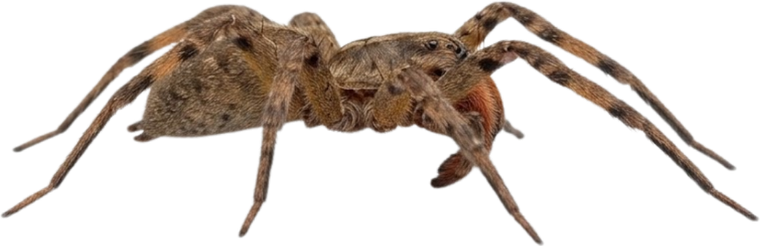
2. Brazilian wandering spider (Phoneutria spp.)
- Size
- Body up to about 5 cm in the largest spiders
- Human deaths
- About 10 known deaths from over 7,000 confirmed bites in Brazil
- Antivenom
- Yes
- Where
- South-eastern Brazil; genus across South America
Brazilian wandering spiders hunt on the forest floor at night instead of building webs. Some also hide in banana plants, which is why they are sometimes called banana spiders. Their venom causes intense pain and, in men, a painful erection called priapism. Even so, most bite victims suffer only pain. In a large study in South America, about 90% of bites were mild. Only about 2 to 3% needed antivenom.
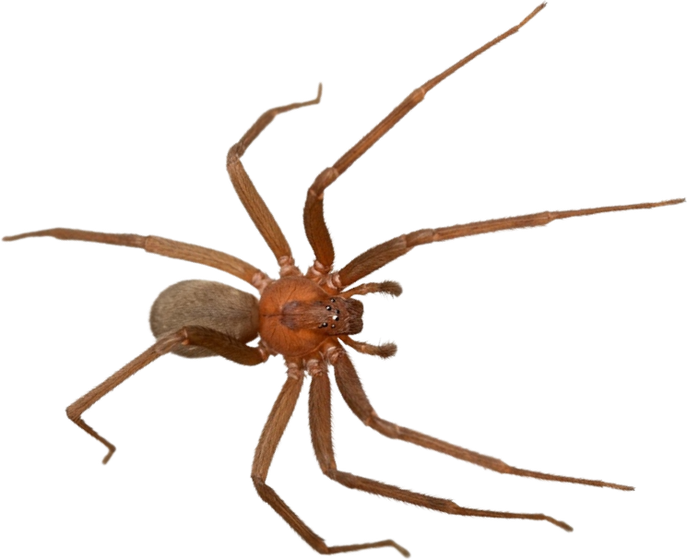
3. Chilean recluse spider (Loxosceles laeta)
- Size
- Body up to 1.5 cm
- Human deaths
- Rare: 3.7% of 216 Chilean cases died, all with whole-body illness
- Antivenom
- Yes
- Where
- Western South America; introduced elsewhere
The Chilean recluse is one of the largest and most dangerous violin spiders. Similarly to the brown recluse, it has a dark violin-shaped marking on its back. In a study of 216 Chilean bites, 84% only affected the skin. However, 3.7% of patients died. Each death followed whole-body illness, which can destroy red blood cells and cause kidney failure.
4. Brown recluse spider (Loxosceles reclusa)
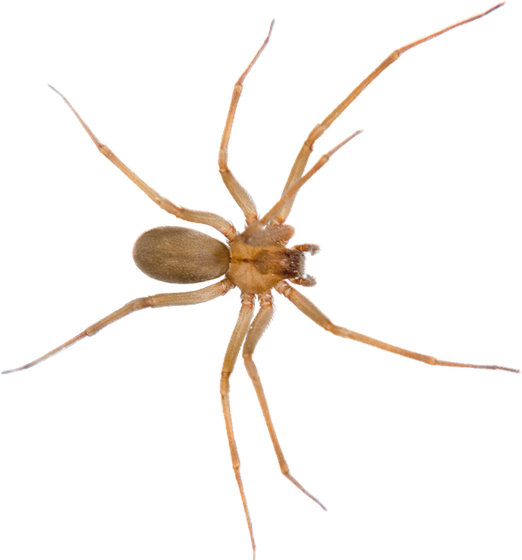
- Size
- Body 7 to 12 mm (females)
- Human deaths
- Very rare: a few confirmed deaths, mostly young children
- Antivenom
- None
- Where
- South-central and midwestern United States
The brown recluse lives in the south-central and midwestern United States. Still, its body length is only 7 to 12 mm. Most brown recluse bites heal within weeks, but some leave slow-healing skin lesions. There is no antivenom in the US. Even so, only an occasional death has been confirmed, mostly in young children.
Brown recluse spider bites are also badly over-diagnosed. For instance, one Kansas home held 2,055 brown recluses in six months. Yet nobody living there showed signs of a bite.
5. Southern black widow (Latrodectus mactans)
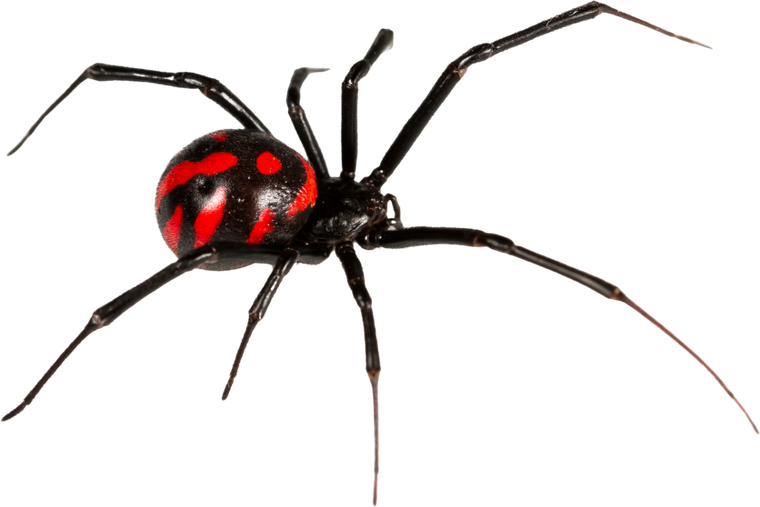
- Size
- Body 8 to 13 mm (females)
- Human deaths
- Deaths are now very rare: none among 23,409 US cases reported in 2000-2008
- Antivenom
- Yes, since 1936
- Where
- North America, especially the southern US
The much-feared black widow carries a red hourglass under its shiny black body. Its venom causes severe muscle pain, muscle spasms, sweating and nausea. Still, US poison centres reported 23,409 widow spider exposures from 2000 to 2008, and none were fatal. Antivenom has existed since 1936.
Other Latrodectus species also include the brown widow spider and the red widow of Florida's palmetto scrub. Brown widow bites are usually milder than black widow bites.
6. Australian redback spider (Latrodectus hasselti)
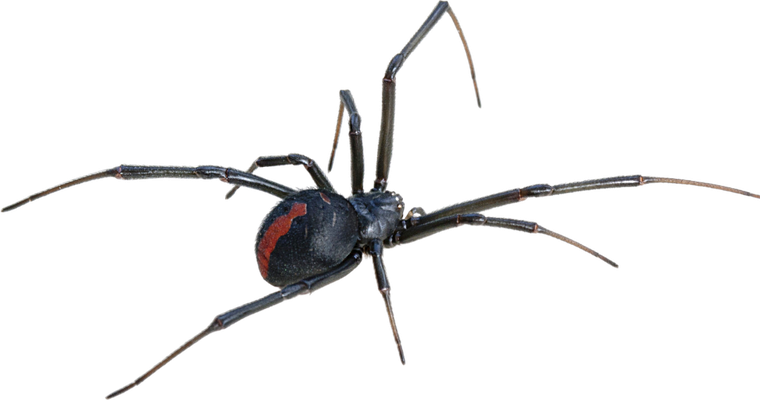
- Size
- Body about 1 cm (females)
- Human deaths
- No deaths confirmed since antivenom arrived in 1956; severe pain is common
- Antivenom
- Yes, since 1956
- Where
- Australia-wide; introduced to Japan, New Zealand
The Australian redback spider is a close cousin of the black widow. Still, mature females are only about 1 cm long. On a Sydney work site, a coworker once moved a redback in a plastic jar. I did not want to hold it, but I had a close look.
In one study of 68 confirmed bites, 62% caused severe pain and 35% caused whole-body effects. Nobody has died since antivenom arrived in 1956. More than 250 people still receive it each year, according to the Australian Museum.
7. Northern tree funnel-web (Hadronyche formidabilis)
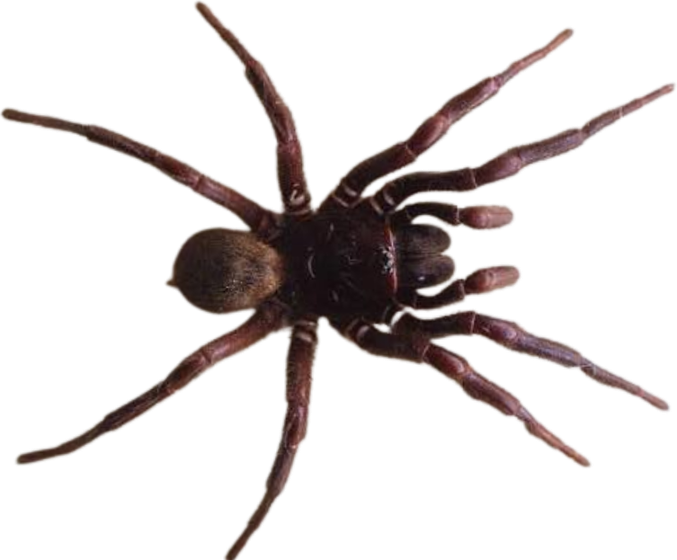
- Size
- Body 4 to 5 cm, the largest funnel-web
- Human deaths
- No definite deaths, but 5 of 8 identified bites caused severe illness
- Antivenom
- Yes, since 1981
- Where
- Wet forests, NSW Watagans to southern Queensland
This is the largest funnel-web, with a body up to 5 cm long. Surprisingly, it lives in wet forests from New South Wales to southern Queensland, sometimes high in trees. In a review of identified bites, five of eight caused severe illness, among the highest rates of any spider.
8. Mouse spiders (Missulena spp.)
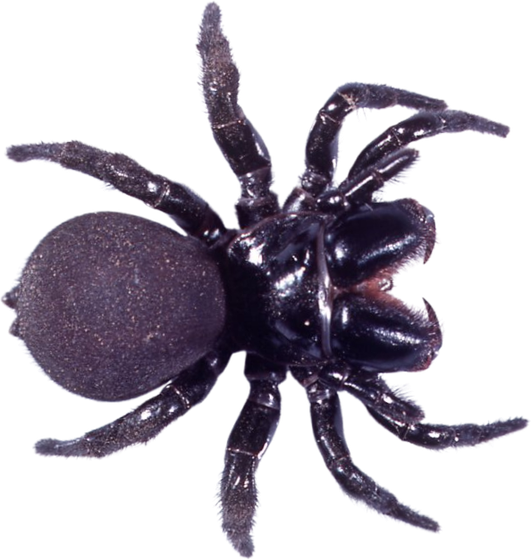
- Size
- Body 1 to 3.5 cm
- Human deaths
- No recorded deaths
- Antivenom
- Yes, since 1981
- Where
- Mainland Australia; one species in Chile
Mouse spiders are not the deadliest spider in Australia. Still, they look like small funnel-webs and share some of their venom toxins. However, of 40 confirmed bites, only one, in a toddler, caused severe illness. Funnel-web antivenom also works against mouse spider bites.
9. Indian ornamental tarantula (Poecilotheria regalis)
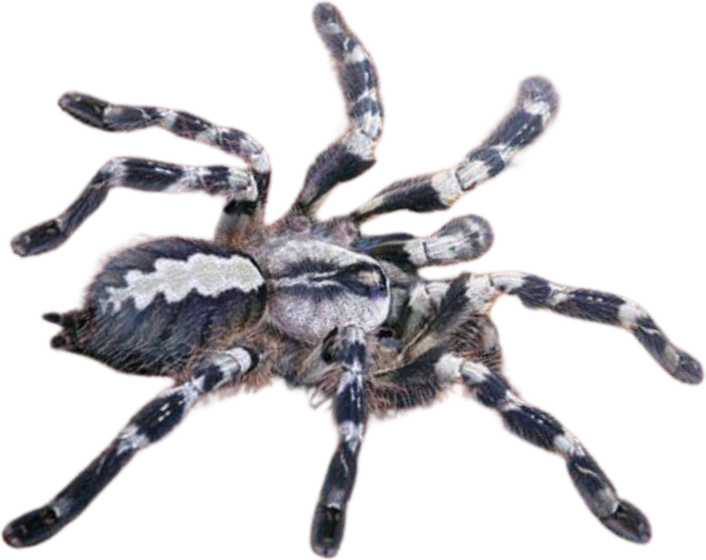
- Size
- Leg span up to about 18 cm (keeper reports)
- Human deaths
- No recorded deaths
- Antivenom
- None
- Where
- Forests of southern and central India
Tarantulas are not deadly, but this one is not harmless either. It delivers a very painful bite. Verified bites in this genus have caused severe muscle cramps that lasted for days. Generally, bite victims are pet keepers handling these large venomous spiders.
10. Six-eyed sand spider (Hexophthalma hahni)
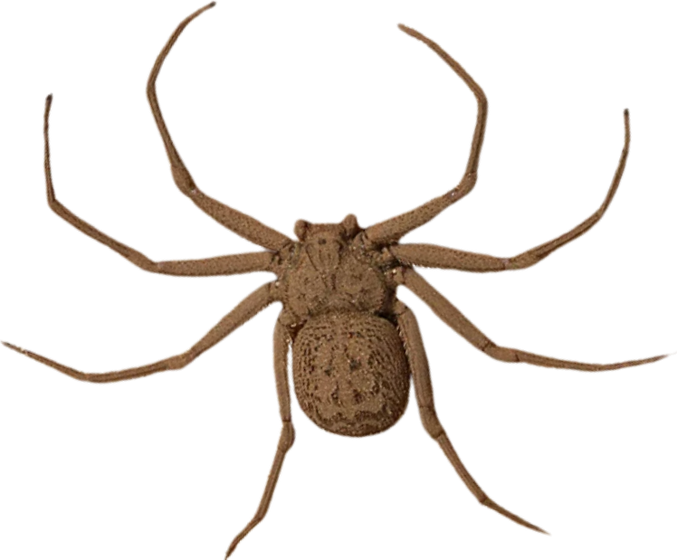
- Size
- Body 8 to 11 mm
- Human deaths
- No confirmed human deaths
- Antivenom
- None
- Where
- Sandy arid areas of southern Africa
The six-eyed sand spider of southern Africa buries itself in sand to ambush insect prey. Its venom destroys tissue in lab tests, so it often appears on lists of the deadliest spiders. However, no human bite by this species has ever been proven.
Big spiders that are not the deadliest
Many people judge spiders by size, and large venomous spiders look the scariest. In fact, some of the biggest spiders in the world are among the least dangerous. Australian huntsman spiders reach a leg span of about 15 cm. Even so, the Australian Museum calls them not dangerous. The giant huntsman of Laos is the biggest spider by leg span, at about 30 cm.
Similarly, wolf spiders are large ground hunters, with about 240 species in North America alone. Their bites are usually minor. The original "tarantula", Lycosa tarantula, is a European wolf spider. People in southern Italy once blamed its bite for a frenzy cured by dancing, the legend behind the tarantella.
Some banana spiders are harmless too. The golden silk orb-weaver shares that nickname, but its bite is milder than a bee sting. For more giants, see my roundup of the biggest spiders in the world and the biggest spiders in Texas.
Spider myths: blamed, but cleared by science
Spider mythology is everywhere, and most of it is wrong. Here are the spider myths that matter most. For example, white-tailed spiders are blamed for flesh-eating ulcers. However, in 130 confirmed white tail spider bites, none caused an ulcer (Isbister & Gray, 2003). Instead, the skin wounds blamed on them have other causes.
Likewise, the hobo spider was once feared in the north-western US. However, no necrotic bite has ever been verified. Its old nickname, "aggressive house spider", came from a misreading of agrestis, which means "of the fields".
Yellow sac spiders face the same accusation too. None of 20 verified bites in the US and Australia caused necrosis. In fact, many reported bites are not actual bites at all. They turn out to be infections or other conditions.
How spider venom works
Almost all spiders possess venom, made in venom glands and injected through their fangs. They use it to subdue insect prey. However, most spiders are harmless, and most species rarely bite humans. Many have fangs too small to pierce human skin, or venom too weak to matter.
The deadliest spider venoms work in two main ways. Firstly, widow and funnel-web venoms attack the nerves. They cause intense pain, sweating and muscle spasms. Secondly, recluse venoms attack the bite site and, rarely, the blood. As a result, they can leave skin lesions and, in the worst cases, damage red blood cells and kidneys.
Venom toxicity alone does not decide danger, though. No one species tells the whole story. It also depends on how much venom a spider injects. How often it meets people, and how fast bite victims get help, matter too.
What to do after a spider bite
Even a bite from the deadliest spider is rarely fatal today, thanks to antivenom and fast care.
Apply a firm pressure bandage over the bite and the whole limb, then splint it. Keep the person still and call an ambulance.
Apply an ice pack to ease the pain and seek medical help. Do not use a pressure bandage, because it makes the pain worse.
Wash the bite with soap and water, apply a cold pack and see a doctor. Whole-body illness can start a day later.
Most bites need only this: wash the bite and apply a cold pack. Then seek advice if pain spreads, or if the bite looks infected.
In the US, the Centers for Disease Control and Prevention also warns outdoor workers about two spiders. They are the black widow and the brown recluse.
Love wild animal facts?
My printable infographic guides include Insects & Arachnids, with fact-checked facts, maps and charts. So they suit curious kids, classrooms and nature lovers.
Frequently asked questions
What are the 10 deadliest spiders?
The top five are the Sydney funnel-web, Brazilian wandering spider, Chilean recluse, brown recluse and black widow. Then come the redback, northern tree funnel-web, mouse spiders, Indian ornamental tarantula and six-eyed sand spider. Only the first five have caused confirmed deaths, and deaths are now very rare.
What is the deadliest spider in Australia?
The Sydney funnel-web, one of several Australian funnel-web spiders. Its bite caused 13 recorded deaths before antivenom arrived in 1981. Since then, nobody has died. The redback bites far more people, but it causes pain rather than deaths.
Which spider has no antivenom?
The brown recluse has no antivenom in the US, and doctors treat its bites with wound care. The six-eyed sand spider has none either, but no human bite has ever been proven. Most other spiders do not need antivenom at all.
Is a black widow bite 100% fatal?
No. A black widow spider bite is rarely fatal. US poison centres recorded 23,409 widow spider exposures from 2000 to 2008, and none were fatal. The bite can still cause severe muscle pain and cramps, so seek medical help.
What is the largest venomous spider?
Nearly all spiders are venomous, so the largest venomous spider is simply the largest spider. The giant huntsman has the biggest leg span, at about 30 cm, while the Goliath birdeater is the heaviest. Neither is considered dangerous to people.
What is a spider's worst enemy?
Spider-hunting wasps are among the worst, especially for tarantulas. Tarantula hawk wasps, for example, paralyse tarantulas to feed their young. Some spiders also hunt other spiders, such as the white-tailed spider.
More to explore
References
Isbister, G. K., & Gray, M. R. (2003). White-tail spider bite: A prospective study of 130 definite bites by Lampona species. Medical Journal of Australia, 179(4), 199–202. https://www.mja.com.au/journal/2003/179/4/white-tail-spider-bite-prospective-study-130-definite-bites-lampona-species
Isbister, G. K., Gray, M. R., Balit, C. R., Raven, R. J., Stokes, B. J., Porges, K., Tankel, A. S., Turner, E., White, J., & Fisher, M. M. (2005). Funnel-web spider bite: A systematic review of recorded clinical cases. Medical Journal of Australia, 182(8), 407–411. https://doi.org/10.5694/j.1326-5377.2005.tb06760.x
Loria, S. F., Frank, S.-C., Dupérré, N., Smith, H. M., Jones, B., Buzatto, B. A., & Harms, D. (2025). The world's most venomous spider is a species complex: Systematics of the Sydney funnel-web spider (Atracidae: Atrax robustus). BMC Ecology and Evolution, 25(1), Article 7. https://doi.org/10.1186/s12862-024-02332-0



