Texas doesn’t just have spiders, it has some of the largest spiders in North America. From giant wolf spiders patrolling backyards to Texas brown tarantulas crossing desert roads, the Lone Star State is a hotspot for arachnid encounters.
The good news? Most of these large spiders in Texas aren’t as dangerous as they look. In fact, many are beneficial pest controllers, keeping cockroaches and insects in check. Still, knowing how to identify the biggest spiders in Texas can ease fears and help you avoid risks from species like the black widow or brown recluse.
Let’s dive into the top twelve biggest spiders in Texas, their habits, and why they deserve more respect than fear. But before that, if you are curious at the wordl level, have a loot at our article:
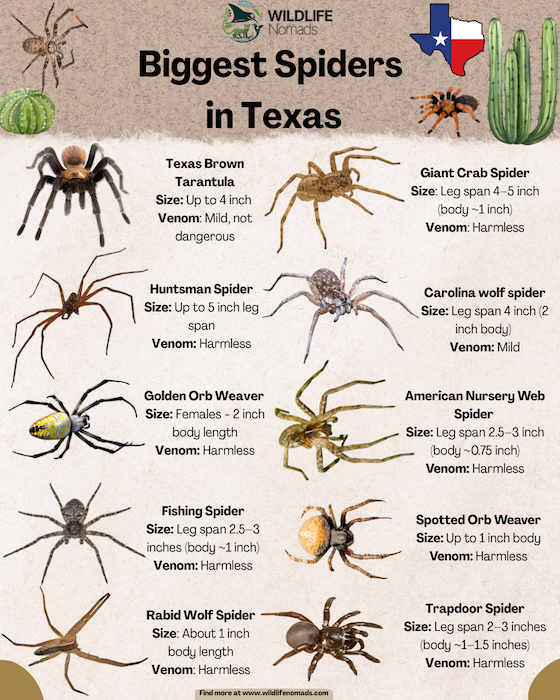
1. Texas Brown Tarantula (Aphonopelma hentzi)
The Texas brown tarantula is the largest spider in Texas and a true desert giant. With a dark brown body covered in fine hairs, sometimes with a reddish hue, it looks intimidating but is surprisingly docile.
- Size: Up to 4 inches (largest spider in Texas)
- Venom: Mild, not dangerous to humans
Females can live for more than 20 years, making them one of the longest-lived spiders in North America. Despite their fearsome reputation, they prefer to retreat unless they feel threatened.

2. Giant Crab Spider (Olios giganteus)
Often mistaken for the non-native huntsman, this native giant has a flattened body adapted for hiding under bark and rocks. With mottled brown and gray coloring, it blends perfectly into rocky habitats.
- Size: Leg span 4–5 inches (body ~1 inch)
- Venom: Harmless to humans
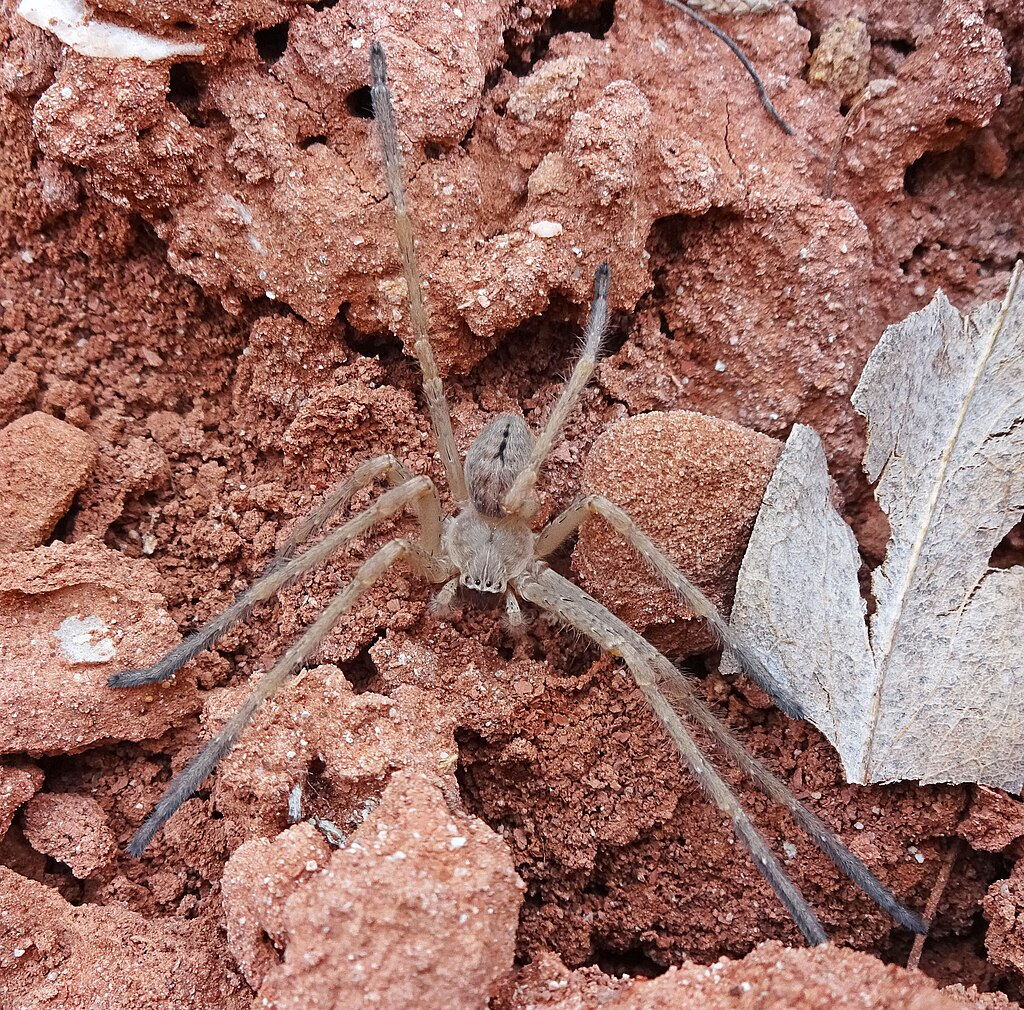
3. Huntsman Spider (Heteropoda venatoria)
Also known as the banana spider, huntsman spiders aren’t native but have settled in Texas, especially in warmer southern regions. Their long legs and crab-like sideways scuttle make them startling to encounter.
- Size: Up to 5 inches leg span
- Venom: Harmless to humans
Huntsman spiders often hide behind curtains, indoors on walls, or in garages. Despite their alarming size, they are helpful predators, feeding on cockroaches and other pests.
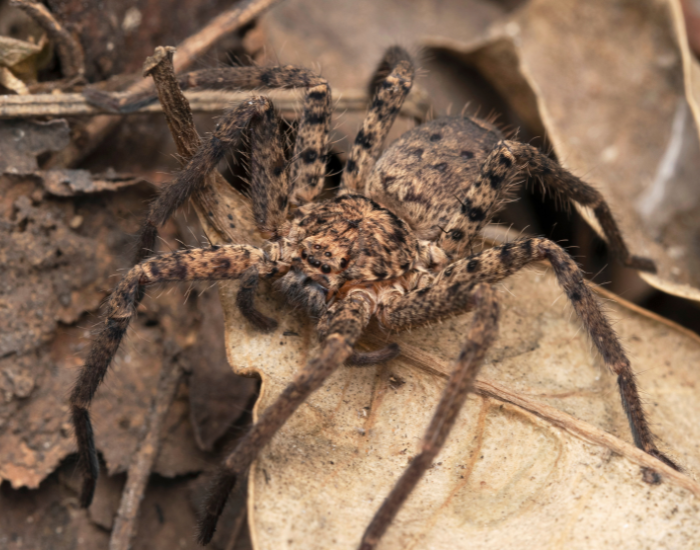
4. Carolina wolf spider (Hogna carolinensis)
Wolf spiders are among the most common spider species in Texas, and they’re often mistaken for tarantulas because of their size and hairy bodies. Many species, including the Texas wolf spider, have white markings or stripes on their bodies that help with camouflage. They don’t spin webs, instead, they actively hunt prey on the ground, especially at night. One unforgettable moment from my surveys was seeing a female with her egg sac attached to her abdomen and later carrying dozens of spiderlings on her back.
- Size: Up to 2 inches body length; leg span around 4 inches
- Venom: Mild, bites can be painful but not harmful
Their distinctive markings, usually a mix of gray and brown with lighter streaks, help camouflage them in yards and fields. If found indoors, it’s usually because they’ve wandered in through cracks or open doors.
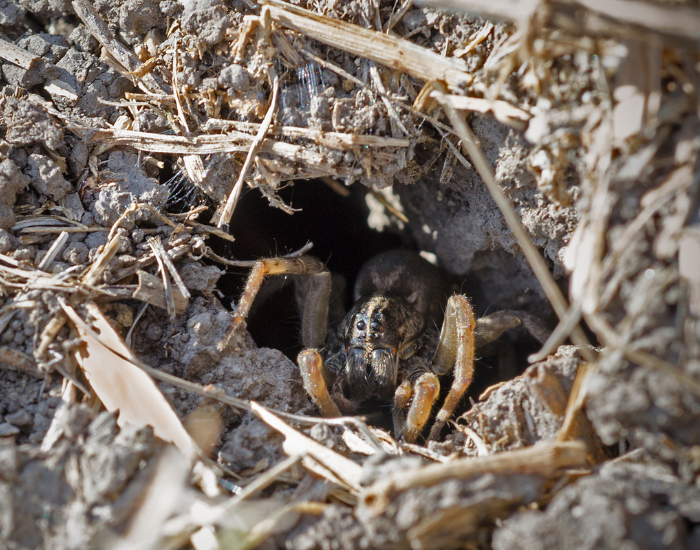
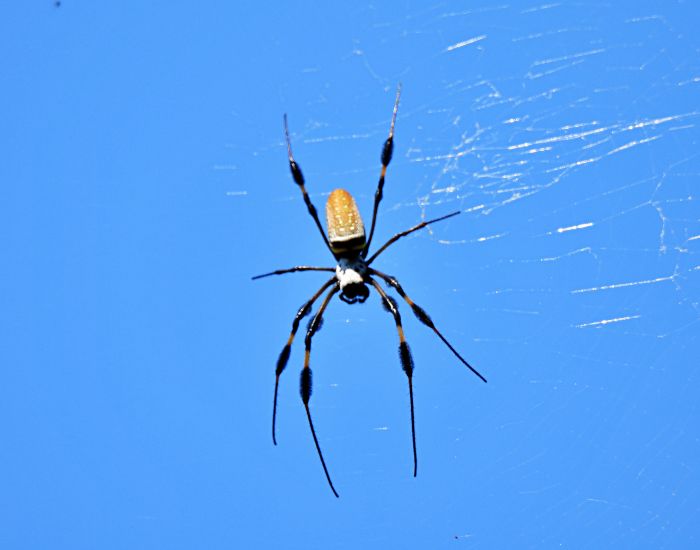
5. Golden Orb Weaver (Trichonephila clavipes)
These spectacular spiders weave webs with a golden hue, sometimes stretching several feet across trails and gardens. Seeing one in person can feel like stepping into a National Geographic documentary.
- Size: Females up to 2 inches body length
- Venom: Harmless
Their silk is so strong it has even been studied for use in biomaterials.
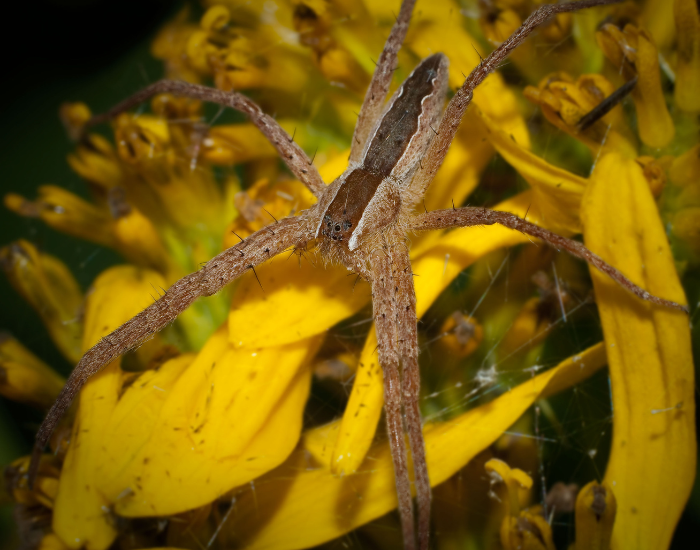
6. American Nursery Web Spider (Pisaurina mira)
Looking much like a wolf spider, this agile hunter carries its egg sac in its jaws. Females guard their spiderlings in protective “nursery” webs, often hidden in corners of vegetation.
- Size: Leg span 2.5–3 inches (body ~0.75 inches)
- Venom: Harmless
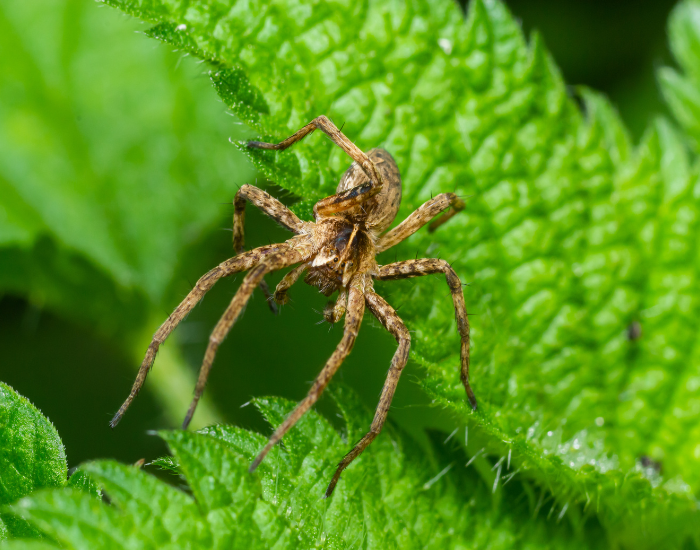
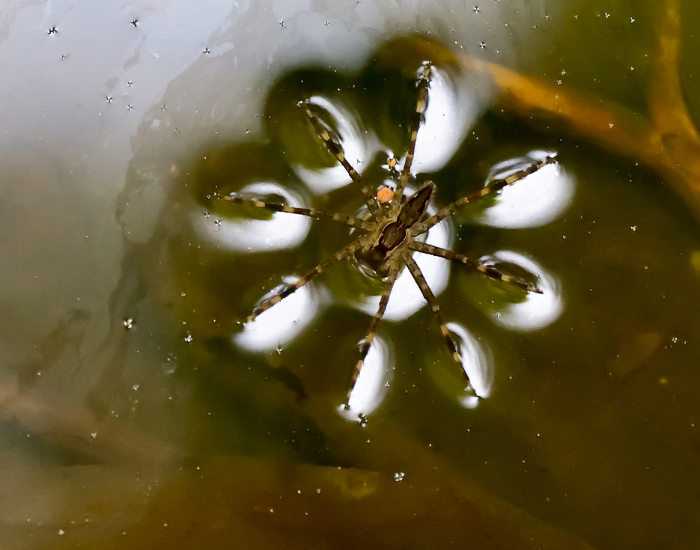
7. Fishing Spider (Dolomedes spp.)
Semi-aquatic predators, fishing spiders prowl near ponds and streams, even hunting tadpoles and small fish. They don’t spin traditional webs but ambush prey while skimming water surfaces.
- Size: Leg span 2.5–3 inches (body ~1 inch)
- Venom: Harmless
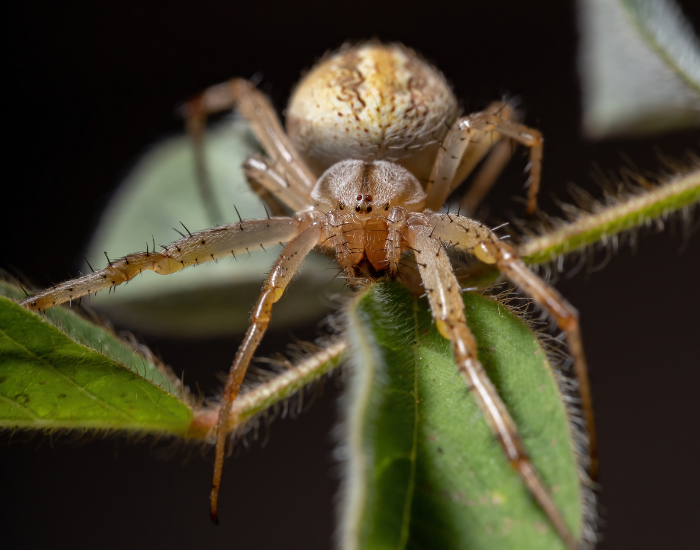
8. Spotted Orb Weaver (Neoscona crucifera)
The spotted orb weaver is common in Texas gardens, especially in summer. With reddish-brown bodies and spiny legs, they spin impressive orb webs at night, dismantling them by dawn.
- Size: Up to 1 inch body
- Venom: Harmless
If you walk into a web at night, you’ve likely crossed paths with this species. They are shy and quickly drop out of sight if disturbed.
9. Rabid Wolf Spider (Rabidosa rabida)
Despite the frightening name, rabid wolf spiders are neither rabid nor aggressive. They’re among the fastest-running spiders in Texas, often darting away before you can get a good look.
- Size: About 1 inch body length
- Venom: Harmless to humans
Their erratic movements are what earned them the dramatic name.
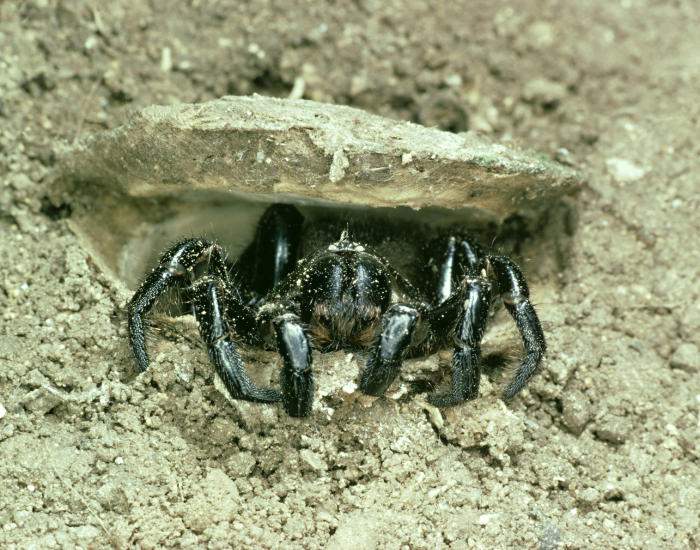
10. Trapdoor Spider (Ummidia spp.)
Glossy and dark, these burrowing spiders live underground in silk-lined tunnels with a camouflaged “trapdoor.” They ambush prey rather than roam.
- Size: Leg span 2–3 inches (body ~1–1.5 inches)
- Venom: Harmless
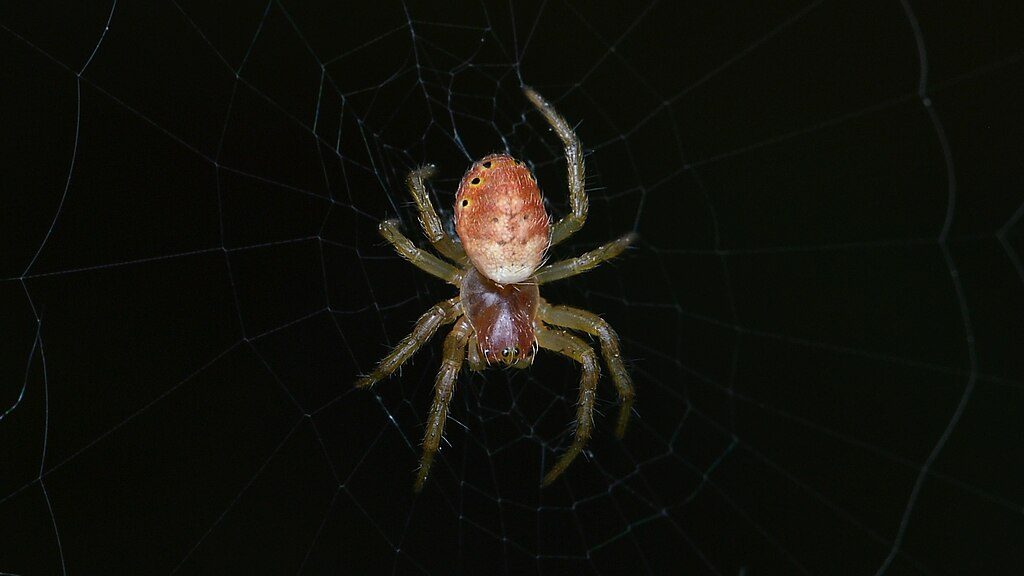
11. Six-Spotted Orb Weaver (Araniella displicata)
Smaller-bodied but with relatively long legs, this orb weaver builds delicate webs in shrubs. Its abdomen often shows six dark spots, helping with ID.
- Size: Leg span 2–2.5 inches (body 0.3–0.5 inches)
- Venom: Harmless
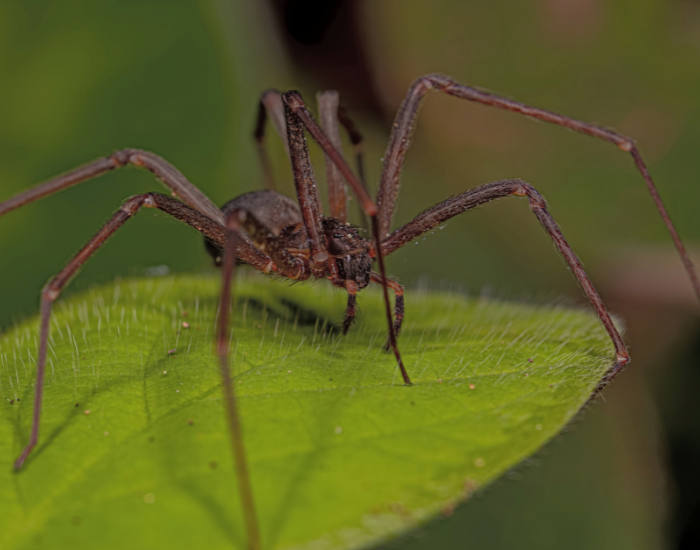
12. Texas Recluse (Loxosceles devia)
A close cousin of the infamous brown recluse, the Texas recluse is slightly larger, with the same violin-shaped distinctive marking on its back. It hides indoors in dry, dark spaces like attics or sheds.
- Size: Leg span 1.5–2 inches (body ~0.5 inch)
- Venom: Can cause necrotic lesions; medical attention advised
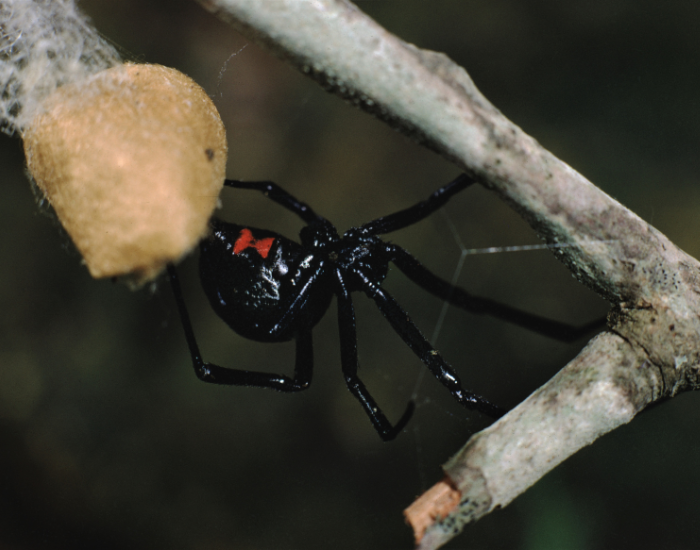
13. Black Widow (Latrodectus mactans)
One of the most infamous Texas spiders, the black widow is sleek, black, and instantly recognizable by its red hourglass marking. While not among the largest in body size, its reputation as a dangerous spider earns it a place here.
- Size: About 1.5 inches including legs
- Venom: Potent neurotoxin, can cause cramps and nausea; rarely fatal
Black widows favor quiet corners, garages, sheds, and woodpiles. If you accidentally disturb one, it will usually retreat rather than attack. Medical attention is recommended if bitten, but fatalities are virtually unheard of.
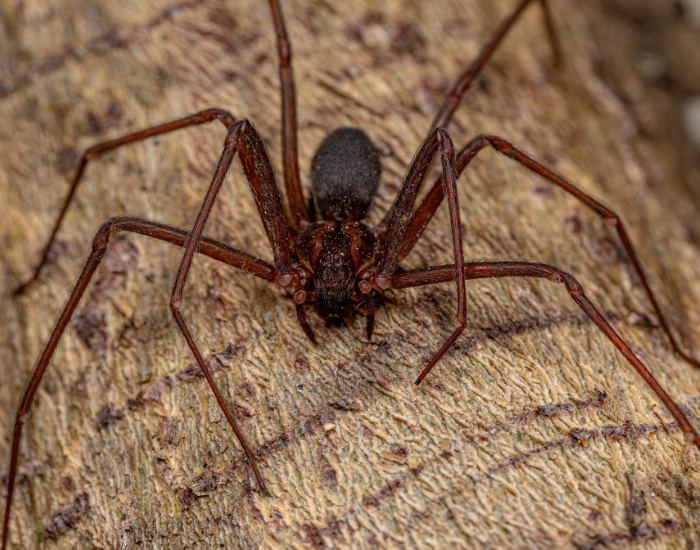
14. Brown Recluse Spider (Loxosceles reclusa)
The brown recluse is often mistaken for other indoor spiders, but its violin-shaped marking across the abdomen makes it easy to identify. Its venom can cause painful bites if the spider feels threatened., It has distinctive markings, a violin-shaped pattern on its back, set it apart. While not a giant, its venom is powerful enough to make it one of the most feared spiders in Texas.
- Size: 0.25–0.75 inches
- Venom: Can cause tissue damage; medical attention strongly advised
They prefer dark, undisturbed areas indoors, closets, shoes, and basements. Although bites are rare, they can trigger severe reactions, including necrotic lesions. Still, many reports are exaggerated, most heal without serious complications.
15. American House Spider (Parasteatoda tepidariorum)
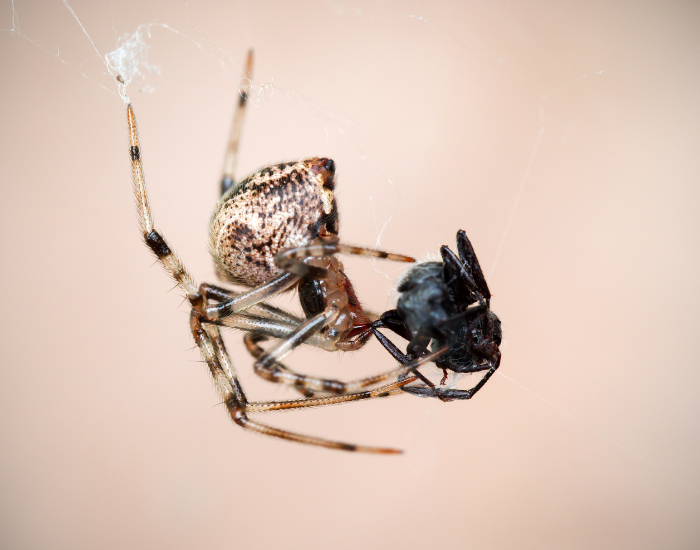
If you’ve noticed cobwebs in corners or around window frames, you’ve probably seen this spider. The American house spider is one of the most common spider species in Texas homes, though it’s small compared to tarantulas or wolf spiders.
- Size: About 0.25 inches
- Venom: Harmless
They build messy webs indoors but are more of a nuisance than a threat. Keeping your home clean and sealing cracks is usually enough to keep them under control.
Spider Habitats in Texas
Spiders adapt to many niches:
- Indoors: American house spiders in corners, orb weavers near window frames.
- Yards: Wolf spiders in grass, tarantulas in burrows.
- Hidden spots: Brown recluses in closets, black widows in sheds.
If you see huge spiders in your house, they’re often wolf spiders that wandered in while hunting prey.
Why You Shouldn’t Squish a Wolf Spider
One reason to avoid squishing wolf spiders: females carry babies on their back. Crush her, and dozens of spiderlings scatter across the floor. I’ve seen this happen in the field, and it’s a sight you don’t forget.
Wolf spiders also help keep pests like cockroaches and crickets under control. Instead of killing them, gently guide them outdoors.
Science and Research
Science Spotlight: Wolf Spiders as Pest Controllers
Wolf spiders also have their share of scientific attention, and for good reason. A recent study on Hogna carolinensis, one of the largest wolf spiders in Texas, revealed that their diet is surprisingly flexible, they adjust nutrient intake depending on whether they eat prey like crickets or even small frogs . This adaptability helps them thrive in fields, yards, and even urban habitats. For Texans, the takeaway is simple: wolf spiders aren’t just big and intimidating, they’re active partners in natural pest control. Instead of reaching for chemical sprays, remember these spiders are already hard at work reducing insect populations around your home and garden.
Prevention and Control
Want to reduce spider encounters? Try these tips:
- Seal cracks and crevices around windows, doors, and foundations.
- Keep your home clean to reduce insects that attract spiders.
- Declutter closets, garages, and basements where spiders hide.
- Trim yard vegetation and remove woodpiles near the house.
- Use professional pest control if you suspect recluse or widow infestations.
Spider Bites and Safety
Most spider bites in Texas are harmless, though they may cause redness, swelling, or an allergic reaction in sensitive individuals.
- Brown recluse bites can cause tissue damage and require medical attention.
- Black widow bites may trigger muscle pain and nausea but are rarely life-threatening.
- Fortunately, most Texas spiders are non-aggressive and won’t bite unless provoked.
If bitten and symptoms worsen, always seek medical care.
FAQ About these Spiders
The Texas brown tarantula is the biggest, with a leg span up to 4 inches.
Up to 2 inches body length, with 4-inch leg spans.
Yes, particularly in warmer regions near the Gulf Coast.
Because females may be carrying babies that scatter if crushed.
No, they’re harmless and beneficial.
Look for the distinctive violin-shaped marking, many spiders are mistaken for recluses, but most are harmless.
Intimidating But Harmless
The biggest spiders in Texas may look intimidating, maybe more that most other spiders, but most are harmless allies. From the giant wolf spider chasing prey in your yard to the orb weaver spiders in Texas spinning golden webs, these arachnids play vital roles in ecosystems.
As a biologist, I’ve learned that fear fades once you understand their place in nature. The next time you spot a huge spider in Texas, take a moment to observe its behavior. More often than not, it’s just doing its job, keeping balance in a world that often underestimates its quiet workers.
Further readin that may interest ytou: