The first weasel I ever saw properly was a ribbon of brown fur near Uppsala, Sweden. I was hiking a spruce trail at dusk when something poured across the path like liquid. It vanished into a wall of ferns before my brain caught up. Weeks later, near Banff in Canada, it happened again, a small head popping from a snowbank, black eyes shining, gone in a blink. I’ve spent my career chasing animals across continents, yet I couldn’t tell you which species I’d seen. That bothered me. So I did the homework, and this guide is the result.
Here’s the honest truth: weasels confuse almost everyone, biologists included. There are roughly 15 living types, and many look nearly identical at a glance. They share the same slender bodies, short legs, and restless energy. Below, I’ll walk you through each one, where it lives, what it eats, and how to recognize it in the wild. By the end, you’ll spot the difference between a stoat and a least weasel with confidence.
What Is a Weasel, Anyway?
Before the list, a quick grounding. A weasel is a small carnivorous mammal in the family Mustelidae, the same diverse family that includes badgers, otters, and martens. Most true weasels sit in the genus Mustela, though recent genetics moved a handful into a newer genus, Neogale. While all 15 species covered here belong to the subfamily Mustelinae (or the closely allied Ictonychinae), note that this list includes close allies like minks, ferrets, and polecats alongside the strict “true” weasels.
The body plan is unmistakable. Weasels have long, slender bodies, small heads, and short legs—an elongated shape that lets them pour into narrow tunnels after prey. They have five toes on each foot and thin bodies that lose heat fast. To survive, they eat 40 to 60 percent of their body weight daily. That furnace of a metabolism drives nearly everything a weasel does.
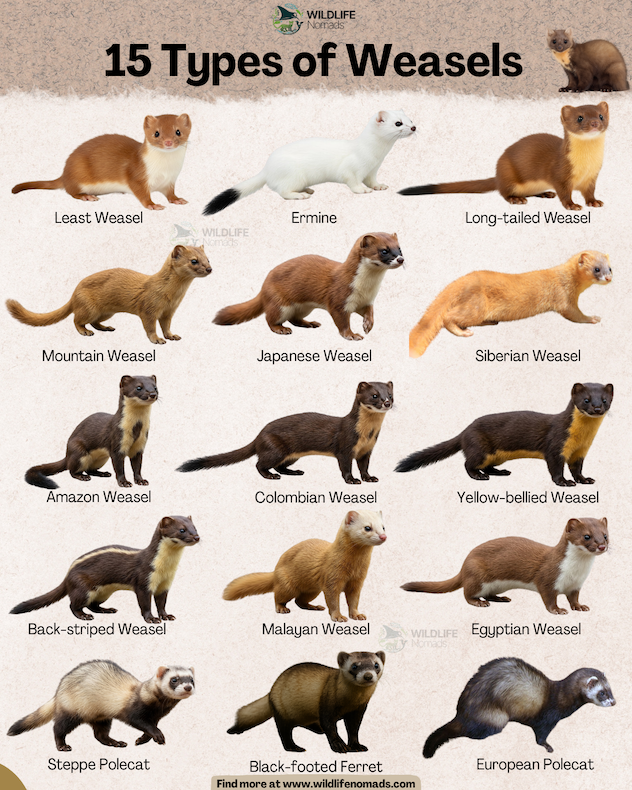
The 15 Types of Weasels
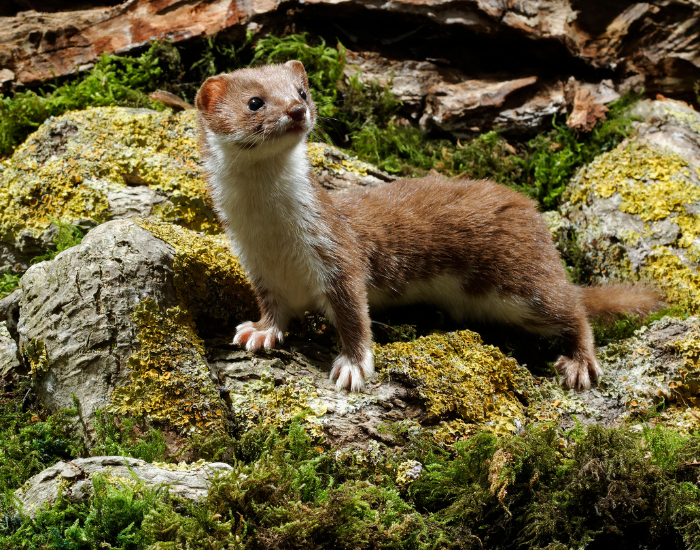
1. Least Weasel (Mustela nivalis)
The least weasel is the smallest carnivore on Earth, growing to roughly 10 inches long. It weighs as little as 3 ounces, lighter than a deck of cards. Despite that, it hunts mice and voles many times its weight, hammering rodent populations across the northern hemisphere.
I find its range astonishing. This tiny predator lives across North America, Europe, and Asia, from open fields to alpine meadows. In winter, northern populations turn white for camouflage. When I picture “weasel,” this brown-and-cream sprite is what my mind reaches for first.
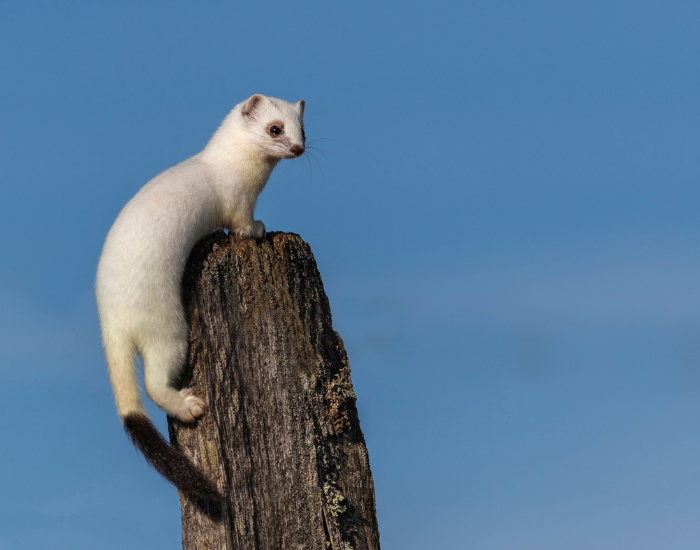
2. Short-tailed Weasel / Ermine (Mustela erminea)
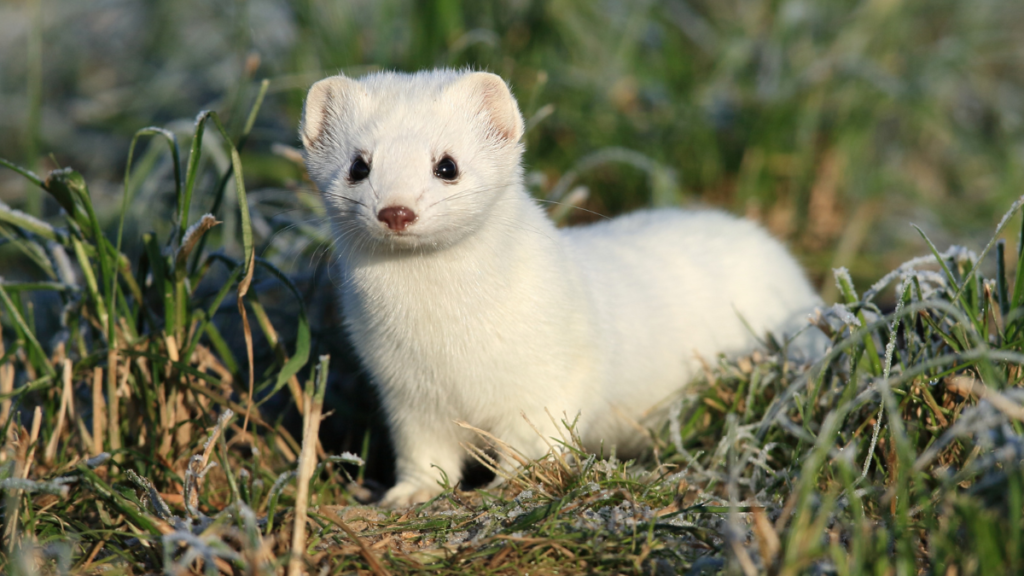
The short-tailed weasel is also known as the ermine, a nod to the luxurious white fur it grows in winter. It is arguably the most common and widespread species worldwide, ranging across the Arctic, Europe, Asia, and much of North America. Only the black tail tip stays dark year-round.
That coat made ermine famous in royal robes for centuries. In the field, though, I love it for its curiosity, ermines will pause and stand tall to study you before darting off. They den in burrows, often ones stolen from the very rodents they’ve eaten.
3. Long-tailed Weasel (Neogale frenata)
The long-tailed weasel can grow up to 12 inches long, with a tail that seems almost too big for its body. Genetically it’s no longer a true Mustela… a 2021 study moved it into the genus Neogale. You’ll still see it labeled Mustela frenata in older guides, so don’t let that trip you up.
This is a New World specialist. The long-tailed weasel lives across southern Canada, the United States, and down into South America. It thrives in riverbank habitats and riparian woodlands, hunting rats, mice, and rabbits with relentless focus.

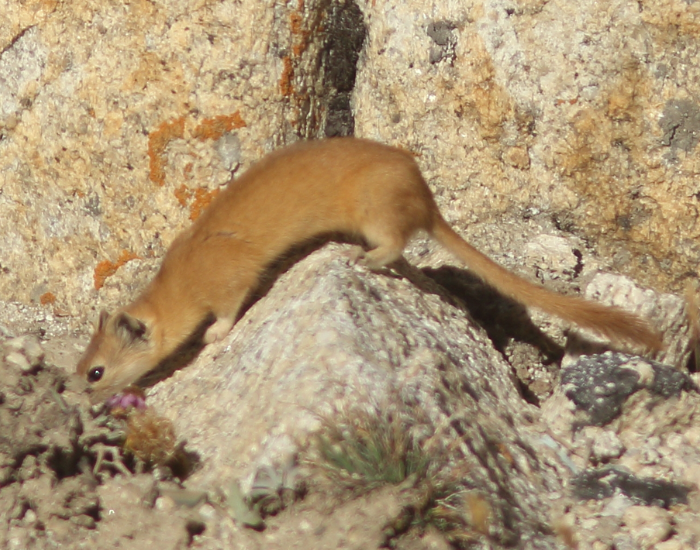
4. Mountain Weasel (Mustela altaica)
The mountain weasel haunts the high country of Central Asia, from Kazakhstan and Tibet to Mongolia and southern Siberia. It’s built for altitude, denning among rocks and burrows well above the treeline. Its summer coat runs grey-brown, fading paler in the cold months.
Sadly, this is one to watch. The mountain weasel is listed as near threatened by the IUCN, its numbers pressured by habitat change. It’s a reminder that even hardy alpine species aren’t immune to a shifting world.
5. Japanese Weasel (Mustela itatsi)
Native to Japan’s islands, the Japanese weasel wears a warm orange-brown coat that stands out against green undergrowth. Males noticeably outsize females, a size gap common across the weasel family. It favors forests and riverbanks, where it hunts small mammals, frogs, and birds.
Interestingly, humans have moved this species around Japan to control rodents, which occasionally turns a native helper into a local problem. It’s a neat example of how “useful” and “invasive” can blur.
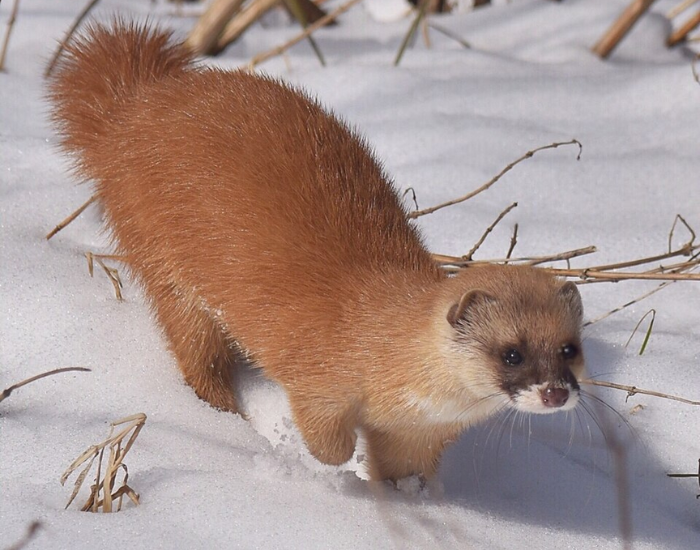
6. Siberian Weasel (Mustela sibirica)
The Siberian weasel, or kolonok, ranges across eastern Asia from Siberia to the Himalayas. It’s larger than most weasels and famous for its tail, the soft hair once supplied “kolinsky” artist brushes. Its rich russet fur makes it one of the more striking species.
This weasel adapts easily, turning up near villages and farmland as readily as deep forest. That flexibility helps explain why it remains widespread while some cousins struggle.
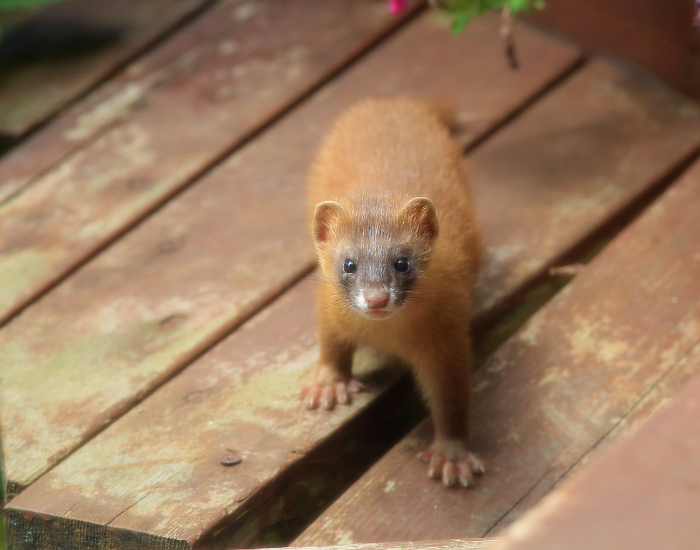
7. Tropical (Amazon) Weasel (Neogale africana)
Despite the misleading scientific name africana, this weasel lives nowhere near Africa. The tropical weasel, better known as the Amazon weasel, inhabits the rainforests of South America. Like the long-tailed weasel, genetics recently placed it in Neogale.
We know surprisingly little about it. It seems to favor lowland forest and riverbanks, and it swims well. For a field biologist, that scarcity of data is its own kind of magnet, there’s real natural history still waiting to be written here.
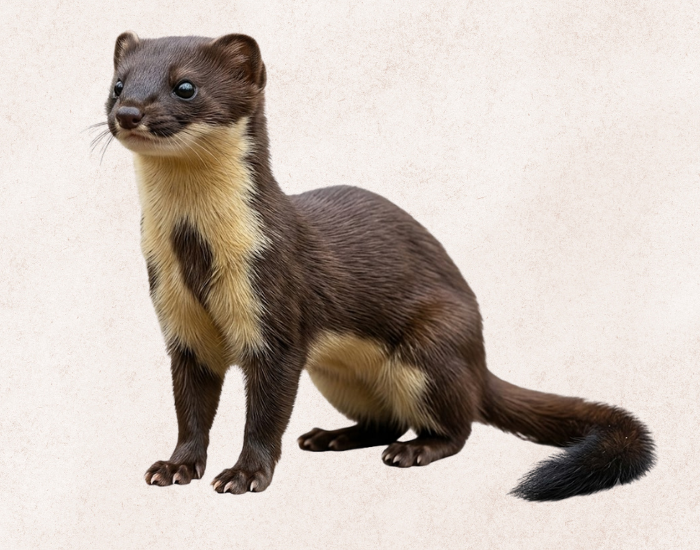
8. Colombian Weasel (Neogale felipei)
The Colombian weasel may be the rarest carnivore in South America, known from only a handful of sites in Colombia and Ecuador. It has partially webbed feet, hinting at a semi-aquatic life along cold Andean streams.
This one worries me most. The Colombian weasel is classified as vulnerable, largely because habitat loss is erasing the cloud forests it depends on. Every confirmed sighting is a small scientific event.
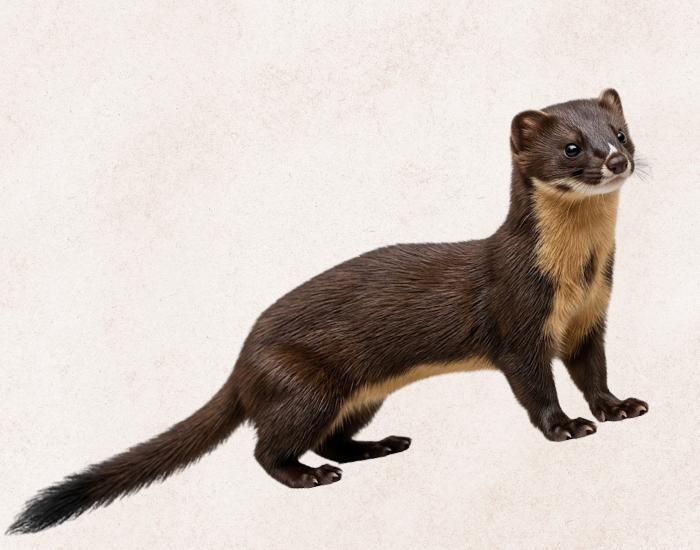
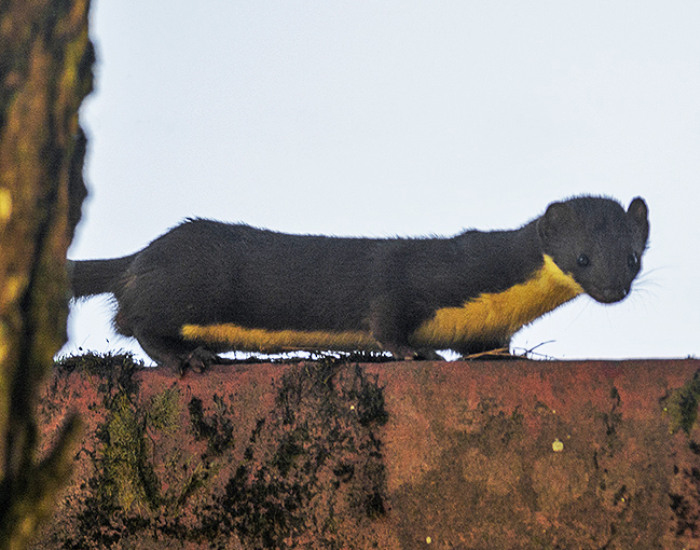
9. Yellow-bellied Weasel (Mustela kathiah)
The yellow-bellied weasel is easy to name once you see it, dark brown above, bright yellow-orange below. It lives across southern Asia, through the Himalayas and into southern China and Southeast Asia, usually in pine forests and mountain scrub.
It hunts much like its relatives, chasing rodents through burrows and leaf litter. Locals sometimes welcome it near homes precisely because it keeps mice in check.
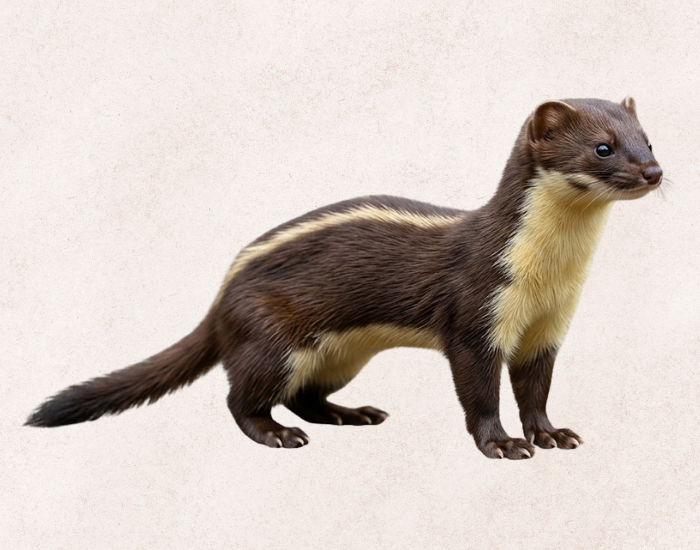
10. Back-striped Weasel (Mustela strigidorsa)
A thin silver stripe runs down the spine of the back-striped weasel, giving this Southeast Asian species its name. It ranges from Nepal and northeast India through Laos and Vietnam, mostly in evergreen forest.
Sightings are rare enough that much of its behavior remains guesswork. What we do know fits the family template: solitary, quick, and endlessly hungry.
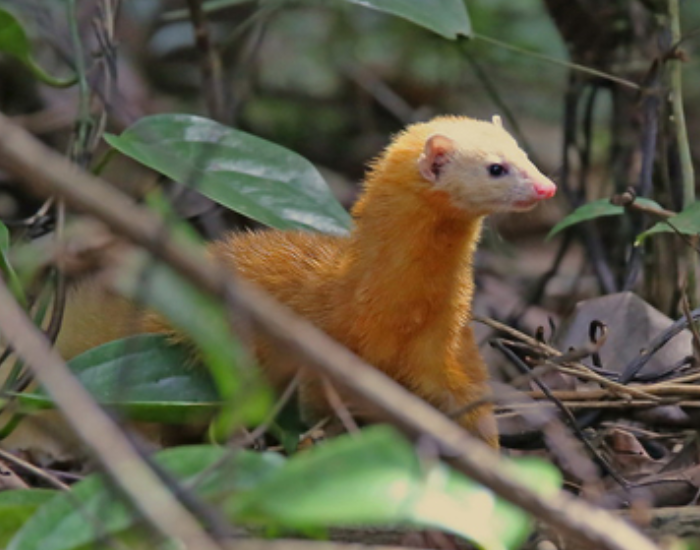
11. Malayan Weasel (Mustela nudipes)
The Malayan weasel breaks the color rules. Its body glows reddish-orange while its head turns pale, almost white, a bold contrast in the forests of the Malay Peninsula, Sumatra, and Borneo. The name nudipes, “naked-footed,” refers to its bare soles.
It’s poorly studied, but appears to hunt on the ground for small mammals and other animals of the forest floor. Spotting one would top my Southeast Asia wish list.
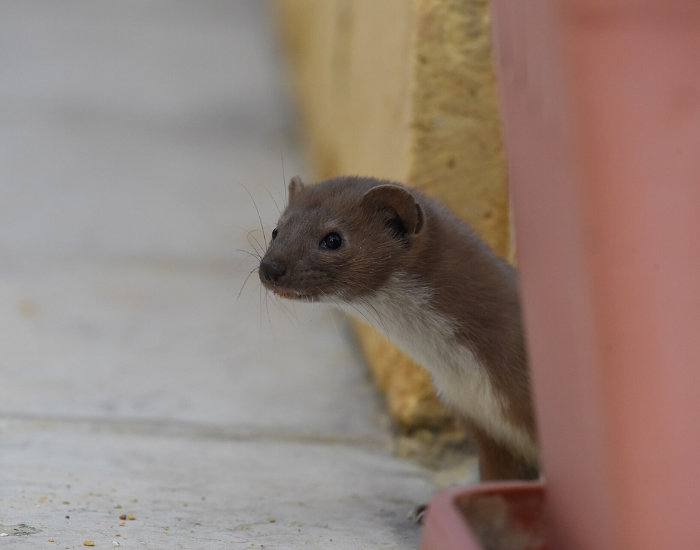
12. Egyptian Weasel (Mustela subpalmata)
The Egyptian weasel lives almost entirely in northern Egypt, especially around the Nile Delta and cities like Cairo. It was long considered a form of the least weasel before earning full species status. City living suits it, it dens in walls and gardens and preys on urban rodents.
I find it a charming exception. While most weasels flee human contact, this one has quietly become a neighbor, thriving where few carnivorous mammals dare.
13. Steppe Polecat (Mustela eversmanii)
Polecats stretch the definition of “weasel,” but they’re close cousins in the same genus. The steppe polecat roams the open grasslands of Eastern Europe and Central Asia, hunting ground squirrels and other burrowing prey. It’s heavier and blunter than a true weasel, with a dark mask across the face.
Like all its relatives, it can produce a strong-smelling spray to mark territory and warn off rivals. Get close to one and you won’t forget the introduction.
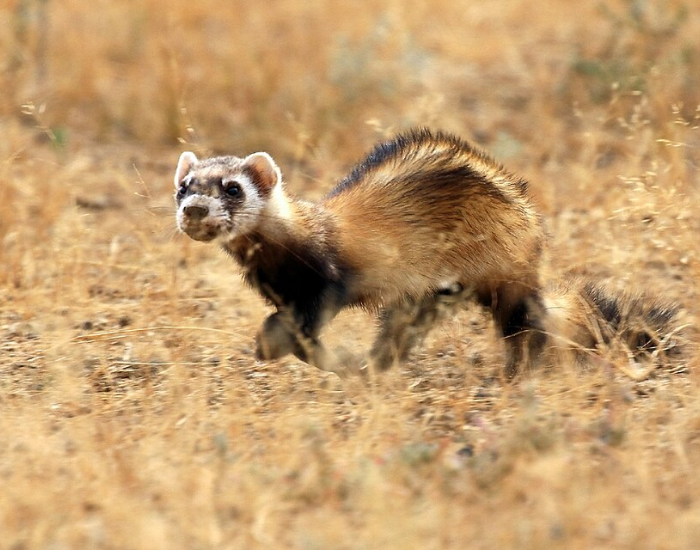
14. Black-footed Ferret (Mustela nigripes)
The black-footed ferret is North America’s only native ferret and one of conservation’s great comeback stories. Once declared extinct, it was rediscovered in 1981 and bred back from a tiny founding population. It depends almost entirely on prairie dogs for food and shelter, denning in their abandoned burrows.
I include it because it shows the family’s fragility and resilience at once. Captive breeding pulled this species back from zero, yet it remains endangered and tied to a single shrinking prey base.

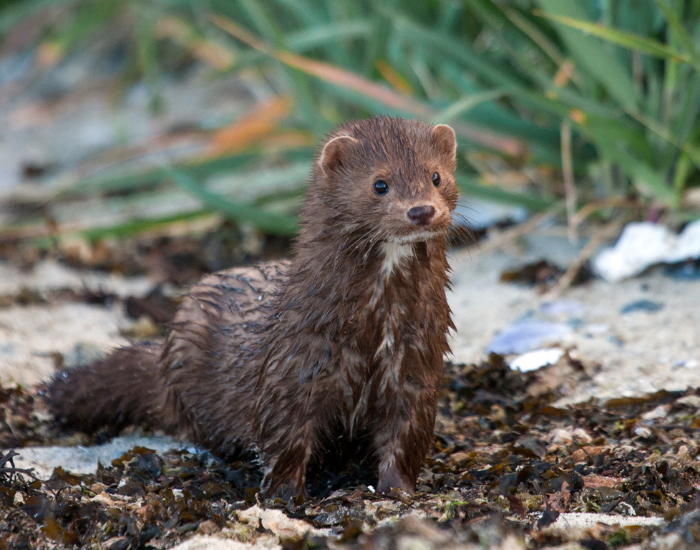
15. American Mink (Neogale vison)
The American mink rounds out our list as the weasel family’s water specialist. With a longer body, thick waterproof fur, and semi-webbed feet, it thrives in riverbank habitats across North America. Genetically it now sits in Neogale alongside the long-tailed and Amazon weasels.
Beyond its native range, though, the mink is a notorious invasive species. Escapes from fur farms seeded wild populations across Europe and beyond, where the American mink now outcompetes the struggling European mink and preys heavily on native wildlife, including bird eggs and waterfowl.
A Quick Word on Their Wilder Relatives
Weasels don’t live in a vacuum. The family Mustelidae is a sprawling, diverse family, and knowing the neighbors helps you place a weasel correctly. The genus Gulo holds the powerful wolverine; the genus Martes holds the tree-climbing martens. Nearby sit the sea otters and river otters, with their broad webbed feet, plus the American badger and the unrelated but similarly bold honey badger. Even the African striped weasel (despite its name) belongs to a separate lineage entirely.
Understanding those cousins is why I lean on comparisons in the field. A weasel’s small head, short legs, and pour-through-a-keyhole build read very differently once you’ve watched a chunky badger or a bounding pine marten move.
FAQ
Weasels are hunted by larger predators, including foxes, hawks, owls, and snakes. Their small size makes them vulnerable despite their ferocity. Domestic cats and dogs also kill them. To survive, weasels rely on speed, cover, and those slender bodies that let them dive into burrows too tight for pursuers.
Weasels sleep in burrows, rock crevices, hollow logs, and dense vegetation. They are resourceful and often move into abandoned burrows dug by other animals, sometimes the very rodents they’ve eaten. Some line the den with fur and grass for insulation. Most weasel species are solitary and rest alone outside of the breeding season.
Weasels are remarkably intelligent for their size. They solve spatial problems quickly, remember tunnel systems, and adapt hunting tactics to different prey. One famous behavior is the so-called “war dance,” a frenzy of twisting leaps that may confuse or mesmerize prey. That mix of curiosity and cunning is exactly what makes them so hard to catch on camera.
A weasel’s favorite food is small rodents — primarily rats, mice, and voles, along with rabbits. Weasels are opportunistic predators that also eat frogs, birds, and bird eggs when the chance arises. They can kill prey larger than themselves, and when hunting is easy they sometimes kill more than they can eat, storing the excess food for lean days. This appetite makes them powerful natural controllers of rodent populations.
A weasel is a carnivorous mammal in the genus Mustela (or Neogale), family Mustelidae. Many species use delayed implantation, a strategy that lets a fertilized egg pause before developing so young arrive in favorable seasons. Gestation ranges from about one month to more than nine months because of that pause. Weasels typically raise one to two litters yearly, and the young — called kits — reach sexual maturity fast, often within a year.
Why These Small Predators Matter
Weasels are proof that ecological importance has nothing to do with size. These pocket-sized hunters keep rodent numbers in check across nearly every continent except Antarctica and Australia, quietly protecting crops and native ecosystems in the process. Most species are still listed as least concern, but that stability isn’t guaranteed, the mountain weasel is slipping toward threatened status, and the Colombian weasel is already vulnerable.
So the next time you’re on a trail at dusk, watch the edges. That flicker of brown fur near the ferns might be a story worth chasing. If it leaves you wanting more small, fierce mammals, wander over to our roundup of the cutest animals in the world, meet their fearsome cousin in wolverine facts, or compare notes with the ermine, the polecat, and the world’s foxes. Then tell me in the comments: which weasel finally melted your heart?
Can You Name That Weasel? 🐾
A 15-photo identification challenge — the wrong answers are deliberately tricky look-alikes, because so many weasels look nearly identical. Go back and change any answer before you score.
Which weasel is this?
References:
Harding, L. E., & Smith, F. A. (2009). Mustela or Vison? Evidence for the taxonomic status of the American mink and a distinct biogeographic radiation of American weasels. Molecular Phylogenetics and Evolution, 52(3), 632–642. https://doi.org/10.1016/j.ympev.2009.05.036
Zub, K., Szafrańska, P. A., Konarzewski, M., Redman, P., & Speakman, J. R. (2009). Trade-offs between activity and thermoregulation in a small carnivore, the least weasel Mustela nivalis. Proceedings of the Royal Society B: Biological Sciences, 276(1663), 1921–1927. https://pubmed.ncbi.nlm.nih.gov/19324766/
Zub, K., Piertney, S., Szafrańska, P. A., & Konarzewski, M. (2013). Seasonal variation of resting metabolic rate and body mass in free-living weasels Mustela nivalis. Physiological and Biochemical Zoology, 86(6), 610–622. https://doi.org/10.1086/673286
Atmeh, K., Andruszkiewicz, A., & Zub, K. (2018). Climate change is affecting mortality of weasels due to camouflage mismatch. Scientific Reports, 8, 7648. https://doi.org/10.1038/s41598-018-26057-5
González-Maya, J. F., Zárrate-Charry, D. A., Vela-Vargas, I. M., Jiménez-Alvarado, J. S., Gómez-Hoyos, D. A., & Cepeda-Mercado, A. A. (2019). The Vulnerable Colombian weasel Mustela felipei (Carnivora): New record from Colombia and a review of its distribution in protected areas. Therya, 10(3). https://therya.mastozoologiamexicana.com/index.php/THERYA/article/view/776