Three years ago, the Wildlife Nomads team waded out from a rocky headland on San Cristóbal Island with snorkels and a half-formed plan to photograph sea lions. The Galápagos islands had pulled us back for the usual lineup: giant tortoises lumbering down the trails and sea lions sprawled on every bench. What we did not expect, on my third breath at the surface, was to lift my head and find three blue footed booby birds drifting beside me, calm as ducks on a pond.
Earlier that day, I had spotted my first blue footed boobies waddling along the esplanade, those bright blue feet so saturated they looked photoshopped onto the bird. A pair of waved albatross cruised overhead while we snorkeled. We had already shared the reef with two green sea turtles. But meeting a booby at eye level in the ocean rewrote everything I thought I knew about this species.
This piece is everything I wish I had known before that swim, a biologist’s guide to booby birds, the whole genus, not just the famous blue ones.
1. The Genus Sula Holds Six Species (Plus One Strange Cousin)
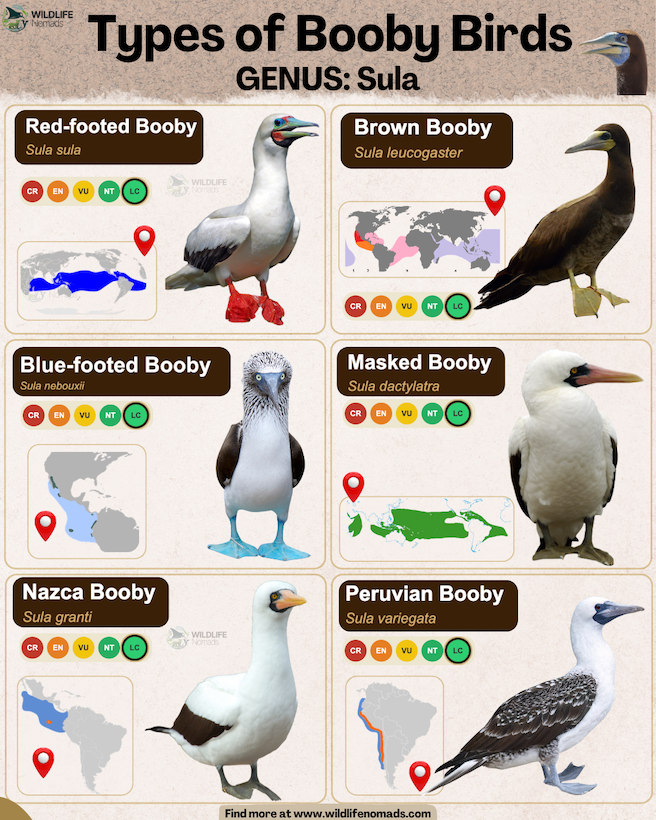
When most people picture booby birds, they think of the iconic blue footed boobies of the Galápagos islands. The booby family is bigger and stranger than that. There are six species in the genus Sula, plus one closely related cousin in the genus Papasula. The blue footed boobies (Sula nebouxii), peruvian boobies (Sula variegata), brown booby (Sula leucogaster), red footed booby (Sula sula), masked booby (Sula dactylatra), and nazca boobies (Sula granti) make up the core six.
The Abbott’s booby, in genus Papasula, is the outlier. It nests only on Christmas Island and split from the main lineage millions of years ago. It is also the largest booby and lives in the canopy of rainforests! Each booby species has carved out its own slice of tropical and subtropical ocean, from the cold Humboldt Current off Peru to the coral atolls of the Indian Ocean.
2. “Booby” Is a Spanish Word for “Foolish”
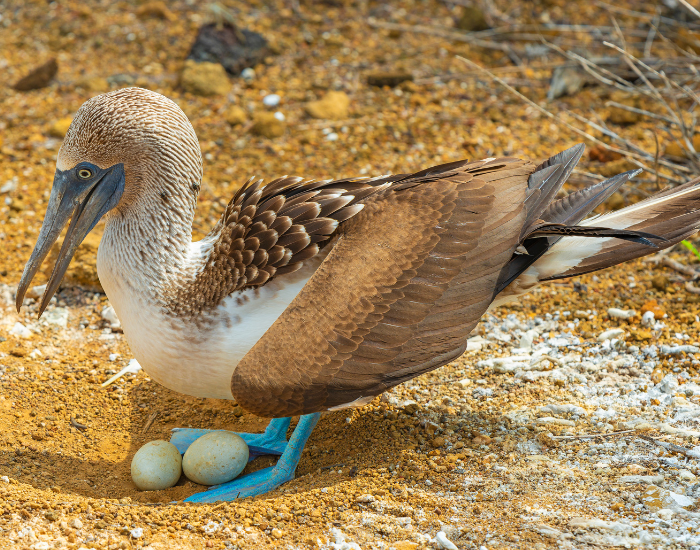
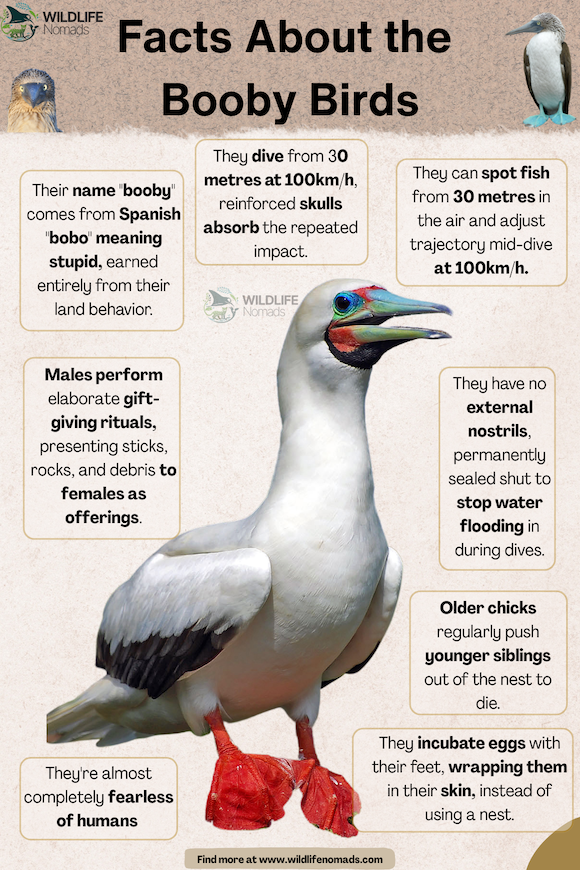
The name comes from the Spanish word “bobo,” meaning silly or foolish. Sailors gave them this nickname because boobies would land on ship rigging and let themselves be caught by hand. On land they look comical too, adults waddling, parading, and tipping side to side as they walk on land with those oversized feet. We have stood three meters from a blue footed booby on a Galápagos trail while it stared back without a hint of concern.
That apparent foolishness is actually fearlessness. These birds evolved on remote islands and coastal areas where natural predators were essentially absent. Calling them a “bobo bird animal” tells you more about the sailors than the booby.
3. Those Vibrant Blue Feet Are a Living Health Report
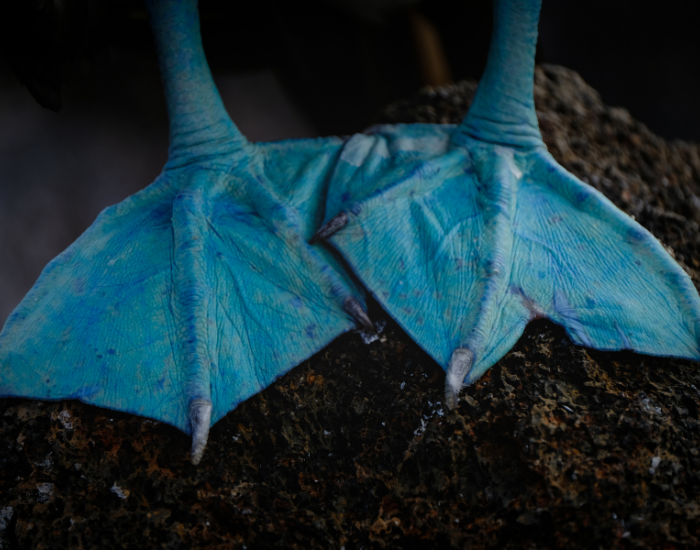
The bright blue feet of blue footed boobies are not paint. They are a real-time advertisement of the bird’s diet and immune health. The vibrant blue feet pigment comes from carotenoids in fresh fish that the bird must catch fresh, a healthy, well-fed booby has the brightest blue feet in the colony.
In a clever 2006 experiment, Velando and colleagues fed adult blue footed boobies a starvation diet for forty-eight hours. Their blue feet visibly faded. When females spotted faded feet on a partner, they laid smaller eggs and invested less effort in the brood. The blue feet are an honest signal; fade them, and your reproductive prospects fade too.
4. Sky Pointing and Strut: The Most Charming Dance on Earth
The courtship displays of blue footed boobies are pure theater. Males begin “sky pointing,” tilting beak and tail upward, spreading their wings, and whistling toward the sky. Then comes the slow, deliberate parading: lifting each foot in turn so the female can admire those blue feet at close range.
Female blue footed boobies are slightly larger than males and respond with their own gravelly honk. Adult blue footed boobies can keep this routine going for an hour. I have watched it on a windy hillside on Española and laughed out loud; every species’ love language is strange, but the blue footed boobies’ is one of the most committed.
5. They Are Plunge Divers Built Like Missiles
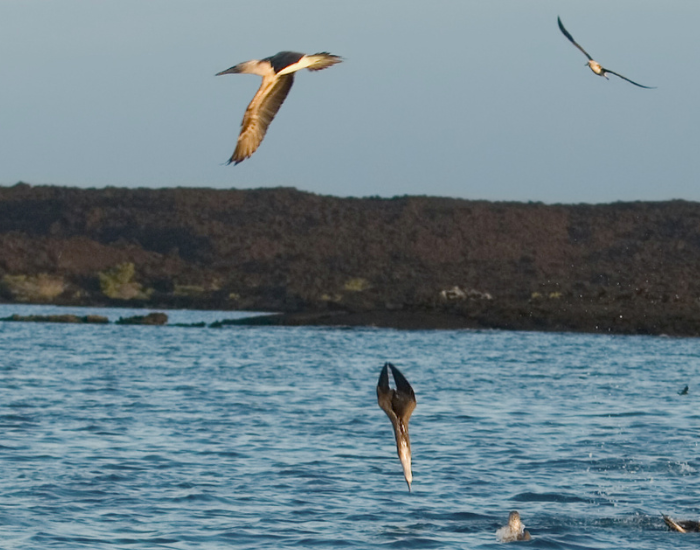
When boobies hunt, the comedy ends. They climb to twenty or thirty meters, fold their long wings tight to the body, and drop. Air sacs along the neck and chest cushion the impact as the booby hits the surface at nearly 100 km/h. The streamlined head and tail let the birds knife into deep water after fish and squid.
Brown booby and Nazca boobies often dive in shallower water, while red footed booby specialists chase flying fish far offshore. From the snorkel that morning, the boobies that joined me looked unbothered; they were gauging fish below, not me. Across the family, every booby is a precision diving machine.
6. The Brown Booby I Met in North Queensland
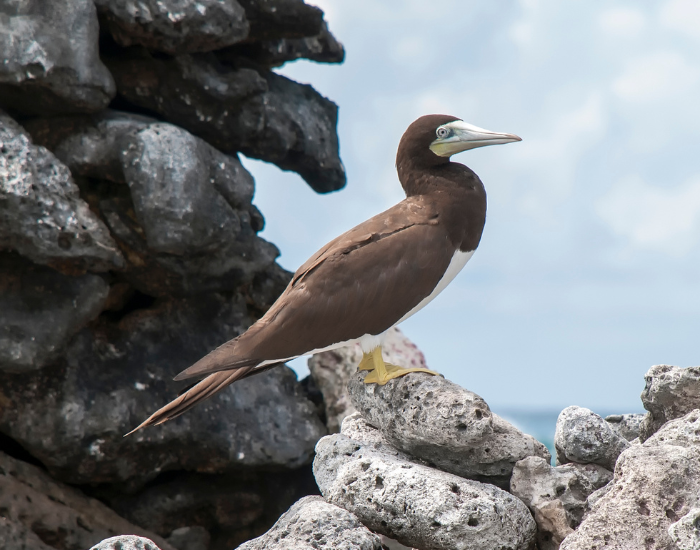
In 2019 I drove the coast north of Cairns on my first long Australian road trip. Between mangroves and headlands I caught a single brown booby cruising low over the water, chocolate brown above, white belly, yellow feet. Sula leucogaster has the widest range of any booby species, breeding in tropical colonies from the Caribbean to the Coral Sea.
Brown booby chicks practice fierce sibling rivalry. The first to hatch usually pushes the second from the nest. Brutal? Yes. But it is also a hard-edged adaptation that keeps at least one brown booby chick alive when fish are scarce. Compared with other seabirds, the brown booby is also one of the easiest boobies to spot from a coastal headland.
7. Red Footed Booby — The Only Booby That Builds a Tree Nest
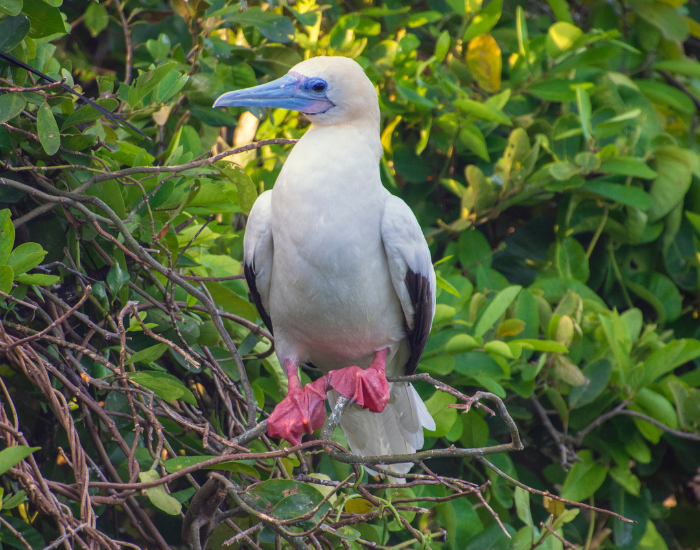
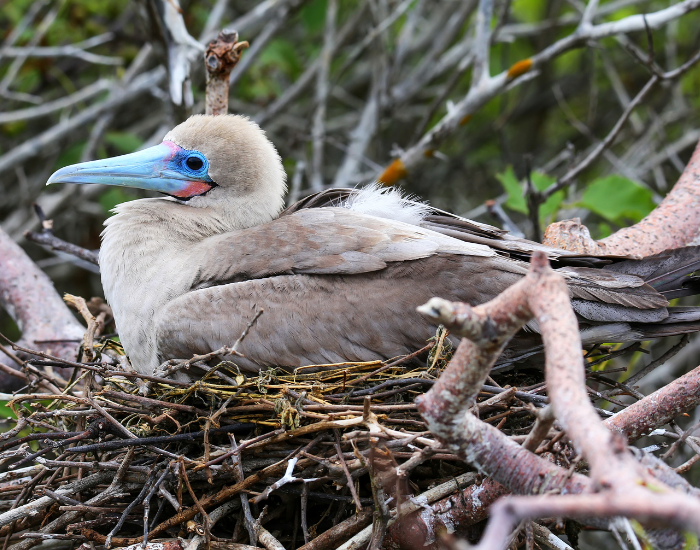
The red footed booby is the smallest of the six species and the only one that consistently builds a tree nest. Every other booby lays eggs on bare ground or a scrape of guano. The red footed booby nests in mangroves and low scrub, weaving sticks into a flimsy platform that somehow survives tropical storms.
I have not yet seen a red footed in the wild; they are firmly on our Galápagos return list. They come in white and brown morphs across their range, and their bright red feet pop against green foliage like a Christmas ornament. Their long wings let red footed boobies fly hundreds of kilometers from the colony to find fish.
8. Nazca Boobies and the Cruelty of the Older Sibling
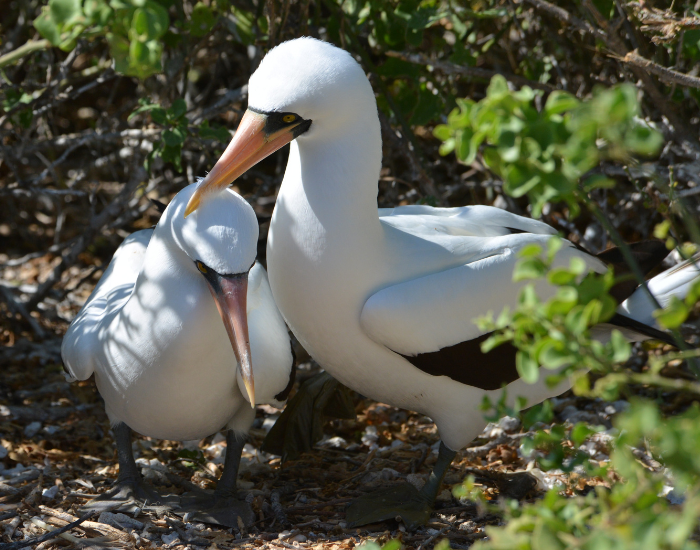
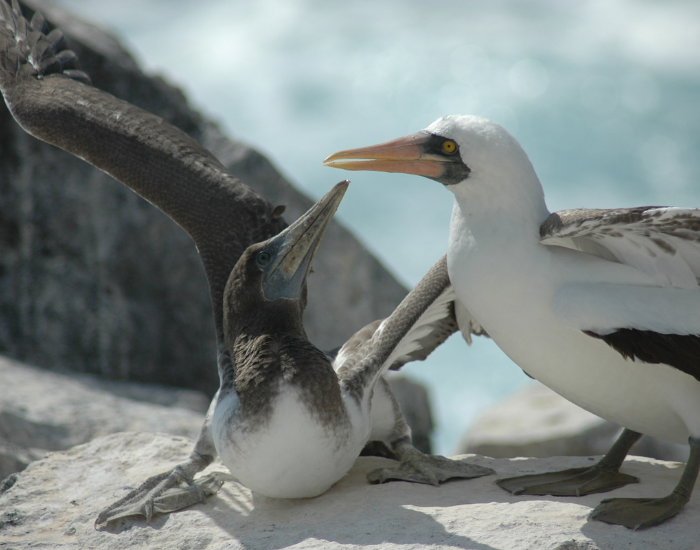
Nazca boobies are slightly larger than their masked cousins, with a sharp orange beak and snow-white bodies. Sula granti was only recognized as a separate species from the masked booby (Sula dactylatra) in 2002, when DNA work confirmed they were distinct. Both lay one or two chalky blue eggs directly on the ground.
Here is the dark twist. In Nazca boobies, the older chick almost always evicts the younger from the nest within days of hatching. Researchers tracking these chicks found that maltreatment carries into adulthood, a phenomenon they call the “cycle of violence” in seabirds. Field biology is not always cute.
9. Boobies Are Closely Related to Gannets
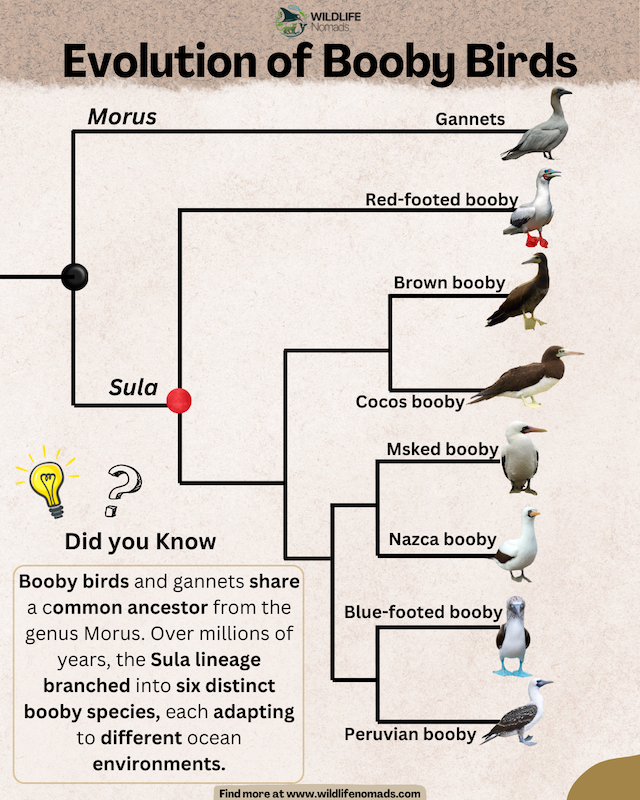
Boobies and gannets share a recent common ancestor. The northern gannet looks like a giant pale booby, and the family Sulidae groups them together. The two genera split when colder North Atlantic waters opened up new fishing niches. Today gannets handle the cold seas while boobies dominate the tropical and subtropical oceans.
Knowing this evolutionary history changed how I watch both groups. The plunge dive technique, the colonial breeders’ chatter, the long pointed wings, they all trace back to the same blueprint as the northern gannet. Boobies are basically gannets that moved to the tropics and added flair.
10. Chalky Blue Eggs and Colonial Breeding Life
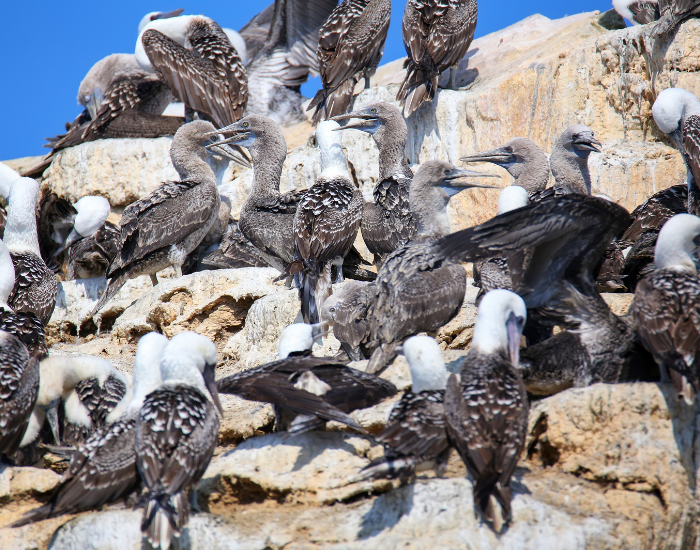
All boobies are colonial breeders. Some Peruvian booby colonies hold half a million birds packed wing to wing. They lay one to three chalky blue eggs directly on the ground, then incubate them with their feet, boobies do not have a brood patch like most other birds, so those big webbed feet do double duty.
Breeding season varies by booby species and latitude. Blue footed boobies on the Galápagos breed almost year round; brown booby populations sync with the dry season. Walking through an active booby colony, you hear a constant low chorus and step carefully to avoid stepping on chalky blue eggs the size of robins’ but with a thick, dusted shell.
11. Peruvian Boobies Built Empires of Guano
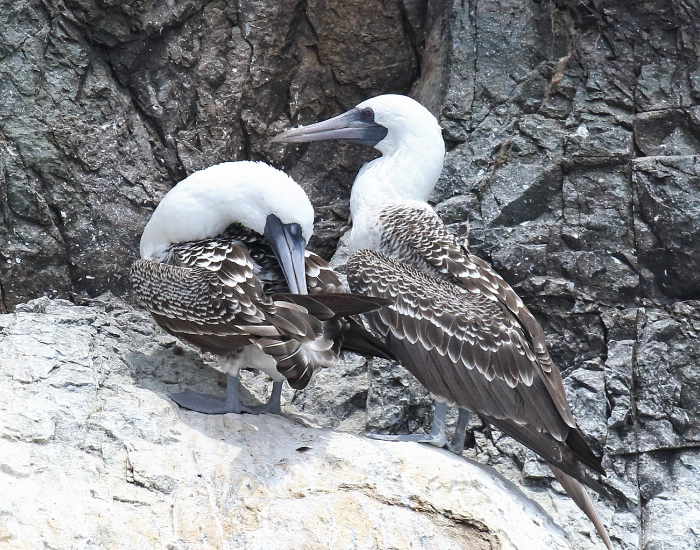
Sula variegata, the Peruvian booby, may be the most economically important seabird in history. Massive Peruvian booby colonies along the cold Humboldt Current, off Peru and northern Chile in south america, produced guano deposits so vast that nineteenth-century Peru built a national economy on bird droppings.
These boobies feed almost exclusively on Peruvian anchoveta — small schooling fish that thrive in the cold upwelling. When El Niño warms the ocean off South America, the anchovy schools collapse, and Peruvian boobies starve by the millions. I have not yet visited Peru’s guano islands, but they sit near the top of my fieldwork wishlist.
12. Their Biggest Threats Are Humans and Our Pets
Boobies survived eons without natural predators on remote islands. Then humans showed up with rats, cats, goats, and pigs. Feral cats are now one of the worst invasive species for ground-nesting birds, raiding nests for chicks and eggs. Native birds of prey and reef sharks also pick off chicks at the colony edge, but it is the introduced mammals that do the catastrophic damage.
Adults face their own pressures: longline fisheries, plastic pollution, oil spills, and warming seas that shift fish stocks further from breeding colonies. Climate-driven food shortages in the eastern Pacific have crashed blue footed boobies populations on the Galápagos islands by more than half since the 1990s. Protecting boobies means protecting the whole tropical ocean food web — including the crabs and small fish that feed both birds and reefs.
FAQs about Booby Questions
Yes. Boobies are real seabirds in the family Sulidae, with six species in the genus Sula plus the Abbott’s booby in genus Papasula. The most famous is the blue footed booby of the Galápagos, but brown booby, red footed booby, masked booby, Nazca, and peruvian boobies all exist too. They are all large seabirds that dive for fish.
The name comes from the Spanish word “bobo,” meaning foolish or silly. Sailors thought the birds were stupid because they landed on ship rigging and could be caught by hand. The fearlessness comes from evolving on remote islands and coastal areas without natural predators. The boobies were not foolish, they had simply never met humans.
Boobies eat fish and squid, caught by plunge diving from the sky. Blue footed boobies often feed close to shore on small schooling fish like sardines and anchovies. Brown booby and red footed booby chase flying fish offshore. Peruvian boobies depend almost entirely on anchovies. Adults bring whole fish back to chicks at the colony.
Future of the Booby Birds Flock
Booby birds reward you the moment you stop laughing at the name and start watching the bird. Every booby species has a distinct silhouette, a different home ocean, and a slightly different drama unfolding on the nest. The blue footed boobies that swam beside me on San Cristóbal turned an ordinary snorkel into a moment I still replay.
If you find yourself anywhere a booby breeds — a Galápagos cliff, a Caribbean rock, a Queensland headland — sit down and watch. Bring a notebook. Note who is parading, who is sky pointing, whose blue feet are the brightest. Then come tell me what you saw. For more on closely related groups, our albatross deep dive, the 12 seabirds you must know, and the broader types of birds guide are good next stops.
References:
Anchundia, D., Huyvaert, K. P., & Anderson, D. J. (2014). Chronic lack of breeding by Galápagos blue-footed boobies and associated population decline. Avian Conservation and Ecology, 9(1), 6. https://doi.org/10.5751/ACE-00650-090106
Anderson, D. J., & Apanius, V. (2003). Actuarial and reproductive senescence in a long-lived seabird: Preliminary evidence. Experimental Gerontology, 38(7), 757–760. https://doi.org/10.1016/S0531-5565(03)00104-9
Friesen, V. L., Anderson, D. J., Steeves, T. E., Jones, H., & Schreiber, E. A. (2002). Molecular support for species status of the Nazca booby (Sula granti). The Auk, 119(3), 820–826. https://doi.org/10.1093/auk/119.3.820
Friesen, V. L., & Anderson, D. J. (1997). Phylogeny and evolution of the Sulidae (Aves:Pelecaniformes): a test of alternative modes of speciation. Molecular phylogenetics and evolution, 7(2), 252–260. https://doi.org/10.1006/mpev.1996.0397
Müller, M. S., Porter, E. T., Grace, J. K., Fagan, W. F., Kacelnik, A., Wikelski, M., & Anderson, D. J. (2011). Maltreated nestlings exhibit correlated maltreatment as adults: Evidence of a “cycle of violence” in Nazca boobies (Sula granti). The Auk, 128(4), 615–619. https://doi.org/10.1525/auk.2011.11008
Velando, A., Beamonte-Barrientos, R., & Torres, R. (2006). Pigment-based skin colour in the blue-footed booby: An honest signal of current condition used by females to adjust reproductive investment. Oecologia, 149(4), 535–542. https://doi.org/10.1007/s00442-006-0457-5
Weimerskirch, H., Le Corre, M., Ropert-Coudert, Y., Kato, A., & Marsac, F. (2005). The three-dimensional flight of red-footed boobies: Adaptations to foraging in a tropical environment? Proceedings of the Royal Society B, 272(1558), 53–61. https://doi.org/10.1098/rspb.2004.2918
Zavalaga, C. B., Halls, J., Mori, G. P., Taylor, S. A., & Dell’Omo, G. (2010). At-sea movement patterns and diving behavior of Peruvian boobies Sula variegata in northern Peru. Marine Ecology Progress Series, 404, 259–274. https://doi.org/10.3354/meps08490