I’ve spent years writing about the weirdest creatures the ocean has to offer, from the slow, sun-basking ocean sunfish to the eerie, glass-headed barreleye fish. The monkfish belongs in that same hall of oddities. This North Atlantic bottom dwelling fish looks like something a child drew after a bad dream, yet monkfish fillets command premium prices on white-tablecloth menus from Boston to Barcelona. As a biologist, I find monkfish irresistible. Here is a fish with a built-in fishing pole, a mouth bigger than its torso, and a culinary reputation that earned it the nickname poor man’s lobster.
In this piece, I’ll walk you through twelve facts about the strange, delicious monkfish; covering biology, habitat, the fisheries that catch it, and why so many cooks fight over the tail. We’ll meet the genus Lophius, examine how the modified spine on its head works, and figure out why monkfish fishing has become serious commercial business. Stick with me. This fish gets weirder the closer you look.
1. The Name “Monkfish” Has Different Theories… Pick Your Favorite
Stare at a whole monkfish on ice and the name suddenly makes sense. The flat head, hooded ridge, and downcast mouth resemble a robed monk in prayer. Old European fishermen working the Mediterranean and the cold North Atlantic noticed the same thing centuries ago. They called the fish “monk,” “monkfish,” or “lotte” depending on the port.
cross Britain, France, and Spain, you’ll find it labeled as monkfish, lotte, or rape. While the “hooded” look fits an ambush predator perfectly—allowing it to sit pressed against the seabed, indistinguishable from sand—there is another, more practical theory for the name.
Historically, monkfish were often hauled up as “ugly” bycatch that fishermen couldn’t sell at the market. Instead of throwing them back, legend has it they would donate the fish to local monasteries. Because the monks were often living on humble means, they became the primary consumers of this “trash fish” long before it ever touched a white-tablecloth menu. As a biologist, I love when folk taxonomy nails the biology so precisely, but I also appreciate a good story about how a “monster” became a monastery staple.
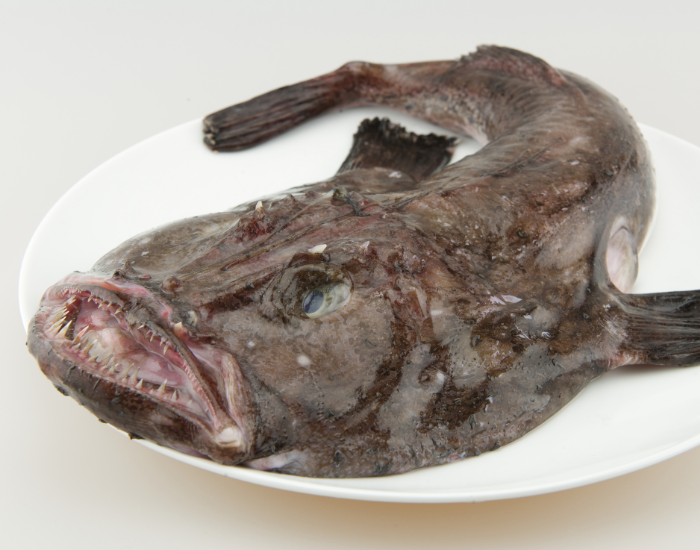
2. The American Monkfish Is Lophius americanus
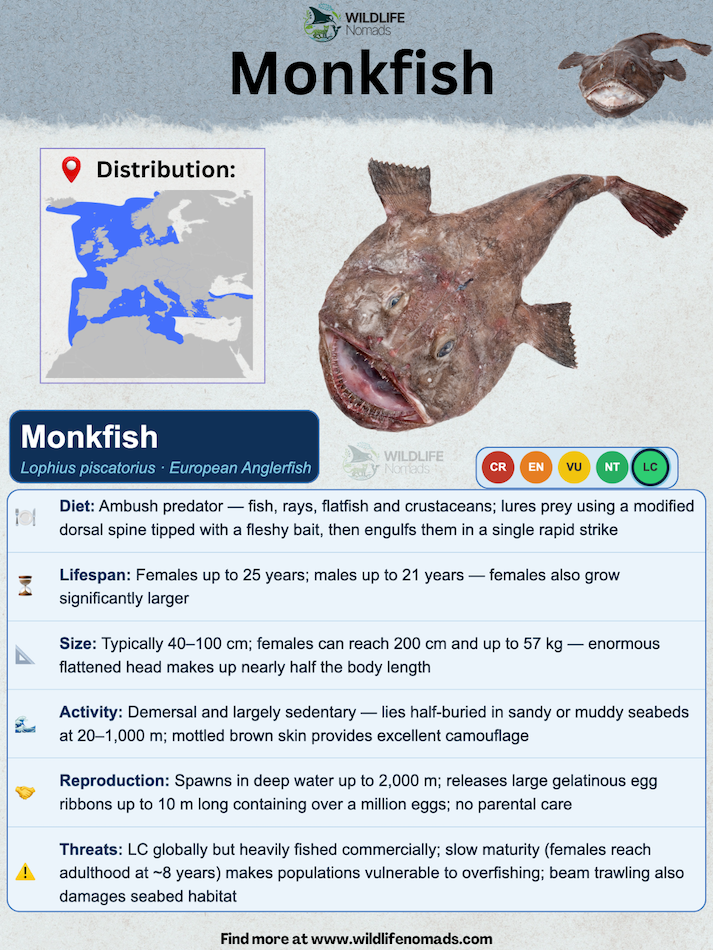
The monkfish you’ll see at a fish counter on the U.S. East Coast is almost always Lophius americanus, the American angler. Globally, the genus Lophius includes seven recognized members, with the European counterpart, L. piscatorius, dominating Mediterranean and North Atlantic markets across the pond.
The American angler ranges from Newfoundland to Cape Hatteras. It’s among the largest species harvested commercially in U.S. waters, with fish reaching over four feet long and 50 pounds. The American angler isn’t a shark, but it shares an ambush lifestyle with several small reef sharks I’ve watched in the Caribbean. The convergent evolution between this species and certain sharks fascinates me; different lineages, same lurking strategy on the ocean floor.
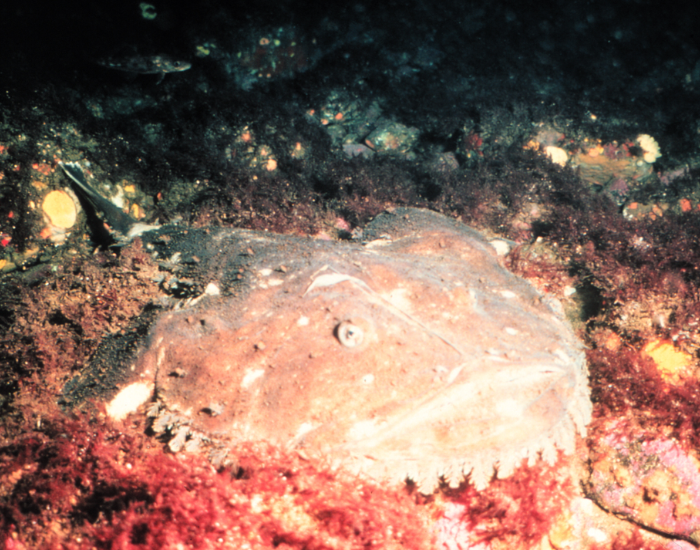
3. They Hunt With a Modified Spine That Acts as a Fishing Pole
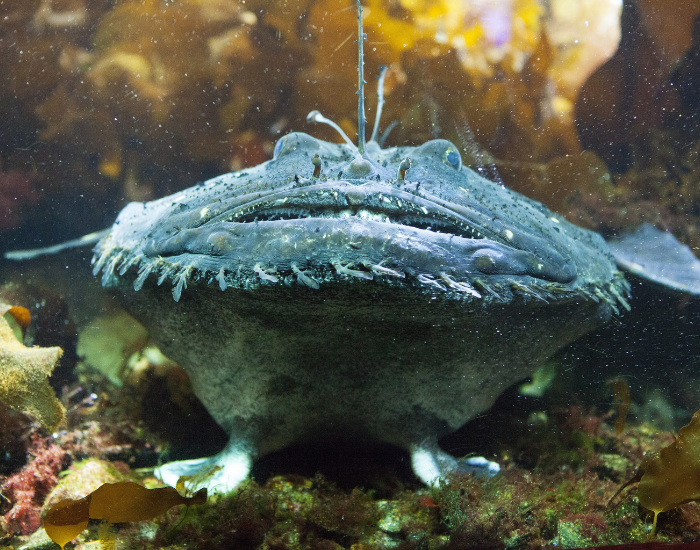
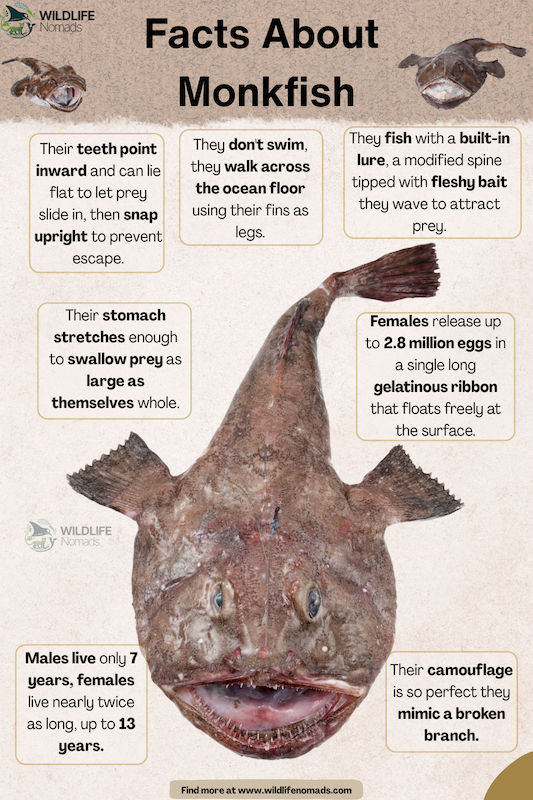
Here’s where monkfish get genuinely strange. The first ray of the dorsal fin has evolved into a long, mobile fishing rod tipped with a fleshy lure. Biologists call this the illicium. The monkfish dangles it above its head and wiggles it to lure small fish, squid, and crustaceans within striking range.
I’ve watched aquarium specimens at work. The monkfish lies motionless in sand, pectoral fins splayed, and that little flag of flesh above its head twitches like a wounded shrimp. Nearby animals drift in to investigate. Then the monkfish takes a single, explosive large gulp, and the meal vanishes. The whole strike lasts about six milliseconds. Few hunters in the sea use bait quite this clever, and the dorsal fin lure is one of evolution’s most elegant tools.
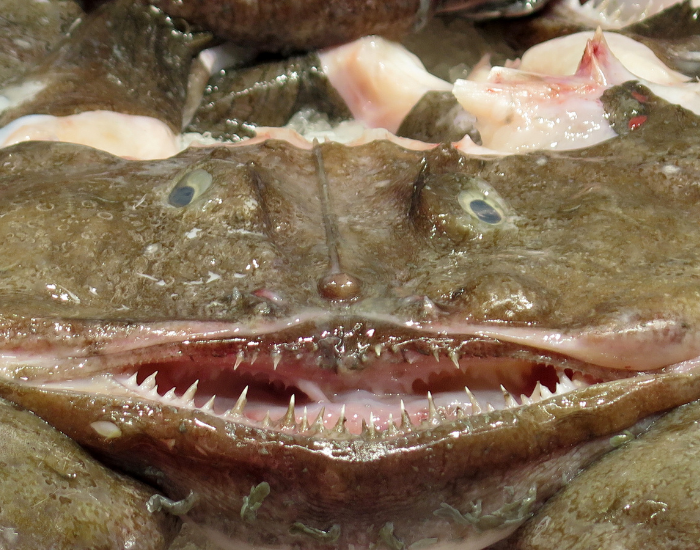
4. Their Mouths Are Lined With Back-Pointing Teeth
Open the jaws of a whole monkfish and you’ll see hundreds of back pointing teeth angled inward. This isn’t ornamentation. The teeth fold flat when prey enters and lock upright when prey tries to retreat. Once a fish, crab, or even a seabird ends up inside, escape is essentially impossible.
The mouth itself is enormous. A monkfish can engulf a meal nearly its own length, including dogfish, flatfish, and the occasional unlucky duck. Stomach contents recovered from monkfish caught in commercial fisheries have included whole gulls.
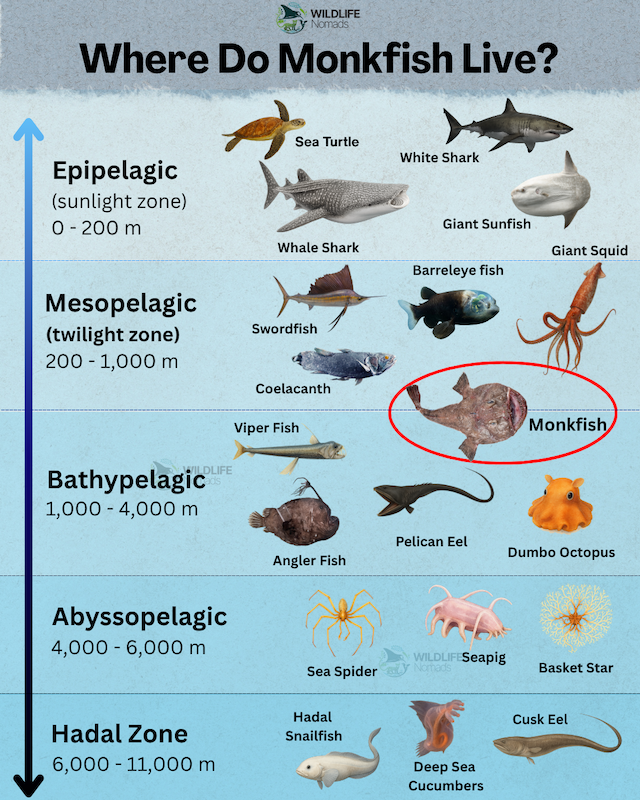
5. Monkfish Live on the Ocean Floor in Cold, Deep Waters
Where do monkfish live? Mostly on the ocean floor, in habitat ranging from shallow inshore waters about 50 feet deep down to the continental slope at over 3,000 feet (or 2,000 meters). Adult monkfish live across mud, sand, and gravel bottoms throughout the North Atlantic. Younger monkfish live in shallower zones, while the largest individuals migrate seasonally between deep and shallow grounds.
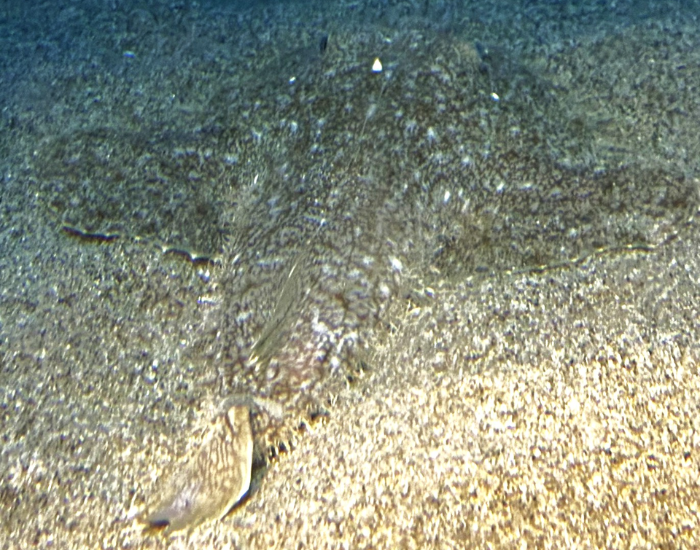
This habitat preference reflects camouflage strategy. The mottled brown skin matches sand and mud perfectly. A blue gray membrane along the gills helps them lie nearly flush with the bottom. I’ve dived in cold Atlantic waters and stared straight at a monkfish without seeing it until it blinked. That’s how good the camouflage on this bottom dwelling fish actually is.
6. A Single Large Gulp Can Swallow a Meal Nearly Their Size
Monkfish hunting strategy boils down to patience and a massive mouth. The stomach is elastic, the jaws hinge wide, and a single gulp can pull in food close to the monkfish’s own length. Stomach surveys from regional fisheries have logged everything from cod and haddock to lobster, sea birds, and small fish like skates and juvenile sharks.
This makes the monkfish an apex ambush predator on its patch of seabed. As prey populations shift due to warming waters and changing fisheries pressure, monkfish diet shifts with them. That flexibility is part of why this fish (among the largest species hunting these grounds) has rebounded faster than some of its neighbors. Generalist eaters tend to weather change better than picky specialists. Monkfish are the ultimate generalists of the cold North Atlantic mud.
7. The Tail Is Why Chefs Call It Poor Man’s Lobster
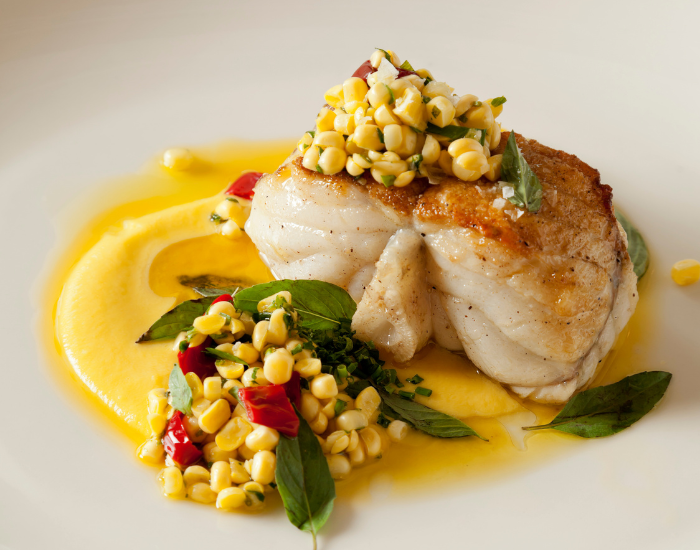
Almost everything edible on a monkfish lives in the tail. The body is mostly head and gut, but the tail meat is dense, white, and astonishingly similar in texture to lobster; hence the nickname poor man’s lobster. Monkfish tail fillets have a meaty texture and a sweet flavor that holds up to bold cooking methods. They don’t flake apart like cod.
I’ve eaten monkfish tail grilled in Croatia, pan fried in butter and garlic in coastal Maine. Each preparation worked because the meat itself is forgiving. Monkfish behaves more like a shellfish than a typical fish, which is exactly why this poor man’s lobster moved from trash to delicacy. Chefs wait months for fresh fillets when local supply runs thin.

8. Females Spawn Floating Veils Wrapped in a Blue-Gray Membrane
Monkfish spawn one of the strangest egg masses in the sea. A female releases a long, ribbon-like sheet of mucus containing up to a million eggs, all bound in a blue gray membrane. The veil drifts at the surface for weeks before the larvae hatch. Some sheets stretch over 30 feet long.
Few survive to adulthood, but the monkfish spawn strategy of releasing huge numbers in a buoyant film exposes the eggs to a wider range of currents and habitats than typical demersal spawners use.
9. Once Bycatch, Now a Major Commercial Fishery
For most of the twentieth century, monkfish were a nuisance bycatch species hauled up incidentally in scallop dredges and bottom trawls. Commercial fishermen tossed them back. The fish was ugly, unfamiliar, and unmarketable. Then chefs discovered the tail.
By the 1980s, monkfish had become the target of a serious commercial fishery in New England. Today this is one of the largest species harvested in U.S. waters, with a catch worth over $30 million annually. Monkfish fishermen across the northeast multispecies fishery now go after this fish directly using sink gillnets, scallop dredges, and bottom trawls. What was once trash fish became one of the most valuable wild caught fish on the East Coast.
Sink gillnets remain the dominant gear in deeper water, while bottom trawls and scallop dredges sweep up the rest. Today’s regional fisheries enforce strict reporting on every catch landed at port. The cultural shift happened in a single generation. For comparison, only a few other fish — like swordfish — moved from regional staple to luxury good in the same era.
10. Monkfish Are a Good Source of Lean Protein
Nutritionally, monkfish meat is a good source of lean protein with low fat. A typical fillet runs around 76 calories per three ounces, with 14 grams of protein and almost no fat. The flesh is mild in flavor, mild in odor, and remarkably approachable for people who don’t usually eat fish. The mild texture and low fat content make it a frequent recommendation from dietitians who suggest white fish over fattier species like tuna.
Monkfish is also a very good source of selenium, vitamin B12, and phosphorus. The mild taste and meaty texture make it an easy gateway fish for diners suspicious of stronger flavors like swordfish or mackerel. I recommend monkfish to friends who claim they don’t like seafood. Most of them eat it eagerly after the first bite of properly cooked tail meat. The flavor is sweet, the fat is minimal, and the protein content rivals chicken.
FAQs About Monkfish
Yes. Monkfish is a delicate fish with a meaty texture, mild sweet flavor, and dense fillets that hold up to nearly any cooking method. The tail meat in particular is rich, lobster-like, and a good source of lean protein. As a delicacy on European and American menus, monkfish ranks among the most versatile white-fleshed fish you can buy. Pan fried, grilled, or served in stews — it rarely disappoints, and the meat doesn’t break apart like other fish in the same price range.
Several factors push the price up. Most of a monkfish is unusable, so only the tail meat (about 30 percent of the body) yields fillets. Commercial fishermen catch monkfish using sink gillnets and bottom trawls, both labor-intensive methods. Add quota limits, growing chef demand, and seasonal supply gaps, and monkfish takes its place near the top of the seafood case. The poor man’s lobster nickname is increasingly ironic — a pound of fresh fillets often costs more than actual lobster.
In the USA, monkfish is officially Lophius americanus, often labeled American angler, anglerfish, or simply monkfish at fish markets. Some New England fishermen still use older names like fishing frog or goosefish. Whatever the label, you’re looking at the same bottom dwelling fish from the cold North Atlantic — a wild caught fish harvested mainly off the U.S. Northeast.
A Final Thought From the Field
Few fish blur the line between monster and meal as elegantly as the monkfish. It’s a creature engineered for ambush, equipped with its own fishing rod, and improbably good on a plate. The fish has survived overfishing, jumped from bycatch to delicacy, and earned a permanent spot on serious menus from Lisbon to Long Island. That’s a remarkable arc for a catch most people once threw overboard.
If you’ve enjoyed this dive into one of the ocean’s stranger residents, you might also like my deeper looks at the weirdest fish in the world, the slow-moving ocean sunfish, the river-prowling piranha, and the otherworldly barreleye fish. Next time you’re at a good fishmonger, ask for fresh monkfish tail. Cook it simply. Tell me what you think in the comments.
References:
Armstrong, M. P., Musick, J. A., & Colvocoresses, J. A. (1992). Age, growth, and reproduction of the goosefish Lophius americanus (Pisces: Lophiiformes). Fishery Bulletin, 90(2), 217–230. https://spo.nmfs.noaa.gov/sites/default/files/pdf-content/1992/902/armstrong.pdf
NOAA Fisheries. (2024). Monkfish species profile. National Oceanic and Atmospheric Administration. https://www.fisheries.noaa.gov/species/monkfish
Richards, R. A., Nitschke, P. C., & Sosebee, K. A. (2008). Population biology of monkfish Lophius americanus. ICES Journal of Marine Science, 65(7), 1291–1305. https://doi.org/10.1093/icesjms/fsn108
Steimle, F. W., Morse, W. W., Berrien, P. L., Johnson, D. L., & Zetlin, C. A. (1999). Essential fish habitat source document: Goosefish (L. americanus), life history and habitat characteristics (NOAA Technical Memorandum NMFS-NE-127). U.S. Department of Commerce. https://repository.library.noaa.gov/view/noaa/3155