
I was wandering through a small natural history museum in Cairns, North Queensland, when I stopped dead in front of a glass case. Inside sat a pinned specimen of Acrophylla alta, an Australian giant stick insect nearly as long as my forearm. I’d written about stick insects before, but seeing one at that scale, in person, under museum lights, rewired something in my brain. That encounter sent me down a rabbit hole I haven’t climbed out of: tracking down the biggest bug on Earth and understanding just how massive insects can get.
This list covers the absolute top 15 giant insects in the world, ranked not by a single metric but by overall impact, length, weight, wingspan, and sheer visual shock factor. No spiders, no crustaceans. Just the biggest insect species walking, flying, and crawling across every continent. Let’s get into it.

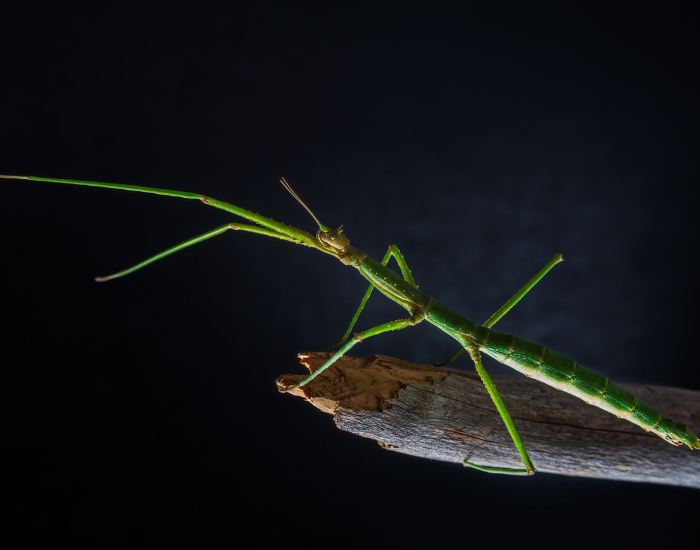
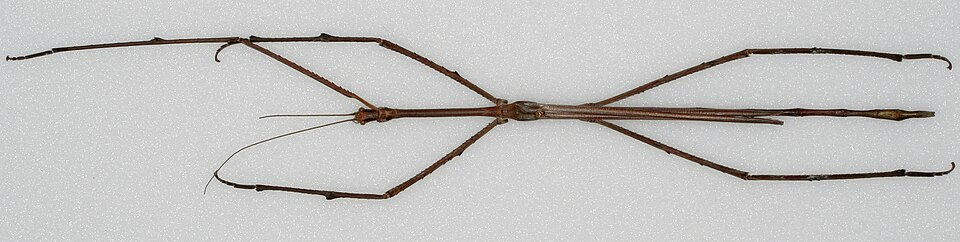
1. The World’s Longest Insect (Phryganistria chinensis)
If you want the longest insect on the planet, this is it. Phryganistria chinensis is a species of stick insect discovered in southern China’s Guangxi region in 2014 by Zhao Li, curator at the Insect Museum of West China. The original specimen measured 62.4 cm (24.6 inches) with legs fully extended. By 2017, a captive bred young individual, the granddaughter of that first specimen, stretched to 64 cm, earning a Guinness World Records entry.
These huge bugs live in mountainous forests where they mimic tree branches with eerie precision. Their body length alone reaches roughly 38 cm. That means even without the legs, this insect in the world is longer than most people’s shoes. Phryganistria chinensis remains poorly studied because reaching lengths like that in remote Chinese highlands makes fieldwork difficult. Among all stick insects ever measured, nothing else comes close.
2. The Malaysian Giant (Phobaeticus serratipes)
Before Phryganistria chinensis stole the crown, the species Phobaeticus serratipes held the record for the world’s longest insect. A female specimen from Peninsular Malaysia measured 55.5 cm total length, with a body length of roughly 27.8 cm. These stick insects are found across Malaysia, Singapore, and Sumatra, blending seamlessly into the canopy.
I find it fascinating that two species of stick insect dominate the “longest insect” category. They achieve extreme lengths not through bulk but through an almost absurd elongation of their body segments and legs. Reaching lengths that seem impossible for an arthropod, these stick insects represent one of evolution’s most creative solutions to predator avoidance, just look like a twig and hope nobody notices.
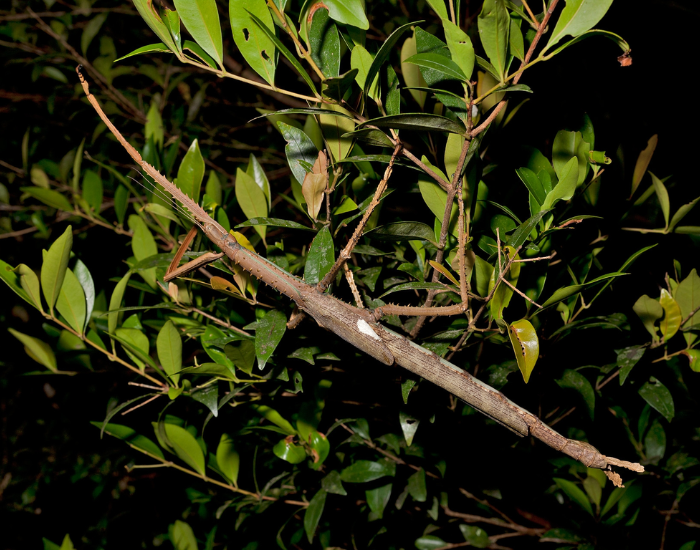
3. Australia’s Newly Described Giant Stick Insect (Acrophylla alta)
This is the one that started my obsession. When I visited North Queensland as a tourist, I found a specimen of Acrophylla alta in a local museum in Cairns. I’d already written about stick insects in my stick bug article, but nothing prepared me for the sheer mass of this species. Formally described in Novermber 2024 by researchers at James Cook University, Acrophylla alta measures up to 40 cm long and weighs around 44 grams, potentially the heaviest insect ever recorded in Australia.
These massive stick insects inhabit the canopy of highland tropical forests near Millaa Millaa, at elevations between 500 and 1,200 meters. Their large species size may follow Bergmann’s rule, where animals in colder environments evolve bigger bodies. They’re a reminder that new species of giant stick insects are still being discovered in the world, even in well-surveyed countries like Australia.
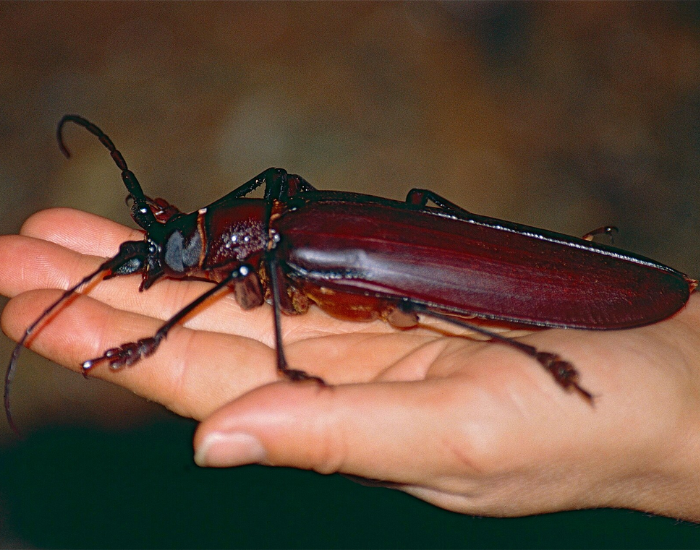
4. Titan Beetle (Titanus giganteus): The Amazon’s Armored Giant
The titan beetle is the biggest bug in the heavyweight category, the largest insect among all known species measured by body length alone (no horns, no legs). Adults of Titanus giganteus reach 16.7 cm (6.6 inches). Their mandibles can snap a pencil clean in half.
These huge creatures live in the tropical rainforests of South America, Venezuela, Colombia, Ecuador, Peru, and northern Brazil. Here’s where it gets strange: no entomologist has ever formally identified titan beetle larvae. Researchers have found boreholes in dead wood that suggest grubs over 5 cm wide and possibly 30 cm long, but nobody has confirmed this in the field. Adults don’t feed at all. They survive on fat reserves accumulated during the larval stage, living just a few weeks while searching for mates. Habitat destruction across the Amazon threatens their survival.
5. Hercules Beetle (Dynastes hercules): The Longest Horned Insect
When you include the horn, the Hercules beetle becomes the longest species in its order at up to 17.3 cm. Males sport a massive upper horn on the thorax and a smaller one on the head, used for flipping rivals during combat. The body length without horns ranges from 5 to 8.5 cm.
Dynastes hercules lives in lowland rain forests throughout Central America, from southern Mexico through to Bolivia and Brazil. I’ve spoken with researchers who describe the sound of two males fighting as surprisingly loud, a clicking, scraping contest that can last minutes. These insects feed on tree sap and rotting fruit during their adult phase, which sets them apart from the non-feeding titan. The larval stage in decaying logs takes one to two years, reaching considerable body mass before pupation. The Hercules beetle remains one of the most recognizable big insects on the planet.

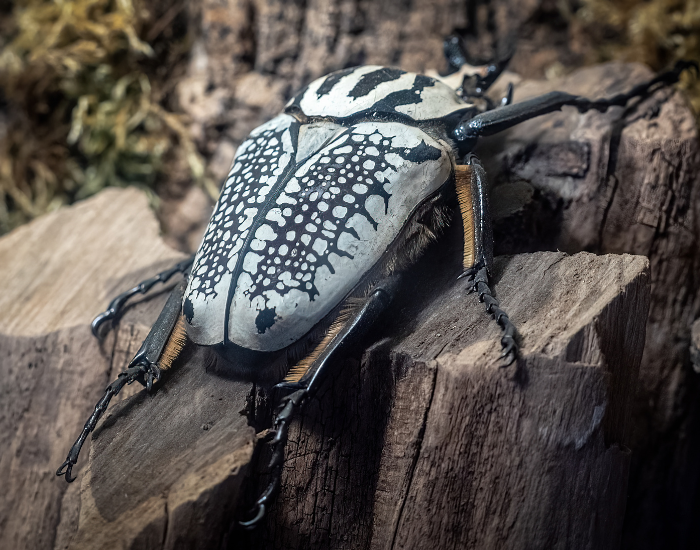
6. Goliath Beetles: Africa’s Heavyweight Champions
Goliath beetles (genus Goliathus) are among the heaviest flying insects on the planet. Adult males weigh 40–60 grams and measure up to 11 cm long. During the larval stage, they’re even more impressive, grubs can hit 80–100 grams and stretch over 15 cm in body length.
Six species exist, all native to tropical Africa. Despite their bulk, goliath beetles actually fly. They deploy a secondary set of membranous wings hidden beneath their hardened elytra. Watching one take off feels like watching a small helicopter ignore the laws of physics. As larvae, these creatures are protein-hungry predators, feeding on rich substrates. Adults consume fruit and sap. Goliath beetles remain among the most sought-after specimens in natural history museum collections worldwide, and for good reason.
7. Elephant Beetle (Megasoma elephas)
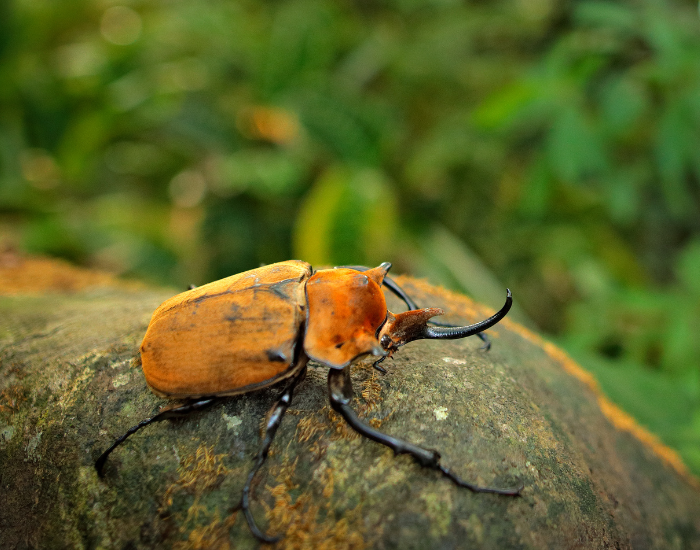
The elephant beetle earns its name honestly. Males reach 13.7 cm including the horn, weigh up to 50 grams, and look like something designed for a science fiction film. Females are smaller and lack the distinctive horns, measuring 5–7 cm.
Found across Central America and neighboring regions, elephant beetles inhabit lowland forests where they feed on sap and fallen fruit. Their legs are thick, covered in fine reddish-brown hair, and built for gripping bark. The larval stage lasts up to 29 months, nearly two and a half years spent underground growing. That extended development period produces some of the most massive larvae in the insect world. The elephant beetle is a true contender for the biggest insect in Central America.
8. Actaeon Beetle (Megasoma actaeon): Heaviest Known Larvae
Closely related to the elephant species above, the actaeon from the northern forests of the continent holds a staggering record: its larvae can reach 228 grams. That makes it the biggest bug by larval weight ever documented. Adults reach about 13.5 cm, but their sheer thickness, up to 4 cm across the body, makes them look like armored vehicles.
These nocturnal giants are drawn to lights during the breeding season. The extreme weight of their young likely reflects the nutrient-dense decaying wood they consume during multi-year development underground. For anyone asking what the biggest bug in the world looks like at every life stage, the actaeon’s grub is the answer.
9. Giant Weta: The Heaviest Adult Insect Alive
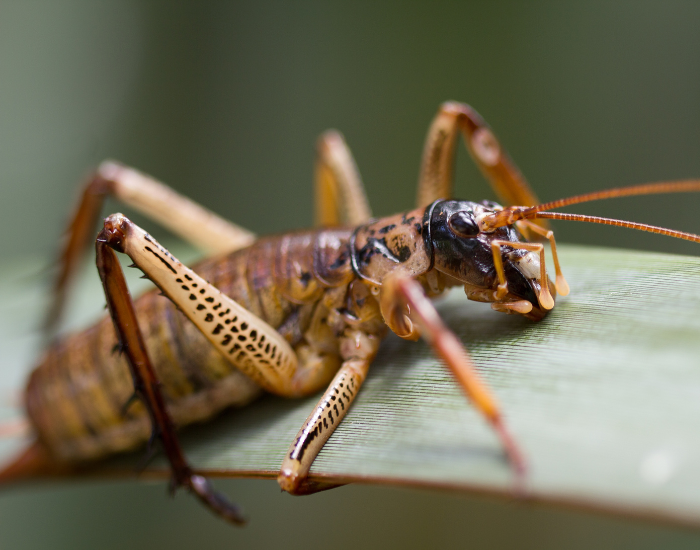
The Little Barrier Island giant weta (Deinacrida heteracantha), also called wetapunga (a Maori word meaning “god of ugly things”), holds the Guinness World Records title for the heaviest insect in its adult form. A gravid (pregnant) female discovered in 2011 by researcher Mark Moffett weighed 71 grams, heavier than a house sparrow.
Giant weta belong to the genus Deinacrida and are found only in New Zealand. Often called the largest insect by weight, the wetapunga lives exclusively on Little Barrier Island (Te Hauturu-o-Toi), a predator-free sanctuary north of Auckland. Their maximum weight under normal conditions sits around 35 grams, with estimates varying for captive versus wild populations. These huge bugs are herbivores, feeding on leaves and fruit.
10. Giant Burrowing Cockroach (Macropanesthia rhinoceros)
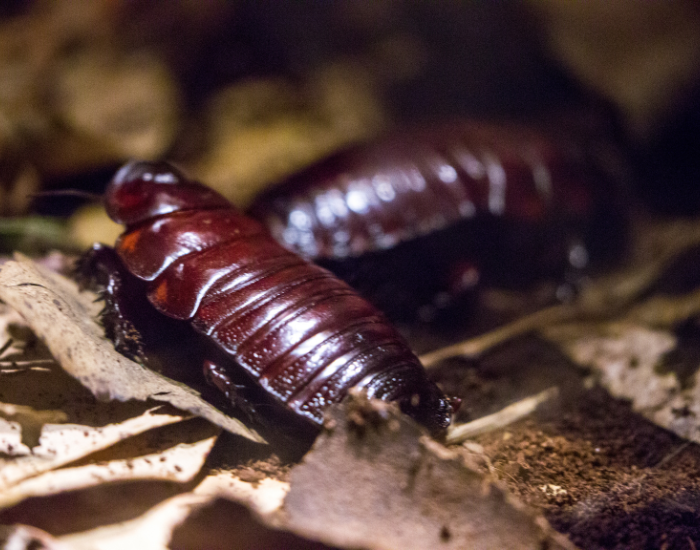
Also called the rhinoceros cockroach, this is the world’s heaviest cockroach species, weighing up to 35 grams and measuring 8 cm long. Unlike the pest cockroaches that invade kitchens, the giant burrowing cockroach is wingless, lives exclusively in tropical Queensland, Australia, and plays a vital ecological role recycling leaf litter.
These cockroaches burrow up to one meter underground, creating permanent homes where they raise live-born young, up to 30 nymphs per clutch. The giant burrowing cockroach can live over 10 years, making it among the longest-lived insects on record. Australians actually keep them as pets. I’ve met keepers in the zoo where I used to work who describe them as gentle, low-maintenance, and surprisingly personable. Among all cockroaches in the world, this one species completely defies the stereotype.
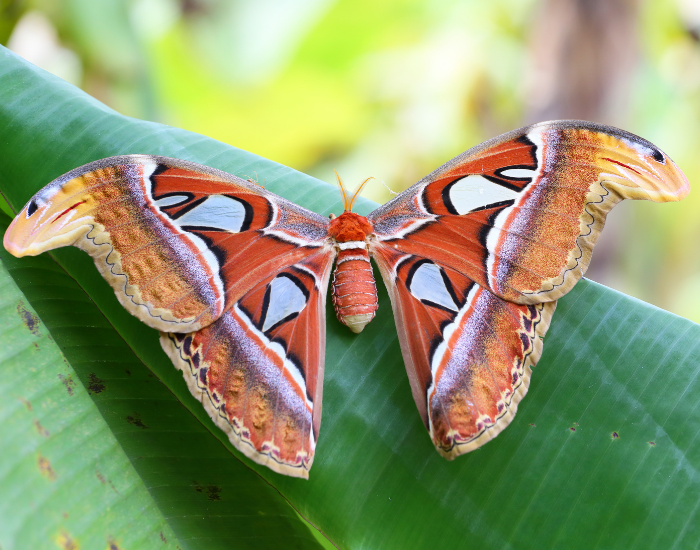
11. Atlas Moth (Attacus atlas): Largest Moth by Wing Area
The atlas moth holds the title for the largest total wing surface area of any moth, at approximately 160 cm². With a wingspan of 25–30 cm, it dwarfs most birds in the forests of Asia. The wingtips curve into shapes that mimic snake heads, a defense that startles predators.
Attacus atlas ranges from India and Nepal through Southeast Asia, including Malaysia, Indonesia, and southern China. Adults have no functional mouthparts. They don’t eat at all. Their entire adult life span of one to two weeks is fueled by fat reserves stored during the larval stage. The cocoons are so tough and silk-like that in parts of Taiwan, people historically used them as small purses. The atlas moth is an extraordinary example of how huge insects can be without most people ever seeing one.
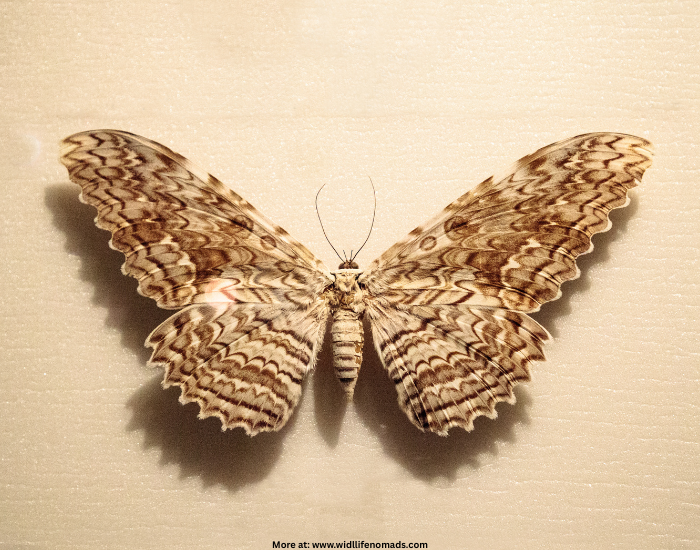
12. White Witch Moth (Thysania agrippina): The Largest Wingspan of Any Insect
Thysania agrippina holds the record for the largest wingspan of any insect in the world, up to 29–30 cm in exceptional specimens from Brazil. It ranges from Uruguay to Mexico, with occasional strays reaching as far north as Texas.
Despite that enormous wingspan, this moth is surprisingly delicate. Its pale, mottled wings provide camouflage against tree bark during the day. First described in the early 1700s by Maria Sibylla Merian, one of history’s great natural illustrators, it often gets confused with the atlas moth. However, they occupy entirely different continents and ecological niches.
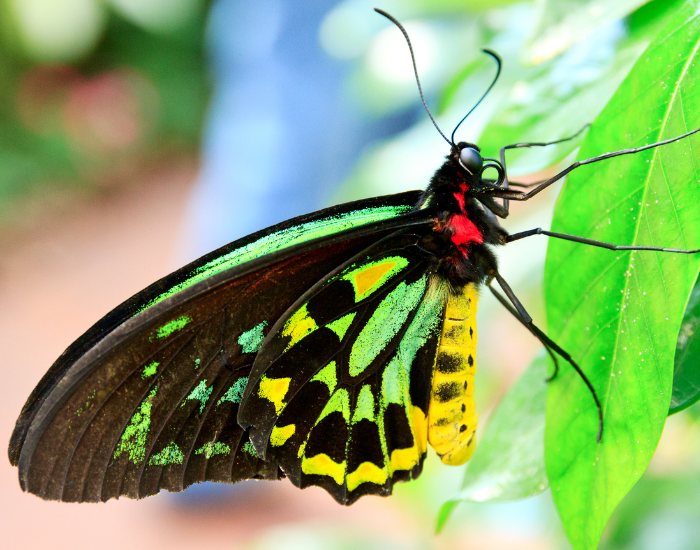
13. Queen Alexandra’s Birdwing: The World’s Largest Butterfly
Ornithoptera alexandrae is the largest butterfly in the world, with females reaching wingspans of 25–28 cm. Males are smaller but far more colorful, flashing iridescent blue-green patterns across their 20-cm wings. This is not just the biggest bug among butterflies, it’s one of the rarest insects on Earth.
This species is restricted to about 100 km² of coastal forest in Papua New Guinea’s Oro Province. It’s endangered, listed on CITES Appendix I, which bans all commercial trade. Oil palm expansion and the 1951 eruption of Mount Lamington devastated its range. Queen Alexandra’s birdwing is so rare that most lepidopterists will never encounter one in the wild. Conservation programs involving captive bred young offer slim but real hope for its survival. A closely related species, the Cairns birdwing, can be seen in New Guinea and parts of northern Australia, but nothing matches the sheer scale of the queen.
14. Giant Water Bugs (Lethocerus spp): The Biggest True Bugs
When entomologists say “true bugs,” they mean insects in the order Hemiptera, and giant water bugs are the largest of that group. Lethocerus maximus reaches 11.5 cm, making it the biggest true bug in the world. These fierce predators ambush prey including small fish, some amphibians like frogs, and even small snakes, grabbing victims with powerful forelegs and injecting digestive enzymes.
Giant water bugs occur across the Americas, Southeast Asia, and parts of Africa. In Thailand and Vietnam, the large species Lethocerus indicus is actually eaten as street food, roasted or steamed. Their bite is considered one of the most painful among insects, which any field biologist who’s accidentally stepped on one can confirm. If you’ve ever heard the term “toe-biter,” this is the biggest bug responsible.
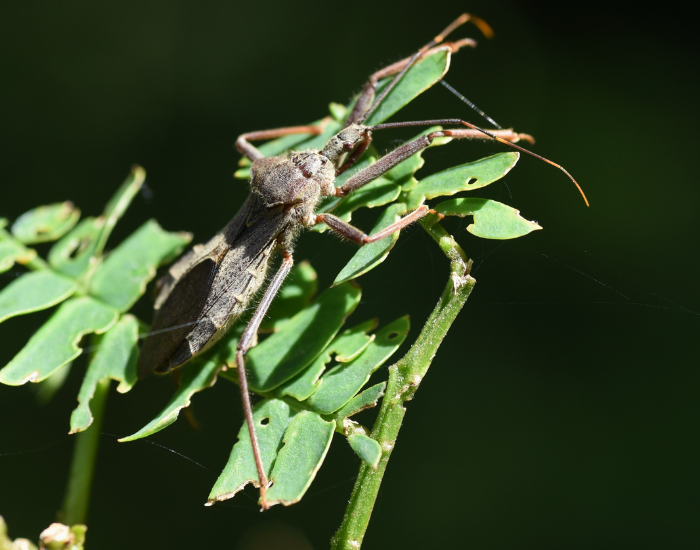
15. Chan’s Megastick (Phobaeticus chani): Borneo’s Hidden Giant
Rounding out the list is Phobaeticus chani, described in 2008 from a single specimen collected in the forests of Sabah, Malaysian Borneo. The type specimen measures 56.7 cm total length, with a body length of 35.7 cm, making it one of the longest insects ever measured and a contender for the biggest insect in the world by total length.
Almost nothing is known about this creature’s behavior, diet, or population size. Only a handful of specimens exist in natural history museum collections. That mystery is part of what makes entomology so thrilling, somewhere in Borneo’s canopy, these huge stick insects go about their lives completely unbothered by the fact that they hold a world record. Large insects in remote habitats remind us how much biodiversity remains undiscovered, and how many giant insects the world still hides. The largest insect may not even be discovered yet.
FAQs You May Have
The answer depends on your metric. By total length, Phryganistria chinensis at 64 cm is the world’s longest insect. By weight, the giant weta holds the record at 71 grams for a wild adult. And by wingspan, the white witch moth reaches 30 cm. The titan is often cited as the biggest insect in the world by body length at 16.7 cm. No single insect claims every category, which makes the question “what’s the biggest bug” so fun to explore.
They include some of the most massive insects by weight and bulk — goliath, hercules, and elephant species all rank among the largest. However, stick insects surpass them in total length, and moths and butterflies beat them in wingspan. The order Coleoptera does produce the widest variety of large species across the insect in the world rankings.
Insects breathe through a network of tiny tubes called tracheae that deliver oxygen directly to tissues. This system becomes less efficient as body size increases. Modern atmospheric oxygen levels limit how big insects can get. During the Carboniferous period roughly 300 million years ago, oxygen levels reached 35%, and dragonflies with 70-cm wingspans ruled the skies. Today’s 21% oxygen caps insect size at the dimensions you see on this list.
The Bigger Picture
From the 64-cm stick insects of China to the 71-gram giant weta of New Zealand, the world’s biggest bugs challenge everything most people assume about insects. They’re not all small. They’re not all simple. Many of the species on this list face genuine threats from deforestation and climate change — the same pressures squeezing biodiversity across the planet.
If this list sparked your curiosity, dig deeper. Check out my guide to stick bug facts for more on the world’s most extraordinary masters of disguise. If moths caught your eye, my article on the Polyphemus moth covers another fascinating giant. And for readers curious about other incredible insect forms, explore my pieces on giraffe weevils and leaf insects. Get outside, turn over a log, and look closely, the insect world has far more to show than most people will ever see.
References:
Brock, P. D., Büscher, T., & Baker, E. (2022). Phasmida Species File Online. Version 5.0. Retrieved from http://phasmida.speciesfile.org
Coupland, R. M., & Emmott, A. J. (2025). A new giant species of Acrophylla Gray, 1835 (Phasmida: Phasmatidae: Phasmatini) from the highlands of the Wet Tropics, Queensland, Australia. Zootaxa, 5647(4), 371–383. https://doi.org/10.11646/zootaxa.5647.4.4
De Moya, R. S., et al. (2023). “Genomics, population divergence, and historical demography of the world’s largest and endangered butterfly, the Queen Alexandra’s birdwing.” Genome Biology and Evolution, 15(4), evad040. https://doi.org/10.1093/gbe/evad040
Gibbs, G. W. (2001). “Habitats and biogeography of New Zealand’s Deinacridine and Tusked Weta species.” In The Biology of Wetas, King Crickets, and Their Allies (pp. 35–55). CABI Publishing. https://doi.org/10.1079/9780851994086.0035
Šípek, P., Fabrizi, S., Eberle, J., & Ahrens, D. (2020). “First comprehensive study of a giant among the insects, Titanus giganteus: Basic facts from its biochemistry, physiology, and anatomy.” Insects, 11(2), 120. https://doi.org/10.3390/insects11020120
Reboud, E. L., Nabholz, B., Chevalier, E., Tilak, M. K., Bito, D., & Condamine, F. L. (2023). Genomics, Population Divergence, and Historical Demography of the World’s Largest and Endangered Butterfly, The Queen Alexandra’s Birdwing. Genome biology and evolution, 15(4), evad040. https://doi.org/10.1093/gbe/evad040
Twort, V. G., Newcomb, R. D., & Buckley, T. R. (2019). New Zealand Tree and Giant Wētā (Orthoptera) Transcriptomics Reveal Divergent Selection Patterns in Metabolic Loci. Genome biology and evolution, 11(4), 1293–1306. https://doi.org/10.1093/gbe/evz070