
Have you ever stared at a leaf, only to watch it walk away? Only if you have been somehwehre in south ast Asia or Australia. If you have, these awesome creatures are leaf insects, literally nature’s masters of disguise. Their bodies mimic every detail of real leaves, from veins to bite marks, making them nearly impossible to spot in the wild.
Leaf insects belong to the family Phylliidae and inhabit rainforests across Southeast Asia, New Guinea, and Australia. In a world filled with predators like birds, spiders, and reptiles, their camouflage isn’t just impressive, it’s essential for survival.
Let’s explore ten extraordinary species of these walking leaves and discover how evolution sculpted such perfect mimicry.
What Are Leaf Insects?
Leaf insects are herbivorous insects from the order Phasmatodea, which also includes stick insects. Unlike their stick-like relatives, these bugs evolved flat, broad bodies that perfectly resemble leaves. Scientists have identified over 60 species of true leaf insects, though many remain undiscovered in remote tropical forests.
Their appearance goes beyond simple green coloring. Leaf insects display a remarkable range of colour, including shades of green, reddish-brown, and yellow, which enhances their camouflage and helps them mimic real leaves. Therefore, predators struggle to distinguish them from surrounding foliage. Each species has evolved to match specific plants in their native habitat, creating regional variations in color, texture, and shape. Some species reach a large size, further improving their ability to imitate leaves and avoid detection.
Physical description: Leaf insects typically have broad, flat bodies, leaf-like extensions on their legs, and can grow to a large size, all of which contribute to their convincing leaf mimicry.
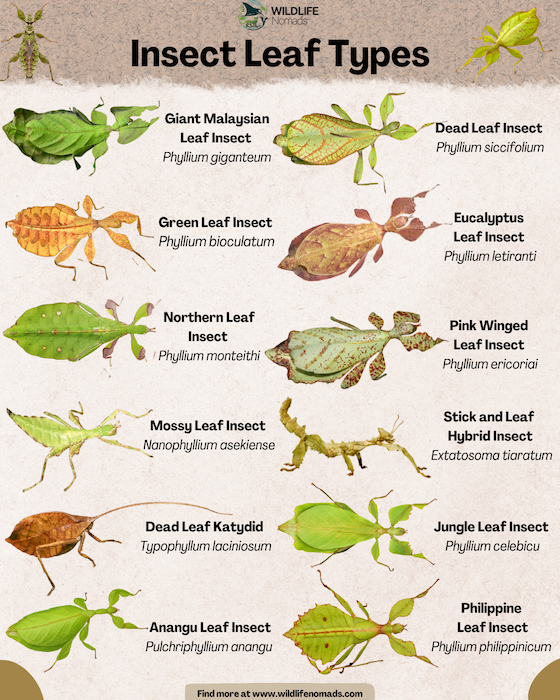
1. Giant Malaysian Leaf Insect (Phyllium giganteum)
The Giant Malaysian Leaf Insect reigns as one of the largest leaf insects in the world. Native to Malaysia’s rainforests, females can reach 10 cm in body length, making them impressive specimens for both researchers and insect enthusiasts.
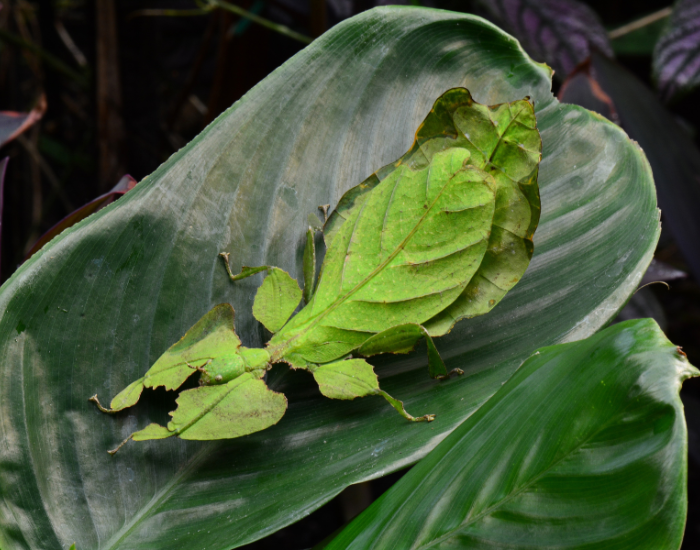
This species displays remarkable sexual dimorphism. Females are large, broad, and flightless with vibrant green bodies. The female’s broad abdomen, with forewings lying edge to edge along the abdomen, enhances the leaf-like illusion and contributes to their exceptional camouflage. Males, however, are smaller and possess functional wings that allow them to fly between trees in search of mates.
Their camouflage includes simulated leaf veins, midribs, and even fake insect bite marks. When resting among tropical plants, they become virtually invisible to predators. In addition, their slow, swaying movement mimics leaves caught in a gentle breeze.
2. Dead Leaf Insect (Phyllium siccifolium)
Unlike most leaf insects that mimic fresh green leaves, the Dead Leaf Insect takes a different approach. This species imitates dried, decaying leaves with reddish-brown coloring and irregular wing texture.
Found throughout Southeast Asian rainforests, these insects blend perfectly with leaf litter on forest floors. Their defense strategy relies on looking unappetizing to predators. After all, most birds prefer fresh leaves over dead ones.
When disturbed, they sway gently to mimic wind-blown dead leaves. This behavioral camouflage adds another layer of protection, making them nearly impossible to detect.
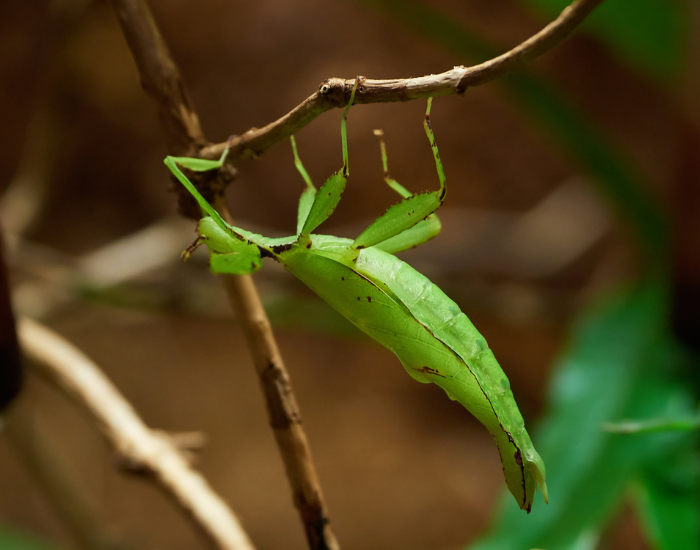
3. Green Leaf Insect (Phyllium bioculatum)
The Green Leaf Insect represents the classic image most people picture when thinking about leaf bugs. Distributed across tropical Asia and New Guinea, this species thrives in diverse forest habitats.
Females display an extraordinary ability called parthenogenesis. This means they can produce eggs without mating with males. Consequently, populations can establish themselves even when males are scarce.
Their eggs resemble tiny plant seeds, providing additional camouflage on the forest floor. Young nymphs hatch with reddish-brown coloring before gradually turning green as they mature. During hatching, the nymphs emerge from their eggs with a slender body and dark coloration, which helps them blend in with leaf litter until they molt and develop their characteristic green hue. This color change mirrors the natural progression of new plant growth.
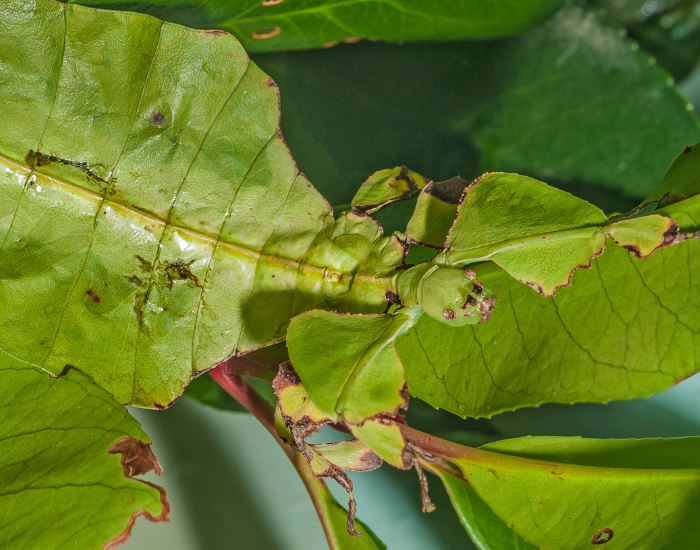
4. Eucalyptus Leaf Insect (Phyllium letiranti)
Discovered in Sulawesi, Indonesia, this recently described species demonstrates how leaf insects adapt to local plant life. Phyllium letiranti mimics eucalyptus leaves with remarkable accuracy, including subtle mottling that resembles fungal marks.
This adaptation shows how evolution fine-tunes mimicry to match dominant tree species in specific regions. Scientists believe this species evolved alongside eucalyptus trees, developing coloration and body shape that perfectly match their host plants.
Such specialized mimicry highlights the intricate relationship between insects and their environment. However, it also makes them vulnerable to habitat loss.
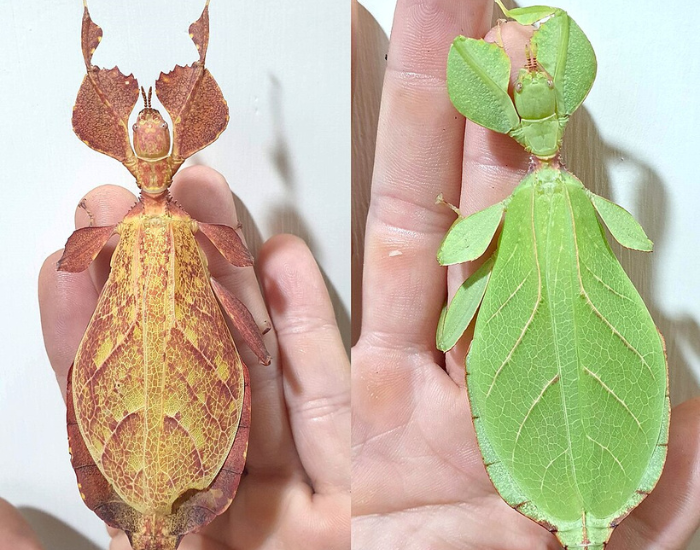
5. Northern Leaf Insect (Phyllium monteithi)
Australia’s rainforests harbor this striking species, which mimics glossy tropical leaves from plants like Ficus. Females can grow up to 9 cm in body length and remain motionless for hours while feeding.
Unlike their lowland relatives, Northern Leaf Insects prefer cooler highland habitats. They have slightly thicker leaf-like wings adapted to these environments. Their camouflage is so convincing that researchers in Queensland report difficulty spotting them in the wild. The Northern Leaf Insect blends seamlessly into its natural surroundings, making it difficult for both predators and researchers to detect.
This species demonstrates how leaf insects adapt to different climate zones. For example, their thicker body structure helps them withstand cooler temperatures found at higher elevations.
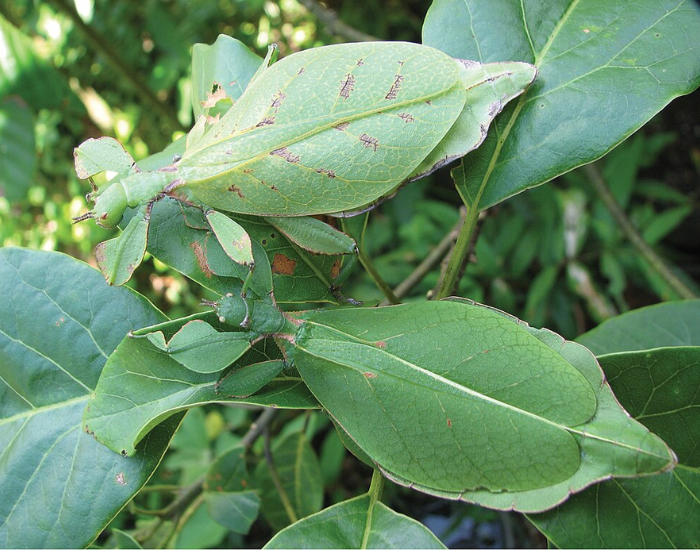
6. Pink Winged Leaf Insect (Phyllium ericoriai)
Native to the Philippines, this delicate species hides a colorful secret. While their exterior appears as a flawless green leaf, their wings feature rosy-pink undersides that flash when they’re startled.
This defense mechanism confuses predators through sudden color contrast. Birds and other animals hesitate when their expected prey suddenly reveals bright colors. In addition, the translucent quality of their wings allows sunlight to filter through, adding another layer of realism.
The Pink Winged Leaf Insect shows how some species combine camouflage with startle displays for maximum protection.
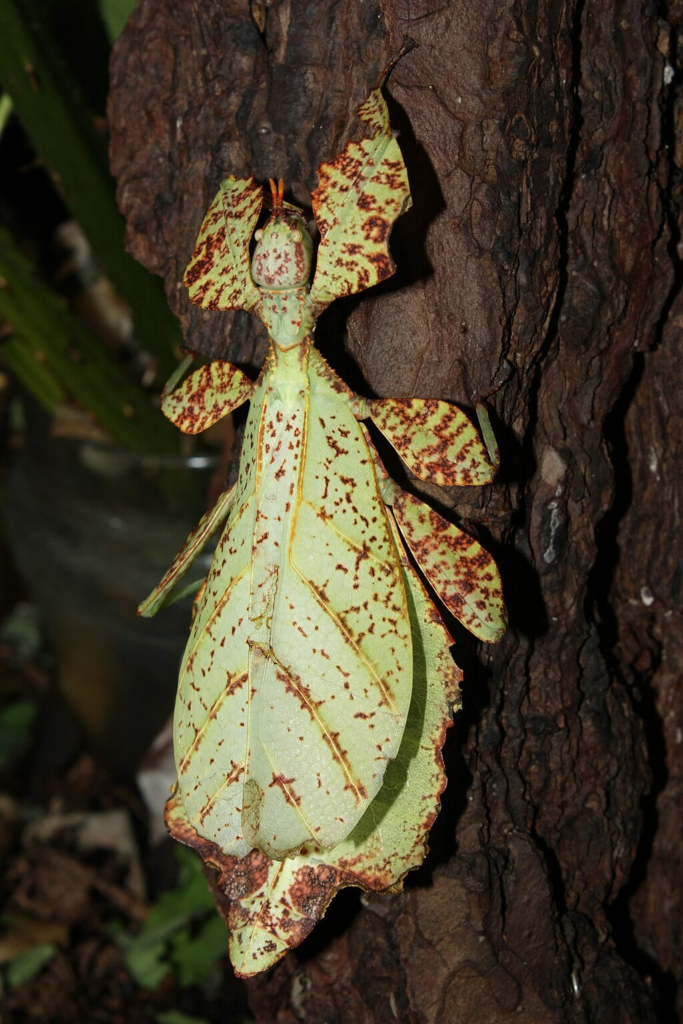
7. Dead Leaf Katydid (Typophyllum laciniosum)
Not all leaf-mimicking insects belong to the Phylliidae family. The Dead Leaf Katydid evolved independently in Central and South America as part of the Tettigoniidae family.
This species demonstrates convergent evolution—when unrelated animals develop similar traits. Its brownish wings feature veins, holes, and curled edges that perfectly mimic dried tropical leaves. When resting among forest litter, it becomes virtually invisible. At rest, the Dead Leaf Katydid remains completely motionless, further enhancing its camouflage and making it even harder for predators to detect.
Moreover, this katydid mimics the posture of fallen leaves by keeping its legs tucked and antennae still. Nature developed this solution twice through different evolutionary paths.
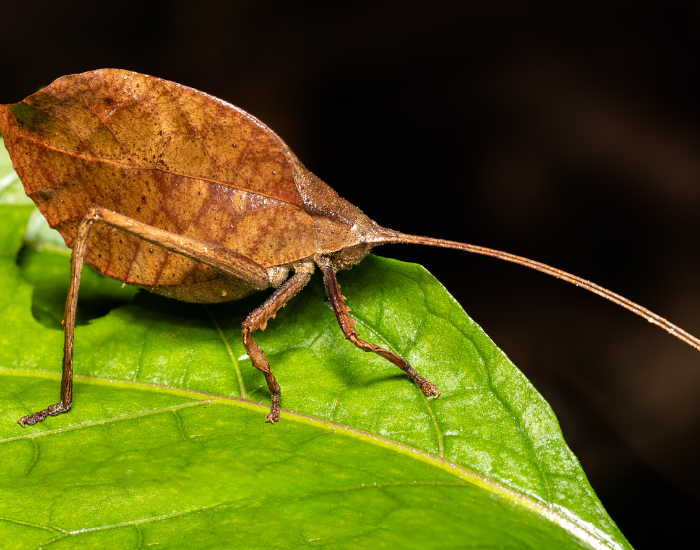
8. Stick and Leaf Hybrid Insect (Extatosoma tiaratum)
The Australian Giant Prickly Stick Insect bridges the gap between leaf and stick mimicry. Females resemble dried, curled leaves, while males look more stick-like and can fly.
When threatened, this species rocks back and forth to imitate vegetation swaying in the wind. Scientists call this behavior “leaf sway,” and it effectively confuses visual predators like birds that rely on movement to detect prey.
This species shows how some insects combine multiple camouflage strategies for enhanced survival.
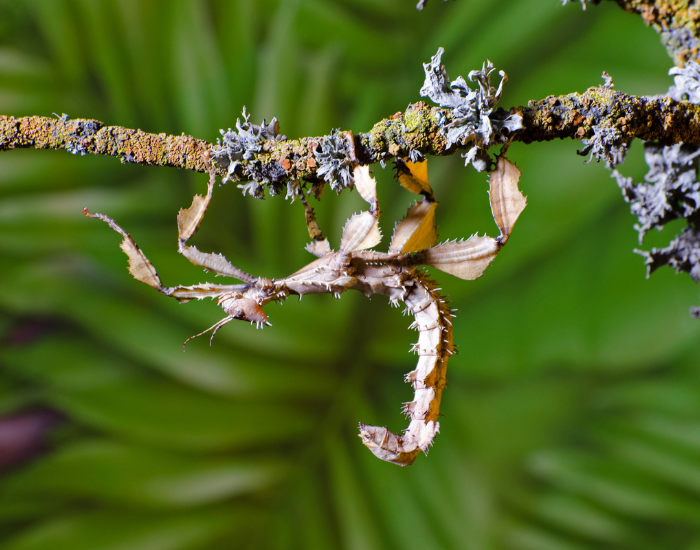
9. Mossy Leaf Insect (Nanophyllium asekiense)
Discovered in Papua New Guinea and described in 2020, the Mossy Leaf Insect represents one of science’s newest additions. Its body features intricate lobes and textures that resemble moss-covered leaves.
This species exemplifies microhabitat mimicry by matching not just color but also texture. In damp rainforest canopies where moss grows abundantly, this adaptation provides exceptional camouflage.
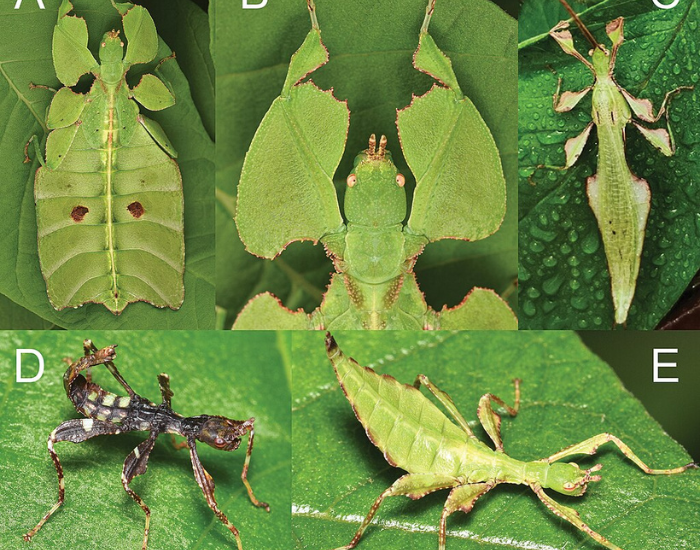
10. Jungle Leaf Insect (Phyllium celebicum)
Hailing from Indonesia and surrounding islands, this vibrant green species is one of the most studied leaf insects. Its edges imitate leaf serrations, and its midrib aligns perfectly with a leaf’s central vein.
Behavioral adaptation enhances their camouflage. They remain completely still when predators approach or sway slightly depending on wind conditions. Females are flightless, while males can glide short distances to escape threats or locate mates.
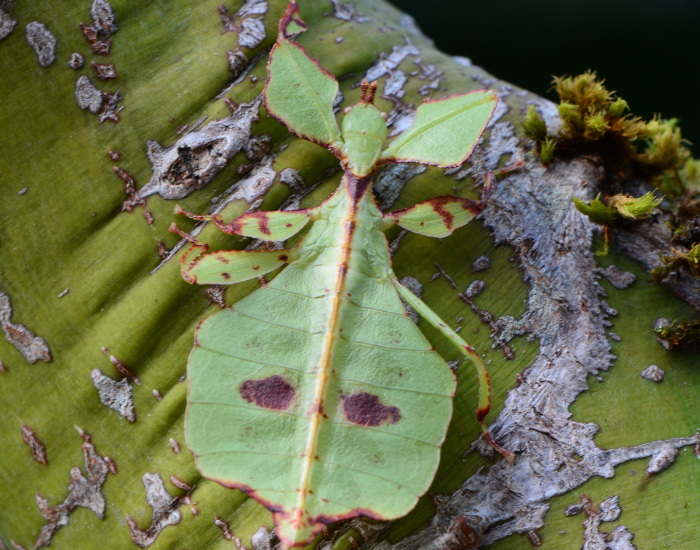
11. Westwood’s Leaf Insect (Phyllium westwoodii)
Named after the British entomologist John Obadiah Westwood, Phyllium westwoodii is one of the most visually striking members of the Phylliidae family. Native to Southeast Asia, particularly regions of Myanmar, Thailand, and parts of Malaysia, this species epitomizes nature’s precision in camouflage.
The body of P. westwoodii is broad, flat, and vibrantly green, with intricate venation that mirrors the structure of a living leaf. Its legs bear leafy lobes, and the edges of its abdomen mimic the uneven contour of leaf margins, giving it an almost sculptural quality. In some individuals, subtle brown spots appear — perfect imitations of fungal blemishes or tiny insect bites.
Females are larger and wingless, remaining motionless on host plants such as guava or mango trees. Males are slimmer and possess functional wings, allowing limited flight during mating season. When disturbed, both sexes employ gentle swaying motions that resemble leaves moving in the wind, enhancing their already impressive disguise.
The Science Behind Insect Camouflage
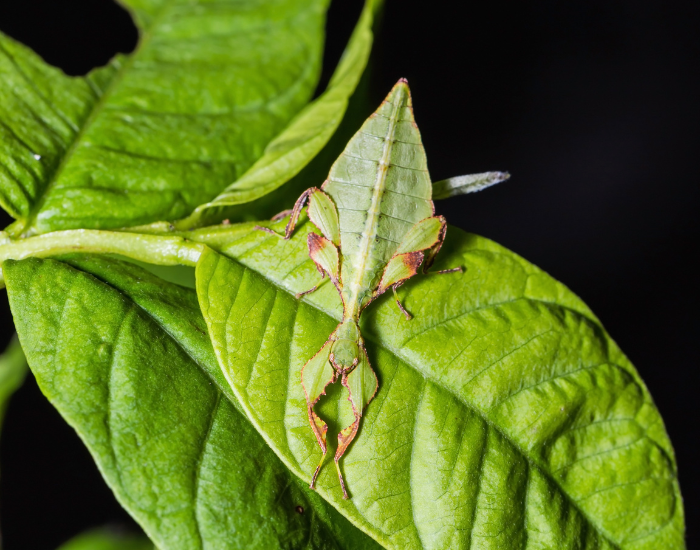
Leaf insects belong to the order Phasmatodea, which includes over 3,000 species of stick and leaf insects. Their camouflage represents one of evolution’s most sophisticated achievements.
Their bodies are flattened for a low profile among foliage. Veins on their wings and legs mimic the vascular patterns found in real leaves. Even their joints align with natural leaf folds and creases. In some species, the feet closely resemble the base of a leaf stalk, further enhancing their mimicry and making it difficult to distinguish them from real leaves.
Some species evolved edges that imitate caterpillar bite marks. This detail adds authenticity to their disguise, making them appear like partially eaten leaves that predators might ignore.
However, mimicry extends beyond physical appearance. Many leaf insects sway in the wind, freeze when touched, or drop to the ground and play dead. Some species can shift colors to match seasonal changes, turning brown during dry seasons.
Leaf Insect Habitat and Distribution
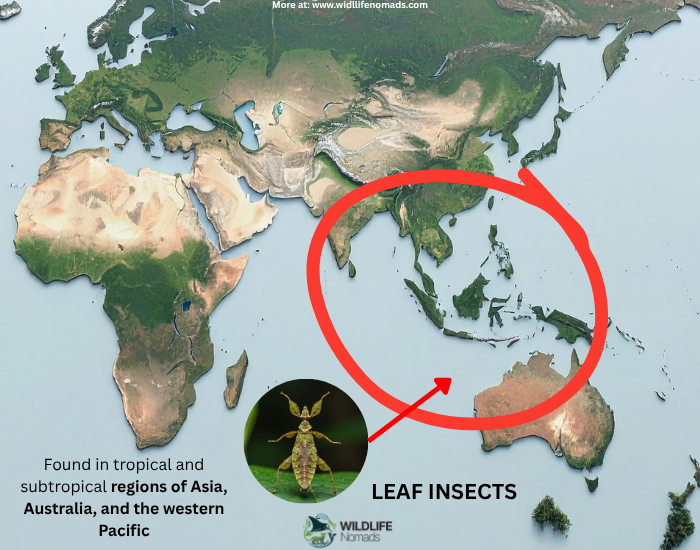
These insects primarily inhabit tropical and subtropical rainforests across Southeast Asia. Leaf insects are specially adapted to the warm, humid conditions of the tropics, which provide the lush vegetation and climate necessary for their survival and camouflage. Malaysia, Thailand, Indonesia, and the Philippines host the greatest diversity of species. Australia and New Guinea also support several endemic species.
Most leaf insects live in forest canopies where they feed on fresh leaves. They prefer plants like guava, mango, oak, and bramble. Different species have adapted to specific host plants in their native regions.
Habitat loss threatens many populations. Rainforest destruction in Southeast Asia has reduced available habitat significantly. Conservation efforts focus on protecting these tropical forests to preserve leaf insect diversity.
Life Cycle and Reproduction
Leaf insects undergo incomplete metamorphosis with three life stages: egg, nymph, and adult. This process differs from complete metamorphosis seen in butterflies. Butterflies, such as the orange oakleaf butterfly, have a pupal stage (chrysalis) between the larva and adult, which is absent in leaf insects.
Females drop eggs from trees that resemble plant seeds or buds. This camouflage protects eggs from predators and parasites. Eggs can take several months to hatch depending on temperature and humidity.
Nymphs emerge as reddish-brown miniature versions of adults. This coloring mimics young leaves or bark, providing protection while they’re small and vulnerable. As they grow through several molts, they gradually turn green.
Many female leaf insects reproduce through parthenogenesis. This means they can produce viable offspring without mating. Males remain important for genetic diversity, but this ability ensures population survival when males are scarce.
Adults typically live for several months to a year. Females focus on feeding and egg production, while males actively search for mates.
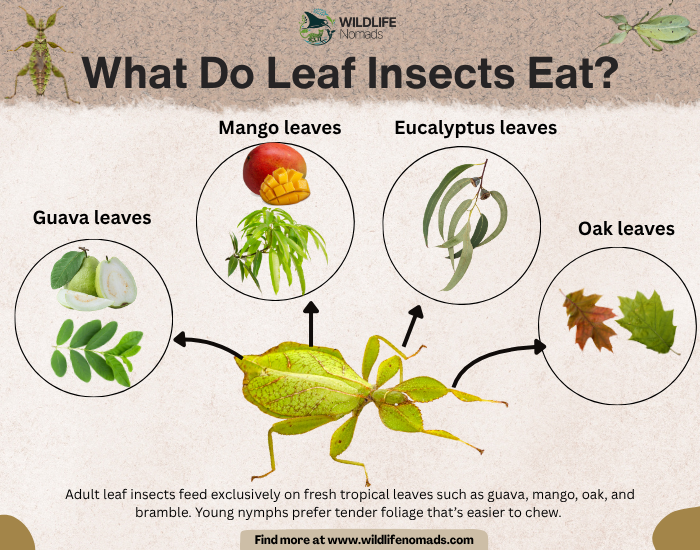
What Do Leaf Insects Eat?
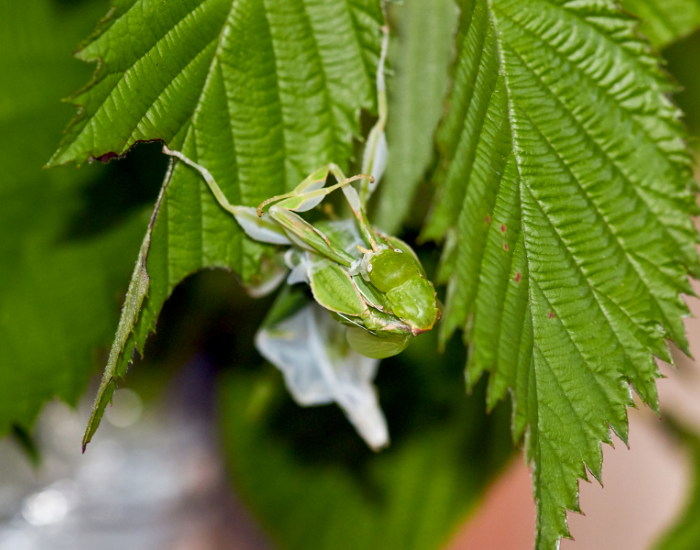
As herbivores, leaf insects feed exclusively on plant leaves. Their diet includes various tropical and subtropical plants, though preferences vary by species.
Common food plants include guava, mango, oak, and bramble leaves. In captivity, they readily accept these plants along with rose leaves and eucalyptus. Fresh leaves provide both nutrition and hydration.
Their feeding behavior helps regulate plant growth in forest ecosystems. While individual insects consume minimal foliage, populations can influence plant health and distribution.
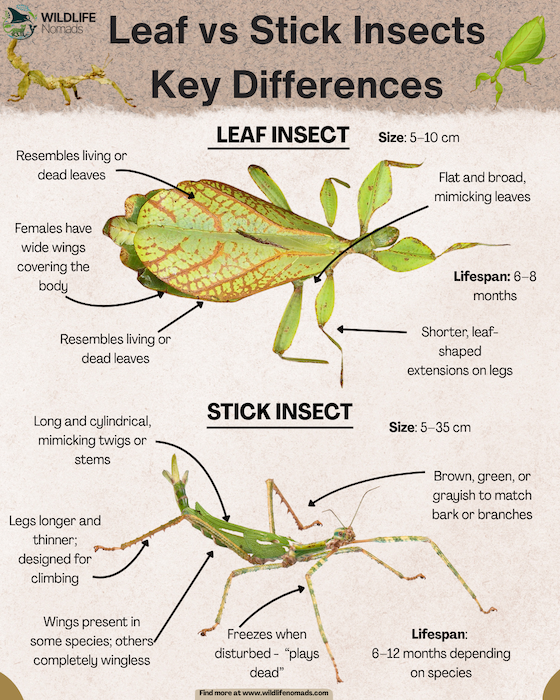
Leaf Insects vs Stick Insects
Both groups belong to the order Phasmatodea and share many characteristics. However, key differences distinguish these relatives.
Leaf insects have flat, broad bodies that mimic leaves, while stick insects have cylindrical bodies resembling twigs. Leaf insects typically have shorter legs relative to body size. Stick insects often grow longer and thinner.
Both groups evolved to match their preferred microhabitats. Leaf insects live among foliage, while stick insects hide among branches and stems.
Frequently Asked Questions
Leaf insects belong to the family Phylliidae. They’re commonly called walking leaves or leaf bugs. Scientists have described over 60 species, with many more likely awaiting discovery in tropical forests.
No, leaf insects are completely harmless to humans. They’re peaceful herbivores that feed only on plants. They cannot bite, sting, or transmit diseases. They make interesting pets for experienced insect keepers.
Leaf insects eat fresh leaves from various plants. Their preferred food includes guava, oak, mango, and bramble leaves. In captivity, they readily accept rose leaves and eucalyptus. They need fresh foliage daily for proper nutrition.
Rarity varies by species and location. Some species like the Giant Malaysian Leaf Insect are occasionally bred in captivity. However, many tropical species remain rare due to their excellent camouflage and restricted habitats. Scientists discover new species regularly.
Flying ability depends on species and sex. Male leaf insects typically have functional wings and can fly or glide between trees. Females are usually larger, heavier, and flightless. This sexual dimorphism is common among leaf insects.
Adult leaf insects typically live several months to one year. Lifespan varies by species, temperature, and food quality. Females generally live longer than males. The complete life cycle from egg to adult takes 4-6 months.
Leaf insects inhabit tropical rainforests across Southeast Asia, New Guinea, and Australia. Malaysia, Thailand, Indonesia, and the Philippines host the greatest diversity. Look carefully among foliage in these regions—though their camouflage makes them extremely difficult to spot.
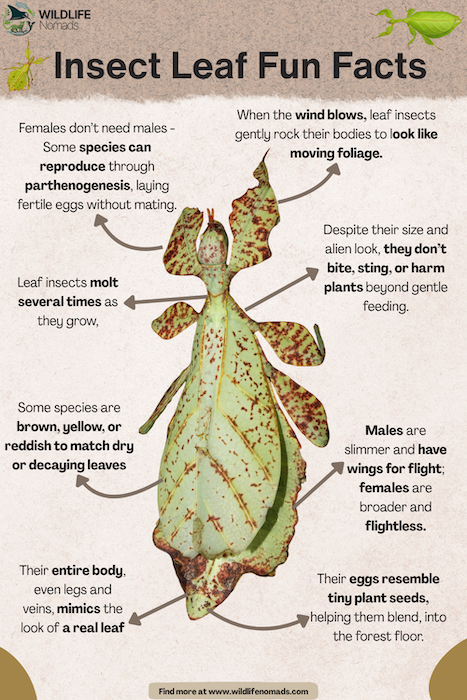
Photo: Drägüs, CC BY-SA 3.0, via Wikimedia Commons
Nature’s Living Art
The next time you walk through a tropical forest, look carefully at the leaves around you. Some may be insects, silent masters of camouflage that have perfected their disguise over millions of years.
The Phylliidae family represents one of evolution’s most remarkable achievements. Each species tells a story of survival, adaptation, and perfect mimicry. From the Giant Malaysian Leaf Insect to the tiny Mossy Leaf Insect, these creatures remind us that nature’s most incredible animals often hide in plain sight.
Protecting tropical rainforests preserves these extraordinary insects and the ecosystems they help sustain. As researchers continue exploring remote forests, new species will emerge, each adding another chapter to this fascinating story of evolution.