

Picture this: a half-tonne predator stalks a seal’s breathing hole with total silence. It hasn’t eaten in days. The ice is shrinking. Yet it waits. That patience, that precision, is exactly what makes the polar bear (Ursus maritimus) one of the most extraordinary animals on Earth.
I first became obsessed with polar bear facts during my master’s research in Sweden. A colleague stationed in Svalbard shared field data that stopped me in my tracks. Many things we casually repeat about these bears barely scratch the surface of their actual biology. If you’re looking for essential facts about polar bears, you’re in the right place.
Below, you’ll find 12 polar bear facts grounded in current science, including a few that will genuinely surprise you. Let’s dive in.
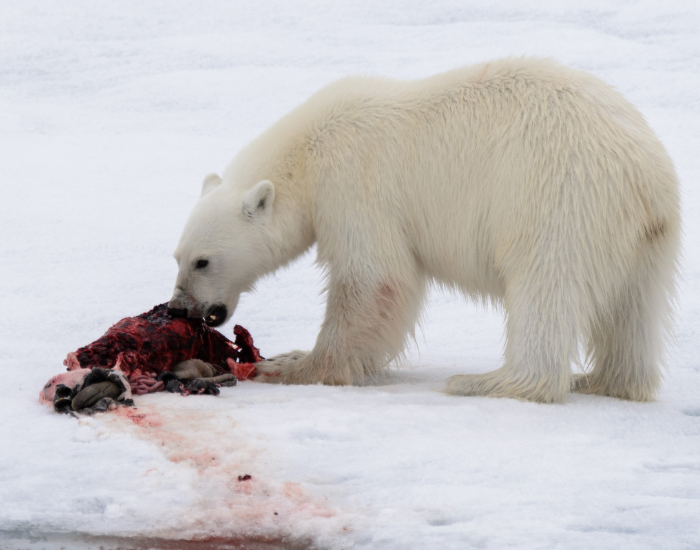
1. They Are Classified as Marine Mammals
Polar bears are the only bear species classified as marine mammals. That distinction isn’t just a naming quirk. Taxonomically, they belong alongside seals, whales, and dolphins, because they depend almost entirely on the Arctic Ocean ecosystem to survive.
Their Latin name, Ursus maritimus, literally translates to “sea bear.” They spend the vast majority of their lives on sea ice, hunting, mating, and travelling. Without the marine environment, they simply cannot survive.
2. Their Fur Is Transparent — Not White
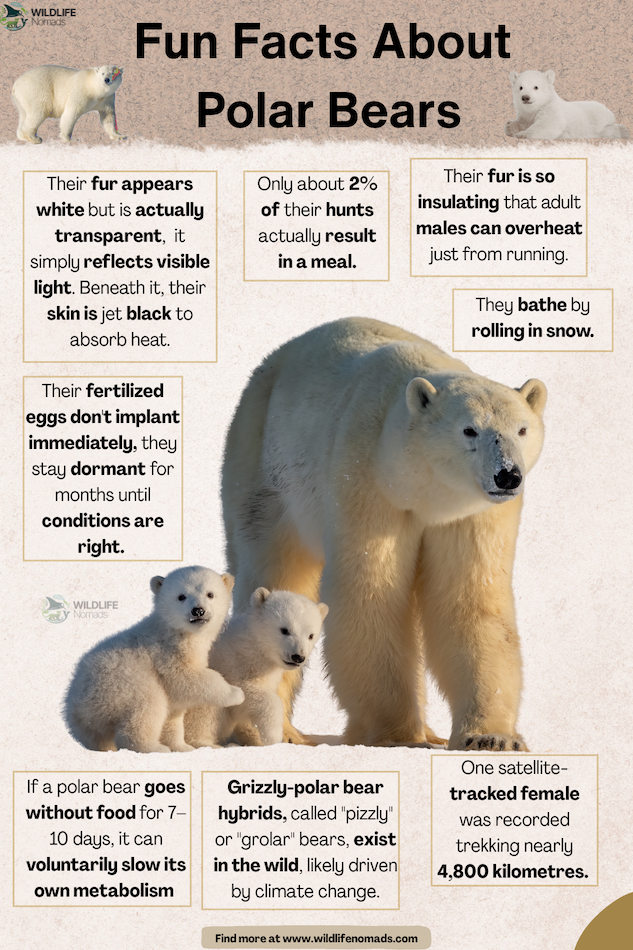
Here’s one of the most surprising polar bear facts: their fur isn’t actually white. Every guard hair is transparent, with a hollow core and no pigment. The fur scatters and reflects light, making the coat appear white, perfect camouflage against pack ice. A polar bear’s fur consists of thick fur with two layers: dense underfur and guard hairs, which provide insulation and help the animal survive in the harsh Arctic environment.
Underneath all that fur? Jet-black skin. A polar bear’s skin is actually black, and its fur is translucent, appearing white because it reflects visible light. Polar bears also have a thick layer of blubber up to 4.5 inches (11.4 cm) thick beneath the skin for insulation. This thick fur and blubber trap heat, helping polar bears maintain warmth in the frigid Arctic.
However, the old idea that the hollow hairs act like fibre-optic cables to channel UV light to the skin is a myth, scientists have since disproven that claim.
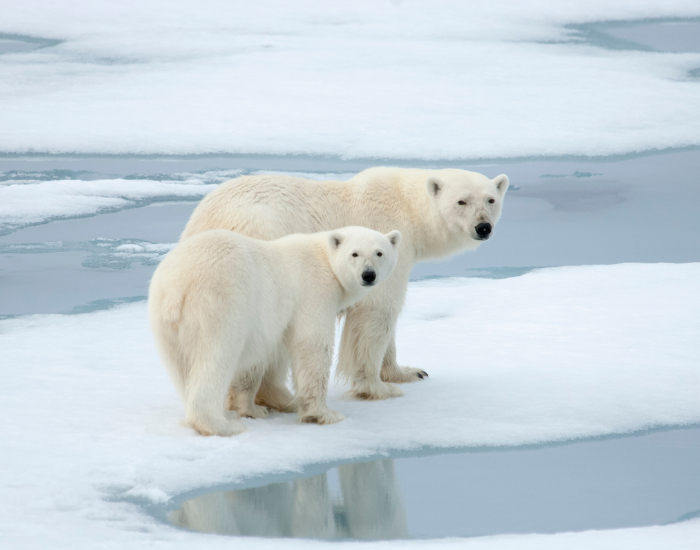
3. A Footprint Can Reveal the Bear’s Identity
Conservation biology has entered a new era for polar bears. Scientists can now extract DNA from the snow inside a polar bear’s footprint. By scraping just a thin layer of fresh snow, researchers identify the individual bear’s sex and genetic profile — without ever handling the animal.
A 2023 study published in Frontiers in Conservation Science confirmed this method with wild Alaskan polar bears. It’s a game-changer. Traditional monitoring relied on costly aerial surveys and chemical immobilisation. This footprint DNA approach is cheaper, non-invasive, and respects Indigenous community concerns about animal welfare.
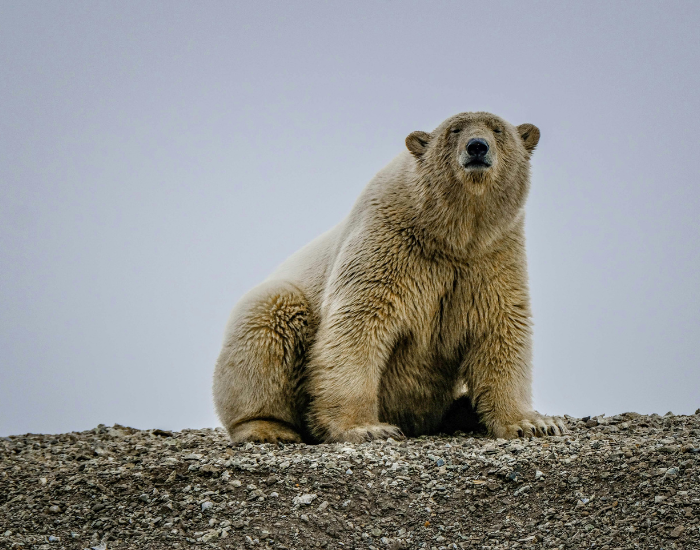
4. They Can Swim for Days Without Stopping
Polar bears are powerful swimmers. Their massive front paws act like oars, while their hind legs function as a rudder. When swimming, polar bears keep their hind legs flat, using them as a rudder for improved maneuverability in the water. In 2011, a GPS-collared female in the Beaufort Sea swam continuously for nine days, covering 687 km (426 miles) of open water to reach sea ice.
That marathon swim came at a cost. She lost 22 percent of her body weight, and her yearling cub did not survive the journey. As sea ice disappears, these forced long-distance swims are becoming more frequent and more dangerous, especially for mothers with young cubs.
5. Hybrid ‘Pizzly Bears’ Are Real — and Fertile
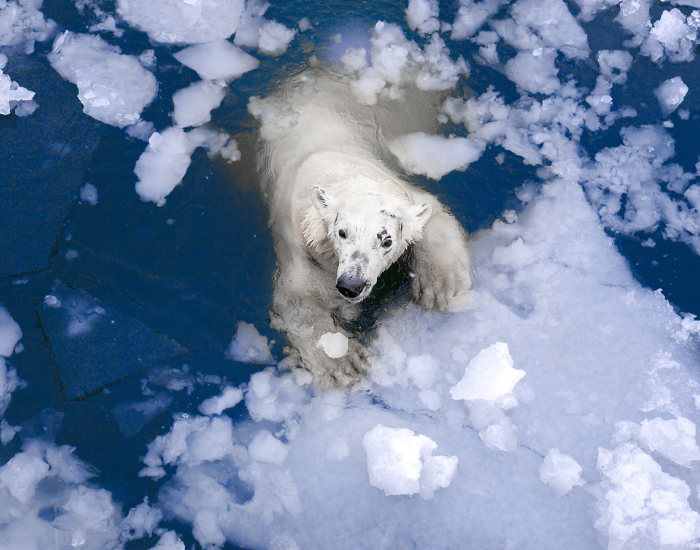
As Arctic warming pushes polar bears onto land and grizzly bears further north, something remarkable is happening: the two species are meeting and mating. Their offspring is a different kind of bear, called pizzly bears or grolar bears — are not only real but fertile.
Only a handful of confirmed cases exist in the wild. However, genomic research shows this isn’t entirely new. Polar bears and brown bears share a history of “ancient admixture” stretching back at least 150,000 years. Climate change is simply accelerating an ancient pattern.

6. Most Polar Bears Don’t Actually Hibernate
Unlike brown bears, polar bears remain active through most of the year. They don’t need to hibernate in winter because that’s when their hunting season peaks, sea ice forms, seals surface at breathing holes, and the Arctic becomes a polar bear’s pantry. Therefore, only pregnant females enter a true denning state.
A mother bear seals herself into a snow den, where she gives birth and nurses her cubs without eating, drinking, or leaving for months. Cubs are born tiny, weighing just 450–680 grams, blind and nearly hairless. By the time they emerge in spring, they’ve grown to 10–15 kg on milk that is roughly 33% fat. That transformation, from a creature smaller than a guinea pig to a robust Arctic explorer, happens entirely in darkness.
7. They Are Built to Eat Fat
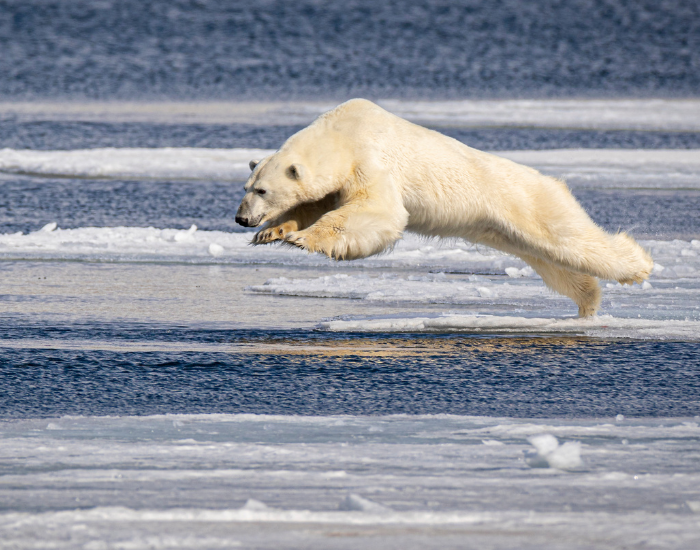
Polar bears are less hunters than they are energy economists. Their entire physiology is built around one goal: acquiring and storing fat as efficiently as possible. Their digestive system absorbs approximately 97% of the fat they consume, one of the highest rates recorded in any mammal. A single sitting can fuel a stomach holding 15–20% of the bear’s own body weight.
During lean summer months, when the sea ice retreats and hunting becomes impossible, that stored fat is everything. Polar bears can carry up to 50% of their body mass as fat reserves, sustaining themselves for weeks without a meal. However, as ice-free seasons grow longer, that buffer is shrinking — and the consequences for body condition, reproduction, and survival are already measurable.
8. The Svalbard Population Is a Closely Watched Anomaly
The Barents Sea is losing sea ice faster than almost any other region. Yet bears around Svalbard, Norway, are currently maintaining relatively stable body condition, a finding that puzzles and intrigues researchers.
Scientists at the Norwegian Polar Institute suggest these bears benefit from a highly productive marine ecosystem and a flexible diet that includes reindeer and, in some cases, walrus. This dietary flexibility is notable when compared to other species, such as brown bears and American black bears, which also adapt their diets to available resources but differ in their ecological roles and evolutionary history. In addition, Indigenous knowledge of bear movements has become an essential layer of data alongside satellite telemetry. However, researchers caution that this stability is likely a short-term reprieve. Without sea ice, the long-term outlook for polar bear habitat remains dire.
9. Their Sense of Smell Is Extraordinary
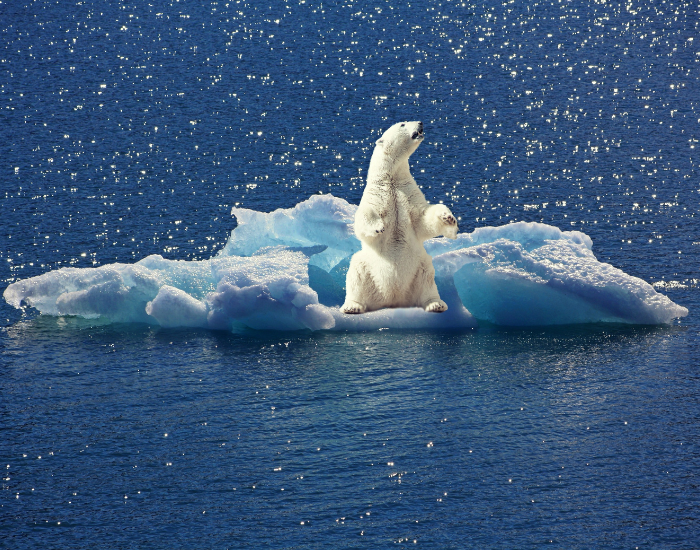
A polar bear can detect a seal’s breathing hole through nearly a metre of solid ice, and from more than 800 metres away. Their olfactory system is tuned to navigate a vast, featureless Arctic landscape where visual cues are often useless.
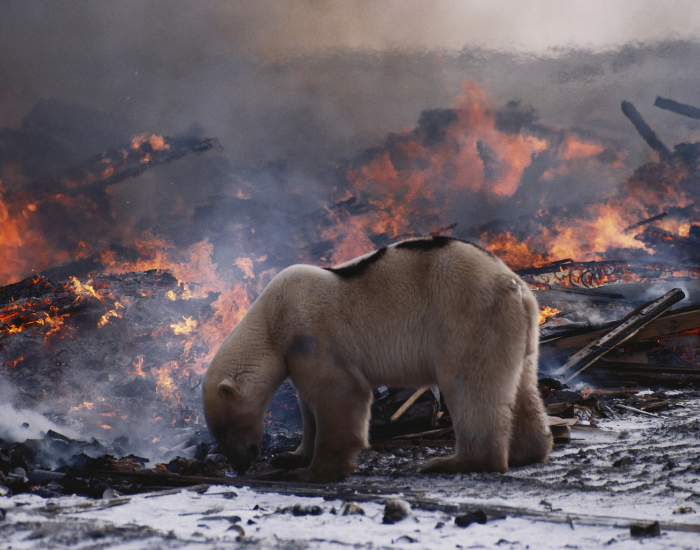
Unfortunately, this same powerful sense of smell now draws many bears toward human settlements. They follow the scent of stored food and rubbish, which increases conflict and risk for both bears and communities. Managing this human-wildlife interface is a growing conservation challenge across polar bear range states.
10. Their Paws Are Engineering Masterpieces
Polar bears have large paws that measure up to 30 cm (12 inches) across, roughly the size of a dinner plate. These large paws distribute the bear’s weight (up to 800 kg for the largest males) across a large surface, preventing them from crashing through thin ice.
The paw pads are covered in small, rough bumps called papillae, and tufts of fur between the toes add warmth and grip. The forepaws also function as large paddles when swimming, providing stability and traction on snow and ice surfaces. Polar bears are, in many ways, the best-engineered predator for their environment.
11. They Have a Third Eyelid
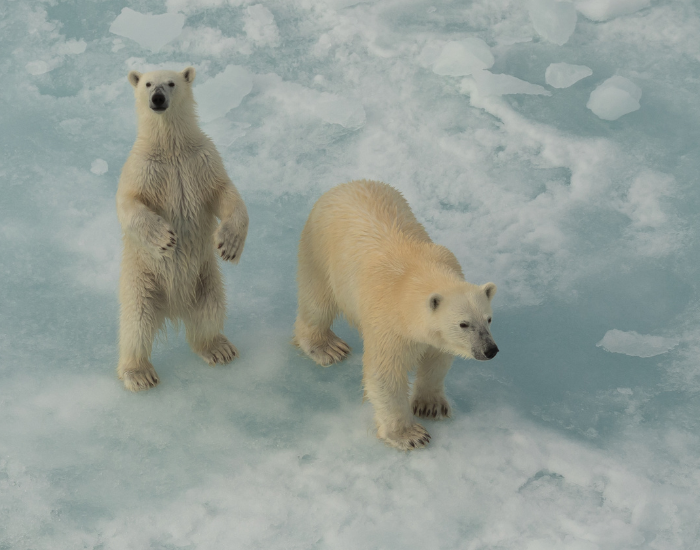
Arctic light can be blinding. Snow and ice reflect UV radiation intensely, creating a real risk of snow blindness. Polar bears have evolved a clever solution: a third eyelid on their eyes, called the nictitating membrane.
This clear protective layer acts like built-in sunglasses. It shields the eye from UV damage and glare while still allowing clear vision, even underwater. It’s one of several adaptations that makes polar bears so well-suited to their extreme environment.
12. A Group of Polar Bears Has a Wonderful Name
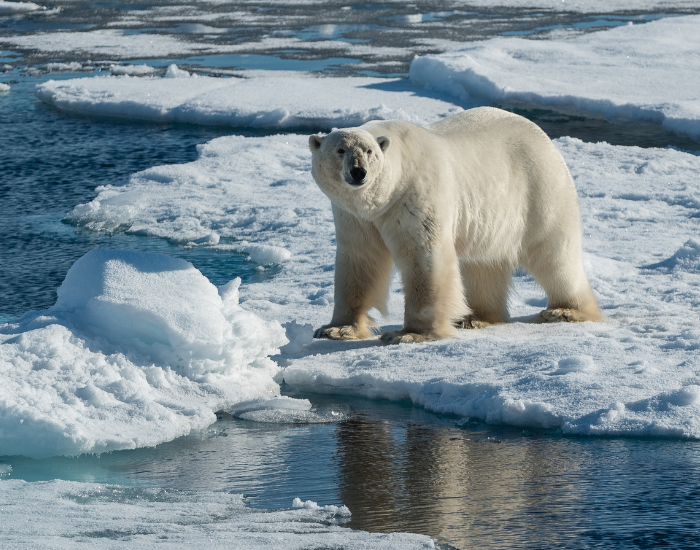
Polar bears are famously solitary animals. However, when they do gather, typically near food sources like whale carcasses during summer, a group is called a “celebration” or a “sleuth.” For a species whose habitat is under increasing threat, that name feels strangely poignant.
Adult male polar bears generally tolerate each other outside the breeding season and have even been recorded sharing large food sources. This social flexibility is another reminder that polar bears are far more nuanced than the lone icons of conservation campaigns suggest.
13. They Can Hit “Pause” on Their Own Pregnancy
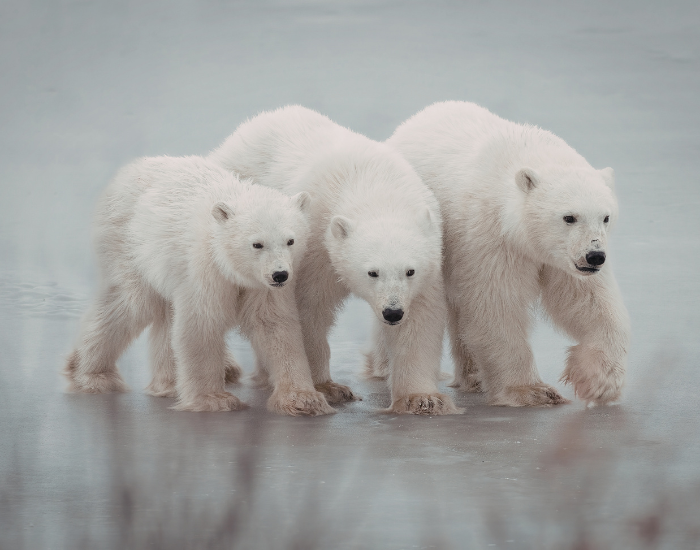
One of the most remarkable feats of polar bear biology is delayed implantation. While mating occurs on the sea ice between April and June, the embryo does not immediately implant in the mother’s uterus. Instead, it remains in a state of suspended animation for several months.
This “biological pause button” ensures the pregnancy only proceeds if the female has stored enough fat to survive the winter. If she hasn’t reached a critical body mass by autumn, the embryo may never implant, and her body simply reabsorbs it. This prevents a mother from attempting to raise cubs when her own survival is at risk.
Once she has successfully gained several hundred kilograms of fat, primarily from hunting seal pups in the spring, the embryo implants in the autumn. The actual gestation period is surprisingly short, lasting only about 60 days. This allows the tiny, vulnerable cubs to be born in the safety of a snow den during the peak of the Arctic winter, perfectly timed to emerge exactly when the spring seal-hunting season begins again.

14. The Hudson Bay Population Is a Warning Signal
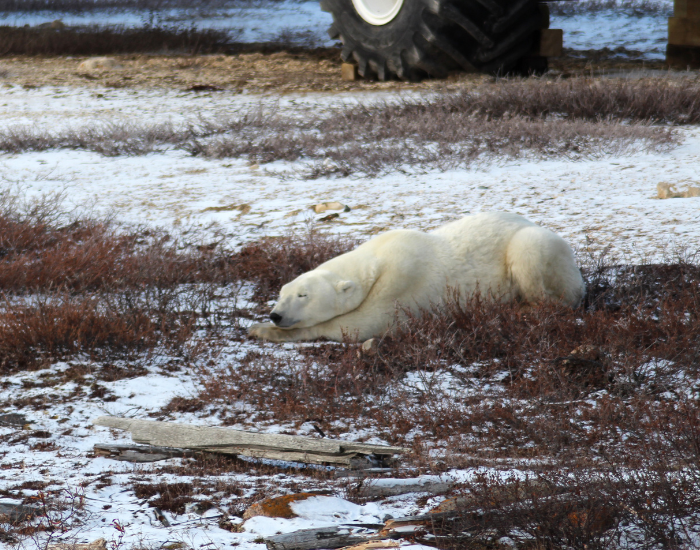
Some polar bear subpopulations show us, in real time, what sea ice loss means for bears. The Western Hudson Bay population has declined around 27% as its ice-free season grows longer each year. Bears spend more time on land, burning through fat reserves without the chance to replenish them. Reproductive rates fall. Cub survival drops.
As other sea ice habitats diminish, Northern Greenland is now considered a critical stronghold — one of the last places where thick, year-round sea ice may persist long enough to sustain a viable polar bear population. Scientists and conservation groups watch this region closely. It represents both a refuge and a last warning. If the ice goes there too, options narrow significantly.
15. Oil and Gas Development Is a Threat Beyond Climate
Climate change dominates the conservation conversation, and rightly so. However, oil and gas development in the Arctic adds its own distinct set of risks to polar bears. Exploration activity disturbs denning females and disrupts key migration corridors. Seismic surveys and increased vessel traffic fragment the sea ice habitat bears rely on.
An oil spill in Arctic waters would be catastrophic. Cold temperatures dramatically slow the natural breakdown of oil. Contamination would spread through the entire food web, from the plankton and microorganisms at the base of the Arctic ecosystem, up through the ringed and bearded seals that polar bears depend on. Recovery from a major spill, as history has shown, can take decades. It is a risk that sits quietly alongside climate change, rarely making headlines but no less serious.
For more on climate impacts to Arctic wildlife, see our guides to narwhals and reindeers.
FAQs About Polar Bears
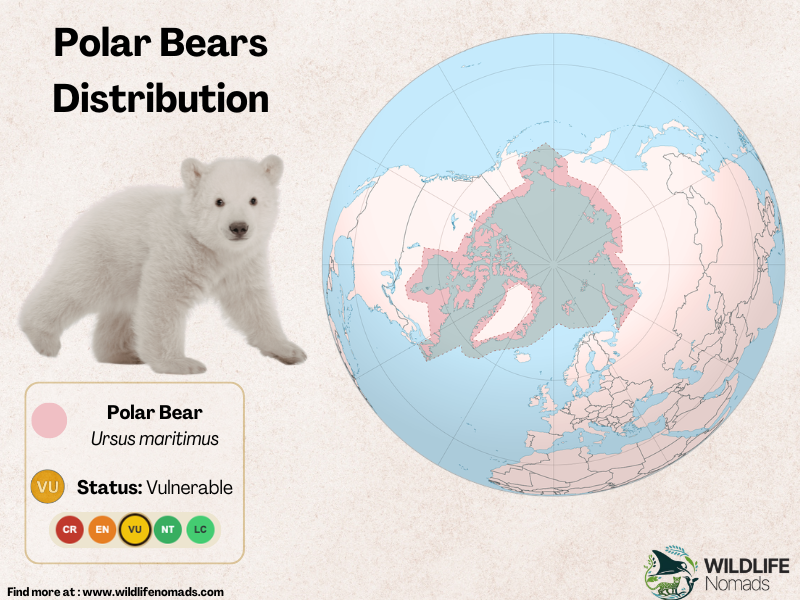
Polar bears are currently listed as Vulnerable by the IUCN — not yet Endangered, but under serious threat. Their survival is directly linked to sea ice availability, which is declining rapidly due to climate change. Some regional populations are already in steep decline.
Adult males typically weigh 350–600 kg (775–1,300 lbs), though the largest recorded male was estimated at 800 kg (1,760 lbs). Adult females are considerably smaller, usually 150–290 kg (330–650 lbs).
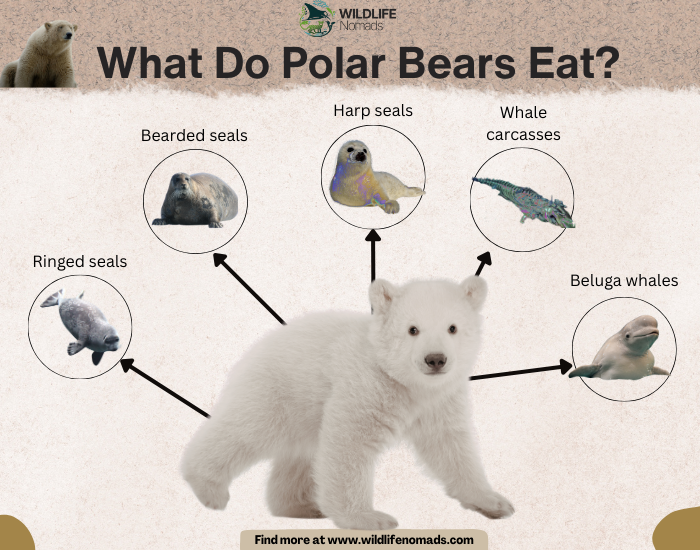
Their primary diet consists of ringed and bearded seals, specifically targeting the energy-rich blubber. They will also scavenge whale carcasses, occasionally eat reindeer, and consume birds or eggs when available. They are the most carnivorous of all bear species.
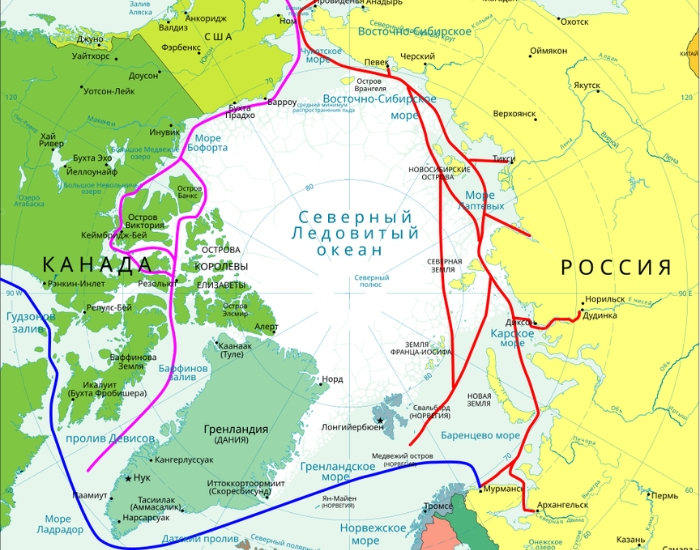
Polar bears are found across the Arctic Circle in five range states: Canada, the United States (Alaska), Russia, Norway (Svalbard and other Arctic islands), and Greenland. They require sea ice habitat to hunt and survive.
Where to See Polar Bears in the Wild?
Here is a list of 3 wildlife tours where you can see a polar bear in the wild besides Svalbard. As a biologist, I only recommend tours that follow strict ethical guidelines to ensure we don’t disturb wildlife. These are the three tours/ partners I trust most based on their conservation records:
This blog is reader-supported. When you buy experiences through links listed on this site, we may earn an affiliate commission.
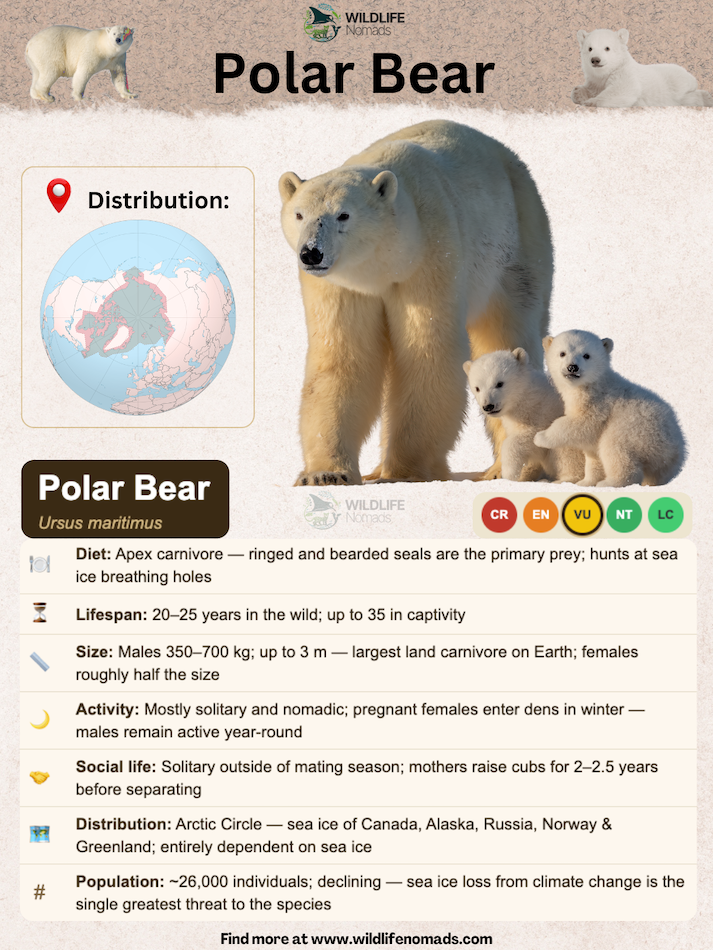
Polar Bear Facts in a Nutshell!
References:
Durner, G. M., Whiteman, J. P., Harlow, H. J., Amstrup, S. C., Regehr, E. V., & Ben-David, M. (2011). Consequences of long-distance swimming and travel over deep-water pack ice for a female polar bear during a year of extreme sea ice retreat. Polar Biology, 34(7), 975–984. https://doi.org/10.1007/s00300-010-0953-2
Pagano, A. M., Durner, G. M., Amstrup, S. C., Simac, K. S., & York, G. S. (2012). Long-distance swimming by polar bears (Ursus maritimus) of the southern Beaufort Sea during years of extensive open water. Canadian Journal of Zoology, 90(5), 663–676. https://doi.org/10.1139/z2012-033
Pagano, A. M., Durner, G. M., Rode, K. D., Atwood, T. C., Atkinson, S. N., Peacock, E., Costa, D. P., Owen, M. A., & Williams, T. M. (2018). High-energy, high-fat lifestyle challenges an Arctic apex predator, the polar bear. Science, 359(6375), 568–572. https://doi.org/10.1126/science.aan8677
Rode, K. D., Regehr, E. V., Douglas, D. C., Durner, G., Derocher, A. E., Thiemann, G. W., & Budge, S. M. (2014). Variation in the response of an Arctic top predator experiencing habitat loss: feeding and reproductive ecology of two polar bear populations. Global Change Biology, 20(1), 76–88. https://doi.org/10.1111/gcb.12339
McGeachy, D., Lunn, N. J., Richardson, E. S., & Derocher, A. E. (2025). Temporal dynamics of polar bear (Ursus maritimus) pregnancy rates in western Hudson Bay: influence of mass, age and timing of first breeding. Conservation physiology, 13(1), coaf058. https://doi.org/10.1093/conphys/coaf058
Von Duyke, A. L., Crawford, J. A., Quakenbush, L., Adams, J. R., & Waits, L. P. (2023). Determination of polar bear (Ursus maritimus) individual genotype and sex based on DNA extracted from paw-prints in snow. Frontiers in Conservation Science, 4, 1166279. https://doi.org/10.3389/fcosc.2023.1166279
Wiig, Ø., Amstrup, S., Atwood, T., Laidre, K., Lunn, N., Obbard, M., Regehr, E. & Thiemann, G. (2015) Ursus maritimus. The IUCN Red List of Threatened Species 2015: e.T22823A14871490. https://dx.doi.org/10.2305/IUCN.UK.2015-4.RLTS.T22823A14871490.en. Accessed on 17 March 2026.



.svg)