
Most people walk past mallards without a second glance. They’re the background noise of city parks, the ducks kids throw bread to on Sunday afternoons. However, as a field biologist I can tell you that the mallard is one of the most fascinating birds on the planet. The mallard is a large dabbling duck and one of the most recognizable large ducks, known for its size and distinctive feeding style.
The mallard (Anas platyrhynchos) is not only the most common duck in the world — it is the ancestor of nearly every domestic duck breed you’ve ever seen. It is an evolutionary marvel hiding in plain sight. The mallard’s breeding range is extensive, covering much of North America, Europe, and Asia, reflecting its global presence. Here are 10 weird, wonderful facts about this extraordinary species.
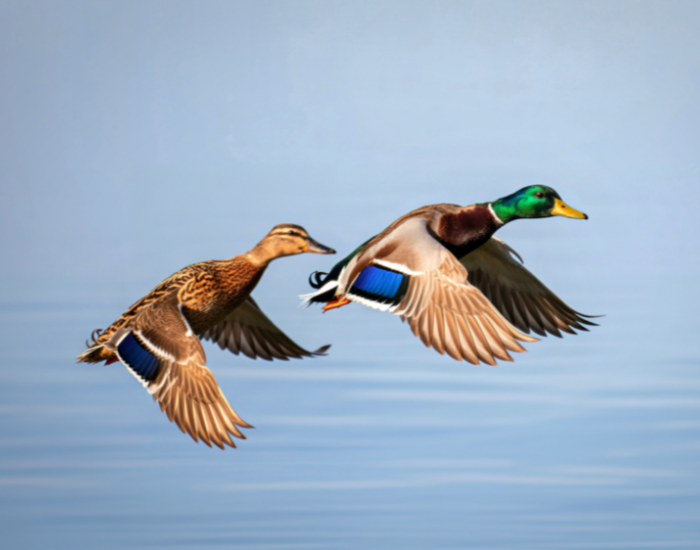
Mallard Quick Field Guide
| Feature | Detail |
|---|---|
| Common Name | Mallard |
| Scientific Name | Anas platyrhynchos |
| Typical Length | 50–65 cm (20–26 in) |
| Typical Wingspan | 81–98 cm (32–39 in) |
| IUCN Status | Least Concern |
| Primary Diet | Aquatic vegetation, invertebrates, waste grain |
The mallard is highly adaptable and thrives in varied habitats, including wetlands, urban areas, and farmlands.
1. The Mallard Is the Ancestor of Domestic Ducks
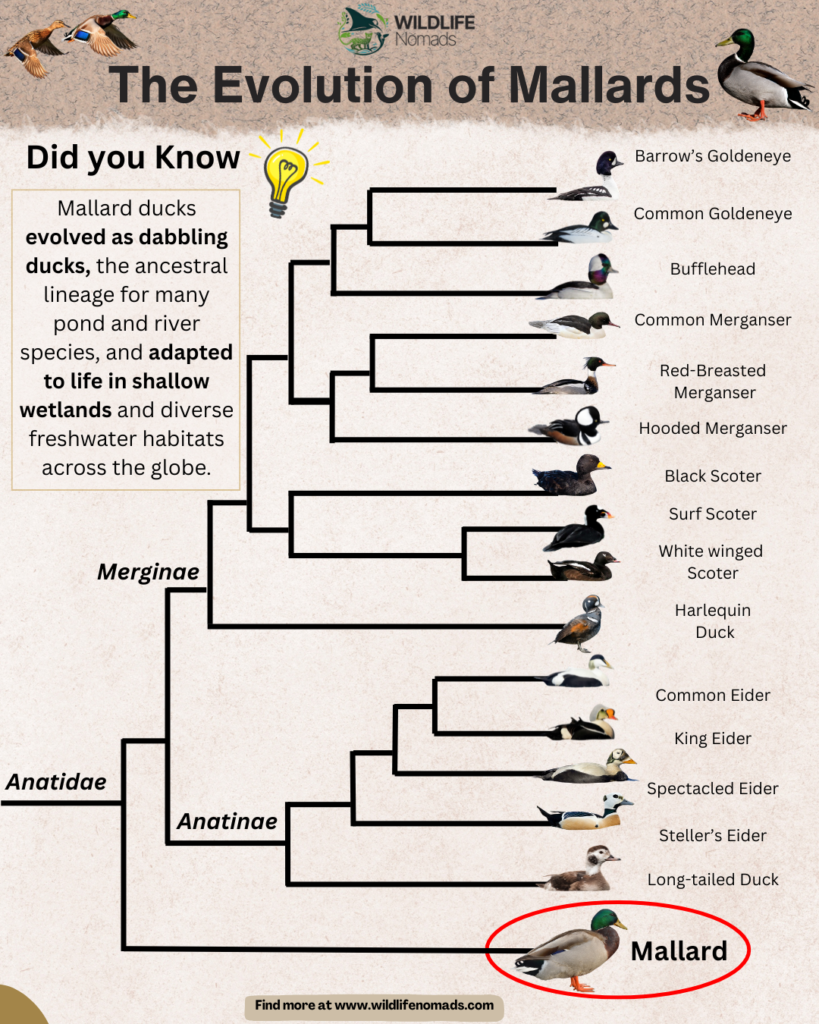
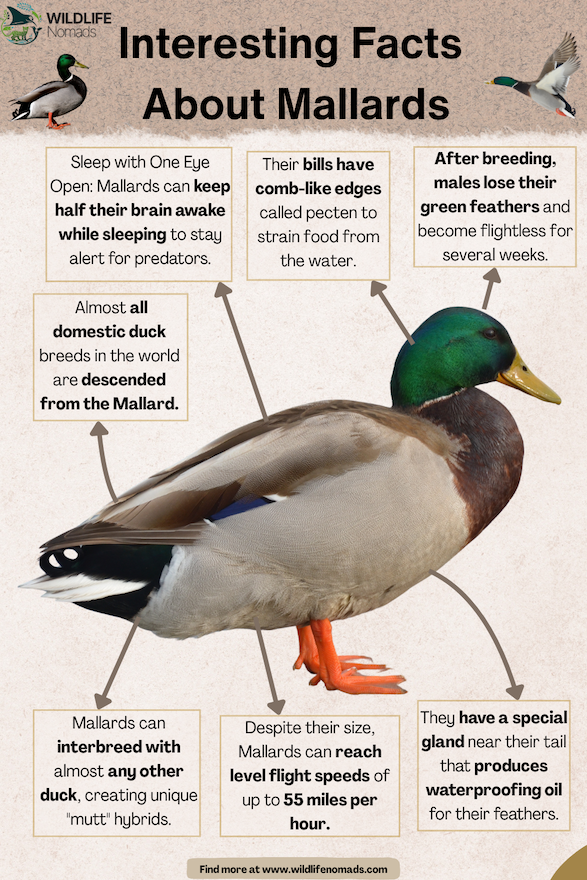
When you picture a white farm duck waddling across a yard, you’re looking at a mallard descendant. Nearly every domestic duck breed in the world — from the heavy-bodied Pekin to the slim Indian Runner — traces its lineage back to Anas platyrhynchos. The one major exception is the Muscovy duck, which branched off from a separate lineage entirely.
The taxonomy tells the whole story. Anas is Latin for ‘duck,’ while platyrhynchos is Greek for ‘broad-beaked.’ This genetic flexibility explains the ‘manky ducks’ you sometimes see in parks — birds with unusual white patches caused by wild mallards interbreeding with escaped domestic ducks, which often form feral populations. Mallards can hybridize with more than 40 species in the wild, producing hybrids that may be fully fertile. Complete hybridization of various species of wild duck gene pools could result in the extinction of many indigenous waterfowl.
2. That Iridescent Green Head Contains No Green Pigment
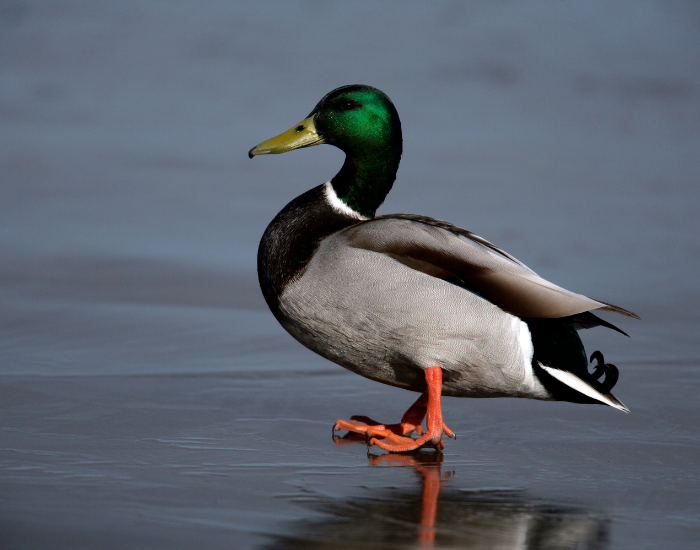
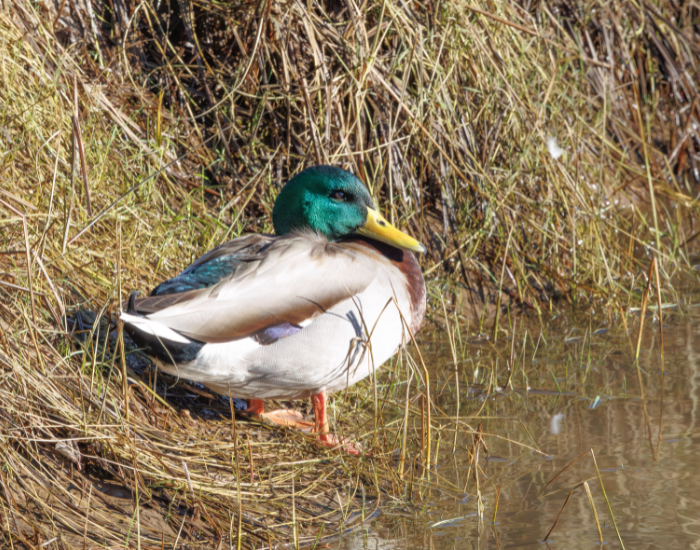
The male mallard’s distinctive dark green head and chestnut breast are key identification features, especially during the breeding season. These colors are not due to pigment, but rather microscopic structures within the feathers that refract light like a prism, creating the vivid emerald shimmer.
Depending on the angle of sunlight, a drake’s head can appear deep forest green, bright lime, or even black. This structural coloration is one of nature’s cleverest optical illusions. Look also for the narrow white neck ring, also referred to as a white collar, that separates the dark green head from the chestnut breast—an important feature for distinguishing males from females and similar duck species. Both sexes have an area of white-bordered black or iridescent purple or blue feathers called a speculum on their wings. The male also possesses a unique, black curled tail feather, a feature rarely seen in other duck species.
3. Mallards Are the Original Dabbling Duck
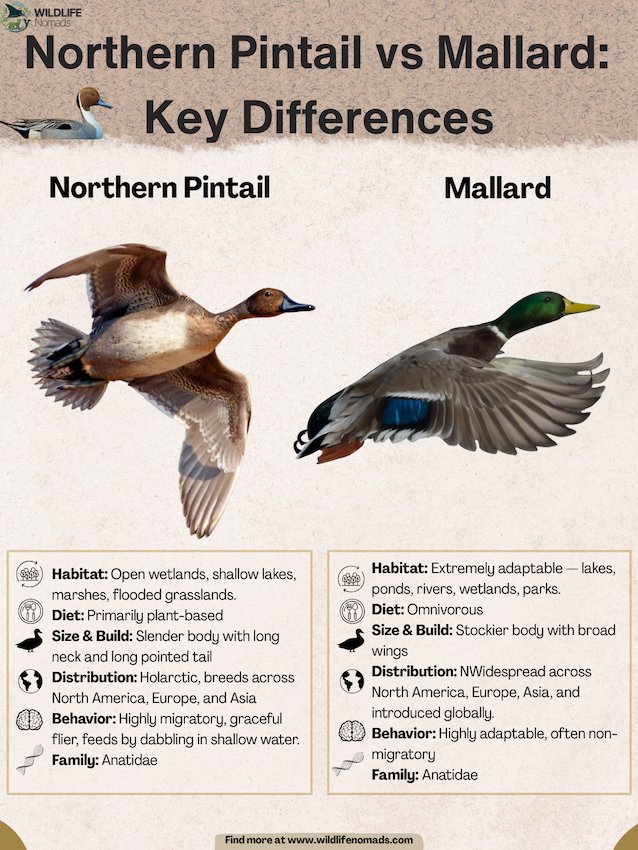
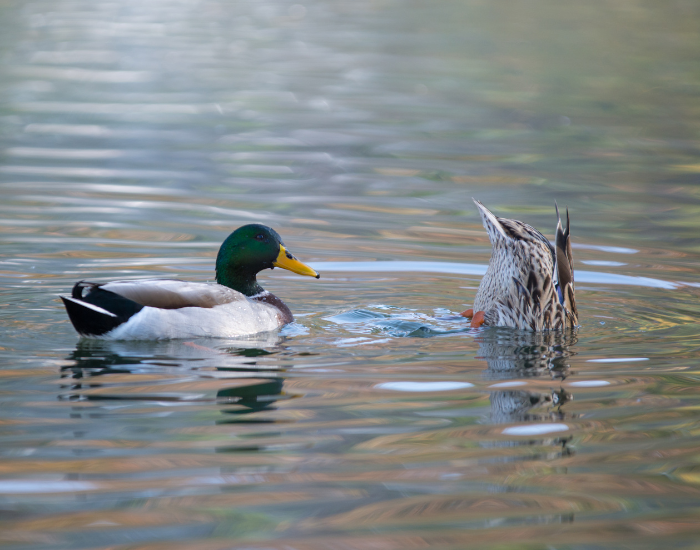
The mallard is the quintessential dabbling duck and is part of the group known as ‘puddle ducks,’ which are recognized for feeding in shallow water. Unlike diving ducks such as the Harlequin Duck or Ruddy ducks, which plunge fully underwater to hunt, the mallard stays at the surface and tips tail-up to reach aquatic vegetation and aquatic invertebrates below. Basically a dabbling duck such as wood ducks or northern pintails.
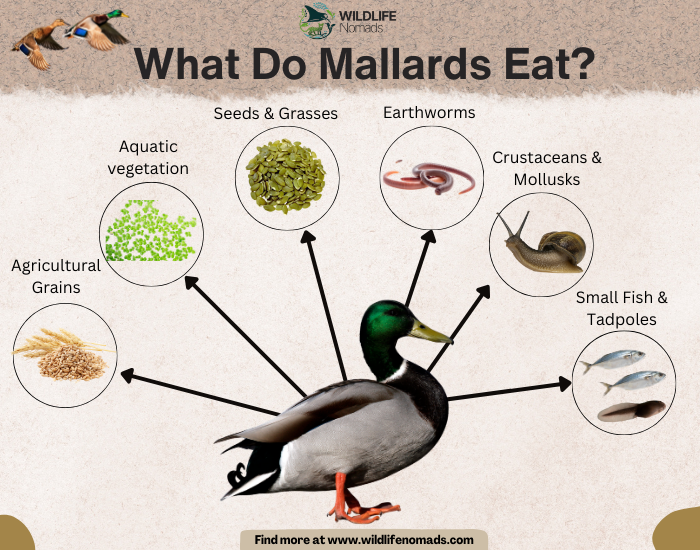
This feeding strategy makes them extraordinary generalists. Mallards thrive in shallow, permanent water bodies such as marshes, bogs, lakes, and rivers. In summer, they eat small fish, tadpoles, and insects. The majority of the mallard’s diet consists of gastropods, insects, crustaceans, other arthropods, worms, seeds, and plant matter. In winter, they move into agricultural fields to glean waste grain. That adaptability is precisely why mallards thrive equally well in pristine beaver ponds, small ponds, and urban areas such as the middle of London or New York City.
They don’t need deep water. They just need enough to tip over.
4. The American Black Duck Identity Crisis
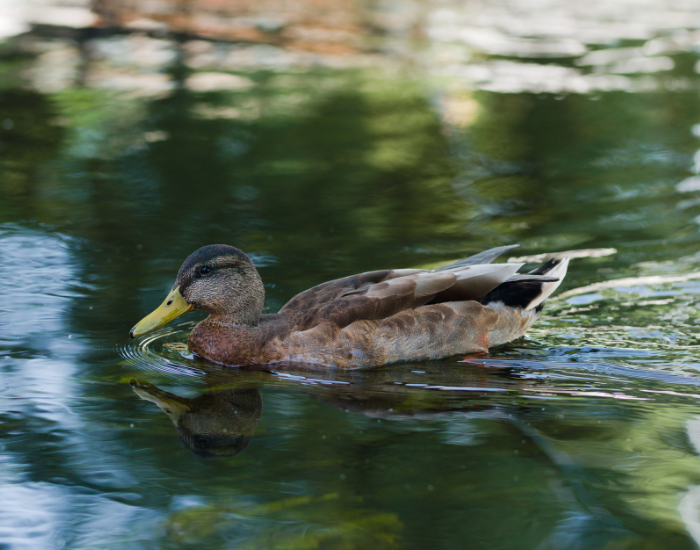
One of the trickiest lessons in field ornithology is the ‘Black Duck trap.’ In eastern North America, the American black duck looks almost identical to a female mallard at a distance. Both are mottled brown, both swim in the same freshwater wetlands.
However, the wing speculum gives them away. On a mallard, that blue iridescent patch on the wing is bordered by two creamy white bars. On an American black duck, the white trailing edge is nearly absent. To make things more complicated, these two species hybridise freely. The resulting hybrids look like sooty mallards — a vivid reminder that nature does not respect the tidy lines we draw around species.
5. Migration Is a Choice, Not a Rule
Many people assume all mallards fly south for winter. In reality, migration for this species is more of a flexible strategy than a hard rule. As long as open water and food remain available, many mallards will stay put through brutal cold.
When they do migrate, they travel in large puddle duck flocks along established flyways that birders track obsessively across North America. They are not searching purely for warmth — they are searching for liquid water where they can continue their dabbling lifestyle. A mallard can survive sub-zero temperatures provided the local wetland habitats stay accessible.

6. The Female Is a Masterpiece of Camouflage
While the male mallard steals attention with his green head and curled tail, the adult female is a survival engineer. Her mottled brown plumage, orange-black bill, and gray body allow her to vanish completely into reeds and dry grass while sitting on a nest.
That mottled brown colouration is so effective it borders on magical. The orange-black bill also distinguishes her immediately from the male’s yellow bill — a reliable field mark at any distance.
7. After Breeding, Males Disguise Themselves as Females
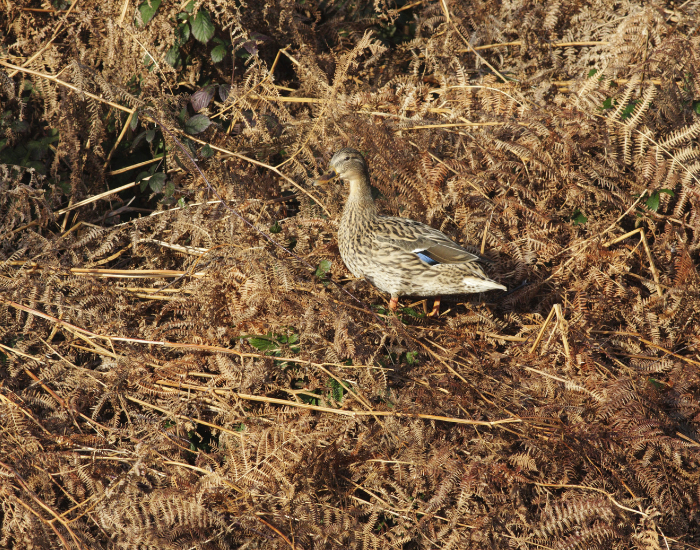
After the breeding season ends, male mallards enter what biologists call ‘eclipse plumage.’ They shed their vibrant colours and grow a dull, mottled brown coat that makes them look remarkably like female mallards.
This eclipse phase is not just cosmetic. During this period, male mallards also lose their primary flight feathers simultaneously, leaving them temporarily flightless. It is the most vulnerable time in a drake’s year — grounded and camouflaged, waiting for new feathers to grow in.
8. A Clutch Size That Surprises Most People
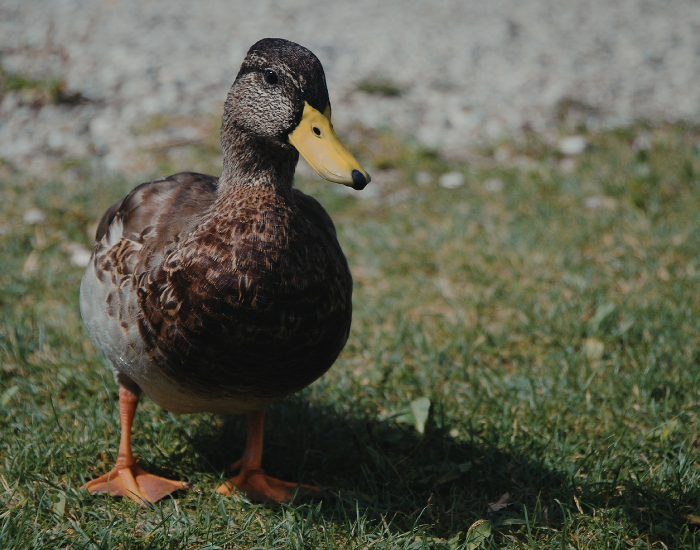
The female mallard is a productive nester. She typically lays between 8 and 13 eggs per clutch, often choosing surprisingly urban locations — tucked into a suburban flower box, hidden under a hedge, or nestled at the edge of a car park near water.
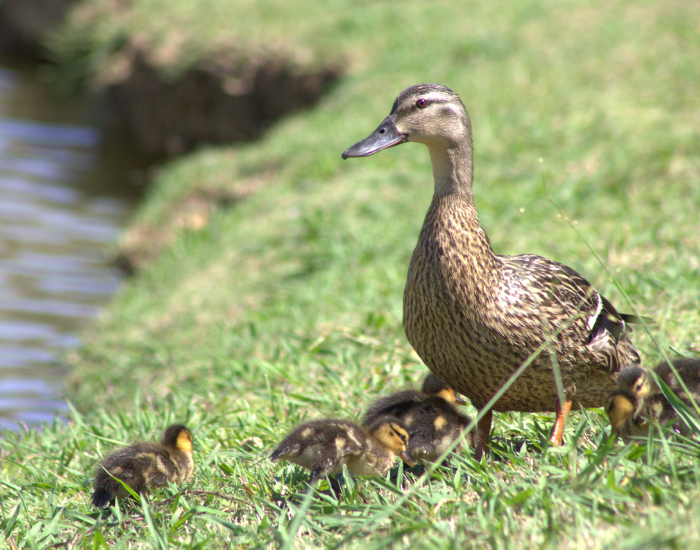
After hatching, mallard ducklings are precocial, meaning they can swim and feed themselves almost from the moment they emerge. Watching a mother lead her ducklings to water for the first time is one of the great wildlife moments — tiny fluff-balls paddling confidently within hours of hatching.
9. The Loud Quack Belongs to the Female
That classic, resonant QUACK echoing across the pond? It almost always comes from the female. The male mallard produces a much quieter, raspier sound.
In the field, we use these vocalisations to locate pairs. The female uses a ‘decrescendo call’ — a series of 2 to 10 quacks that start loud and gradually get softer. If you hear an insistent, commanding duck, you are listening to the lady of the pond. Male mallards communicate mostly through soft, raspy notes during courtship displays, when pairs form during the winter months ahead of spring migration.
10. One Eye Open, Always Watching
Sneaking up on a mallard is nearly impossible — and for good reason. Their eyes sit on the sides of their heads, giving them a near 360-degree field of vision. Even more remarkable is their ability to sleep with one eye literally open.
This technique, called unihemispheric slow-wave sleep, allows one hemisphere of the brain to sleep while the other stays alert, keeping the corresponding eye open and scanning for foxes or hawks. I have observed this in wild ducks resting on logs — one eye closed, one eye watching. It is a brilliant evolutionary response to being a prey species in a world full of predators.
11. The White Outer Tail Feathers Are a Flight Signal
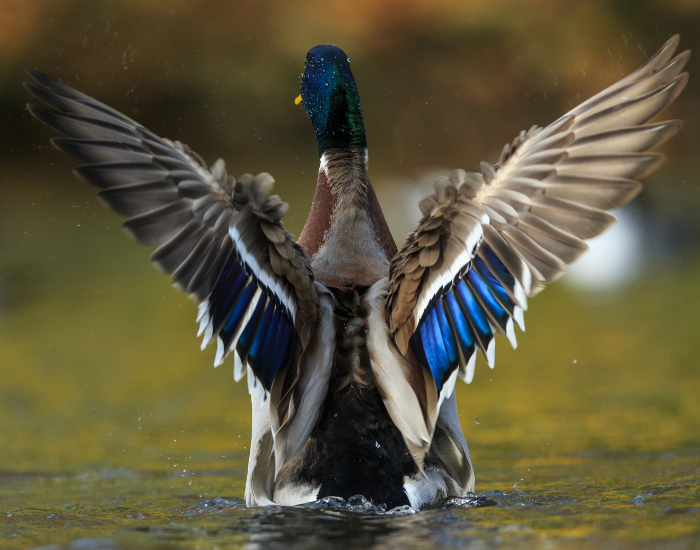
When a mallard takes off, look closely at the tail. Those bright white outer tail feathers flash like signal flags against the darker gray body and black rump. In low light over wetlands, this contrast helps keep flocks together during sudden flushes from predators.
Birds flying in formation rely on visual cues, and that white edging becomes especially visible in fast, twisting flight. It is not decorative — it is functional. In dense marshes where visibility drops, that split-second flash helps other mallards track the movement of the flock.
You will notice this most during the breeding season, when pairs flush together from shoreline cover and the white tail edges flicker against the reeds.
12. Mallards Hybridise With More Species Than Any Other Duck
Few birds blur species boundaries like the mallard. In North America alone, they interbreed not only with domestic ducks but also with closely related species such as the Mexican duck and the mottled duck. The offspring often show a confusing mix of traits — a yellow bill on an otherwise dark bird, or faint green feathers on a mostly brown head.
This genetic mixing is now a conservation concern in some regions. As mallards expand into new wetlands, hybridisation threatens the genetic integrity of more localised species. Ironically, the same adaptability that made the mallard the world’s most common puddle duck also makes it a biological wildcard.
For field identification, this means not every “female mallard” is what it seems. When a gray-bodied duck shows subtle plumage anomalies, you may be looking at a hybrid rather than a pure bird.
Why the Mallard Matters for Conservation
Mallards act as major seed dispersers for aquatic vegetation. Because they move constantly between different wetland habitats, seeds they consume pass through and germinate in new locations, maintaining the genetic diversity of our marshes and wetlands.
Conservation organisations including the WWF and wildlife services worldwide use the mallard as an indicator species. If mallard populations crash in an area, it signals that the entire wetland ecosystem is under stress. By protecting this most common duck, we inadvertently safeguard rarer species — including the elusive Harlequin Duck — that share the same water systems.
The mallard’s IUCN status remains Least Concern globally. However, habitat loss, pollution of freshwater wetlands, and the spread of invasive species continue to pose threats in specific regions.
FAQ: Everything You Need to Know About Mallards
No. Mallard refers to the entire species (Anas platyrhynchos). The male is called a drake, and the female is called a hen or simply a duck. Both sexes are mallards.
The mallard thrives in almost every habitat with access to water — from city parks to Arctic wetlands. Its broad diet, flexible migration behaviour, and adaptability to human environments make it uniquely successful. It is found across the entire Northern Hemisphere.
Rarely, but yes. As females age, hormonal changes can occasionally trigger growth of male-like plumage, including a few iridescent green feathers. It is unusual but biologically documented.
‘Duck’ is the broad category — like saying ‘dog.’ ‘Mallard’ is the specific species, like saying ‘Labrador.’ All mallards are ducks, but not all ducks are mallards. Diving ducks, Wood Ducks, and Ruddy Ducks are all ducks but entirely separate species.
Seeing the Ordinary in a New Light
The mallard is proof that ‘common’ does not mean ‘boring.’ From its iridescent green head built entirely from light to its role as ancestor of domestic ducks worldwide, Anas platyrhynchos is one of the most ecologically significant birds alive today.
Next time you visit a park pond, look past the bread crusts. Notice the white neck ring, the black rump, the curled tail feather. Watch how a female mallard lays perfectly still in the reeds. Listen for who is actually doing the quacking.
There is deep scientific beauty in the everyday. You just need to be observant enough to see it.
References:
Konadhode, R. R., Pelluru, D., & Shiromani, P. J. (2016). Unihemispheric sleep: An enigma for current models of sleep-wake regulation. Current Sleep Medicine Reports, 2(1), 10–14. https://pmc.ncbi.nlm.nih.gov/articles/PMC4763353/
Lawson, D. M., Williams, C. K., Lavretsky, P., Howell, D. L., & Fuller, J. C. (2021). Mallard–black duck hybridization and population genetic structure in North Carolina. The Journal of Wildlife Management, 85(7), 1403–1415. https://doi.org/10.1002/jwmg.22085
Masto, N. M., Blake-Bradshaw, A. G., Highway, C. J., Keever, A. C., Feddersen, J. C., Link, P. T., Hagy, H. M., Osborne, D. C., & Cohen, B. S. (2025). Spring migration strategies of Anas platyrhynchos (Mallard) necessitate individual time-energy trade-offs despite wintering origins or migratory destinations. Ornithology, 142(1), ukae044. https://doi.org/10.1093/ornithology/ukae044
Stavenga, D. G., van der Kooi, C. J., & Wilts, B. D. (2017). Structural coloured feathers of mallards act by simple multilayer photonics. Journal of the Royal Society Interface, 14(133), 20170407. https://doi.org/10.1098/rsif.2017.0407
Zhang, Y., Bao, Q., Cao, Z., Bian, Y., Zhang, Y., Cao, Z., Chen, G., & Xu, Q. (2018). Chinese domestic ducks evolved from Mallard duck (Anas platyrhynchos) and Spot-billed duck (A. zonorhyncha). Genes, 9(10), 499. https://doi.org/10.3390/genes9100499