
I’ll never forget the first time I saw a lemon shark. I was in the first semester of my biology degree, on holiday with my family, still trying to decide whether I loved nature as a hobby, or if it was something deeper.
That morning, I’d been diving with the whale shark and in the afternoon in crystal-clear Caribbean water, drifting over coral reefs alive with coral fish like anglerfish and pufferfish flashing colourful and beautiful blues and yellows. Stingrays lifted gently from the sandy bottom like underwater kites.
But the next day, near a tangled thicket of mangrove forests, everything shifted.
I was hovering about eight meters above the seabed when I saw it: a massive fish carcass being torn apart. On one side, two sea turtles were struggling for a piece. On the other, a lemon shark, maybe 1.5 meters long, was locked in a prehistoric tug-of-war.
Watching sea turtles grapple with a shark over a meal shattered the peaceful reef illusion. It wasn’t just colorful coral fish and postcard wildlife anymore. It was competition. Strategy. Survival. A living, breathing ecosystem in motion. Let’s explore some of the most interesting facts about the lemon shark!

1. They Are the True “Yellow Shark” of the Sea
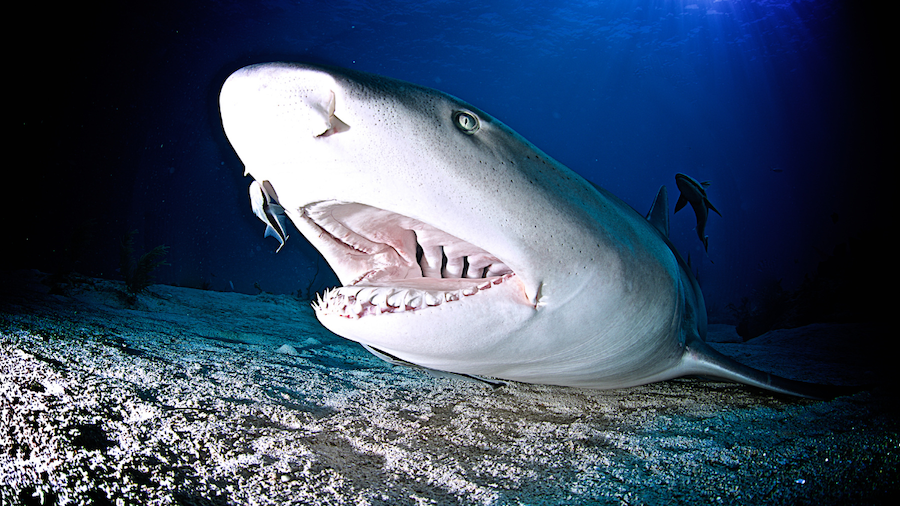
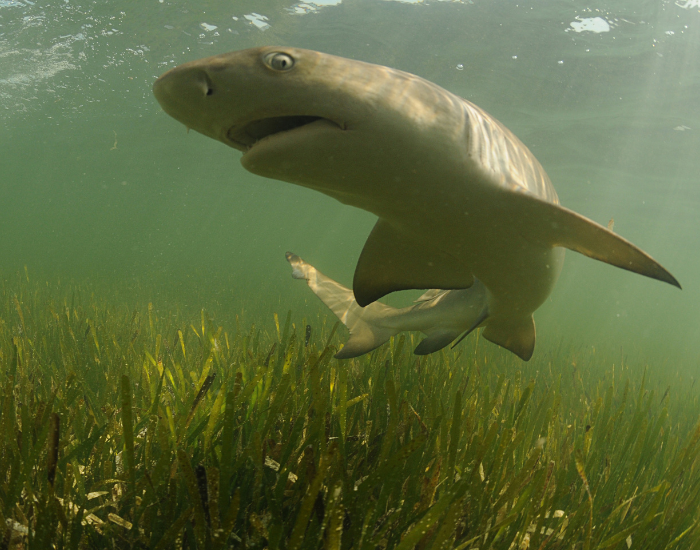
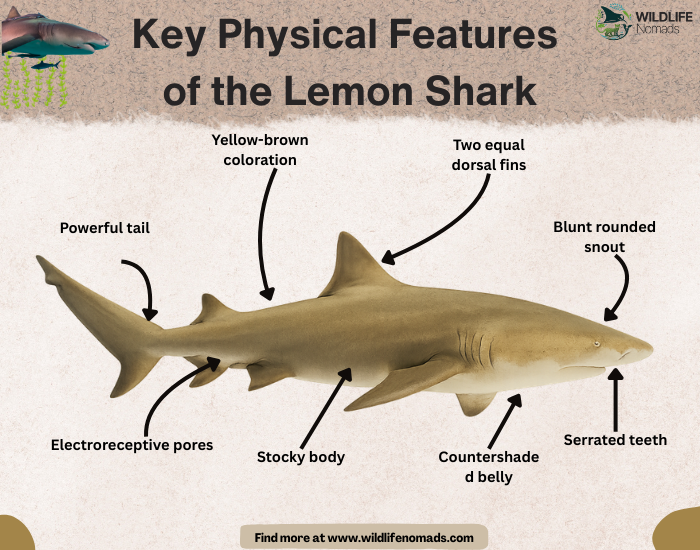
The most striking feature about lemon sharks is their namesake: a distinct yellowish tint. While many shark species display standard gray coloring, adult lemon sharks have a brownish-yellow to olive-green hue on their dorsal fins and back.
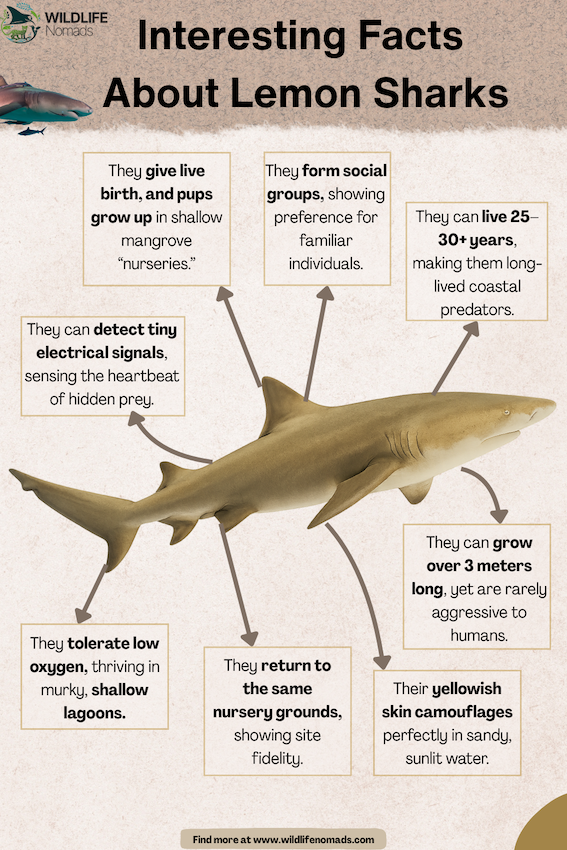
This coloration isn’t merely for show. In fact, it’s highly sophisticated camouflage. Lemon sharks spend considerable time in shallow water over sandy habitats. When you’re looking down at them from the surface, that yellowish tint blends perfectly with sun-dappled sandy bottoms.
Consequently, they become nearly invisible to prey like bony fish and rays. By the time these prey species notice the predator, it’s far too late to escape.
2. Negaprion brevirostris: Understanding the Scientific Name
In the world of marine biology, we classify these animals as Negaprion brevirostris. While many assume “Nega” implies size, it actually stems from the Greek prefix “nē-” (meaning “not”) and “priōn” (meaning “saw”). This is a critical taxonomic distinction: unlike many of their Carcharhinid cousins (the requiem sharks) which have heavily serrated, saw-like teeth for shearing, lemon sharks have evolved smooth-edged, dagger-like teeth. These are highly efficient tools for their specific niche—, iercing and gripping slippery, fast-moving bony fish in the shallows.
The species name, brevirostris, is Latin for “short snout” (brevis meaning short, rostris meaning beak). Historically, you’ll find them as Carcharhinus brevirostris in older literature, but their unique morphology, specifically those twin dorsal fins, rightfully earned them their own genus.
3. They Possess Similarly Sized Dorsal Fins
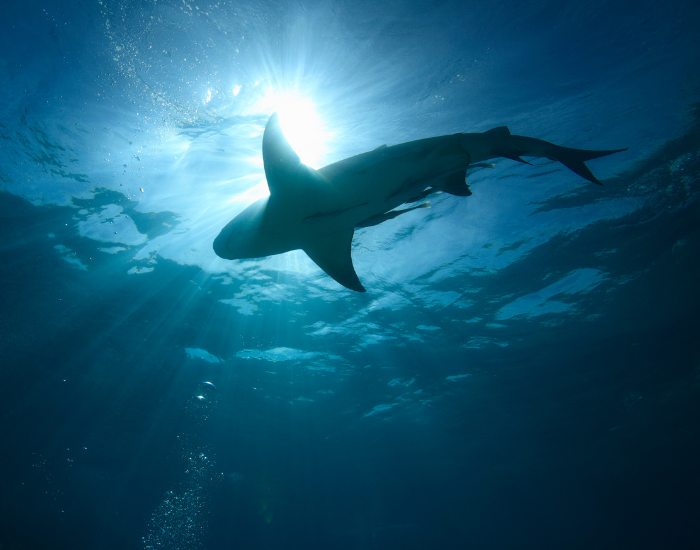
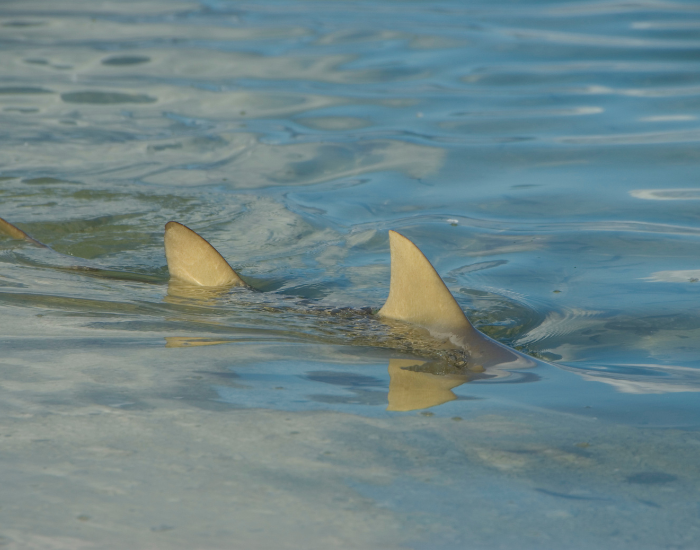
If you’re trying to identify a lemon shark, look at the dorsal fins. Most types of sharks have a large first dorsal fin and a tiny second one. Lemon sharks, however, are unique because their two dorsal fins are similarly sized.
This fin symmetry serves as a huge identifier for sharks divers and marine biologists. If you spot a shark with a flattened head and two large fins sticking up like twin sails, you’re likely observing a lemon shark. In addition, this anatomical feature provides extra stability when maneuvering through tight spaces of mangrove habitats and coral reefs.
The second dorsal fins on lemon sharks are proportionally larger than in other shark species. Therefore, this adaptation helps them navigate shallow nursery waters with precision.
4. Lemon Shark Populations Display Complex Social Behavior
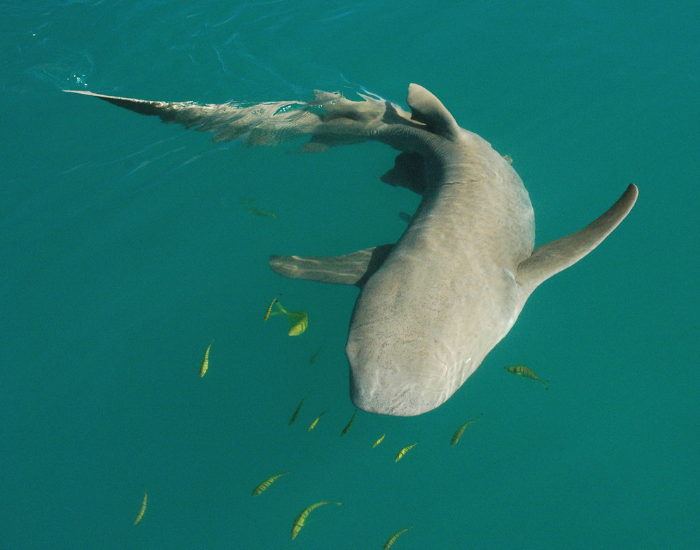
One of the biggest myths in biology is that sharks are solitary predators. Lemon shark populations display incredibly complex social behavior. They don’t just swim together by accident. Instead, they form loose aggregations based on size and sex.
Research at the Bimini Biological Field Station shows that juvenile lemon sharks actually learn from one another. For example, they exhibit “social enhancement,” where individuals investigate new objects after seeing peers do it first. This level of social behavior is something we typically associate with dolphins or primates, not fish.
Female lemon sharks and their offspring often remain in groups. These social animals benefit from cooperative behavior in hunting and defense. Moreover, young lemon sharks develop social bonds that can last for years of age.
5. Mangrove Forests Serve as Critical Nursery Areas
If you want to find juvenile lemon sharks, look in the roots. Lemon sharks are incredibly reliant on mangrove forests and enclosed bays as nursery areas. These shallow nursery waters provide oxygen rich water and protection from larger sharks like tiger or bull sharks.
Female lemon sharks return to the very same mangrove habitats where they were born to give birth. This behavior demonstrates remarkable site fidelity. The dense root systems create perfect hiding spots where 60cm pups practice hunting on crabs, crustaceans and porcupine fish.
Habitat loss of mangrove forests represents one of the greatest threats to lemon shark populations. When coastal waters lose these critical nurseries, entire generations disappear.
6. Adult Lemon Sharks Maintain a Defined Home Range
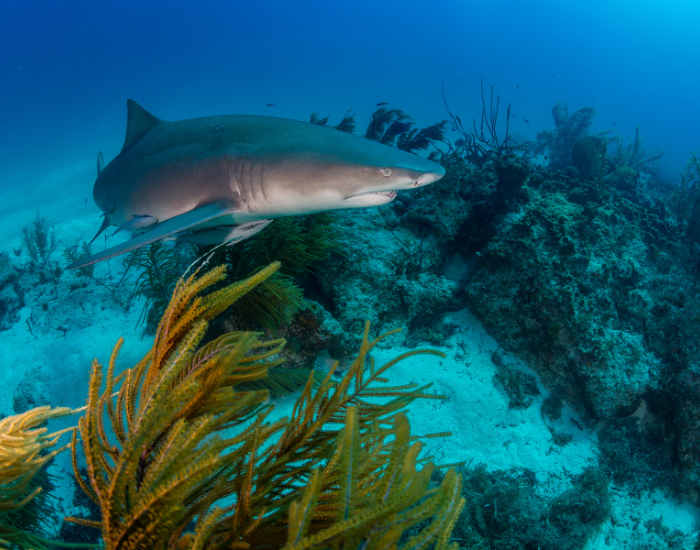
Unlike nomadic species like the Great White, adult lemon sharks often have a defined home range. They are known for their site fidelity, staying within specific geographic areas for extended periods.
I’ve noticed they prefer coastal waters of the Atlantic Ocean and Eastern Pacific Ocean. Whether in Florida waters, the Western North Atlantic, or Pacific coast of Central America, they remain in familiar territory. This defined home range behavior helps them memorize locations of the best bony fish populations and coral reefs.
7. They Give Birth to Live Young (Viviparous Reproduction)
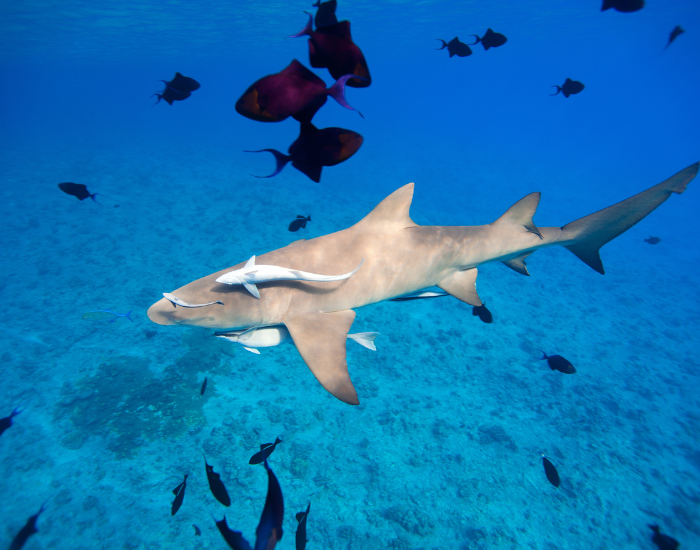
Many people are surprised that lemon sharks don’t lay eggs. They are viviparous, meaning live young develop inside the mother, nourished by a yolk-sac placenta.
After a gestation period of 10 to 12 months, female lemon sharks give birth to litters of 4 to 17 pups. Each pup measures approximately 60-65 centimeters at birth, making them fully functional predators from day one. Female lemon sharks typically give birth in shallow water during spring and summer months when prey populations are abundant.
8. Sexual Maturity Takes Between 12-15 Years
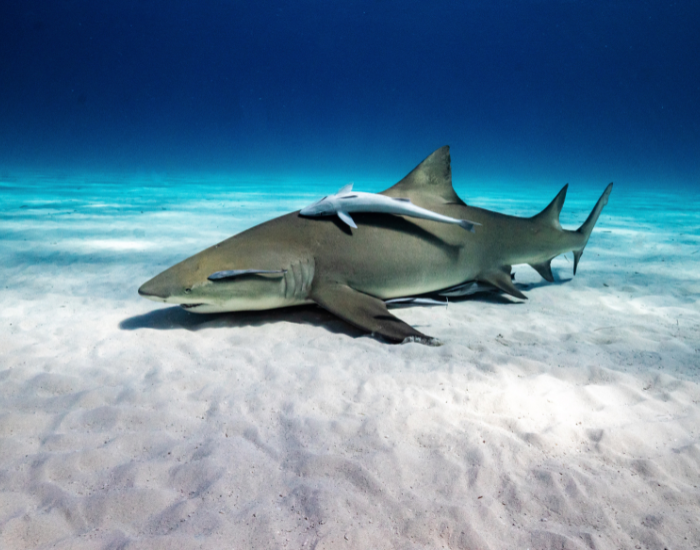
Lemon shark populations are vulnerable because of their slow growth rate. It takes 12 to 15 years of age to reach sexual maturity, with males maturing slightly earlier than females.
Because they don’t reproduce until relatively old, every adult lemon shark lost to commercial and recreational fisheries represents a significant blow. They cannot “bounce back” as quickly as fish that spawn millions of eggs annually. This slow reproductive rate makes lemon sharks particularly susceptible to overfishing, which is why the International Union for Conservation of Nature closely monitors these shark species.
9. Their Diet Includes Diverse Prey Species
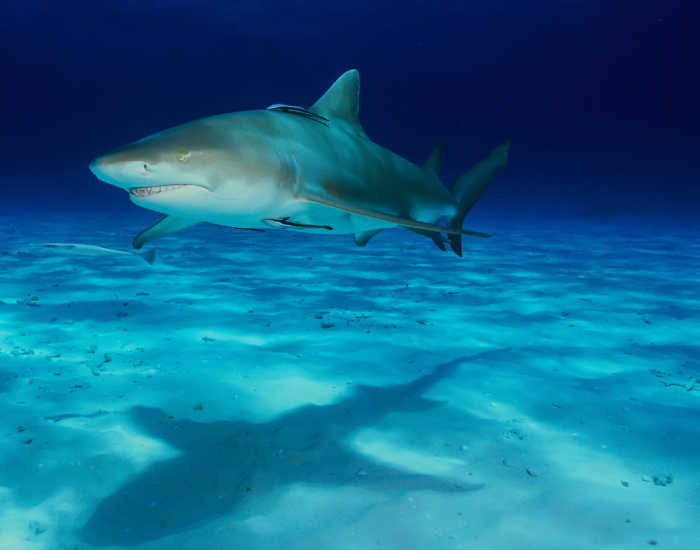
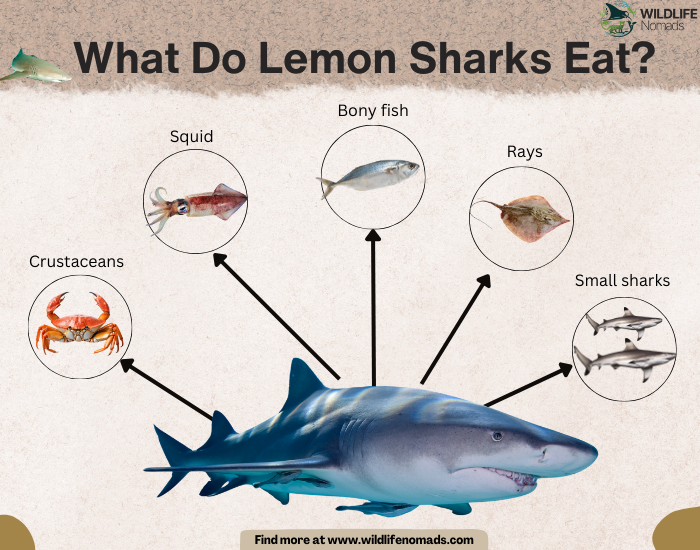
Lemon sharks are primarily piscivores, targeting bony fish. However, they aren’t particularly selective hunters. Their diet consists of catfish and mullet, rays and smaller sharks, crustaceans including crabs and lobsters, and occasionally sea birds.
Lemon sharks are known for nocturnal foraging behavior, using their electroreceptors to find prey hiding in sand during dark hours. Their yellowish tint becomes even more effective camouflage under moonlight. They often hunt in groups, with social animals working cooperatively to corner schools of fish in shallow water and coral reefs.
10. They Can Handle Low-Oxygen Environments
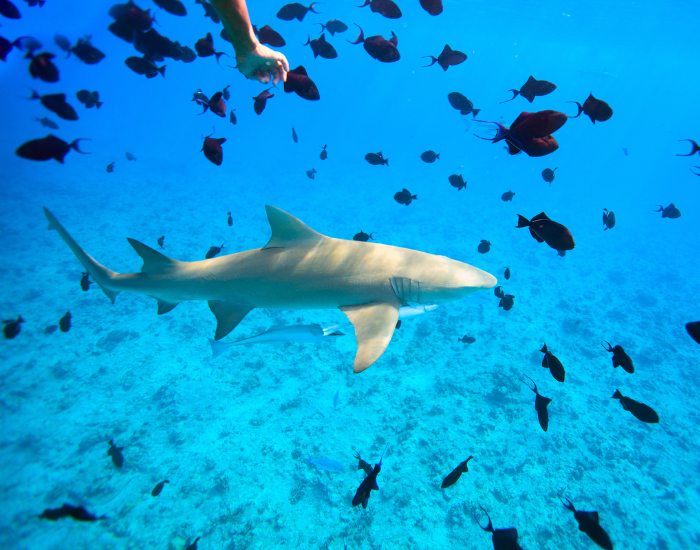
Lemon sharks are incredibly hardy animals, often found in river mouths where water might be brackish or lower in oxygen. They possess the ability to “buccal pump,” meaning they can remain stationary and manually pump water over their gills.
This represents a huge advantage over “obligate ram ventilators”, sharks that must continuously swim to breathe. Consequently, lemon sharks can rest in shallow water or wait in ambush within mangrove habitats. This capability allows them to conserve energy and survive in enclosed bays where oxygen levels fluctuate.
11. Conservation Status: Vulnerable to Human Threats
Despite their resilience, lemon sharks face mounting pressure. The International Union for Conservation of Nature lists them as “Vulnerable” or “Near Threatened” depending on regional populations.
Primary threats include habitat loss through destruction of mangrove forests for coastal development, bycatch in gillnet fisheries, targeted fishing for fins and skin, and pollution in coastal waters. Commercial and recreational fisheries operating in Atlantic Ocean and Pacific Ocean waters impact populations significantly.
Conservation efforts focus on protecting mangrove habitats and implementing sustainable fishing practices. However, lemon shark populations continue declining in many regions. Florida state waters have implemented some protections, but enforcement remains challenging.
12. Are Lemon Sharks Dangerous to Humans?
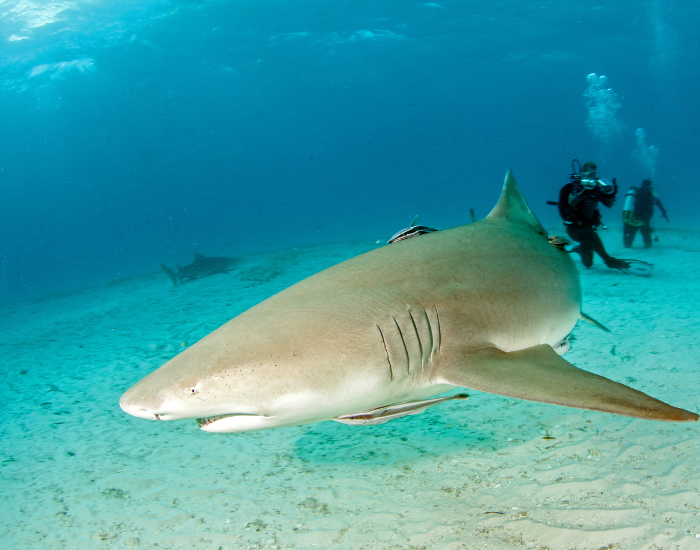
No, lemon sharks are not typically dangerous to humans. Throughout recorded history, there has never been a fatal attack attributed to a lemon shark. They are generally curious but cautious around humans.
Sharks divers often find that lemon sharks approach to investigate but move along once curiosity is satisfied. They are wild animals with sharp teeth, so treat them with respect. However, avoid provoking or cornering them, especially during feeding or breeding periods. In Florida waters and other popular diving locations, lemon sharks have become accustomed to human presence and rarely show aggressive behavior.
Quick Facts Snapshot
| Feature | Detail |
| Scientific Name | Negaprion brevirostris |
| Adult Size | 2.4 to 3.1 meters (approx. 8–10 feet) |
| Maximum Recorded Length | 3.4 meters |
| Lifespan | 25 to 30+ years |
| Conservation Status | Vulnerable / Near Threatened |
| Primary Habitat | Coastal sandy habitats, mangroves, coral reefs |
FAQs About Lemon Sharks
The yellowish tint comes from skin pigmentation that helps them blend into sandy habitats. This coloration provides excellent camouflage in shallow water where sunlight creates dappled patterns on the bottom.
Lemon shark populations inhabit coastal waters of Atlantic and Pacific Oceans. They’re found in Florida waters, the Bahamas, Gulf of Mexico, Caribbean, Southern Brazil, West Africa, and Eastern Pacific near Central America. They rarely venture into open ocean.
Generally, yes. They’re favorites among sharks divers because of predictable social behavior. However, always go with professional guides. Avoid wearing high-contrast jewelry and never touch or provoke them.
Lemon sharks typically live 25 to 30 years of age in the wild. Commercial and recreational fisheries significantly reduce average lifespan in heavily fished areas.
Protecting Mangrove Forests: A Call to Action
My journey from watching a lemon shark fight sea turtles to becoming a professional biologist taught me one crucial lesson: we cannot have lemon sharks without mangrove forests.
These habitats are the nurseries for our most iconic shark species. If we lose mangrove forests to coastal development, we lose the next generation of lemon sharks. Conservation efforts must prioritize protecting shallow nursery waters in Atlantic and Pacific Oceans.
Sustainable fishing practices are essential. Commercial and recreational fisheries must implement catch limits and bycatch reduction. By protecting mangrove habitats and regulating fishing, we can ensure lemon shark populations thrive. These remarkable social animals deserve our protection as vital members of coastal ecosystems.
Lemon Shark Biology & Science Quiz
Ten fun study questions covering camouflage, dorsal fin anatomy, buccal pumping, mangrove nurseries, and social behavior. Test your retention!
Multiple Choice
Where to See Lemon Sharks in the Wild?
Here is a list of 3 scuba or snorkelling tours where you can see lemon sharks in the wild. As a biologist, I only recommend tours that follow strict ethical guidelines to ensure we don’t disturb wildlife. These are the three tours/ partners I trust most based on their conservation records:
This blog is reader-supported. When you buy experiences through links listed on this site, we may earn an affiliate commission.
References:
Feldheim, K. A., Gruber, S. H., DiBattista, J. D., Babcock, E. A., Kessel, S. T., Hendry, A. P., Pikitch, E. K., Ashley, M. V., & Chapman, D. D. (2014). Two decades of genetic profiling yields first evidence of natal philopatry and long-term fidelity to parturition sites in sharks. Molecular Ecology, 23(1), 110–117. https://doi.org/10.1111/mec.12583
Guttridge, T. L., van Dijk, S., Stamhuis, E. J., Krause, J., Gruber, S. H., & Brown, C. (2013). Social learning in juvenile lemon sharks, Negaprion brevirostris. Animal Cognition, 16(1), 55–64. https://doi.org/10.1007/s10071-012-0550-6
Jennings, D. E., Gruber, S. H., Franks, B. R., Kessel, S. T., & Robertson, A. L. (2008). Effects of large-scale anthropogenic development on juvenile lemon shark (Negaprion brevirostris) populations of Bimini, Bahamas. Environmental Biology of Fishes, 83(4), 369–377. https://doi.org/10.1007/s10641-008-9357-3
Kressler, M. M., Byrnes, E. E., Trevail, A. M., White, C. E., Heim, V., Smukall, M., Gleiss, A. C., & Sherley, R. B. (2024). Habitat selection and spatial behaviour of vulnerable juvenile lemon sharks: Implications for conservation. Ecological Indicators, 166, 112239. https://doi.org/10.1016/j.ecolind.2024.112239