
As Biologists, we tend to study many animals. But if there is one animal that consistently makes me feel like I’m the one being studied, it’s the raven.
Most people know the raven through the lens of Edgar Allan Poe or as a cinematic shorthand for “something bad is about to happen.” when they make their characteristic sound. They are the ink-blots of the bird world, massive, obsidian-hued, and deeply mysterious. But that the “spooky” reputation is only the surface.
I remember a specific afternoon in Melbourne. I had just stepped out of a museum, my head full of taxonomic data and history, and sat down on a quiet bench. Within minutes, four large ravens landed. They didn’t beg for food like a common pigeon. They just sat. Two on the backrest, two on the ground.
Up close, the raven size is genuinely startling. They were massive, easily twice the size of a city crow, with thick, hooked beaks that looked like they could snap a bone. In that moment, looking into those dark, calculating eyes, I felt a rush of something akin to fear. It wasn’t that I thought they would attack; it was the realization that they were evaluating me.
Let’s peel back the feathers on the scientific name of raven—Corvus corax—and explore why these birds are the undisputed geniuses of the sky.
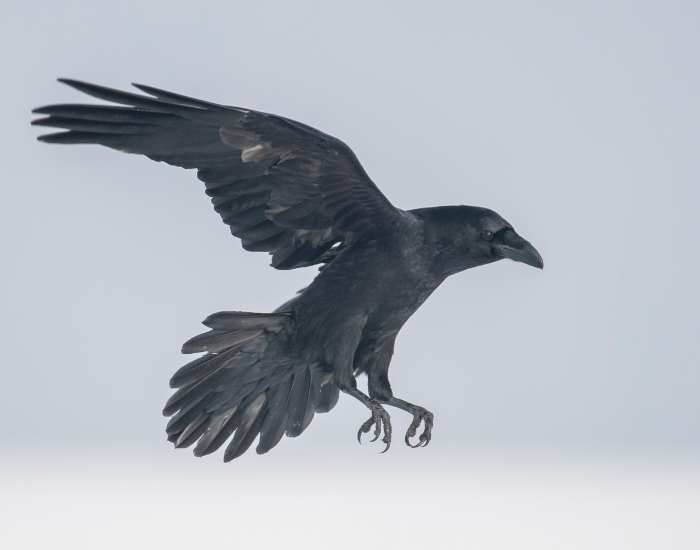
1. Ravens Are Incredibly Smart (Possibly Smarter Than Your Toddler)
When discussing ravens, we’re talking about feathered primates. In ethology circles, these birds earn the title “Einstein of the avian world.”
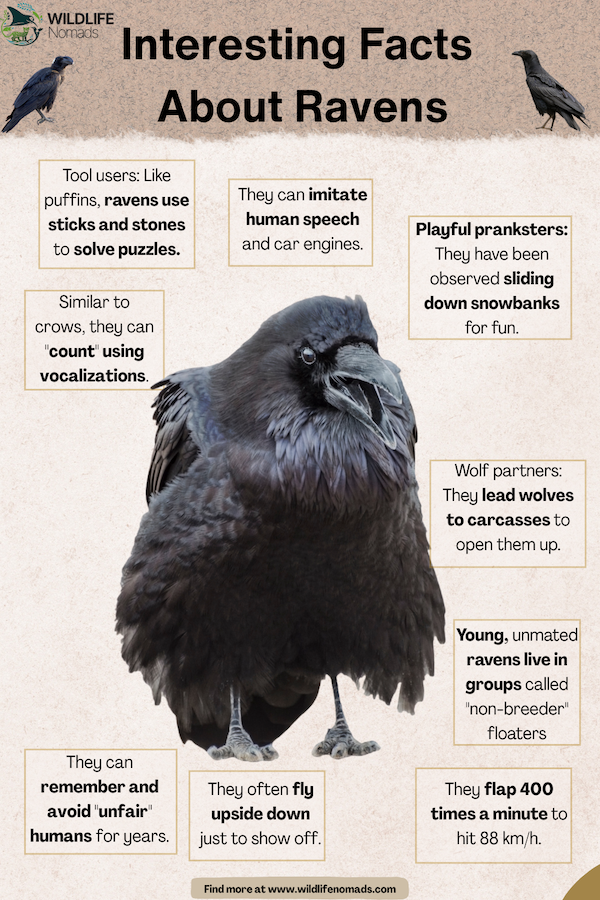
I’ve watched them solve problems that stump most mammals. They don’t merely react—they manipulate their environment. Ravens have over 100 vocalizations and can mimic sounds, including human speech, demonstrating their ability to mimic sounds from their surroundings and other species.
Common raven intelligence includes future planning, once thought exclusive to humans and great apes.
Studies show ravens choose tools for delayed rewards. Therefore, they demonstrate patience and foresight rivaling our closest primate relatives.
These birds possess a “theory of mind.” They know when being watched. If caching food under observation, a raven will fake hiding it in one spot while secretly stashing it elsewhere. That’s not instinct—that’s tactical deception. Their cognitive abilities are comparable to dolphins and great apes.
Ravens are also capable of recognizing when they are given an unfair trade during reciprocal interactions with conspecifics or humans. They are known for their intelligence and complex social dynamics, and are capable of learning innovative solutions to newly encountered problems.
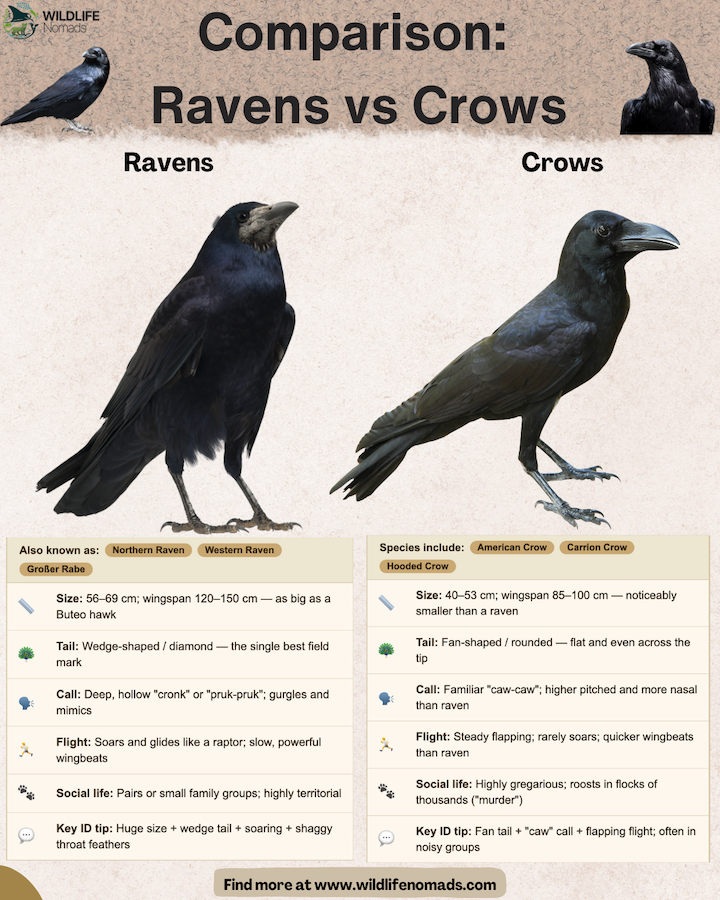
2. Raven vs Crow: Clearing the Confusion
People constantly ask: “Is that a raven or crow?” While both belong to Corvidae, they differ significantly.
The common raven (Corvus corax) towers over crows. Side-by-side, it’s like comparing an SUV to a compact car.
Quick field guide:
- Tail shape: In flight, ravens show wedge shaped tails forming a “V.” Crows display fan-shaped or rounded tails.
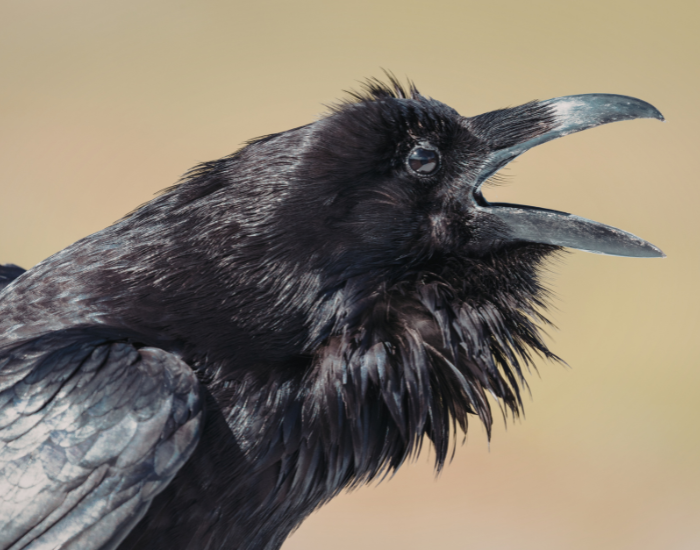
- Throat feathers: Ravens sport distinctive shaggy throat feathers called “hackles.” Crows appear sleeker.
- Vocalizations: Crows “caw.” Ravens produce deep, guttural croaks—a hollow “wonk-wonk.”
The American crow is a close relative often confused with the raven. In North America, common ravens are generally found in wild areas, while American crows tend to inhabit regions more affected by human activity, including urban and agricultural environments.
3. Cultural Significance Spans Centuries
From the Tower of London to Norse mythology, ravens accompany human history. Viking culture featured Odin’s two ravens, Huginn (Thought) and Muninn (Memory), who gathered worldwide information for their master.
Despite Western folklore labeling them “evil,” many Indigenous cultures in the Pacific Northwest revere ravens as creators and tricksters. They aren’t bad omens—they’re keen observers.
Their presence in our stories reflects recognition of their uncanny intelligence. For instance, ravens appear prominently in cultures spanning North America, Europe and Asia.

4. Nature’s Ultimate Scavengers Eat Everything
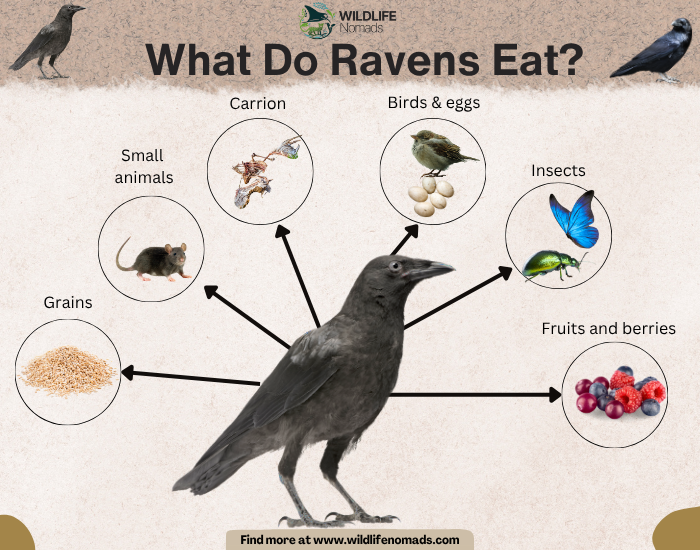
As a biologist, their “ecology of everything” fascinates me. Ravens are omnivorous generalists, consuming grain, berries, fruit, small mammals, reptiles, and carrion.
However, they aren’t passive scavengers. Wild ravens maintain symbiotic relationships with wolves. Often called “wolf-birds,” they follow wolf packs to kills. Ravens are highly opportunistic feeders and will raid seabird colonies for eggs and young, as well as eat the afterbirth of ewes and other large mammals.
Evidence suggests ravens vocalize to lead wolves (or humans) to carcasses they can’t open alone. Once wolves tear the hide, ravens claim their share. This cooperation demonstrates remarkable problem-solving across species. Ravens have also been observed picking up and investigating objects like golf balls, showcasing their intelligence and curiosity.
Ravens also frequent garbage dumps and urban areas, capitalizing on human food sources. They are known to scavenge from other predators and human landfills. Their adaptability to anthropogenic environments contributes to population increases in many regions.
6. Scientific Name Reveals Identity: Corvus corax
The scientific name for ravens is Corvus corax. In Latin, “Corvus” means raven or crow. “Corax” derives from Greek “korax”—also meaning raven. It’s identity reinforcement.
Taxonomically, they top the Passeriformes order. While we associate “songbirds” with tiny warblers, or thrushes, ravens are technically the world’s largest songbirds. Their complex vocal apparatus produces a massive array of sounds.
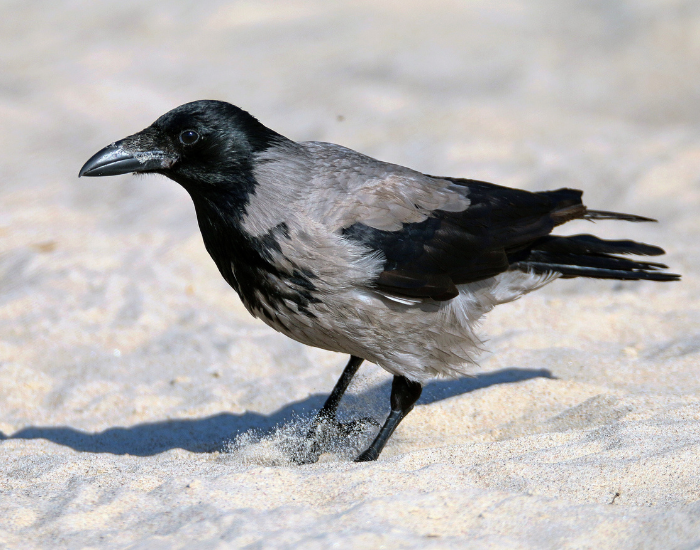
7. Impressive Raven Size and Wingspan
Examining ravens birds size reveals truly impressive dimensions. These birds boast wingspans exceeding 4 feet (1.2 meters).
| Feature | Average Measurement |
|---|---|
| Weight | 1.5 to 4.4 lbs (0.7 to 2.0 kg) |
| Length | 21 to 28 inches (54 to 71 cm) |
| Wingspan | 46 to 60 inches (116 to 153 cm) |
When comparing raven size to human hands or heads in the field, you realize they’re the raptors of the corvid family. Their beak alone serves as a formidable tool, evolved for delicate grooming and tearing frozen meat.
Males typically measure slightly larger than females, though considerable overlap exists. Geographic location also influences size—birds from colder regions grow larger following Bergmann’s Rule.
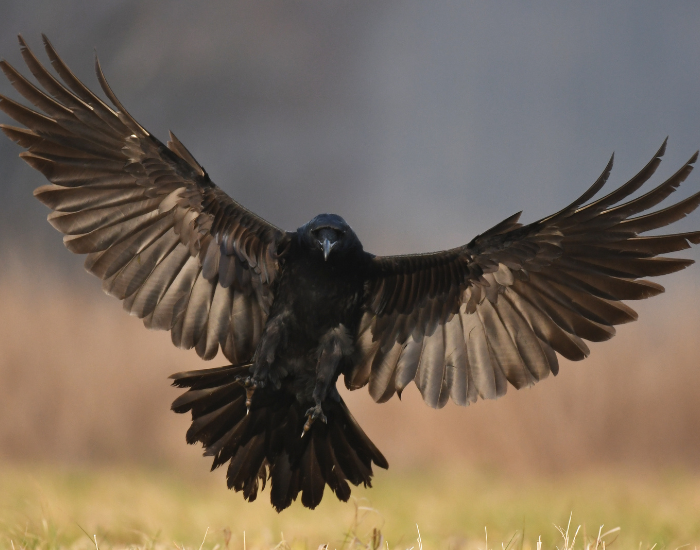
8. The Raven Call: Complex Vocalizations
The common raven call ranks among the most complex in the avian world. These birds don’t simply “croak.” They mimic other animals, human voices, and mechanical sounds like car engines. Ravens have a diverse vocal repertoire, including alarm calls to warn others of danger and chase calls used during social interactions or when pursuing intruders.
In the wild, they use vocalizations to identify individuals and communicate complex social information. I’ve spent hours recording their clicks, whistles, and “knocking” sounds, attempting to decipher canopy social dynamics. In addition to vocalizations, ravens also produce non vocal sounds such as bill snapping and wing whistles, which play important roles in social and communicative contexts.
Moreover, ravens demonstrate over 30 different vocalizations serving various purposes. Their vocal flexibility surpasses most birds, sometimes even exceeding parrots in mimicry accuracy.
9. Ravens Lifespan: Long-Term Commitment to Learning
How long do they live? In the wild, ravens lifespan typically ranges 10 to 15 years due to harsh natural realities. In captivity or protected environments, they survive much longer.
The famous Tower of London ravens have lived over 40 years. This extended lifespan allows incredible “cultural” knowledge accumulation, passed to offspring across generations.
Consequently, older ravens become repositories of survival strategies. Young birds learn by following parents, gaining experience through observation and practice.

10. Where Ravens Call Home
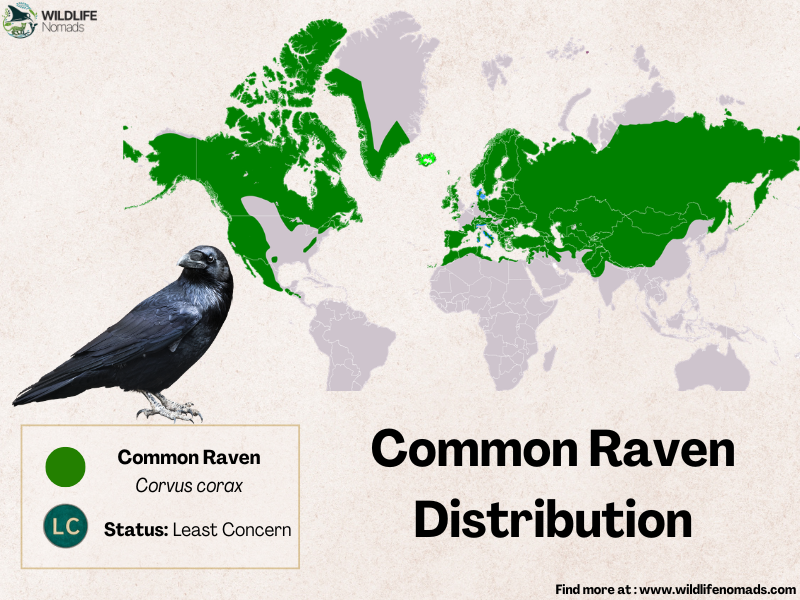
Wondering where ravens are native to? The answer: almost everywhere in the Northern Hemisphere. They’re native to North America, Europe, Asia, and parts of North Africa.
They disappeared from some Eastern United States and European regions during the 19th and 20th centuries due to persecution. Currently, they’re making massive comebacks, reclaiming old territories.
Ravens inhabit diverse environments: rocky mountains, deep woods, arctic tundra, high deserts, mountain forests, and even British Isles coastlines. Their habitat flexibility demonstrates remarkable adaptability.
In the New World, they range from Alaska through Canada and across western mountains. They’re expanding into urban areas and agricultural lands, exploiting new food sources.
11. Playful Pranksters Display Joy
As a scientist, I avoid anthropomorphizing animals. With ravens, however, it’s challenging. They genuinely play.
I’ve witnessed ravens sliding down snow-covered hills on their backs purely for enjoyment. They engage in “social play” like tug-of-war with sticks or dropping pebbles to watch them fall.
This play isn’t frivolous, it’s how young ravens develop motor skills and social intelligence needed for competitive survival. Aerial acrobatics and wing flapping games hone flying abilities.
Breeding pairs sometimes perform spectacular courtship displays involving aerial rolls and synchronized flying, demonstrating both skill and partnership.
12. Reproduction and Lifelong Partnerships
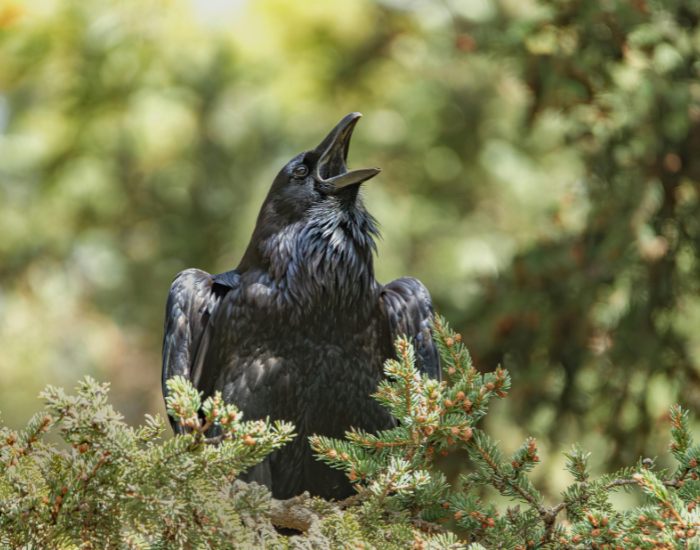
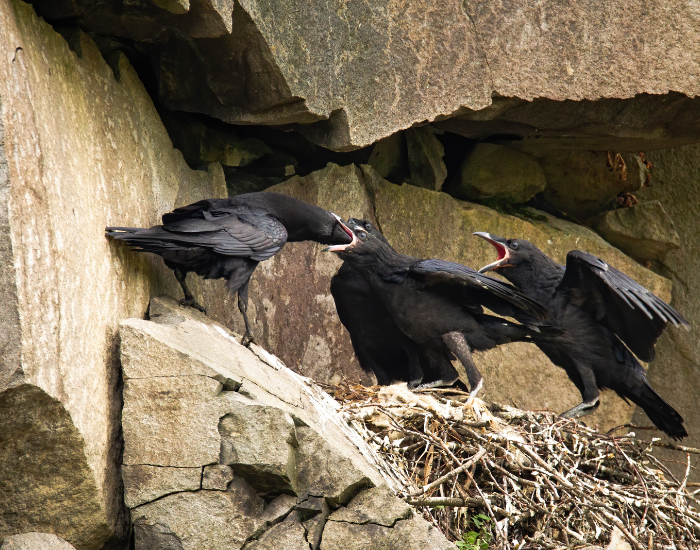
Ravens generally mate monogamously. Once paired, they typically remain together for life, defending specific nesting territories. Their nesting habits equally impress.
They construct massive nests from large sticks on cliff faces or atop massive conifers. Nests contain inner layers of roots, mud, bark, and soft materials like deer fur.
Breeding birds defend territories aggressively throughout the year. Therefore, nesting territories vary based on food resource density. Pairs must establish territory before beginning nest building and reproduction.
Egg laying typically begins late January through February in most ranges. In colder climates like Greenland, it delays until April. Ravens usually lay 3-8 eggs, though 4-6 is typical.
Both parents feed young ravens, which fledge at 5-6 weeks. Juveniles may form flocks called “floaters,” moving over large distances while learning survival skills.
13. A Global Family: More Than Just the “Common” Raven
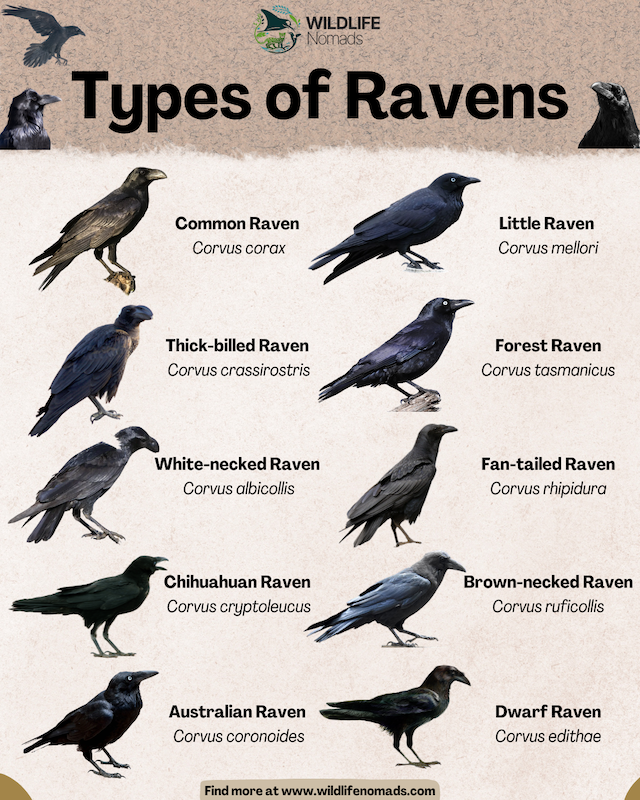
While the Common Raven (Corvus corax) is the most famous, it is actually just one of about 10 distinct raven species found across the globe. From the high-altitude deserts of Africa to the coastal suburbs of Australia, the “raven” blueprint has adapted to almost every climate on Earth. These species vary in size, beak shape, and even plumage, proving that the raven is a master of evolutionary flexibility.
In Africa, you’ll find the Thick-billed Raven, which sports a massive, arched beak and a distinctive white patch on its nape, making it look more like a prehistoric raptor than a backyard bird. Meanwhile, in the Southern Hemisphere, the Australian Raven has evolved unique “throat pouches” that inflate like a balloon when they let out their iconic, mournful territorial cries.
Conservation Status and Threats
Currently, common ravens maintain a healthy conservation status. The global population exceeds 16 million individuals and continues increasing. The common raven is classified as ‘least concern’ by the IUCN due to its widespread distribution and stable population. The common raven is a large all-black passerine bird. However, specific regional populations face challenges.
Habitat loss poses the greatest threat. Human hunting and poisoning historically reduced populations significantly. In addition, climate change may impact high-elevation populations in coming decades.
Paradoxically, some regions experience raven population booms causing conflicts. In the Mojave Desert, a 16-fold population increase over 25 years threatens species like desert tortoises and ground-nesting birds.
FAQs about Ravens
Historically, ravens symbolize both death and rebirth. Many cultures view them as mediators between living and spirit worlds due to black plumage and scavenging habits.
Absolutely not. Biologically, “evil” doesn’t exist. Ravens are highly intelligent, social animals playing vital ecosystem roles by cleaning carrion and controlling pest populations.
They rank as the largest passerines (perching birds). Large males weigh as much as small hawks, with wingspans reaching nearly 60 inches.
Ravens nest on rocky cliffs, tall trees, and increasingly on artificial structures like power lines and buildings. They reuse nest sites annually, making them vulnerable to disturbance.
Ravens are omnivores consuming carrion, small mammals, birds, eggs, insects, grain, berries, and fruit. They also exploit garbage dumps and food sources in urban areas.
The Verdict for the Smartest Bird
The raven transcends its gothic icon status. It is one of the most intelligent animals in the world. It testifies to evolution’s power and intelligence’s triumph. Whether outsmarting wolves in tundra or commanding respect on Melbourne benches, they deserve our admiration.
Next time you spot a large black bird, examine the wedge shaped tail. Check for shaggy throat feathers. Listen for that deep, resonant croak. You might be observing the smartest creature in the sky.
These remarkable birds continue adapting, thriving, and captivating those wise enough to truly observe them. From their complex vocalizations to their tool use and problem-solving abilities, ravens represent nature’s brilliance at its finest.
References:
Boucherie, P. H., Loretto, M. C., Massen, J. J. M., & Bugnyar, T. (2019). What constitutes “social complexity” and “social intelligence” in birds? Lessons from ravens. Behavioral ecology and sociobiology, 73(1), 12. https://doi.org/10.1007/s00265-018-2607-2
Chappell J. (2006). Living with the Trickster: Crows, Ravens, and Human Culture. PLoS Biology, 4(1), e14. https://doi.org/10.1371/journal.pbio.0040014
Erdas, C. (2020). Wolves and ravens: Defining a unique relationship. Osmosis Magazine, 2020(1), Article 6. https://scholarship.richmond.edu/osmosis/vol2020/iss1/6
Fraser, O. N., & Bugnyar, T. (2010). The quality of social relationships in ravens. Animal behaviour, 79(4), 927–933. https://doi.org/10.1016/j.anbehav.2010.01.008
Liao, D. A., Brecht, K. F., Dahmen, L., & Nieder, A. (2024). Crows “count” the number of self-generated vocalizations. Science, 384(6698), 874–877. https://doi.org/10.1126/science.adl0984
Wascher, C. A. F., Waterhouse, G., & Beheim, B. A. (2025). Vocal mimicry in Corvids. Animal cognition, 28(1), 88. https://doi.org/10.1007/s10071-025-02006-4