
I’ve spent a good chunk of my life chasing shadows in the brush, trying to find, Pine martens and Arctic Foxes in the snow-heavy forests of Sweden. I’ve stood in the backcountry of Canada, glassing for grizzly bears, my heart doing that familiar double-thump at every snapping twig.
As biologist, I’ve learned that nature doesn’t always require a ten-mile hike into the wilderness to blow your mind. Sometimes, the most striking biological “aha!” moments happen when you’re just wandering through a coastal town with a coffee in hand.
In my travels, I’ve noticed that ducks often get the short end of the stick. People walk past them in parks, toss them stale bread (please don’t do that!), and move on. Familiar species like the northern pintail or the compact ruddy duck are often overlooked, but for those of us who look closer, ducks can be extraordinary. Take the harlequin duck (Histrionicus histrionicus): a whitewater specialist and a true miracle of evolution, thriving in conditions that would overwhelm most other waterfowl.
If you’ve read my articles on the comeback of wood ducks or my deep dives into extinct birds, you know I have a soft spot for the underdogs. Today, we’re looking at the bird the locals call the “Sea Mouse” or “Lords and Ladies.”
1. Harlequin Ducks Are the Only Species in Their Genus
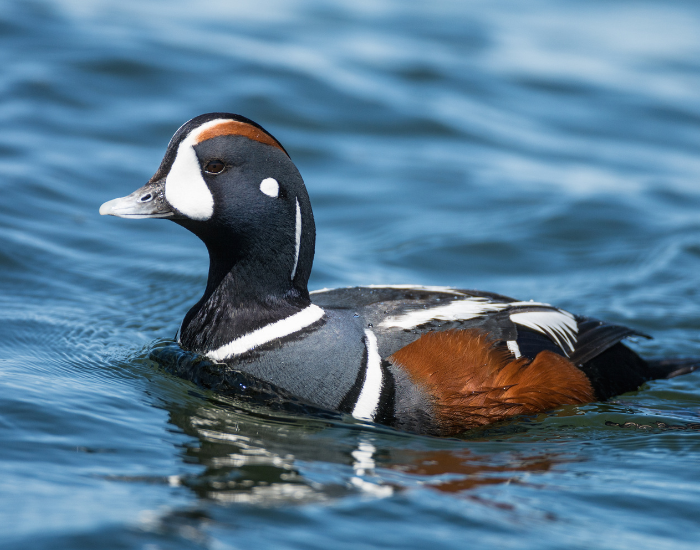
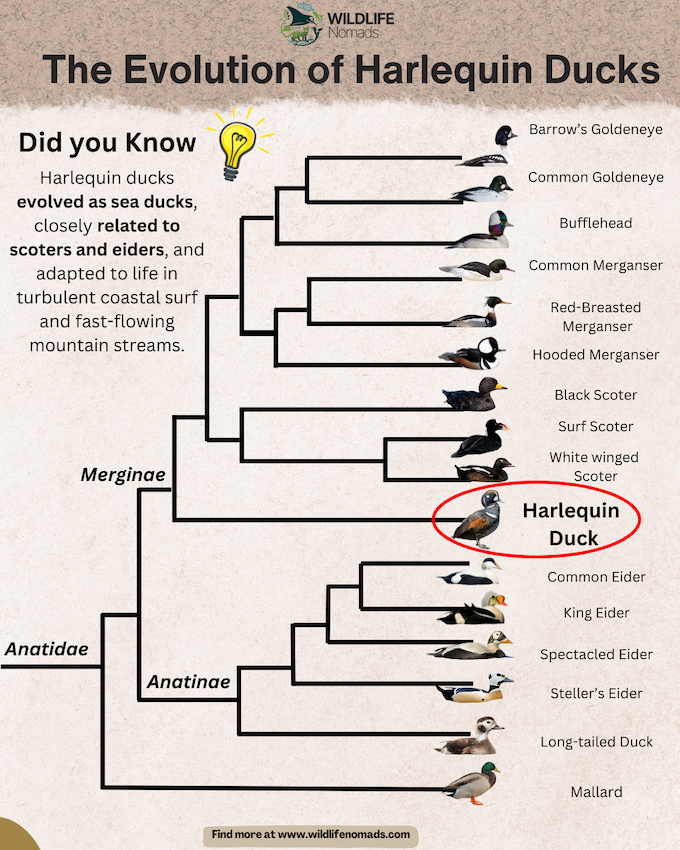
Harlequin ducks belong to the genus Histrionicus as the sole member. Therefore, they represent an evolutionary “loner”, specialized to a degree that sets them apart from other sea ducks.
Moreover, their scientific name Histrionicus histrionicus roughly translates to “theatrical” or “actor-like,” referencing the male harlequin’s dramatic plumage. In addition, they’re diving ducks that split their lives between mountain streams and coastal areas.
2. Male Harlequin Ducks Are Beautiful!
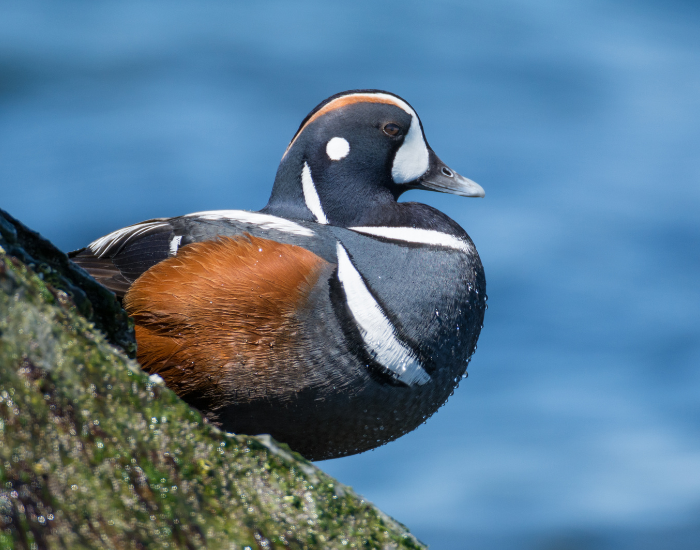
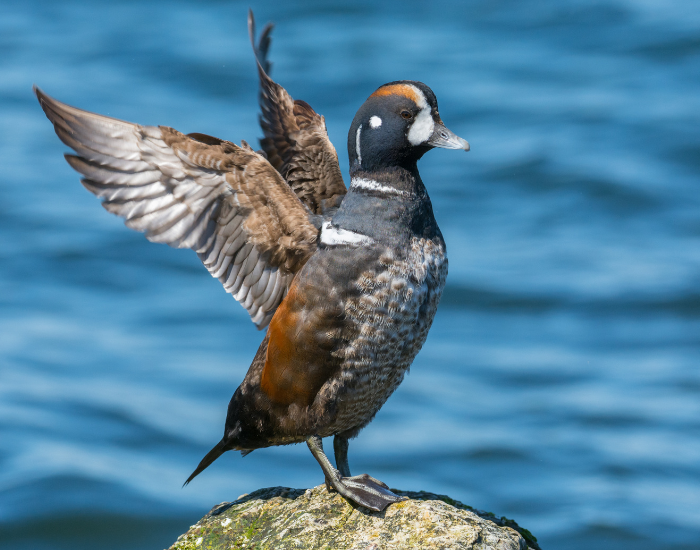
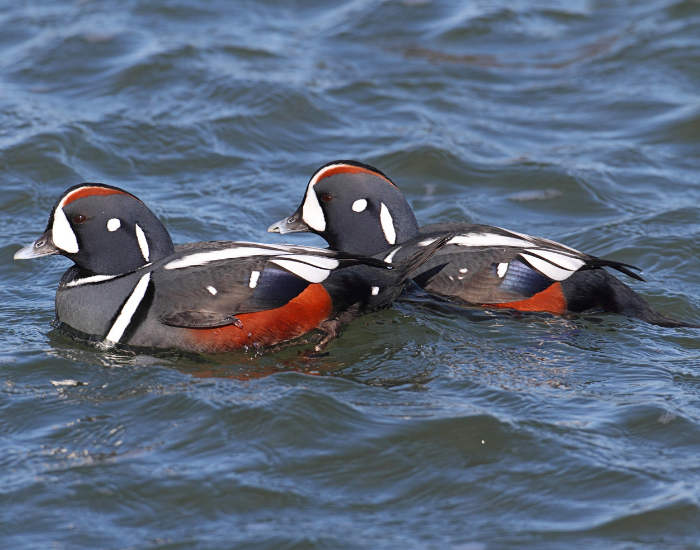
Male harlequin ducks display stunning alternate plumage that resembles painted artwork. Specifically, they feature slate blue bodies with white markings, including a large white crescent on the head. Furthermore, white stripes run along the neck, while chestnut flanks and chestnut sides complete the pattern.
Consequently, this high-contrast coloration works as camouflage in breaking surf and turbulent waters. Moreover, the pattern breaks up their outline against churning white water and rocky shorelines.
3. Female Harlequin Ducks Have Distinctive White Patches
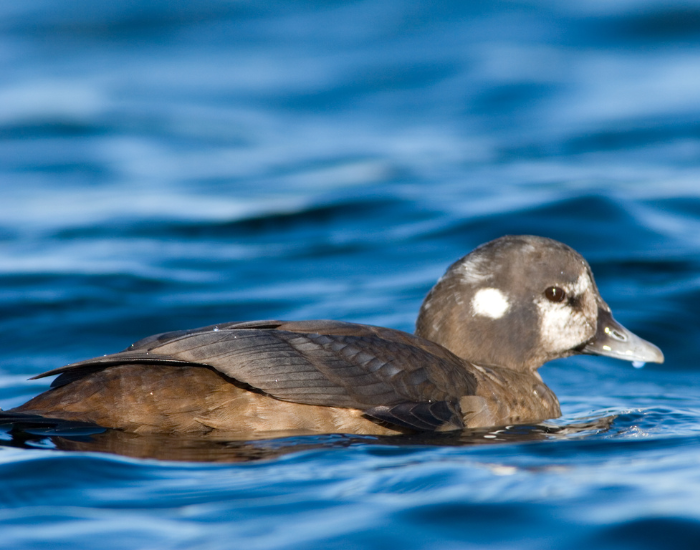
Female harlequin ducks appear more subtle with grayish brown plumage. However, adult females display three distinctive white patches on their heads. Specifically, one sits behind the eye, another at the bill base, and a faint mark above the eye.
Therefore, these white spots serve as the telltale signature for identifying adult females. Moreover, their smaller bill helps distinguish them from other sea ducks in coastal wintering areas.
4. They Inhabit Two Distinct Populations in North America
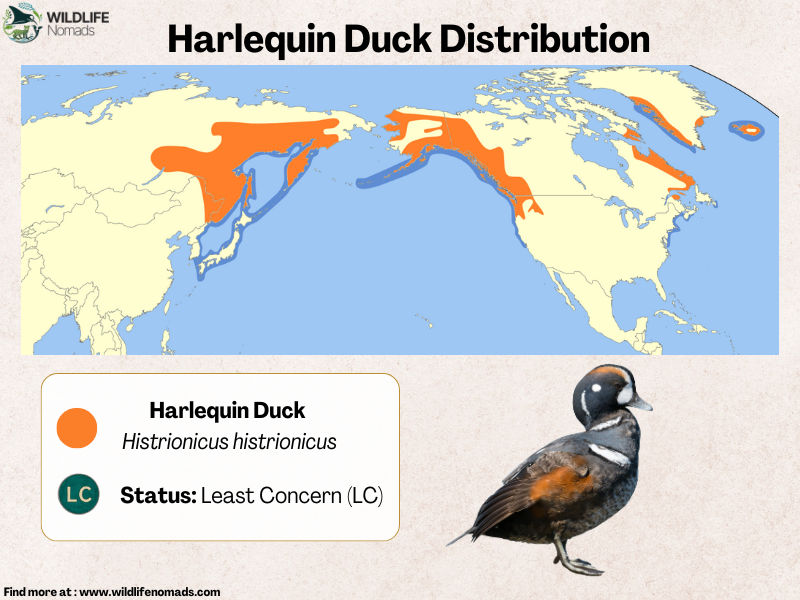
The harlequin duck’s range spans Western North America and Eastern North America. Furthermore, their distribution extends from Eastern Asia to the Pacific coast.
In Western North America, these birds inhabit areas from the Aleutian Islands and Alaska down to Northern California. Therefore, breeding areas include the Rocky Mountains, Pacific Northwest, and mountain streams in British Columbia. Consequently, popular locations include Glacier National Park.
However, the Eastern North American population is much smaller. In fact, only a few thousand birds remain in Eastern Canada and parts of the Eastern North coast. Therefore, their population status remains a major conservation concern.
5. Harlequins Are the Only Diving Ducks That Feed in Heavy Surf
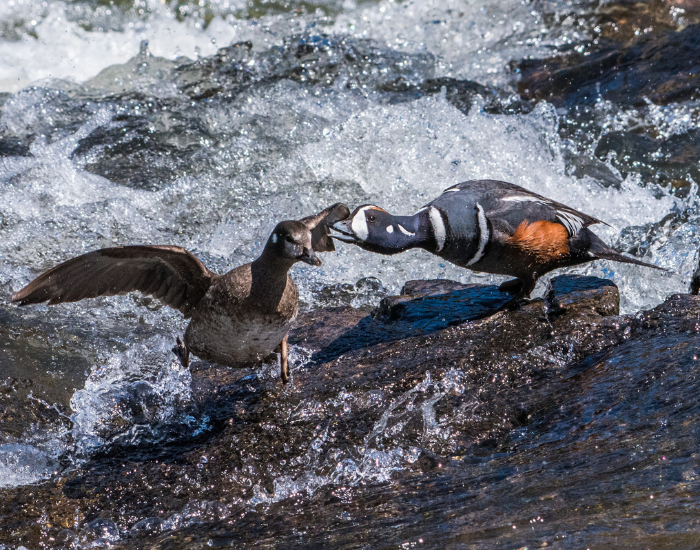
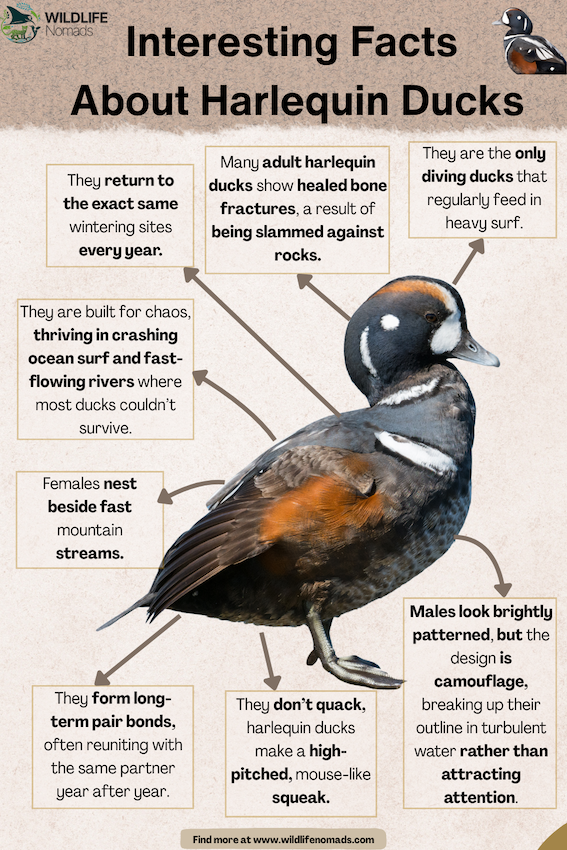
Unlike other sea ducks, harlequins specialize in the most turbulent environments. Specifically, they’re the only diving ducks that regularly feed in heavy surf along rocky shorelines. Moreover, they dive up to 21 meters in shallow water to forage.
They basically walk along the bottom of fast flowing streams, using their smaller bill to extract aquatic invertebrates and aquatic insects from beneath rocks. In addition, they consume small fish in both mountain streams and coastal areas.
6. Many Adult Harlequins Carry Healed Bone Fractures
Studies using X-rays reveal a shocking fact. Specifically, many adult male and female harlequin ducks have multiple healed bone fractures. Therefore, researchers conclude these injuries result from slamming against rocks in heavy surf and navigating turbulent mountain streams.
Nevertheless, these birds continue thriving in their extreme habitat. Consequently, they accept physical injury as a cost of living in environments other waterfowl avoid. Moreover, this dedication to their niche makes them true survivors.
7. They Make a Mouse-Like Squeak Instead of Quacking
One of my favorite discoveries about these birds surprised even experienced birders. Specifically, harlequins don’t quack like most ducks. Instead, they produce a high-pitched mouse-like squeak.
Therefore, if you’re standing on rocky shores in the Pacific Northwest or British Columbia coast and hear tiny peeps over crashing waves, you’ve likely found a flock. Moreover, this unique vocalization earned them the nickname “Sea Mouse” in many coastal communities.
8. Harlequins Form Multi-Year Pair Bonds
During winter, harlequin ducks form pair bonds that often last multiple years. Furthermore, both male and female harlequin ducks exercise mate choice. Consequently, males display their alternate plumage to attract partners in coastal wintering areas.
Moreover, these pair bonds form before migration to breeding areas. Therefore, most birds arriving at mountain streams in spring are already paired. In addition, this strategy maximizes breeding success during the short breeding season.
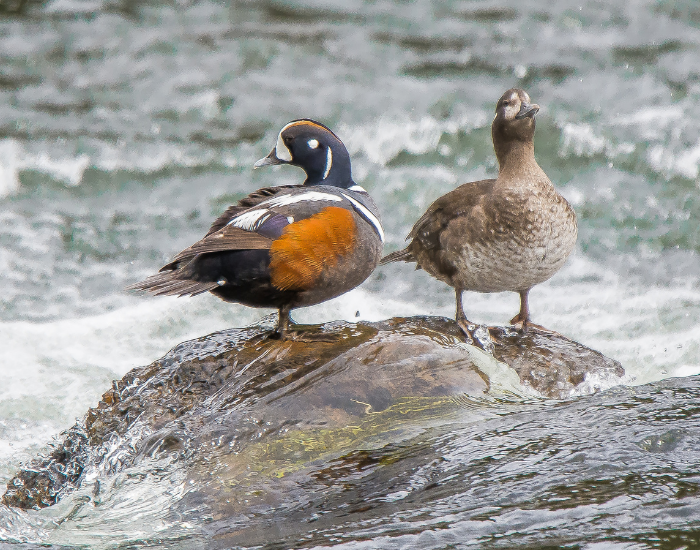
9. Nesting Females Choose Rock Crevices Near Fast-Flowing Streams
Each spring, harlequins leave coastal wintering areas and migrate inland to breeding habitat. Furthermore, nesting females carefully select their nest site in rock crevices, hollow logs, or riparian areas near rocky streams.
Moreover, harlequin ducks lay pale buff or pale cinnamon-colored eggs. Specifically, a clutch typically contains 3 to 7 eggs. Therefore, the female begins incubating in early July. Consequently, these eggs develop in environments surrounded by fast flowing water.
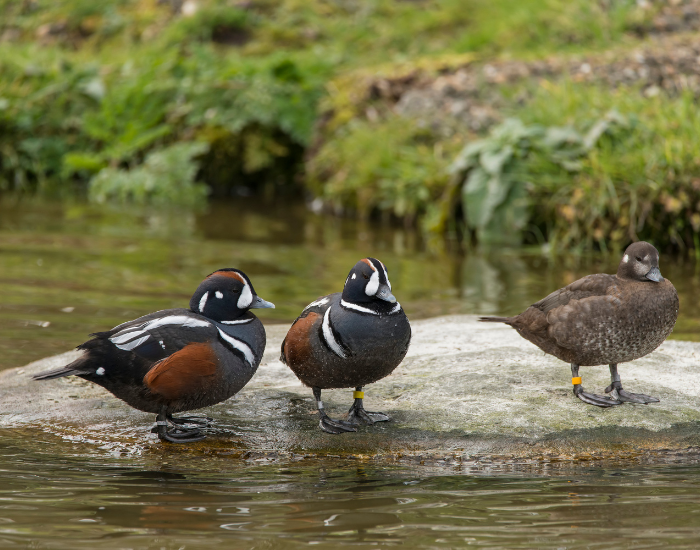
10. Male Harlequins Abandon Families to Return to Molting Areas
By early July, male harlequin ducks depart for molting areas on the coast. Specifically, once the female starts incubating eggs, males leave breeding areas entirely. Therefore, adult females raise harlequin ducklings alone.
Consequently, young birds learn to navigate dangerous fast-flowing streams without paternal help. Moreover, this survival strategy allows males to molt safely in coastal areas while females focus entirely on offspring.
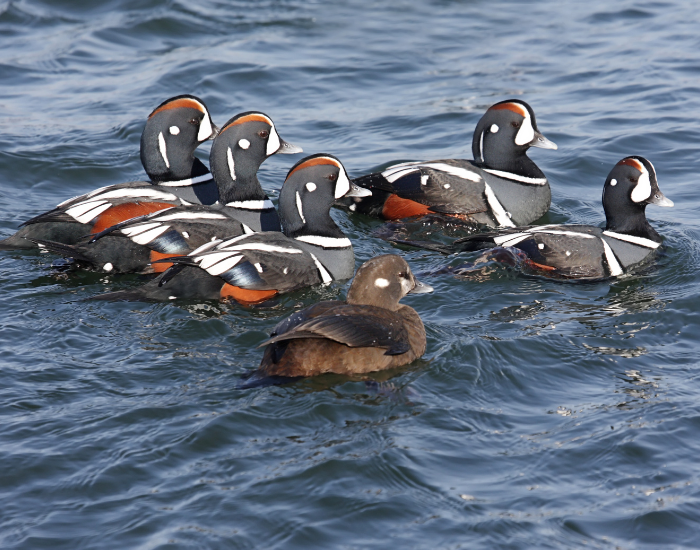
11. They Show Extreme Site Fidelity to Wintering Areas
Harlequins demonstrate incredible site fidelity, returning to identical wintering sites year after year. However, this behavior creates vulnerability. Specifically, when oil spills occur, birds continue foraging in contaminated areas.
Therefore, the Exxon Valdez disaster devastated harlequin populations in Alaska. Because they don’t relocate easily, birds suffer chronic health problems from oiled sediments. This makes them particularly susceptible to environmental disasters in coastal areas.
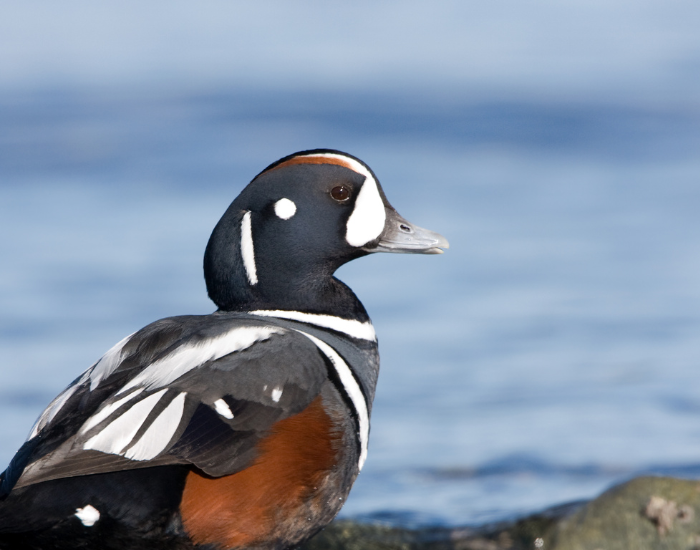
12. Climate Change Threatens Their Mountain Breeding Habitat
Habitat loss and climate change present the greatest conservation challenges for harlequins. Specifically, altered snowmelt patterns in breeding areas like Glacier National Park and Eastern Siberia affect stream flows.
Therefore, timing changes can result in complete breeding failures. Moreover, if water levels are too high or too low during critical periods, entire year classes of young birds can be lost. Consequently, conservation efforts focus on protecting both breeding habitat and coastal wintering areas.
Where to See Harlequin Ducks
Western Population: Look for them along rocky shorelines from Alaska to Northern California. Moreover, during breeding season, visit mountain streams in the Rocky Mountains, Pacific Northwest, or British Columbia. Consequently, Glacier National Park offers excellent viewing opportunities.
Eastern Population: These rare birds inhabit Eastern Canada and parts of the Eastern North coast. However, populations are small and require protection as a species of special concern.
Your FAQs about Harlequin Ducks!
In Western North America, harlequins are locally common along the Pacific coast and British Columbia coast. However, the Eastern population is quite rare with only a few thousand birds. Therefore, the Eastern North American population receives intensive conservation efforts.
These diving ducks feed primarily on aquatic invertebrates and aquatic insects. Moreover, they consume small fish in fast flowing streams and rocky shorelines. Furthermore, they forage by walking along stream bottoms, using their smaller bill to extract prey from beneath rocks.
No. While domestic breeds like Welsh Harlequin exist, wild harlequin sea ducks are protected under law. Furthermore, they’re highly specialized migratory birds requiring specific habitats that cannot be replicated in captivity.
The breeding season begins in spring when pairs migrate from coastal wintering areas to mountain streams. Moreover, nesting females begin laying pale buff eggs in early summer. Specifically, incubation starts by early July in most breeding areas.
While harlequins are unique, other sea ducks share coastal habitats. However, no other diving ducks regularly feed in heavy surf like harlequins. Nevertheless, species like scoters and other sea ducks occupy similar coastal wintering areas.
Survivors of Whitewater and Stone
Observing harlequin ducks differs completely from watching common waterfowl at local ponds. Therefore, encountering these birds means witnessing survivors that thrive from Eastern Asia to North America.
Whether tracking Arctic foxes or observing harlequins on coastal rocks, my goal remains constant. Specifically, I want to witness life’s remarkable resilience. Moreover, these birds remind us why protecting pristine habitats matters for conservation efforts.
Next time you visit coastal wintering areas or mountain streams, watch for flashes of slate blue. Furthermore, you might witness one of nature’s toughest species navigating fast flowing streams and heavy surf with remarkable grace.