
The first big bird that genuinely scared me was a southern cassowary in Queensland. It walked out of the rainforest edge, stopped, and stared. Every warning sign I’d ignored that morning suddenly made sense.
If you’ve been on this blog before, you know we like measuring things. We already ranked the biggest animals on Earth. Now it’s the turn of birds.
But what makes a bird “big”? Height, weight, or wingspan? Each question gives a different champion. The common ostrich takes two. The wandering albatross owns the third. None come close to what used to walk around Madagascar.
Here are the largest birds in the world alive today… plus the prehistoric giants that make them look modest.
Understanding What Makes Birds “Big”
Three measurements, three different record-holders.
Weight. The heaviest birds usually can’t fly. Mass buys defence and insulation, not lift.
Height. Tall birds see further. On open plains that’s an early-warning system against natural predators.
Wingspan. Soaring specialists trade mass for surface area, then ride air currents for hours.
Two ecological rules explain a lot of what follows. Bergmann’s rule states that larger sizes are favoured in colder climates, because big bodies lose heat slowly. Emperor penguins are the textbook case.
The island rule runs the other way for small birds. Island ecosystems promote larger bird sizes due to fewer threats and less competition. A 2021 analysis across terrestrial vertebrates confirmed the pattern in birds, mammals and reptiles. Madagascar and New Zealand produced the extremes.
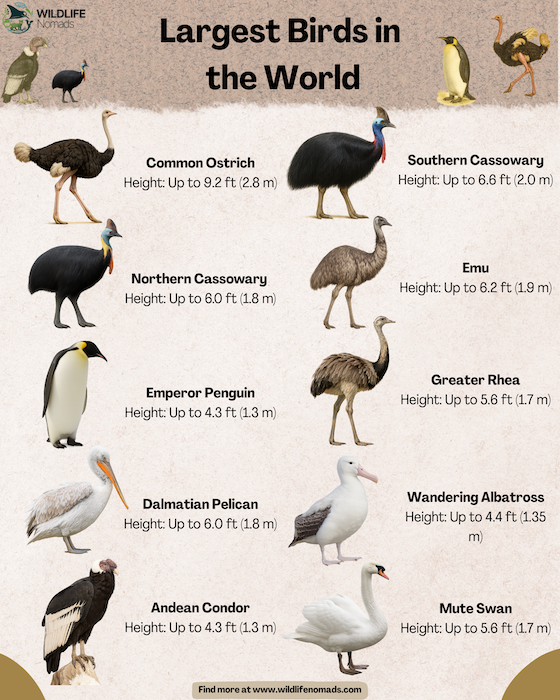
The Top 10 Biggest Birds: Living Giants
1. Common Ostrich (Struthio camelus)
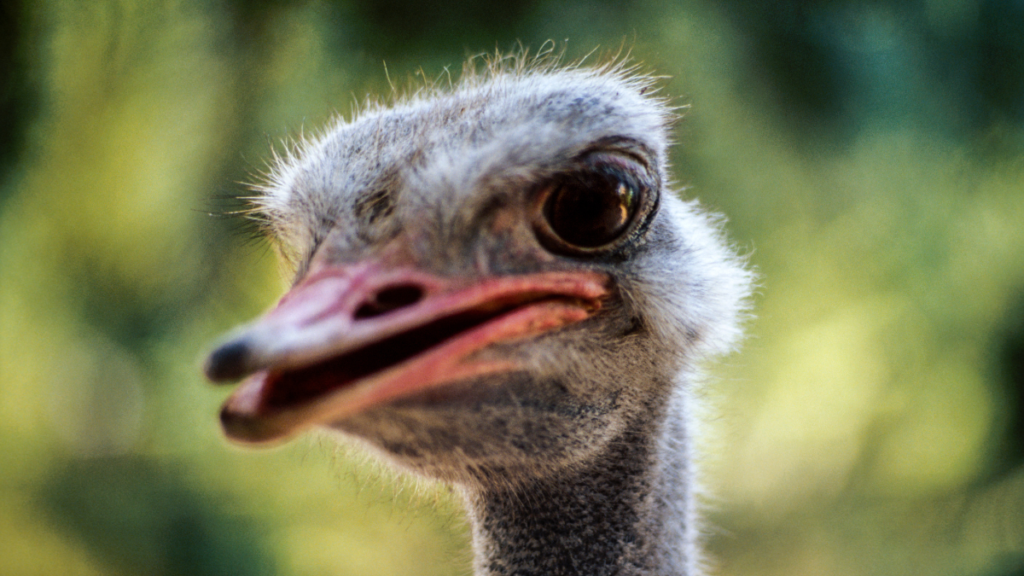
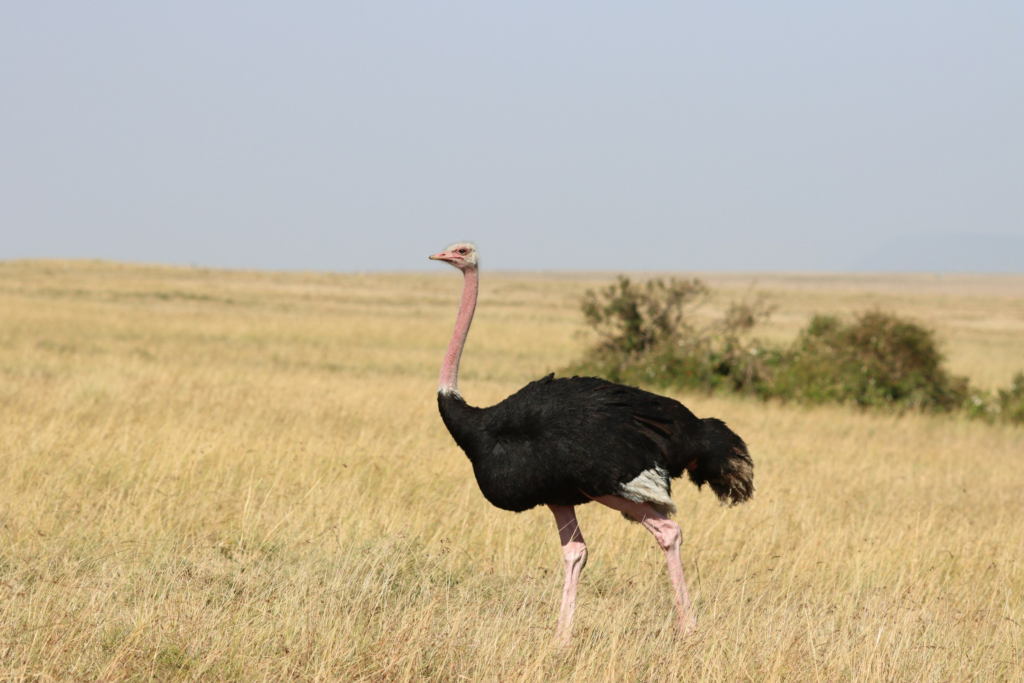
Ask anyone for the biggest bird in the world and this is the answer. The common ostrich is the largest living bird by both height and weight, and the tallest bird on the planet.
Vital Statistics:
- Height: Up to 9 feet (2.8 meters)
- Weight: 220–346 pounds (100–157 kg)
- Speed: Up to 43 mph (70 km/h)
The common ostrich’s size is functional. That height buys a commanding view across African savanna. Those legs aren’t just for running… a single kick can kill a lion. The male ostrich runs fastest and guards the communal nest.
Ostriches also have the most efficient running gait of any two-legged animal. A study in 2016 modelled the pelvic limb and found they exploit passive tendon structures to slash muscular cost.
Two details I like. Ostriches and emus belong to a group of flightless birds known as ratites, and both swallow stones to help grind food in their gizzard, a bird with no teeth outsourcing chewing to geology. And ostrich eggs are the largest bird eggs of any living species, each one equivalent to about 24 chicken eggs.
There are two species. The Somali ostrich, or blue-necked ostrich, is native to the Horn of Africa and is a distinct species from the common ostrich. Geographic isolation split them, allopatric speciation, producing other species in the same family separated by range and physical traits.
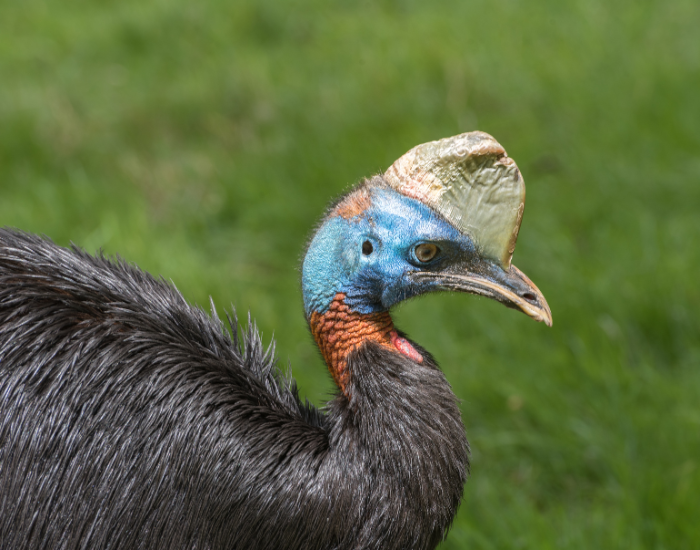
2. Southern Cassowary (Casuarius casuarius)
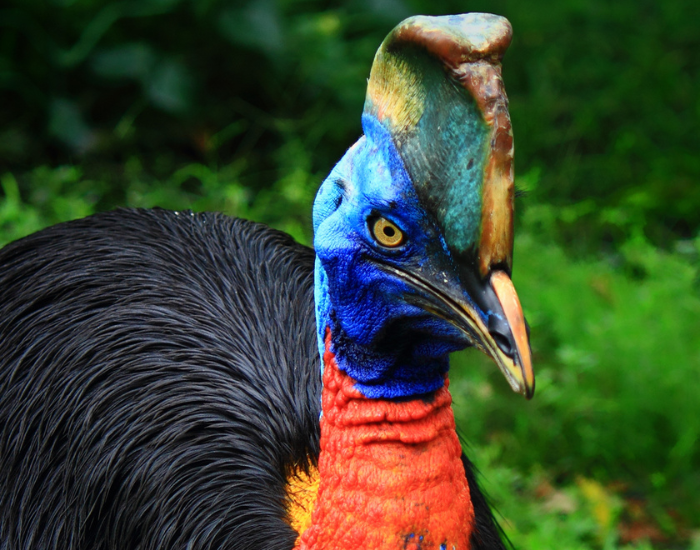
The Southern Cassowary holds the title of third largest bird in the world by weight and is often The southern cassowary is the third largest bird by height and the second heaviest living bird after the ostrich. It’s also, reasonably, called the most dangerous bird on Earth. One of three cassowary species, it lives in northeastern Australia and New Guinea.
Vital Statistics:
- Height: Up to 6.6 feet (2 meters)
- Weight: 130–190 pounds (58–85 kg)
- Notable feature: 5-inch dagger-like inner claws
The casque works like a battering ram through dense rainforest. The claws do the rest — kicks measured at up to 2,000 psi.
What gets missed is their ecological job. Campbell et al. (2023) hid accelerometers inside native fruits and confirmed southern cassowaries still move large-seeded plants across fragmented landscapes. Lose the bird, lose the forest.
3. Northern Cassowary (Casuarius unappendiculatus)
Slightly smaller than its southern cousin, the northern cassowary occupies lowland rainforest and coastal swamp in northern New Guinea and nearby islands. It is the most threatened cassowary species.
Vital Statistics:
- Height: Up to 5.9 feet (1.8 meters)
- Weight: 110–150 pounds (50–68 kg)
- Range: Northern New Guinea and surrounding islands
The golden-necked cassowary, with its bright blue face and neck, is the striking form found in New Guinea’s rainforests.
The third species is the dwarf cassowary, also called the mountain cassowary. It stands between 39 and 53 inches (99 and 135 centimeters) and sticks to highland forest, where I’ve only ever found footprints.
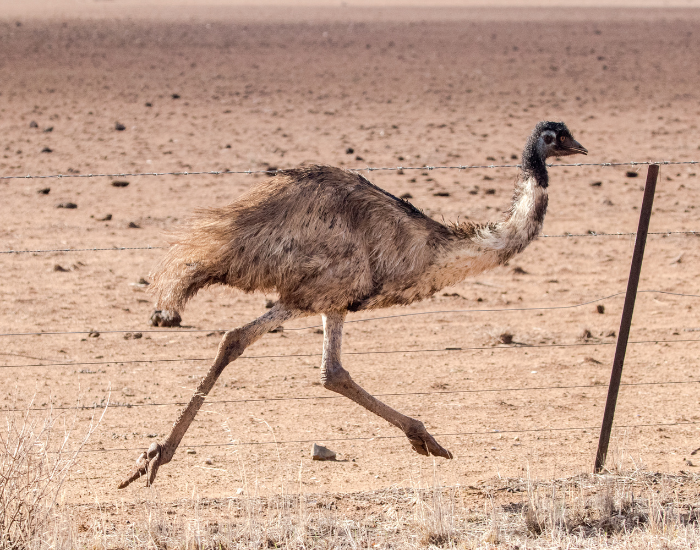
4. Emu (Dromaius novaehollandiae)
Australia’s national bird is Australia’s largest native bird and the second tallest living bird species after the ostrich. Emus have colonised deserts, forests and suburban fringes alike.
Vital Statistics:
- Height: Up to 6.2 feet (1.9 meters)
- Weight: 80–130 pounds (36–60 kg)
- Speed: Up to 30 mph (48 km/h)
During Australia’s “Emu War” of 1932, the military gave up. The birds were too fast, too scattered, too indifferent.
Female emus are larger than males and have wider rumps. Males do the incubating. Like ostriches, emus swallow gizzard stones, and they can go without food for up to eight weeks while breeding. Their double-shafted feathers handle anything the Australian climate throws at them.
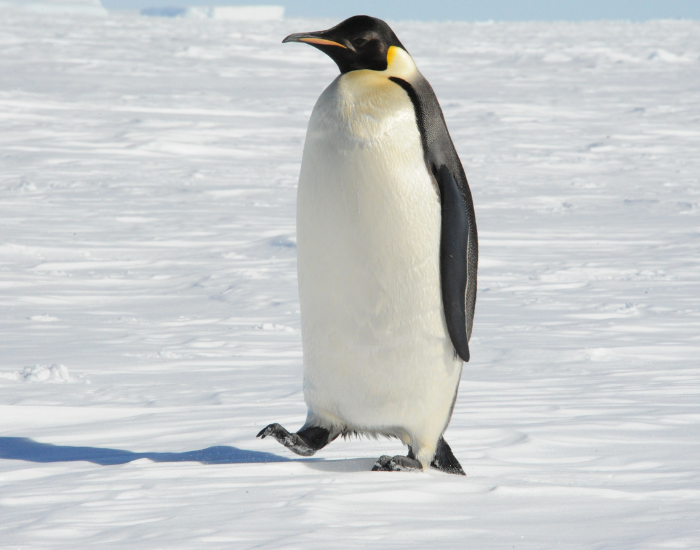
5. Emperor Penguin (Aptenodytes forsteri)
Penguins don’t come to mind as big birds until you stand next to one. The emperor penguin is the heaviest of all. For more penguin facts, have a look at this article.
Vital Statistics:
- Height: Up to 4 feet (1.22 meters)
- Weight: Up to 101 pounds (46 kg)
- Diving depth: Up to 1,800 feet (550 meters)
Emperors hold their breath for over 20 minutes. Their extremely dense feathers trap warm air against the skin, which is how a bird survives −40°F on open sea ice.
Males incubate a single egg on their feet for 64 days through the Antarctic winter, losing up to 45% of their body weight. The Snow Hill Island colony in the Weddell Sea is one of the few reachable by ship, the reason most photographs of emperor chicks exist at all. The king penguin, second largest of the family, does the same job in the milder sub-Antarctic.
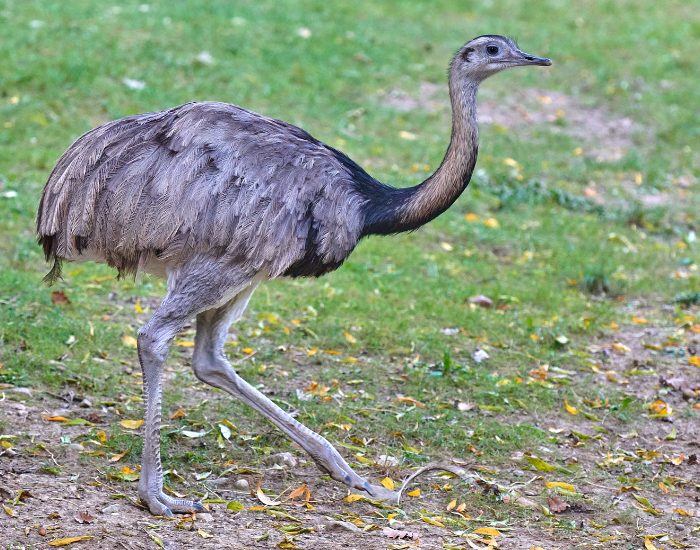
6. Greater Rhea (Rhea americana)
The greater rhea is the largest bird in the Americas and the largest extant species native to the continent, weighing up to 88 pounds (40 kilograms). It gets overshadowed by its African and Australian relatives, unfairly.
Vital Statistics:
- Height: Up to 5.6 feet (1.7 meters)
- Weight: 50–88 pounds (23–40 kg)
- Wingspan: 8.2 feet (2.5 meters) – though flightless
Rhea americana has one of the strangest social systems among large flightless birds. Males collect harems of up to 15 females, then incubate up to 50 eggs alone. Watching one male herd forty striped chicks across the Pampas is among the odder sights in South America. Rheas are also kept as domestic animals for meat and eggs.
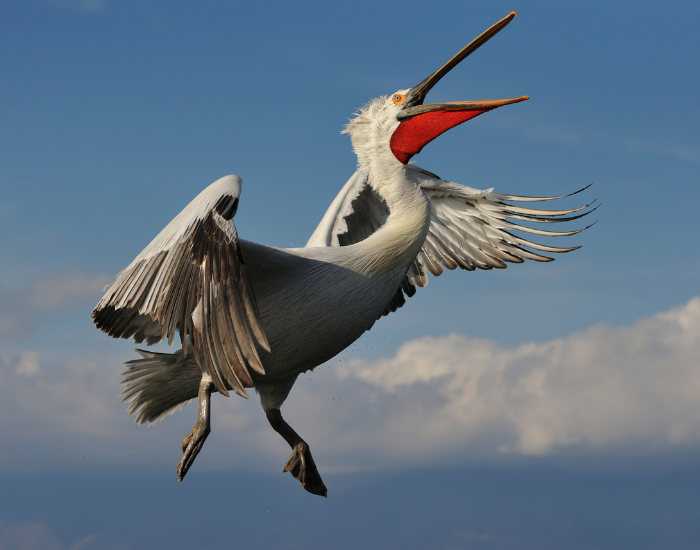
7. Dalmatian Pelican (Pelecanus crispus)
Now the flying giants. I have spotted this one in Turkey. The Dalmatian pelican is a member of the pelican family and one of the heaviest birds capable of flight, with a wingspan among the largest of the world’s birds.
Vital Statistics:
- Height: Up to 6 feet (1.8 meters)
- Weight: 20–33 pounds (9–15 kg)
- Wingspan: Up to 11.5 feet (3.5 meters)
These birds migrate thousands of miles on thermals and have been recorded above 10,000 feet. One pelican eats up to 4 pounds of fish a day, and the pouch holds more water than its stomach.
Worth noting: the heaviest flying bird isn’t a pelican. That record belongs to the great bustard, at up to 21 kilograms.
8. Wandering Albatross (Diomedea exulans)
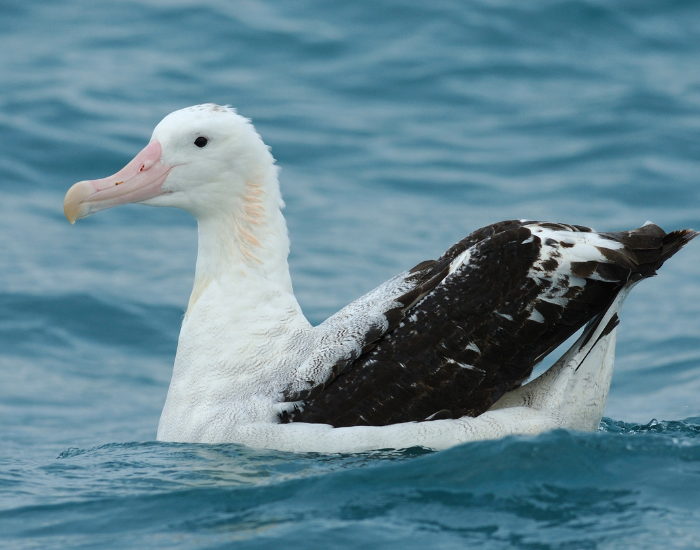
The wandering albatross holds the record for the largest wingspan of any living bird. It is built for a life spent almost entirely above the southern ocean.
Vital Statistics:
- Height: Up to 4.5 feet (1.35 meters)
- Weight: 13–28 pounds (6–13 kg)
- Wingspan: Up to 12.1 feet (3.7 meters)
Tracked birds cover up to 75,000 miles a year, spend roughly 85% of their lives airborne, and touch land only to breed every second year.
A shoulder-locking mechanism holds the wings open without muscular effort. A 2018 study modelled GPS tracks against wind data to show how albatrosses harvest energy from the wind gradient over waves, climbing into wind, descending downwind, repeating for hours. Some live past 60.
9. Andean Condor (Vultur gryphus)
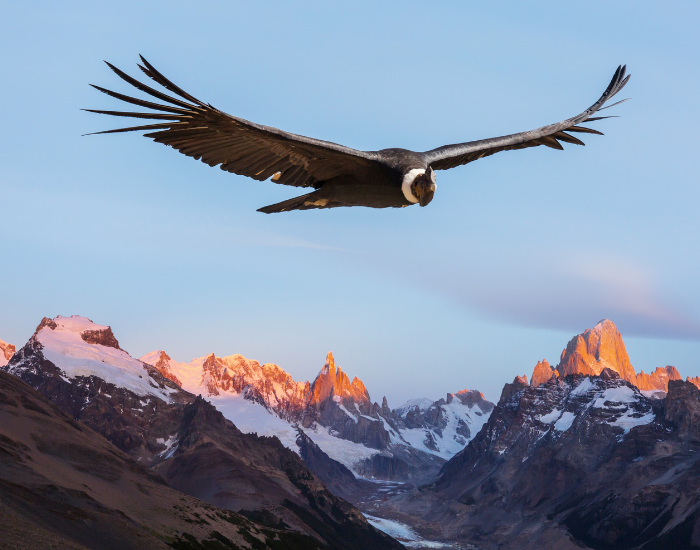
The Andean condor is one of the largest flying birds in the Western Hemisphere, and one of the largest flying land birds by both weight and wingspan.
Vital Statistics:
- Height: Up to 4.3 feet (1.3 meters)
- Weight: 20–33 pounds (9–15 kg)
- Wingspan: Up to 10.8 feet (3.3 meters)
Only the marabou stork rivals it among land birds for span. The raptors people usually name as giants aren’t close: harpy eagles of central and south america top out near 7 feet, a golden eagle around 7.5.
Andean condors can fly 170 miles without a flap. They’ve been recorded above 18,000 feet, live past 50, and don’t breed until age 8 to 10.
10. Mute Swan (Cygnus olor)
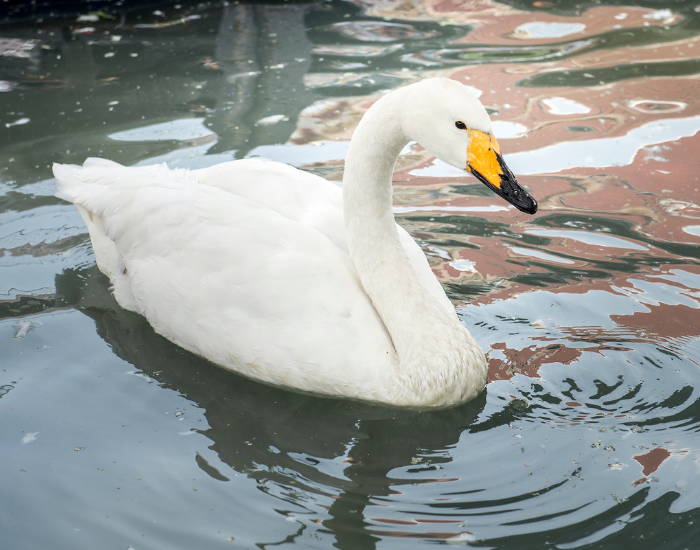
The mute swan closes out the list, and it surprises people. It’s among the heaviest flying birds in the world, with pure white plumage that hides real power.
Vital Statistics:
- Height: Up to 5 feet (1.5 meters)
- Weight: 20–33 pounds (9–15 kg)
- Wingspan: Up to 8.2 feet (2.5 meters)
They defend territory aggressively and can break bones with a wing strike. Their weight forces a running take-off across water.
They aren’t mute either, hisses, grunts and trumpeting calls all feature. Their necks hold 25 vertebrae, more than most mammals, which is how they feed so far underwater.
Prehistoric Giants: The Biggest Birds in History
Today’s birds are impressive. They are also the leftovers.
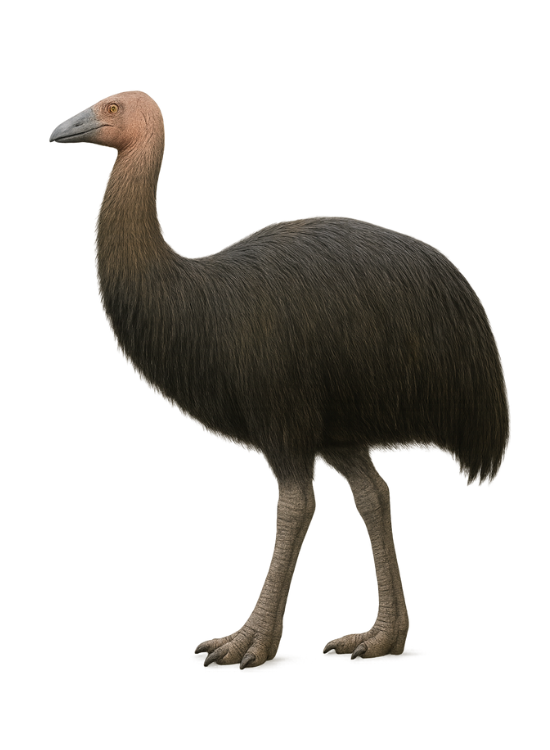
Elephant Bird (Aepyornis maximus)
Madagascar’s elephant birds went extinct roughly 1,000 years ago. They remain the heaviest birds ever to walk the planet.
Vital Statistics:
- Height: Up to 10 feet (3 meters)
- Weight: 880–1,100 pounds (400–500 kg)
- Egg: The largest elephant bird egg measured 39 centimeters long
One egg equalled about 180 chicken eggs. Mitchell et al. (2014) sequenced ancient mitochondrial DNA and found elephant birds are most closely related to the kiwi of New Zealand, a bird you can hold in two hands. Flight was lost independently, over and over, on islands with no predators. Hunting after human arrival finished them.
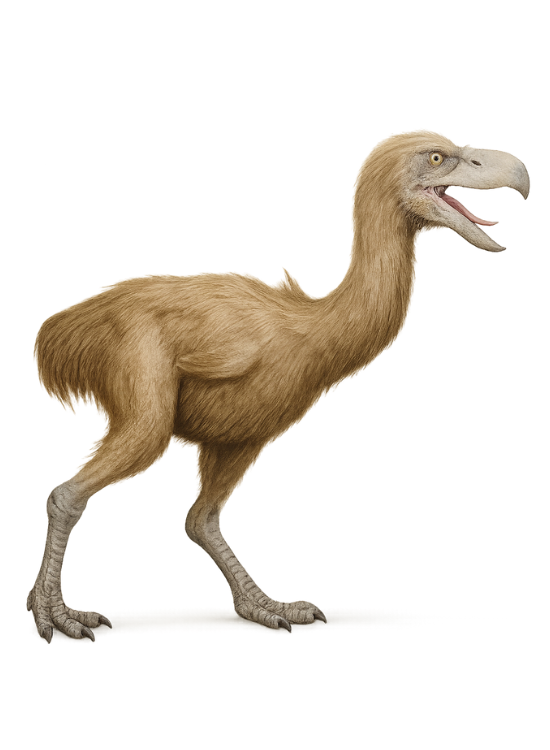
Terror Birds (Phorusrhacidae)
Terror birds ran South America for millions of years. The largest species, Kelenken guillermoi, stood 10 feet tall with a skull over 2 feet long. They were apex predators, hunting mammals and other birds with hooked beaks and powerful legs.
Argentavis magnificens
For flying birds, nothing since comes close. Argentavis soared over Argentina 6 million years ago with a 23–26 foot wingspan (roughly a small aircraft) at around 70–82 kg. Modelling suggests a soaring scavenger that stayed aloft for hours on thermals.
Conservation: Protecting Our Modern Giants
Most of the birds on this list are in trouble.
Southern cassowary numbers have fallen by over 80% in parts of their range, driven by rainforest clearing and vehicle strikes. More than half of all bustard species (including the great bustard and the kori bustard) are threatened or endangered.
Emperor penguins face the sharpest climate threat here. Jenouvrier et al. (2021) projected that under high emissions, 98% of colonies reach quasi-extinction by 2100 and global abundance drops 99%. That work supported the species’ listing under the US Endangered Species Act.
Wandering albatrosses drown on longline hooks. Bird-scaring lines and weighted gear have stabilised some populations, but enforcement is uneven across the southern ocean.
There is good news. California condors went from 27 individuals in 1987 to over 500 today. Dalmatian pelicans in Europe recovered on the back of wetland protection. Recovery works when it’s funded.
A footnote on domestication: farmed turkeys have been bred so hard for size that they now differ sharply from wild turkeys in shape, flavour and mobility. Domestic turkeys can’t fly. Their wild ancestors can.
Frequently Asked Questions About Big Birds
The common ostrich, at up to 9 feet tall and 346 pounds (157 kg).
Ostriches, by roughly ten times. A large turkey weighs 30–40 pounds.
The sarus crane, at up to 5.9 feet (1.8 meters).
he great bustard, at up to 21 kilograms (46 pounds).
No. Ostriches win on height and weight — though cassowaries are far more dangerous.
The elephant bird (Aepyornis maximus), up to 1,100 pounds. For flying birds, Argentavis magnificens.
The trumpeter swan is the largest extant species of waterfowl.
Can You Name That Giant Bird? 🐦
A 10-photo identification challenge — the wrong answers are deliberately tricky look-alikes of a similar build. Go back and change any answer before you score.
Which big bird is this?
References:
Benítez-López, A., Santini, L., Gallego-Zamorano, J., Milá, B., Walkden, P., Huijbregts, M. A. J., & Tobias, J. A. (2021). The island rule explains consistent patterns of body size evolution in terrestrial vertebrates. Nature Ecology & Evolution, 5(6), 768–786. https://doi.org/10.1038/s41559-021-01426-y
Campbell, M. A., Lawton, T., Udyawer, V., Bell-Anderson, K. S., Westcott, D., & Campbell, H. A. (2023). The southern cassowary (Casuarius casuarius johnsonii) remains an important disperser of native plants in fragmented rainforest landscapes. Austral Ecology, 48(4), 787–802. https://doi.org/10.1111/aec.13309
Jenouvrier, S., Che-Castaldo, J., Wolf, S., Holland, M., Labrousse, S., LaRue, M., Wienecke, B., Fretwell, P., Barbraud, C., Greenwald, N., Stroeve, J., & Trathan, P. N. (2021). The call of the emperor penguin: Legal responses to species threatened by climate change. Global Change Biology, 27(20), 5008–5029. https://doi.org/10.1111/gcb.15806
Mitchell, K. J., Llamas, B., Soubrier, J., Rawlence, N. J., Worthy, T. H., Wood, J., Lee, M. S. Y., & Cooper, A. (2014). Ancient DNA reveals elephant birds and kiwi are sister taxa and clarifies ratite bird evolution. Science, 344(6186), 898–900. https://doi.org/10.1126/science.1251981
Rankin, J. W., Rubenson, J., & Hutchinson, J. R. (2016). Inferring muscle functional roles of the ostrich pelvic limb during walking and running using computer optimization. Journal of the Royal Society Interface, 13(118), 20160035. https://doi.org/10.1098/rsif.2016.0035
Richardson, P. L., Wakefield, E. D., & Phillips, R. A. (2018). Flight speed and performance of the wandering albatross with respect to wind. Movement Ecology, 6, 3. https://doi.org/10.1186/s40462-018-0121-9