India stands as one of the world’s richest countries for bird diversity, boasting over 1,300 bird species that thrive across its vast and varied landscapes. If you are curious about the animals of India, have a look at the article! From the snow-capped peaks of the Himalayas to the lush rainforests of the Western Ghats, and from arid deserts to sprawling wetlands, these habitats support an incredible array of avian life. This diversity, however, is under severe threat. Same story as everywhere in the world, rapid urbanization, deforestation, and pollution have led to significant habitat loss, while climate change is altering migration patterns and breeding seasons for many species.
The result? A growing number of birds (like some Hornbills) in India are now classified as critically endangered species or endangered species, with some teetering on the brink of extinction. Conservation efforts have become more urgent than ever, as the loss of even a single bird species can disrupt entire ecosystems. Protecting these birds isn’t just about saving individual species, it’s about preserving the delicate balance of nature that sustains us all. Understanding the challenges facing India’s birds, and the importance of terms like “critically endangered,” “endangered species,” and “conservation efforts,” is the first step toward meaningful action.
The Magnitude of India’s Bird Crisis
Before diving into specific species, let’s talk numbers. The State of India’s Birds 2023 identified that 178 species of birds needed immediate priority for conservation (High Priority). When nearly 200 species require urgent intervention, we’re not talking about isolated conservation cases, we’re facing a systematic collapse of avian biodiversity.
Think about it this way: every time a bird species goes extinct, we lose a piece of our ecosystem’s puzzle. Birds are pollinators, seed dispersers, pest controllers, and indicators of environmental health. When they disappear, the ripple effects cascade through entire ecosystems. Declines in India’s bird populations don’t just affect local biodiversity—they also reduce the global population of these species, impacting their worldwide conservation status.
The Five Most Critically Endangered Birds in India
When people ask me about five endangered birds in India, I always start with the species that could vanish within our lifetime. Disruptions to the breeding season further threaten their survival, as these periods are crucial for mating, nesting, and raising young. Here are the most critical cases:
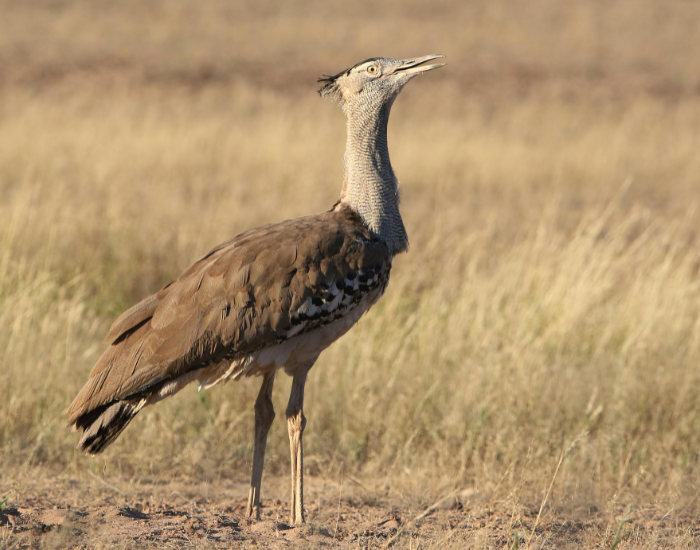
1. Great Indian Bustard (Ardeotis nigriceps)
The Great Indian Bustard isn’t just endangered, it’s practically extinct. As one of the most threatened bustard species, this bird’s massive decline in numbers – now at around just 200 individuals – is mainly due to loss and degradation of habitat. To put this in perspective, there are more people in a single apartment building than there are Great Indian Bustards left in the wild.
It is critically endangered due to hunting and habitat loss. It is protected under the Indian Wild Life (Protection) Act, 1972. What makes this particularly heartbreaking is that this magnificent bird, standing about one meter tall, was once common across northwestern India. Now, it’s confined to small patches in Rajasthan and Gujarat, where tall grass and scrublands serve as prime habitat essential for its survival. India is also the only known breeding ground for the Great Indian Bustard during the monsoon season.
The primary threats? Power lines are killing them through collisions, agricultural expansion is destroying their grassland habitat, and climate change is altering their breeding patterns. Conservation efforts include breeding programs and habitat restoration, with the Desert National Park in Rajasthan serving as a key site for protection and breeding ground management, but with only 200 individuals left, every single bird counts.
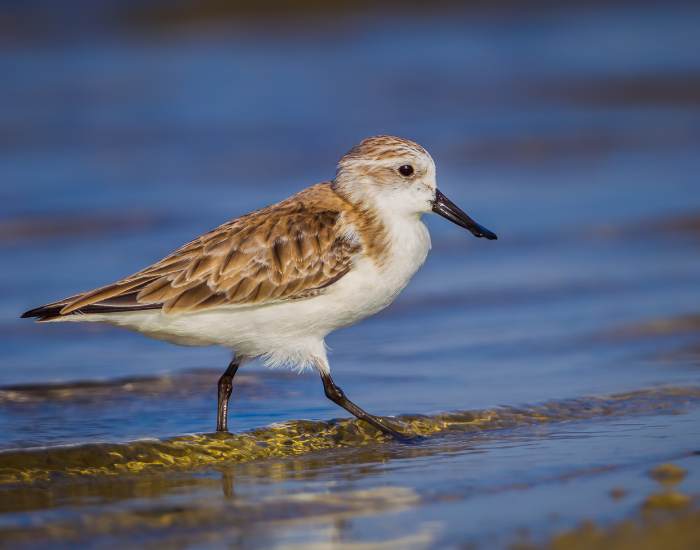
2. Spoon-billed Sandpiper (Calidris pygmaea)
Here’s a bird that most people have never heard of, but it’s one of the world’s most endangered species. This bird is critically endangered, with a current population of fewer than 2500 – probably fewer than 1000 – mature individuals.
What makes the Spoon-billed Sandpiper unique is its distinctive spoon-shaped bill, which it uses to filter-feed in coastal mudflats. These mudflats, along with other feeding sites such as estuaries and lagoon spits, are crucial habitat areas that provide essential resources for the Spoon-billed Sandpiper’s survival during nesting and migration. The Spoon-billed Sandpiper, one of the world’s most threatened bird species, is critically endangered in India. This tiny bird travels thousands of kilometers during migration, and India’s coastal areas serve as crucial stopover points.
The threats are multifaceted: coastal development is destroying their feeding grounds, pollution is contaminating their food sources, and climate change is affecting their migration patterns. The country also holds the record for the highest single count of the bird anywhere in the world, 202 birds in 1989 from Moulevir Char. Compare that to current sightings of just a handful of individuals, and you can see the catastrophic decline.
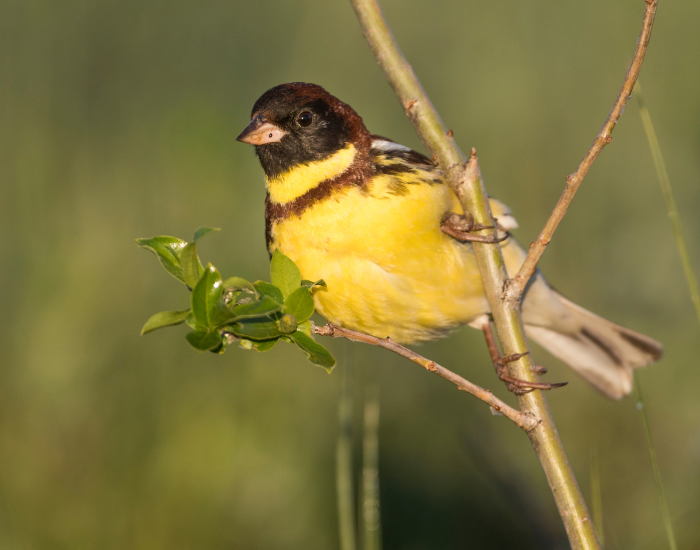
3. Yellow-breasted Bunting (Emberiza aureola)
The Yellow-breasted Bunting is classified as Critically Endangered due to illegal hunting, habitat loss, and agricultural expansion, with its population plummeting by over 90% since the 1980s. This small songbird was once common in India during winter months, but sightings have become increasingly rare.
What’s particularly troubling about the Yellow-breasted Bunting’s decline is how rapid it’s been. In just four decades, we’ve lost 90% of the population. The primary culprit? Illegal hunting for the bird trade, combined with habitat destruction from agricultural expansion. Illegal trapping is also a major threat to the Yellow-breasted Bunting, further contributing to its dramatic decline.
Learn more about illegal pet trade here:
What is illegal trade in wildlife?
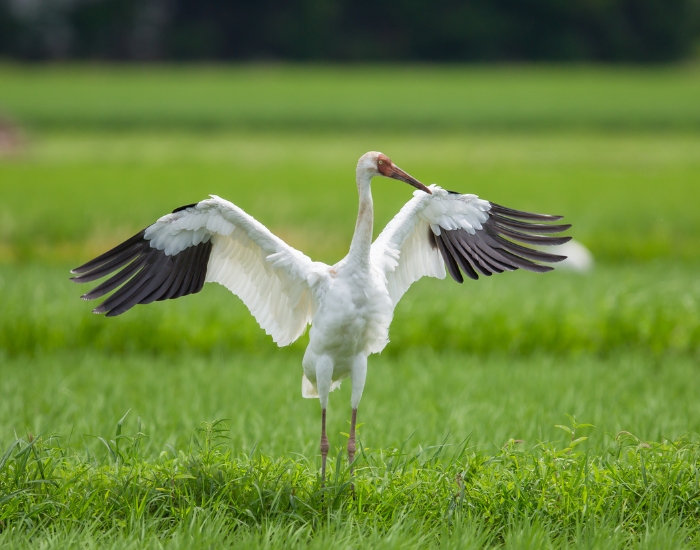
4. Siberian Crane (Leucogeranus leucogeranus)
The Siberian Crane represents one of conservation’s most heartbreaking stories. These magnificent white birds with their distinctive red faces once migrated to India in large numbers, particularly to Bharatpur’s Keoladeo National Park. However, the last confirmed sighting in India was over a decade ago.
Their decline is attributed to habitat loss along their migration route, hunting pressure, and dam construction affecting their wetland habitats. Wetland drainage has also played a significant role in the loss of prime habitat, as critical breeding and wintering wetlands are destroyed or degraded. The species still exists in extremely small numbers in their Siberian breeding grounds, but their Indian wintering grounds have been effectively abandoned.
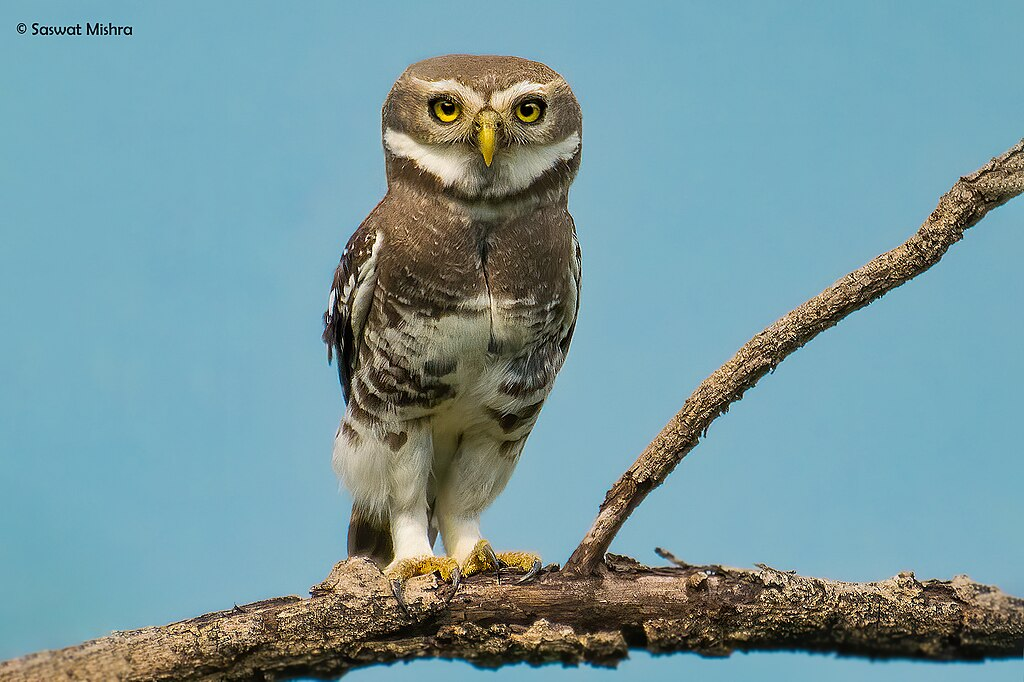
5. The Forest Owlet (Athene blewitti)
The Forest Owlet is often called the “rediscovered bird” because it was thought extinct for over a century before being rediscovered in 1997. This small owl is endemic to the forests of central India and remains critically endangered with an estimated population of fewer than 1,000 individuals.
Habitat fragmentation and deforestation are the primary threats. Unlike many owl species that adapt to human presence, the Forest Owlet requires intact forest ecosystems, particularly undisturbed scrub jungle, to survive.
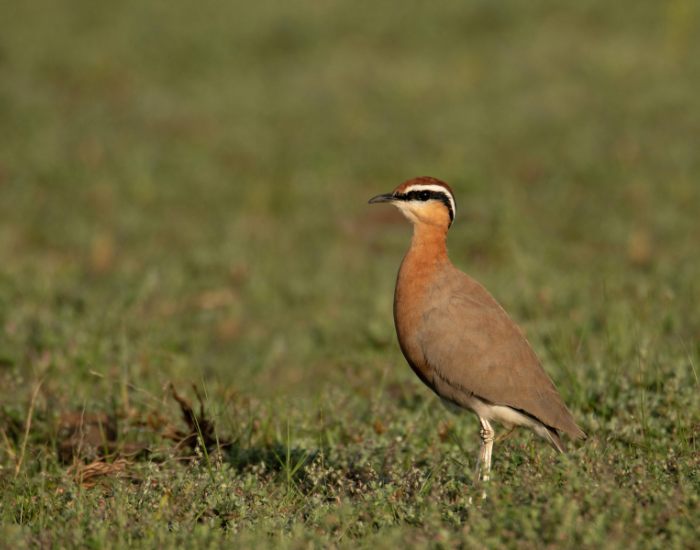
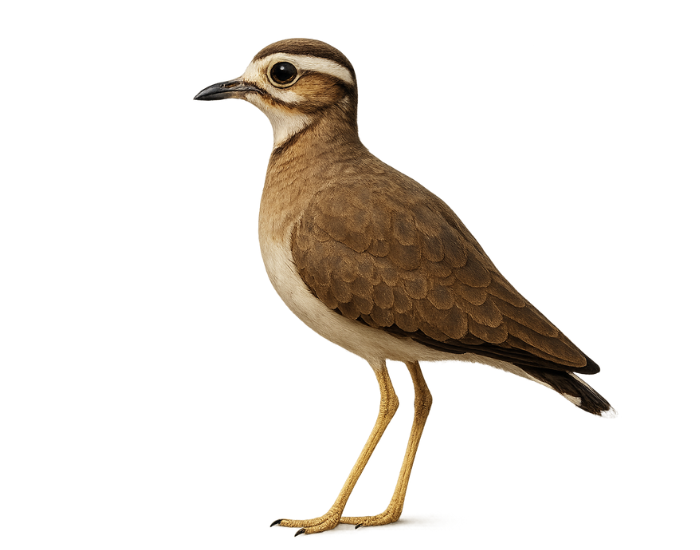
6. Jerdon’s Courser (Rhinoptilus bitorquatus)
Jerdon’s Courser is one of the rarest birds in the world and is endemic to Andhra Pradesh, India. Thought extinct until its rediscovery in 1986, this nocturnal bird remains critically endangered, with a population of only a few hundred at best.
Its preferred habitat, scrub forest with sparse bushes, has been heavily fragmented due to agriculture, quarrying, and canal construction. Conservation is particularly challenging because the bird is nocturnal, extremely elusive, and rarely seen. Protecting the Sri Lankamalleswara Wildlife Sanctuary, where the bird has been recorded, is crucial for its survival.
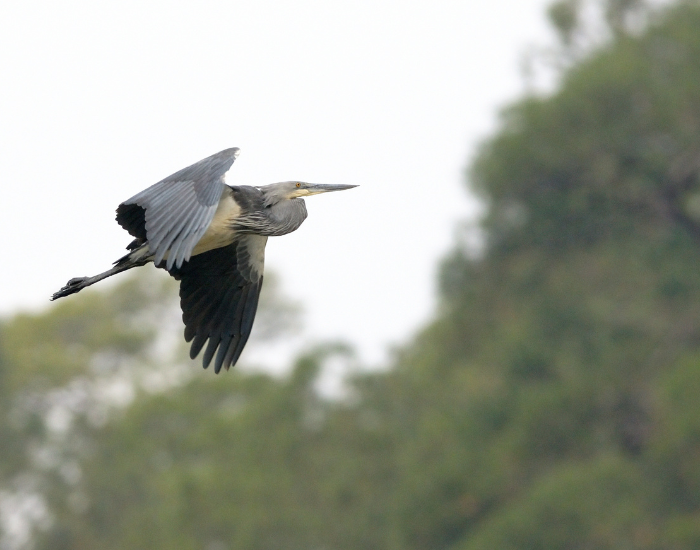
7. White-bellied Heron (Ardea insignis)
Towering and elegant, the White-bellied Heron is one of the rarest herons on Earth, with fewer than 250 individuals left globally. In India, it survives in pockets of Arunachal Pradesh and Assam, inhabiting fast-flowing rivers and wetlands.
The main threats are habitat degradation, sand mining, hydropower development, and human disturbance near rivers. Its extremely low numbers make every sighting significant. Conservation in the Himalayan foothills, including transboundary cooperation with Bhutan, is critical to keeping this giant heron from disappearing.
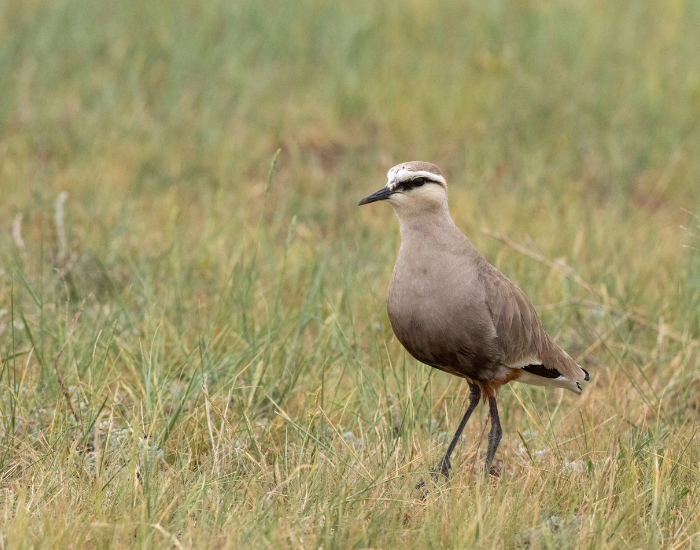
8. Sociable Lapwing (Vanellus gregarius)
The Sociable Lapwing is a critically endangered migratory bird that winters in parts of northwestern India. Once relatively widespread, it has declined drastically due to illegal hunting and habitat loss along its migration routes that stretch across Central Asia, the Middle East, and South Asia.
Agricultural intensification and land conversion have reduced its stopover sites, while hunting pressure in some countries has decimated flocks. India remains an important wintering ground, making local protection efforts vital to the species’ global survival.
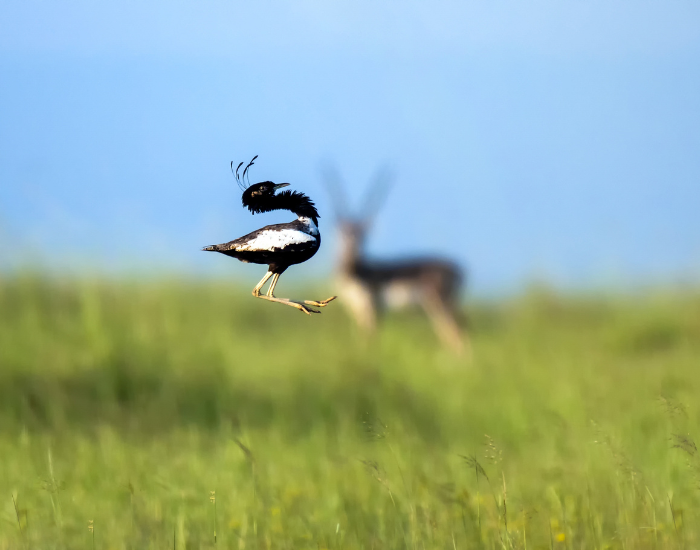
9. Lesser Florican (Sypheotides indicus)
The Lesser Florican is famous for the males’ spectacular leaping display during the monsoon breeding season, when they jump dramatically into the air to attract females. Endemic to the Indian subcontinent, its population has suffered a steep decline due to loss of grassland habitats.
Agricultural expansion, overgrazing, and infrastructure development have fragmented the open grasslands these birds rely on. With fewer than 1,000 mature individuals left, the Lesser Florican is now critically endangered, and its survival depends on restoring and safeguarding India’s remaining grasslands.
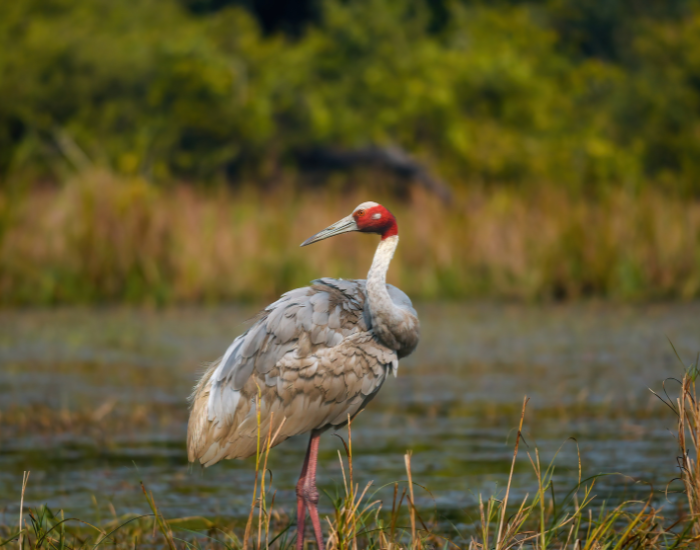
10. Sarus Crane (Antigone antigone)
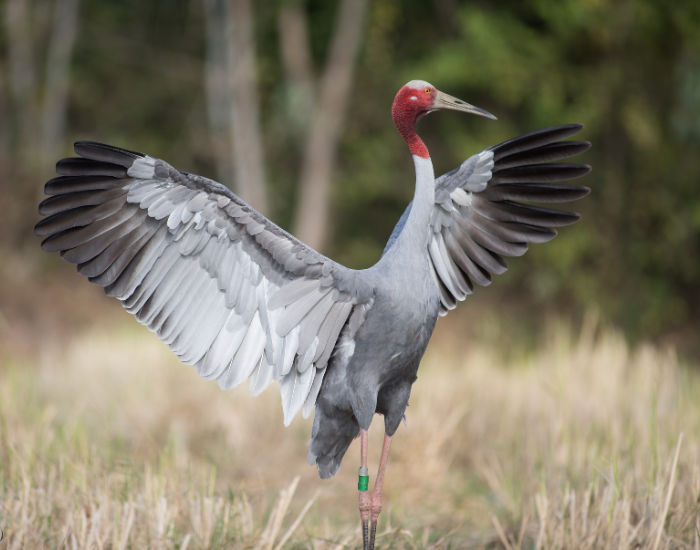
The Sarus Crane, the world’s tallest flying bird, once symbolized wetlands across northern and central India. While still seen in parts of Uttar Pradesh, Madhya Pradesh, and Gujarat, its population is in sharp decline and is considered vulnerable globally, but critically endangered in some Indian states.
Wetland loss, drainage for agriculture, and pollution are major threats. Despite this, the Sarus is also a bird of hope, it adapts to agricultural landscapes and is revered in Indian culture, which has helped in its protection. Strengthening wetland conservation and reducing pesticide use are crucial to ensuring its survival.
Understanding the Broader Picture: Endangered Species of Birds in India
The endangered species of birds in india extends far beyond these five critical cases. The Critically Endangered list includes 10 mammals, 15 birds, 6 reptiles, 19 species of amphibians, 14 fishes etc. But when we look at the broader categories of threatened species, the numbers become even more staggering.
Here’s what’s particularly concerning: Over 80% of migratory birds (307 species) visit India through CAF and among these, 87 species are of high conservation concern including two critically endangered, five endangered and 13 vulnerable species. This means that India’s role as a stopover point for migratory birds makes our conservation efforts globally significant. Various conservation initiatives are underway to protect these migratory species and their habitats, involving government agencies, NGOs, and local communities.
Among the regions, North-East India stands out as a key area for endangered bird conservation, with several protected areas and conservation projects focused on preserving unique and threatened avian species.
The Complete List of Endangered Birds in India
When creating a comprehensive list of endangered birds in india, we need to consider different threat categories. This list is organized by conservation status as defined by the IUCN Red List, which classifies species based on their risk of extinction.
Critically Endangered:
- Great Indian Bustard
- Spoon-billed Sandpiper
- Yellow-breasted Bunting
- Siberian Crane
- Forest Owlet
- Jerdon’s Courser
- White-bellied Heron
- Sociable Lapwing
Endangered:
- Lesser Florican
- Sarus Crane
- Black-necked Crane
- Masked Finfoot
- Nilgiri Wood-pigeon
- White-rumped Vulture
- Indian Vulture
- Slender-billed Vulture
Vulnerable:
- Painted Stork
- Asian Openbill
- Greater Adjutant
- Lesser Adjutant
- Pallas’s Fish Eagle
- Imperial Eagle
- Egyptian Vulture
- Himalayan Quail
This represents just a fraction of the species at risk. The complete list would include nearly 200 species across all threat categories.

Habitat and Ecosystem: The Foundation of Survival
The survival of India’s bird species is intricately tied to the health of their natural habitats. Forests, grasslands, wetlands, and scrublands are not just scenic backdrops—they are the lifeblood of avian populations. Unfortunately, habitat degradation and habitat loss have become the leading causes of rapid population decline among many of India’s most threatened birds.
Take the Great Indian Bustard, for example, a striking bird whose existence depends on undisturbed grasslands occasionally interspersed with scrub. As these prime habitats are converted into agricultural fields or lost to infrastructure projects, the bustard’s numbers have plummeted, making it one of the most critically endangered species in the world. Similarly, the elusive White-bellied Heron, found in the lowland forests and riverine habitats of the Himalayan foothills, faces extinction due to wetland degradation and the encroachment of human settlements.
Conservation efforts focused on habitat restoration and protection are essential to reversing these trends. By safeguarding breeding grounds and restoring native plants, we can give endangered species a fighting chance. The fate of India’s rarest birds hinges on our ability to protect and rehabilitate the ecosystems they call home.
What’s Driving This Crisis?
Understanding the causes behind bird endangerment is crucial for developing effective solutions. Here are the primary drivers:
- Habitat Loss and Fragmentation: This is the number one threat. India has lost over 75% of its natural habitats to agriculture, urbanization, and infrastructure development. Birds need specific habitat types for breeding, feeding, and roosting. When these habitats are destroyed or fragmented, entire populations can collapse. The conversion of natural habitats into arable land reduces suitable breeding and wintering grounds for many species, such as the sociable lapwing. Habitat modification, often driven by human activities, is a key factor in the decline and extinction of species like the Himalayan Quail. The plantation of exotic trees can also negatively impact native bird habitats by altering the local ecosystem and displacing indigenous flora.
- Climate Change: Rising temperatures and changing rainfall patterns are altering migration routes, breeding cycles, and food availability. Mountain species are particularly vulnerable as they have nowhere to migrate when temperatures rise.
- Pollution: Pesticide use in agriculture affects insect-eating birds, while industrial pollution contaminates water sources that waterfowl depend on. Plastic pollution in coastal areas is affecting seabirds and shorebirds.
- Hunting and Poaching: Despite legal protections, illegal hunting continues for the pet trade, traditional medicine, and food. Species like the Yellow-breasted Bunting have been decimated by hunting pressure.
- Infrastructure Development: Power lines, wind turbines, and buildings cause millions of bird deaths annually through collisions. The Great Indian Bustard is particularly vulnerable to power line strikes. The construction of river canals, such as the Telugu Ganga Canal, also contributes to habitat destruction and fragmentation, further threatening bird populations.
Community Involvement: Grassroots Guardians of Birdlife
While laws and policies are vital, the real guardians of India’s birdlife are often the people who live closest to these threatened species. Across the country, local communities have become powerful allies in conservation initiatives, proving that grassroots action can make a world of difference.
A good example is the protection of the Amur Falcon in Nagaland. Once heavily hunted during migration, these migratory birds now find safe passage thanks to community-led efforts that have transformed attitudes and provided alternative livelihoods. In central India, the conservation of the Forest Owlet, an extremely rare bird, has been bolstered by the involvement of local communities who help monitor nesting sites and reduce human wildlife conflict.
These stories highlight a crucial truth: when local people are empowered and engaged, conservation becomes more effective and sustainable. By supporting community-based conservation initiatives, we not only protect endangered birds but also foster a sense of stewardship that benefits entire ecosystems.
Research and Development: Science at the Heart of Conservation
Behind every successful conservation story lies a foundation of rigorous scientific research. Understanding the complex needs of critically endangered birds and endangered birds requires detailed studies of their behavior, migration routes, and breeding grounds. This knowledge is the backbone of effective conservation strategies.
For instance, research on the migratory patterns of the Siberian Crane has pinpointed critical stopover sites and breeding grounds, guiding international conservation efforts across south and southeast Asia. Similarly, scientific studies on the habitat preferences of the elusive Jerdon’s Courser have informed targeted habitat protection and restoration in its former range.
What Can You Actually Do?
Here’s where I get practical. Conservation isn’t just about government programs and scientific research, individual actions matter, especially when multiplied across millions of people.
Support Bird-Friendly Agriculture – Choose organic products when possible. Pesticide-free farming supports insect populations that birds depend on. If you’re a farmer or know farmers, advocate for integrated pest management practices that reduce chemical use.
Create Bird-Friendly Spaces – Whether you have a balcony, garden, or rooftop, you can create habitat for birds. Plant native species, provide water sources, and avoid using pesticides. Even small urban green spaces can serve as stepping stones for migrating birds.
Reduce Glass Strikes – If you live in a high-rise building, advocate for bird-friendly glass or window decals that make glass visible to birds. This simple measure can prevent thousands of bird deaths annually.
Support Conservation Organizations – Organizations like the Wildlife Institute of India, Bombay Natural History Society, and various bird clubs across India are doing critical work. Even small donations can make a difference.
Citizen Science – Participate in bird counts and monitoring programs. Apps like eBird allow you to contribute valuable data that scientists use for conservation planning. Your observations could help track population trends or discover new breeding areas.
Responsible Tourism – When visiting natural areas, choose eco-tourism operators that contribute to conservation. Responsible wildlife tourism can provide economic incentives for habitat protection.
Time is Running Out, But Hope Remains
The crisis facing indian endangered birds is real, urgent, and unprecedented. With species like the Great Indian Bustard down to just 200 individuals and others following similar trajectories, we’re witnessing a potential mass extinction event in our own lifetimes. The diversity of endangered birds spans regions such as northeastern India and the western Himalayas, and includes unique and elusive species like African Grey Parrots, Northern Bald Ibis, and others that are rarely seen or studied.
But here’s what keeps me optimistic: conservation works when we commit to it. We’ve seen tiger populations recover, wetlands restored, and communities mobilized around wildlife protection. The same can happen for birds—if we act now.
The five most critically endangered birds I’ve discussed—the Great Indian Bustard, Spoon-billed Sandpiper, Yellow-breasted Bunting, Siberian Crane, and Forest Owlet—represent both the magnitude of the crisis and the urgency of action needed. Each species lost is irreplaceable, but each species saved demonstrates our capacity for positive change.
Listed in Schedule I of the Indian Wildlife (Protection)Act, 1972, in the CMS Convention and in Appendix I of CITES, as Critically Endangered on the IUCN Red List and the National Wildlife Action Plan (2002-2016). Legal protections exist, but they’re only as strong as our commitment to enforce them.
The next time you see a bird, any bird, remember that you’re looking at a survivor in an increasingly hostile world. And remember that their survival depends, in large part, on choices we make every day.
Because in the end, the story of India’s endangered birds is really the story of us—and what kind of world we choose to leave behind.
Further reading you may be interested: