I remember my first trip to the Caribbean in Cancun when I was just a kid. The warm summer rains had just passed, and the humid air clung to everything. That’s when I spotted it, a massive green frog next to one of the numerous gardens of our hotel. Its bug eyes reflected the lamplight, and its warty skin gave it an almost prehistoric appearance.
“That’s a Cuban tree frog,” our waitress told me with a smile. At the time, I had no idea what “invasive” meant. I just thought it was the coolest thing I’d ever seen. Years later, I would understand the devastating ecological impact these fascinating creatures, but invasive species, have on native ecosystems.
If you live in southern Florida or other parts of the southeastern United States, you’ve likely encountered these giants. In this guide, we’ll explore why this frog, or Osteopilus septentrionalis, has become one of the most successful invasive species in Florida and what you can do about it.
1. Scientific Identity: Meet Osteopilus Septentrionalis
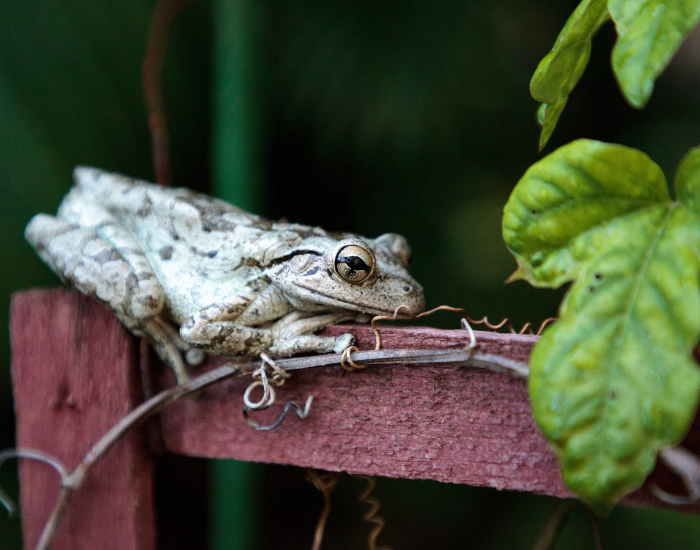
The Cuban tree frog scientific name is Osteopilus septentrionalis. Interestingly, “septentrionalis” means “northern” in Latin, ironic for a species native to Cuba, the Cayman Islands, and the Bahamas.
These aren’t your typical tree frogs. While most native tree frog species in North America remain relatively small, the invasive Cuban tree frog towers over them. In fact, it’s the largest tree frog on the continent.
For comparison, if you’re familiar with other popular amphibians like poison dart frogs from Central and South America, you’ll know that most frogs stay compact. However, Cuban treefrogs break that mold entirely.
2. How to Identify a Cuban Tree Frog
Wondering how to tell if it’s a Cuban treefrog? Look for these distinctive characteristics:
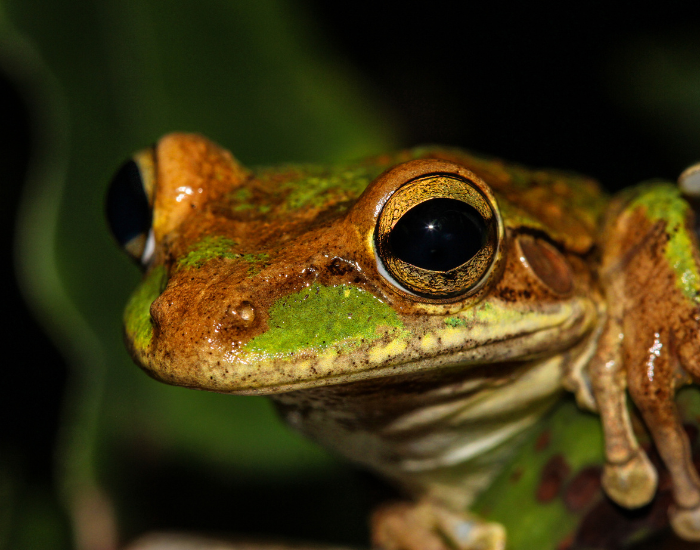
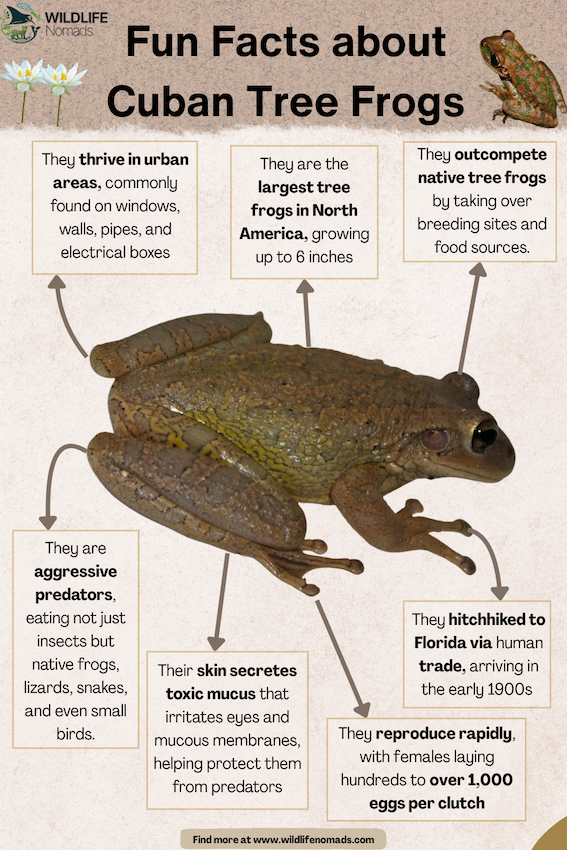
Size Matters: Adult females can reach up to 6 inches in length, making them significantly larger than Florida’s native treefrogs, which typically max out at 2.5 inches. This cuban tree frog size alone often gives them away.
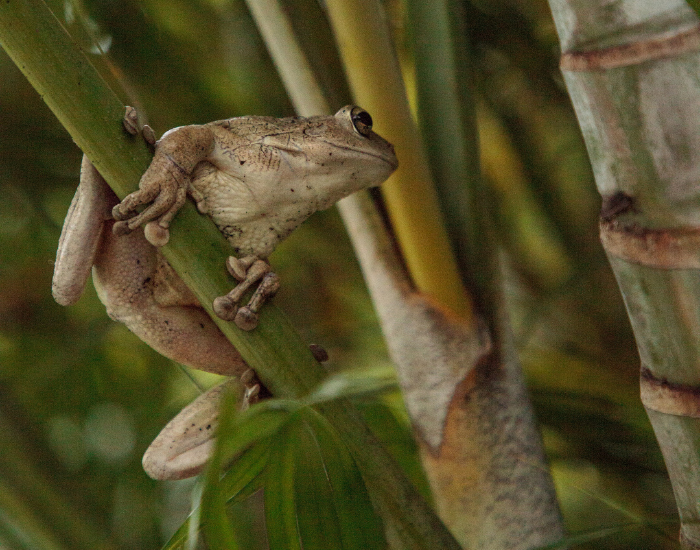
Warty Skin Texture: Unlike the smooth-skinned green tree frog (Hyla cinerea) or other native species, Cuban treefrogs have prominently warty skin. This texture helps distinguish them from native tree frog populations.
Oversized Sticky Pads: Their toe pads are exceptionally large and sticky, much more prominent than those of native treefrogs. These help them climb smooth surfaces like windows and walls in urban areas.
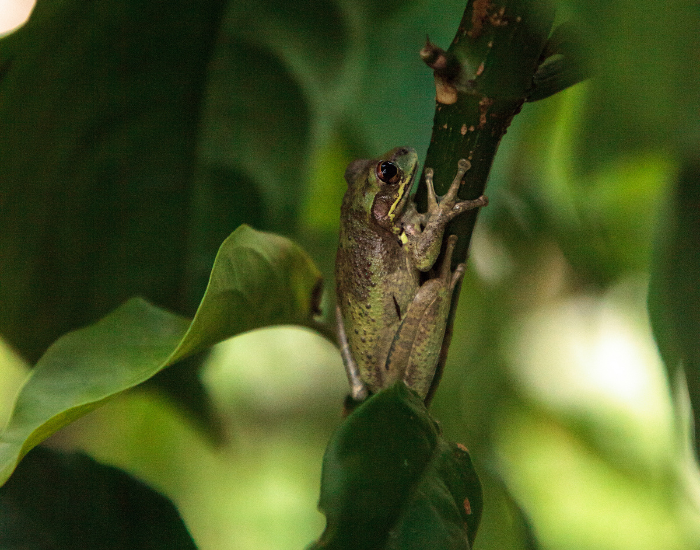
Variable Coloration: Cuban treefrogs are masters of camouflage. You’ll see them in shades of light brown, dark brown, or even green, depending on their environment and stress levels.
The Skull Test: Here’s a professional trick I learned in the field. The skin on top of a Cuban tree frog’s head is fused to its skull. Gently rub the skin between the eyes. If it doesn’t move independently, you’ve found an Osteopilus septentrionalis.
This is quite different from green frogs found in ponds throughout the United States species, which have completely different head structures and habitat preferences.

3. How the Cuban Tree Frog Invaded Florida
You might wonder, “How did the Cuban tree frog get to Florida?” They didn’t swim across the Florida Straits on their own.
Most evidence suggests these amphibians arrived as stowaways in the early 1900s. They hitchhiked in shipping containers and ornamental plants being imported for the nursery trade. By the mid-20th century, they had established breeding populations in south Florida (similar to many introduced fish species).
Today, their range has expanded dramatically. They’re now found throughout the Florida peninsula, into the Florida panhandle, and in isolated records as far north as Georgia. Tropical weather systems like hurricanes help spread them to new areas, and they continue to travel via potted plants shipped across the southeastern United States.
The Florida Fish and Wildlife Conservation Commission has been tracking their spread for decades, noting significant impacts on native wildlife in affected regions.
4. Why Cuban Tree Frogs Are Problematic?
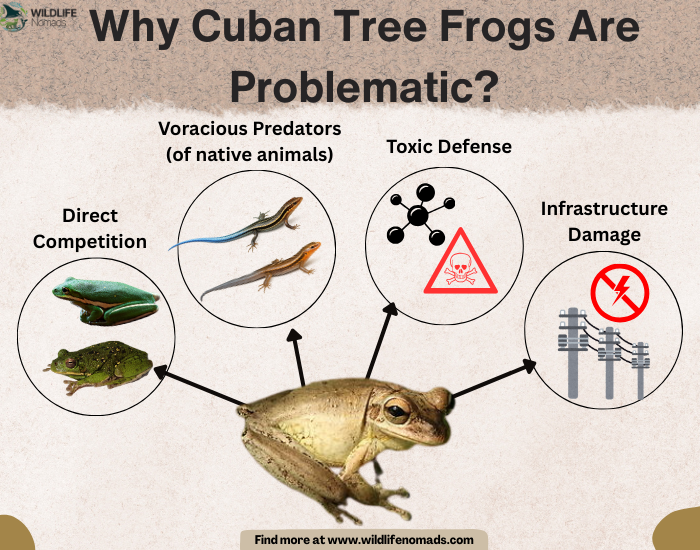
The “invasive species” label isn’t just bureaucratic jargon.Biologists have watched native tree frog populations vanish from suburban backyards within just a few years of the Cuban tree frog’s arrival.
Direct Competition: They aggressively compete with native frogs for breeding sites and food resources. Their larger size gives them a significant advantage.
Voracious Predators: Cuban treefrogs have a diverse diet. They don’t just eat insects, they eat lizards, small snakes, and even other frogs and toads. Native tree frog species like the squirrel treefrog often become meals for these invaders.
Toxic Defense: They produce noxious skin secretions that irritate human eyes and mucous membranes. These secretions also deter natural predators like pygmy rattlesnakes and predatory fish, giving them an unfair advantage over native ecosystems.
Infrastructure Damage: In urban areas, they cause costly power outages by seeking shelter in electrical transformers. Their large size allows them to bridge electrical gaps, creating short circuits.
The impact on Florida’s native treefrogs has been severe. Species that once thrived in mangrove habitats and pine rockland areas now struggle to maintain populations where Cuban treefrogs are present.
5. Understanding the Cuban Tree Frog Life Cycle
The cuban tree frog life cycle explains why controlling this alien invasive Cuban treefrog is so challenging.
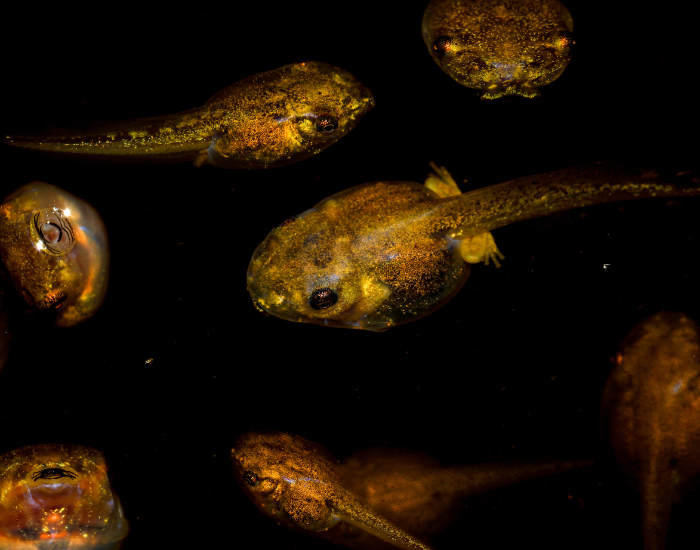
Prolific Breeding: While they prefer warm summer rains, they can breed year-round in southern Florida’s tropical climate.Females lay eggs in clutches of 75-1,000 eggs at a time, with total annual production reaching 3,000-5,000 eggs per season (up to 15,000 for very large females).
Flexible Breeding Sites: They’re not picky about where they reproduce. Any standing water works, bird baths, pool covers, water-filled plastic bags, natural ponds, or even temporary puddles in urban areas.
Rapid Development: Their tadpoles develop faster than native frog tadpoles, giving them a competitive edge. Native frog tadpoles often don’t stand a chance when competing for the same resources.
Multiple Generations: In Florida’s warm climate, they can produce multiple generations per year, accelerating their population growth dramatically.
This reproductive strategy is far more aggressive than that of poison dart frogs in their native habitats, which typically have more limited breeding seasons and smaller clutch sizes.
6. Are Cuban Tree Frogs Venomous or Dangerous?
A common question is: “Are Cuban treefrogs venomous?” Technically, no. They don’t inject venom like snakes or certain reptiles and amphibians do.
However, they are toxic to an extent. Their skin produces a mucus containing irritating compounds. This protects them from predators in their native range and in Florida.
Is it safe to touch Cuban tree frogs? It’s best to avoid bare-handed contact. If you must handle one, use gloves or a plastic bag. Never touch your eyes or mouth after handling one until you’ve washed your hands thoroughly with soap and water.
Effects on Pets: If your dog or cat tries to eat a Cuban tree frog, the noxious skin secretions can cause excessive salivation and pawing at the mouth. While rarely lethal, it’s an unpleasant experience for your pet.
For reference, while poison dart frogs from South America produce some of the most toxic compounds in the animal diversity web, Cuban tree frogs’ secretions are much milder but still deserve caution.
7. Management: What Should You Do?
If you’re in peninsular Florida or other areas where they’re invasive, the Wildlife Conservation Commission recommends humane euthanasia to protect native wildlife.
Step 1 – Proper Identification: First, ensure it’s not a native tree frog. Check for the large size, warty skin, oversized toe pads, and that distinctive fused skin on the head. Don’t confuse them with green tree frogs or other native species.
Step 2 – Humane Removal: The most accepted method involves applying benzocaine ointment (like Orajel) to the frog’s back to anesthetize it, then placing it in a sealed plastic bag in the freezer.
Step 3 – Eliminate Breeding Habitat: Remove standing water from your property. Empty bird baths regularly, dump water from potted plants, and fix any areas where water accumulates.
Step 4 – Report Sightings: Use apps to report tree frog sightings. This helps scientists track their spread and understand the full extent of amphibian declines.
Never Release Them: If someone gives you one as a pet or you catch one, never release it into natural areas! understood? This only worsens the invasion problem.

8. Native Tree Frogs of Florida: What We’re Protecting
To understand why controlling Cuban treefrogs matters, let’s look at what we’re trying to save.
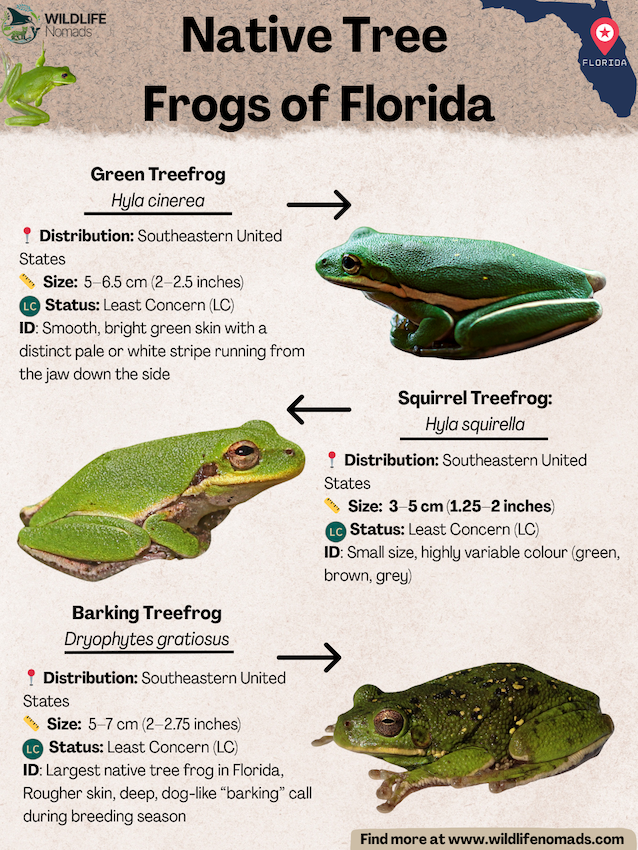
Green Treefrog (Hyla cinerea): These beautiful bright green frogs are native native to the United States (from Texas to Maryland). However, in Florida, they’re being displaced by their Cuban cousins. Green tree frogs prefer natural habitats and are important indicators of ecosystem health.
Squirrel Treefrog: A small, adaptable native that comes in various colors. They’re increasingly rare in areas with heavy Cuban treefrog presence.
Barking Treefrog: Named for its distinctive call, this species lives in pine rockland and flatwood habitats throughout the southeastern United States.
Understanding these native treefrog species helps us appreciate what’s at stake. Each plays a unique role in controlling insect populations and serving as food for native predatory animals like wading birds and other frogs.
FAQ: Your Cuban Tree Frog Questions Answered
The main differences are size and texture. Cuban tree frogs grow much larger (up to 6 inches) with distinctively warty skin. Florida’s native treefrogs rarely exceed 2.5 inches and typically have smoother skin. The fused skull skin is the definitive test.
While legal in some areas, it’s highly discouraged. The risk of escape or release is too great. If you want a pet frog, consider native to Cuba species that are bred in captivity or explore other frogs like the non-invasive species available through reputable breeders.
Yes. While most frogs concentrate in southern Florida and the Florida peninsula, isolated records exist in Georgia, Louisiana, and even as far as the Virgin Islands. Tropical weather systems occasionally transport them to new areas.
They disrupt the animal diversity web by eating native frogs, lizards, and insects that native predators depend on. This creates cascade effects throughout native ecosystems.
Generally, no. Cold winters in central North America prevent their spread northward. However, climate change may expand their potential range over time.
Conservation: Protecting Florida’s Native Wildlife
The story of the Cuban tree frog serves as a powerful reminder of how human activity reshapes ecosystems. As someone who has studied animals, I’ve seen firsthand how global amphibian decline affects biodiversity.
These frogs aren’t villains in their native Cuba, Cayman Islands, or Bahamas. There, they’re a natural part of mangrove habitats and coastal ecosystems. The problem is their presence where they don’t belong.
By taking action in our own backyards, identifying invasive species, removing breeding sites, and supporting wildlife conservation commission efforts, we can help protect native frog species and reduce amphibian declines.
The next time you hear that loud, rasping call during Florida’s warm summer rains, investigate. You might be looking at one of the most successful invaders in the amphibian world. And now you know exactly what to do about it.