Penguins are some of the most beloved birds on Earth, charismatic, comical, and surprisingly complex. If you want a quick laugh, you can check out my 20 funny facts about penguins!, but if you really want to understand how these birds conquered every environment from the Antarctic to the Equator, we have to look closer.
My obsession with penguin diversity started on a pier in Melbourne back in 2019. I was exploring Australia’s southeast coastline, waiting at dusk for the St Kilda colony to return from the sea. When those Little Blue Penguins (Eudyptula minor) finally appeared—waddling confidently past us under an orange sky, it changed how I saw the entire family. Seeing the world’s smallest penguin “in the heart of a bustling city” made me realize just how adaptable these “good little divers” truly are.
In this guide, we are looking at all 18 recognized species. We will break down where they live, the unique evolutionary “tricks” they use to survive, and the conservation threats they face in 2026.
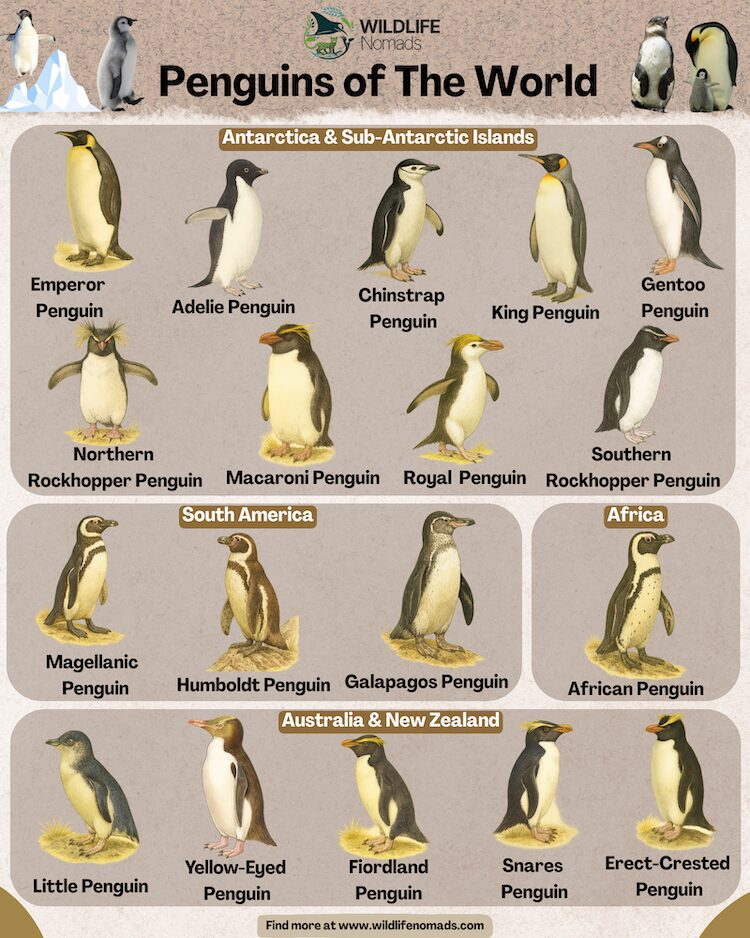
Penguin Species by Region
Antarctica & Sub-Antarctic Islands
The Southern Ocean and surrounding islands are home to the majority of penguin varieties.
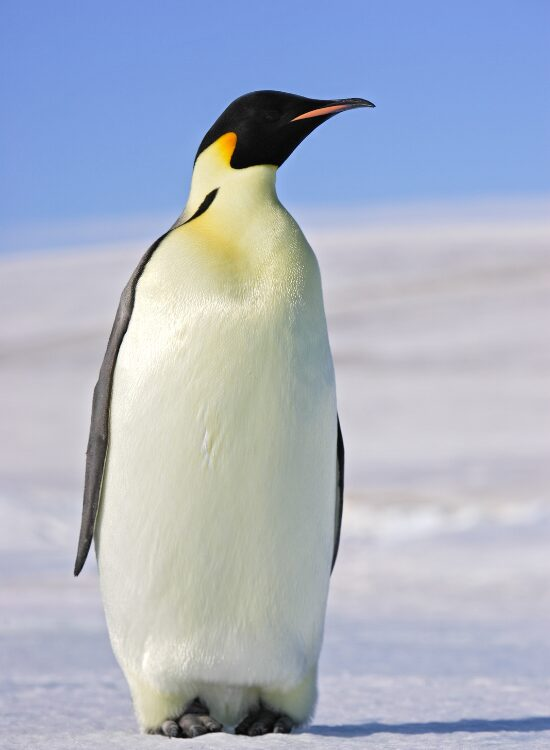
1. Emperor Penguin
The emperor penguin is the largest penguin species, standing up to 45 inches (115 cm) tall and weighing up to 45 kg. Endemic to Antarctica, these antarctic birds endure brutal winters and are famous for their long breeding cycles. Males incubate eggs on their feet for over two months without food, huddling on the sea ice in temperatures as low as -60°C.
Emperor penguin colonies depend on stable land-fast sea ice for breeding. Their estimated population has been declining faster than predicted—research shows a 22% decline near Snow Hill Island and the Antarctic Peninsula between 2009 and 2023.
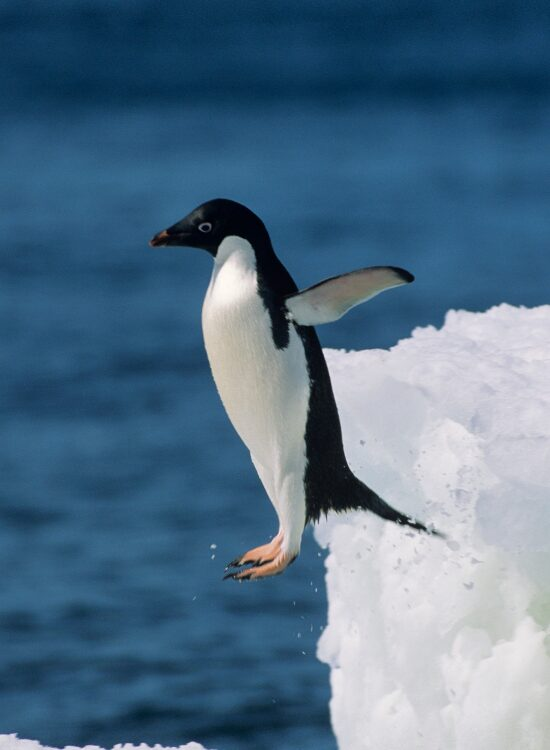
2. Adelie Penguin
Adelie penguins are small but hardy penguin species and true Antarctic natives. With their tuxedo-like plumage and feisty personalities, Adelie penguins are often seen darting across the ice or diving for krill in the frigid Southern Ocean. They breed in massive penguin colonies along the Antarctic coastline and on sub-Antarctic islands, including the South Orkney Islands.
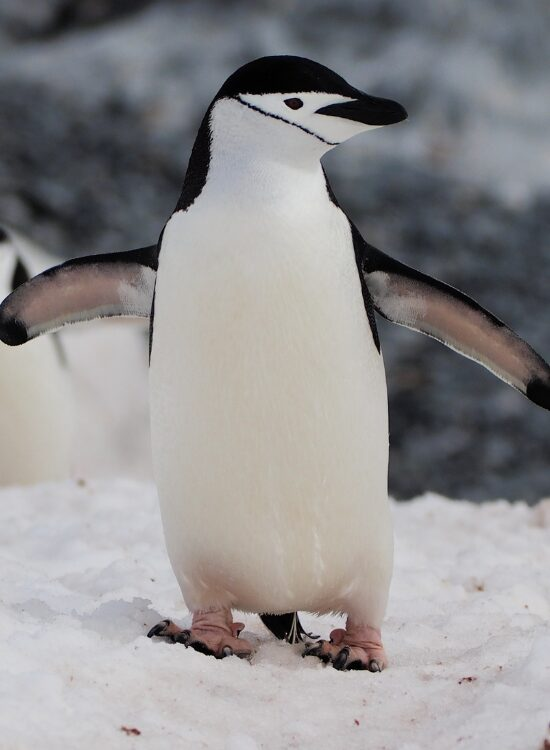
3. Chinstrap Penguin
Named for the thin black line across their chin, chinstrap penguins nest in huge colonies on rocky Antarctic islands and the Antarctic Peninsula. Chinstrap penguins are among the loudest penguin types, with an estimated 3.4 million breeding pairs across 375 colonies.
Found throughout the sub-Antarctic, particularly around the South Orkney Islands, chinstrap penguins have experienced population declines linked to shifts in krill availability. Chinstrap penguins feed mainly on Antarctic krill in the southern hemisphere.
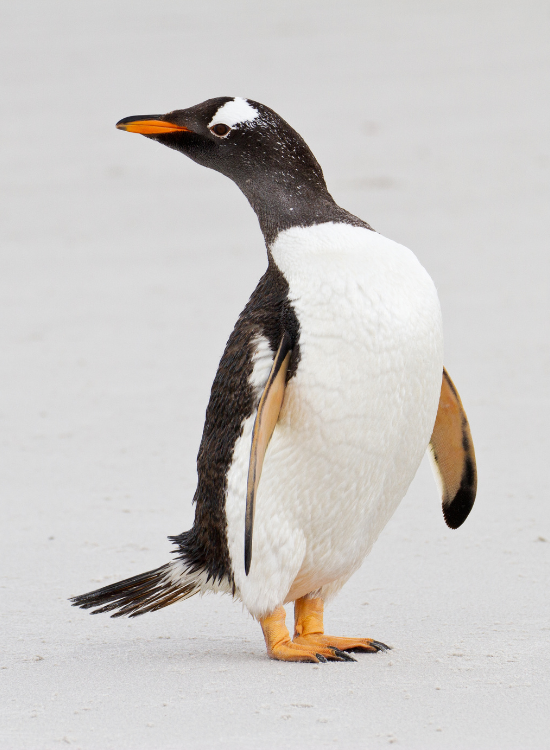
4. Gentoo Penguin
Easily recognized by their white headbands and bright orange beaks, gentoo penguins are the fastest swimmers among all penguin species, reaching up to 22 mph underwater. Gentoo penguins breed from the Antarctic Peninsula to the Falkland Islands and sub-Antarctic islands like South Georgia.
With an estimated population of around 774,000 individuals, gentoo penguins are listed as Near Threatened. Unlike most other penguin species, gentoo penguins have adapted well to changing conditions. Gentoo penguins feed on a varied diet of fish and squid, and some gentoo penguin colonies have actually grown in recent years.
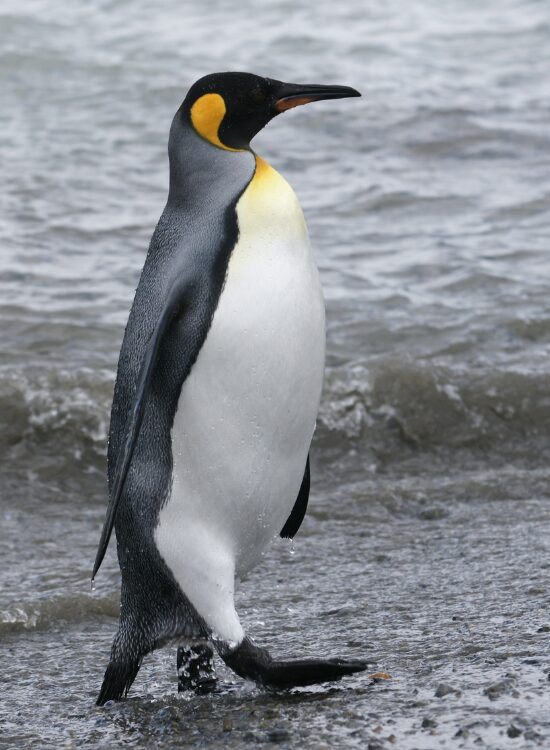
5. King Penguin
The king penguin is the second largest penguin species, standing up to 95 cm tall with striking golden-orange neck patches. King penguins breed on sub-Antarctic islands like South Georgia, the Falkland Islands, and Macquarie Island, preferring a more temperate climate than their Antarctic cousins.
With an estimated population of 2.2 million breeding pairs, king penguins are listed as Least Concern. King penguins have one of the longest breeding cycles of any bird—over 14 months per chick—and dive to 300+ metres for lanternfish. Their penguin colonies on the Falkland Islands are among the most spectacular wildlife gatherings in the southern hemisphere.
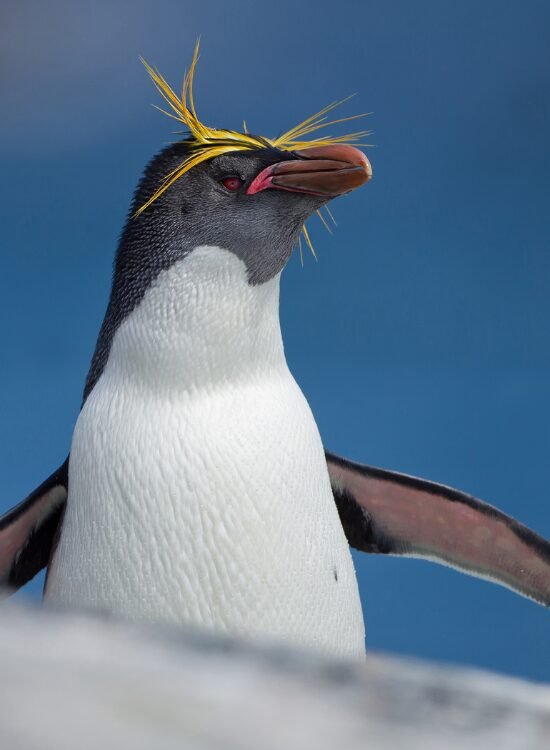
6. Macaroni Penguin
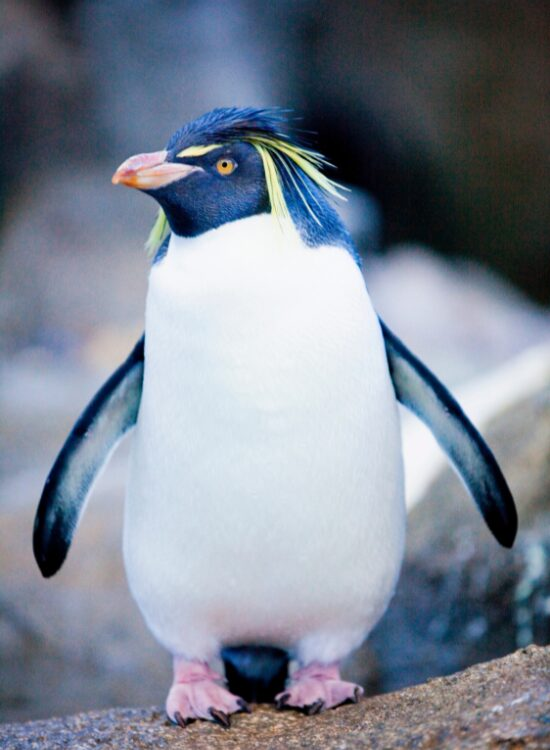
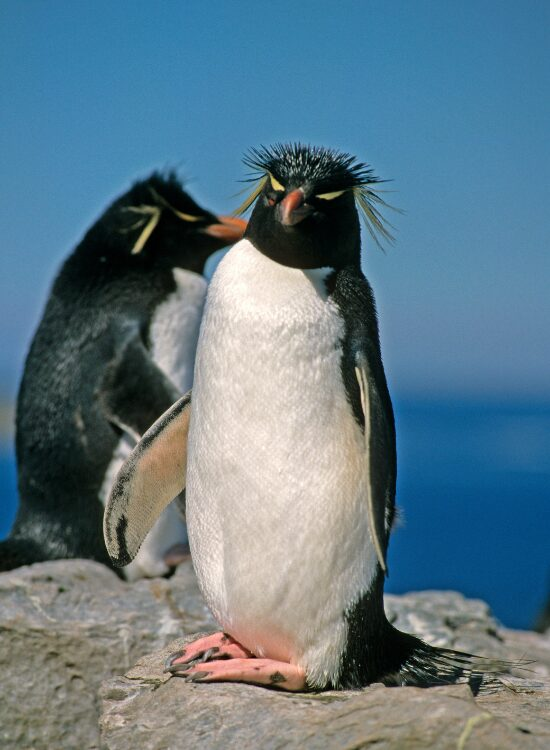
This punk-rock penguin species sports bold yellow crests and nests in enormous colonies across sub-Antarctic islands. Macaroni penguins are the most abundant penguin species in the world, with an estimated population of 18 to 24 million breeding individuals. Despite this, macaroni penguins are Vulnerable because their population has declined since the mid-1970s.
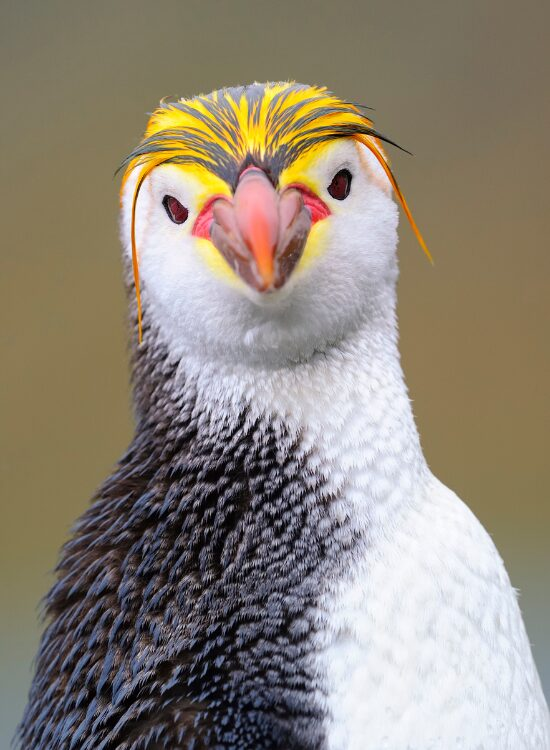
7. Royal Penguin
Closely related to the macaroni penguin, royal penguins also have golden crests but breed only on Macquarie Island south of New Zealand—one of the most range-restricted penguin species. Their estimated population is around 750,000 breeding pairs, and royal penguins are classified as Near Threatened.
Once hunted for oil, royal penguins have since recovered but now face threats from climate change. During the non-breeding season, royal penguins disperse across the Southern Ocean.
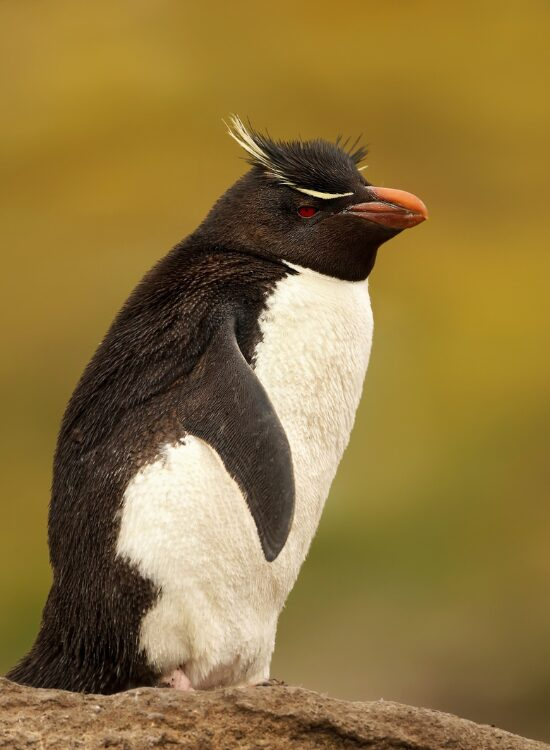
8. Southern Rockhopper Penguin
These penguins are small, spiky-feathered penguins known for their acrobatic climbing—they use strong claws to scale steep rocky cliffs to reach nesting sites. Southern rockhopper penguins breed across the Falkland Islands, South America’s Tierra del Fuego, and several sub-Antarctic islands.
9. Northern Rockhopper Penguin
Found around Tristan da Cunha and Amsterdam Island in the southern hemisphere, the northern rockhopper penguin has longer crest feathers and a more limited range than its southern cousin. Northern rockhopper penguins are classified as Endangered, having suffered a devastating 90% population decline since the 1950s.
South America
Several penguin species make their homes along the southern coasts of South America, from Argentina and Chile to the Pacific shores of Peru.
10. Magellanic Penguin
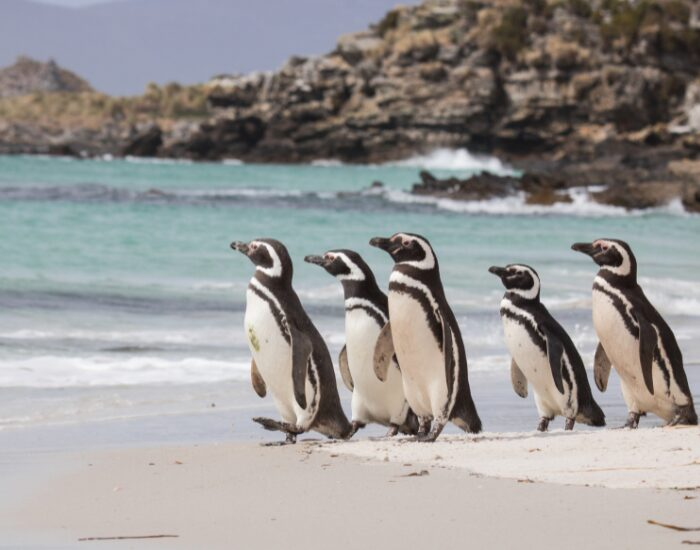
Named after explorer Ferdinand Magellan, magellanic penguins nest in burrows along the coasts of Argentina, Chile, and the Falkland Islands. Magellanic penguins are one of the most widespread penguin species in South America, with an estimated 1.1 to 1.6 million breeding pairs.
Magellanic penguins migrate thousands of kilometres north along South America and face threats from oil spills and fishing nets. The largest magellanic penguin colony at Punta Tombo in Argentina hosts over 200,000 breeding pairs.
11. Humboldt Penguin
Named for the cold Humboldt Current along the Pacific coast of South America, humboldt penguins live along the shores of Chile and Peru. With an estimated population of only 23,800 mature individuals, humboldt penguins are classified as Vulnerable and declining.
12. Galápagos Penguin
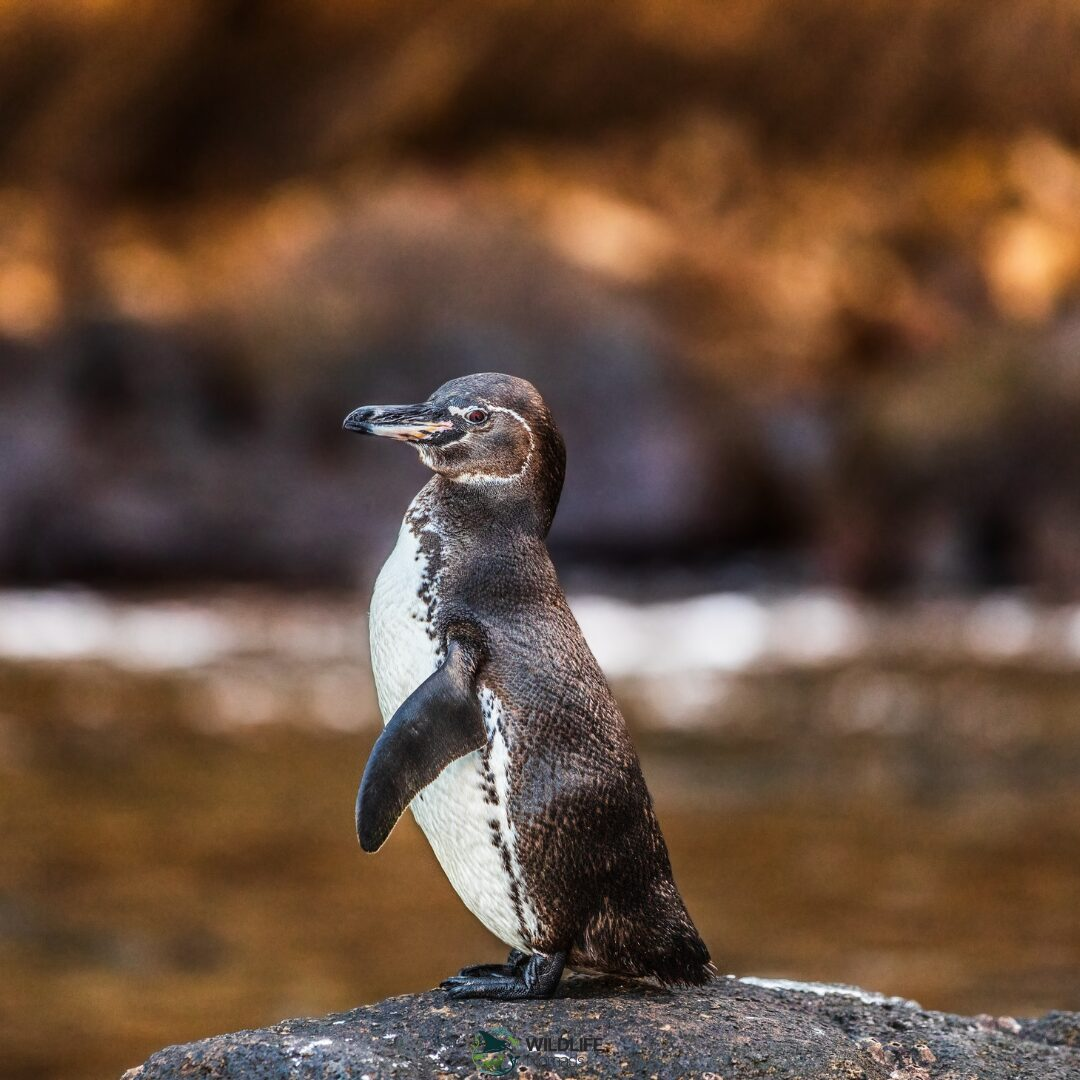
The Galápagos penguin is the only penguin species found north of the equator. Living on volcanic shores, the Galápagos penguin has evolved to survive warm tropical conditions, cooling itself by panting, seeking shade, and spreading its flippers.
With an estimated population of only 1,200 individuals, the Galápagos penguin is one of the rarest penguin species in the world and is classified as Endangered. The Galápagos penguin is the only species of penguin that can breed year-round, but their tiny population makes every season critical.
Africa
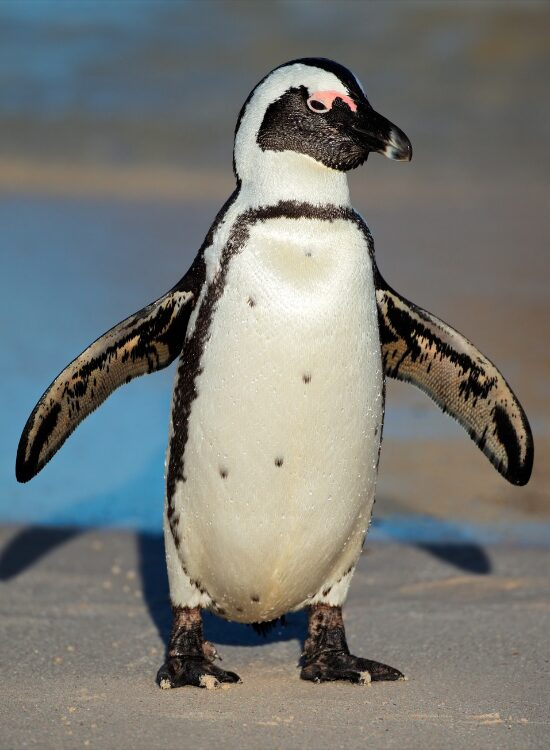
13. African Penguin
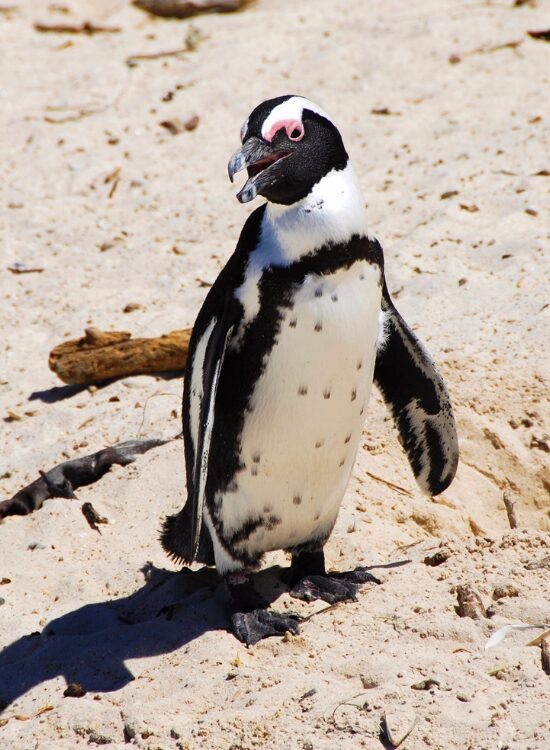
Also known as the jackass penguin for its braying call, the African penguin lives along the coast of southern Africa. African penguins are one of the most endangered types of penguin, their estimated population has plummeted from four million individuals 200 years ago to fewer than 20,000 mature individuals today.
Reclassified as Critically Endangered in 2024, African penguins face threats from overfishing, oil spills, and habitat destruction. Conservation programs including captive breeding are working to save African penguin colonies.
Australia & New Zealand
14. Little Penguin
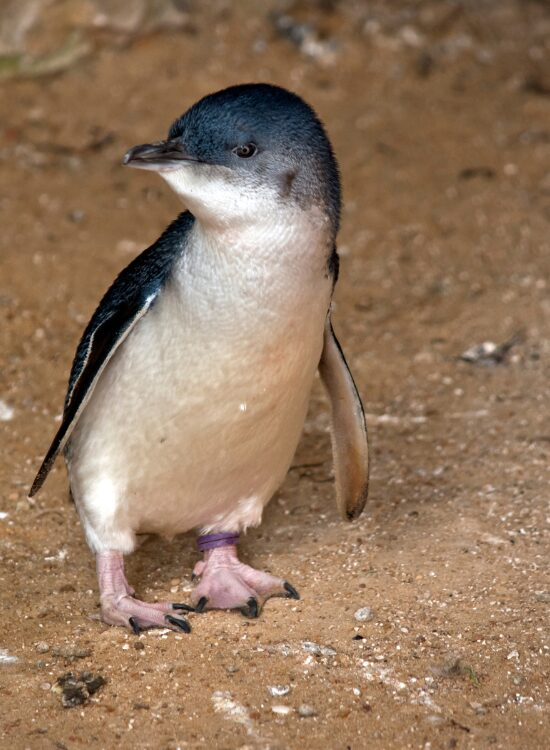
The little penguins, or also known as fairy penguins, they are the smallest species at just 13 inches tall. They live in colonies along Australia’s and New Zealand’s southern coasts. Nocturnal and shy, they return to shore after dark in a famous “penguin parade.”
The little penguin’s slate-blue plumage is why they’re also called blue penguins—the only penguin with blue rather than black feathers. The fairy penguin colony at Phillip Island attracts over a million visitors yearly. Little penguin colonies stretch from Perth to New Zealand’s South Island.
15. Yellow-Eyed Penguin
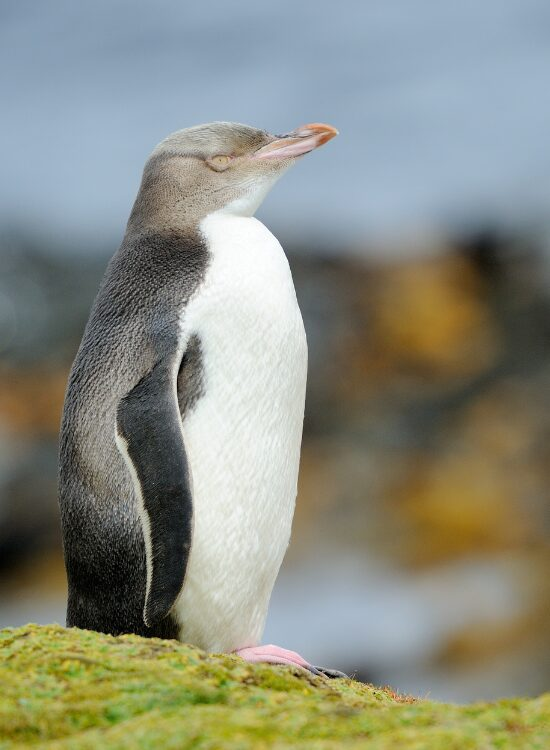
Found only in New Zealand, the yellow-eyed penguin is one of the rarest penguin species in the world, with an estimated population of fewer than 4,000 individuals. Yellow-eyed penguins have distinctive pale yellow eyes and a yellow headband.
Unlike most other penguin species, yellow-eyed penguins are solitary nesters in coastal forests on New Zealand’s South Island and sub-Antarctic islands. Classified as Endangered, yellow-eyed penguins are threatened by introduced predators, disease, and habitat degradation.
16. Fiordland Penguin
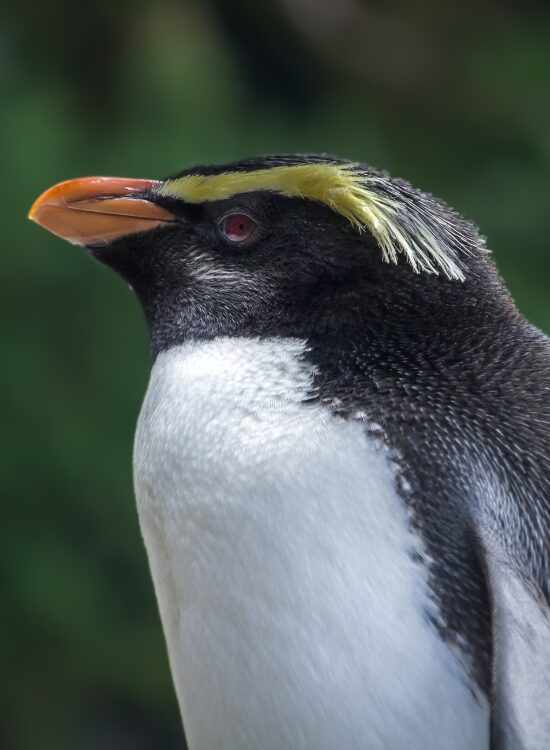
Native to New Zealand’s southwestern coast, the Fiordland penguin is one of the shyest penguin species. Fiordland penguins stand about 24 inches tall with thick yellow eyebrow crests that distinguish them from other crested penguins.
With an estimated population of only 2,500 to 3,000 breeding pairs, Fiordland penguins are classified as Near Threatened. They nest in caves and dense vegetation, one of the few penguin species that breed in temperate rainforest on New Zealand’s South Island.
17. Snares Penguin
Snares penguins live only on the Snares Islands, sub-Antarctic islands about 200 km south of New Zealand’s South Island. With their thick crests and aggressive personality, Snares penguins are a standout among regional penguin varieties.
The Snares penguin is the only species restricted to these islands, with an estimated population of 25,000 breeding pairs. Classified as Vulnerable due to their limited range, Snares penguins are crested penguins related to Fiordland penguins and erect-crested penguins.
18. Erect-Crested Penguin
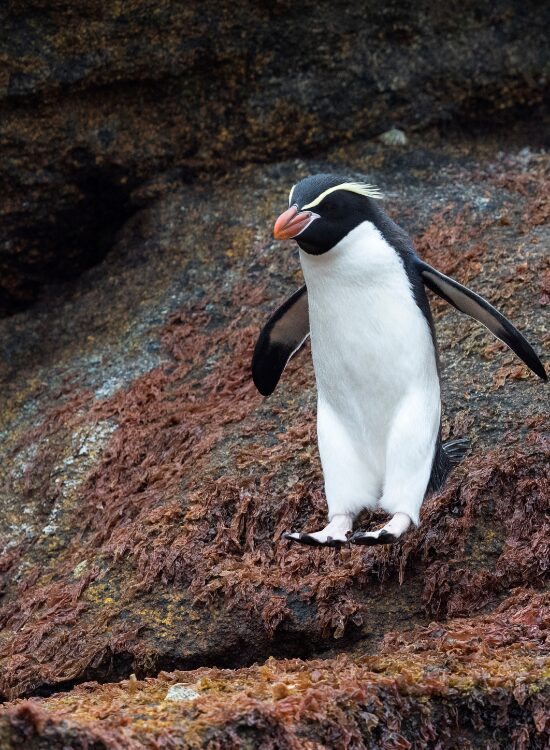
Found only on the Bounty and Antipodes Islands southeast of New Zealand, the erect-crested penguin is one of the least studied penguin species due to its remote habitat. Erect-crested penguins are named for their distinctive upright yellow crests, which they can raise and lower.
With an estimated population of 150,000 individuals, erect-crested penguins are classified as Endangered, with substantial declines during the late 20th century. They are part of the crested penguin group alongside royal penguins in the New Zealand sub-Antarctic
Penguins in Pop Culture and Media
Penguins have become pop culture icons. In the Netflix series Atypical, four penguin types—emperor penguin, chinstrap, Adelie, and gentoo penguins, are referenced as symbols of resilience. Happy Feet featured the emperor penguin as its star, while Penguins of Madagascar turned rockhopper penguins into covert agents. Documentaries like March of the Penguins and Dynasties have educated millions about life on the Antarctic continent.
Despite their fame, many penguin species shown in film face real threats. Entertainment can be an entry point for raising awareness about conservation across the southern hemisphere.
How Penguins Survive the Southern Hemisphere
Living entirely in the southern hemisphere, penguin species have adapted to conditions ranging from blizzards on the Antarctic Peninsula to volcanic shores in the Galápagos. The Galápagos penguin cools itself by panting, while the emperor penguin breeds on sea ice in sub-zero conditions with dense feathers and thick fat for insulation.
In South America, species like the magellanic penguin and humboldt penguin depend on cold ocean currents, while the little penguin on New Zealand’s South Island relies on nocturnal habits. Every species of penguin, from king penguins of the Falkland Islands to erect-crested penguins of the Antipodes, displays an evolutionary masterpiece of survival.
Evolution and Adaptations of Penguin Species
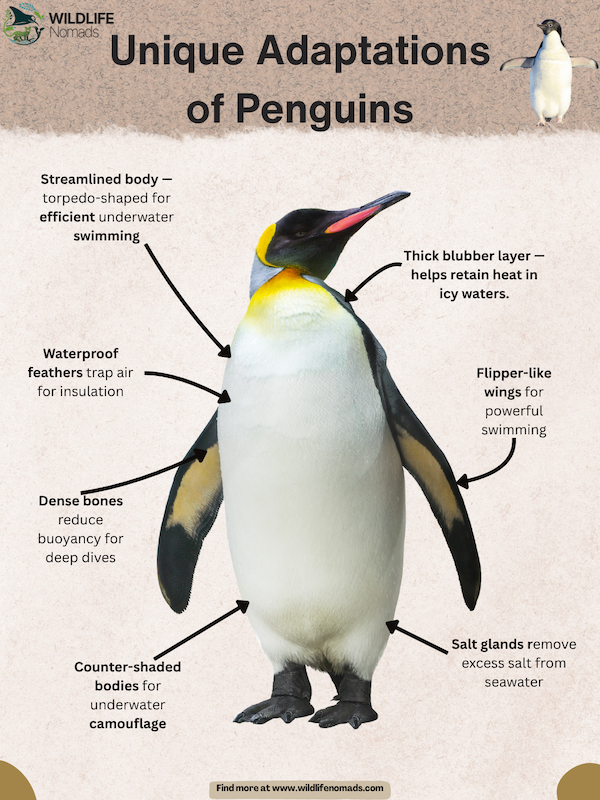
Penguins evolved from ancient seabirds over 60 million years ago. Over time, wings transformed into flippers, enabling incredible underwater agility. Most penguin colonies today are coastal, providing quick access to the ocean for hunting fish, squid, and krill.
Unique traits include:
- Counter-shaded bodies for underwater camouflage
- Salt glands that remove excess salt from seawater
- Dense bone structure that reduces buoyancy
Species like the Fiordland penguin, found in the dense forests of New Zealand’s South Island, still retain some of the ancestral nesting habits, hiding in caves or under vegetation rather than open beaches. The diversity of penguin species is a living testament to evolution’s creativity.
Common Penguin Questions Answered
There are 18 confirmed penguin species alive today, though some sources previously listed 17. The northern and southern rockhopper penguins are now considered distinct species.
Both the king penguin and royal penguin fit this description, with the royal being rarer and limited to one breeding island.
The star of Happy Feet is a young emperor penguin named Mumble. Emperor penguins are known for their long breeding cycles and stoic endurance.
The yellow-eyed penguin and the Galápagos penguin are among the rarest, with populations declining due to habitat degradation and climate change.
Yes! Fossils from prehistoric times reveal that a now-extinct species called Kumimanu biceae may have stood nearly 6 feet tall and weighed over 200 pounds.
No. Puffins may look similar, but they are auks, not penguins, and they live in the Northern Hemisphere. Penguins are found only in the Southern Hemisphere.
Estimates vary by species, but globally there are likely between 30–50 million penguins. However, some species number in the hundreds and are at risk of extinction.
Penguin Conservation: A Global Challenge
Many species of penguins are under threat due to rising ocean temperatures, overfishing, habitat destruction, and pollution. Organizations like the World Wildlife Fund (WWF) and Global Penguin Society are actively working to protect penguin habitats and advocate for sustainable practices across the southern hemisphere.
Conservation successes include marine protected areas in the Southern Ocean and captive breeding for endangered penguin breeds like the African penguin and yellow-eyed penguin. However, climate change remains the biggest threat, emperor penguin populations are declining twice as fast as predicted, and the loss of sea ice threatens penguin colonies across the Antarctic continent.
Each of the 18 species of penguins has its own story, challenges, and role in our planet’s biodiversity. Whether it’s the emperor penguin trudging through Antarctic winds, the tiny little penguin parading at dusk, or the Galápagos penguin near the equator, every one of these penguin types deserves our protection.
Ready to see penguins in Australia and New Zealand?
This blog is reader-supported. When you buy experiences through links listed on this site, we may earn an affiliate commission.
References:
BirdLife International. (2020). Spheniscus mendiculus. The IUCN Red List of Threatened Species 2020: e.T22697825A182729677. https://dx.doi.org/10.2305/IUCN.UK.2020-3.RLTS.T22697825A182729677.en. Accessed on 03 April 2026.
Clucas, G. V., Dunn, M. J., Dyke, G., Emslie, S. D., Levy, H., Naveen, R., & Hart, T. (2020). Divergent trophic responses of sympatric penguin species to historic anthropogenic exploitation and recent climate change. Proceedings of the National Academy of Sciences, 117(22), 12121–12126. https://doi.org/10.1073/pnas.1913093116
Hao, Z., Yin, B., Prapamonthon, P., & Yang, G. (2023). Hydrodynamic performance of a penguin wing: Effect of feathering and flapping. Physics of Fluids, 35(6), Article 061907. https://doi.org/10.1063/5.0147776
LaRue, M. A., Kooyman, G., Lynch, H. J., & Fretwell, P. (2014). Emigration in emperor penguins: Implications for interpretation of long-term studies. Ecography, 37(12), 1142–1145. https://doi.org/10.1111/ecog.00990
Trivelpiece, W. Z., Hinke, J. T., Miller, A. K., Reiss, C. S., Trivelpiece, S. G., & Watters, G. M. (2011). Variability in krill biomass links harvesting and climate warming to penguin population changes in Antarctica. Proceedings of the National Academy of Sciences, 108(18), 7625–7628. https://doi.org/10.1073/pnas.1016560108