Chinstrap Penguins: Everything You Need to Know About These Survivors
Chinstrap penguins don't get nearly enough credit. They're aggressive, fiercely loyal, and somehow thriving on one of the most inhospitable coastlines on Earth. But their numbers are quietly dropping — and most people have no idea.
When it comes to Antarctic seabirds, few species command as much attention as the penguin, and among these, the chinstrap penguin (Pygoscelis antarcticus) is a standout. While they might not share the global fame of the towering Emperor penguin or the iconic Little Blue penguin that I saw in Australia, these spirited birds are arguably the most fascinating of the bunch. Compact, incredibly aggressive, and engineered to thrive in one of Earth’s harshest environments, they deserve far more spotlight than they get.
These types of birds are often overshadowed by their famous cousins, but the chinstrap is a true master of its domain. Whether they are navigating treacherous Southern Ocean swells or managing massive, noisy nesting colonies, their resilience is unmatched. Here are 10 facts about the remarkable chinstrap penguin that might just change how you see this incredible species.
Here are 10 facts about the remarkable chinstrap penguin that might just change how you see this incredible species.
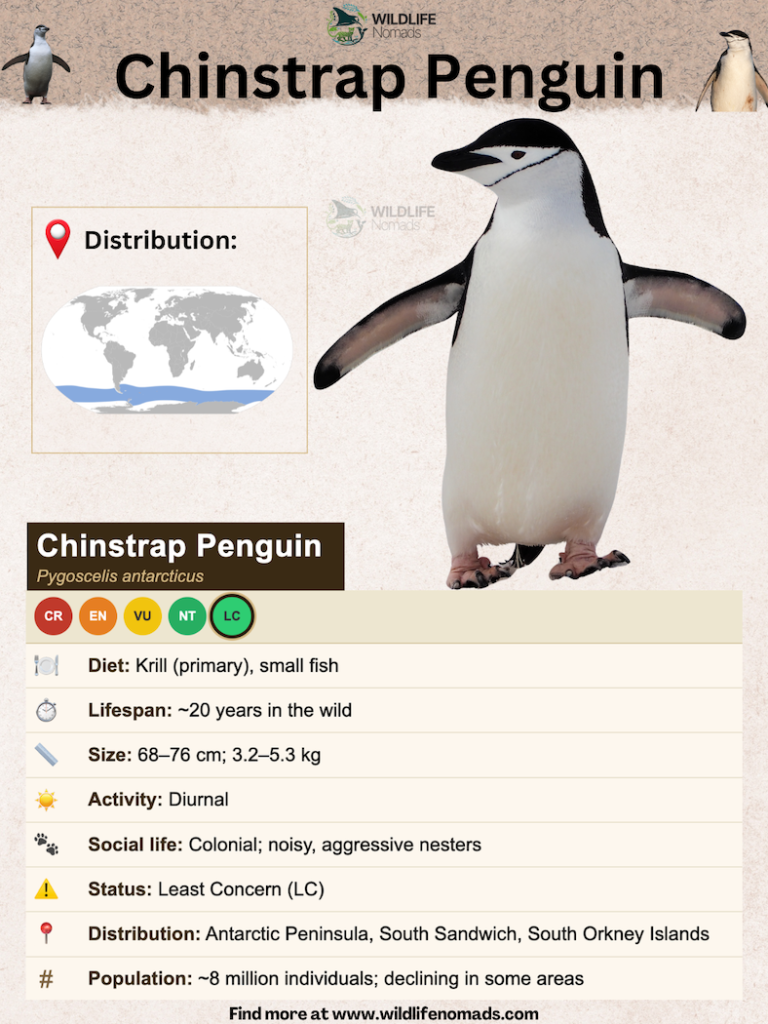
Antarctic Krill (Euphausia superba), small fish, squid
Key Identification
Narrow black line under the chin, white face
Distribution
Antarctic Peninsula, South Georgia, South Sandwich Islands
Breeding Season
November to March (Austral Summer)
Lifespan
15–20 years in the wild
Chinstrap Penguin | By Wildlife nomads
1. That Iconic Black Stripe Is Actually a Helmet Strap
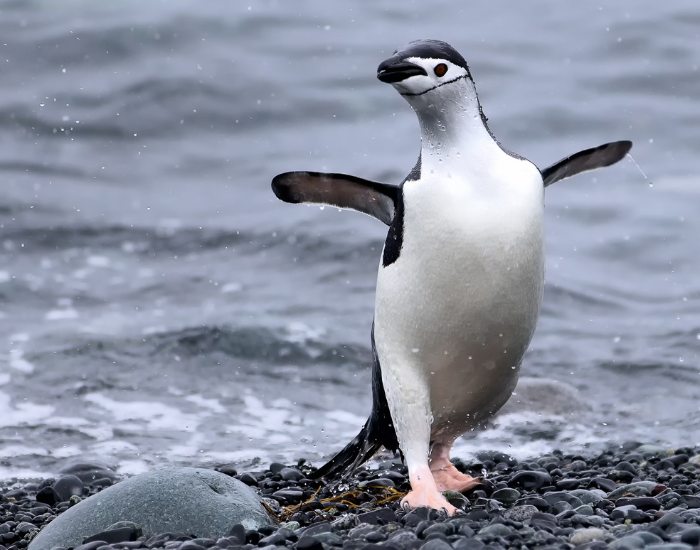
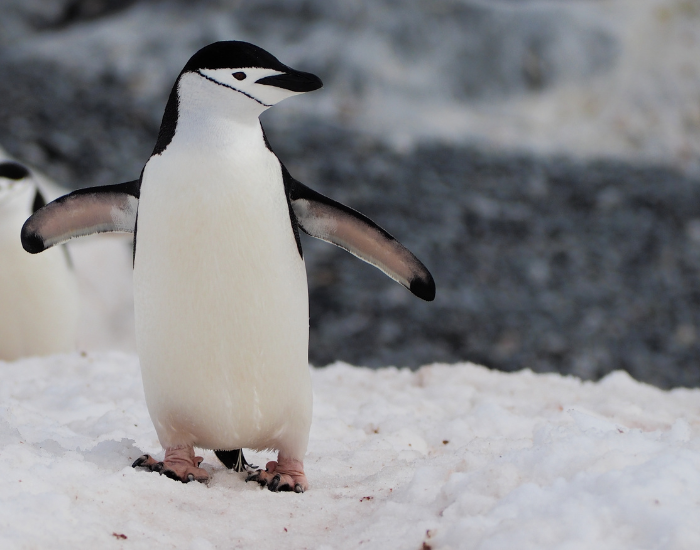
The chinstrap penguin gets its name from the narrow black band that runs under its chin, making it look exactly like a soldier wearing a helmet strap. This narrow black band is often referred to as a ‘band of black’ that runs beneath the chin, serving as a key identification trait. In fact, alternative common names, ringed penguin, bearded penguin, and stonecracker penguin, all nod to different features of this distinctive bird.
Their plumage follows the classic penguin contrast: black back, white front, pink legs. Chinstrap penguins have pink feet with distinctive black soles, a key identification feature. This countershading provides camouflage in the water. From above, a predator sees black against the dark ocean floor. From below, white blends with the sunlit surface. It’s elegant and effective.
Chinstrap penguins are medium-sized, standing 28 to 30 inches (68–76 cm) tall and weighing 7 to 13 pounds (3.2–5.3 kg). Males are slightly heavier than females, though it takes a trained eye to tell them apart in the field.
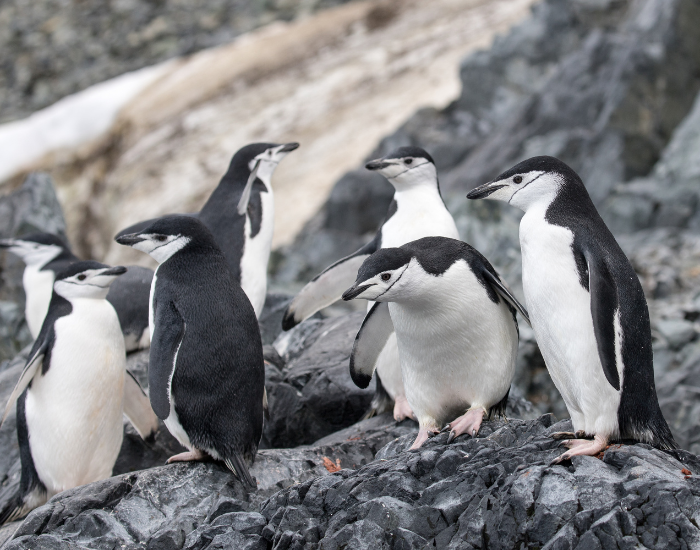
They get their name from the narrow black band that runs under its chin | Photo by Michel Viard
2. Chinstrap Penguins Live on Some of the World’s Most Rugged Islands
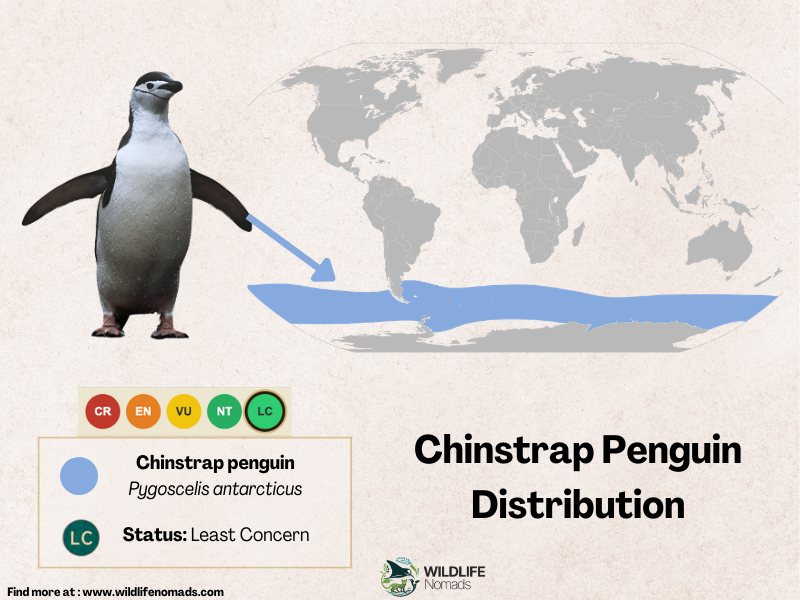
Chinstrap penguins live across the Antarctic and sub-Antarctic, with a circumpolar distribution spanning several island groups. Their core breeding range includes the Antarctic Peninsula, the South Shetland Islands, the South Sandwich Islands, and the South Orkney Islands.
The largest known colony on Earth sits on Zavodovski Island in the South Sandwich Islands, home to an estimated several million birds. A small population also breeds near New Zealand, in the Balleny Islands.
These birds show a strong preference for ice-free, rocky slopes, often on steep, exposed cliff faces. It’s a bold habitat choice. However, those elevated positions offer excellent drainage during snowmelt and quick access to the sea. Chinstrap penguins are, in short, natural mountaineers.
Chinstrap penguins distribution map | Map: Wikimedia Commons, edited By Wildlife Nomads
3. They Are Krill Specialists… and That’s Their Vulnerability
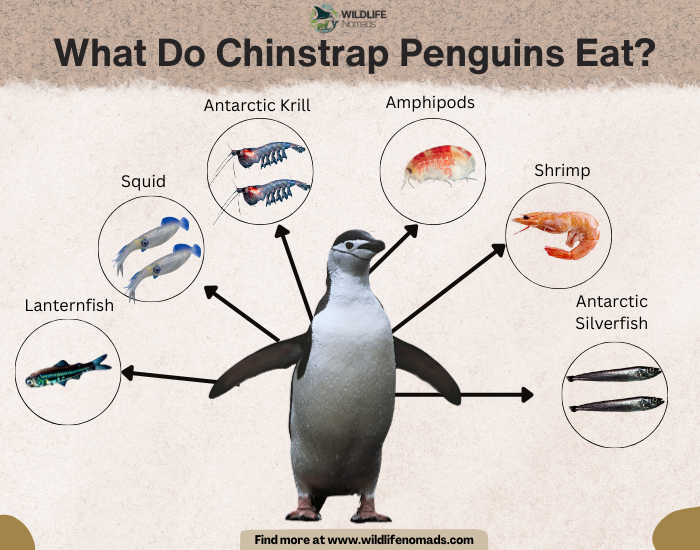
The chinstrap penguin diet is almost entirely built around one organism: Antarctic krill (Euphausia superba). During the breeding season, krill makes up an estimated 90–99% of their diet. They supplement with small fish, squid, and other crustaceans when krill is scarce.
To find food, chinstrap penguins travel up to 80 km offshore each day. They are pursuit-divers capable of reaching depths of 70 m, though most dives stay shallower than 45 m and last just 20–30 seconds. They can swim at speeds up to 30 km/h, making them impressive athletes in the water.
This near-total reliance on krill means that anything threatening krill populations directly threatens chinstrap penguins. That fact, as we’ll see later, is deeply concerning.
Chinstrap Penguin Diet | By Wildlife Nomads
4. They Build Stone Nests and Share Parenting Duties Equally
Breeding begins in October and November, when chinstrap penguins return to the same nesting sites they used the year before. Males typically arrive about five days ahead of females to reclaim and rebuild the nest, a shallow, circular structure made from small stones and occasionally bones.
Females lay two eggs in late November. Both parents share incubation in shifts of roughly six days each. The eggs hatch after 31–39 days. Unlike many bird species, chinstrap penguins work to raise both chicks equally, not just the strongest one.
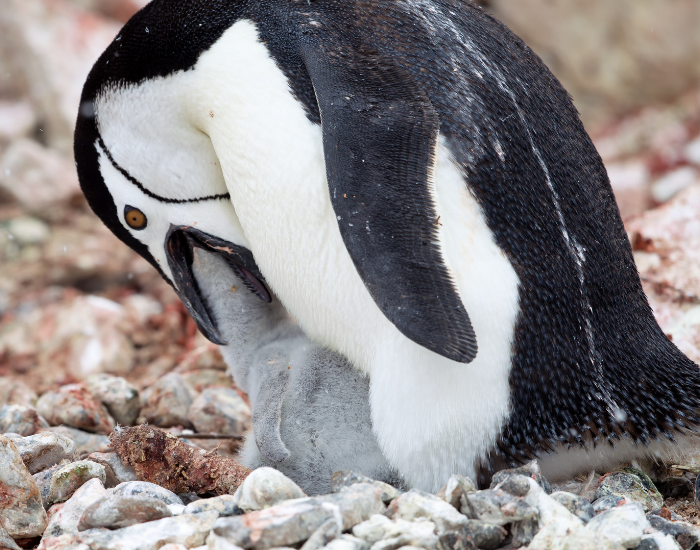
The chicks hatch covered in fluffy grey down and grow rapidly on a high-protein diet delivered by both parents.
Males typically arrive before females to reclaim and rebuild the nest | Source: Getty Images
5. Chinstrap Penguin Chicks Join a “Crèche” for Safety
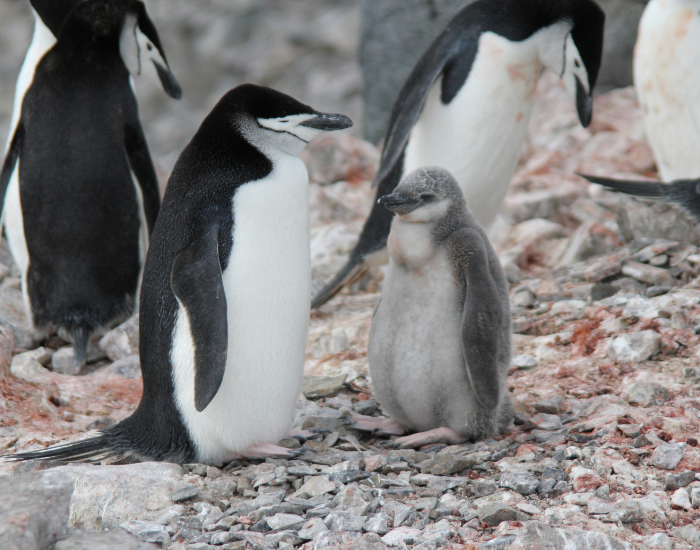
After around 20–30 days in the nest, chinstrap penguin chicks leave and join a crèche, a communal huddle of young birds that provides warmth and protection in numbers. This system allows both parents to forage at sea simultaneously, maximizing the food supply during critical growth stages.
At around 50–60 days old, the chicks undergo their first moult, shedding their grey down and gaining their adult black-and-white plumage. Chinstrap penguin chicks fledge between 48 and 59 days of age, leaving the nest and heading to sea for the first time as independent seabirds. In the wild, chinstrap penguins typically live for 15 to 20 years, a solid lifespan for a bird operating in such an extreme environment.
After around 20–30 days in the nest, chinstrap penguin chicks leave | Photo by cleo Anne
6. Their Main Predators Are Leopard Seals and Skuas
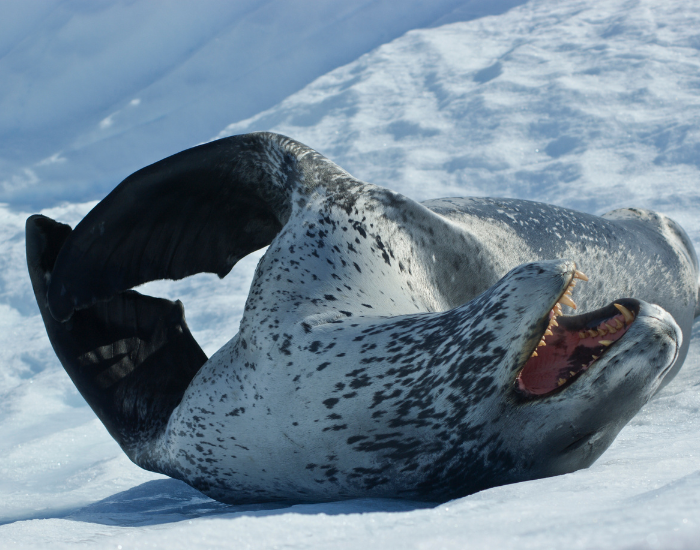
At sea, the primary predators of chinstrap penguins are leopard seals (Hydrurga leptonyx) and orcas. These ambush hunters patrol near popular landing sites, waiting patiently for their moment. Leopard seals are estimated to reduce some chinstrap populations by 5–20% annually, a significant pressure on top of other threats.
Orcas also prey on many types of penguins at sea. On land, the story is different. Brown skuas (Stercorarius antarcticus) are key predators of eggs and chicks, while south polar skuas and southern giant petrels circle colonies relentlessly, targeting unattended eggs and vulnerable chicks. Snowy sheathbills — opportunistic scavengers — add to the pressure by distracting feeding adults and stealing regurgitated krill from chicks, as well as preying on eggs and chick regurgitations.
It is a constant, exhausting vigil for parent birds from the moment the eggs are laid. Chinstrap penguins defend their chicks from aerial attacks by vocalizing and slapping predators with their rigid flippers.
Leopard Seal | Source: Getty Images
7. Chinstraps Are the Most Aggressive Penguin Species
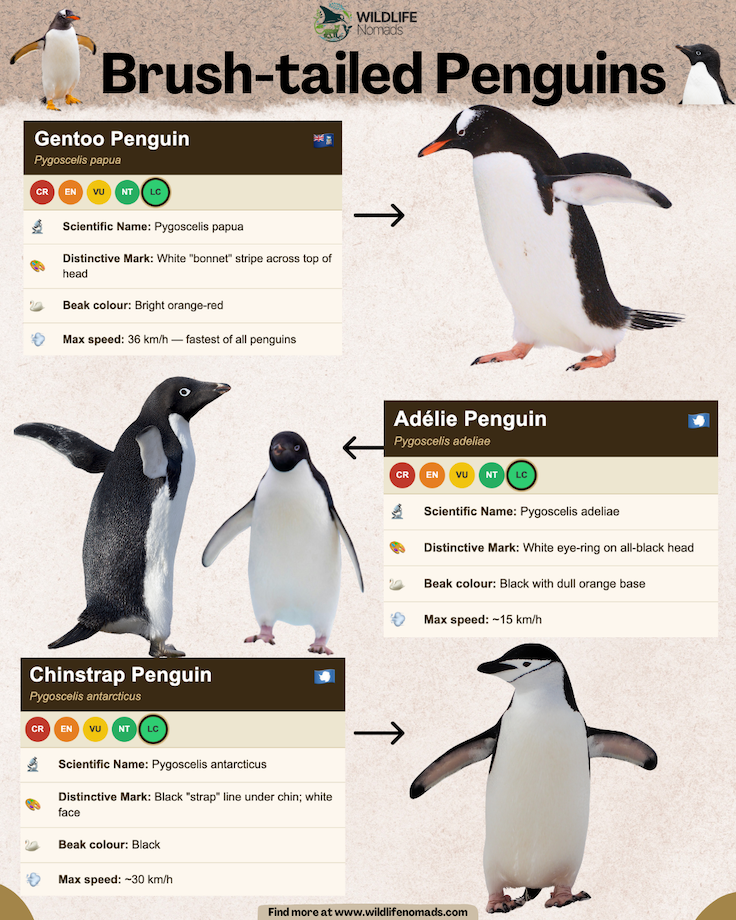
Among the three closely related “brush-tailed” penguins in the genus Pygoscelis, the chinstrap is widely considered the most aggressive. Chinstrap penguins are known for their social behavior and often breed in large, noisy colonies. Their personality matches their habitat, bold, confrontational, and uncompromising.
Comparing the three species highlights key ecological differences:
Chinstrap penguins occupy rugged, exposed rocky slopes. They are krill specialists, highly aggressive, and ice-avoiding (pagophobic). Chinstrap penguins are known as one of the most aggressive penguin species, often attacking intruders to defend their breeding territory. Compared to other penguins, chinstraps display more intense aggression within their colonies, which can affect social interactions and breeding dynamics.
Gentoo penguins are more adaptable, forage in lower-energy habitats, and have a more varied diet. Their populations are currently increasing in many areas.
Adélie penguins are the true ice-lovers, depending on sea ice access for feeding. They are classified as pagophilic.
These niche differences matter enormously as the Antarctic ecosystem responds to climate change. In a warming world, generalists like the Gentoo are thriving. Specialists like the Chinstrap are struggling.
Brush-tailed Penguins | By Wildlife Nomads
8. Their Colonies Are in Serious Decline
Despite their conservation status being classified as “Least Concern” on the IUCN Red List, chinstrap penguin populations are declining across much of their range. Although their conservation status reflects a relatively lower risk of extinction, recent trends show their population is decreasing. A 2020 global population assessment published in Scientific Reports estimated approximately 3.42 million breeding pairs across 375 colonies worldwide — considerably lower than older estimates.
On Elephant Island, a key breeding ground, surveys found that populations had dropped by more than 50% compared to counts taken in 1971. One colony — known as Chinstrap Camp — declined by 77% over roughly 50 years.
Across the Antarctic Peninsula and South Orkney Islands, which hold around 60% of the global population, studies show that 62% of monitored colonies have decreased. Many have fallen by over 50%. These are not minor fluctuations. They are persistent, widespread, and alarming trends.
Studies show that 62% of monitored colonies have decreased | Photo by Ken Griffiths
9. Climate Change and Krill Fishing Are the Twin Threats
The two biggest threats to chinstrap penguins are closely linked: climate change and commercial krill fishing.
Antarctic krill depend on winter sea ice to complete their life cycle. Krill larvae graze on algae growing on the underside of sea ice. As climate warming reduces sea ice cover — down roughly 40% over the last 30 years on the western Antarctic Peninsula — krill recruitment falls. Less krill means less food for the most krill-dependent species, including the chinstrap.
Commercial krill fishing compounds this problem. Research shows that concentrated krill fishing near penguin breeding colonies, particularly during years with warm winters and low sea ice, is associated with population declines in the following breeding season. Chinstrap penguins, as near-exclusive krill consumers, are particularly exposed.
The solution isn’t simple. However, strengthening Marine Protected Areas (MPAs) in the Southern Ocean and reforming krill fishery management through the Commission for the Conservation of Antarctic Marine Living Resources (CCAMLR) are key conservation priorities.
Climate change is threatening them | Source: Getty Images
10. They Are One of the World’s Most Fascinating Indicator Species
Beyond their ecological role, chinstrap penguins function as a living barometer of Southern Ocean health. When their populations shift, the data reflects changes happening at every level of the food web, from phytoplankton blooms to krill swarms to apex predators.
Interestingly, research has revealed that chinstrap penguins accumulate over 11 hours of sleep per hemisphere daily, but in microsleep bursts of just 4 seconds, taken over 10,000 times a day. It’s an extraordinary adaptation for an animal that must remain alert to predators while still getting the rest it needs.
These birds also mate for life in many cases, returning to the same partner and the same nest site year after year. Their loyalty is as impressive as their resilience.
They function as a living barometer of Southern Ocean health! | photo by Michel Viard
When to See Chinstrap Penguins in the Wild
The best time to visit a chinstrap penguin colony is between December and February. During this window, chicks are in the crèche stage and activity across the colony is at its peak. The South Shetland Islands, accessible from Ushuaia, Argentina, offer some of the most spectacular wildlife viewing on the planet.
Always follow Antarctic visitor guidelines. Keep a minimum distance of 5 metres from wildlife, never approach nesting birds, and follow the guidance of your expedition operator. These animals face enough pressure without human interference adding to it.
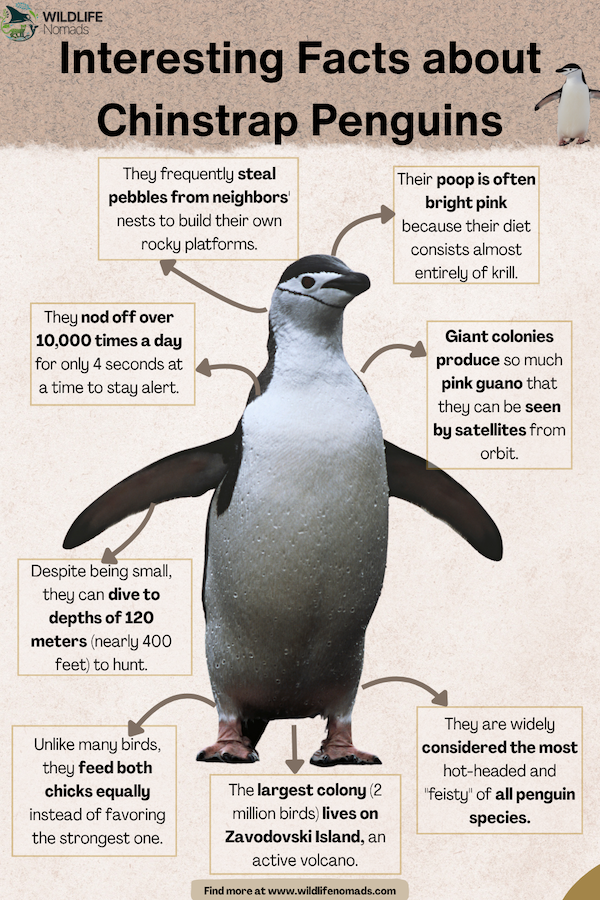
Interesting Facts about Chinstrap Penguins | Credit: Wildlife Nomads
FAQs about Chinstrap Penguins
How many chinstrap penguins are left in the world?
The most recent global estimate places the population at approximately 3.42 million breeding pairs, or around 8 million individuals. However, populations in the Antarctic Peninsula are declining significantly.
What is the scientific name of the chinstrap penguin?
The correct scientific name is Pygoscelis antarcticus. Earlier references used P. antarctica, but antarcticus is the grammatically correct form.
Are chinstrap penguins friendly?
They are curious and highly social within their colonies. However, they are also considered the most aggressive penguin species. In the wild, they will defend their nests actively. Always maintain a respectful distance.
Do chinstrap penguins fly?
No. Their wings have evolved into rigid, powerful flippers. They are flightless but extraordinarily agile swimmers, reaching speeds of around 30 km/h underwater.
How do chinstrap penguins stay warm?
They have incredibly dense, tightly packed feathers that trap air and form a waterproof layer. A thick layer of blubber underneath provides further insulation in freezing Antarctic waters.
The Future of the Chinstrap: A Polar Perspective
Every time I stand at the edge of a chinstrap colony and watch these birds scramble up icy cliffs, argue over pebbles, and tenderly care for their chicks, I’m reminded of something important. These are not background characters in the story of Antarctica. They are central to it.
The chinstrap penguin is fighting to survive in a rapidly changing ocean. The decisions we make today about emissions, fishing regulations, and protected areas will determine whether these remarkable birds continue to fill Antarctic coastlines with their extraordinary noise.
They are worth fighting for.
References:
Clucas, G. V., Dunn, M. J., Dyke, G., Emslie, S. D., Levy, H., Naveen, R., … & Hart, T. (2020). Divergent trophic responses of sympatric penguin species to historic anthropogenic exploitation and recent climate change. Proceedings of the National Academy of Sciences, 117(22), 12121–12126. https://doi.org/10.1073/pnas.1913093116
de León, A., Fargallo, J. A., Polo, V., & Ferrer, M. (2002). Adult aggression during the post-guard phase in the chinstrap penguin Pygoscelis antarctica. Polar Biology, 25(5), 355–359. https://doi.org/10.1007/s00300-001-0350-y
Hinke, J. T., Salwicka, K., Trivelpiece, S. G., Watters, G. M., & Trivelpiece, W. Z. (2007). Divergent responses of Pygoscelis penguins reveal a common environmental driver. Oecologia, 153(4), 845–855. https://doi.org/10.1007/s00442-007-0781-4
Krüger, L. (2023). Decreasing trends of chinstrap penguin breeding colonies in a region of major and ongoing rapid environmental changes suggest population level vulnerability. Diversity, 15(3), 327. https://doi.org/10.3390/d15030327
Salmerón, F., Barbosa, A., & Militão, T. (2023). Contrasting environmental conditions precluded lower availability of Antarctic krill affecting breeding chinstrap penguins in the Antarctic Peninsula. Scientific Reports, 13, 5202. https://doi.org/10.1038/s41598-023-32352-7
Strycker, N., Wethington, M., Borowicz, A., Forrest, S., Witharana, C., Hart, T., & Lynch, H. J. (2020). A global population assessment of the Chinstrap penguin (Pygoscelis antarctica). Scientific Reports, 10, 19474. https://doi.org/10.1038/s41598-020-76479-3
Trivelpiece, W. Z., Hinke, J. T., Miller, A. K., Reiss, C. S., Trivelpiece, S. G., & Watters, G. M. (2011). Variability in krill biomass links harvesting and climate warming to penguin population changes in Antarctica. Proceedings of the National Academy of Sciences, 108(18), 7625–7628. https://doi.org/10.1073/pnas.1016560108
I'm Cesar, a conservation biologist, science communicator, and the founder of Wildlife Nomads. I've tracked wildlife through 30+ countries and done fieldwork in Sweden, Australia, and Mexico, but the work I care about most happens after the field notes are filed: turning research into stories that actually reach people. That's what Wildlife Nomads is for.
We've compiled over 2,500 incredible facts across 365 animals into one giant collection, sorted into 14 animal groups with an A–Z index: lions, narwhals, hippos, capybaras, sharks, whales and everything in between. One PDF, endless wildlife knowledge.
2,500+
animal facts
365
species covered
385
pages of content
Secure payment via Stripe • Instant PDF delivery
Found these Birds of the World guides helpful?
Support the mission for $5 and get the full 100-page high-res PDF. Bundle with other guides and save.
Your guide
Add more animal guides & save
🎨 Add an activity book · fun facts on every animal