
The air is still. The moon hangs above the canopy. The world transforms into shades of inky blue.
It’s in moments like these, trekking through ancient deciduous woodland, that you truly appreciate forest silence. Then, a sound breaks the stillness. A gentle, resonant owl’s cry echoes through the trees… that classic “hoo-hoo-hoo-hooo.”
That’s the unmistakable voice of the tawny owl. This bird ranks among the most widespread yet elusive avian residents of Eurasia.
The Tawny Owl Strix aluco
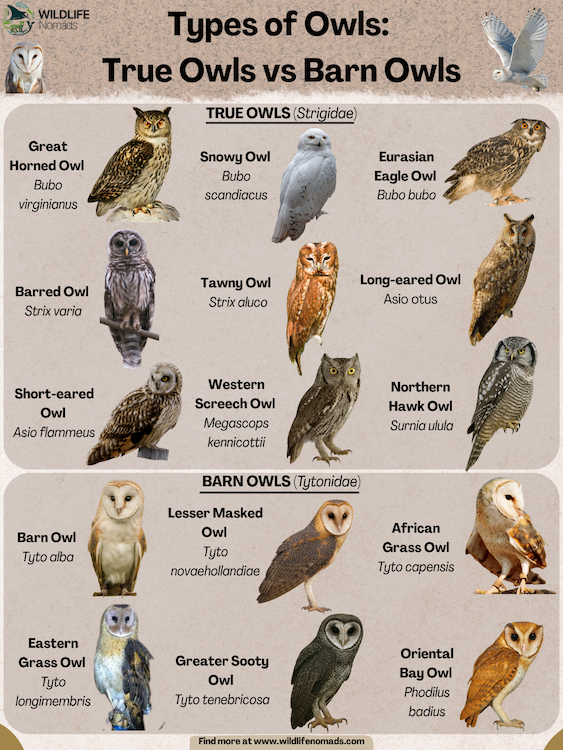
The tawny owl Strix aluco is a robust bird of prey. This medium-sized hunter dominates its nocturnal domain. Tawny owls belong to the “true owl” family, Strigidae.
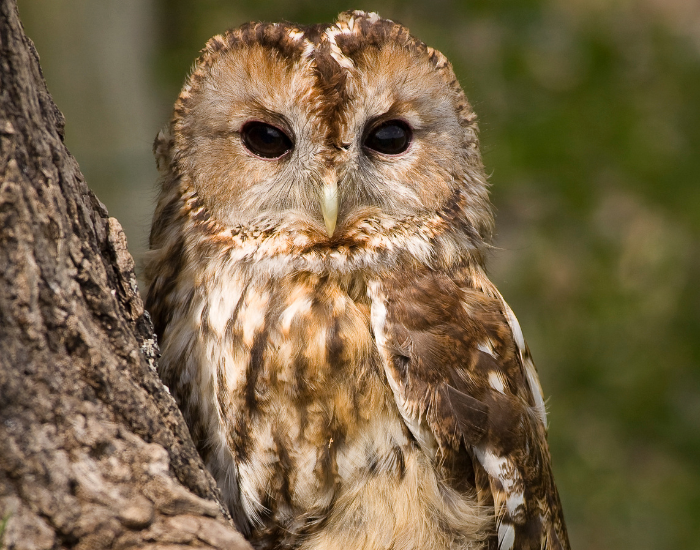
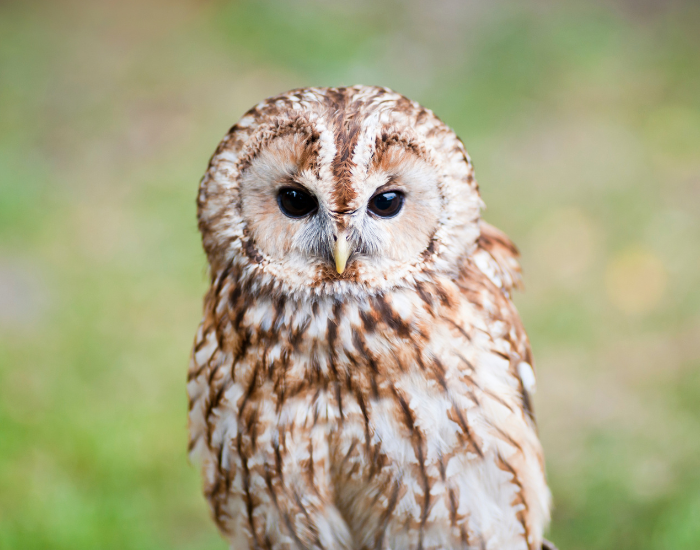
They’re instantly recognizable by their large, rounded head. Their deep-set, dark brown eyes are unmistakable features. Unlike some owls, tawny owls lack ear tufts, giving them a smooth silhouette.

1. A European Icon Among Resident Birds
Unlike many birds that migrate, tawny owls remain loyal to their territories. Once they find suitable habitat, they stay for life. This commitment makes them excellent subjects for long-term study.
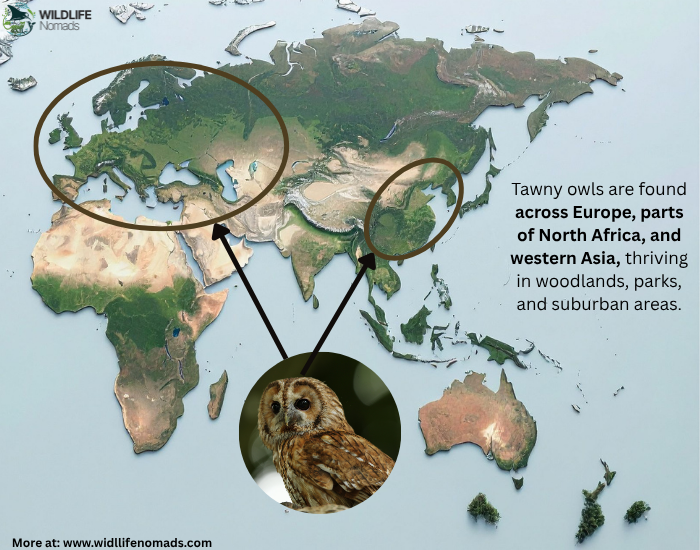
Tawny owls live across most of Europe and western Siberia. They’re key members of the community of Eurasian owls. For birdwatchers in Britain, this is one of the most common owl species you’ll encounter.
Their preference for ancient deciduous woodland makes them indicators of forest health. Therefore, protecting these habitats supports stable tawny owl populations.
2. Masters of Silent Flight
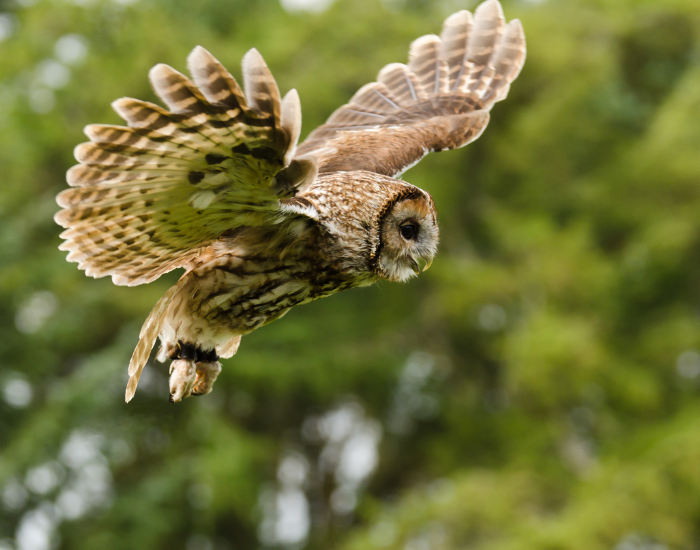
One adaptation stands out above all others. Tawny owls execute silent flight with remarkable precision. The leading edges of their broad wings feature comb-like serrations.
These structures break up turbulent airflow into quieter currents. Their trailing wing edges have soft fringes. Body feathers feel velvety soft to the touch. This combination muffles wingbeat sounds completely.
As a result, tawny owl flies through woodland habitat like a ghost. This silent approach allows them to catch woodland rodents and small mammals by complete surprise. The prey never hears them coming.
3. Hearing: The Tawny Owl’s True Superpower
People often focus on owl vision myths. However, it’s the tawny owl’s hearing that serves as its true superpower. These nocturnal birds can detect faint sounds made by a mouse beneath snow or leaves.
Their large, rounded facial disk feathers act like satellite dishes. They channel sound waves to asymmetrical ear openings. One ear sits higher than the other.
This asymmetry means sound reaches each ear at different times. Consequently, the owl’s brain pinpoints noise origin in both dimensions. The owl’s actual visual acuity isn’t as superior as folklore suggests. Instead, tawny owls depend heavily on this incredible auditory system.
4. The Distinctive Owl’s Cry and Owl’s Song
Everyone recognizes the classic owl’s cry: “hoo-hoo-hooo.” This represents the male tawny owl’s territorial call. The female answers differently, with a sharper “kee-wick” or “keevitt” call.
When you hear both calls together, it indicates a tawny owls pair establishing territory. This vocal communication forms a vital part of their social structure. Birds use these calls for marking boundaries and attracting mates.
In addition, young tawny owls make different sounds. Juvenile owls produce begging calls that help parents locate them in darkness.
5. Nesting in Tree Trunk Cavities
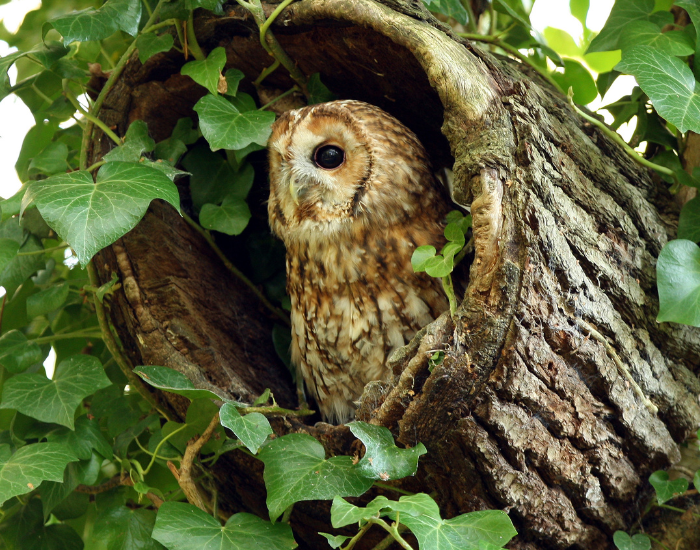
Tawny owl typically nests in natural tree hollows. These cavities sit high in the tree trunk of mature, older trees. Unlike other birds, tawny owls don’t build elaborate stick nests.
The female simply uses whatever material exists in the cavity. The availability of suitable nest boxes has become crucial. Artificial nest boxes mimic natural tree hollows effectively.
Conservationists have found great success with nest boxes. These structures support local populations where ancient woodland has fragmented. Therefore, providing nest boxes helps tawny owls depends on human assistance in some areas.
6. Fierce Defenders of Young Owls
Tawny owls are renowned for nest defense aggression. When protecting young tawny owls (called tawny owlets), parent birds attack fearlessly. If adults or humans approach too close, parent owls swoop down silently.
I know a colleague who received a scalp scratch from a diving female tawny owls. These birds employ their sharp talons with frightening precision. After laying glossy white eggs (usually 2-3), the brooding female tawny owl stays close.
She relies on the male to hunt and bring food. Woodland rodents form the primary diet during this period. Young birds grow rapidly on this protein-rich diet.
7. Tawny Owl vs Barn Owl: Key Differences
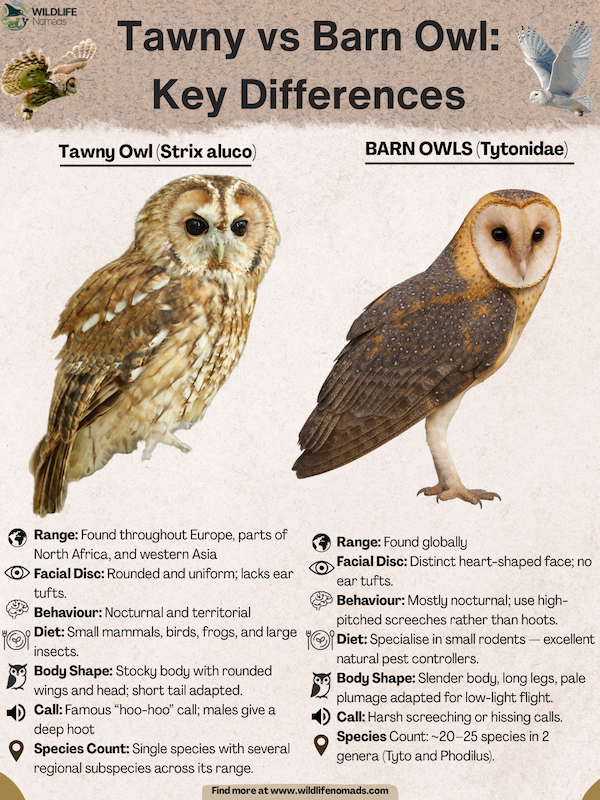
People often confuse different owl species, specially tawny and barn owls. However, the differences are stark. Understanding what distinguishes barn owls from tawny owls helps with identification.
Appearance: Tawny owls are brown owls with round heads and dark brown eyes. In contrast, barn owls have pale, white underparts. The barn owl appears as a staring owl with a distinctive heart-shaped face.
Habitat: Tawny owls prefer deciduous and mixed forests, parks, and urban areas. Barn owls favor open countryside, farmland, and old buildings.
Hunting: Tawny owl hunts primarily at night from a perch. Barn owls often hunt at dawn and dusk, flying low over fields.
Size: Tawny owls are larger and more robust. Barn owls are generally smaller and lighter.
Call: The tawny owl produces the classic “hoo-hoo-hooo.” Barn owls make a harsh, rasping screech.
While barn owls are beautiful hunters of open fields, tawny owls reign as kings of deep forest.
8. Size and Robust Bird Build
How big is a tawny owl? They’re not as huge as eagle owls. However, they’re sturdy, compact birds built for power.
Tawny owls typically measure 37-39 cm in length, not as small as a pygmy owl, and a bit smaller than a barred owl. Their wingspan reaches around 80-95 cm. The female is generally slightly larger than the male. This reversed sexual dimorphism is common in birds of prey.
Their robust bird structure suits short, powerful bursts of flight. Within dense forest, their broad wings distinguish them from other birds. They’re the epitome of powerful woodland owls.
9. What Tawny Owls Eat: A Diverse Diet
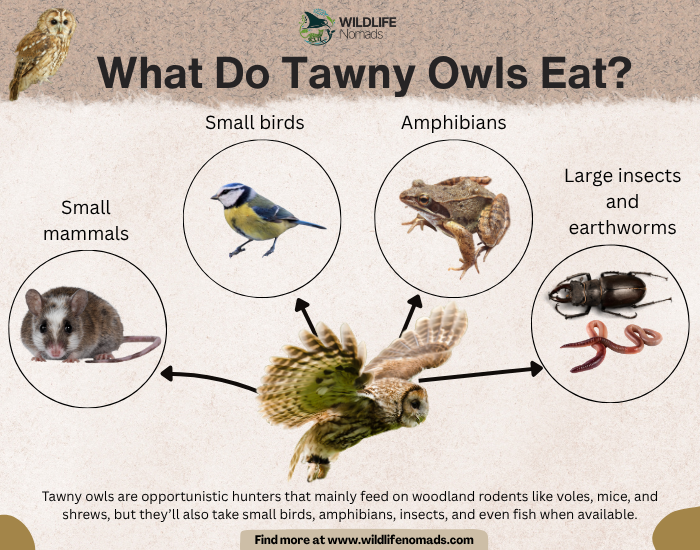
The diet varies considerably, making these adaptable birds highly successful. Tawny owls eat primarily small prey. Woodland rodents like voles, mice, and shrews form the core diet.
However, their diet proves opportunistic. They also take other birds when opportunities arise. Amphibians, large insects, and even fish supplement their menu. Small birds roosting at night become easy targets.
This dietary flexibility explains why they’re among the most common owl species in Europe. Unlike specialist feeders, tawny owls thrive in diverse environments. They succeed in urban parks where rats abound. They also prosper in deep, rural forests rich with wildlife.
- Explore more about Bird’s Beak Types
10. Conservation Status and Threats
Globally, the conservation status of tawny owls is classified as “Least Concern” (LC) by the IUCN. This indicates stable and widespread populations. However, that doesn’t mean they’re immune to threats.
The primary challenge is habitat fragmentation. Tawny owls depends heavily on ancient and mature trees. When deciduous and mixed forests are cut down, their range shrinks. Roads and development break up these critical habitats.
Collisions with traffic and windows cause significant mortality. In addition, loss of traditional nesting sites reduces breeding success. Supporting conservation efforts through habitat protection remains essential.
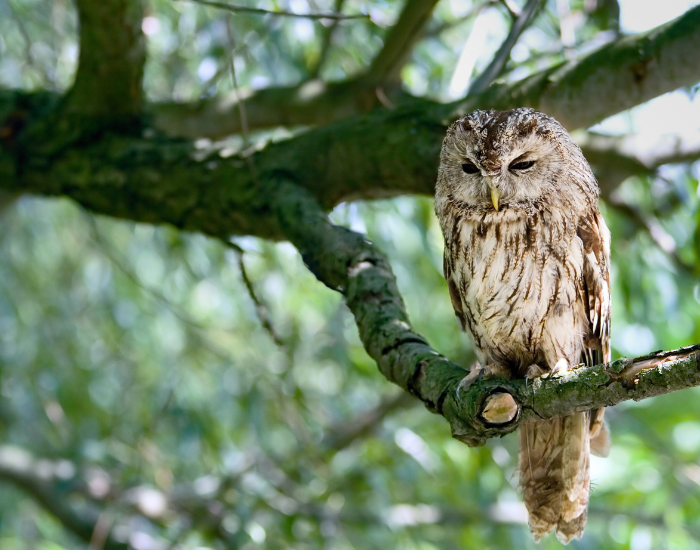
11. Roosting Owls: Masters of Daytime Disguise
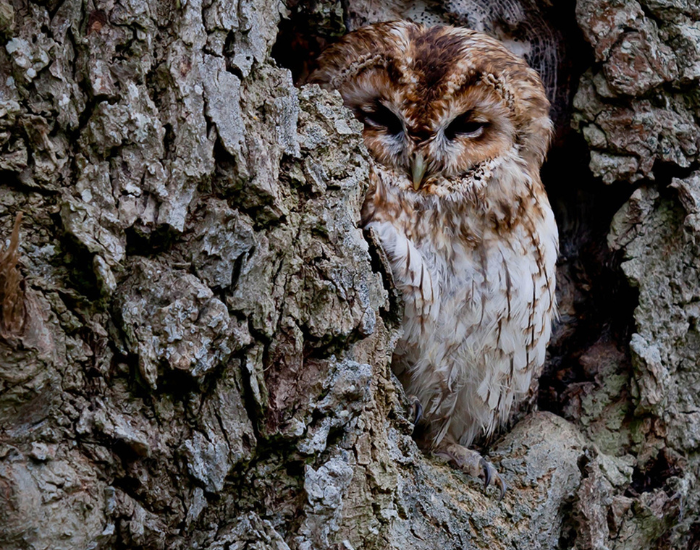
During daylight hours, roosting owls must remain completely still. Camouflage protects them from diurnal birds like crows. The plumage of brown tawny owls blends seamlessly with rough bark.
They find shaded branches close to the tree trunk. Closing their dark brown eyes, they become practically invisible. This explains why seeing a tawny owl during the day is so rare. They simply hide too well.
Unlike diurnal birds, these nocturnal birds have evolved perfect daytime concealment. Their mottled patterns break up their outline completely.
12. Humans attach Them a lot of Symbolic Meaning: From Wisdom to Omens
Throughout history, owls have held deep symbolic meaning. Cultural interpretations vary widely across regions.
In ancient Greece, owls symbolized wisdom. They were associated with the goddess Athena. However, in many European regions, owls were linked to death and bad luck.
This negative association stems from their nocturnal habits. Their eerie calls and silent flight connected them to darkness and the unknown. Today, what a brown owl symbolizes has evolved.
They now represent nature’s power of adaptation. They’re feathered emblems of wild nature surviving at civilization’s doorstep.
Understanding Where Tawny Owls Live
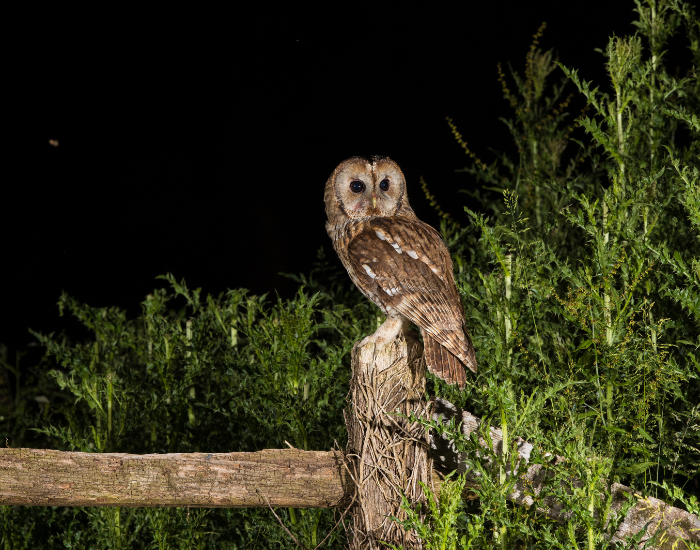
The tawny owl’s habitat consists primarily of woodlands. Ancient deciduous woodland provides ideal conditions. These forests offer mature trees with natural nesting cavities.
However, tawny owls live in surprisingly diverse locations. They’ve adapted to parks, large gardens, and urban areas. This adaptability makes them successful resident birds across Europe and Western Asia.
Their woodland habitat must provide three key elements. First, suitable nest boxes or natural cavities for breeding. Second, adequate prey populations of woodland rodents and other birds. Third, roosting sites protected from disturbance.
In urban settings, tawny owls eat rats and pigeons. Parks with mature trees provide excellent habitat. Therefore, protecting old trees in cities supports urban tawny owl populations.
Breeding and the Life of Female Tawny Owls
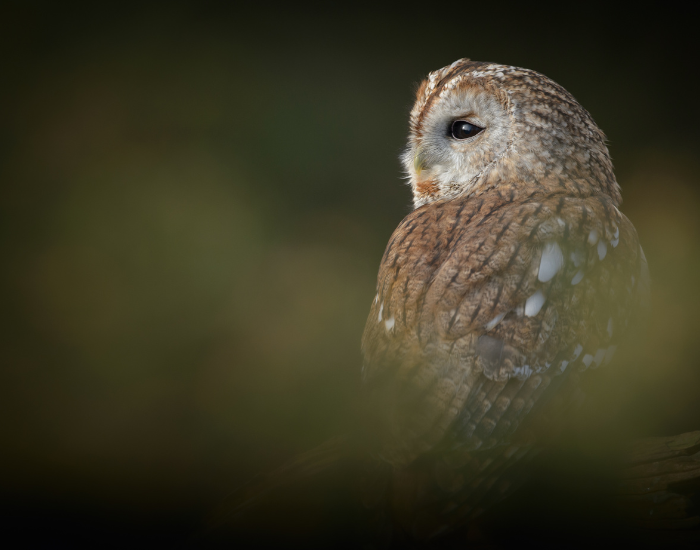
Breeding season begins in late winter. Female tawny owls prepare nest sites in January or February. They lay glossy white eggs in March or April.
The brooding female tawny owl incubates eggs for approximately 28-30 days. During this time, she rarely leaves the nest. The male provides all food through hunting trips.
Young tawny owls hatch covered in white down. They grow rapidly on a diet of woodland rodents. By six weeks old, young birds begin exploring near the nest.
However, young owls don’t achieve full independence quickly. Parents continue feeding them for several months. This extended care helps young tawny owls develop essential hunting skills.
How Tawny Owls Differ from Other Eurasian Owls
Several other Eurasian owls share the tawny owl’s range. Understanding these differences helps with identification.
Eagle owls are much larger and have prominent ear tufts. Long eared owl species also display distinctive feather tufts. In contrast, tawny owls lack these features entirely.
The ural owls are larger and paler. They prefer different woodland habitat than tawny owls. Meanwhile, the screech owl (found in North America, not Eurasia) is considerably smaller.
Why Conservation Matters
My travels have taught me something fundamental. Every animal holds a vital piece of the global ecological puzzle. The tawny owl is more than a creature of the night.
It’s a superb environmental indicator. Its presence tells us the forest is healthy. Stable woodland rodents populations support these predators. Those crucial nest boxes and natural cavities in ancient trees remain available.
The next time you’re out after dark, listen carefully. When you hear that echoing, ethereal hoot, pause. You’re not just hearing a bird. You’re hearing a successful predator, a dedicated parent, and a champion of the night.
The tawny owl is inviting you into its world.
Frequently Asked Questions
Yes, the brown owl and tawny owl refer to the same species. The tawny owl (Strix aluco) is colloquially called the brown owl due to its coloration. This ranges from reddish-brown to grey-brown. However, “tawny owl” is the proper common name.
Tawny owls possess extraordinary hunting adaptations. Their silent flight results from specialized feather structures. In addition, their asymmetrical hearing allows precise prey location in total darkness. They’re also known for fierce nest defense and their distinctive two-part hooting call.
Tawny owl habitat consists primarily of woodlands. They prefer ancient deciduous and mixed forests with mature trees. However, tawny owls live in diverse locations including parks, large gardens, and urban areas. Their range spans Europe and Western Asia. This makes them successful resident birds throughout their territory.
While tawny owls are among the most common owl species in their range, seeing one is rare. They are strictly nocturnal birds and masters of daytime camouflage. You’re far more likely to hear their distinctive call than spot one. During the day, roosting owls blend perfectly with tree bark.
In the wild, the typical lifespan ranges from 4 to 5 years. However, some individuals survive much longer. The oldest recorded wild tawny owl reached 18 years. In captivity, tawny owls live even longer, sometimes exceeding 20 years.
Yes, tawny owls typically form long-term pair bonds. Once a tawny owls pair establishes territory, they usually remain together for life. This monogamous behavior helps them defend territories and raise successive broods successfully.
Further Reading
- The 10 Most Fascinating Extinct Birds You Should Know About
- 10 Fascinating Facts About the Turtle Dove