Have you Heard of Australian Water Dragons?
I first spotted an eastern water dragon in 2019 during my first trip to Australia. I was so excited to finally see kangaroos, koalas, Echidnas, and so many of the country’s iconic animals, but nobody told me about these lizards. As I walked through Burleigh Head National Park in Queensland, one suddenly darted across the path and froze, its long tail trailing behind like a whip. It reminded me of the iguanas I’d grown up seeing in Mexico, yet at the same time it felt uniquely Australian, bold, curious, and at ease living right alongside people.
The sight felt both strange and familiar at the same time. When I returned to Australia later, I encountered them again, this time in Sydney, where they seemed at ease in urban parks and public spaces. Water dragons belong to the broader group of water lizards. They have become iconic across eastern Australia. This article explores 12 essential facts about Australian water dragons.
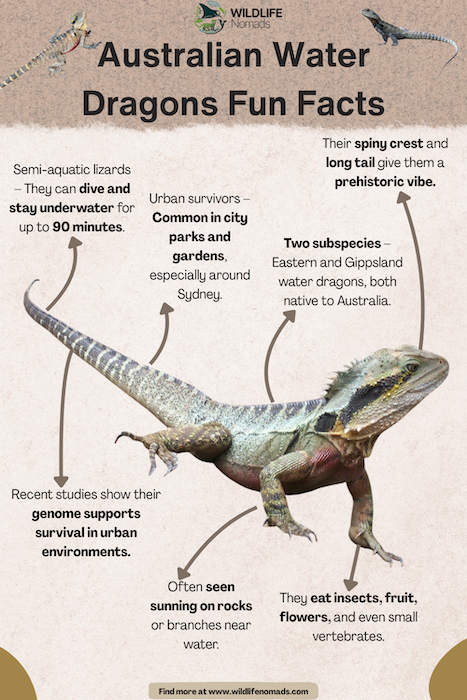
1. Eastern vs. Gippsland: The Two Water Dragon Subspecies
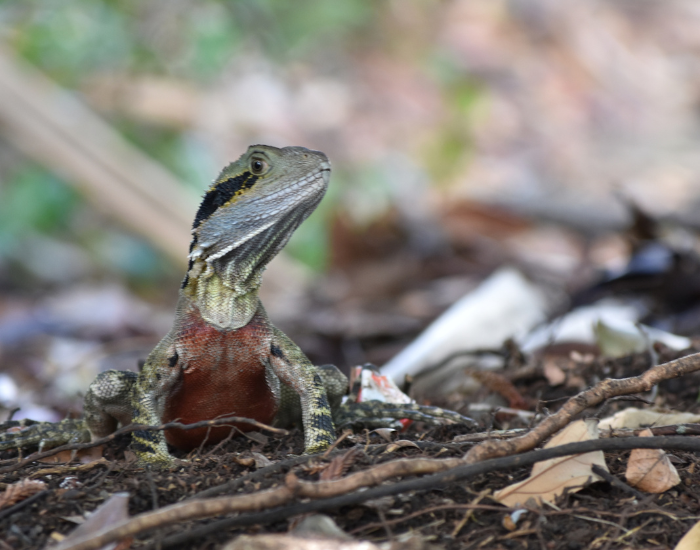
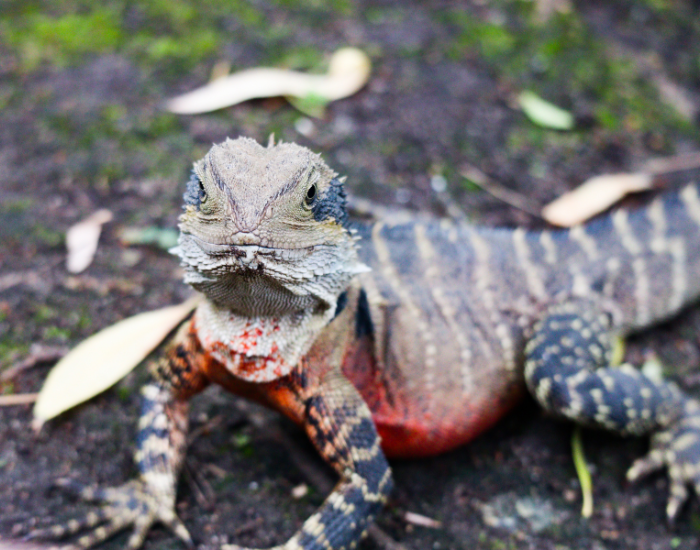
Australia hosts two subspecies of water dragons. The eastern water dragon (Intellagama lesueurii lesueurii) lives across New South Wales and Queensland. This subspecies features a distinctive dark stripe behind the eye. The dark stripe becomes more prominent during breeding season.
The Gippsland water dragon (Intellagama lesueurii howittii) inhabits mainly eastern Victoria. This subspecies lacks the dark stripe behind the eye that characterizes eastern dragons. Gippsland water dragons show more subdued coloration overall compared to their eastern cousins.
The eastern subspecies dominates most areas along the east coast of Australia. Both subspecies share similar behaviors and habitat preferences throughout their ranges.

2. How Big Do Water Dragons Grow?
Male Australian water dragons grow over one metre long. Their tail makes up two-thirds of total length. Females and juveniles remain smaller but still impressive among Australian water lizards.
These reptiles display olive green scales with distinctive black striping. A spiny nuchal crest runs along their neck and head. Sharp claws and long toes help them climb trees effectively.
Males develop broad heads during breeding season. Males have larger heads than females, which is a key difference between the sexes. Mature males show red or orange chest markings when asserting dominance. Eastern water dragon size ranks among Australia’s largest lizards outside goannas.

3. Habitat Along the East Coast
Water dragons inhabit the east coast from southern New South Wales to northern Queensland. Small populations exist in southern New Guinea as well. These reptiles prefer fresh water streams and rivers for their primary habitat.
Alpine streams in mountainous areas also support water dragon populations. They choose healthy waterways with overhanging branches for optimal living conditions. An overhanging branch provides shelter, aids in camouflage, and helps water dragons escape from predators.
Rocks and sandy soil near water sources provide essential basking and nesting sites.
Urban environments including parks and campuses welcome thriving water dragon communities. These reptiles bask on rocks and climb trees regularly throughout their territory. They always remain close to water to avoid predators effectively.
4. Semi-Aquatic Lifestyle
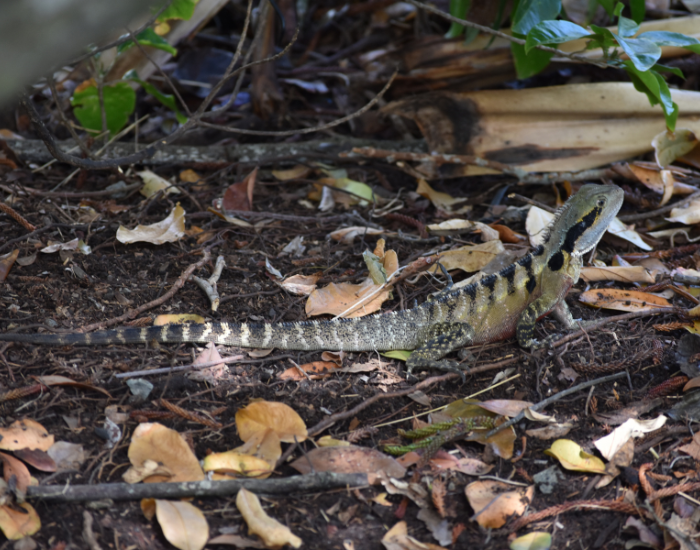
Australian water dragons excel as semi-aquatic reptiles. They use strong limbs and a laterally compressed, powerful tail to swim swiftly through fresh water. These lizards can remain submerged for up to 90 minutes, slowing their heart rate to conserve oxygen. When threatened by predators or humans, they dive beneath the surface and stay hidden until danger passes.
On land, long toes and sharp claws make them agile climbers, scaling tree branches and rocky outcrops with ease. These adaptations allow them to escape predators and reach prime basking sites, especially in areas with sandy soil and overhanging vegetation.
5. From Insects to Fruits: A Varied Diet
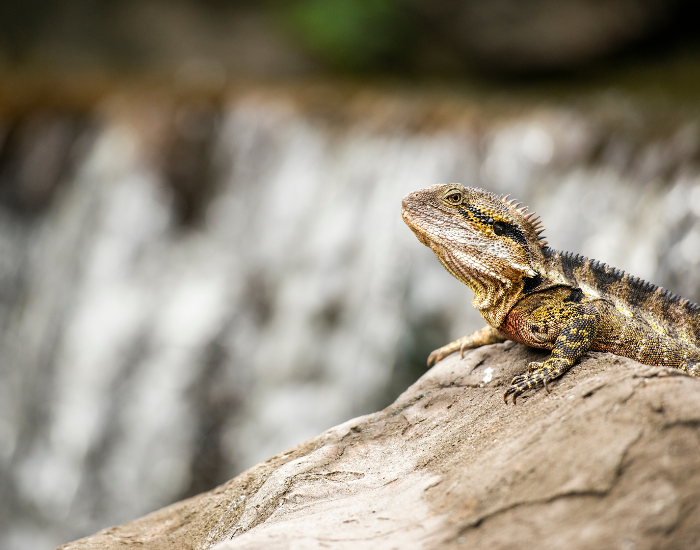
They maintain a varied diet throughout their lifetime. Young dragons eat mostly small insects during their juvenile years. Adults expand their diet to include more vegetation and small vertebrates.
Their insect consumption includes ants, cicadas, and beetles found near fresh water. Small insects become primary food sources during warmer weather months. Water dragons also hunt small rodents and other mammals when opportunities arise.
Frogs and other amphibians form important parts of their diet. They consume other reptiles including skinks found in their territory. Plant matter includes fruits such as figs and lilly pilly berries. Various other fruits and vegetation supplement their nutritional needs throughout the year.
6. Life in a Water Dragon Group – Social Life
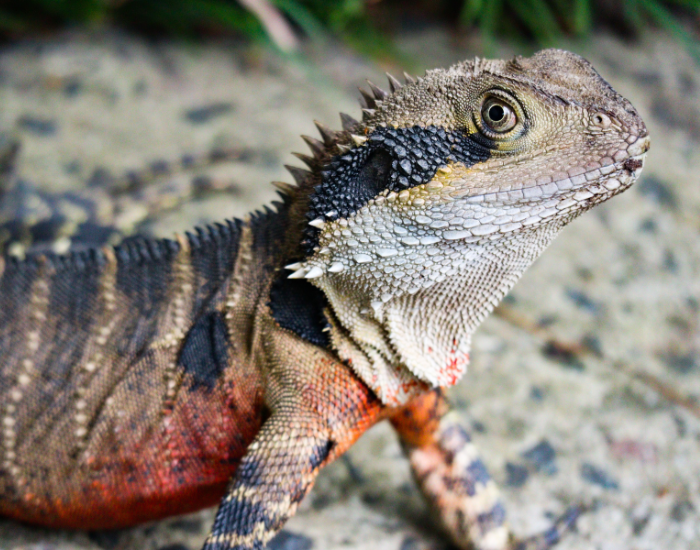
Water dragons live in organized social groups across their territory. Several females typically share territory with one dominant male with a larger head and bold coloration. Males perform head bobbing displays to assert dominance over rivals.
These reptiles pack dirt to seal burrow entrances for protection. They bask on rocks and tree branches throughout daylight hours. Water dragons display semi-aggressive postures when defending their territory from intruders.
Sandy soil provides ideal locations for digging protective burrows. Dominant males show bright red undersides during territorial displays. Head bobbing becomes more frequent during breeding season activities.
7. Reproduction and Lifespan
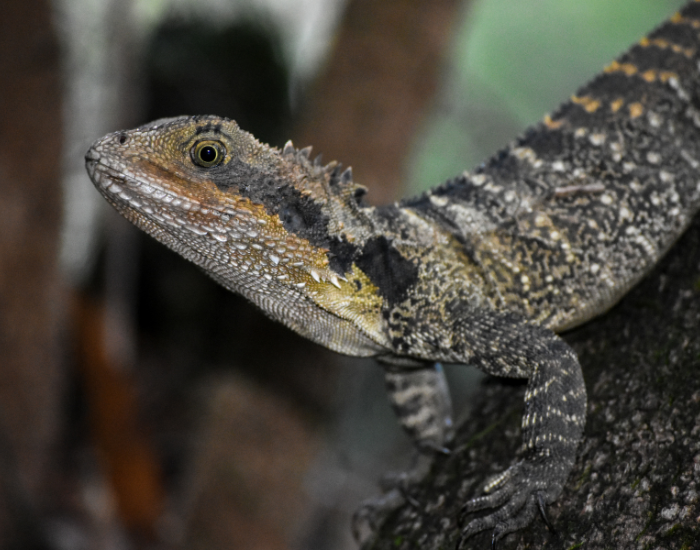
Breeding occurs during spring and early summer months each year. Females lay eggs in carefully selected sandy soil locations. Sexual maturity develops around four to five years of age.
Wild Australian water dragons live up to twenty years in natural conditions. Captive dragons often live longer with proper care and nutrition. Females typically lay multiple eggs per breeding season for population maintenance.
Eggs require specific temperature and moisture conditions for successful hatching. Juvenile dragons emerge ready to hunt small insects independently.
8. Natural Predators and Threats
Water dragons face various natural and human-related threats throughout their lives. Brown tree snakes hunt juveniles actively in their natural habitat. Birds of prey target smaller dragons from above regularly.
Large fish occasionally catch swimming dragons in deeper water areas. Domestic cats and dogs attack dragons in urban environments frequently. Road mortality affects urban populations significantly across their range.
Habitat destruction reduces suitable areas for breeding and feeding. Urban persecution occurs in some locations despite legal protection. These threats combine to create ongoing conservation challenges.
9. How Water Dragons Respond to People
Australian water dragons tolerate humans reasonably well in most situations. They bask near footpaths in urban parks without showing fear. Sudden movements send them scurrying toward fresh water immediately.
These reptiles defend themselves when handled directly by humans. Eastern water dragons inflict painful scratches with their sharp claws. They are not venomous but bite when threatened or cornered.
Most water dragons prefer escape over confrontation with humans. Their tolerance makes them popular among wildlife observers and photographers.
10. Water Dragons in the City
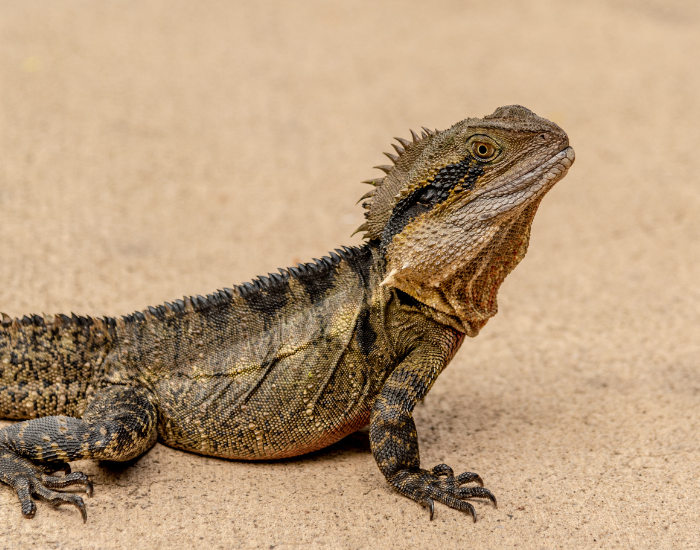
Water dragons thrive in cities across New South Wales and Queensland. Sydney’s Royal Botanic Gardens hosts thriving populations year-round. They adapt well to urban environments with healthy waterways nearby.
Their success in cities makes them icons along the east coast. They require access to fresh water and suitable basking sites. Tree branches provide essential climbing opportunities in urban park environments.
Urban water dragons often become less wary of humans over time. This adaptation allows closer observation of their natural behaviors.
11. Ecological Role and Importance
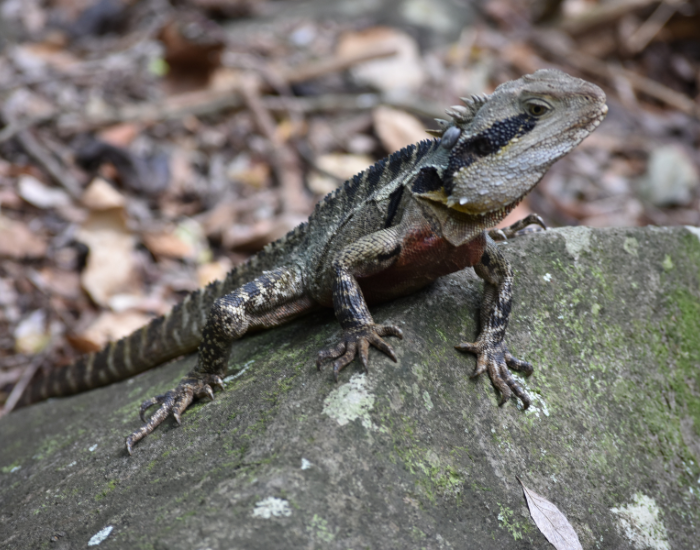
Water dragons regulate insect populations effectively throughout their territory. They consume various small insects during warmer weather months. Similar to many fruit eating animals, by eating fruits regularly, they disperse seeds across their habitat range.
This seed dispersal contributes to forest health along rivers and streams. Their natural history includes important ecosystem functions for riparian environments. They maintain ecological balance in areas throughout eastern Australia.
Water dragons serve as both predators and prey in their ecosystems. This dual role makes them important indicators of environmental health.
12. Conservation Status
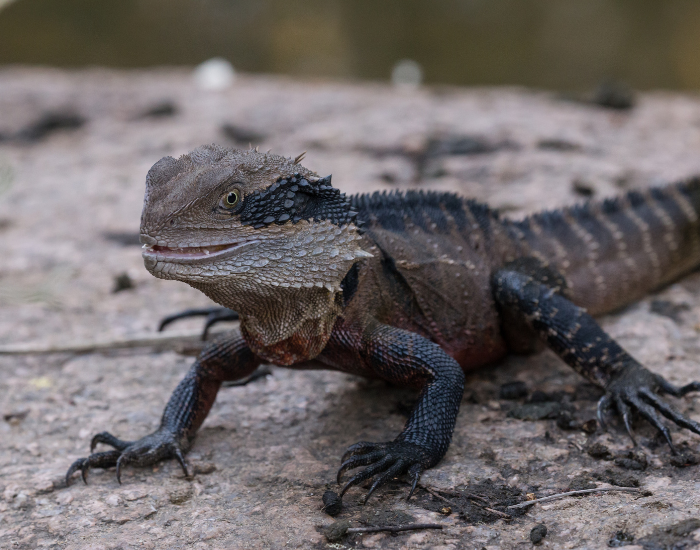
Compared to other threatened Australian animals, Australian water dragons maintain stable populations currently across their range. They receive legal protection in Queensland, Victoria, and New South Wales. Conservation efforts focus on preserving healthy waterways and riparian habitats.
These efforts benefit many species sharing water dragon territories. Protecting rivers ensures suitable habitat for future generations. Continued monitoring helps track population trends and habitat quality.
Public education programs promote coexistence between humans and water dragons. These initiatives reduce persecution and increase appreciation for these reptiles.
Latest research on Water Dragons
Recent research has shed light on how water dragons adapt so successfully to city life. A 2024 study published in Oxford Academic provided a complete genome for Intellagama lesueurii, revealing genetic expansions linked to immunity, energy regulation, and even wound healing, traits that may help them thrive in challenging urban environments.
Meanwhile, a 2019 study found that city-dwelling dragons show altered gut microbiomes and dietary shifts compared to their wild counterparts, detected through stable isotope profiling. Together, these findings highlight how both their genes and their diets are adapting to human-altered landscapes.
Natural History of Water Dragons
Fossil evidence suggests that water dragons have ancient roots in eastern Australia, where they adapted to riparian habitats millions of years ago. Closely related to Asian forest lizards in the genus Physignathus, they represent one of the oldest semi-aquatic lizard lineages on the continent. Their presence along the east coast of Australia, from alpine streams in Victoria to the warmer rivers of northern Queensland, shows remarkable ecological flexibility. Small populations also extend into southern New Guinea, hinting at a wider historical distribution shaped by shifting climates and land bridges. This long evolutionary history explains the water dragon’s resilience and its successful coexistence with both natural ecosystems and urban environments today.
FAQs about Water Dragons
No, they prefer escape over conflict in most situations. Males show aggression only during breeding season toward other males competing for territory.
Their diet includes insects, frogs, fruits, and occasional vegetation found nearby. Urban dragons adapt their diet to available food sources effectively.
No, eastern water dragons are not venomous at all. They have strong jaws but pose no venom threat to people.
Males exceed one metre in total length regularly. Tails comprise most of their impressive size and help with swimming.
Yes, their sharp claws and long toes make them excellent climbers. They use tree branches for basking and escaping predators successfully.
Water Dragons: A Lasting Impression
The Australian water dragon represents remarkable adaptation to semi-aquatic life. From impressive eastern water dragon size to fascinating behaviors like head bobbing, these reptiles captivate observers worldwide.
Their ability to pack dirt, remain submerged, and thrive in urban environments demonstrates incredible versatility. Protecting healthy waterways ensures these iconic lizards continue thriving along Australia’s east coast.
Future generations deserve to experience the same wonder I felt watching my first water dragon disappear beneath fresh water in northern Queensland. Conservation efforts today secure their survival for tomorrow.
If you are interested in coming to australia, the following articles will interest you