Picture this: you’re floating peacefully in the ocean when suddenly, a creature the size of a small building drifts past you. No, it’s not a submarine, it’s one of nature’s most mesmerizing giants, the biggest jellyfish species on our planet. These translucent titans have been silently ruling our seas for over 500 million years, and today we’re diving deep to meet the fifteen most colossal jellyfish that call our oceans home.
Among these mysterious creatures are certain gelatinous members of the marine world, known for their unique characteristics, ancient lineage, and important ecological roles. I’ve spent years studying jellyfish across coastal zones worldwide, and every encounter reminds me how strange and ancient this branch of marine life really is.
From species that can span wider than a blue whale is long to venomous beauties that pack a deadly punch, these marine marvels will change how you think about ocean life forever. Ready to meet some seriously impressive sea creatures?
What Makes a Jellyfish “Big”? Understanding Size in the Sea
Before we dive into our countdown, let’s get one thing straight , when we talk about the biggest jellyfish, we’re not just measuring bell diameter (that’s their umbrella-shaped body). We’re looking at total length including tentacles, because let’s be honest, a jellyfish with 100-foot tentacles deserves some serious respect, right?
Jellyfish belong to the phylum Cnidaria, making them relatives of corals and sea anemones. As gelatinous members of the animal kingdom, these creatures are 95% water and have semi-transparent, water-rich bodies. Their unique body structure, with that gelatinous material called mesoglea, allows them to grow to incredible proportions while remaining virtually weightless in water.
How many tentacles does a single jellyfish carry? It depends on the species of jellyfish. Some carry just four to eight tentacles; others trail hundreds. Most jellyfish live as free swimming marine adults drifting through surface waters, but a few species hug the ocean floor or vanish into the deep sea. Riding ocean currents lets them disperse widely across coastal zones worldwide.

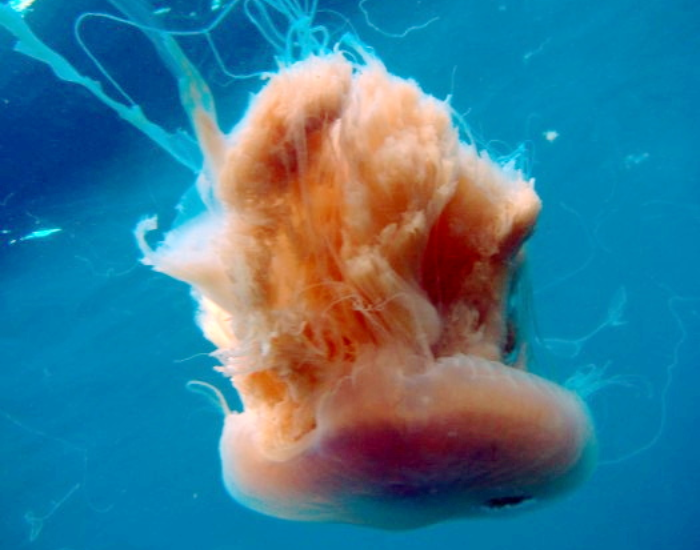
1. Lion’s Mane Jellyfish (Cyanea capillata) – The Undisputed Champion
Bell Diameter: Up to 8 feet (2.4 meters) Tentacle Length: Up to 120 feet (36.5 meters) Total Length: Can exceed 150 feet
The lion’s mane jellyfish isn’t just the biggest jellyfish, it is one of the longest animals on Earth (the Giant Siphonophore Praya dubia, a colony of cnidarians, is generally considered longer). Found primarily in colder northern waters, these magnificent creatures can have tentacles longer than a blue whale. Their reddish-brown coloration and flowing tentacles, sometimes called the “lion’s mane,” create an otherworldly appearance that’s both beautiful and intimidating.
Can a lion’s mane jellyfish hurt you? Absolutely. While not typically fatal to humans, their sting can cause severe pain, muscle cramps, and respiratory issues. The tentacles contain thousands of stinging cells called nematocysts that can fire even after the jellyfish is dead — including specimens jellyfish washed up on the beach hours earlier.

2. Nomura’s Jellyfish (Nemopilema nomurai) – The Gentle Giant
Bell Diameter: Up to 6 feet (1.8 meters) Weight: Up to 440 pounds (200 kg)
Don’t let the name fool you – Nomura’s jellyfish is an absolute unit. Native to the waters between China and Japan, these massive jellies can grow to the size of a refrigerator and weigh as much as a large motorcycle. They’re known for forming enormous population explosions — called blooms — that can impact fishing industries. Large jellyfish blooms can clog and damage fishing nets, causing significant economic losses.
3. Stygiomedusa Gigantea – The Deep Sea Mystery
Bell Diameter: Up to 3 feet (1 meter) Arm Length: Up to 30 feet (9 meters)
This deep sea giant is one of the ocean’s best-kept secrets. Instead of traditional tentacles, it has four massive paddle-like arms that can extend an incredible 30 feet. So rare that only about 100 sightings have been recorded, this species represents the mysterious nature of our deep oceans.

4. Blue Blubber Jellyfish (Catostylus mosaicus) – Australia’s Gentle Giant
Bell Diameter: Up to 16 inches (40 cm) typically, but can reach 24 inches
When people ask “what is the largest jellyfish in Australia?” the blue blubber often comes to mind. Despite their intimidating name, these jellies are actually quite mild-mannered and are commonly found along Australia’s eastern coast. Their bell can range from blue to purple, and they’re popular in public aquariums. And these amazing purple creatures, despite their strange appearance, do not enter into the deadliest animals in Australia list.

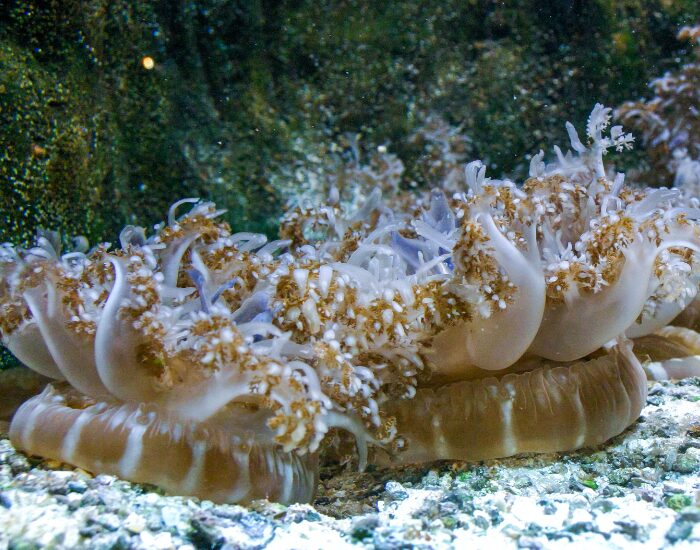
5. Upside-Down Jellyfish (Cassiopea) – The Solar-Powered Giant
Bell Diameter: Up to 12 inches (30 cm)
These unique jellies literally live their lives upside down, using symbiotic algae in their bodies to photosynthesize like plants. While not the biggest in terms of size, their unique lifestyle and substantial presence in shallow tropical waters make them notable giants in their ecosystems. They often share habitat with coral fish like parrot fish, sea anemones and seagrass, drawing nutrients straight from sunlight.
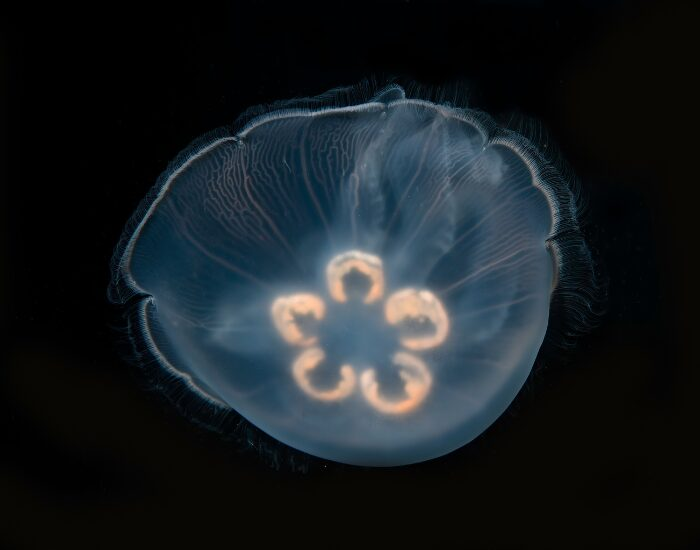
6. Moon Jellyfish (Aurelia aurita) – The Cosmopolitan Giant
Bell Diameter: Up to 16 inches (40 cm)
Found in virtually every ocean on Earth, moon jellies are the cosmopolitan citizens of the jellyfish world. Their translucent, saucer-shaped bells make them incredibly recognizable, and their ability to form massive jellyfish blooms makes them ecological giants despite their moderate size. I’ve watched them pulse through harbors at dusk in soft, graceful movements that look almost choreographed.
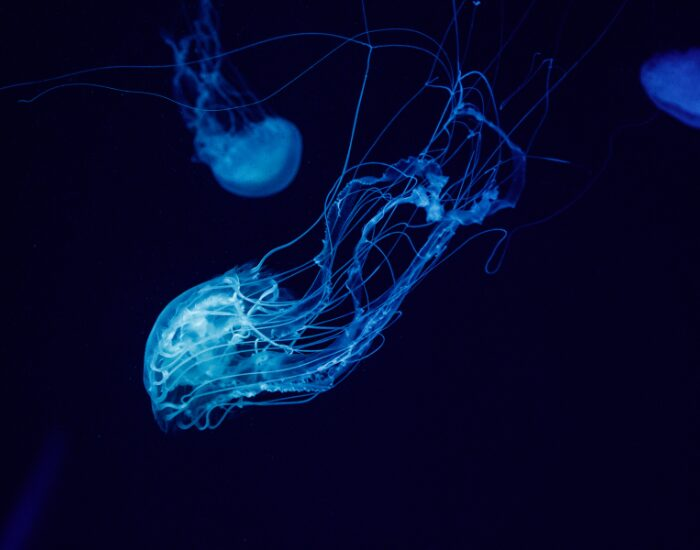
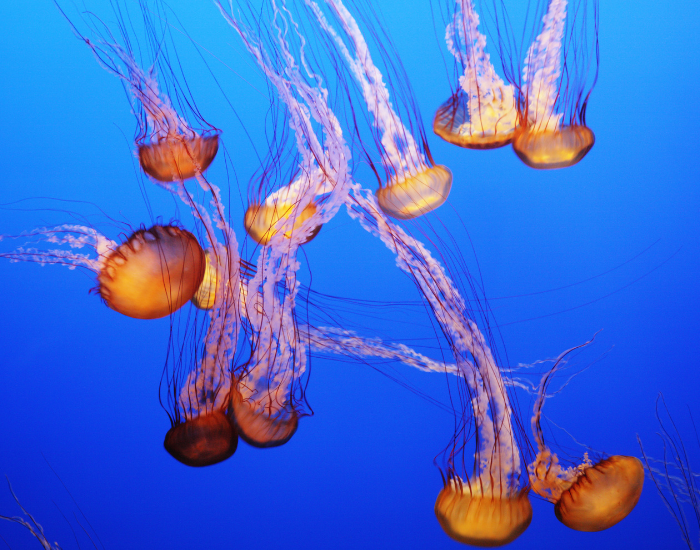
7. Pacific Sea Nettle (Chrysaora fuscescens) – The Elegant Giant
Bell Diameter: Up to 3 feet (1 meter) Tentacle Length: Up to 15 feet (4.5 meters)
The Pacific sea nettle is one of the most well-known sea nettles, belonging to the genus Chrysaora. These stunning jellies are the poster children of many aquariums, and for good reason. Their graceful, ribbon-like tentacles and golden coloration create a hypnotic display. They’re found along the Pacific coast from California to Alaska.

8. Atlantic Sea Nettle (Chrysaora quinquecirrha) – The East Coast Giant
Bell Diameter: Up to 10 inches (25 cm) Tentacle Length: Up to 6 feet (1.8 meters), normally 17.7 – 35 inches (45 -89 cm)
The Atlantic sea nettle is another prominent member of the sea nettles group. It might be smaller than its Pacific cousin, but it makes up for size with attitude. These jellies can deliver a painful sting and are common along the U.S. Atlantic coast, particularly in the Chesapeake Bay.
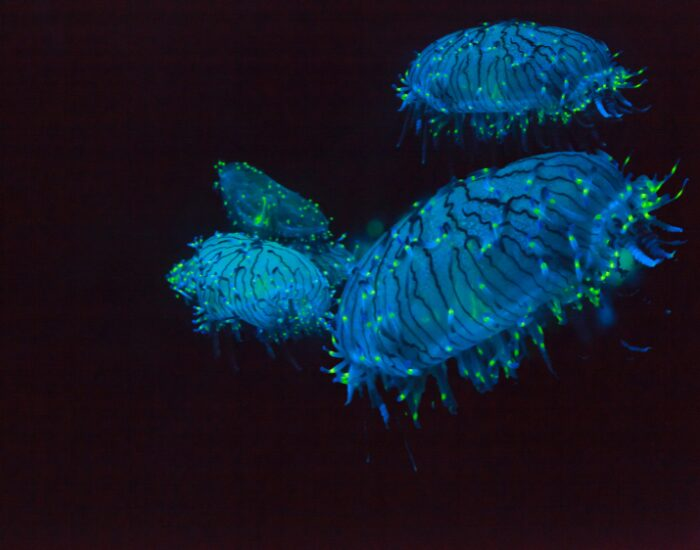
9. Flower Hat Jelly (Olindias formosa) – The Neon Giant
Bell Diameter: Up to 6 inches (15 cm) Tentacle Length: Up to 2 meters (6.6 feet) extended; usually 10–12 inches (25–30 cm)
What this species lacks in size, it makes up for in pure visual impact. Their purple bells with neon fluorescent tentacles make them look like living disco balls. They’re primarily found off the coasts of southern Japan, Brazil, and Argentina.
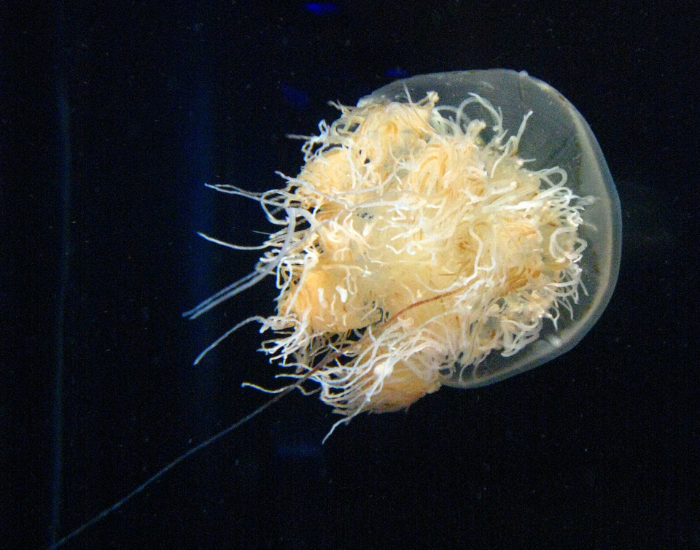
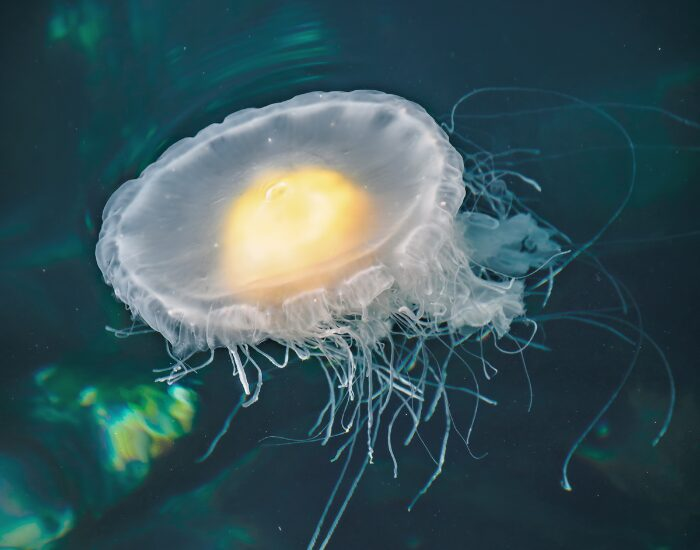
10. Fried Egg Jellyfish (Phacellophora camtschatica) – The Breakfast Giant
Bell Diameter: Up to 24 inches (60 cm) Tentacle Length: Up to 20 feet (6 meters)
Named for their obvious resemblance to a fried egg, these jellies are found in cool waters throughout the world’s oceans. Despite their benign appearance, they’re voracious predators that often eat jellyfish from other species – yes, jellyfish that eat jellyfish.
11. Barrel Jellyfish (Rhizostoma pulmo) – Europe’s Giant
Bell Diameter: Up to 35 inches (90 cm) Weight: Up to 55 pounds (25 kg)
The largest jellyfish commonly found in European waters, barrel jellies are impressive both in size and weight. They’re relatively harmless to humans and are often spotted by divers in the Mediterranean and Atlantic waters around Europe. When they emit light at night under boat lamps, the glow off their barrel-shaped bell is unforgettable.

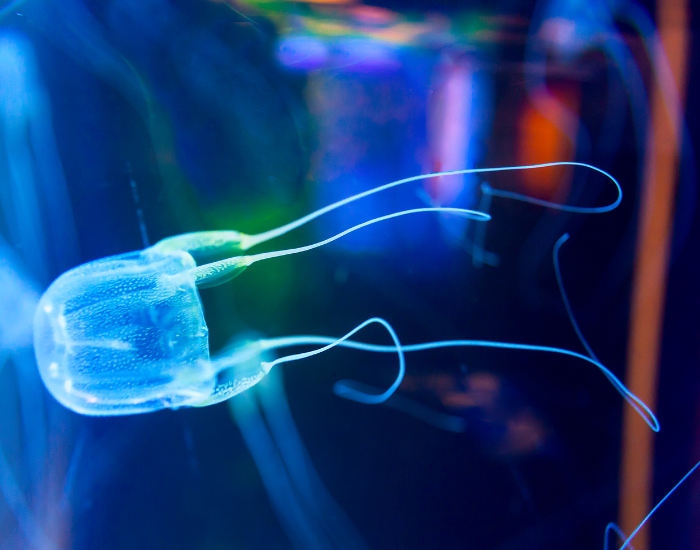
12. Box Jellyfish (Chironex fleckeri) – The Deadly Giant
Bell Diameter: Up to 12 inches (30 cm) Tentacle Length: Up to 10 feet (3 meters)
While not the largest by pure dimensions, the box jellyfish earns its place on this list through sheer lethality and ecological impact. One of the most toxic animals in the world, this jellyfish can be found primarily in Australian waters, this species is considered one of the most venomous creatures on Earth, capable of killing a human in minutes.
Box jellyfish stings are among the most potent and dangerous in the animal kingdom, often requiring immediate medical attention. The sea wasp, a type of box jellyfish found in Australian waters, is considered the most venomous marine animal. Vinegar can deactivate undischarged nematocysts on the skin, but severe box jellyfish stings still demand emergency hospital care.
13. Black Sea Nettle (Chrysaora achlyos) – The Phantom Giant
Bell Diameter: Up to 3 feet (1 meter) Tentacle Length: Up to 25 feet (7.6 meters)
The black sea nettle is a true Pacific giant, and one of the largest invertebrates on Earth. Despite that size, it wasn’t formally described by science until 1997, most large jellyfish species were named in the 1800s, which tells you how good this one is at staying hidden. It lives in deep sea waters off California and Mexico, and surfaces in coastal waters mainly during warm-water years.
I’ve seen black sea nettles trail tentacles longer than a school bus, their dark maroon bells almost black against the surface waters. Their long oral arms trap small fish, fish eggs, and other jellyfish drifting past on ocean currents. Like the Pacific sea nettle, it belongs to the genus Chrysaora — but in raw size, the black sea nettle dwarfs nearly every other member of the group.
14. Pink Meanie (Drymonema larsoni) – The Jelly That Eats Jellyfish
Bell Diameter: Up to 3 feet (1 meter) Tentacle Length: Up to 22 feet (7 meters) Weight: Up to 50 pounds (22 kg)
The pink meanie is one of the strangest discoveries in modern marine biology. Researchers only described it as a separate species in 2011, and it earned its name fast: this enormous pink jellyfish hunts and consumes other jellyfish, eating moon jellies by the dozen. A large pink meanie can carry hundreds of feet of fine trailing tentacles in total.
Pink meanies appear in the Gulf of Mexico and Mediterranean during late-summer jellyfish blooms. Watching one engulf a moon jelly is an unsettling reminder that most jellyfish are not gentle drifters — they’re active predators, and a few species specialize in eating jellyfish of their own kind. The pink meanie also gives us a sobering data point on how many jellyfish species are still hiding in plain sight.
Irukandji Jellyfish | Via Getty Images
15. White-Spotted Jellyfish (Phyllorhiza punctata) – The Invasive Giant
Bell Diameter: Up to 24 inches (60 cm) Weight: Up to 25 pounds (11 kg)
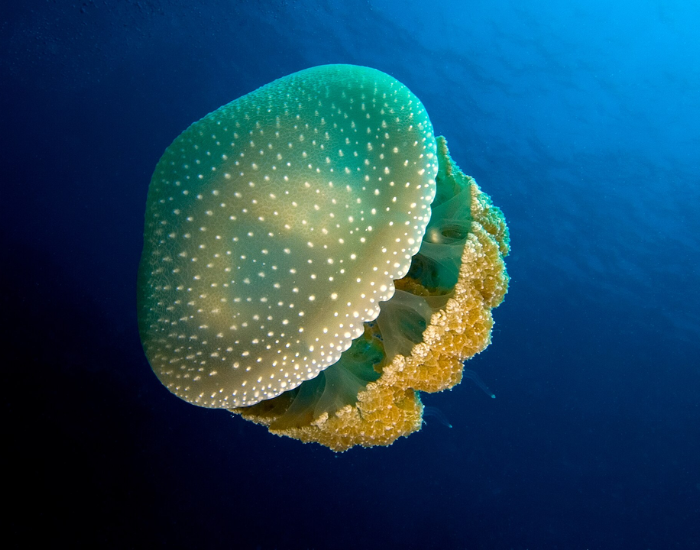
Native to the western Pacific, the white-spotted jellyfish has invaded waters worldwide — Caribbean, Gulf of Mexico, Mediterranean, and beyond. Their bells are dotted with crisp white spots, and large adults can reach the size of a beach ball. They feed by filtering enormous volumes of plankton through frilly oral arms, which puts them in direct competition with native local species that depend on the same food resources.
I’ve watched white-spotted blooms strip plankton from a single bay so completely that small fish populations crashed within weeks. They’re a stark example of how a single invasive species of jellyfish can reshape coastal zones worldwide. As warming surface waters extend their range, expect to see this giant in places it has never appeared before.
Anatomy of a Giant: How Jellyfish Bodies Shape Their Size
When it comes to mysterious creatures of the sea, few are as captivating, or as structurally unique, as jellyfish. Their anatomy is a marvel of marine engineering, allowing these ancient animals to reach astonishing sizes and thrive in coastal waters and the deep sea alike.
At the heart of every jellyfish is its iconic bell, a gelatinous, umbrella-shaped structure that gives these marine animals their ghostly appearance. This bell is made up mostly of water and a jelly-like substance called mesoglea, making jellyfish some of the most efficient floaters in the ocean. T
But what really sets the largest jellyfish apart are their tentacles, sometimes numbering in the hundreds or even thousands. These tentacles hang from the bell’s edge and are armed with specialized stinging cells called nematocysts. With these, jellyfish capture prey ranging from tiny animals and fish eggs to small fish and even other jellyfish species. The more tentacles a jellyfish has, the greater its reach for catching prey and defending itself from other marine animals.
Jellyfish may look simple, but their nervous system is surprisingly sophisticated. Instead of a central nervous system, they have a nerve net, a web of interconnected nerves that allows them to sense their environment and coordinate their movements. Many species can detect light using specialized organs called rhopalia, helping them navigate the ocean’s ever-changing conditions and find the best places to feed or avoid predators.

Do Jellyfish Feel Pain?
This question touches on one of marine biology’s most intriguing debates. Do jellyfish feel pain? Current scientific consensus suggests that jellyfish, lacking a centralized nervous system and brain, likely don’t experience pain as we understand it. However, they do respond to harmful stimuli through their nerve net, which helps them avoid dangerous situations.
Recent research has shown that jellyfish demonstrate more complex behaviors than previously thought, including sleep-like states and learning responses, but pain perception remains unclear.
The Ecological Impact of Giant Jellyfish
These massive creatures aren’t just impressive to look at, they play crucial roles in marine ecosystems. Dramatic increases in jellyfish numbers, called blooms, can significantly impact:
- Commercial fishing: Massive blooms can clog nets and damage equipment
- Tourism: Beach closures due to dangerous species affect coastal economies
- Marine food webs: As both predators and prey, they influence entire ecosystem dynamics. Increasing jellyfish numbers can threaten native local species by outcompeting them for resources.
- Climate indicators: Jellyfish populations often reflect ocean health and climate change impacts
According to research, jellyfish blooms are becoming more frequent and intense, possibly due to climate change, overfishing, and coastal development.
Frequently Asked Questions
It varies enormously. Many cubozoans, like the box jellyfish, have just four to eight tentacles — one or a small cluster at each corner of the bell. True jellyfish in class Scyphozoa often have dozens to hundreds, while the lion’s mane jellyfish can trail more than 1,000 fine tentacles in eight thick clusters.
Jellyfish feed on zooplankton, fish eggs, small fish, shrimp, and other gelatinous animals. Larger species regularly eat jellyfish of other types. Most jellyfish are passive ambush predators that paralyze prey with nematocysts the moment it brushes a tentacle.
Yes. Leatherback sea turtles are jellyfish specialists — their throats are lined with backward-facing spines that trap slippery prey. Loggerhead and green sea turtles also eat jellyfish opportunistically. This is one reason floating plastic bags are so deadly to turtles: they look almost identical to a drifting jelly
Respecting Our Ocean’s Ancient Giants
The biggest jellyfish in our oceans represent some of the most successful life forms on Earth. Having survived multiple mass extinctions, these incredible creatures continue to adapt and thrive in our changing oceans. While the term “jellyfish” is often used broadly, “true jellyfish” specifically refers to members of the class Scyphozoa, distinguishing them from other gelatinous marine animals like box jellyfish or comb jellies. From the record-breaking lion’s mane jellyfish that can dwarf blue whales in length to the deadly beauty of the box jellyfish, each species offers unique insights into marine evolution and ecology.
As we face unprecedented ocean changes due to climate change and human activities, understanding and protecting these ancient giants becomes increasingly important. They serve as both indicators of ocean health and crucial components of marine food webs.
References:
Brotz, L., Cheung, W. W. L., Kleisner, K., Pakhomov, E., & Pauly, D. (2012). Increasing jellyfish populations: Trends in Large Marine Ecosystems. Hydrobiologia, 690(1), 3–20. https://doi.org/10.1007/s10750-012-1039-7
Condon, R. H., Duarte, C. M., Pitt, K. A., Robinson, K. L., Lucas, C. H., Sutherland, K. R., et al. (2013). Recurrent jellyfish blooms are a consequence of global oscillations. Proceedings of the National Academy of Sciences, 110(3), 1000–1005. https://doi.org/10.1073/pnas.1210920110
Gershwin, L.-A., De Nardi, M., Winkel, K. D., & Fenner, P. J. (2010). Marine stingers: Review of an under-recognized global coastal management issue. Coastal Management, 38(1), 22–41. https://doi.org/10.1080/08920750903345031
Hays, G. C., Doyle, T. K., & Houghton, J. D. R. (2018). A paradigm shift in the trophic importance of jellyfish? Trends in Ecology & Evolution, 33(11), 874–884. https://doi.org/10.1016/j.tree.2018.09.001
Pitt, K. A., Welsh, D. T., & Condon, R. H. (2009). Influence of jellyfish blooms on carbon, nitrogen and phosphorus cycling and plankton production. Hydrobiologia, 616(1), 133–149. https://doi.org/10.1007/s10750-008-9584-9
Purcell, J. E. (2012). Jellyfish and ctenophore blooms coincide with human proliferations and environmental perturbations. Annual Review of Marine Science, 4, 209–235. https://doi.org/10.1146/annurev-marine-120709-142751
Richardson, A. J., Bakun, A., Hays, G. C., & Gibbons, M. J. (2009). The jellyfish joyride: Causes, consequences and management responses to a more gelatinous future. Trends in Ecology & Evolution, 24(6), 312–322. https://doi.org/10.1016/j.tree.2009.01.010