Meet a New Toad Species – The Sonoran Desert Toad
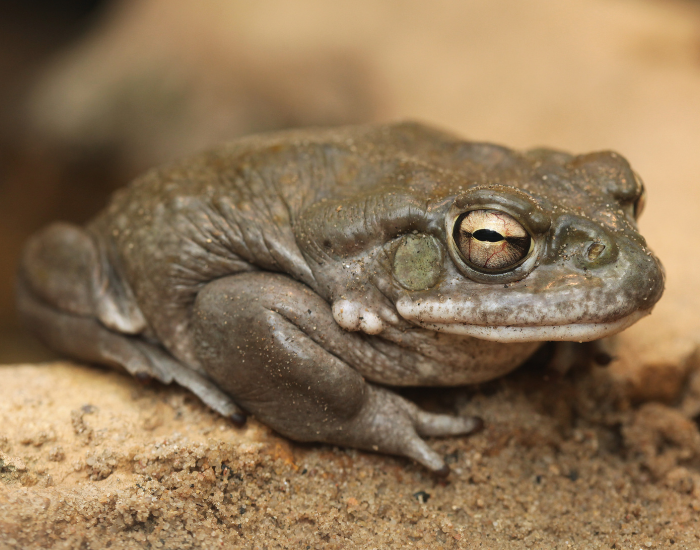
If you ever stumbled across a Sonoran Desert toad in southern Arizona, you mistaken it for a for a coconut. That’s how large these amphibians can get. Known scientifically as Incilius alvarius (formerly Bufo alvarius) and also called the Colorado River toad, this desert dweller grows up to seven inches long, making it one of the largest toads in North America.
I find this toad uniquely fascinating. On one hand, it’s a brilliant evolutionary success, an amphibian adapted to the harsh extremes of the Sonoran Desert, able to vanish underground for months and reappear with the rains. On the other, it’s a creature entangled in cultural narratives, myths, and even modern controversies about its psychedelic secretions.
But let me be clear: this is not an invitation to seek them out. In fact, chasing these toads for their compounds is a threat to their survival. Populations are declining where they are illegally collected, and conservationists warn that curiosity, especially from outsiders, can quickly become exploitation.
So, where biology meets culture, myth, and modern science, the Sonoran Desert toad emerges as one of the most captivating animals of the Southwest. Let’s explore its natural history, its ecological role, and why it’s a species that demands both awe and protection.
Where do They Live? – Geographic Distribution
The Sonoran Desert toad lives primarily in:
- Arizona: Central and southern regions, especially near Tucson.
- New Mexico: Southwestern corner of the state.
- Mexico: Northern Sonora and Sinaloa states.
You’ll typically find them in semi-arid grasslands, desert scrub, and even rodent burrows, but like most amphibians, they stick close to water sources. Permanent ponds, temporary rain pools, and monsoon-season puddles all serve as crucial breeding spots.
The Sonoran Desert toad is just one star of the desert, discover more in our guide [Desert Wildlife: 12 Amazing Animals You Must See] and meet the other creatures that thrive in these extreme landscapes.”
- Raed more about the “Animals of Mexico” and “Animals of the “United States“
This toad just one
Looks – Physical Traits and Behavior
The Sonoran Desert toad is one of the largest amphibians in the Southwest, and it’s almost impossible to mistake it for anything else.
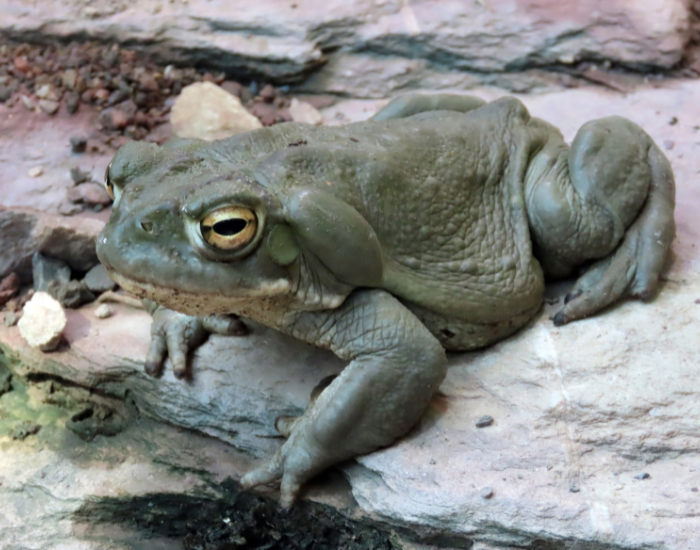
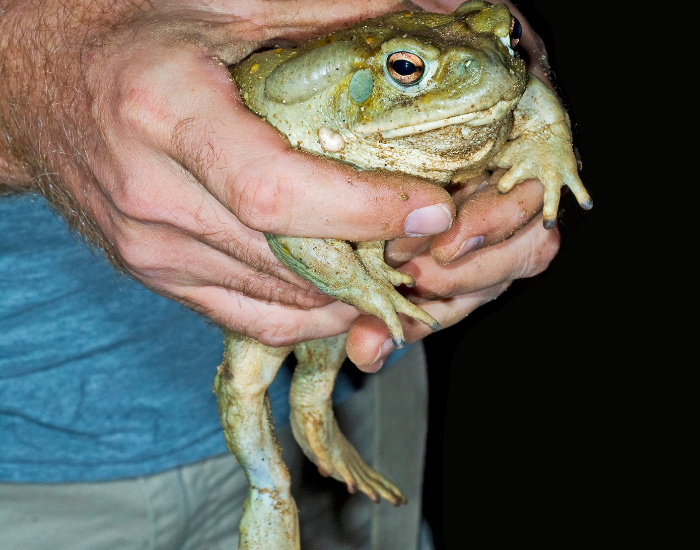
- Size: Adults can reach 6–7 inches long, with some full-grown toads stretching even larger, making them one of the largest toads native to North America.
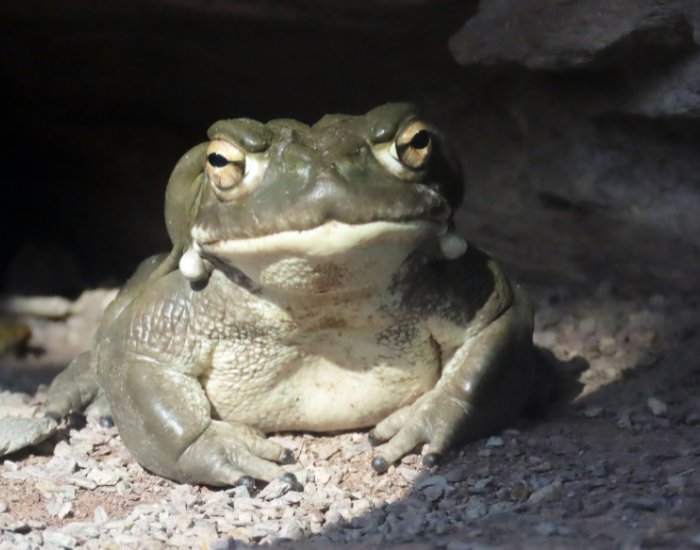
- Color: Typically a muted greenish-gray on the back with a creamy underside, helping them blend into desert soils.
- Skin: Their relatively smooth skin sets them apart from many other toad species, though they still carry noticeable warts near the hind legs.
- Parotoid glands: Large and prominent, these are the toad’s chemical defense system. Alongside several other glands, they produce the toxins that have given the species its mystique.
- Eyes: Striking golden irises that catch the light at night.
Behavior and Adaptations
Like most amphibians in desert environments, they’ve evolved a life strategy built around extremes.
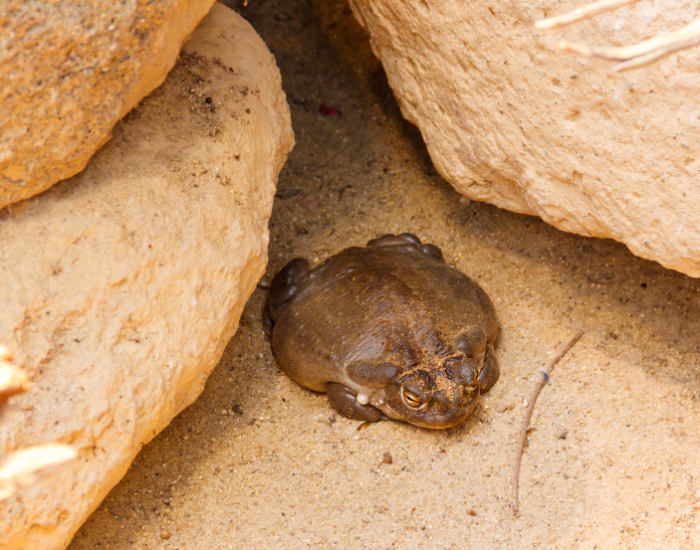
- Burrowing: By day, they retreat into underground burrows, rodent holes, or shaded crevices to escape the desert heat.
- Rainy season: They emerge during the summer rainy season and monsoon season, when water fills temporary pools and small ponds. These breeding sites are essential for laying eggs and continuing the next generation.
- Opportunistic feeding: At night, they hunt insects under porch lights and occasionally venture into suburban yards, making them both familiar and startling to residents across Arizona, New Mexico, and northern Mexico.
Their physical characteristics are perfectly tuned to survival in a land of extremes: long months of dormancy hidden underground, followed by sudden bursts of activity when rain transforms the desert into a temporary oasis.
What Do They Eat? – Diet and Nutrition
Despite their docile appearance, Sonoran Desert toads feeds on many insects and other small vertebrates. Their diet includes:
- Beetles, ants, and crickets
- Small rodents
- Reptiles like lizards
- Other amphibians (yes, even smaller frogs or toads)
I once watched one sit motionless near a floodlit field station in Arizona. Within an hour, it had swallowed half a dozen large beetles and a hapless frog that hopped too close.
Their hunting style is classic amphibian, sit and wait, then snap with lightning-fast tongues.
Predators and Ecological Role
For all their size and toxins, Sonoran Desert toads aren’t untouchable. Raccoons, snakes, and even some birds of prey have figured out clever ways to eat them, usually by avoiding the toxic parotoid glands. Watching nature’s trial-and-error unfold in the desert is humbling; predators quickly learn what’s safe to swallow and what isn’t.
As predators themselves, these toads play a crucial role in desert and grassland ecosystems, helping to keep insect populations under control. Without them, beetles, ants, and other invertebrates could quickly overwhelm fragile desert habitats. Like many amphibians, they’re both predator and prey, a reminder of just how interconnected life in the Sonoran Desert really is.
Reproduction and Eggs
The breeding season is tied tightly to the monsoon rains. As soon as water fills the desert washes, males begin calling, and females respond.
- Females can lay up to 8,000 eggs in long, gelatinous strings.
- Eggs are deposited in shallow temporary pools and small ponds formed by the rains.
- Tadpoles hatch within days, scrambling to grow legs before the desert sun evaporates their nurseries.
If you ever stand by a roadside puddle outside Tucson just after a storm, you will hear thousands of wriggling black tadpoles packed into a space no larger than a bathtub. Within weeks, most were gone, either eaten by predators or dried out before they could metamorphose. It’s a harsh life cycle, but when conditions are right, the desert suddenly teems with new generations.

Where Biology Meets Mystery: The Sonoran Desert Toad in Culture and Myth
The Sonoran Desert toad is more than just another amphibian, it’s a mirror for human imagination. Across cultures, animals with unusual traits often inspire myths, and this toad’s powerful secretions have elevated it into a creature that blurs the line between science and spirit. Some Indigenous groups of the Sonoran region wove the toad into their ritual traditions, recognizing its ability to open doorways of perception and connect people with forces larger than themselves.
In modern times, its reputation as a psychedelic animal has only deepened this sense of mystery. Commonly known in Mexico as “sapito”, menaing little toad, people speak of it not just as a toad, but as a kind of teacher or threshold guardian, forcing us to ask unsettling questions: What is real? How stable is our perception of the world? Where do biology and spirituality meet?
Unfortunately, curiosity has also led to exploitation. Harvesting the toad’s toxins has become a trend in some circles, putting wild populations at risk. Conservationists warn that the mystique of the toad should not come at the expense of its survival.
The myths, the science, and the controversies all remind us of something profound: this animal compels humans to wonder, to reimagine the boundaries of reality, and to recognize that even a desert toad can carry the weight of mystery.
Safety Tips for People
While most encounters are harmless, it’s smart to be cautious around Sonoran Desert toads.
- Don’t handle them with bare hands. If you do, wash thoroughly.
- Keep them away from your mouth, eyes, and face.
- Be alert for symptoms of poisoning in pets or people: confusion, nausea, foaming, or irregular heartbeat.
- Teach kids to admire wildlife from a distance.
These toads deserve respect. A little awareness goes a long way in preventing accidents.
A Note on Psychedelics and Cultural Use
Because this toad produces 5-MeO-DMT, a powerful psychoactive compound, it has drawn global attention once again in recent years. It’s worth remembering, though, that this substance has been used traditionally by Indigenous groups of the Sonoran region, such as the Seri, Yaqui, and Mayo peoples, within carefully held cultural frameworks.
The recent surge of “toad ceremonies” mirrors what has happened with ayahuasca in Peru, a sacred practice transformed into a booming industry, often stripped of its original context and sometimes harmful to both people and ecosystems. The Sonoran Desert toad now finds itself in the spotlight, not always for reasons that help its survival.
Studies published in “Psychopharmacology” (2019) and “Journal of neurochemistry” (2022) have begun to explore the potential therapeutic applications of 5-MeO-DMT, the compound found in the Sonoran Desert toad. In naturalistic settings, participants reported sustained increases in life satisfaction, mindfulness, and reductions in depression and stress weeks after a single session. Clinical reviews further note its rapid onset, short duration, and capacity to induce profound states such as ego dissolution, features that may make it a promising candidate for treating conditions like depression and anxiety. While these findings are intriguing, researchers emphasize that the science is still in its early stages and must proceed with careful, supervised trials, not casual experimentation.
For anyone drawn to the myths and psychedelic reputation of this amphibian, maturity and responsibility are essential. This is not about chasing a quick high or a thrill. It’s about respecting a being that has inspired stories, rituals, and reflection for centuries. Approaching it without that respect risks repeating the mistakes we’ve seen in other sacred traditions, where curiosity turns into exploitation, and we just repeat the story of humans extracting something for our own personal and selfish use, even though it feels is for something spiritual.
In short: let the toad remain a teacher in the desert, not a resource to be extracted.

Quick Facts About the Sonoran Desert Toad
- Lifespan: Can live 10–15 years in the wild.
- One of the largest toads native to North America.
- Known locally as the Colorado River toad.
- Sometimes mistaken for frogs because of their smooth skin.
- Uses underground burrows or rodent tunnels to escape the desert heat.

Sonoran Desert Toads Are Poisonous!
The Sonoran Desert toad is highly toxic and poisoning.
Its parotoid glands secrete a milky substance packed with 5-MeO-DMT and bufotenin, chemicals that can affect the nervous system. In the natural world, these toxins deter predators.
For humans, the psychedelic potential of 5-MeO-DMT has fueled both curiosity and controversy. Some fringe groups have exploited the toad for “toad medicine” ceremonies, while scientists debate its therapeutic potential. However, harvesting toxins is dangerous, often illegal, and harmful to wild populations.
For dogs, the consequences are immediate and life-threatening.
If you are interested into reading about venomous and toxic animals, then you can’t miss these articles:
- 12 Fascinating Facts About the Toxic California Newt
- Top 5 Most Toxic Animals in the World
- Box Jellyfish: The Ocean’s Most Venomous Creature
Frequently Asked Questions About the Sonoran Desert Toad
Yes. The Sonoran Desert toad is highly toxic. As mentioned before, the Sonoran Desert toad secretes potent toxins from its parotoid glands. These toxins can cause poisoning in dogs and even lead to seizures or death if untreated. For humans, ingestion or improper handling can cause severe symptoms.
It’s best not to. While touching won’t harm you immediately, toxins can be absorbed through cuts in the skin or transferred to your mouth or eyes if you don’t wash your hands. It can be poisoning, so, always admire these amphibians without handling them.
Yes, their secretions contain 5-MeO-DMT, a powerful psychedelic compound. However, using toads this way is dangerous, illegal in many places, and harmful to wild populations.
Act fast. Rinse your dog’s mouth with a garden hose, keeping water pointed outward to avoid swallowing. Then, get veterinary care immediately. Symptoms include excessive salivation, irregular heartbeat, and even death if left untreated.
These toads breed during the summer rainy season or monsoon rains, laying thousands of eggs in temporary pools and permanent ponds.
They are opportunistic feeders. Their diet includes insects like beetles and ants, but also lizards, rodents, and other amphibians. They’ll eat almost anything they can fit in their mouths.
They are native to central and southern Arizona, southwestern New Mexico, and parts of Mexico. Look for them near water sources, grasslands, rodent burrows, or underground burrows during the monsoon season.
What to Do if Your Dog Licks a Sonoran Desert Toad
Dogs are particularly at risk because they often bite or lick toads out of curiosity. Exposure can lead to:
- Excessive salivation
- Foaming at the mouth
- Vomiting
- Irregular heartbeat
- Seizures
- Even death if untreated
If your dog encounters a Sonoran Desert toad:
- Act quickly. Time is critical.
- Rinse the mouth with a garden hose, directing water outward to avoid swallowing.
- Call a vet immediately. Emergency treatment may include IV fluids and cardiac monitoring.
Conservation Status and Threats
Currently, the Sonoran Desert toad is not listed as endangered, but it faces threats:
- Habitat loss: Urban sprawl and agriculture reduce breeding sites.
- Road mortality: Nocturnal activity often ends with deadly encounters with cars.
- Illegal collection: The psychedelic reputation has fueled poaching for the illicit pet trade or toxin extraction.
- Climate change: Shifts in rainfall patterns threaten breeding success.
Groups like the Tucson Herpetological Society raise awareness and track populations, but more research is needed. Conservation often starts with public education, helping people understand why these toads matter to desert ecosystems.
Should You Keep a Sonoran Desert Toad as a Pet?
While some herpetology enthusiasts keep them in captivity, it’s not recommended for beginners and highly discouraged.
They require:
- Secure enclosures with burrowing substrate.
- Temperatures between 65–85°F.
- Regular access to water for soaking.
- A steady diet of live insects.
But beyond logistics, there’s an ethical layer. Removing toads from the wild contributes to population declines. If you’re fascinated, consider observing them in nature or supporting research rather than keeping one at home.
Final Thoughts on this Incredible Toad
The Sonoran Desert toad is far more than an oversized amphibian. It is a creature that bridges worlds: the harsh ecology of the desert, the survival strategies of amphibians, and the myths and rituals of human cultures. For Indigenous peoples of northwestern Mexico, such as the Seri, Yaqui, and Mayo, this toad has long been woven into spiritual traditions, not as a commodity but as a teacher.
In modern times, the toad’s reputation as a source of psychedelic experiences has drawn global attention, but also new pressures. Like what we’ve seen with ayahuasca in Peru, curiosity and tourism can quickly slip into exploitation. Without maturity and cultural humility, fascination becomes harm, for both the people seeking the experience and the animals themselves.
For me, encountering one of these toads in the wild during fieldwork was unforgettable. As the monsoon rains rolled in and lightning lit up the desert sky, I was struck not only by the toad’s resilience but also by the way it makes us question our own boundaries: between science and spirit, biology and culture, the known and the mysterious.
Ultimately, the Sonoran Desert toad is a reminder that some of nature’s most extraordinary beings don’t just survive, they inspire. Our task is not to chase or consume them, but to protect them, learn from them, and let them remain what they are: living symbols of the desert’s profound mystery.