
Solving the Red Panda Mystery
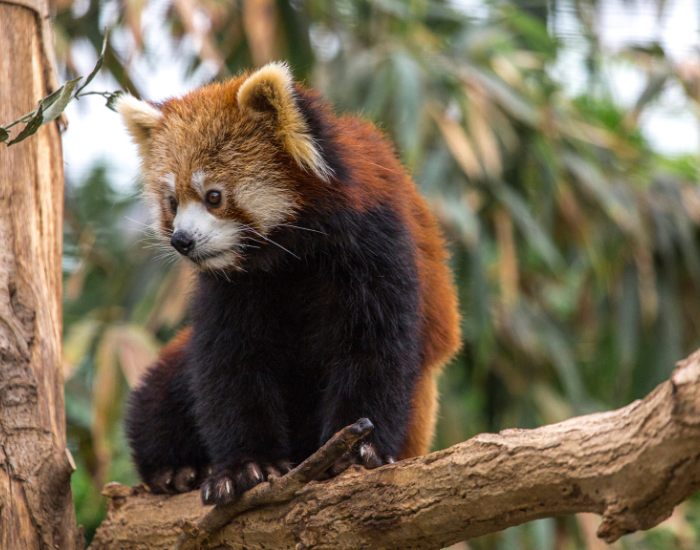
When you first see a red panda, confusion strikes immediately. Their appearance suggests a foxlike creature crossed with a raccoon. Yet their name invokes bears. The reality? Red pandas are so distinct that scientists have placed them in their own family, making them far more remarkable than any simple comparison suggests. But the plot thickens: their taxonomic placement has sparked debate, with some experts questioning whether they truly deserve their own family or should be grouped with related species.
These solitary, tree-dwelling mammals inhabit the misty, high-altitude forests of the eastern Himalayas. Their fiery coats, distinctive white facial markings, and ringed tails have captivated wildlife enthusiasts worldwide. But beyond their undeniable cuteness lies a creature of evolutionary wonder.
Let’s explore 12 must-know facts about red pandas, settle the bear debate once and for all, and understand why conservation matters for these endangered species.
1. Red Pandas (Ailurus fulgens) Are Not Bears, They belong to Another Family
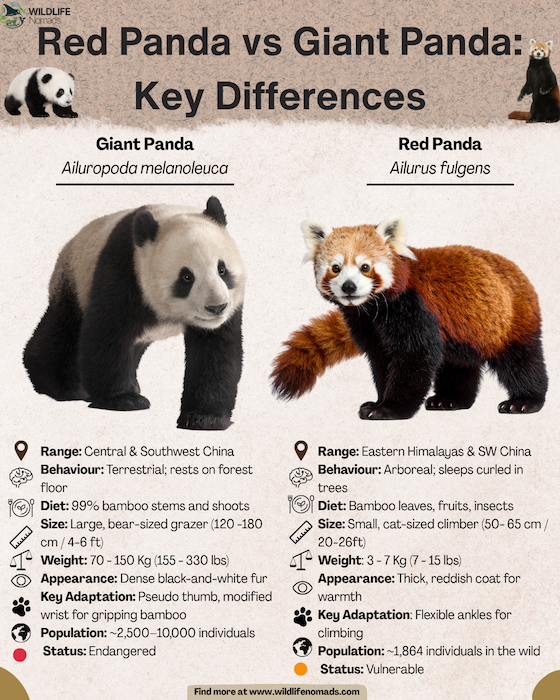
Are red pandas bears? The answer is definitively no. Red pandas (scientifically known as Ailurus fulgens, meaning “shining cat”) belong to their own distinct family called Ailuridae. There has been debate over which animal is the real panda, with some arguing that the red panda, discovered and named before the giant panda, has a stronger claim to the title. This unique classification highlights their evolutionary independence and the remarkable adaptations that set them apart from both the giant panda and other small mammals.
They are the only surviving members of this evolutionary lineage.
Giant pandas, by contrast, belong to the bear family (Ursidae). This distinction surprised scientists for decades. Both species share traits like ringed tails and climbing abilities. Both eat bamboo. Yet genetic studies in the early 2000s confirmed red pandas diverged from other carnivores over 20 million years ago.
Today, red pandas remain more closely related to raccoons and mustelids (weasels, skunks, otters) than to bears. Their ancient lineage sets them apart as a truly distinct species worthy of independent recognition.
2. The Original Panda: How Red Pandas Got Their Name
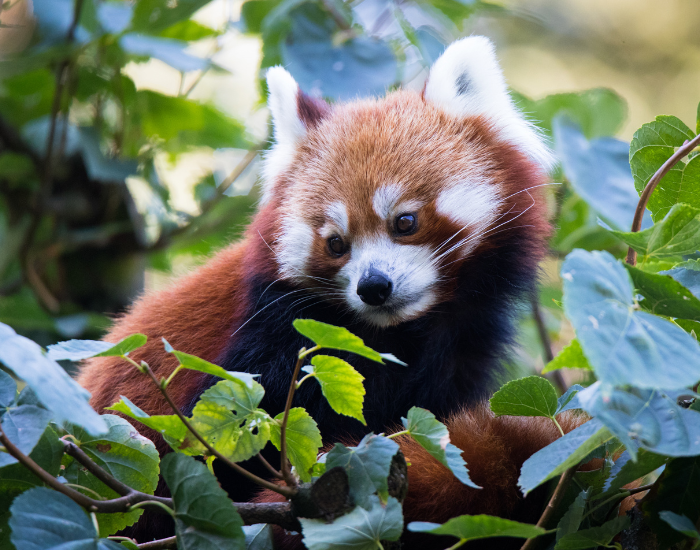
Here’s a fascinating twist in natural history. The red panda was the original panda, not the giant panda. French zoologist Frédéric Cuvier first discovered and named Ailurus fulgens in 1825, long before giant pandas entered scientific literature. The red panda’s discovery played a crucial role in shaping the identity and naming of this unique animal group.
The term “panda” itself derives from the Nepali word “ponya” or “nigalya ponya,” which translates to bamboo eater or bamboo footed. This naming captures their primary behavior perfectly. When giant pandas were later discovered in China, scientists named them after red pandas due to their shared bamboo-based diet.
Therefore, red pandas hold the true title of “original panda.” They inspired the name that later became synonymous with conservation worldwide.

3. Convergent Evolution: Why Red and Giant Pandas Appear Similar
Despite their genetic distance, red pandas and giant pandas share remarkable similarities. Both species evolved the same solution to the same environmental challenge: the false thumb. This enlarged wrist bone functions like an extra digit, enabling both species to grasp bamboo stalks with precision.
However, these similarities resulted from convergent evolution, not shared ancestry. Unrelated species developed identical traits to fill similar ecological roles. Red pandas and giant pandas evolved independently to exploit the same bamboo-rich resource.
Their shared “panda” characteristics, slow metabolism, specialized bamboo diet, and cold-climate adaptations, emerged through separate evolutionary pathways. This parallel creativity demonstrates nature’s remarkable ability to solve problems in identical ways.
4. Eastern Himalayan Habitat: Where Red Pandas Thrive
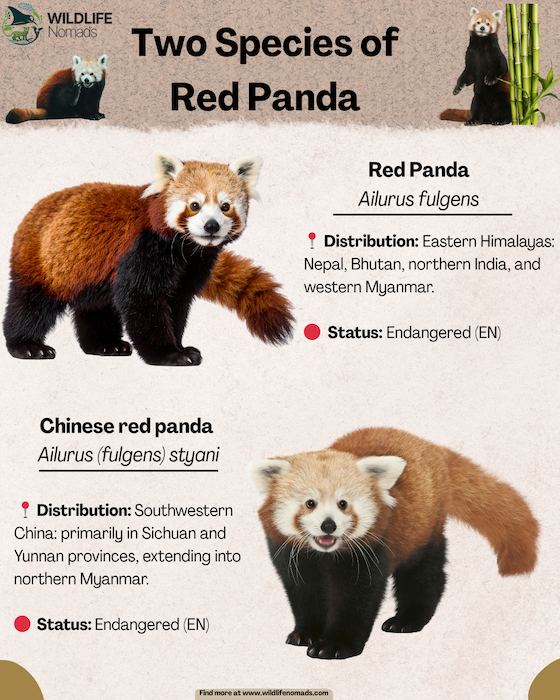
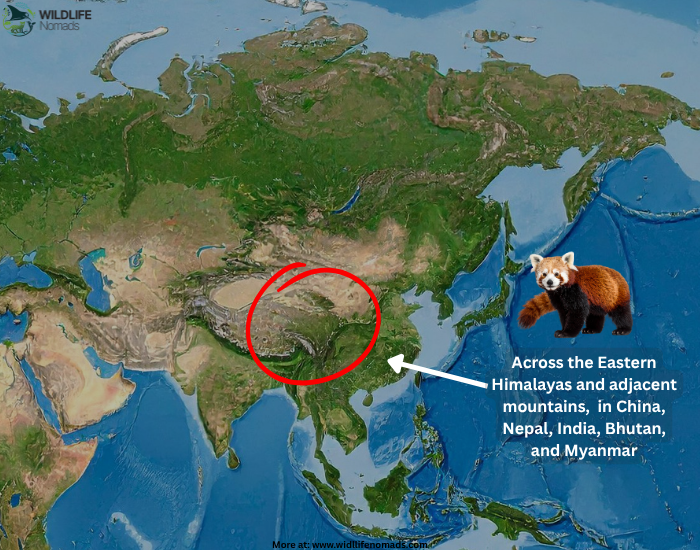
Red pandas inhabit the lush, high-altitude forests across the eastern Himalayas. Their range spans Nepal, India, Bhutan, Myanmar, and southwestern China. Recent genetic studies suggest these two subspecies may actually represent separate species, divided by the Nujiang River in China, making the Himalayan red panda (Ailurus fulgens fulgens) and the Chinese red panda (Ailurus fulgens styani) distinct evolutionary lineages.
Ailurus fulgens fulgens is primarily found in Nepal, India, eastern Nepal, Bhutan, and northern Myanmar, while Ailurus fulgens styani is primarily found in China’s Sichuan and Yunnan provinces and parts of Myanmar. China’s Sichuan and Yunnan provinces are especially important for red panda conservation, as they contain significant portions of the species’ range.
Red panda prefers temperate broadleaf and coniferous forests with dense bamboo thickets, abundant forest cover, and proximity to water sources. The amount of forest cover directly affects their distribution and home range size, with red pandas tending to have larger home ranges in areas with less forest cover. These endangered species thrive between 2,000 and 4,300 meters above sea level, where the cool, humid climate provides their ideal living conditions.
Unfortunately, deforestation, agricultural expansion, and urban development now threaten these fragile ecosystems daily. The red panda’s habitat is crucial for their survival, making habitat conservation essential for the species’ future.
The eastern Himalayas rank among the world’s most biodiverse regions. Beyond red pandas, these forests shelter snow leopards, Himalayan black bears, and countless endemic bird species. Protecting red panda habitat means safeguarding entire ecological communities.
5. Master Climbers: Red Panda Adaptations for Tree Life
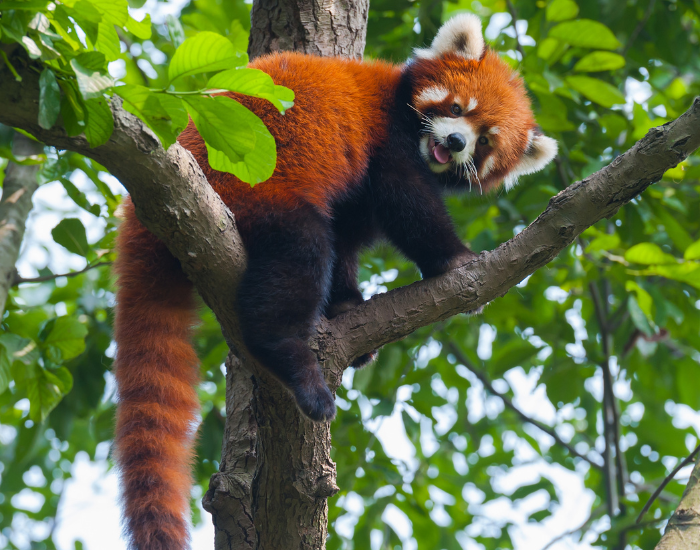
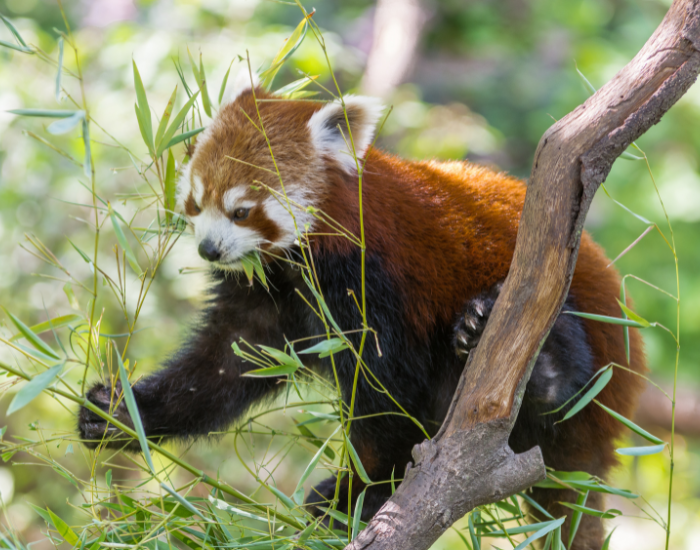
Red pandas spend most of their lives in trees, making them expert climbers. Their semi-retractable claws, flexible ankles, and exceptional balance allow them to navigate vertical terrain effortlessly. Their hind legs enable them to descend trees headfirst—a skill many cat species lack.
The bushy tail, growing nearly as long as their body, serves multiple purposes. During the day, it provides balance while climbing and aids in precise movements. During cold Himalayan nights, they wrap it around themselves like a scarf, providing essential insulation.
Their reddish-brown fur and white facial markings offer perfect camouflage against moss-covered branches. They rest in tree hollows during daylight hours, blending seamlessly into their surroundings. This adaptation demonstrates how millions of years shaped every aspect of their physiology.
6. Carnivores by Design, Bamboo Eaters by Necessity
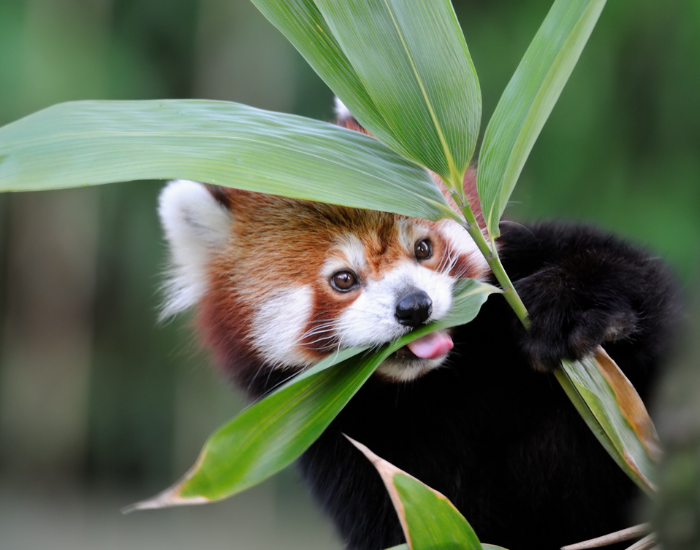
Red pandas eat a variety of foods, but here’s nature’s paradox: red pandas are technically carnivores despite eating almost exclusively bamboo. Their digestive system resembles that of meat-eating mammals. They possess a short, simple gut poorly adapted for digesting cellulose-rich plant material.
Red pandas eat 20 to 30 percent of their body weight in bamboo each day. Consequently, red pandas must consume enormous quantities of bamboo daily. They spend roughly 13 hours each day feeding, consuming up to 20,000 bamboo leaves. While bamboo comprises approximately 95 percent of their diet, they also eat fruits, berries, succulent grasses, insects, small mammals, and bird eggs.
To handle their preferred food efficiently, red pandas evolved a false thumb identical to the giant panda’s adaptation. This specialized appendage strips bamboo stems and holds them steady during feeding. Without this anatomical innovation, their bamboo-based lifestyle would prove impossible.
7. Solitary Behavior: The Red Panda Way
Red pandas are strictly solitary animals outside the breeding season. Each red panda occupies and defends a specific home range, which is the area they use for living and foraging. This solitary lifestyle minimizes competition and reduces social stress in their resource-limited habitat.
These endangered animals are crepuscular, meaning they’re most active during dawn and dusk hours. They rest throughout the day in tree hollows, emerging only when light levels drop. This timing avoids daytime predators while capitalizing on cooler temperatures and reduced human activity.
Red pandas communicate through scent marking and vocalizations. They possess scent glands beneath their tails and between their toes. When marking territory, they produce distinctive “huff-quack” sounds and high-pitched whistles. These calls signal territorial boundaries and attract potential mates during breeding season.
8. Conservation Crisis: Why Red Pandas Face Extinction
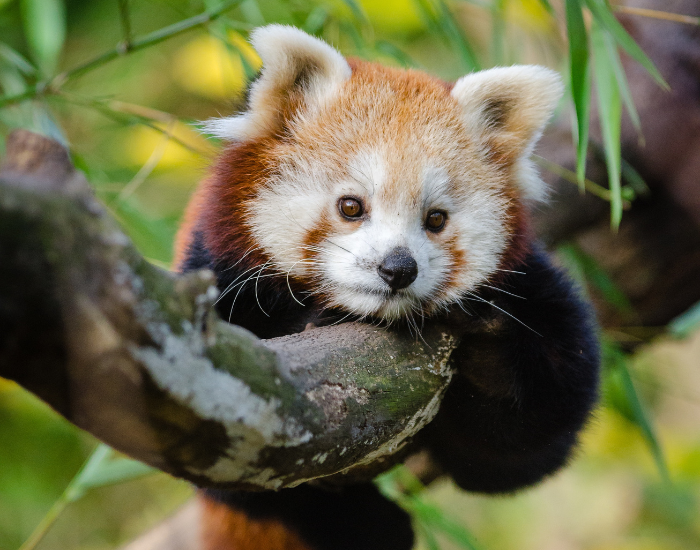
Red pandas are classified as endangered by the IUCN Red List. Fewer than 10,000 wild red pandas remain in existence today. Major threats to the species include habitat loss, forest fragmentation, and illegal poaching, all of which contribute to their declining numbers each year.
The threats multiply across their range. In Myanmar and parts of China, red panda pelts are sold illegally as luxury items, driving poaching pressure. Habitat fragmentation isolates red panda populations from one another, reducing genetic diversity and breeding success rates. Inbreeding becomes inevitable in fragmented populations, weakening future generations.
Conservation organizations worldwide now coordinate efforts to reverse these trends. The Red Panda Network, World Association of Zoos and Aquariums (WAZA), and Smithsonian’s National Zoo maintain international breeding programs. These initiatives preserve genetic diversity while supporting wild population recovery in Nepal, Bhutan, and China.
9. Climate Change: An Emerging Threat to Himalayan Forests
Climate change represents a new and accelerating threat to red panda survival. As temperatures rise, bamboo forests shift upward to higher elevations. This upward migration shrinks available habitat for species already living at extreme altitudes.
Additionally, climate change intensifies natural disasters across the Himalayas. Landslides, floods, and unpredictable weather patterns increasingly degrade the forests red pandas depend upon. Extreme weather events now occur with frightening regularity in this sensitive region.
Red pandas’ specialization makes them vulnerable to even slight environmental changes. They require cool, moist climates and dense forest canopy cover. Rising temperatures directly threaten their survival. Therefore, protecting red pandas demands both habitat restoration and broader climate action. Their fate intertwines with planetary environmental challenges facing humanity.
10. Evolutionary Adaptations for Himalayan Survival
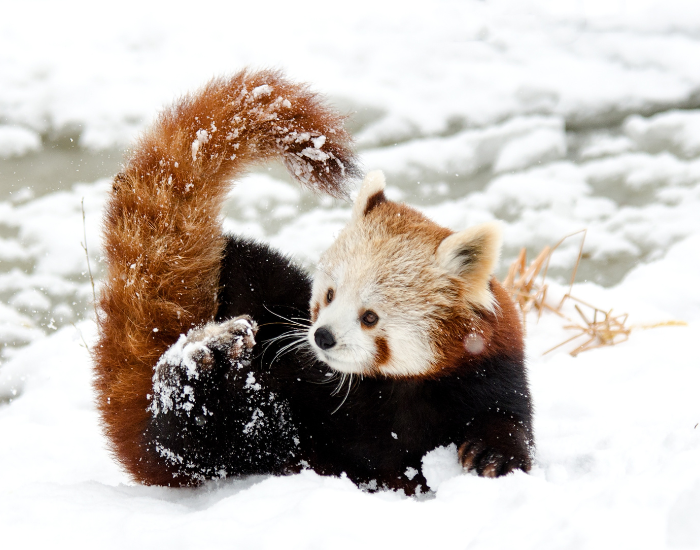
Every aspect of the red panda’s physiology reflects millions of years of adaptation. Their thick fur covers even the soles of their feet, providing insulation against freezing Himalayan temperatures. This complete body coverage allows them to survive in environments where other mammals would perish.
Red pandas maintain an exceptionally low metabolic rate, requiring minimal calories daily. This metabolic efficiency enables survival in cold, low-nutrient environments. When temperatures plummet, they curl into tight balls, using their bushy tails as insulation blankets against the cold.
Their distinctive white facial markings serve as natural fingerprint, each red panda possesses unique markings. Their reddish-brown coat color matches the lichen and moss covering forest trees perfectly. Evolution shaped every visible trait to maximize survival chances in their specific mountain habitat.
11. Ecosystem Engineers: The Ecological Importance of Red Pandas
Red pandas function as ecosystem engineers despite their small size. By feeding on bamboo and other vegetation, they promote healthy forest regeneration throughout their range. Their selective feeding patterns encourage diverse plant growth.
Red panda droppings disperse seeds across the forest floor, supporting regeneration of bamboo stands and fruiting plants. These plants sustain countless other species throughout the ecosystem. Therefore, protecting red pandas indirectly protects entire ecological networks.
As a flagship species, red pandas anchor conservation efforts benefiting hundreds of other organisms. Birds, amphibians, insects, and countless microorganisms depend upon the same delicate Himalayan forests. When we protect red pandas, we simultaneously protect these interconnected communities.
12. How You Can Support Red Panda Conservation
Conservationists emphasize a powerful truth: “Protecting one red panda protects an entire forest.” Individual action creates meaningful impact. Organizations like the Red Panda Network, World Wildlife Fund (WWF), and Rainforest Trust actively support conservation initiatives throughout Nepal, Bhutan, and China.
These organizations restore forest corridors, reducing habitat fragmentation that isolates populations. They work with local communities to reduce human-wildlife conflict through education and livelihood support. Training programs develop local “forest guardians” who actively monitor and protect wild red pandas.
Tourism also drives positive change when managed responsibly. Visiting designated parks and supporting local conservation projects generates income for communities. When red pandas become economically valuable alive rather than hunted, local incentives align with conservation goals.

FAQ About Red Pandas
No, red pandas are not bears. They belong to the distinct family Ailuridae, though they share distant common ancestors with both bears and raccoons. Genetic research confirms their unique evolutionary lineage diverged over 20 million years ago.
While they appear adorable and cuddly, red pandas remain wild, solitary animals. They are not domesticated and should never be kept as pets. These endangered species belong in protected forest habitats, not human homes.
Only distantly. Both belong to different families, giant pandas to Ursidae (bears) and red pandas to Ailuridae. They evolved similar traits like bamboo diets independently through convergent evolution, not shared recent ancestry.
The term “panda” derives from Nepali words meaning “bamboo eater.” Red pandas were discovered and named first, establishing the “panda” terminology. Giant pandas later received the same name due to their shared bamboo-eating behavior.
Red pandas inhabit the eastern Himalayas across Nepal, India, Bhutan, Myanmar, and southwestern China. They occupy high-altitude forests between 2,000 and 4,300 meters, preferring areas with dense bamboo thickets and cool, humid conditions.
Yes, in the southern hemisphere, the breeding season for red pandas is delayed compared to the northern hemisphere. This shift is due to seasonal differences, and it affects the timing of when cubs are born in zoos and habitats located in southern regions.
Saving a Species, Protecting a Forest
The red panda may superficially resemble a fox-cat-raccoon hybrid, but it represents something far more extraordinary. As the only surviving member of the Ailuridae family, Ailurus fulgens embodies millions of years of independent evolution. They are living relics of an ancient lineage.
Their story reveals that evolution rarely follows simple, linear paths. Nature’s creativity produces surprising solutions to environmental challenges. Red pandas remind us that biodiversity encompasses countless species we barely understand.
Protecting red pandas demands protecting the entire eastern Himalayan ecosystem. These forests shelter snow leopards, Himalayan black bears, endemic birds, and countless other species. Conservation efforts benefiting red pandas create ripple effects throughout interconnected ecological networks.
The next time someone asks whether red pandas are bears, you can confidently explain: Red pandas are something rarer, older, and infinitely more extraordinary. They’re a distinct evolutionary branch deserving protection for their own sake and for the forests they anchor. Their survival depends on our commitment to conservation.
Further Reading:
- The Importance of the Reintroduction of Species
- Animals of the Mongolian Gobi Desert
- Why Biodiverse Ecosystems Are More Resilient to Climate Change