Wildlife Nomads


The closest I have come to wild great apes was a jungle trek in Bukit Lawang, Sumatra. I looked a mother orangutan in the eyes, and gibbons called above us. So when I read that wild chimpanzees share boozy fruit, I laughed, then I wanted the details.
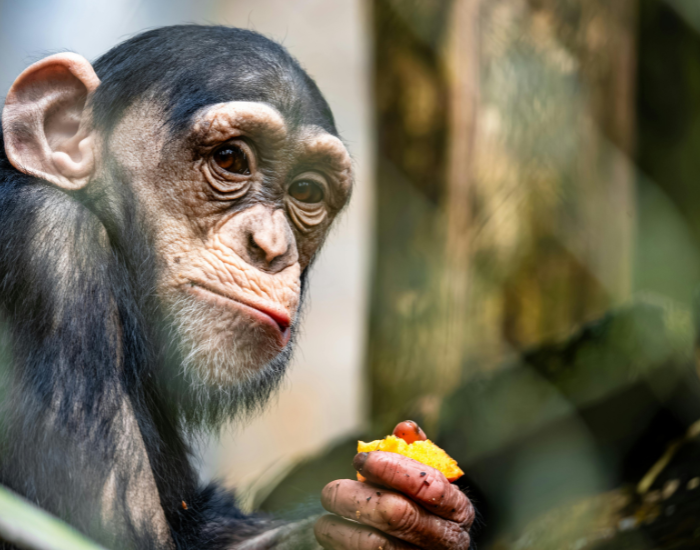
Do chimps drink alcohol? Not from a bottle, of course. But in 2025, researchers filmed wild chimps in Guinea-Bissau eating and sharing fermented fruit that contained ethanol. A second study then estimated how much alcohol wild chimps swallow every day.
Together, these studies hint that our love of a shared drink might be millions of years old. Here is what the science actually says, minus the hangover.
Do Chimps Drink Alcohol? The Short Answer
- Yes, a little, through fruit. Ripe fruit naturally ferments and contains small amounts of ethanol.
- They share it. Camera traps caught chimps sharing fermented breadfruit on 10 separate occasions.
- It is weak. The strongest fruit tested reached 0.61% alcohol by volume.
- It adds up. One study estimates about 14 grams of ethanol a day from fruit alone.
- They do not get drunk. Researchers saw no obvious signs of intoxication.

Caught on Camera in Guinea-Bissau
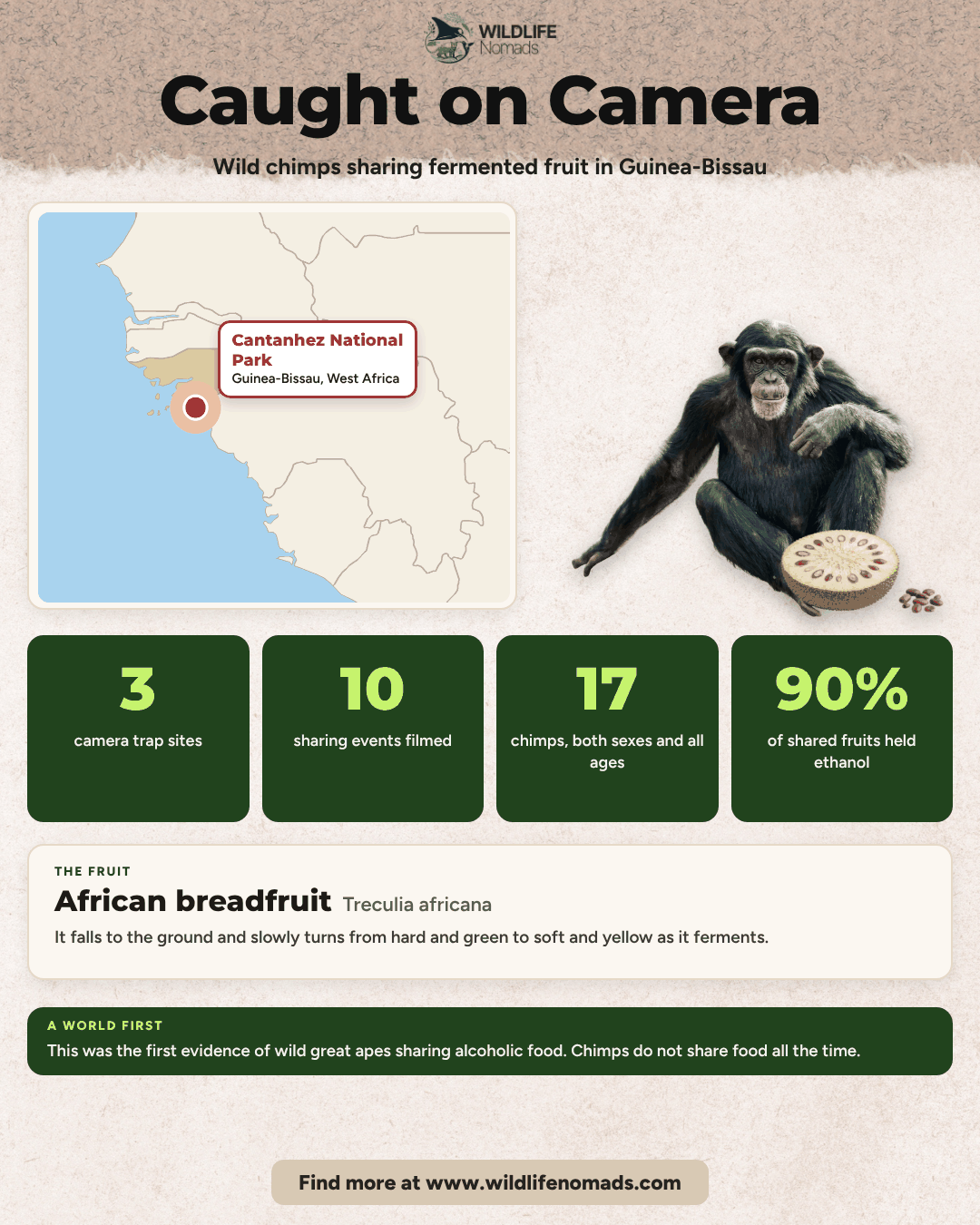
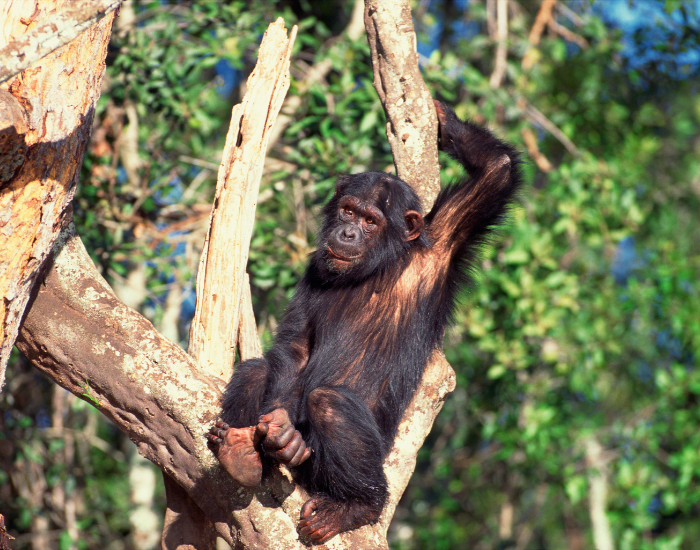
The first study comes from Cantanhez National Park in Guinea-Bissau, West Africa. Anna Bowland and her team at the University of Exeter studied western chimpanzees, Pan troglodytes verus.
These chimps are not used to people, so the team relied on motion-activated cameras at three sites. The cameras watched fallen African breadfruit, Treculia africana. This big, round fruit drops to the ground and slowly turns from hard and green to yellow and spongy.
On 10 occasions, the cameras recorded chimps sharing this fermented fruit. The sharing involved 17 individual chimps of both sexes and every age group. The team then tested the fruit and confirmed it contained ethanol.
This was the first evidence of wild great apes sharing alcoholic food. That matters, because chimps do not share food all the time. As a result, the researchers think the behaviour could be important.
How Boozy Is the Fruit, Really?
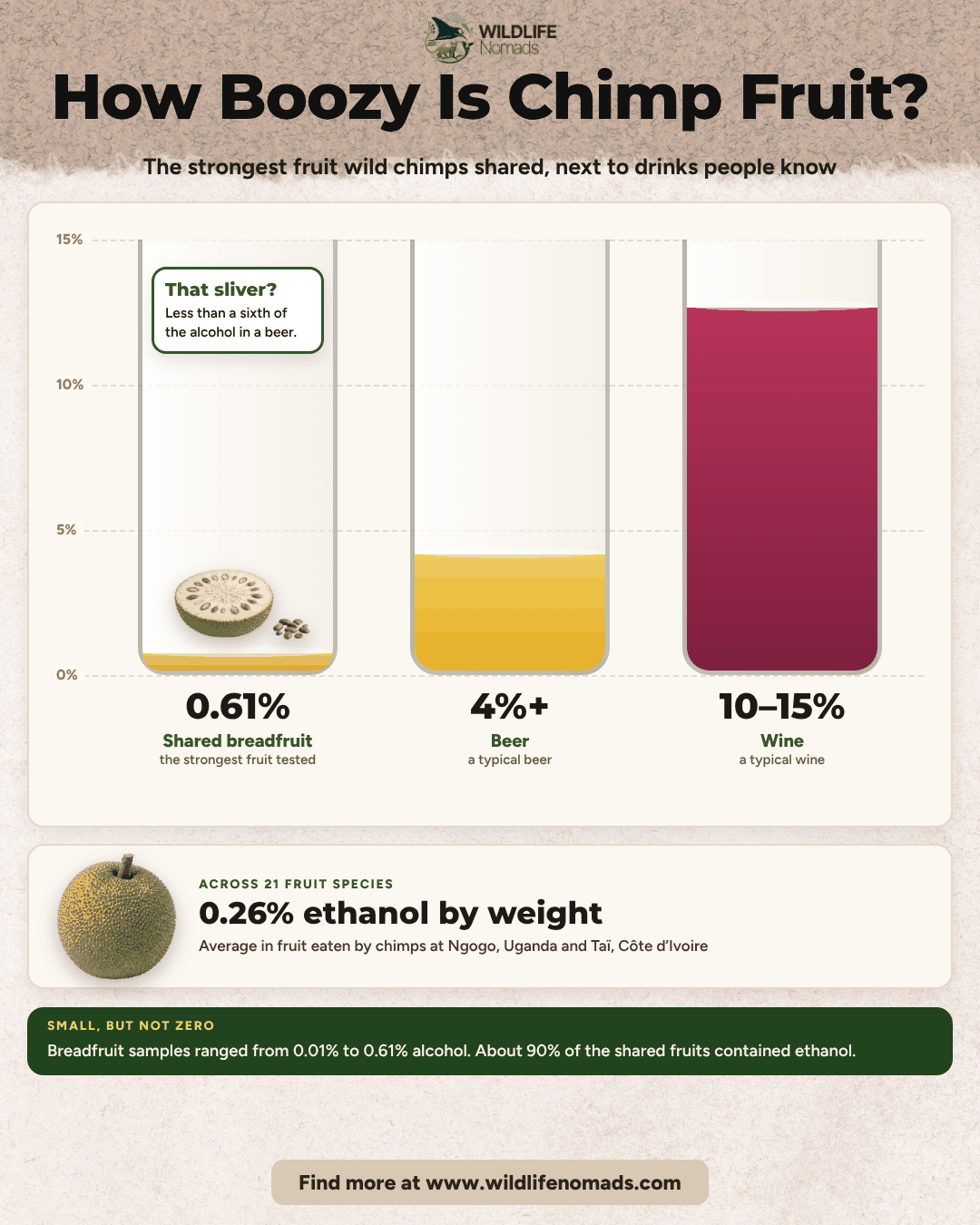
Not very. The strongest breadfruit sample reached 0.61% alcohol by volume. That is far weaker than even a light beer.
However, chimps eat a lot of fruit. In September 2025, a UC Berkeley team led by Aleksey Maro tested the fruit itself. They measured ethanol in fruits chimps eat in Uganda and Côte d’Ivoire.
| Study | Where | What they found |
|---|---|---|
| Bowland et al. 2025, Current Biology | Cantanhez, Guinea-Bissau | Chimps shared fermented breadfruit on 10 occasions; peak 0.61% ABV |
| Maro et al. 2025, Science Advances | Ngogo (Uganda) and Taï (Côte d’Ivoire) | 21 fruit species averaged 0.26% ethanol by weight |
| Maro et al. 2025, Science Advances | Both sites | About 14 g of ethanol a day per chimp |
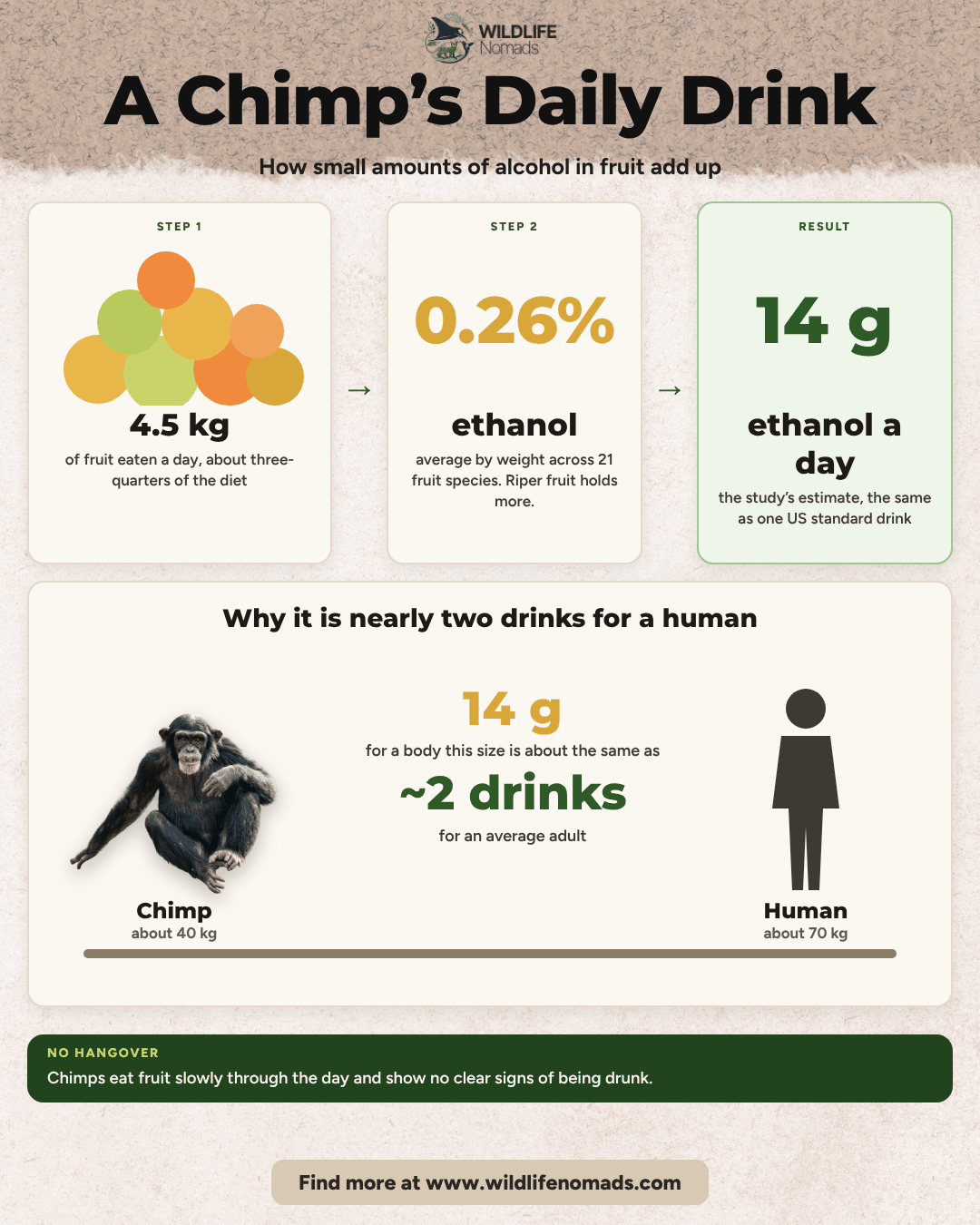
Chimps at these sites eat about 4.5 kilograms of fruit a day. Fruit makes up roughly three-quarters of their diet. So small amounts of alcohol add up to about 14 grams of ethanol daily.
For comparison, a US standard drink holds 14 grams of ethanol. Chimps are smaller than us, so the researchers say that intake is closer to two drinks for a human.
Why Would a Chimp Share Its Snack?
This is the fun part, and also the most uncertain. In humans, alcohol releases dopamine and endorphins, which make us feel happy and relaxed. Sharing a drink also helps people bond.
The Exeter team asks whether chimps might get similar benefits. If so, sharing fermented fruit could be an early form of feasting. That would push the roots of our social drinking deep into our evolutionary past.
For now, that remains a hypothesis. Nobody knows yet whether chimps seek out boozy fruit on purpose, or just eat what is ripe.
The Drunken Monkey Hypothesis
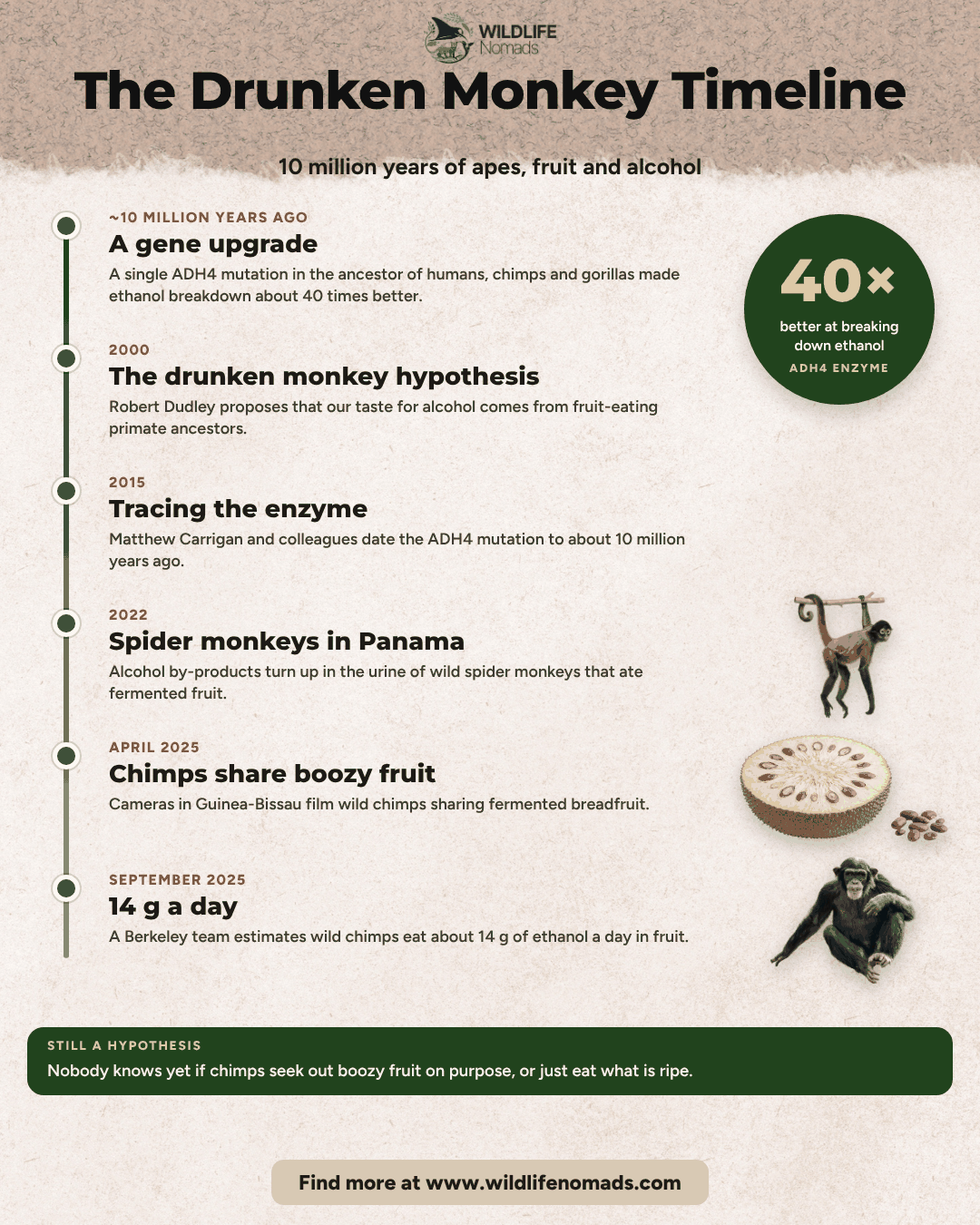
Back in 2000, Berkeley biologist Robert Dudley proposed the drunken monkey hypothesis. His idea is simple. Primates evolved eating ripe fruit, and ripe fruit contains alcohol. So our attraction to alcohol may come from fruit-eating ancestors.
Many primatologists were sceptical at first. However, evidence keeps piling up. In 2022, Dudley’s team found alcohol by-products in the urine of wild spider monkeys in Panama that ate fermented fruit.
I grew up in Mexico, so tequila stories come naturally to me. On a visit to an agave crop, a local guide explained that some agaves, and so tequila, depend on bats. Alcohol and wildlife are tangled together in more ways than we think.
A 10-Million-Year-Old Gene for Handling Alcohol
Here is a piece of evidence I find fascinating. In 2015, Matthew Carrigan and colleagues traced the history of an enzyme called ADH4. It helps break down ethanol in the gut.
They found a single mutation, about 10 million years ago, in the shared ancestor of humans, chimps and gorillas. It made the enzyme about 40 times better at processing ethanol. The timing matches when our ancestors spent more time on the ground, where fallen fruit ferments.
In other words, African apes were built to handle a bit of alcohol long before anyone brewed beer.
So, Are Chimps Getting Drunk?
No. Chimps eat fruit slowly through the day, and they show no clear signs of intoxication. To get drunk, a chimp would have to eat so much fruit that its stomach would swell painfully.
That makes sense from a survival point of view. A tipsy chimp in the rainforest would fall more easily and react more slowly. Natural selection would not favour that.
Chimps also do an important job while they feast. Like many fruit-eating primates, they spread seeds through the forest. You can see how that fits into a food web in our ecosystem explorer.
What Scientists Still Don’t Know
- Do chimps choose riper, boozier fruit on purpose?
- How fast do chimps break down ethanol compared with us?
- Does sharing fermented fruit strengthen bonds between individuals?
- How common is this behaviour across other chimp communities?
The Exeter team suspects that sharing alcoholic fruit is probably fairly widespread. Better cameras and more fruit testing should answer these questions soon.
FAQs About Chimps and Alcohol
Wild chimpanzees consume small amounts of alcohol through ripe, fermented fruit. In 2025, researchers filmed chimps in Guinea-Bissau sharing fermented breadfruit that contained ethanol. They do not drink alcoholic drinks made by people.
A 2025 study in Science Advances estimated that wild chimps eat about 14 grams of ethanol a day through fruit. That equals one US standard drink, or nearly two when adjusted for their smaller body size.
No. Researchers saw no clear signs of intoxication. A chimp would need to eat so much fruit that its stomach would swell painfully before it got drunk.
The chimps in Cantanhez National Park shared African breadfruit, Treculia africana. The strongest sample contained 0.61% alcohol by volume, weaker than a light beer.
It is the idea that humans’ attraction to alcohol comes from fruit-eating primate ancestors. Biologist Robert Dudley proposed it in 2000, and recent chimp studies support parts of it.
A Toast to Our Fruit-Loving Cousins
Do chimps drink alcohol? In a small, fruity way, yes, and they seem to share it. These studies suggest our taste for a shared drink may have very old roots.
If you love primate stories, read our baboon facts next. Then take the quiz below, and tell me in the comments what surprised you most.
References:
Bowland, A. C., et al. (2025). Wild chimpanzees share fermented fruits. Current Biology. Press release: University of Exeter
Maro, A., Sandel, A. A., Blaiore, B. Z. A., Wittig, R. M., Mitani, J. C., & Dudley, R. (2025). Ethanol ingestion via frugivory in wild chimpanzees. Science Advances, 11(38). https://doi.org/10.1126/sciadv.adw1665
Carrigan, M. A., Uryasev, O., Frye, C. B., Eckman, B. L., Myers, C. R., Hurley, T. D., & Benner, S. A. (2015). Hominids adapted to metabolize ethanol long before human-directed fermentation. Proceedings of the National Academy of Sciences, 112(2), 458–463. https://doi.org/10.1073/pnas.1404167111
Dudley, R. (2000). Evolutionary origins of human alcoholism in primates. The Quarterly Review of Biology, 75(1), 3–15. https://doi.org/10.1086/393255