
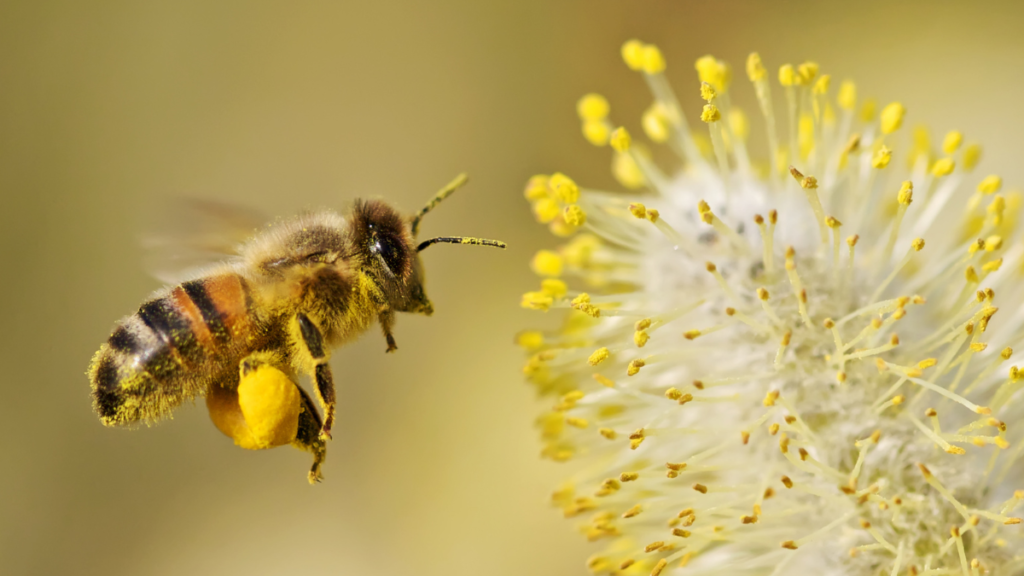
During my bachelor’s degree, I had to build an entomology collection. My classmates and I spent long nights in the lab pinning and identifying insects. We sorted beetles, moths, the odd wasp, and drawer after drawer of common bees like the honeybee.
That lab doubled as a biological collection, and my professor was a bee specialist. To my shock, the trays held thousands of green bees that all looked identical to me. Slowly, painfully, my friends and I learned to tell them apart.
I never expected that skill to matter decades later. Yet last spring, walking through Luxembourg, I watched imported Asian Hornet (Vespa velutina). That moment is exactly why learning to identify bee species matters. There are roughly 20,000 bee species worldwide, and most people can name only one. This guide fixes that.
Below, I walk through 15 bee species you can actually recognize in the field. You will learn what they look like, how they live, and why protecting this diversity keeps whole ecosystems alive.
How Bees Are Classified
Before the species, a quick map. Scientists classify bees as insects in the order Hymenoptera, the same group that holds ants and wasps. A bee is an insect, not an arachnid. It has six legs, two pairs of wings, and antennae, not the eight legs of a spider.
All bees fall into seven distinct families. The Apidae family is the largest bee family, with over 5,700 species, including honey bees, bumble bees, and carpenter bees. The Halictidae family contains the sweat bees found worldwide. The Megachilidae family holds leaf-cutter and mason bees. Andrenidae covers most mining bees, while Colletidae includes the plasterer bees.
The two rarest families round out the group. Melittidae is a small, ancient family of specialist foragers. The smallest bee family is Stenotritidae, a handful of large, fast species found only in Australia. Bees evolved from wasps that switched to a vegetarian diet, trading hunting for a life among flowering plants.
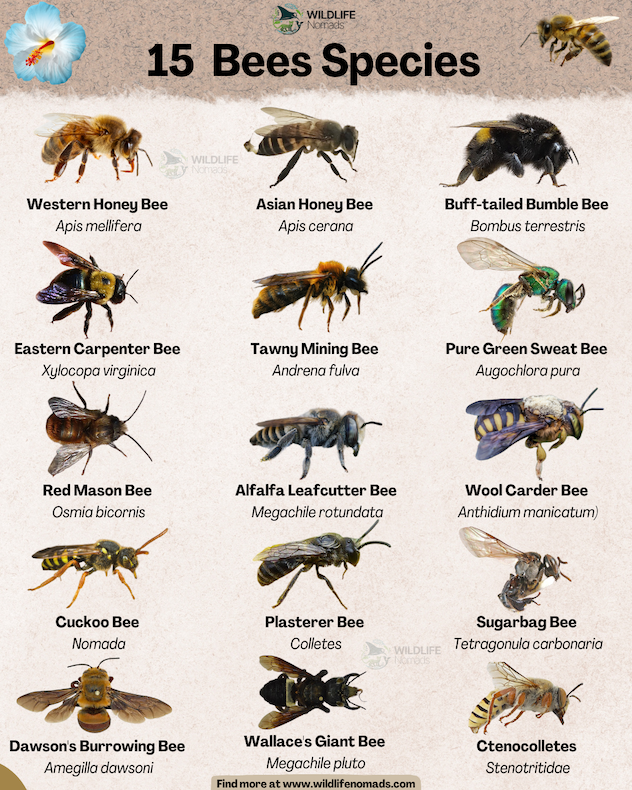
1. Western Honey Bee (Apis mellifera)
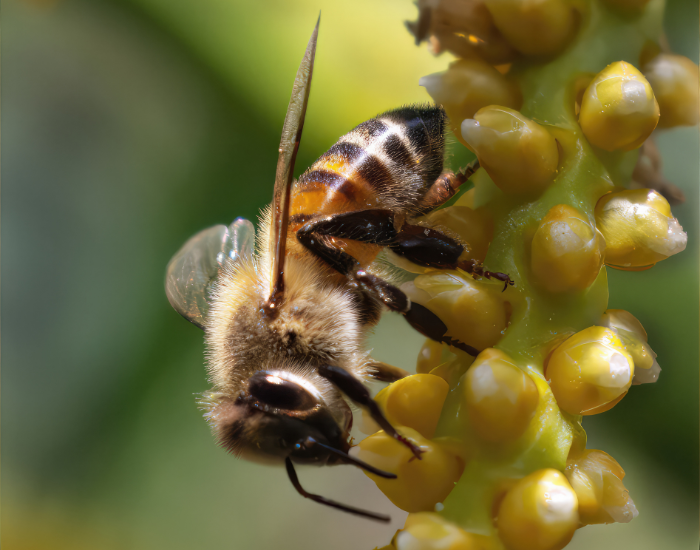
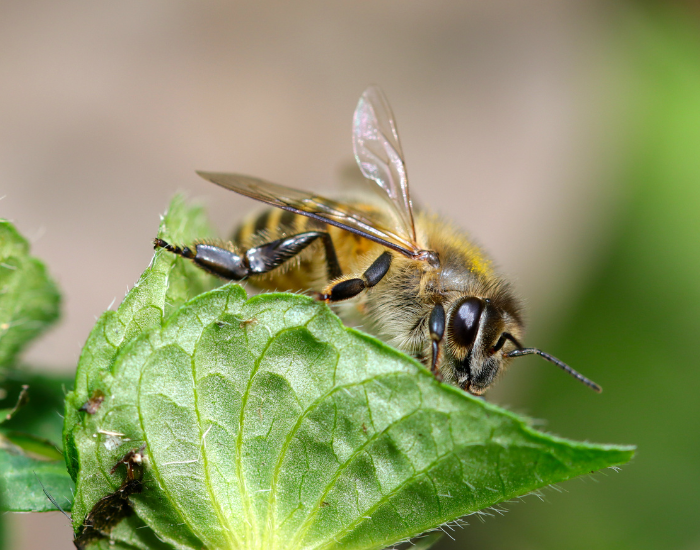
Start with the bee everyone thinks of first. The European honey bee, Apis mellifera, is the world’s most managed pollinator. Golden-brown with dark bands, fuzzy thorax, and a modest size, it visits gardens and fruit trees across every continent except Antarctica.
Honey bees are social bees that form huge honey bee colonies of 20,000 to 60,000 individuals. Worker bees build wax combs, collect pollen in pollen baskets on their hind legs, and produce the honey we harvest. In the United States alone, honey bees contribute an estimated $20 billion annually to crop value through pollination.
2. Asian Honey Bee (Apis cerana)
Honey bees include only seven known species in the genus Apis, and this is the one I met in Luxembourg. Apis cerana is smaller and darker than its western cousin, with crisper abdominal stripes. It nests in hollow trees and cavities, much like the European honeybee.
Here is why identification matters. Where non-native honey bees spread, they compete with native bees for nectar and pollen. Watching Asian workers displace local foragers reminded me that even a “helpful” bee can tip an ecosystem off balance. Knowing which bee you are looking at is the first step to protecting the rest.
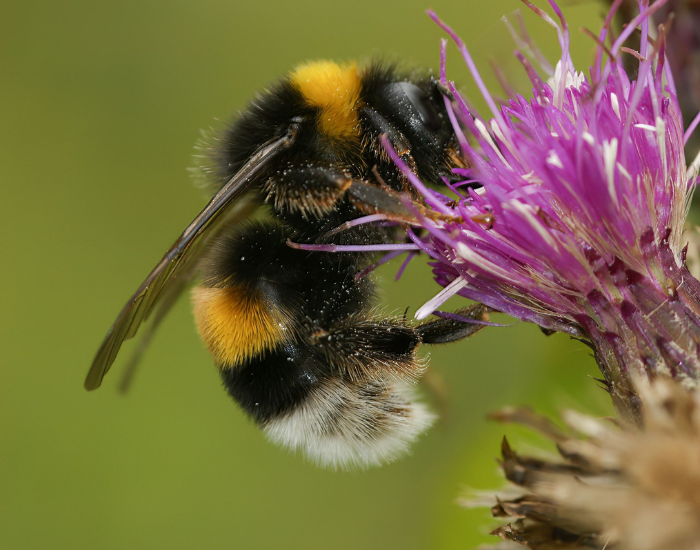
3. Buff-tailed Bumble Bee (Bombus terrestris)
Bumble bees are the plush, rounded giants of the bee world, and there are about 250 species globally. The buff-tailed bumble bee wears black and yellow bands with a pale tail. Its dense, feathery hairs make it look almost cuddly.
These bees earn their keep through buzz pollination. A bumble bee grips a flower and vibrates its flight muscles, shaking loose pollen that honey bees simply cannot reach. This trick is vital for tomatoes, blueberries, and other crops. Bumble bees also pollinate in cooler temperatures than most bees, working early mornings and mountain meadows.
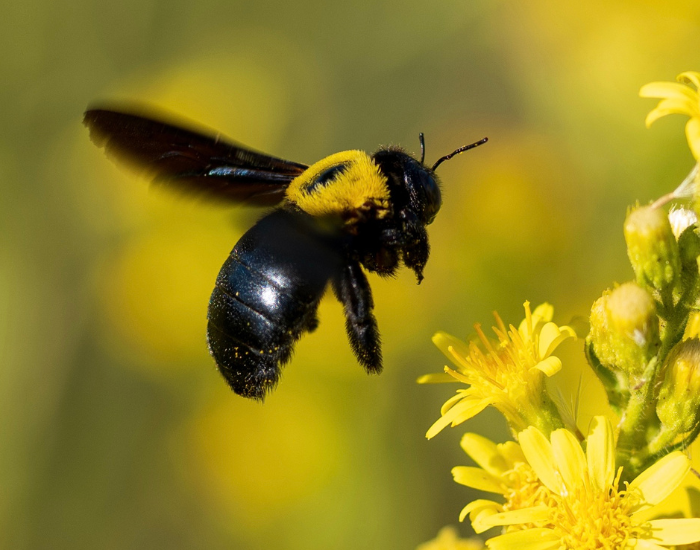
4. Eastern Carpenter Bee (Xylocopa virginica)
People often mistake carpenter bees for bumble bees. Look at the abdomen: a carpenter bee’s is shiny and hairless, almost black, while a bumble bee’s is fuzzy. They are large, loud, and surprisingly gentle.
Carpenter bees bore round holes into wood to create nests, drilling clean tunnels in fences, decks, and dead branches. Females lay eggs in these galleries and stock each brood cell with pollen. The damage looks alarming, but these bees are excellent pollinators of open flowers.
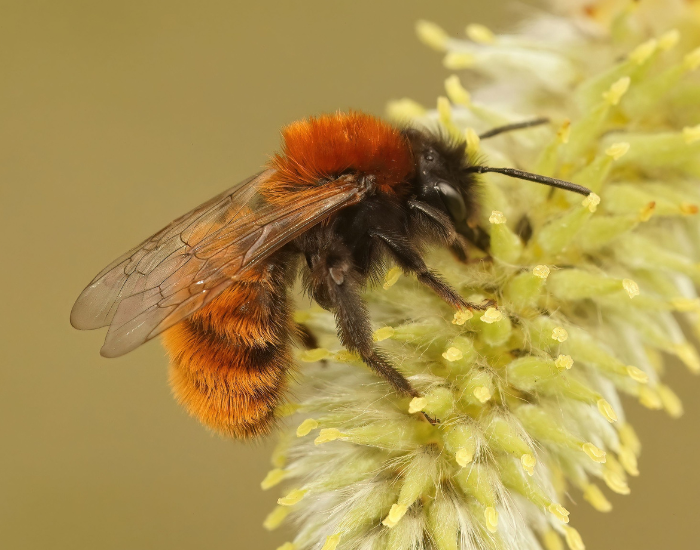
5. Tawny Mining Bee (Andrena fulva)
In early spring, watch your lawn for tiny volcano-shaped mounds of soil. Those are the work of mining bees, and the tawny mining bee is the showstopper. The female glows a rich fox-red, unmistakable against fresh grass.
Mining bees dig burrows in the ground and stay active in spring, timing their short season to early flowering plants and fruit trees. They are solitary and harmless. Each female works alone, provisioning her own nest, which makes them gentle neighbors for any garden.
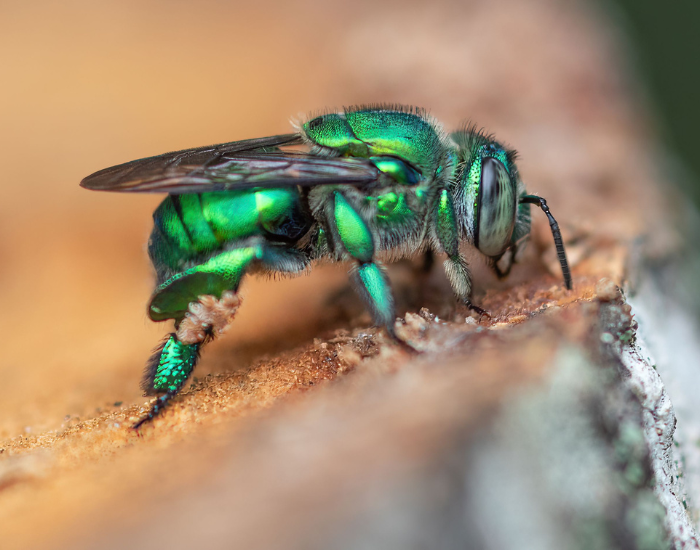
6. Pure Green Sweat Bee (Augochlora pura)
Sweat bees are small, often overlooked, and sometimes stunningly metallic. The pure green sweat bee (Augochlora pura) is a standout example, shining a brilliant emerald bronze that catches the light like a living jewel in eastern North America.
The common name fits the family’s odd habit: many halictid bees are attracted to human perspiration to sip salt on hot days. Do not swat them, they rarely sting. As solitary ground- and wood-nesters, these efficient pollinators visit a wide range of wildflowers and garden crops throughout the growing season.
7. Red Mason Bee (Osmia bicornis)
If you want one bee to champion in your garden, choose the mason bee. Red mason bees are compact, ginger-furred, and astonishingly efficient. A few blue-black relatives shimmer in the same genus.
Mason bees are excellent pollinators and nest in hollow stems or wood, sealing their brood cells with mud. They readily move into bee hotels, which makes them easy to host. A single female can out-pollinate many honey bee workers, because she tumbles through flowers rather than working them neatly.
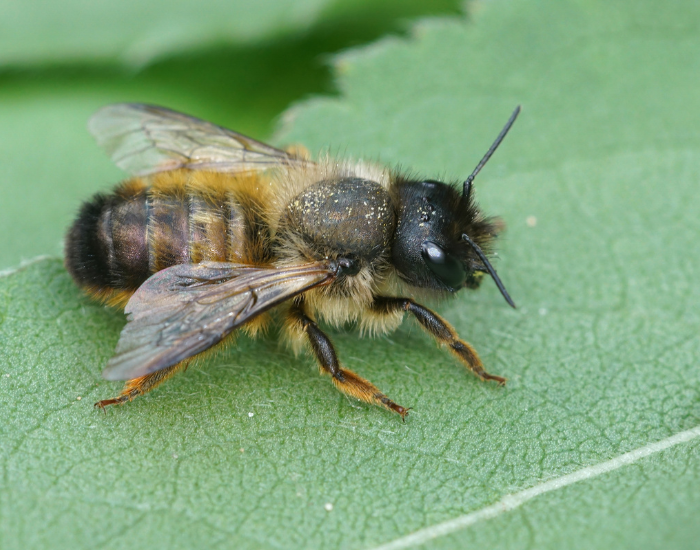
8. Alfalfa Leafcutter Bee (Megachile rotundata)
Have you ever found neat semicircles cut from your rose or shrub leaves? Meet the family responsible. While many wild leafcutters slice foliage to line their nests, the alfalfa leafcutter bee (Megachile rotundata) is perhaps the most famous, managed globally to pollinate forage crops.
Unlike honey bees, these megachilid species carry pollen on dense hairs (scopa) on the underside of their abdomen rather than on their legs, often making them look dusted in gold beneath. They are solitary, gentle, and superb pollinators, the minor leaf damage they cause is purely cosmetic compared to the massive agricultural payoff they provide.
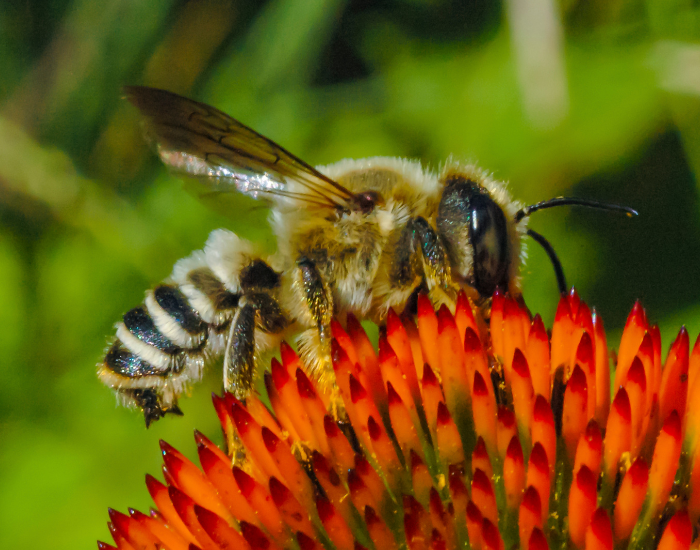
9. Wool Carder Bee (Anthidium)
Wool carder bees break the “bees are docile” rule in the most interesting way. Males are large, boldly marked with yellow, and fiercely territorial. They patrol a patch of flowers and body-slam intruders, including other bees.
Females earn the name by shaving fuzz from plant leaves to line their nests, gathering it like tufts of wool. They favor deep flowers and lamb’s ear in gardens. Watching a male defend his turf is one of the liveliest shows in the insect world.
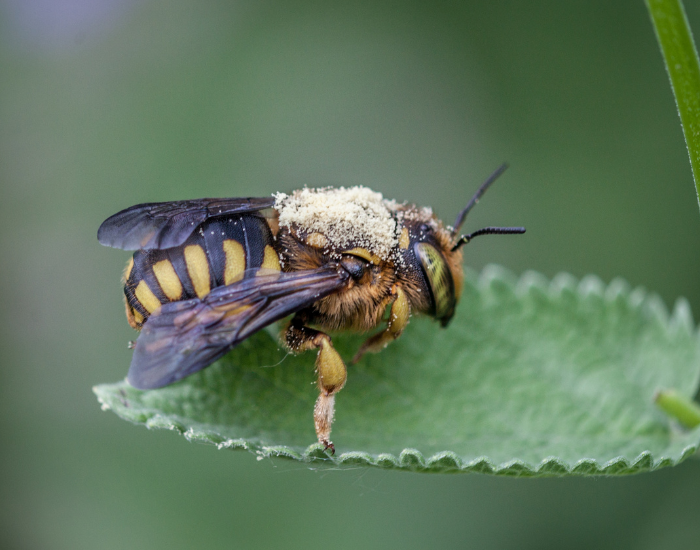
10. Cuckoo Bee (Nomada)
Not every bee builds a home. Cuckoo bees are the con artists of the group, and they look the part. Slender, nearly hairless, and often wasp-like in red and black, they lack the pollen-carrying hairs of honest workers.
True to their name, females sneak into the nests of other bee species, usually mining bees, and lay eggs there. The cuckoo larva hatches and eats the host’s stored pollen. Over 90% of bee species are solitary, and this parasitic lifestyle only works because so many solitary hosts exist.
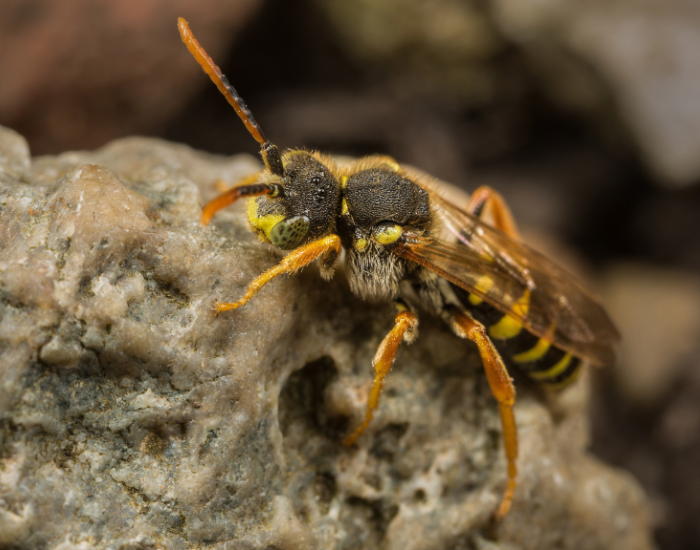
11. Plasterer Bee (Colletes)
Plasterer bees, also called cellophane bees, have one of the neatest tricks in bee biology. Females line their underground brood cells with a clear, waterproof secretion that dries like plastic wrap. It protects the young from flooding and mold.
These Colletidae bees are ground nesters, often forming large aggregations in sandy banks. They are gentle despite the crowds. Different bee species visit different flowers and bloom at different times, and plasterer bees specialize in specific plant species, timing their flight to match.
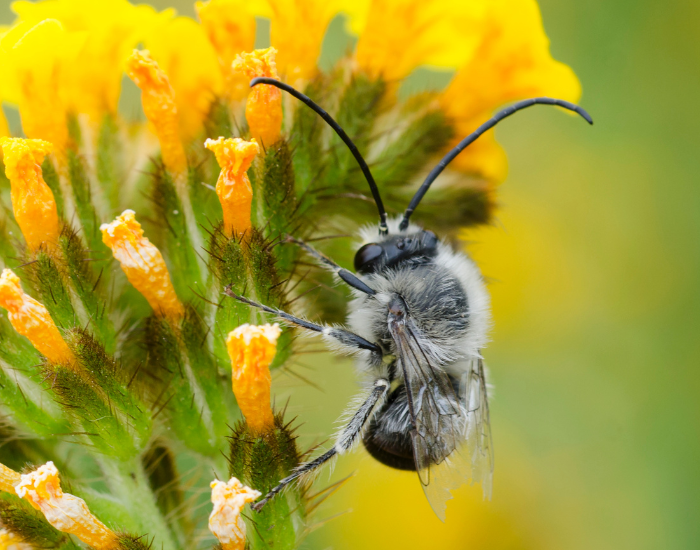
12. Sugarbag Bee (Tetragonula carbonaria)
Australia’s sugarbag bee proves you do not need a stinger to thrive. Stingless bees are tiny, black, and social, storing honey in resin pots inside hollow trees. Indigenous Australians have harvested their tangy “sugarbag” honey for millennia.
These bees build spiraling brood combs and defend their hive entrance with sticky resin instead of venom. They pollinate native plants and macadamia orchards alike. Losing their nest sites to land clearing is one of many reasons protecting a diversity of bee species matters.
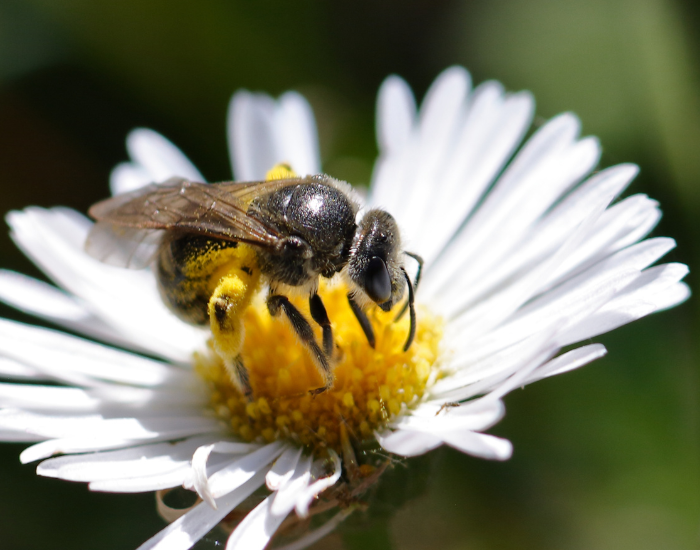
13. Dawson’s Burrowing Bee (Amegilla dawsoni)
Few bees put on a spectacle like Dawson’s burrowing bee. In the Western Australian outback, thousands emerge at once, carpeting the ground near their nest entrances. Males wrestle furiously for mates in the dust.
These are among the largest bees on the continent, fast and loud in flight. Females dig deep burrows in hard-baked clay pans, provisioning each brood cell with pollen and nectar. The whole frenzy lasts only a few weeks, tied tightly to the desert’s brief bloom.
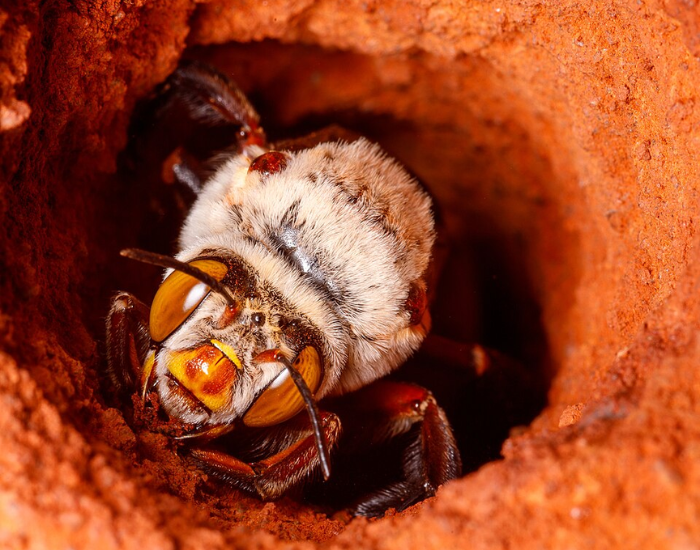
14. Wallace’s Giant Bee (Megachile pluto)
This is the bee I most want to see before I die. Wallace’s giant bee is the largest bee on Earth, with a wingspan wider than your thumb and huge jaws like a stag beetle’s. Rediscovered in Indonesia in 2019, it had been feared extinct.
Remarkably, this megachilid nests inside active termite nests in trees, using its jaws to gather resin that keeps the termites out of its chambers. It is a living reminder of how much bee diversity still hides in the world’s forests.
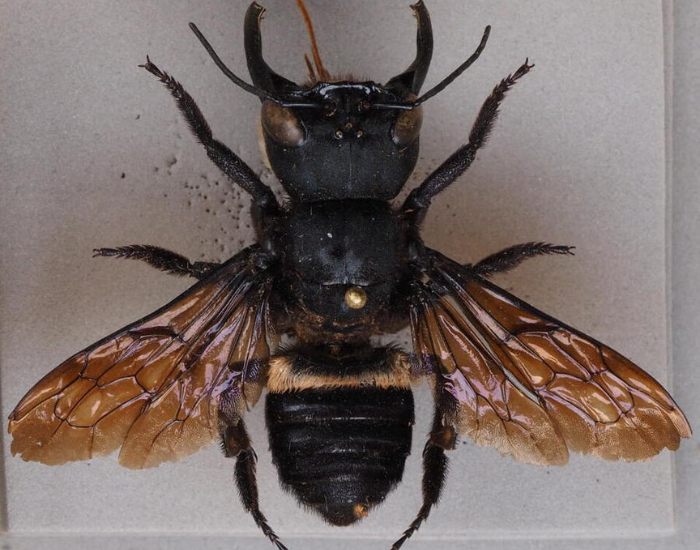
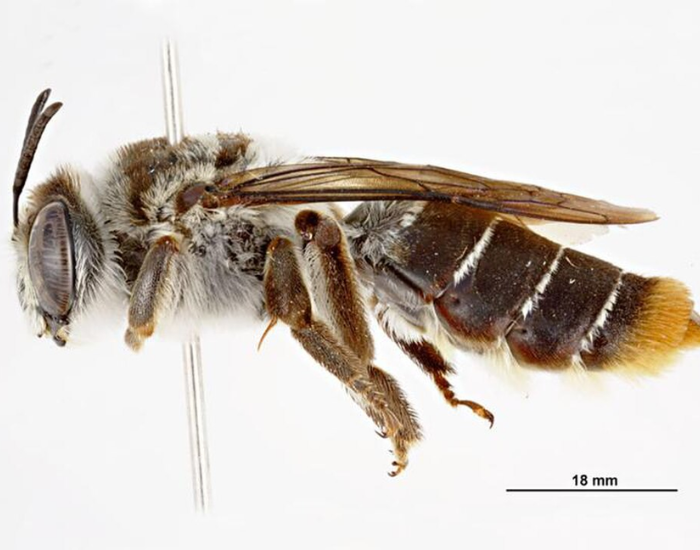
15. Ctenocolletes (Stenotritidae)
I end with the family almost no one knows. Stenotritidae is the smallest bee family, found only in Australia, holding just a handful of large, swift, ground-nesting species. Ctenocolletes are the standouts, fast fliers with dense hair.
They dig deep, unlined burrows in sandy soil and forage on native shrubs. Because these bees are so specialized and so geographically restricted, they show how fragile a lineage can be. When their habitat vanishes, there is nowhere else for them to go.
Why Bee Diversity Matters
Bees play a vital role in ecosystems by pollinating flowering plants. In fact, bees are responsible for the reproduction of over 300,000 species of flowers, and roughly one third of the human food supply depends on bee pollination. Around 75% of North American plant species depend on insect pollination to reproduce.
That web is under strain. Varroa mites significantly threaten honey bee colonies, spreading viruses through the hive. Colony collapse disorder can empty a healthy hive within two weeks, and pesticides threaten bee queens, reducing their reproductive rates.
Chemistry makes it worse. Neonicotinoids act on the same nerve receptors as nicotine, but they are estimated to be 1,000 to 10,000 times more toxic to bees. Habitat loss compounds the damage. The UK has lost 97% of its wildflower meadows since the 1930s, stripping wild bees of the food they need.
FAQs about Bees
Bees are insects in the order Hymenoptera, alongside ants and wasps. They are winged insects with six legs, two pairs of wings, and branched body hairs for carrying pollen. All bee species split across seven families, from the huge Apidae to the tiny Stenotritidae.
A bee’s full classification runs kingdom Animalia, phylum Arthropoda, class Insecta, order Hymenoptera, and superfamily Apoidea. Within that superfamily sit the seven bee families. Solitary bees make up the largest group, while familiar social bees like honey bees form only a small fraction.
The seven types most people encounter are honey bees, bumble bees, carpenter bees, mining bees, sweat bees, mason bees, and leafcutter bees. Together they cover the social hive-builders and the solitary nesters. Learning these seven gives you a foundation to identify almost any bee you meet.
Plant a variety of flowering plants so something blooms in every season, since different bees need different flowers. Provide bees with nectar for energy and pollen for protein, add a shallow water source, and skip harsh chemicals. Building bee hotels gives solitary bees like mason bees a place to nest.
The Bottom Line
Once you can name the bees around you, you start to see an ecosystem instead of a blur. Each of these 15 species fills a role no other can, from the buzz-pollinating bumble bee to the termite-dwelling giant of Indonesia. Protecting that diversity is not sentiment; it is how our food and wild flora keep reproducing.
So next time a bee lands nearby, look closer before you flinch. Notice the legs, the hairs, the flight. Then meet a few of their relatives in my guides to honey bees, blue bees, and green bees — and tell me in the comments which species you spotted.
Can You Name That Bee? 🐝
A 15-photo identification challenge — the wrong answers are deliberately tricky look-alikes from a similar group. Go back and change any answer before you score.
Which bee is this?
References:
Danforth, B. N., Cardinal, S., Praz, C., Almeida, E. A. B., & Michez, D. (2013). The impact of molecular data on our understanding of bee phylogeny and evolution. Annual Review of Entomology, 58, 57–78. https://doi.org/10.1146/annurev-ento-120811-153633
Goulson, D., Nicholls, E., Botías, C., & Rotheray, E. L. (2015). Bee declines driven by combined stress from parasites, pesticides, and lack of flowers. Science, 347(6229), 1255957. https://doi.org/10.1126/science.1255957
Ollerton, J., Winfree, R., & Tarrant, S. (2011). How many flowering plants are pollinated by animals? Oikos, 120(3), 321–326. https://doi.org/10.1111/j.1600-0706.2010.18644.x
Potts, S. G., Biesmeijer, J. C., Kremen, C., Neumann, P., Schweiger, O., & Kunin, W. E. (2010). Global pollinator declines: Trends, impacts and drivers. Trends in Ecology & Evolution, 25(6), 345–353. https://doi.org/10.1016/j.tree.2010.01.007
Woodcock, B. A., Bullock, J. M., Shore, R. F., Heard, M. S., Pereira, M. G., Redhead, J., Pywell, R. F. (2017). Country-specific effects of neonicotinoid pesticides on honey bees and wild bees. Science, 356(6345), 1393–1395. https://doi.org/10.1126/science.aaa1190
Cariveau, D. P., Nayak, G. K., Bartomeus, I., Zientek, J., Ascher, J. S., Gibbs, J., & Winfree, R. (2016). The allometry of bee proboscis length and its uses in ecology. PLOS ONE, 11(3), e0151482. https://doi.org/10.1371/journal.pone.0151482
Klein, A. M., Vaissière, B. E., Cane, J. H., Steffan-Dewenter, I., Cunningham, S. A., Kremen, C., & Tscharntke, T. (2007). Importance of pollinators in changing landscapes for world crops. Proceedings of the Royal Society B, 274(1608), 303–313. https://doi.org/10.1098/rspb.2006.3721