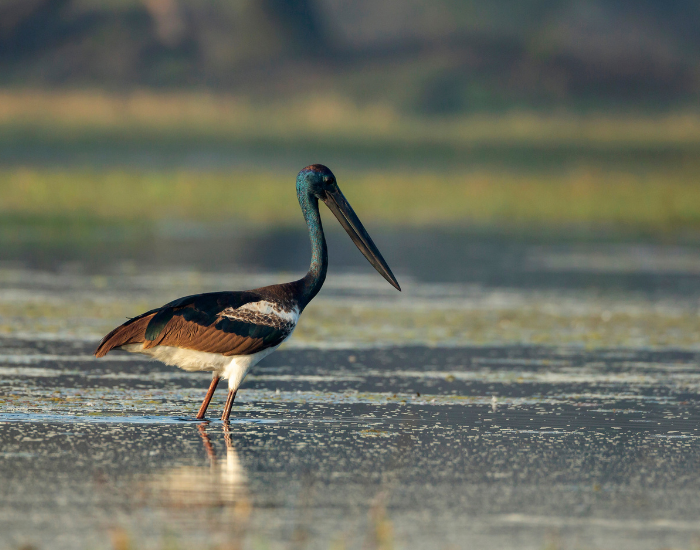
I still remember the first time I saw a Black-necked Stork (Ephippiorhynchus asiaticus) near Ballina, in the wetlands of the Northern Rivers. We often call them “Jabiru” in Australia, though that name technically belongs to their South American cousin. Standing tall among the reeds, they looked almost prehistoric, long black wings folded neatly, a heavy bill built for hunting, and eyes that seemed to size you up from a distance.
You might spot them while exploring some of the national parks of NSW, especially around coastal wetlands and river systems. At first glance, they can be mistaken for ibises or other large wading types of birds, but once you see one properly, you realise they’re in a class of their own.
Most people know stork the bird from german folklore, the one that miraculously delivers young birds (or human babies!) to chimneys, but the reality is far more “National Geographic” and a lot less “Disney.”
In this guide, I’m taking you beyond the myths. We are going to look at the ciconiiformes family, their breeding season, and 15 specific stork species you need to know. Whether you’re a fellow birder or just curious about what is a stork, let’s get into the weeds, literally.
What is a Stork? (More Than Just a “Baby Bringer”)
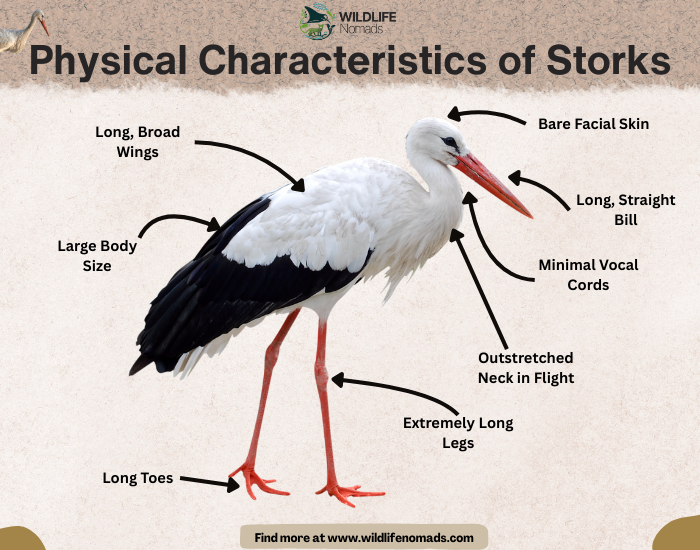
Before we dive into the list, let’s settle the basics: is a grey heron a stork? No. While they look similar, all herons retract their necks in flight, whereas storks live and fly with their legs outstretched and necks fully extended.
Storks animals are characterized by:
- Long, sturdy legs (often red legs or bright orange).
- Large wingspans built for soaring on thermals.
- A lack of a syrinx (vocal organ), which is why storks clap their beaks to communicate instead of singing.
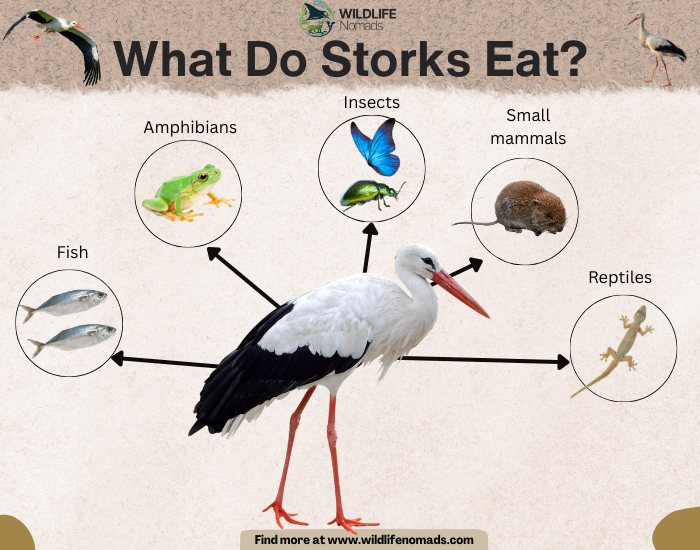
- A diet consisting of fish, amphibians, reptiles, small mammals, and even baby alligators.
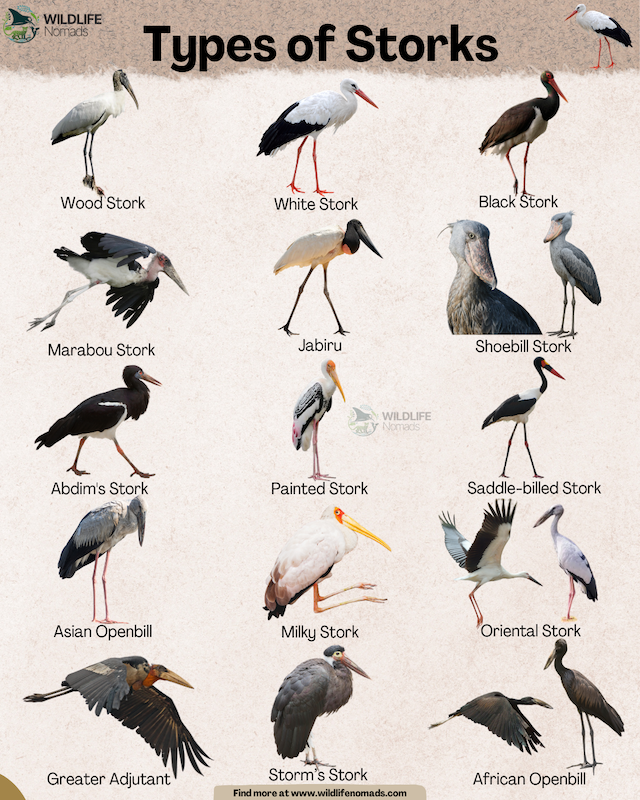
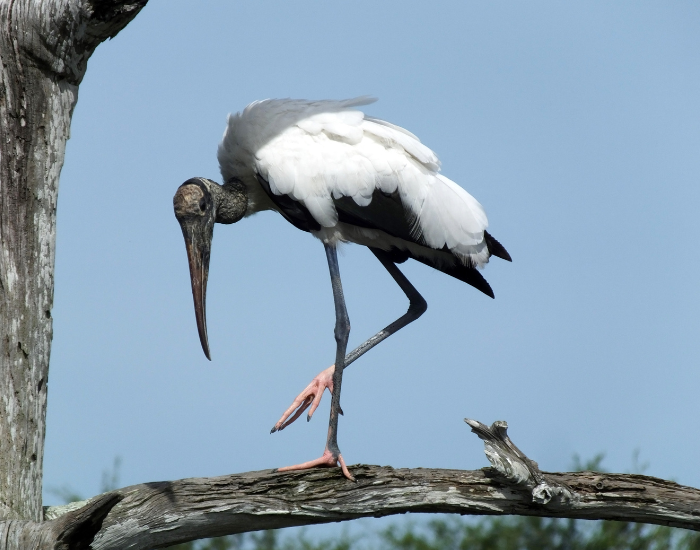
1. Wood Stork (Mycteria americana)
The wood stork is the only stork animal that currently breeds in the United States. I’ve spent a fair amount of time in the Florida Everglades watching these guys. They are “tactile” feeders; they dip their heavy bill into shallow water and wait for a fish to touch it. The reflex is one of the fastest in the vertebrate world.
They have a distinct look, a bald, scaly head that earned them the nickname “flinthead.” While they are currently listed as “Threatened,” stork populations for the Wood Stork have seen a slight rebound thanks to intensive wetland restoration.
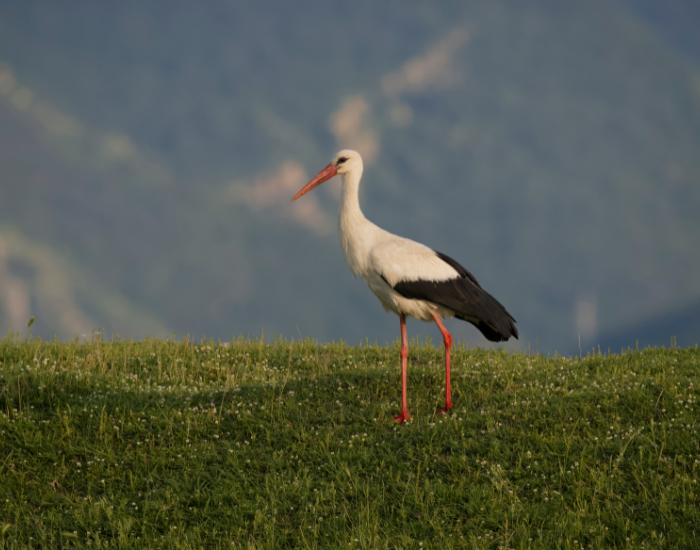
2. White Stork (Ciconia ciconia)
This is the stork of legend. If you travel through western europe or eastern europe during the breeding season, you’ll see their massive nests on top of chimneys and telephone poles.
European white storks are famous for their massive migration routes, traveling all the way to Sub-Saharan Africa. They rely on large flocks to find the best thermals, saving energy by soaring rather than flapping.
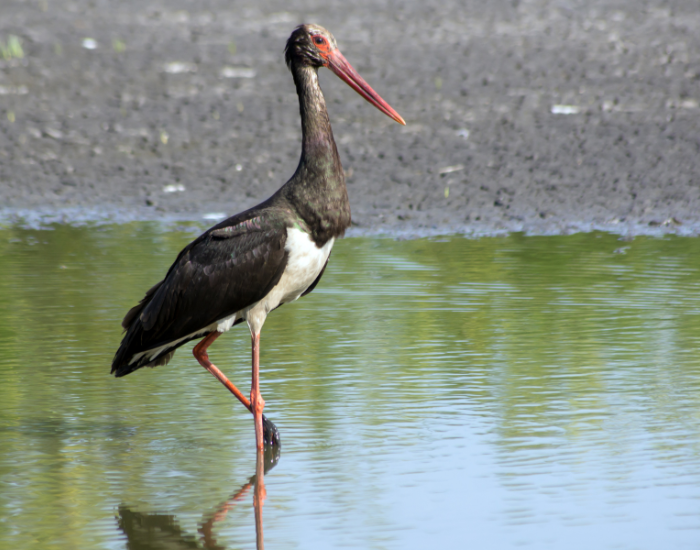
3. Black Stork (Ciconia nigra)
Unlike the social White Stork, the black stork is the “introvert” of the family. I’ve found them to be incredibly shy, preferring deep forests and secluded wetlands over human settlements. They have stunning black wings with a purple-green iridescent sheen and contrasting white plumage on their bellies. Seeing one in the wild feels like finding a rare gem.
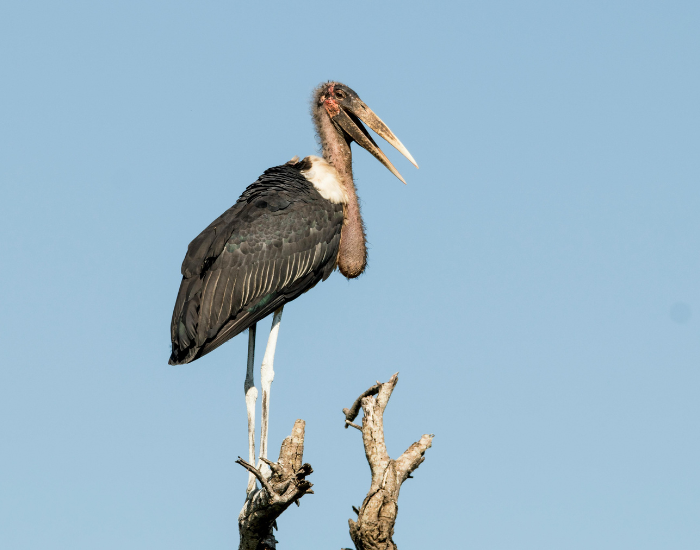
4. Marabou Stork (Leptoptilos crumenifer)
Often called the “undertaker bird” because of its macabre appearance, the Marabou is one of the most storks‘ largest members. Found across Africa, they are other scavengers that often hang out with vultures. They aren’t pretty, they have a massive fleshy pouch and a bald head, but they are vital for the ecosystem, cleaning up carcasses that could otherwise spread disease.
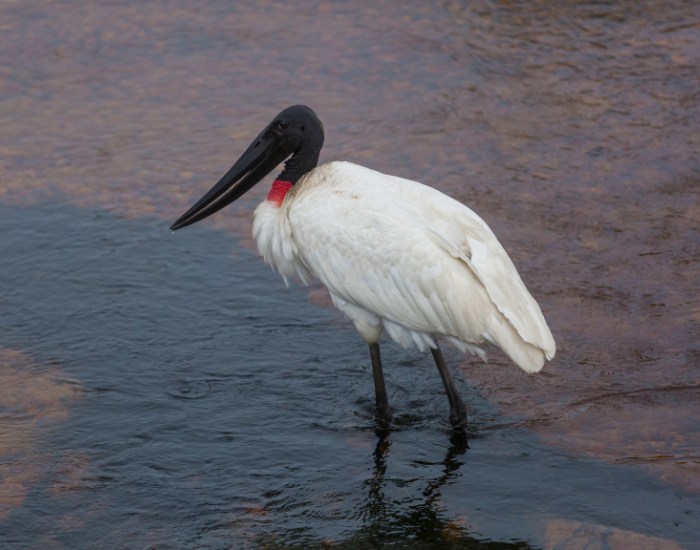
5. Jabiru (Jabiru mycteria)
In South America, specifically the Pantanal, the Jabiru reigns supreme. It is the tallest flying bird in south america. I’ve seen them standing near large colonies of egrets; they tower over them like giants. Their massive black bill is slightly upturned, perfect for snatching large fish or even small caiman.
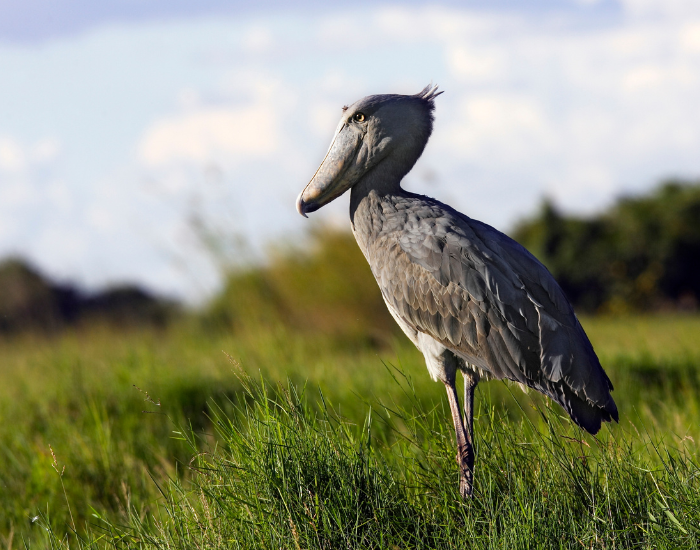
6. Shoebill Stork (Balaeniceps rex) – The Outlier
Okay, technicality check: Genetic testing has moved the Shoebill closer to pelicans, but for decades, they were classified as storks. I’m including them because they embody the “prehistoric” vibe better than any other bird. With a beak shaped like a Dutch clog, they hunt lungfish in the swamps of East Africa.
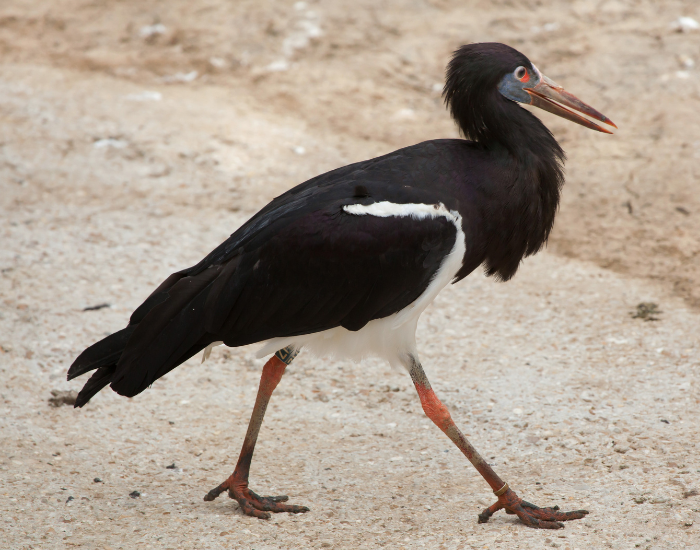
7. Abdim’s Stork (Ciconia abdimii)
Also known as the grasshopper birds, abdim’s storks are the smallest species. They are welcomed by farmers in Africa because they concentrate prey on swarming insects. When the locusts arrive, these storks are right behind them.
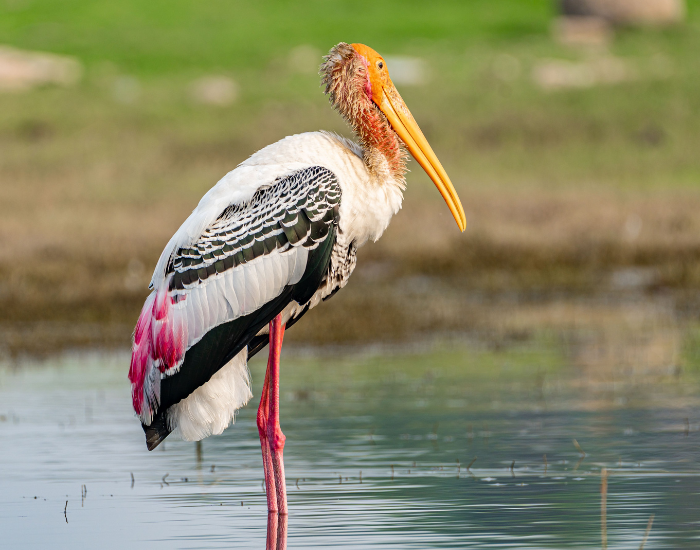
8. Painted Stork (Mycteria leucocephala)
Found in the middle east and across Asia, the Painted Stork looks like it walked through a watercolor palette. They have a delicate pinkish hue on their black primary feathers. I’ve observed them in India, where they build large colonies in trees right in the middle of busy villages.
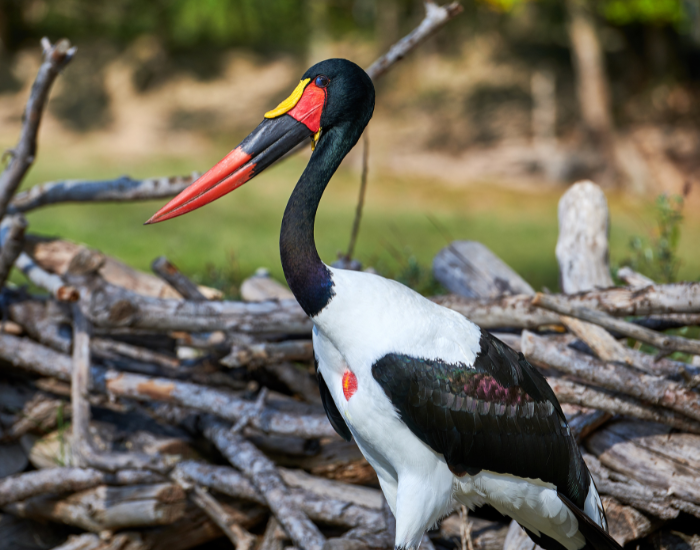
9. Saddle-billed Stork (Ephippiorhynchus senegalensis)
This is arguably the most beautiful stork the bird in existence. They have a massive, colorful bill with a yellow “saddle” on top. They are solitary hunters, and unlike the white stork, they do not migrate. If you find a pair, they are likely there for life.
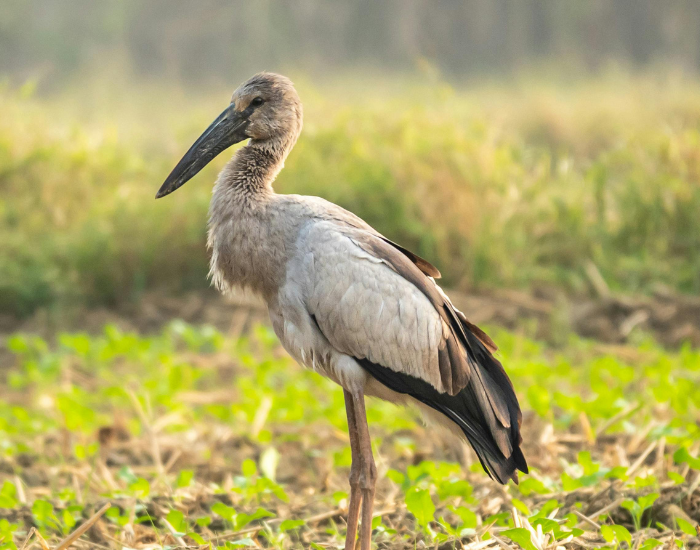
10. Asian Openbill (Anastomus oscitans)
These open billed storks have a very specific adaptation: a gap between their upper and lower mandibles when the beak is closed. This isn’t a deformity; it’s a tool. It helps them grip and pry open the shells of snails, which are their primary food supply.
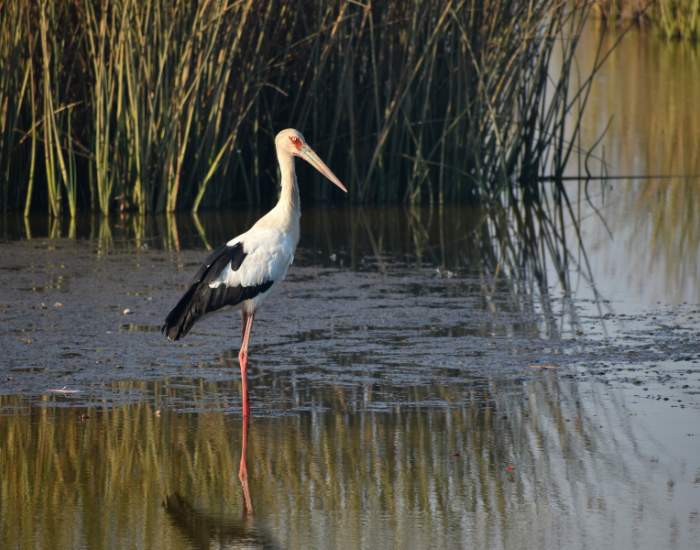
11. Maguari Stork (Ciconia maguari)
Similar to the White Stork but found in South America, the maguari storks prefer open grasslands. I’ve noticed they are much more likely to forage on small mammals and reptiles in the pampas than their European cousins.
12. Milky Stork (Mycteria cinerea)
A rare find in Southeast Asia. The milky storks are sadly struggling with habitat loss due to the destruction of mangroves. They look very similar to the Wood Stork but with much whiter plumage and a less “scaly” head.
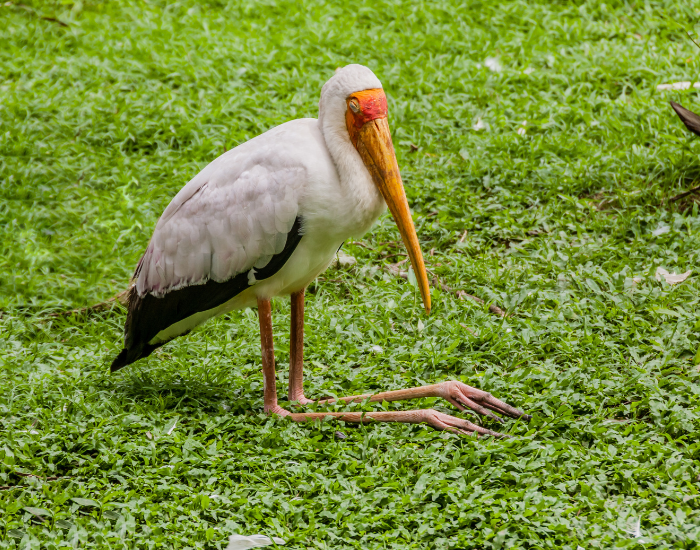
13. Yellow-billed Stork (Mycteria ibis)
Found in Africa, the yellow billed stork is a master of the “foot-stirring” technique. They use one foot to disturb the mud, flushing out frogs and fish into their waiting open beak.
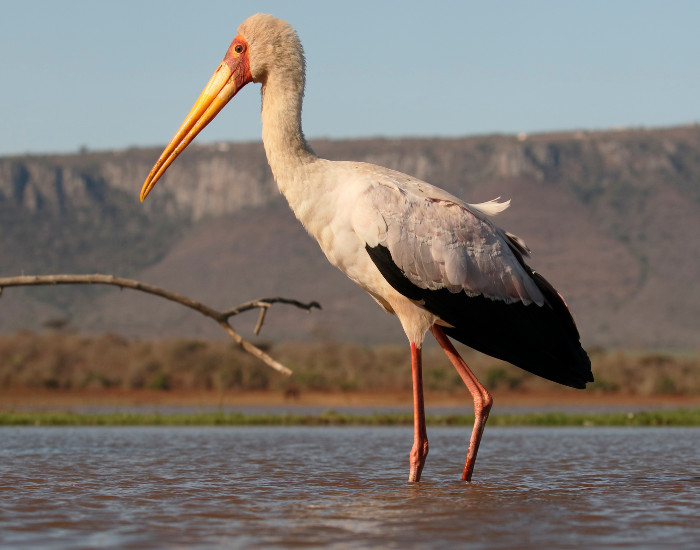
14. Oriental Stork (Ciconia boyciana)
Closely related to the White Stork, the Ciconia boyciana is much larger and has a black bill instead of a red one. Once extinct in Japan, massive conservation efforts have successfully reintroduced them to the wild, a rare “win” for stork populations.
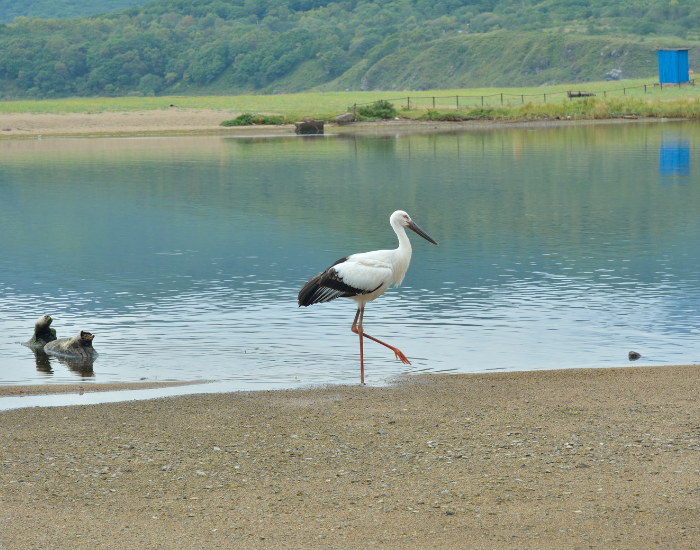
15. Greater Adjutant (Leptoptilos dubius)
One of the rarest storks in the world. They look like the Marabou’s larger, even more disheveled cousin. In Assam, India, local communities have turned from hunting them to protecting their nests, realizing that these birds are essential for controlling pests.
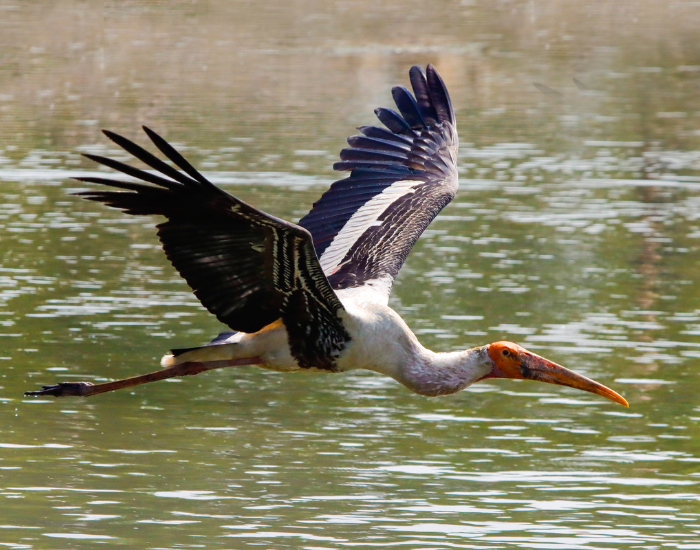
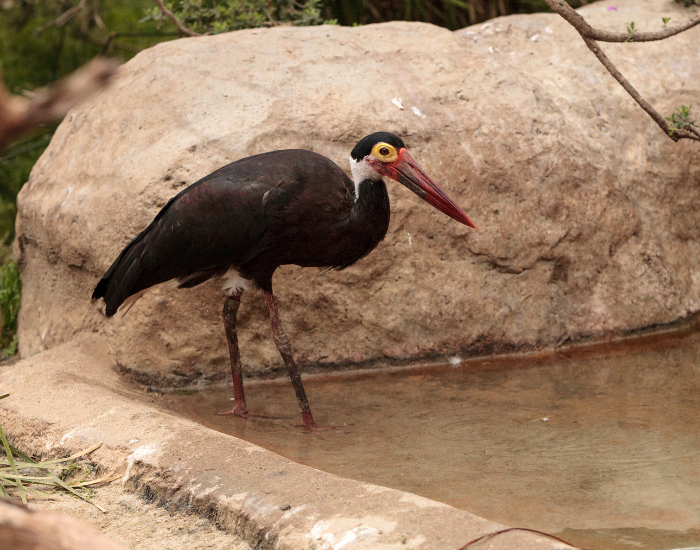
16. Storm’s Stork (Ciconia stormi)
In my opinion, this is the “Ghost of the Forest.” Found in the dense, primary lowland forests of Indonesia and Malaysia, the Storm’s Stork is arguably the rarest stork on the planet. I’ve spoken with researchers who have spent months in the field without a single sighting. They are characterized by a striking orange facial patch. Unlike the white stork, which loves open fields, these birds need undisturbed, old-growth riverine forests to survive.
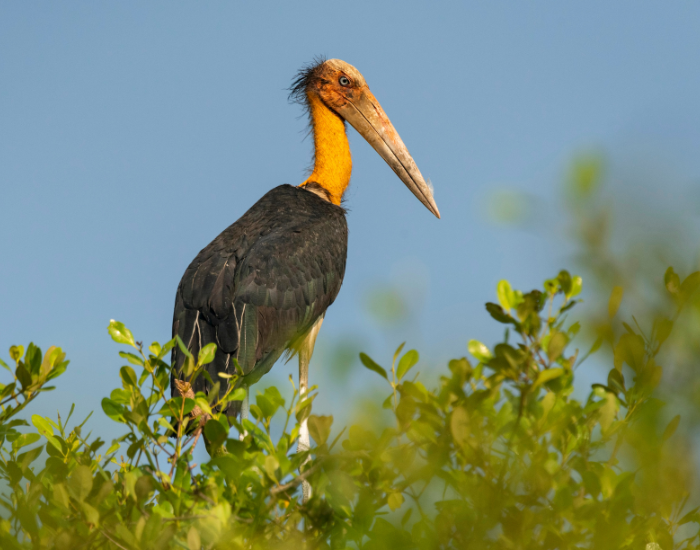
17. Lesser Adjutant (Leptoptilos javanicus)
While the Greater Adjutant is famous for being huge and rare, the Lesser Adjutant is the more “common” (though still vulnerable) cousin found across South and Southeast Asia. They are slightly smaller and lack the hanging neck pouch of the Greater. I often see them walking through rice paddies, looking for fish and frogs. They are surprisingly comfortable near traditional farming communities, provided the food supply remains stable.
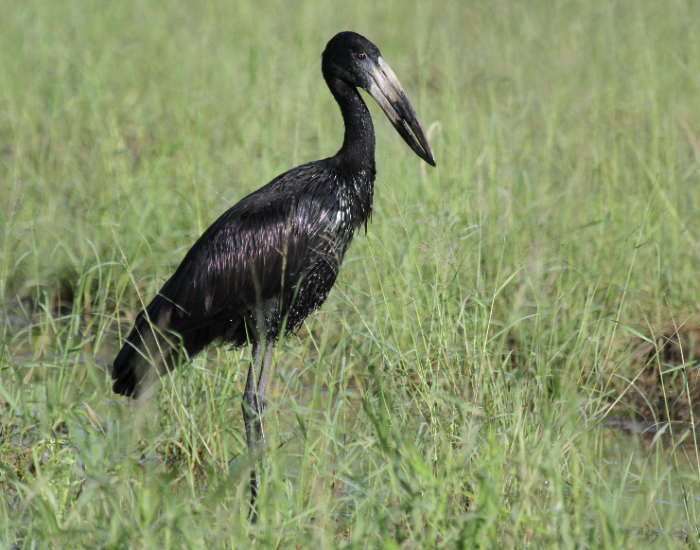
18. African Openbill (Anastomus lamelligerus)
The African counterpart to the Asian Openbill, this bird is almost entirely black with beautiful iridescent feathers. Just like its Asian relative, it has that specialized “gap” in its heavy bill. They are the masters of the “snail hunt.” If you find a pile of empty snail shells by the edge of a marsh in Botswana or Kenya, you can bet an African Openbill has been at work.
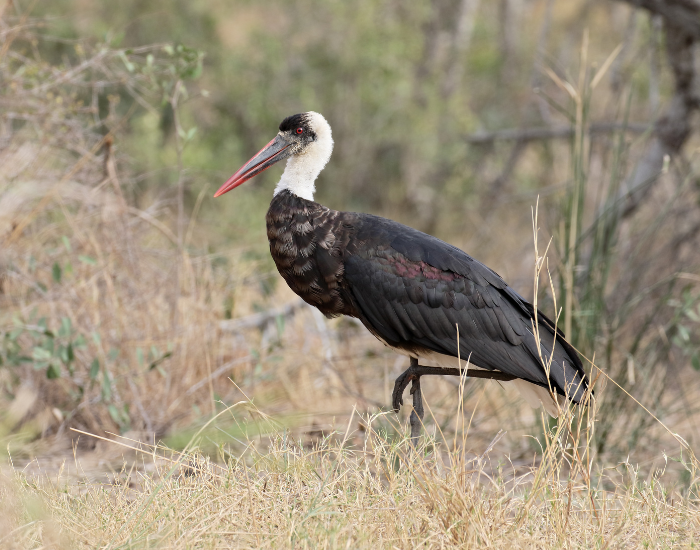
19. Woolly-necked Stork (Ciconia episcopus)
I’ve always loved the name of this one, it describes the thick, white, “woolly” feathers on its neck perfectly. They have a massive range across Africa and Asia. Interestingly, recent studies suggest that the Asian and African populations might actually be two different species entirely. They are quite adaptable and are one of the few stork species that I’ve seen successfully nesting in suburban areas, provided there are tall trees and a nearby habitat with water.
20. Black-necked Stork (Ephippiorhynchus asiaticus)
I mentioned this one briefly in my intro, but it deserves its own profile. While the African Saddle-bill gets all the “beauty” fame, the Black-necked Stork (especially the Australian population) is a powerhouse. The females have a bright orange (yellow) iris, while the males have dark eyes—one of the few cases of clear sexual dimorphism in the stork world. They are the apex avian predators of the Australian wetlands, often seen patrolling shallow water for anything from eels to small turtles.
Stork Diets: What Do Storks Eat?
One common misconception is that storks only eat fish. In my field studies, I’ve seen them take down everything from large insects to snakes.
- Fish & Amphibians: The staple for wetlands dwellers.
- Small Mammals: Storks eat mice, voles, and even small rabbits when they forage in fields.
- Other Prey: I once saw a Marabou snatch a pigeon mid-flight. They are opportunistic “critical thinkers” of the bird world.
Your FAQ about Storks
Primarily in Florida, Georgia, and South Carolina. The wood stork is the main resident, though you might occasionally see a stray Jabiru in Texas.
Their ability to soar for hours using “thermals” (rising warm air) without flapping their wings. This makes them some of the most efficient long-distance travelers on Earth.
Yes! I’ve personally witnessed a Wood Stork snatch a hatchling alligator. It’s a tough world in the marsh.
Absolutely. While the “baby delivery” part is a myth, the 19 biological species of storks are very much real and vital to our ecosystems.
Conservation: Protecting Stork Populations
The greatest threat facing storks isn’t predators—it’s habitat loss. Wetland drainage for development, mangrove destruction, and agricultural expansion eliminate critical foraging areas.
Several species face serious threats:
- Milky Stork – Endangered due to mangrove loss
- Greater Adjutant – Critically endangered with only 1,200 individuals
- Oriental Stork – Recovering but still endangered
- Storm Stork – Vulnerable to wetland drainage
Organizations like the World Wildlife Fund (WWF) and International Union for Conservation of Nature (IUCN) monitor stork populations. The Lincoln Park Zoo participates in breeding programs for several threatened species.
How you can help:
Support wetland conservation initiatives in your area. These habitats benefit not just storks but countless other species. Donate to organizations working on habitat restoration. Finally, spread awareness about the importance of these magnificent large wading birds.